BYZANTINE
ART
IESCAMILO JOSÉ CELA
TEACHER: ROCÍO BAUTISTA
BYZANTINE ART  evolution of the Roman art
+ influences of oriental art.
 Most important forms of art:
 Churches
 Mosaics
 Icons
ARCHITECTURE
General characteristics of Byzantine churches:
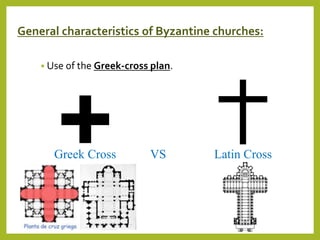
 Use of the Greek-cross plan.
Greek Cross VS Latin Cross
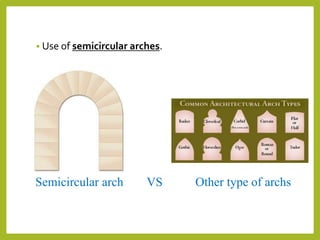
 Use of semicircular arches.
Semicircular arch VS Other type of archs
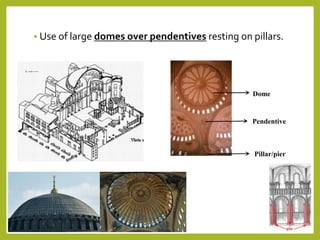
 Use of large domes over pendentives resting on pillars.
Dome
Pendentive
Pillar/pier
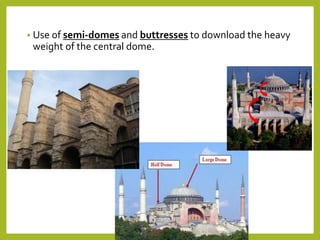
 Use of semi-domes and buttresses to download the heavy
weight of the central dome.
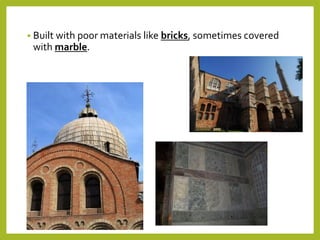
 Built with poor materials like bricks, sometimes covered
with marble.
 Decorated with rich mosaics.
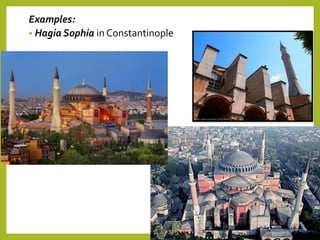
Examples:
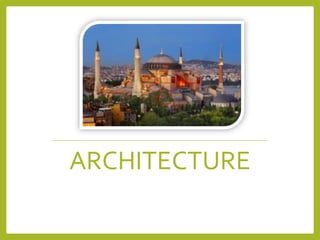
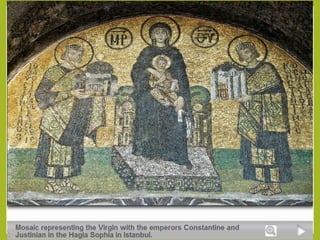
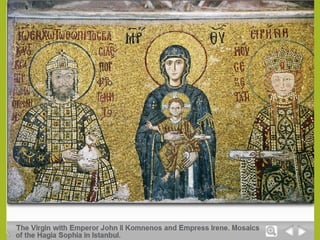
 Hagia Sophia in Constantinople
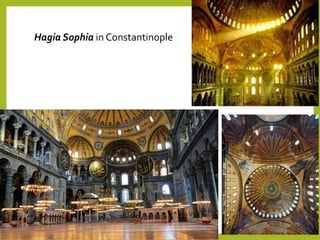
Hagia Sophia in Constantinople
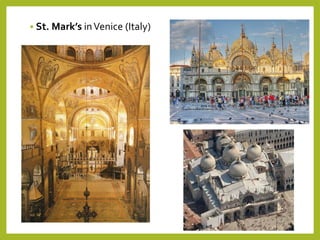
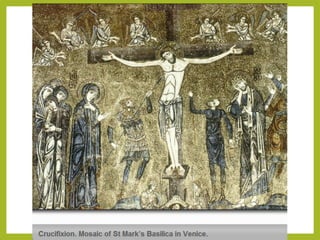
 St. Mark’s inVenice (Italy)
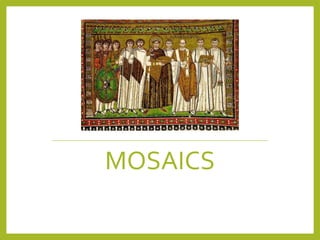
MOSAICS
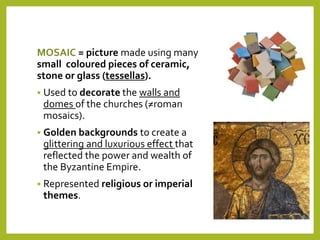
MOSAIC = picture made using many
small coloured pieces of ceramic,
stone or glass (tessellas).
 Used to decorate the walls and
domes of the churches (≠roman
mosaics).
 Golden backgrounds to create a
glittering and luxurious effect that
reflected the power and wealth of
the Byzantine Empire.
 Represented religious or imperial
themes.
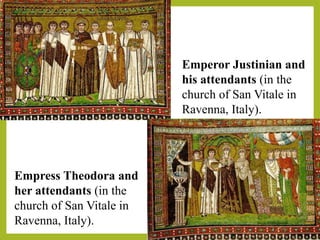
Empress Theodora and
her attendants (in the
church of San Vitale in
Ravenna, Italy).
Emperor Justinian and
his attendants (in the
church of San Vitale in
Ravenna, Italy).
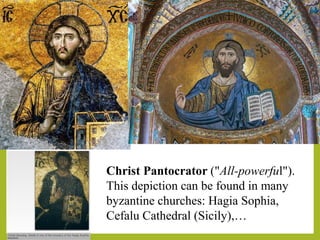
Christ Pantocrator ("All-powerful").
This depiction can be found in many
byzantine churches: Hagia Sophia,
Cefalu Cathedral (Sicily),…
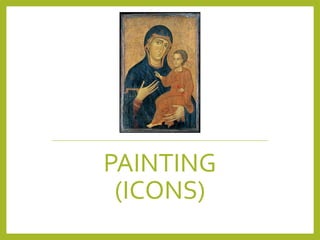
PAINTING
(ICONS)
ICON = religious image (Christ,Virgin
Mary, saints) painted on a wooden board.
 Characteristics of the painted figures:
 Flat and one-dimensional.
 Stylized figures (not proportional nor
realistic).
 Rigid and unnatural expressions.
 Golden backgrounds to symbolize the
divine nature of these characters
(illuminated by God's light).
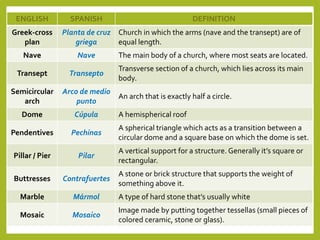
ENGLISH SPANISH DEFINITION
Greek-cross
plan
Planta de cruz
griega
Church in which the arms (nave and the transept) are of
equal length.
Nave Nave The main body of a church, where most seats are located.
Transept Transepto
Transverse section of a church, which lies across its main
body.
Semicircular
arch
Arco de medio
punto
An arch that is exactly half a circle.
Dome Cúpula A hemispherical roof
Pendentives Pechinas
A spherical triangle which acts as a transition between a
circular dome and a square base on which the dome is set.
Pillar / Pier Pilar
A vertical support for a structure. Generally it’s square or
rectangular.
Buttresses Contrafuertes
A stone or brick structure that supports the weight of
something above it.
Marble Mármol A type of hard stone that’s usually white
Mosaic Mosaico
Image made by putting together tessellas (small pieces of
colored ceramic, stone or glass).
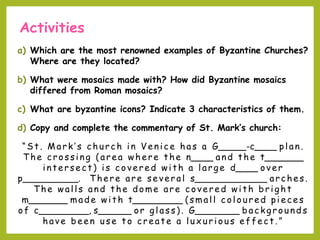
Activities
a) Which are the most renowned examples of Byzantine Churches?
Where are they located?
b) What were mosaics made with? How did Byzantine mosaics
differed from Roman mosaics?
c) What are byzantine icons? Indicate 3 characteristics of them.
d) Copy and complete the commentary of St. Mark’s church:
“St . Mark’s church in V enice has a G_____-c____ plan.
T he crossing (area where the n____ and the t_______
int ersect ) is covered wit h a larg e d____ over
p__________. T here are several s_____________ arches.
T he walls and t he dome are covered wit h brig ht
m_______ made wit h t_________ (small c o l o u red pieces
o f c_________, s______ or glass). G________ backgrounds
have been use t o creat e a lux urious effect . ”

Byzantine art

  • 1.
  • 2.
    BYZANTINE ART evolution of the Roman art + influences of oriental art.  Most important forms of art:  Churches  Mosaics  Icons
  • 3.
  • 4.
    General characteristics ofByzantine churches:  Use of the Greek-cross plan. Greek Cross VS Latin Cross
  • 5.
     Use ofsemicircular arches. Semicircular arch VS Other type of archs
  • 6.
     Use oflarge domes over pendentives resting on pillars. Dome Pendentive Pillar/pier
  • 7.
     Use ofsemi-domes and buttresses to download the heavy weight of the central dome.
  • 8.
     Built withpoor materials like bricks, sometimes covered with marble.
  • 9.
     Decorated withrich mosaics.
  • 10.
    Examples:  Hagia Sophiain Constantinople
  • 11.
    Hagia Sophia inConstantinople
  • 12.
     St. Mark’sinVenice (Italy)
  • 13.
  • 14.
    MOSAIC = picturemade using many small coloured pieces of ceramic, stone or glass (tessellas).  Used to decorate the walls and domes of the churches (≠roman mosaics).  Golden backgrounds to create a glittering and luxurious effect that reflected the power and wealth of the Byzantine Empire.  Represented religious or imperial themes.
  • 15.
    Empress Theodora and herattendants (in the church of San Vitale in Ravenna, Italy). Emperor Justinian and his attendants (in the church of San Vitale in Ravenna, Italy).
  • 16.
    Christ Pantocrator ("All-powerful"). Thisdepiction can be found in many byzantine churches: Hagia Sophia, Cefalu Cathedral (Sicily),…
  • 20.
  • 21.
    ICON = religiousimage (Christ,Virgin Mary, saints) painted on a wooden board.  Characteristics of the painted figures:  Flat and one-dimensional.  Stylized figures (not proportional nor realistic).  Rigid and unnatural expressions.  Golden backgrounds to symbolize the divine nature of these characters (illuminated by God's light).
  • 22.
    ENGLISH SPANISH DEFINITION Greek-cross plan Plantade cruz griega Church in which the arms (nave and the transept) are of equal length. Nave Nave The main body of a church, where most seats are located. Transept Transepto Transverse section of a church, which lies across its main body. Semicircular arch Arco de medio punto An arch that is exactly half a circle. Dome Cúpula A hemispherical roof Pendentives Pechinas A spherical triangle which acts as a transition between a circular dome and a square base on which the dome is set. Pillar / Pier Pilar A vertical support for a structure. Generally it’s square or rectangular. Buttresses Contrafuertes A stone or brick structure that supports the weight of something above it. Marble Mármol A type of hard stone that’s usually white Mosaic Mosaico Image made by putting together tessellas (small pieces of colored ceramic, stone or glass).
  • 23.
    Activities a) Which arethe most renowned examples of Byzantine Churches? Where are they located? b) What were mosaics made with? How did Byzantine mosaics differed from Roman mosaics? c) What are byzantine icons? Indicate 3 characteristics of them. d) Copy and complete the commentary of St. Mark’s church: “St . Mark’s church in V enice has a G_____-c____ plan. T he crossing (area where the n____ and the t_______ int ersect ) is covered wit h a larg e d____ over p__________. T here are several s_____________ arches. T he walls and t he dome are covered wit h brig ht m_______ made wit h t_________ (small c o l o u red pieces o f c_________, s______ or glass). G________ backgrounds have been use t o creat e a lux urious effect . ”