Julius Caesar
100 BC – 44 BC
Politician, general, dictator
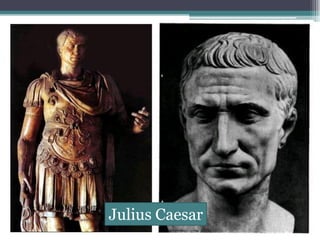
Julius Caesar
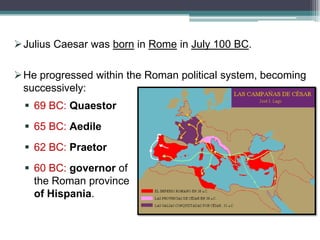
Julius Caesar was born in Rome in July 100 BC.

He progressed within the Roman political system, becoming
successively:
 69 BC: Quaestor
 65 BC: Aedile

 62 BC: Praetor
 60 BC: governor of
the Roman province
of Hispania.
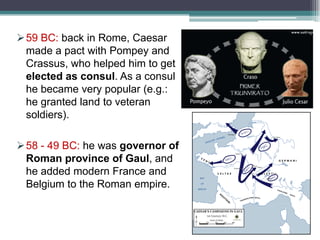
59 BC: back in Rome, Caesar
made a pact with Pompey and
Crassus, who helped him to get
elected as consul. As a consul
he became very popular (e.g.:
he granted land to veteran
soldiers).
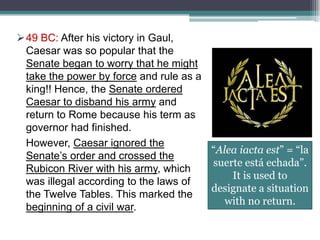
58 - 49 BC: he was governor of
Roman province of Gaul, and
he added modern France and
Belgium to the Roman empire.
49 BC: After his victory in Gaul,
Caesar was so popular that the
Senate began to worry that he might
take the power by force and rule as a
king!! Hence, the Senate ordered
Caesar to disband his army and
return to Rome because his term as
governor had finished.
However, Caesar ignored the
“Alea iacta est” = “la
Senate’s order and crossed the
suerte está echada”.
Rubicon River with his army, which
It is used to
was illegal according to the laws of
designate a situation
the Twelve Tables. This marked the
with no return.
beginning of a civil war.
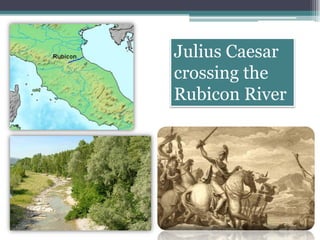
Julius Caesar
crossing the
Rubicon River
49 BC: Civil War between:
Julius Caesar
&
his supporters
(the “Populares”)

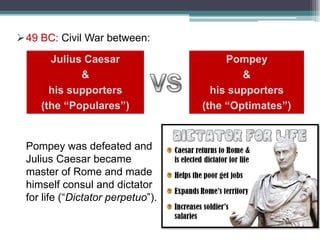
Pompey was defeated and
Julius Caesar became
master of Rome and made
himself consul and dictator
for life (“Dictator perpetuo”).

Pompey
&
his supporters
(the “Optimates”)
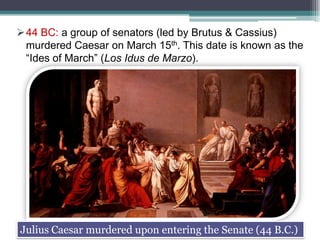
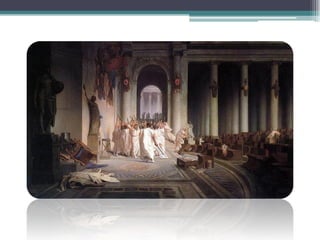
44 BC: a group of senators (led by Brutus & Cassius)
murdered Caesar on March 15th. This date is known as the
“Ides of March” (Los Idus de Marzo).

Julius Caesar murdered upon entering the Senate (44 B.C.)
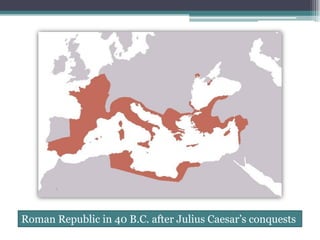
Roman Republic in 40 B.C. after Julius Caesar’s conquests
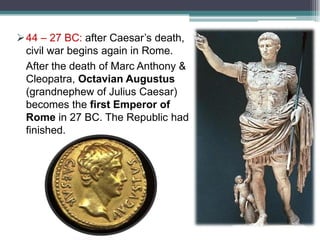
44 – 27 BC: after Caesar’s death,
civil war begins again in Rome.
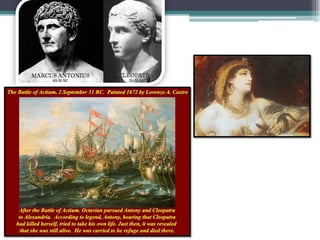
After the death of Marc Anthony &
Cleopatra, Octavian Augustus
(grandnephew of Julius Caesar)
becomes the first Emperor of
Rome in 27 BC. The Republic had
finished.
Julius Caesar

Julius Caesar

  • 1.
    Julius Caesar 100 BC– 44 BC Politician, general, dictator
  • 2.
  • 3.
    Julius Caesar wasborn in Rome in July 100 BC. He progressed within the Roman political system, becoming successively:  69 BC: Quaestor  65 BC: Aedile  62 BC: Praetor  60 BC: governor of the Roman province of Hispania.
  • 4.
    59 BC: backin Rome, Caesar made a pact with Pompey and Crassus, who helped him to get elected as consul. As a consul he became very popular (e.g.: he granted land to veteran soldiers). 58 - 49 BC: he was governor of Roman province of Gaul, and he added modern France and Belgium to the Roman empire.
  • 5.
    49 BC: Afterhis victory in Gaul, Caesar was so popular that the Senate began to worry that he might take the power by force and rule as a king!! Hence, the Senate ordered Caesar to disband his army and return to Rome because his term as governor had finished. However, Caesar ignored the “Alea iacta est” = “la Senate’s order and crossed the suerte está echada”. Rubicon River with his army, which It is used to was illegal according to the laws of designate a situation the Twelve Tables. This marked the with no return. beginning of a civil war.
  • 6.
  • 7.
    49 BC: CivilWar between: Julius Caesar & his supporters (the “Populares”) Pompey was defeated and Julius Caesar became master of Rome and made himself consul and dictator for life (“Dictator perpetuo”). Pompey & his supporters (the “Optimates”)
  • 8.
    44 BC: agroup of senators (led by Brutus & Cassius) murdered Caesar on March 15th. This date is known as the “Ides of March” (Los Idus de Marzo). Julius Caesar murdered upon entering the Senate (44 B.C.)
  • 10.
    Roman Republic in40 B.C. after Julius Caesar’s conquests
  • 11.
    44 – 27BC: after Caesar’s death, civil war begins again in Rome. After the death of Marc Anthony & Cleopatra, Octavian Augustus (grandnephew of Julius Caesar) becomes the first Emperor of Rome in 27 BC. The Republic had finished.