Ancient Greek Art
1100 BC -- 146 BC
The society
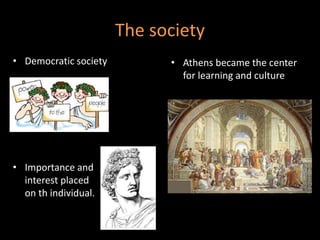
• Democratic society • Athens became the center
for learning and culture
• Importance and
interest placed
on th individual.
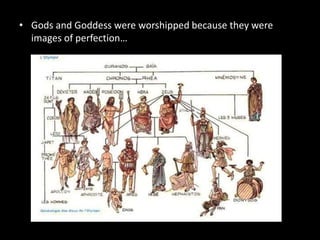
• Gods and Goddess were worshipped because they were
images of perfection…
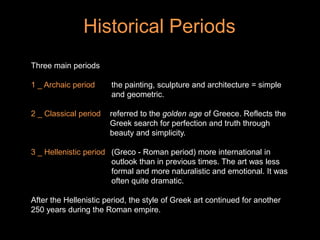
Historical Periods
Three main periods
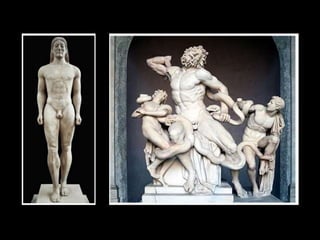
1 _ Archaic period the painting, sculpture and architecture = simple
and geometric.
2 _ Classical period referred to the golden age of Greece. Reflects the
Greek search for perfection and truth through
beauty and simplicity.
3 _ Hellenistic period (Greco - Roman period) more international in
outlook than in previous times. The art was less
formal and more naturalistic and emotional. It was
often quite dramatic.
After the Hellenistic period, the style of Greek art continued for another
250 years during the Roman empire.
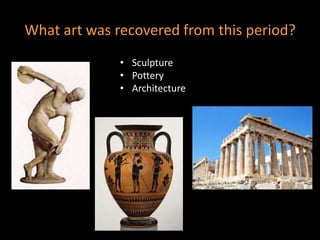
What art was recovered from this period?
• Sculpture
• Pottery
• Architecture
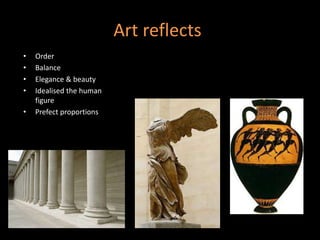
Art reflects
• Order
• Balance
• Elegance & beauty
• Idealised the human
figure
• Prefect proportions
Art Forms
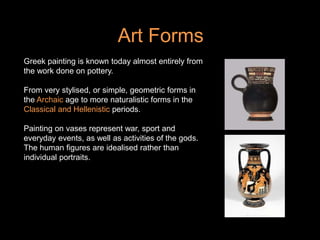
Greek painting is known today almost entirely from
the work done on pottery.
From very stylised, or simple, geometric forms in
the Archaic age to more naturalistic forms in the
Classical and Hellenistic periods.
Painting on vases represent war, sport and
everyday events, as well as activities of the gods.
The human figures are idealised rather than
individual portraits.
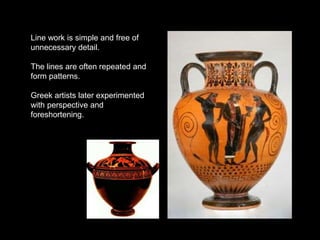
Line work is simple and free of
unnecessary detail.
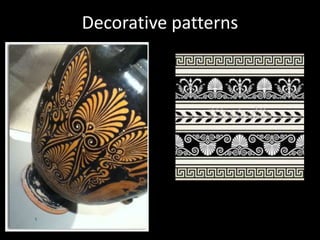
The lines are often repeated and
form patterns.
Greek artists later experimented
with perspective and
foreshortening.
Ancient Greek Pottery
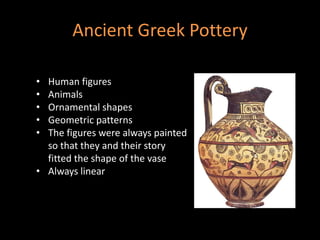
• Human figures
• Animals
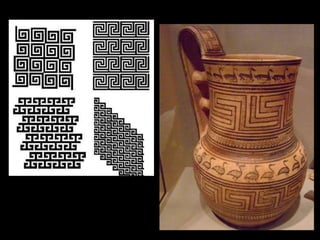
• Ornamental shapes
• Geometric patterns
• The figures were always painted
so that they and their story
fitted the shape of the vase
• Always linear
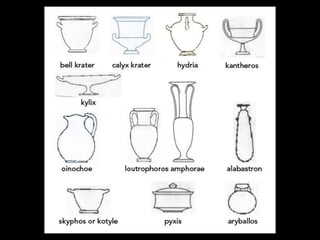
Types of vases
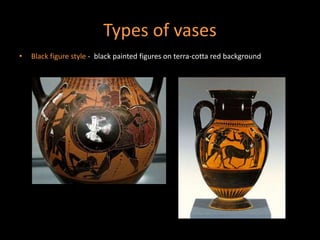
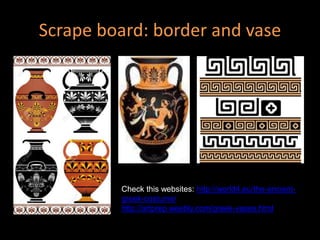
• Black figure style - black painted figures on terra-cotta red background
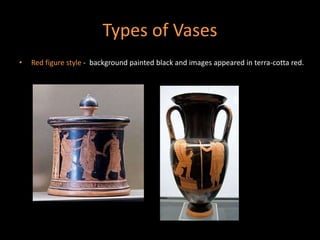
Types of Vases
• Red figure style - background painted black and images appeared in terra-cotta red.
Decorative patterns
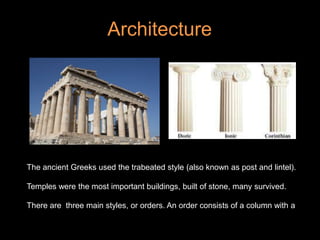
Architecture
The ancient Greeks used the trabeated style (also known as post and lintel).
Temples were the most important buildings, built of stone, many survived.
There are three main styles, or orders. An order consists of a column with a
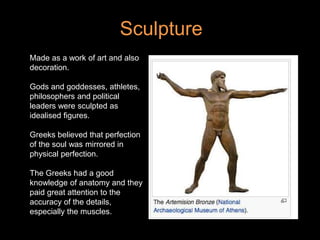
Made as a work of art and also
decoration.
Gods and goddesses, athletes,
philosophers and political
leaders were sculpted as
idealised figures.
Greeks believed that perfection
of the soul was mirrored in
physical perfection.
The Greeks had a good
knowledge of anatomy and they
paid great attention to the
accuracy of the details,
especially the muscles.
Sculpture
Greek and Roman art and culture have been very
influential over the last 2000 years. Not only did
they inspire the Renaissance in the 15th and 16th
centuries, but they have also inspired other
classical revivals.
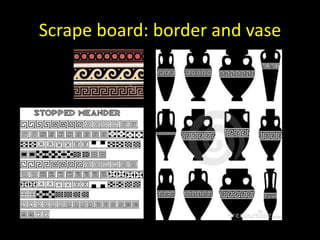
Scrape board: border and vase
Check this websites: http://world4.eu/the-ancient-
greek-costume/
http://artprep.weebly.com/greek-vases.html
Scrape board: border and vase
• http://www.ancientgreece.co.uk/dailylife/explore/exp_set.html
• http://www.bookunitsteacher.com/ancient_greece/stopped_meander.gif
• http://world4.eu/the-ancient-greek-costume/
• http://www.ancient.eu/uploads/images/3372.jpg?v=1431033347
• https://au.pinterest.com/
References

Ancient Greek Art

  • 1.
  • 2.
    The society • Democraticsociety • Athens became the center for learning and culture • Importance and interest placed on th individual.
  • 3.
    • Gods andGoddess were worshipped because they were images of perfection…
  • 4.
    Historical Periods Three mainperiods 1 _ Archaic period the painting, sculpture and architecture = simple and geometric. 2 _ Classical period referred to the golden age of Greece. Reflects the Greek search for perfection and truth through beauty and simplicity. 3 _ Hellenistic period (Greco - Roman period) more international in outlook than in previous times. The art was less formal and more naturalistic and emotional. It was often quite dramatic. After the Hellenistic period, the style of Greek art continued for another 250 years during the Roman empire.
  • 6.
    What art wasrecovered from this period? • Sculpture • Pottery • Architecture
  • 7.
    Art reflects • Order •Balance • Elegance & beauty • Idealised the human figure • Prefect proportions
  • 8.
    Art Forms Greek paintingis known today almost entirely from the work done on pottery. From very stylised, or simple, geometric forms in the Archaic age to more naturalistic forms in the Classical and Hellenistic periods. Painting on vases represent war, sport and everyday events, as well as activities of the gods. The human figures are idealised rather than individual portraits.
  • 9.
    Line work issimple and free of unnecessary detail. The lines are often repeated and form patterns. Greek artists later experimented with perspective and foreshortening.
  • 10.
    Ancient Greek Pottery •Human figures • Animals • Ornamental shapes • Geometric patterns • The figures were always painted so that they and their story fitted the shape of the vase • Always linear
  • 11.
    Types of vases •Black figure style - black painted figures on terra-cotta red background
  • 12.
    Types of Vases •Red figure style - background painted black and images appeared in terra-cotta red.
  • 13.
  • 15.
    Architecture The ancient Greeksused the trabeated style (also known as post and lintel). Temples were the most important buildings, built of stone, many survived. There are three main styles, or orders. An order consists of a column with a
  • 16.
    Made as awork of art and also decoration. Gods and goddesses, athletes, philosophers and political leaders were sculpted as idealised figures. Greeks believed that perfection of the soul was mirrored in physical perfection. The Greeks had a good knowledge of anatomy and they paid great attention to the accuracy of the details, especially the muscles. Sculpture
  • 17.
    Greek and Romanart and culture have been very influential over the last 2000 years. Not only did they inspire the Renaissance in the 15th and 16th centuries, but they have also inspired other classical revivals.
  • 18.
    Scrape board: borderand vase Check this websites: http://world4.eu/the-ancient- greek-costume/ http://artprep.weebly.com/greek-vases.html
  • 20.
  • 21.
    • http://www.ancientgreece.co.uk/dailylife/explore/exp_set.html • http://www.bookunitsteacher.com/ancient_greece/stopped_meander.gif •http://world4.eu/the-ancient-greek-costume/ • http://www.ancient.eu/uploads/images/3372.jpg?v=1431033347 • https://au.pinterest.com/ References