Business Cycle
Economic Growth


It’s a sustained increase in per capita national output or NNP over a
period of time.



Rate of increase in total output must be greater than the rate of
population.



National output is composed of such goods and services which
satisfy the maximum wants of the maximum number of people
Economic Growth
Determinants of EG


Human resources and its quality



Natural resources



Capital formation



Technological development



Social and Political factors
Business Cycle


Economic Growth in countries have not followed a steady and
smooth trend.



There are long upward trend in GNP, but with periodical short –run
fluctuations in economic activity.



The economies of the countries have shown period of economic
expansion alternating with period of contraction.

I ≠S
Business Cycle
Thus
Business / Trade Cycle:
“ Fluctuation of Economic activity characterized by
alternating periods of expansion and contraction.”
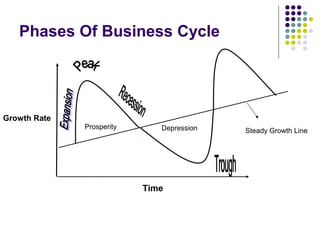
Phases Of Business Cycle

Growth Rate
Prosperity

Depression

Time

Steady Growth Line
Phases of Business Cycle
5 Phases of Trade Cycle
1. Expansion
2. Peak or Prosperity
3. Recession
4. Trough, bottom of Depression
5. Recovery and Expansion
Prosperity : Expansion and Peak
1. Expansion
Rise in National output, consumer and capital expenditure
prices of raw material.
Increase in
Investment
Demand
Output
Employment
Income
Profit
Investment
Bank Credit
Purchasing Power
Prices
Standard of Living
Prosperity : Expansion and Peak
2. Peak







Input starts falling short of demand
Workers are hard to find
Input prices increases
Output price increases
Cost of living is higher than income
Actual demand decrease

or




Bank start reducing credit
Profit expectations change
Businessman become Pessimistic
Turning Point and Recession
3. Recession
 Increase in Demand halts
 Demand starts decreasing in some sectors
 Producers being unaware keep up the production and Investment
 Supply > Demand
 Excess Inventories
Hence it leads to
 Future Investment plans are given up
 Cancellation of Input orders
 Demand for labours falls
 Decline in Investment
 Decline in Income and Consumption
 Bank Credit shrinks, Stock prices decreases,
 Unemployment Increases
Depression and Trough
4. Depression


Economic activities slide down their normal level



Growth Rate becomes negative



Level of National Income and Expenditure declines
Prices of consumer and capital goods decline
Workers lose their job
Debtors find it difficult to pay
Demand for bank credit is at the lowest
Investment in stock least attractive



Weaker firm get eliminated
The Recovery
5. Recovery or Reversal











Unemployment forces worker to work at lower wages
The producers start taking optimistic approach
Consumers begin to resume their postponed consumption
expecting no further decline
Bankers with their excess liquidity lowers their lending rate
Stock prices move up
Producers start replacing Capital stock
Investment and Employment increases
Demand for consumer and capital goods rises
Price level rises
Features of Business Cycle
1.

Business cycle occur periodically but they don not show same
regularity.
 It has distinct phases
 The duration varies from 3 to 12 years

2.

These cycles are Synchronic. They do not cause changes in any
single industry or sector but for all.

3.

Fluctuation occur not only in production and income but also in
other variables like employment, investment , consumption, rate of
interest , price level.
Features of Business Cycle
4.

Investment and Consumption of Durable consumer goods gets
effected.

5.

Consumption of Non- durable goods and services does not vary.

6.

Inventories of goods get affected by the impact of depression
and expansion.

7.

Profits fluctuates more than any other type of income.

8.

They are International in character.
Economic Stabilization Policies


Business Cycles and its violent fluctuations cause lots of
harm to both Business and human.



Various means to control and Stabilize business cycle
need to planned



The major stabilization problem in the developing
countries is the problem of controlling prices.



In developed countries is of preventing the sliding
growth rates
Objective
The major objective of Stabilization policies are:








Prevention of excessive economic fluctuation
Efficient utilization of labour and other productive
resources.
Encouraging free competitive enterprises
Avoiding conflict between internal and external
interests of the economy
Sustained Economic Growth
Economic Stability
Social Justice and Equity
ACTIVE INTERVENTION
BY THE
GOVERNMENT
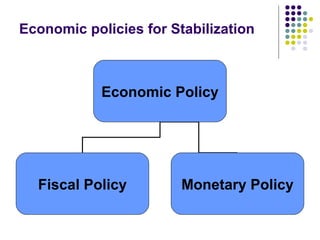
Economic policies for Stabilization

Economic Policy

Fiscal Policy

Monetary Policy

Business cycle

  • 1.
  • 2.
    Economic Growth  It’s asustained increase in per capita national output or NNP over a period of time.  Rate of increase in total output must be greater than the rate of population.  National output is composed of such goods and services which satisfy the maximum wants of the maximum number of people
  • 3.
    Economic Growth Determinants ofEG  Human resources and its quality  Natural resources  Capital formation  Technological development  Social and Political factors
  • 4.
    Business Cycle  Economic Growthin countries have not followed a steady and smooth trend.  There are long upward trend in GNP, but with periodical short –run fluctuations in economic activity.  The economies of the countries have shown period of economic expansion alternating with period of contraction. I ≠S
  • 5.
    Business Cycle Thus Business /Trade Cycle: “ Fluctuation of Economic activity characterized by alternating periods of expansion and contraction.”
  • 6.
    Phases Of BusinessCycle Growth Rate Prosperity Depression Time Steady Growth Line
  • 7.
    Phases of BusinessCycle 5 Phases of Trade Cycle 1. Expansion 2. Peak or Prosperity 3. Recession 4. Trough, bottom of Depression 5. Recovery and Expansion
  • 8.
    Prosperity : Expansionand Peak 1. Expansion Rise in National output, consumer and capital expenditure prices of raw material. Increase in Investment Demand Output Employment Income Profit Investment Bank Credit Purchasing Power Prices Standard of Living
  • 9.
    Prosperity : Expansionand Peak 2. Peak       Input starts falling short of demand Workers are hard to find Input prices increases Output price increases Cost of living is higher than income Actual demand decrease or    Bank start reducing credit Profit expectations change Businessman become Pessimistic
  • 10.
    Turning Point andRecession 3. Recession  Increase in Demand halts  Demand starts decreasing in some sectors  Producers being unaware keep up the production and Investment  Supply > Demand  Excess Inventories Hence it leads to  Future Investment plans are given up  Cancellation of Input orders  Demand for labours falls  Decline in Investment  Decline in Income and Consumption  Bank Credit shrinks, Stock prices decreases,  Unemployment Increases
  • 11.
    Depression and Trough 4.Depression  Economic activities slide down their normal level  Growth Rate becomes negative  Level of National Income and Expenditure declines Prices of consumer and capital goods decline Workers lose their job Debtors find it difficult to pay Demand for bank credit is at the lowest Investment in stock least attractive  Weaker firm get eliminated
  • 12.
    The Recovery 5. Recoveryor Reversal          Unemployment forces worker to work at lower wages The producers start taking optimistic approach Consumers begin to resume their postponed consumption expecting no further decline Bankers with their excess liquidity lowers their lending rate Stock prices move up Producers start replacing Capital stock Investment and Employment increases Demand for consumer and capital goods rises Price level rises
  • 13.
    Features of BusinessCycle 1. Business cycle occur periodically but they don not show same regularity.  It has distinct phases  The duration varies from 3 to 12 years 2. These cycles are Synchronic. They do not cause changes in any single industry or sector but for all. 3. Fluctuation occur not only in production and income but also in other variables like employment, investment , consumption, rate of interest , price level.
  • 14.
    Features of BusinessCycle 4. Investment and Consumption of Durable consumer goods gets effected. 5. Consumption of Non- durable goods and services does not vary. 6. Inventories of goods get affected by the impact of depression and expansion. 7. Profits fluctuates more than any other type of income. 8. They are International in character.
  • 15.
    Economic Stabilization Policies  BusinessCycles and its violent fluctuations cause lots of harm to both Business and human.  Various means to control and Stabilize business cycle need to planned  The major stabilization problem in the developing countries is the problem of controlling prices.  In developed countries is of preventing the sliding growth rates
  • 16.
    Objective The major objectiveof Stabilization policies are:        Prevention of excessive economic fluctuation Efficient utilization of labour and other productive resources. Encouraging free competitive enterprises Avoiding conflict between internal and external interests of the economy Sustained Economic Growth Economic Stability Social Justice and Equity
  • 17.
  • 18.
    Economic policies forStabilization Economic Policy Fiscal Policy Monetary Policy