Downloaded 73 times
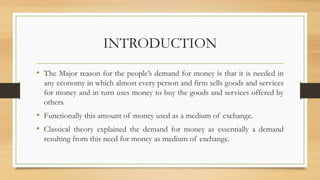
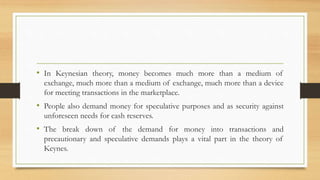
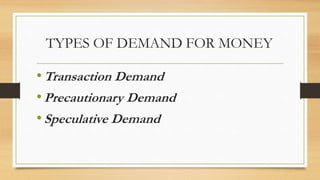
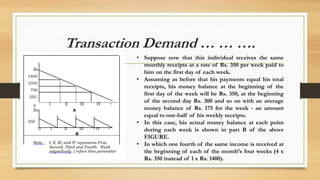


The document discusses the demand for money in an economy, highlighting its necessity for transactions, precautionary purposes, and speculative motives according to classical and Keynesian theories. It categorizes demand into transaction, precautionary, and speculative demands, emphasizing how individuals hold money to manage the timing of receipts and payments, safeguard against uncertainties, and speculate on future interest rates. Overall, it illustrates that the balance of money held increases with rising transaction volumes and the synchronization of incoming and outgoing cash flows.


![Awareness of digital currency[1] (1).pptx](https://cdn.slidesharecdn.com/ss_thumbnails/awarenessofdigitalcurrency11-260125155504-b1badee4-thumbnail.jpg?width=640&height=640&fit=bounds)


