
Mana gerial
Economics
Economics

It’s a study of how people- Individual, households, firms,
nation – maximize their gains from their limited resources
and opportunities

It the study of how men and society choose, with or without
the use of money, to employ scarce productive resources which
could have alternative uses, to produce various commodities
over time and distribute them for consumption now and in
the future amongst various people and groups of `society
… made simpler
…Social Science
…studies Human behavior in relation to optimizing
allocation of available resources to achieve given
ends.
…science which deals with wealth.
…study of the choice-making behavior of the people.
…science of scarcity and choice.

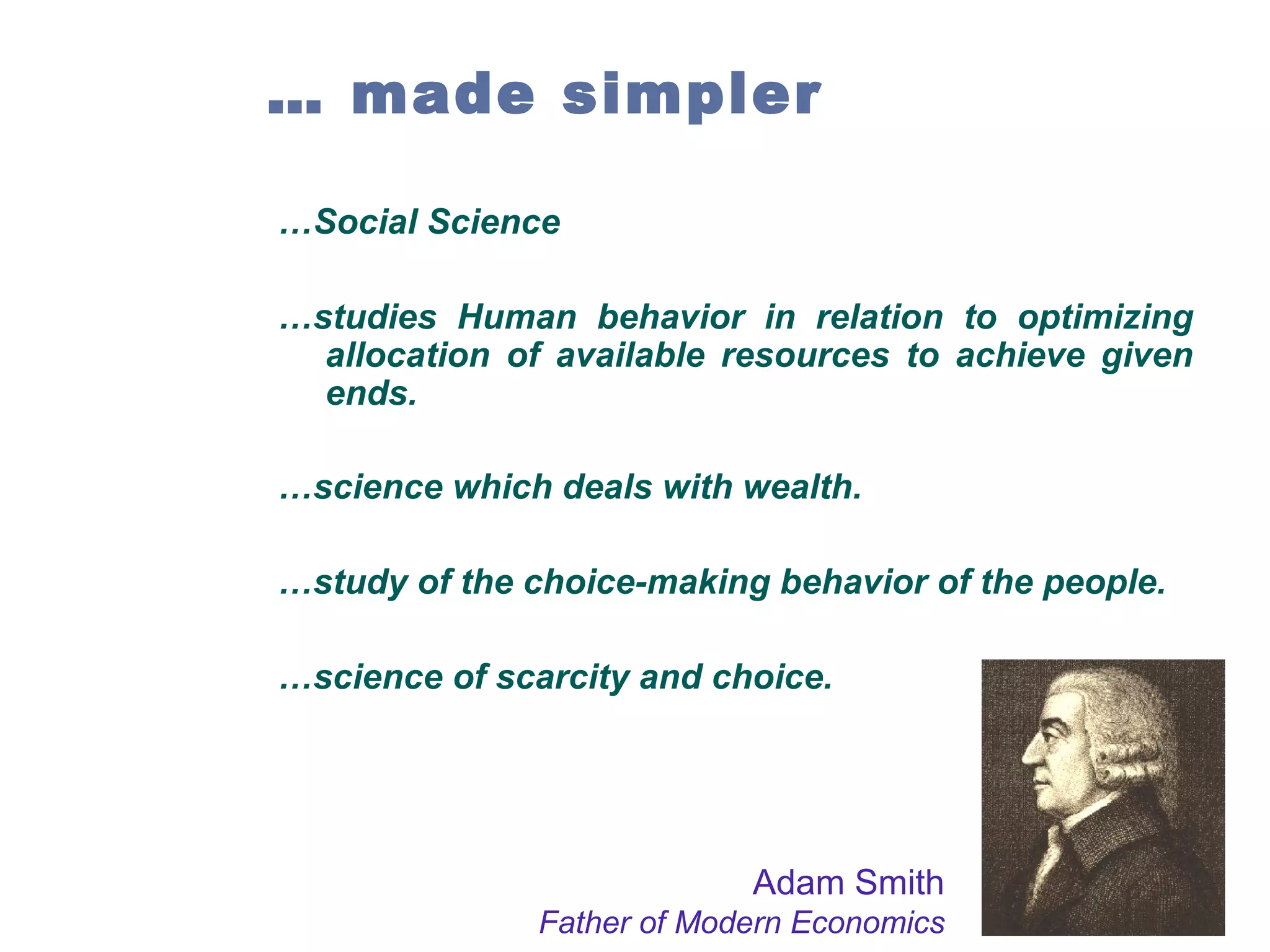
Adam Smith
Father of Modern Economics
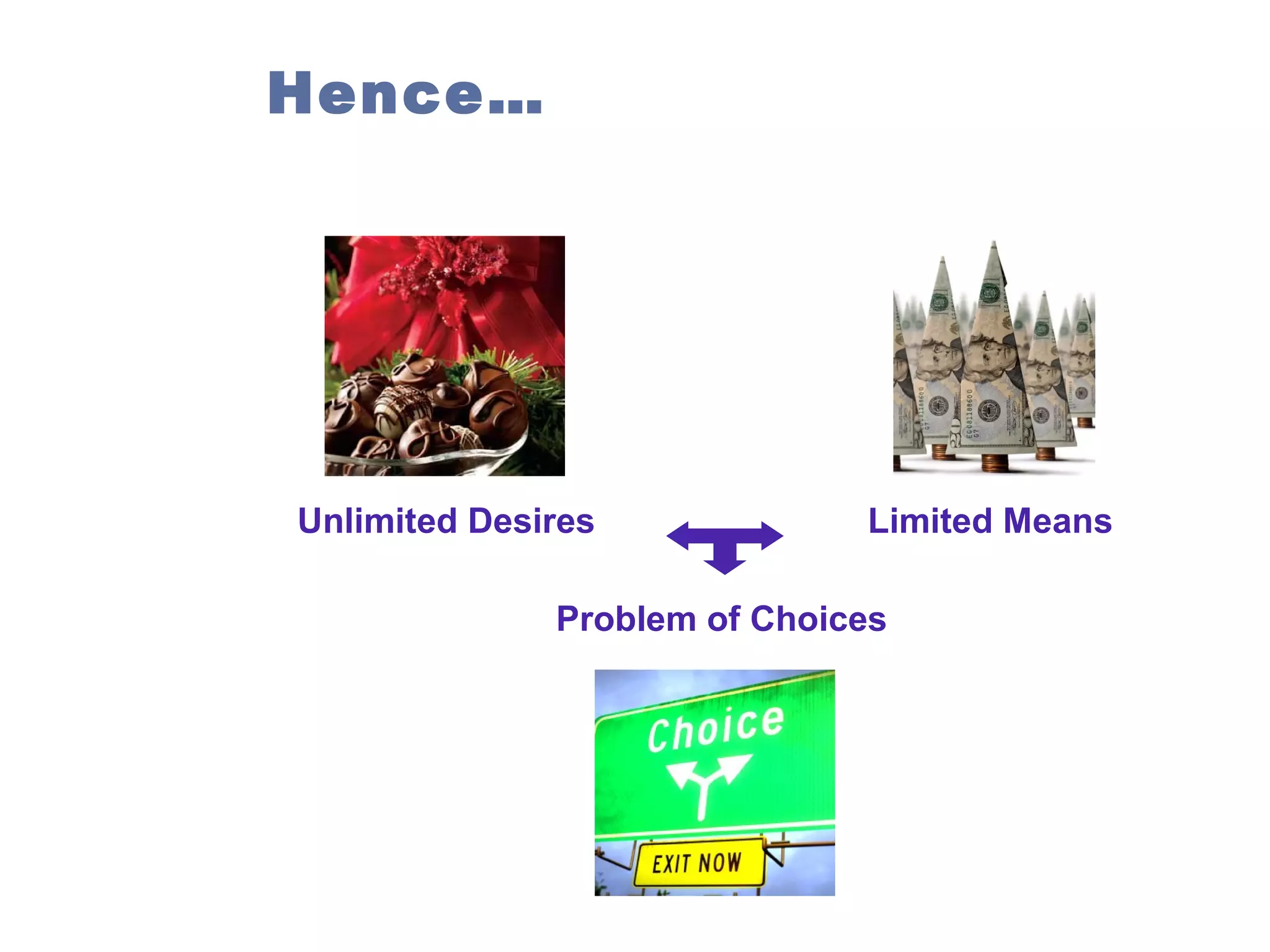
Hence…

Unlimited Desires

Limited Means

Problem of Choices
Why do managers
need to know
Economics?
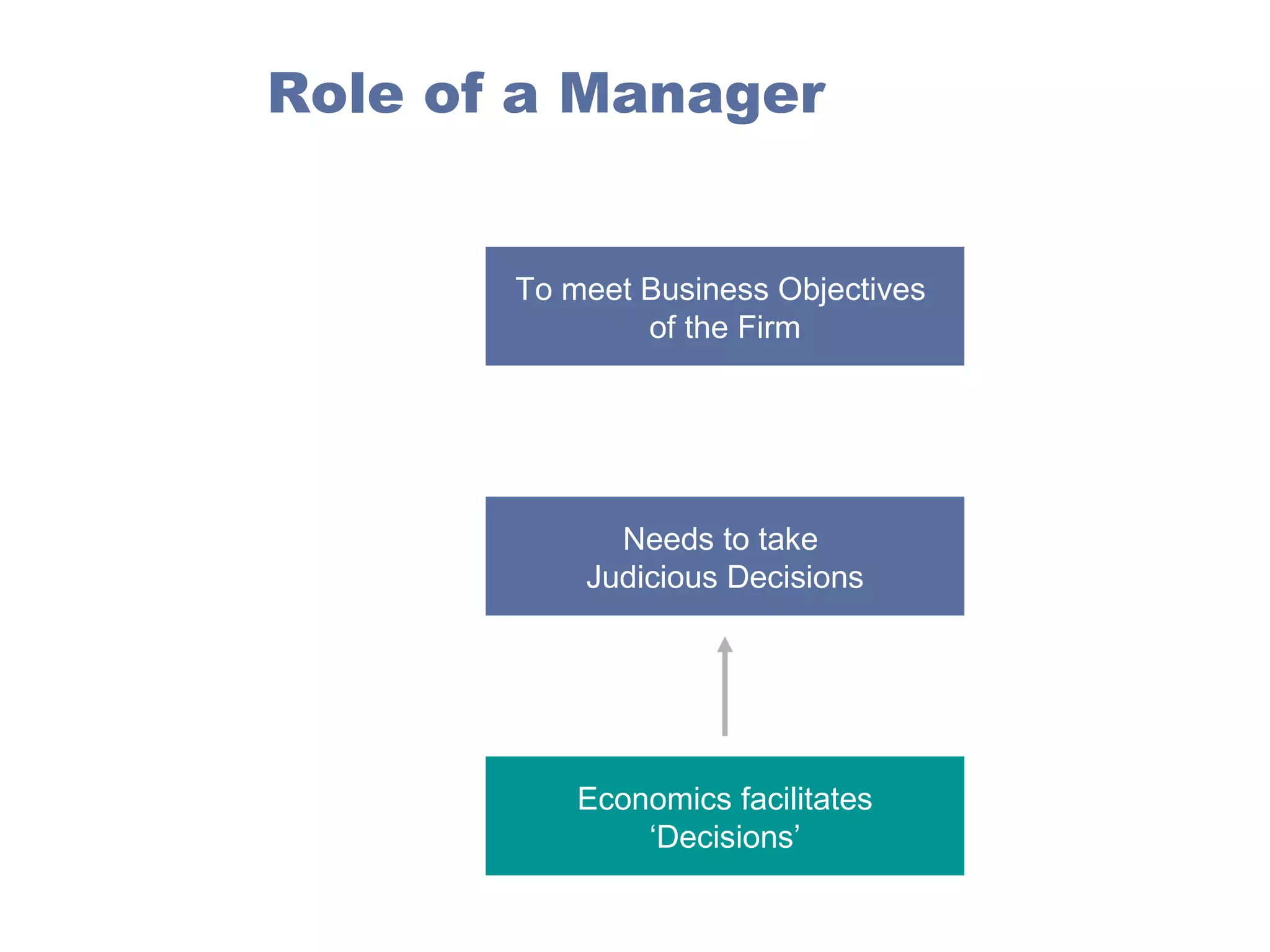
Role of a Manager

To meet Business Objectives
of the Firm

Needs to take
Judicious Decisions

Economics facilitates
‘Decisions’
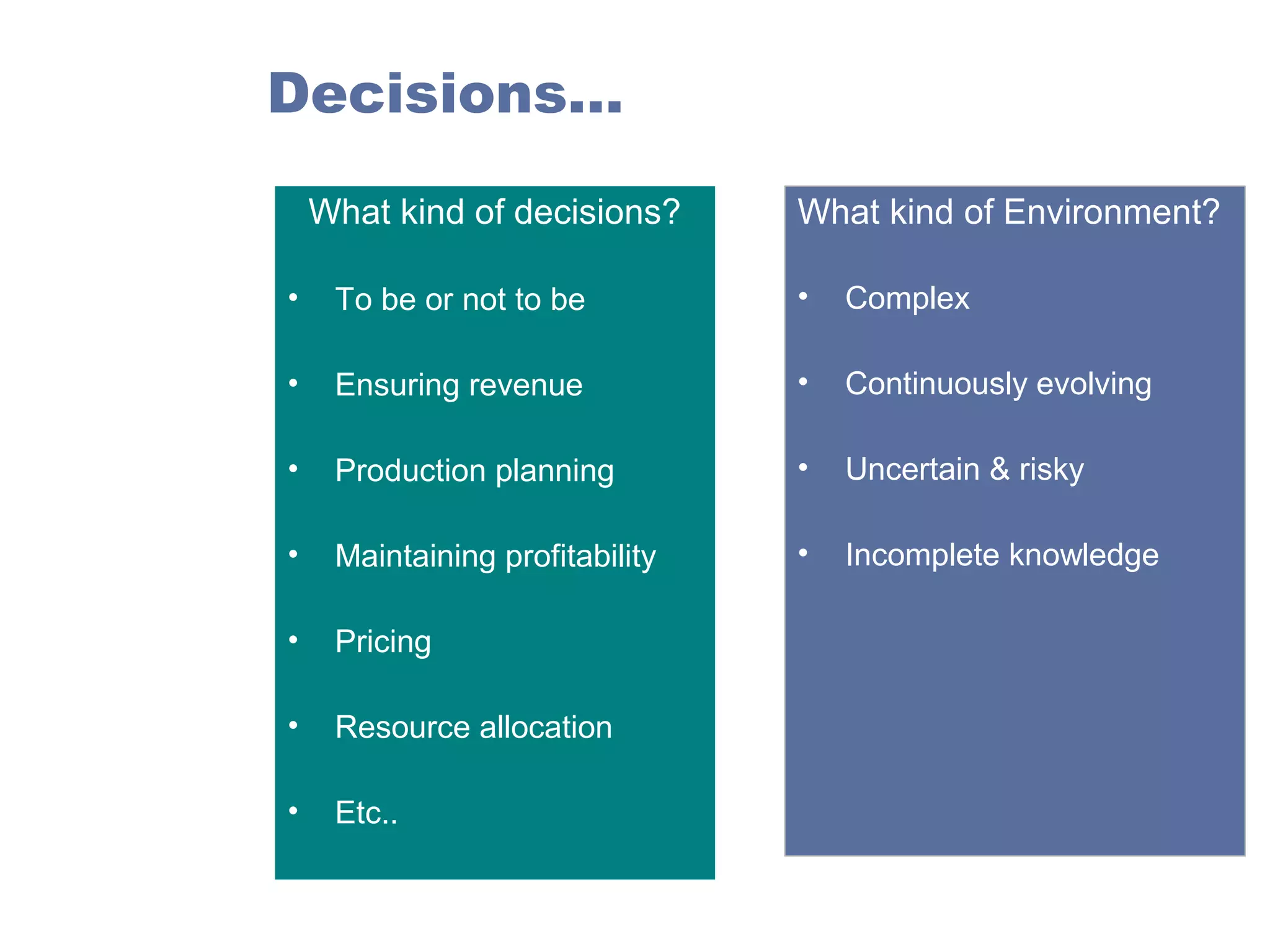
Decisions…
What kind of decisions?

What kind of Environment?

•

To be or not to be

•

Complex

•

Ensuring revenue

•

Continuously evolving

•

Production planning

•

Uncertain & risky

•

Maintaining profitability

•

Incomplete knowledge

•

Pricing

•

Resource allocation

•

Etc..
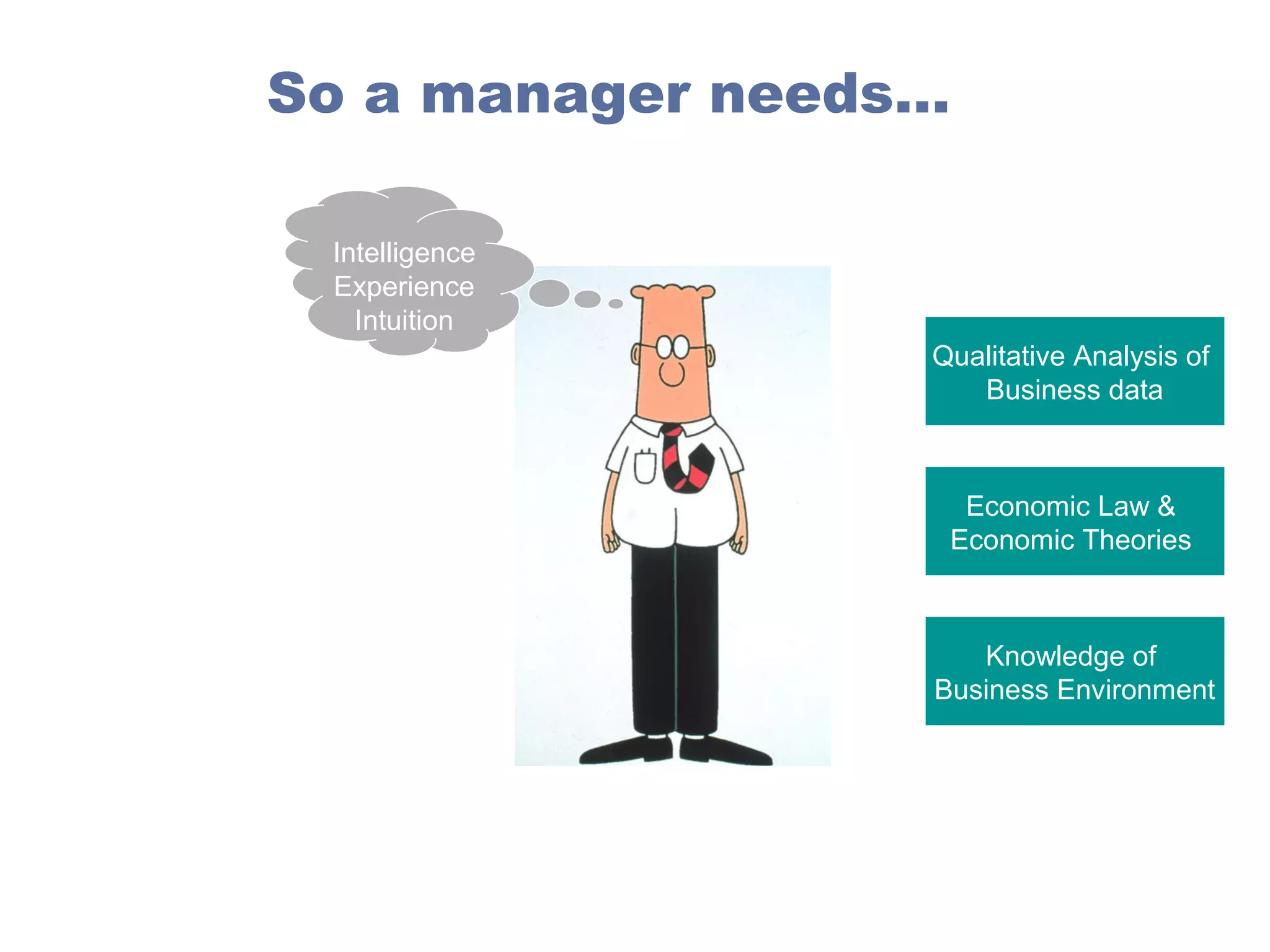
So a manager needs…
Intelligence
Experience
Intuition
Qualitative Analysis of
Business data

Economic Law &
Economic Theories

Knowledge of
Business Environment
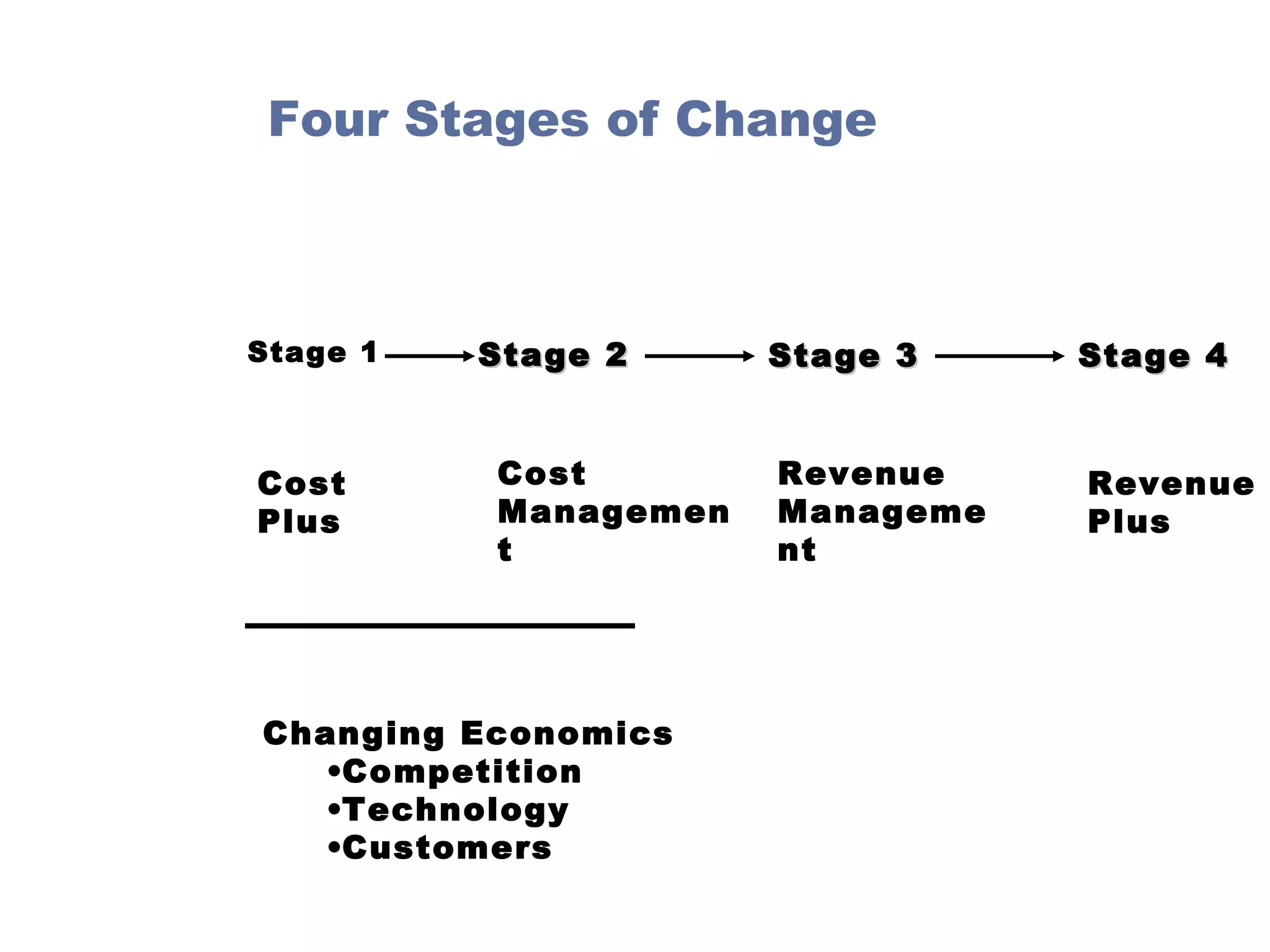
Four Stages of Change

Stage 1

Cost
Plus

Stage 2
Cost
Managemen
t

Changing Economics
•Competition
•Technology
•Customers

Stage 3

Stage 4

Revenue
Manageme
nt

Revenue
Plus
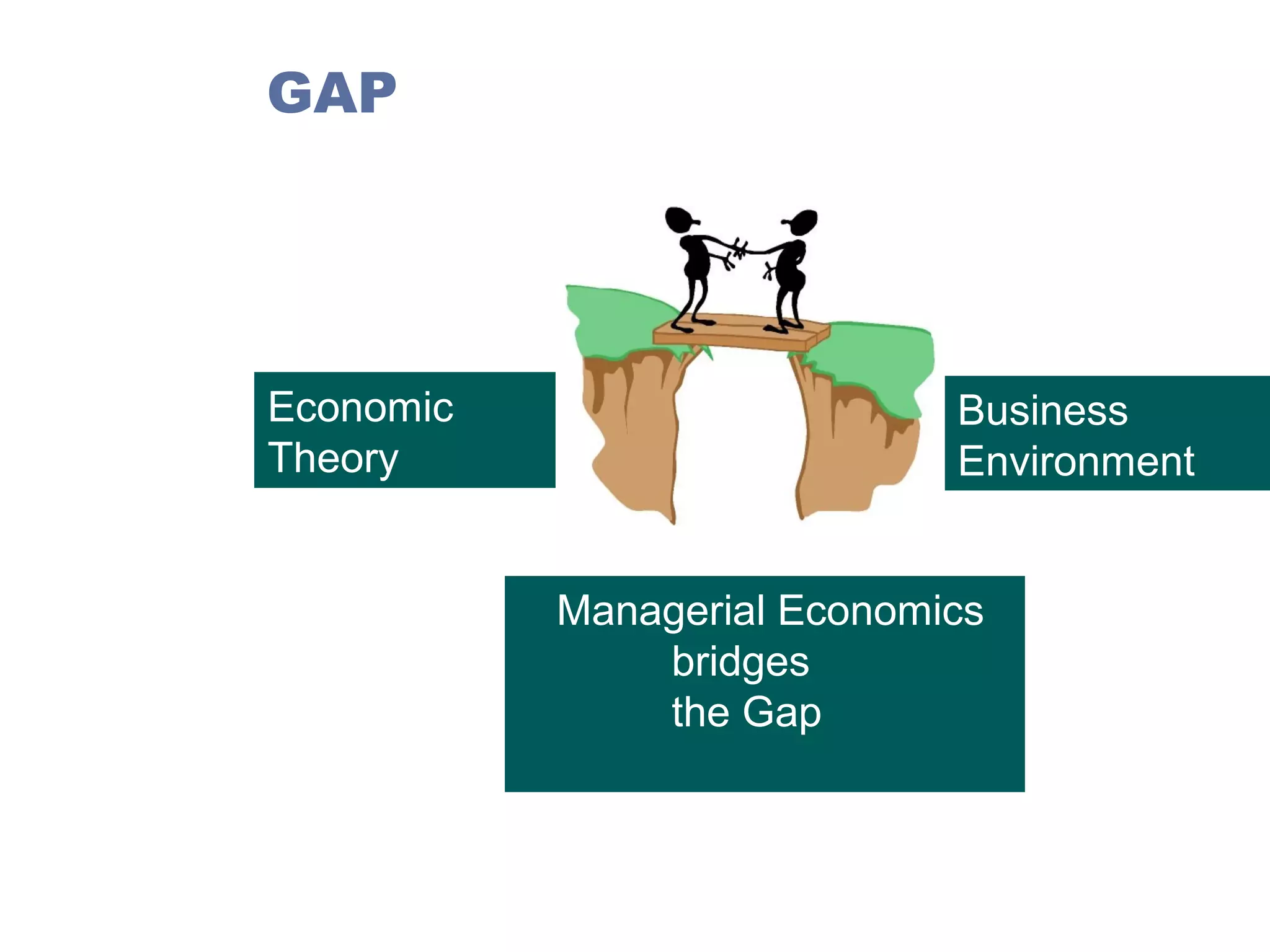
GAP

Economic
Theory

Business
Environment
Managerial Economics
bridges
the Gap
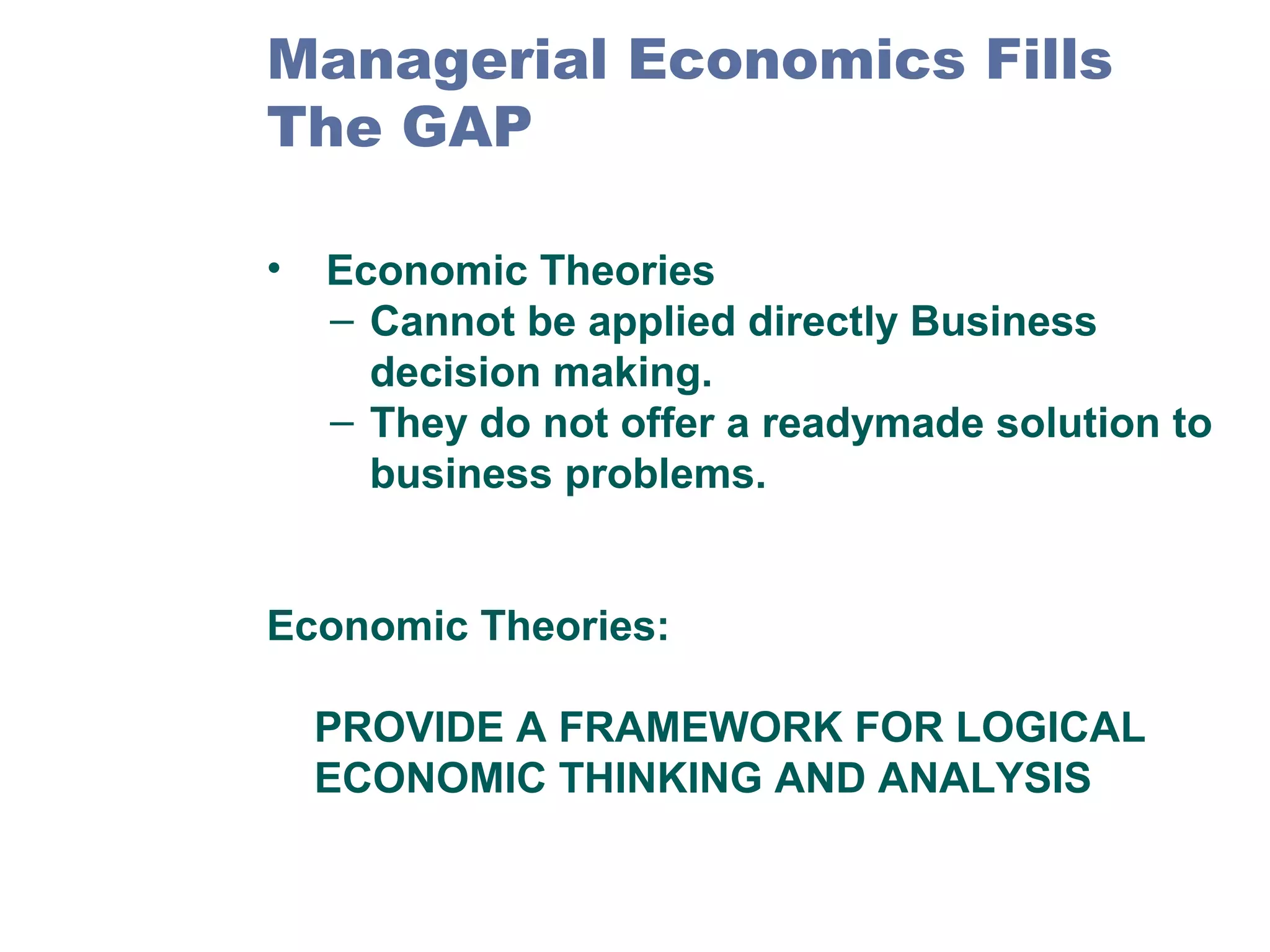
Managerial Economics Fills
The GAP
•

Economic Theories
– Cannot be applied directly Business
decision making.
– They do not offer a readymade solution to
business problems.

Economic Theories:
PROVIDE A FRAMEWORK FOR LOGICAL
ECONOMIC THINKING AND ANALYSIS
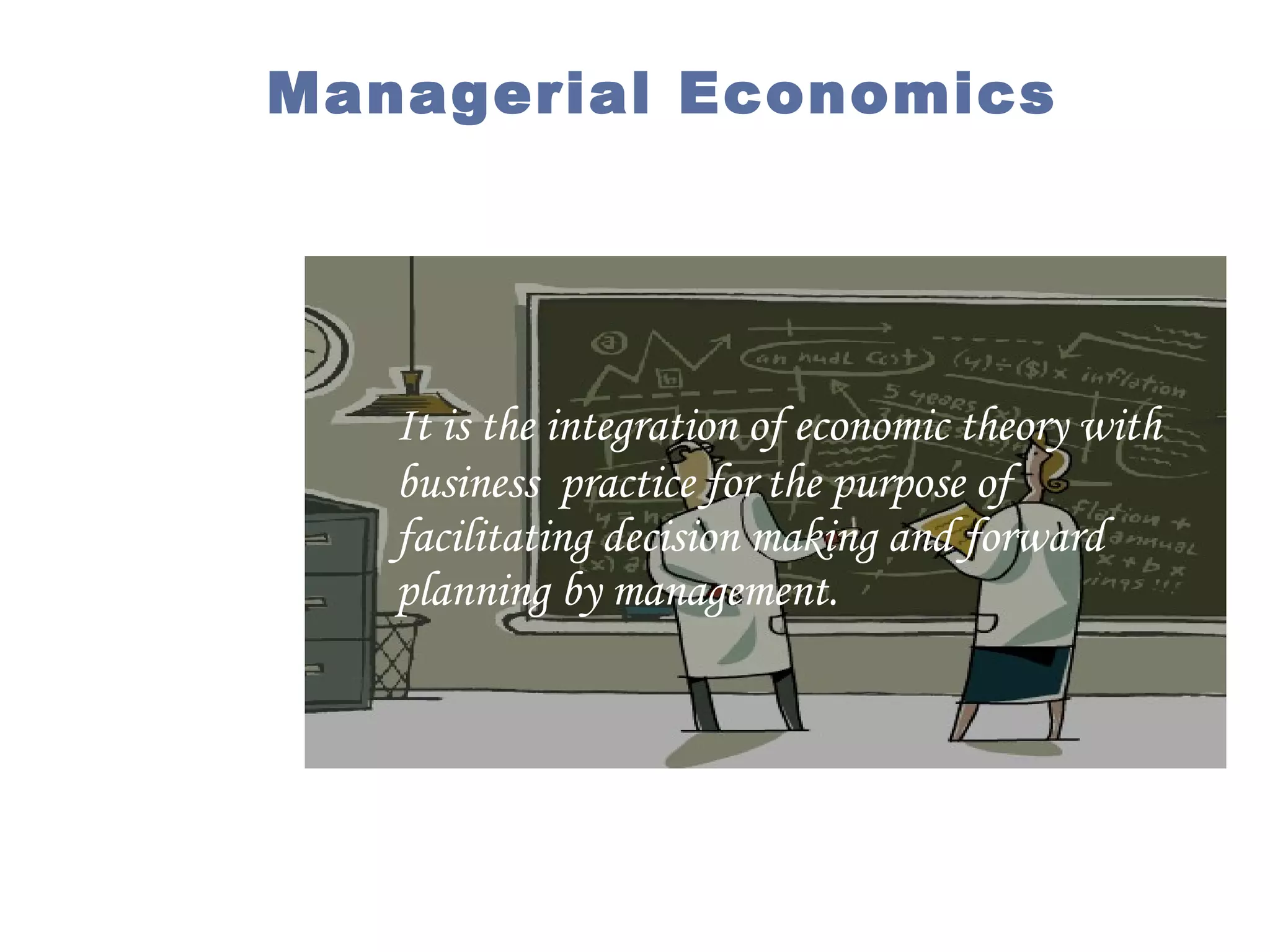
Managerial Economics

It is the integration of economic theory with
business practice for the purpose of
facilitating decision making and forward
planning by management.
Scope of
Managerial
Economics
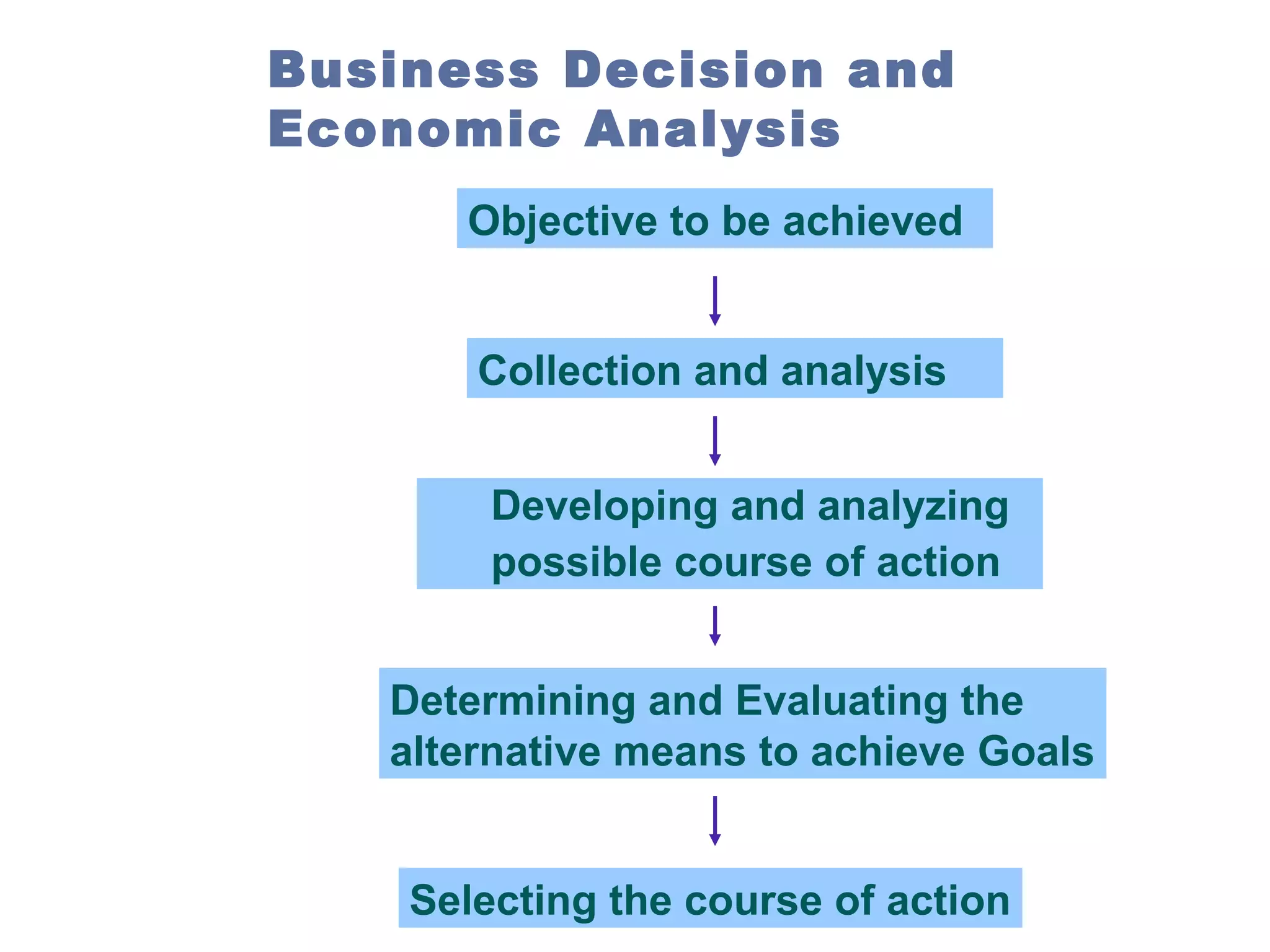
Business Decision and
Economic Analysis
Objective to be achieved
Collection and analysis
Developing and analyzing
possible course of action
Determining and Evaluating the
alternative means to achieve Goals
Selecting the course of action
Responsibilities of a
Managerial Economist
– Profit Maximization
– To make successful forecast
– Minimising the risk involved in uncertainties
– Reassurance to the management about the
trends
– Establish and maintain contacts with data sources
– Successful decision making and forward planning
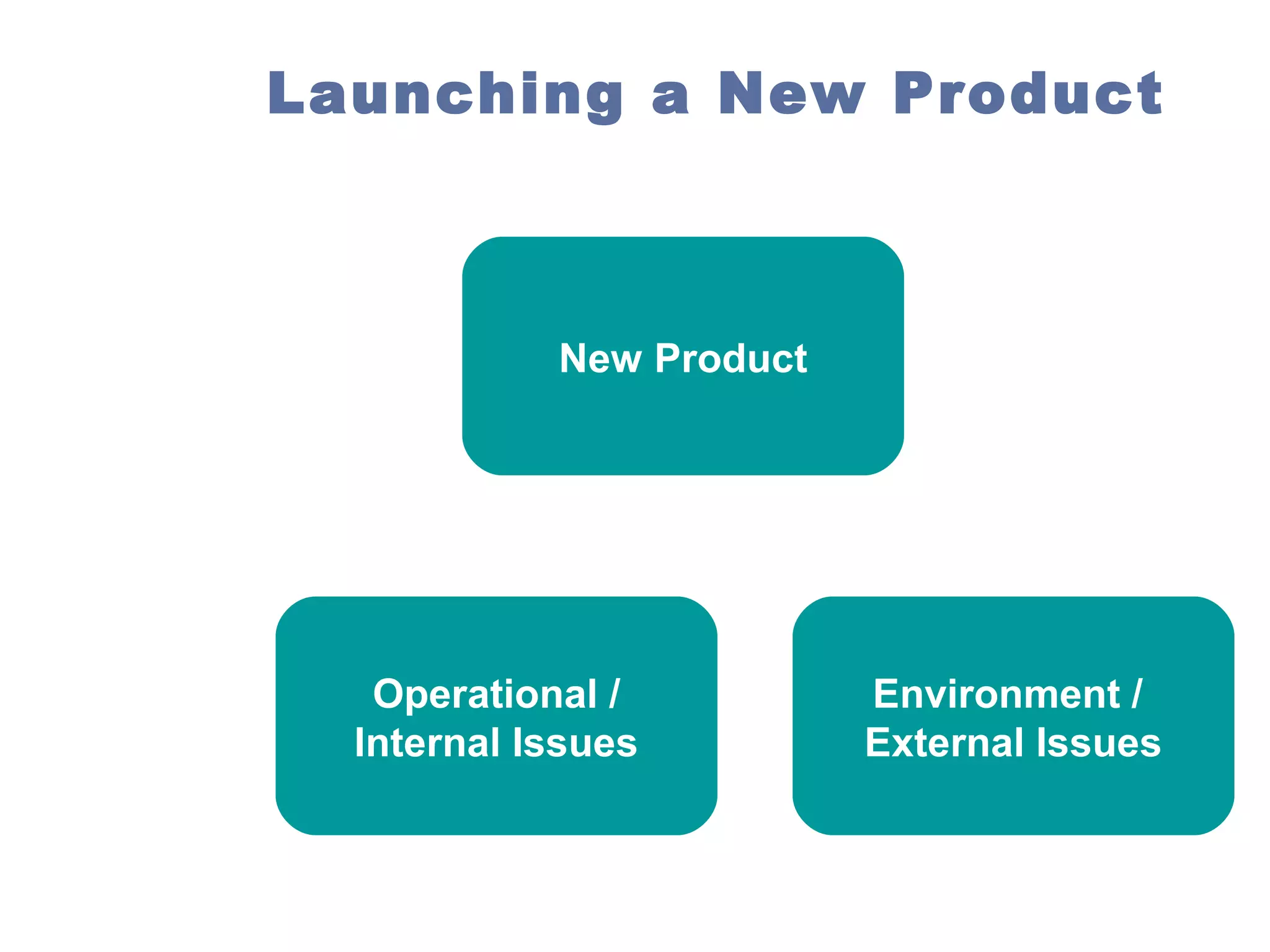
Launching a New Product

New Product

Operational /
Internal Issues

Environment /
External Issues
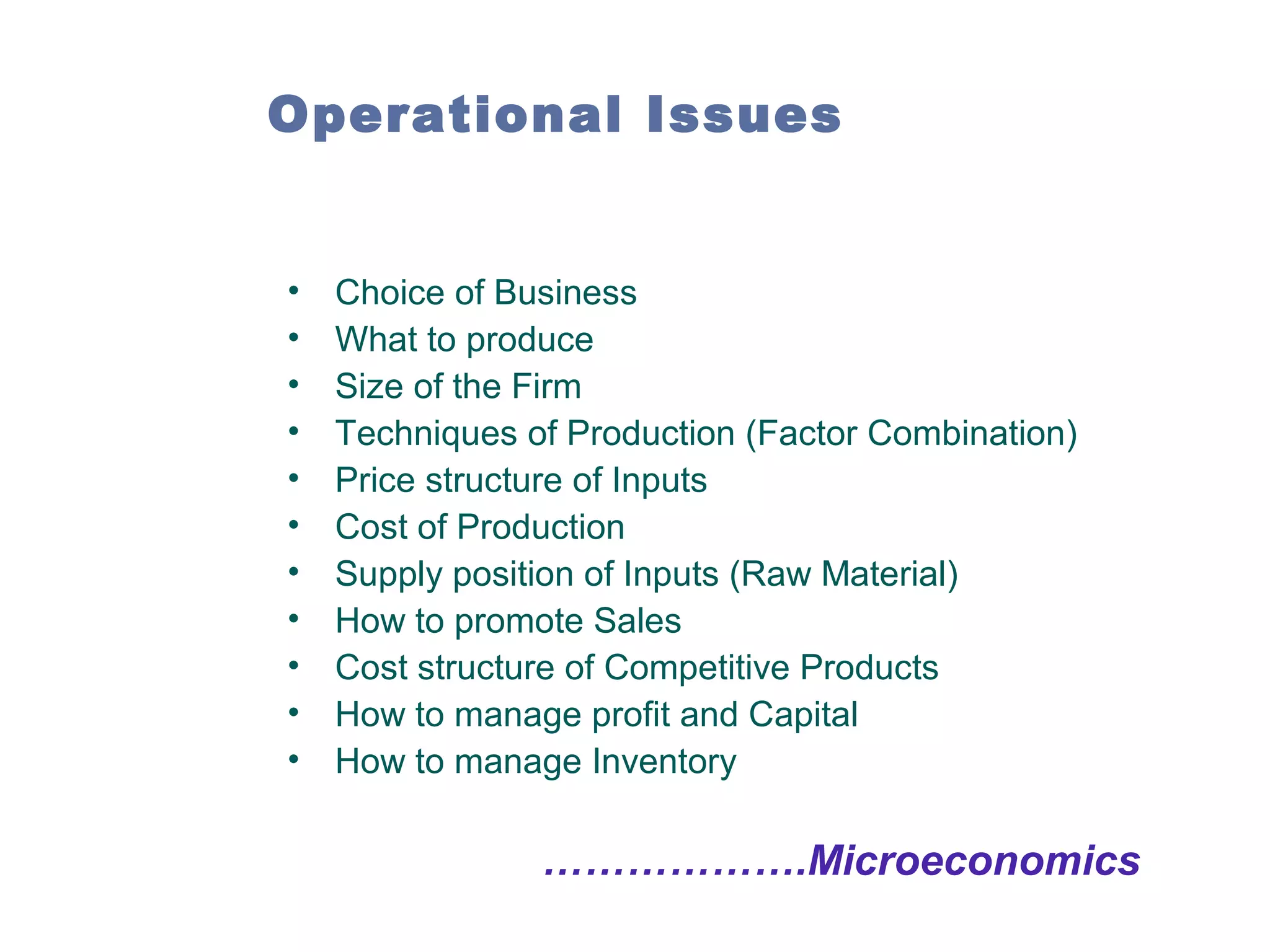
Operational Issues

•
•
•
•
•
•
•
•
•
•
•

Choice of Business
What to produce
Size of the Firm
Techniques of Production (Factor Combination)
Price structure of Inputs
Cost of Production
Supply position of Inputs (Raw Material)
How to promote Sales
Cost structure of Competitive Products
How to manage profit and Capital
How to manage Inventory

……………….Microeconomics
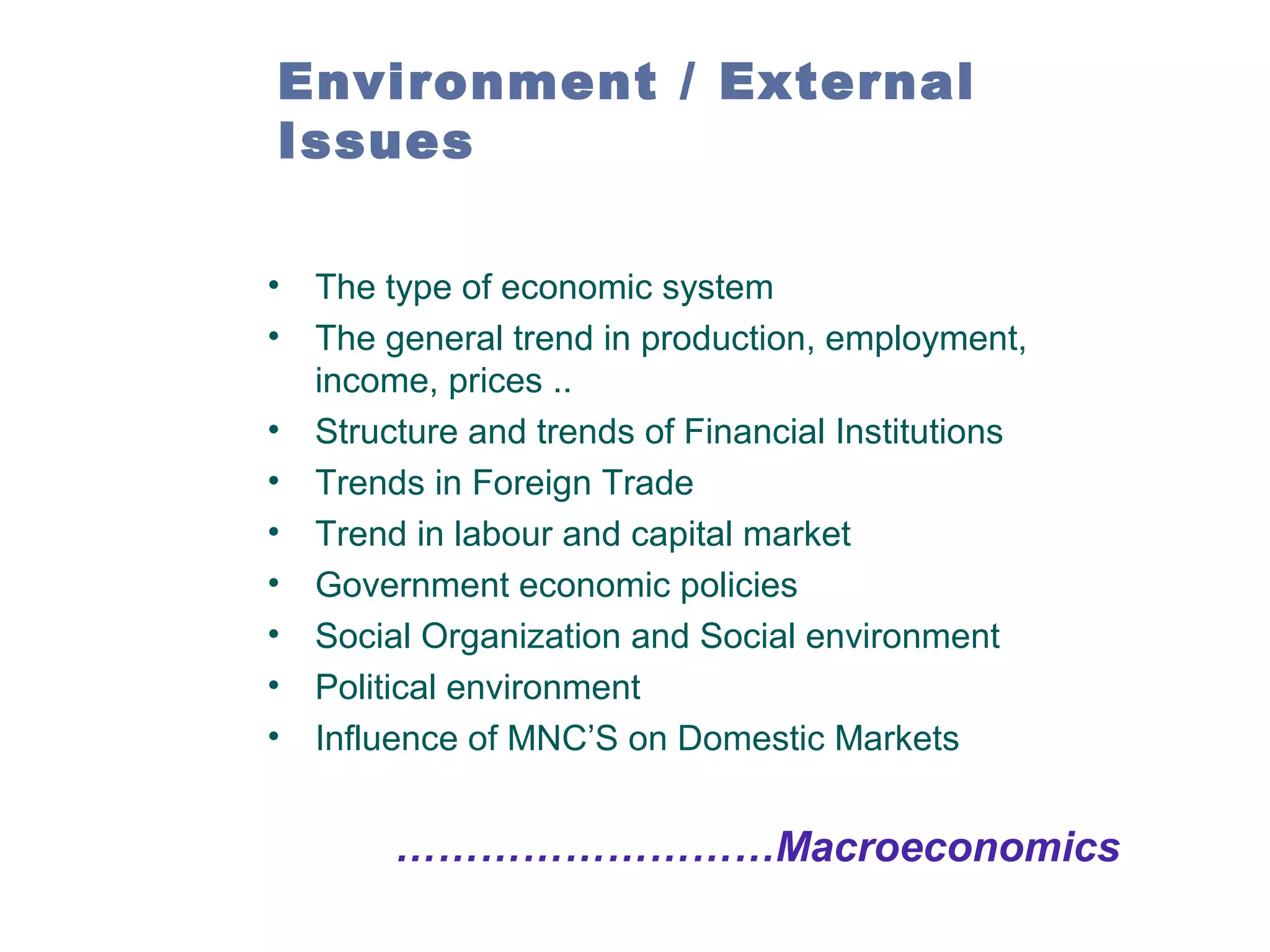
Environment / External
Issues
•
•
•
•
•
•
•
•
•

The type of economic system
The general trend in production, employment,
income, prices ..
Structure and trends of Financial Institutions
Trends in Foreign Trade
Trend in labour and capital market
Government economic policies
Social Organization and Social environment
Political environment
Influence of MNC’S on Domestic Markets

………………………Macroeconomics
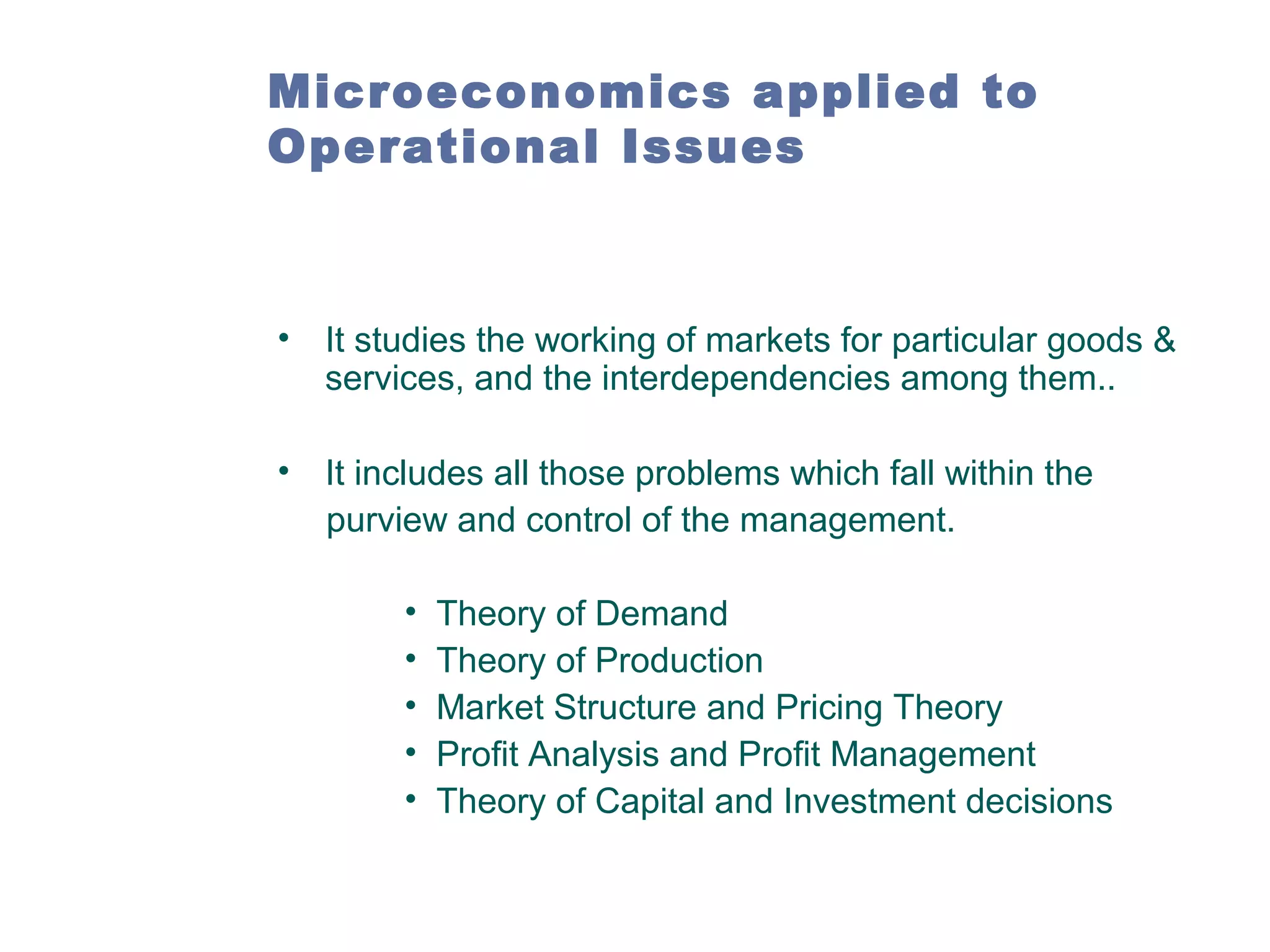
Microeconomics applied to
Operational Issues

•

It studies the working of markets for particular goods &
services, and the interdependencies among them..

•

It includes all those problems which fall within the
purview and control of the management.
•
•
•
•
•

Theory of Demand
Theory of Production
Market Structure and Pricing Theory
Profit Analysis and Profit Management
Theory of Capital and Investment decisions
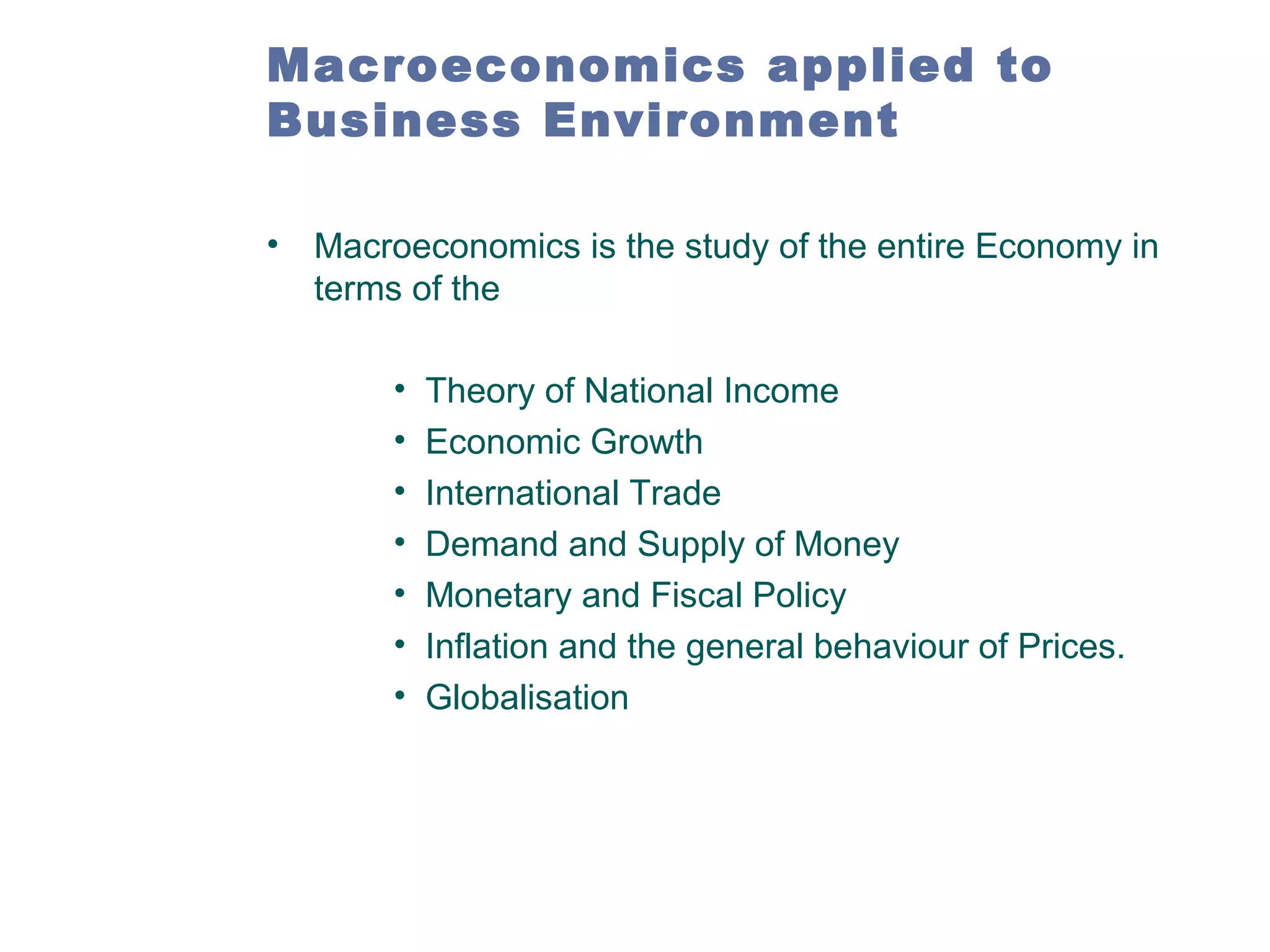
Macroeconomics applied to
Business Environment
• Macroeconomics is the study of the entire Economy in
terms of the
•
•
•
•
•
•
•

Theory of National Income
Economic Growth
International Trade
Demand and Supply of Money
Monetary and Fiscal Policy
Inflation and the general behaviour of Prices.
Globalisation
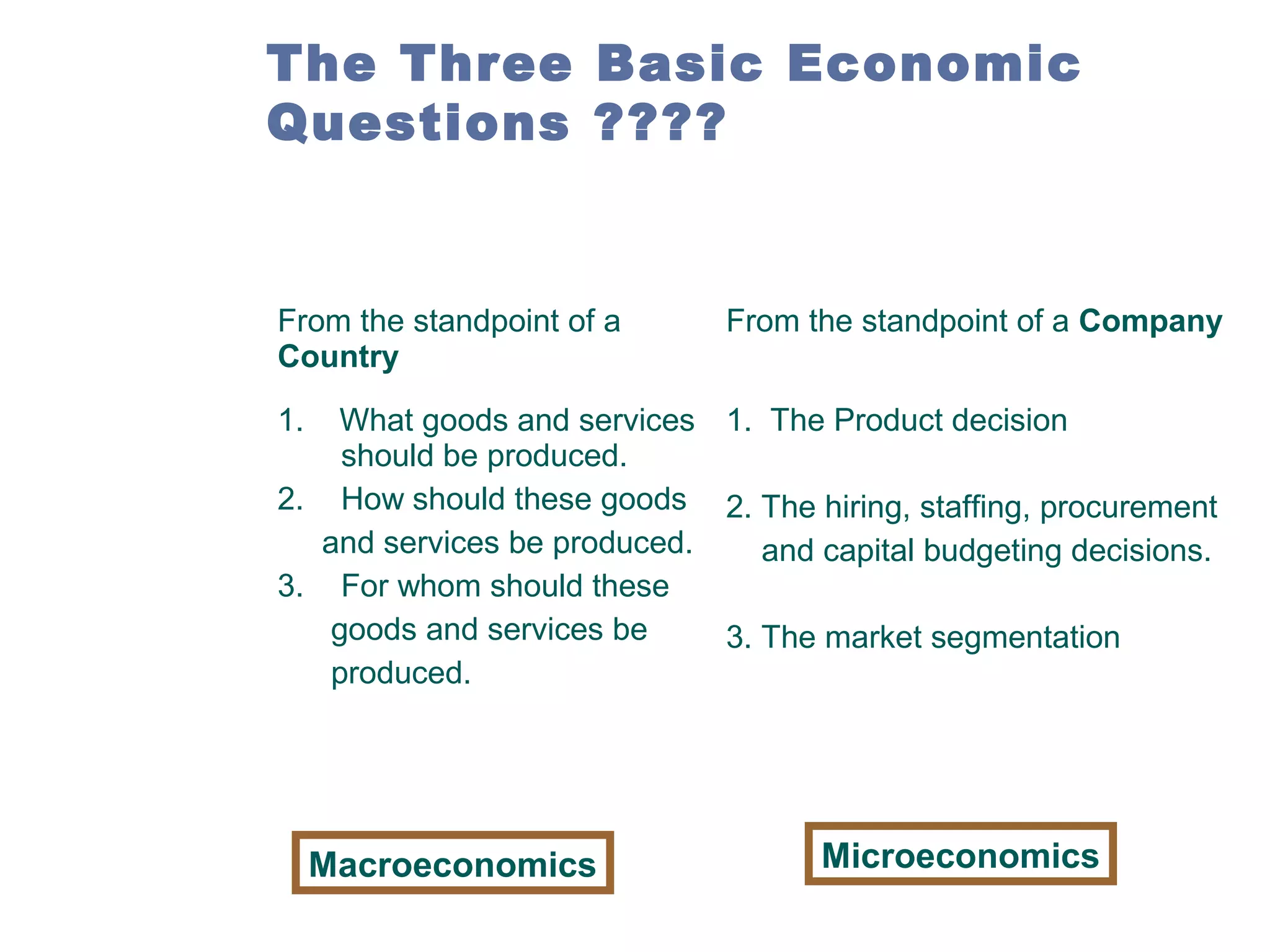
The Three Basic Economic
Questions ????

From the standpoint of a
Country

From the standpoint of a Company

1.

What goods and services 1. The Product decision
should be produced.
2. How should these goods 2. The hiring, staffing, procurement
and services be produced.
and capital budgeting decisions.
3. For whom should these
goods and services be
3. The market segmentation
produced.

Macroeconomics

Microeconomics
Chakravyuh
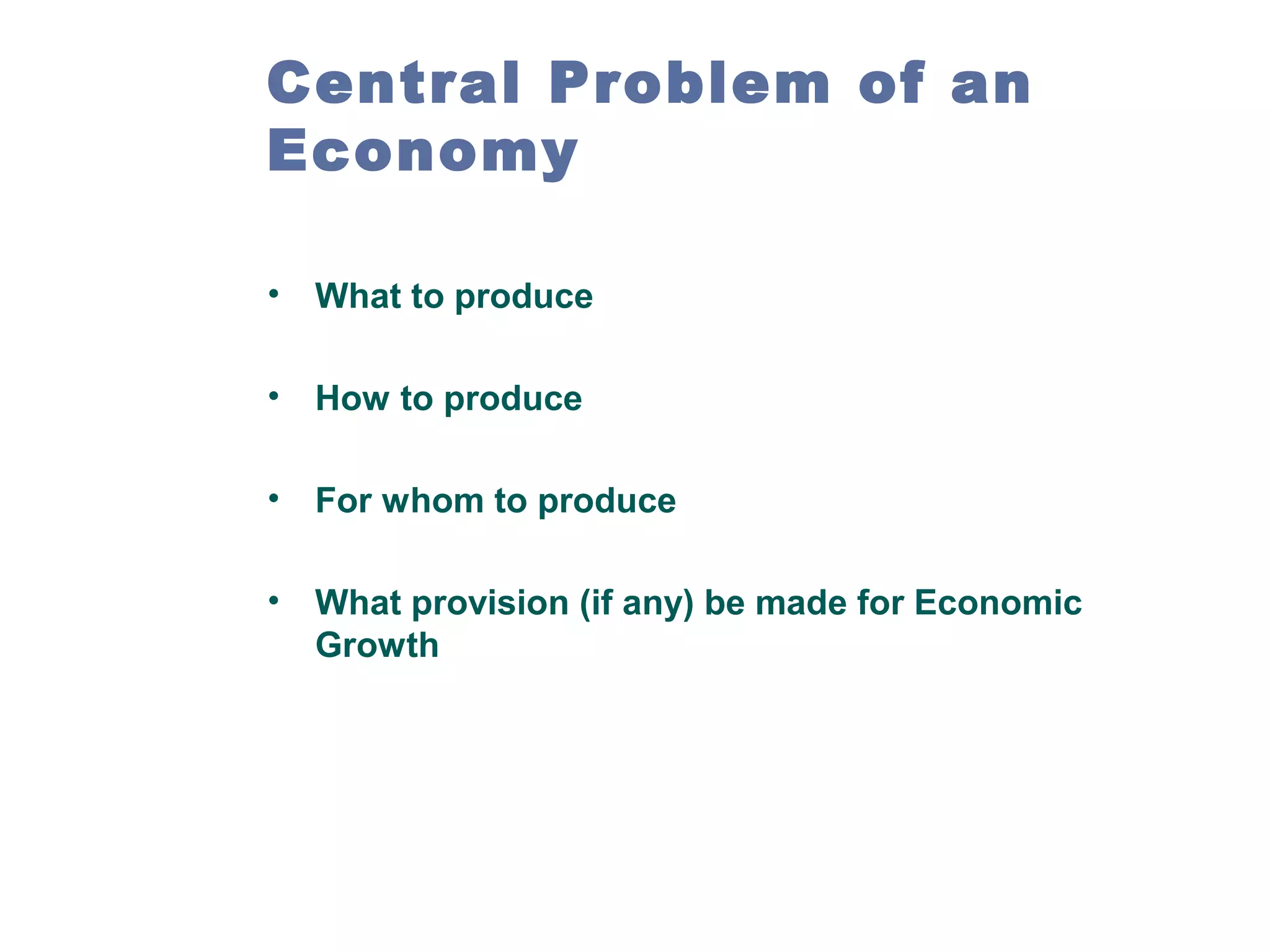
Central Problem of an
Economy
•

What to produce

•

How to produce

•

For whom to produce

•

What provision (if any) be made for Economic
Growth
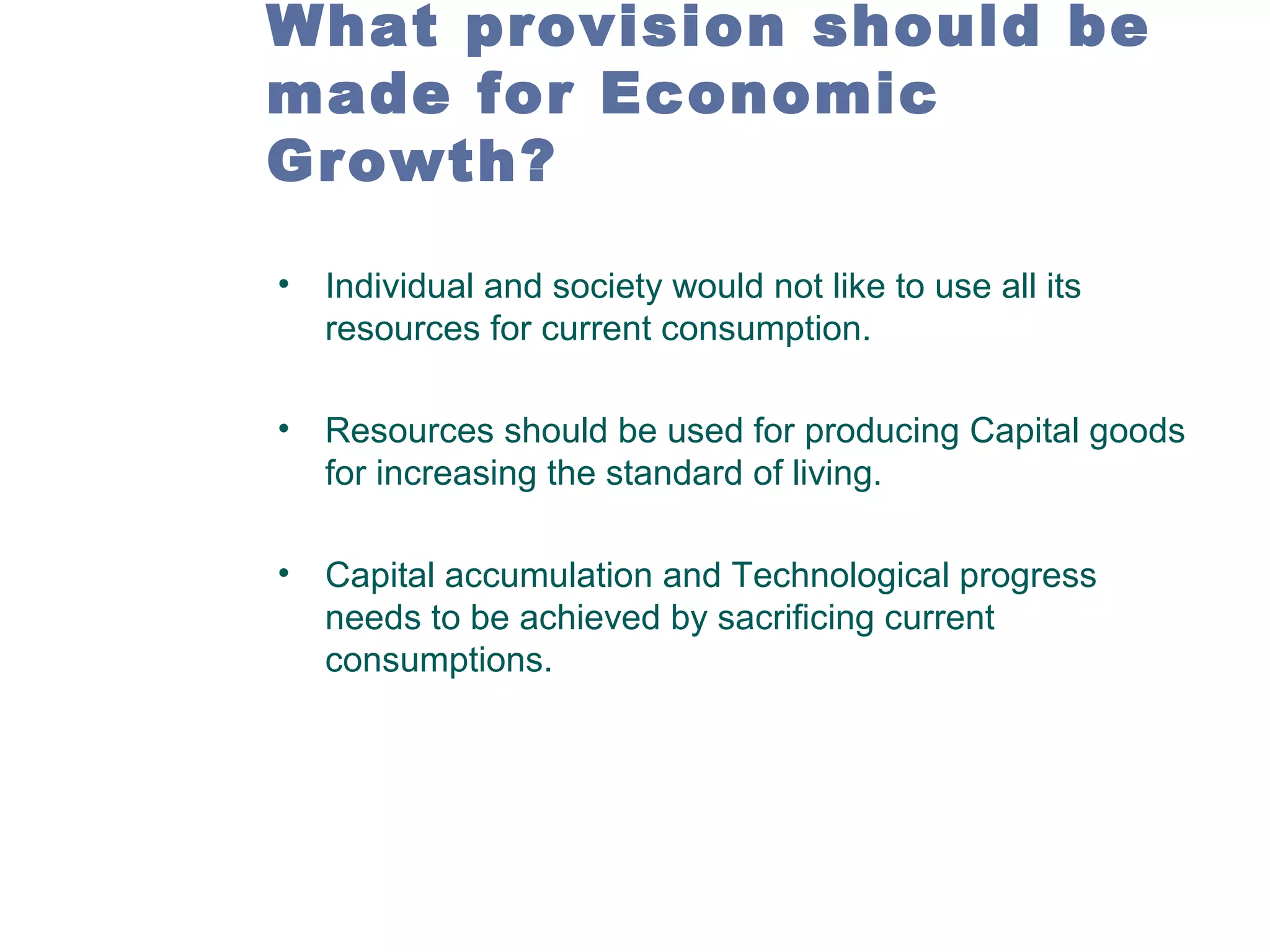
What provision should be
made for Economic
Growth?
•

Individual and society would not like to use all its
resources for current consumption.

•

Resources should be used for producing Capital goods
for increasing the standard of living.

•

Capital accumulation and Technological progress
needs to be achieved by sacrificing current
consumptions.
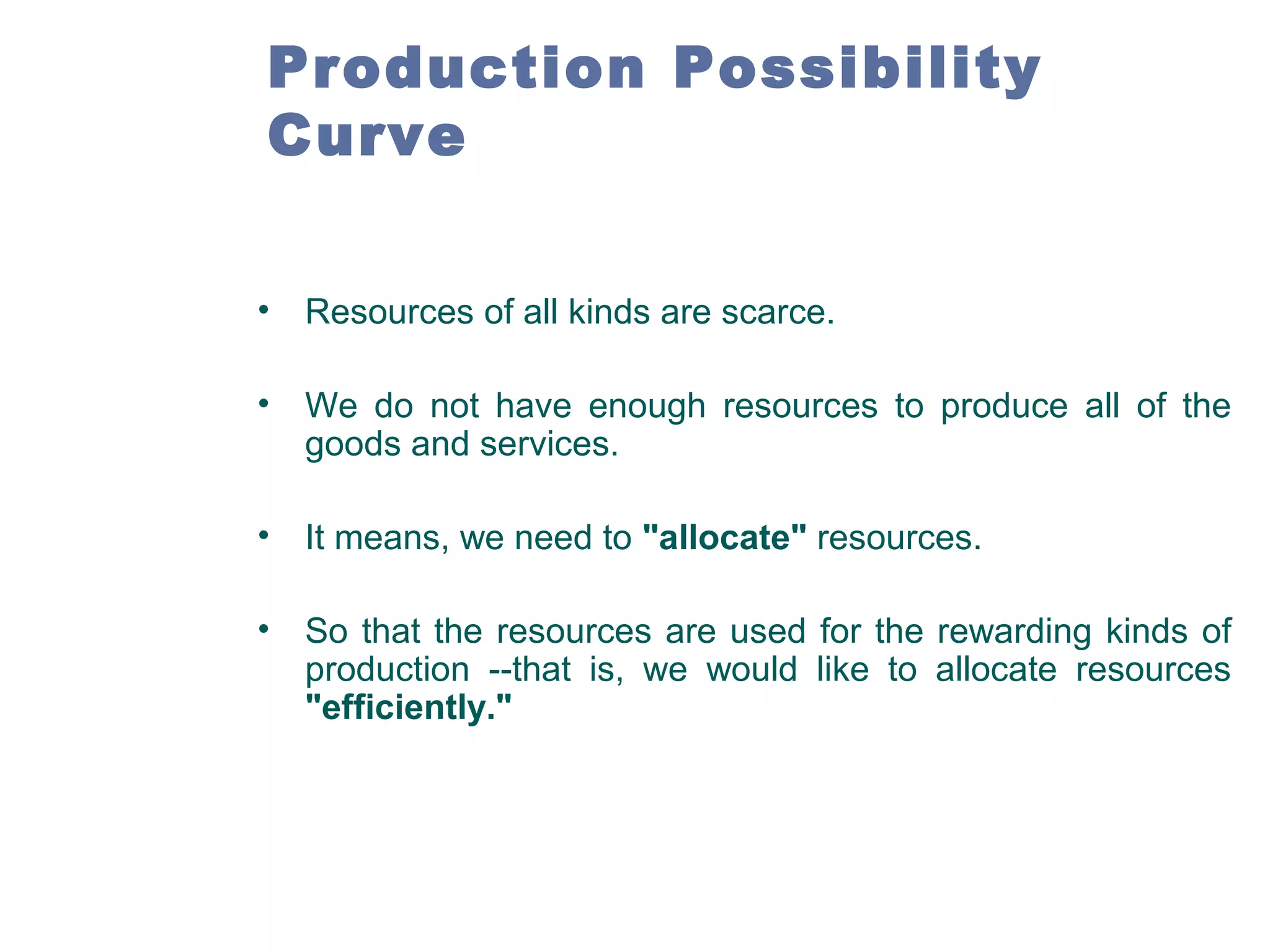
Production Possibility
Curve
•

Resources of all kinds are scarce.

•

We do not have enough resources to produce all of the
goods and services.

•

It means, we need to "allocate" resources.

•

So that the resources are used for the rewarding kinds of
production --that is, we would like to allocate resources
"efficiently."
Choice and Opportunity
Cost
It’s a trade-off.
Whenever we increase the output of one we must
decrease the output of other.
The “Opportunity Cost“ of anything is the value of the
next best alternative that is given up for it.
Cost of any good or service as the value of all the other
goods or services that we must give up in order to
produce it.
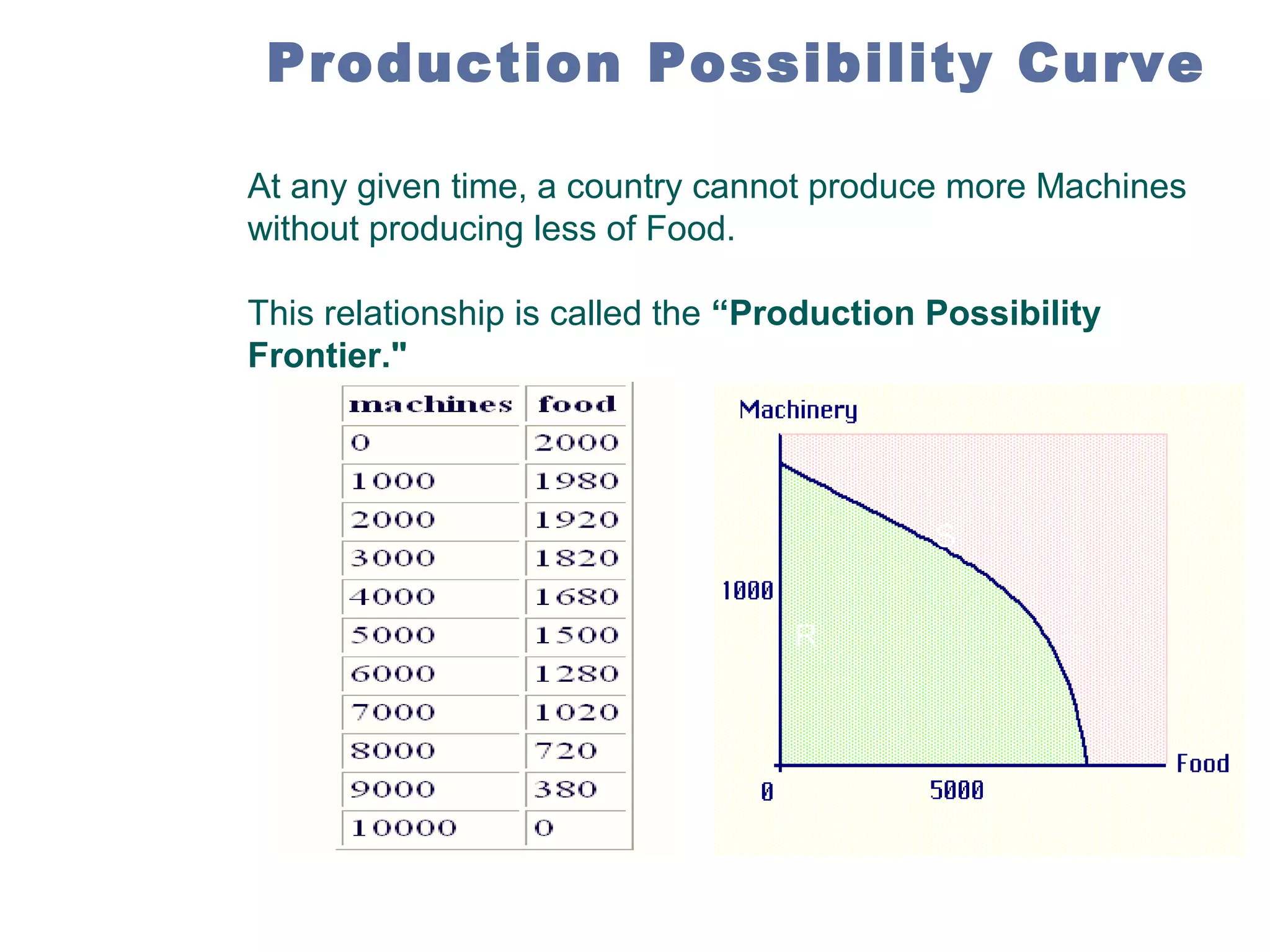
Production Possibility Curve
At any given time, a country cannot produce more Machines
without producing less of Food.
This relationship is called the “Production Possibility
Frontier."

S
R
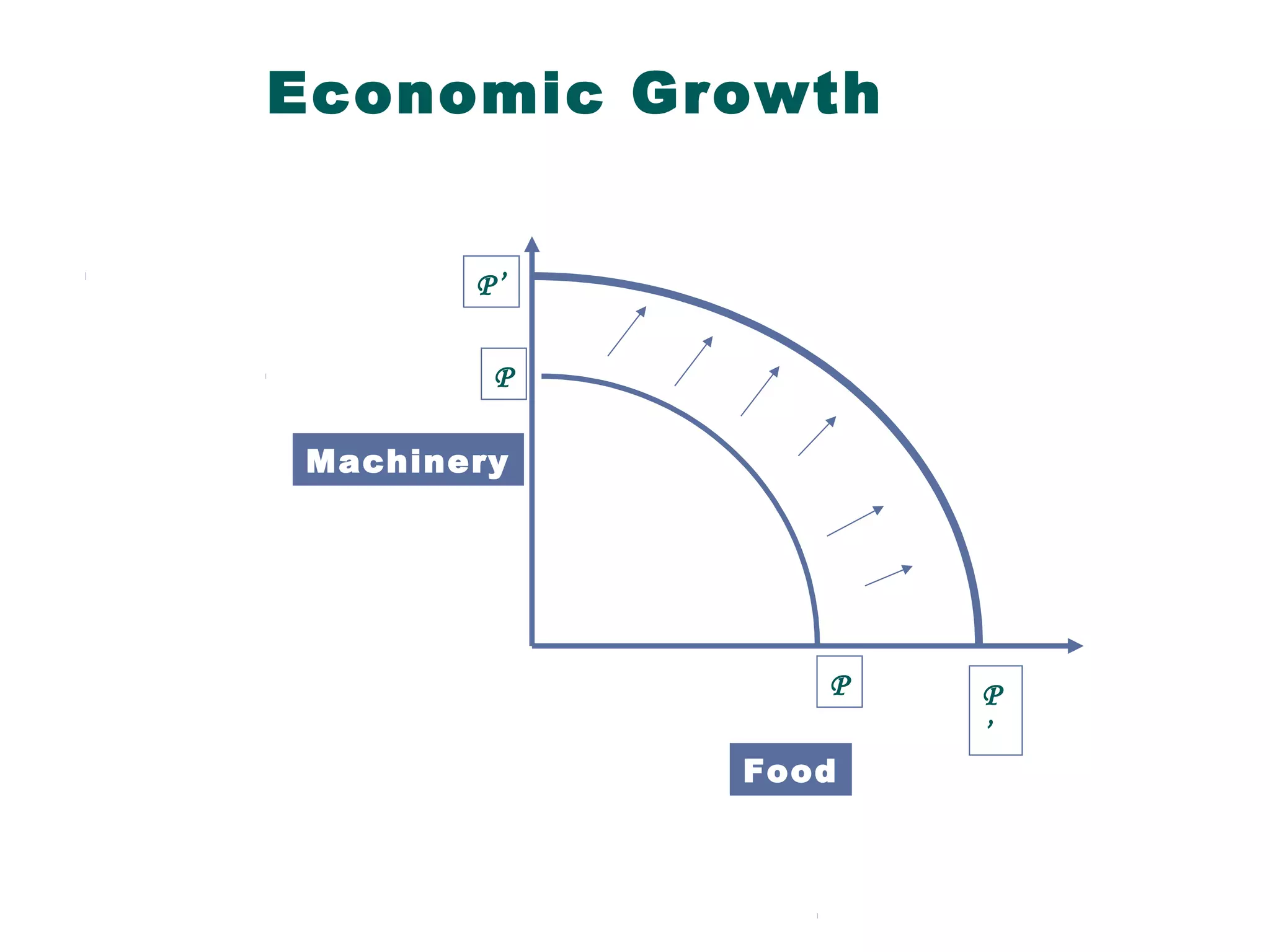
Economic Growth
P’
P
Machinery

P
Food

P
’
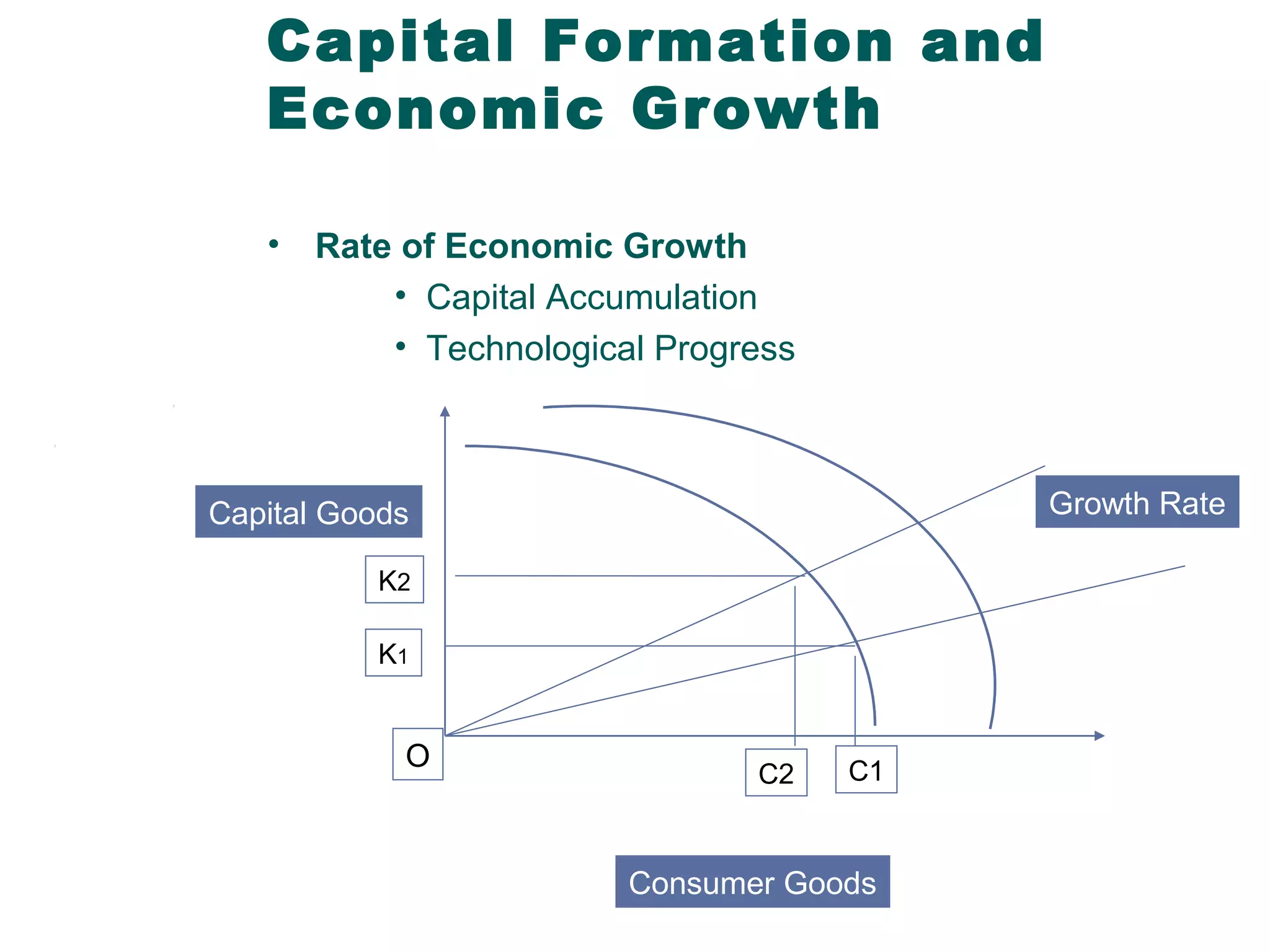
Capital Formation and
Economic Growth
•

Rate of Economic Growth
• Capital Accumulation
• Technological Progress

Growth Rate

Capital Goods
K2
K1

O

C2

C1

Consumer Goods

Manageral economics 1 introduction

  • 1.
  • 2.
    Economics It’s a studyof how people- Individual, households, firms, nation – maximize their gains from their limited resources and opportunities It the study of how men and society choose, with or without the use of money, to employ scarce productive resources which could have alternative uses, to produce various commodities over time and distribute them for consumption now and in the future amongst various people and groups of `society
  • 3.
    … made simpler …SocialScience …studies Human behavior in relation to optimizing allocation of available resources to achieve given ends. …science which deals with wealth. …study of the choice-making behavior of the people. …science of scarcity and choice. Adam Smith Father of Modern Economics
  • 4.
  • 5.
    Why do managers needto know Economics?
  • 6.
    Role of aManager To meet Business Objectives of the Firm Needs to take Judicious Decisions Economics facilitates ‘Decisions’
  • 7.
    Decisions… What kind ofdecisions? What kind of Environment? • To be or not to be • Complex • Ensuring revenue • Continuously evolving • Production planning • Uncertain & risky • Maintaining profitability • Incomplete knowledge • Pricing • Resource allocation • Etc..
  • 8.
    So a managerneeds… Intelligence Experience Intuition Qualitative Analysis of Business data Economic Law & Economic Theories Knowledge of Business Environment
  • 9.
    Four Stages ofChange Stage 1 Cost Plus Stage 2 Cost Managemen t Changing Economics •Competition •Technology •Customers Stage 3 Stage 4 Revenue Manageme nt Revenue Plus
  • 10.
  • 11.
    Managerial Economics Fills TheGAP • Economic Theories – Cannot be applied directly Business decision making. – They do not offer a readymade solution to business problems. Economic Theories: PROVIDE A FRAMEWORK FOR LOGICAL ECONOMIC THINKING AND ANALYSIS
  • 12.
    Managerial Economics It isthe integration of economic theory with business practice for the purpose of facilitating decision making and forward planning by management.
  • 13.
  • 14.
    Business Decision and EconomicAnalysis Objective to be achieved Collection and analysis Developing and analyzing possible course of action Determining and Evaluating the alternative means to achieve Goals Selecting the course of action
  • 15.
    Responsibilities of a ManagerialEconomist – Profit Maximization – To make successful forecast – Minimising the risk involved in uncertainties – Reassurance to the management about the trends – Establish and maintain contacts with data sources – Successful decision making and forward planning
  • 16.
    Launching a NewProduct New Product Operational / Internal Issues Environment / External Issues
  • 17.
    Operational Issues • • • • • • • • • • • Choice ofBusiness What to produce Size of the Firm Techniques of Production (Factor Combination) Price structure of Inputs Cost of Production Supply position of Inputs (Raw Material) How to promote Sales Cost structure of Competitive Products How to manage profit and Capital How to manage Inventory ……………….Microeconomics
  • 18.
    Environment / External Issues • • • • • • • • • Thetype of economic system The general trend in production, employment, income, prices .. Structure and trends of Financial Institutions Trends in Foreign Trade Trend in labour and capital market Government economic policies Social Organization and Social environment Political environment Influence of MNC’S on Domestic Markets ………………………Macroeconomics
  • 19.
    Microeconomics applied to OperationalIssues • It studies the working of markets for particular goods & services, and the interdependencies among them.. • It includes all those problems which fall within the purview and control of the management. • • • • • Theory of Demand Theory of Production Market Structure and Pricing Theory Profit Analysis and Profit Management Theory of Capital and Investment decisions
  • 20.
    Macroeconomics applied to BusinessEnvironment • Macroeconomics is the study of the entire Economy in terms of the • • • • • • • Theory of National Income Economic Growth International Trade Demand and Supply of Money Monetary and Fiscal Policy Inflation and the general behaviour of Prices. Globalisation
  • 21.
    The Three BasicEconomic Questions ???? From the standpoint of a Country From the standpoint of a Company 1. What goods and services 1. The Product decision should be produced. 2. How should these goods 2. The hiring, staffing, procurement and services be produced. and capital budgeting decisions. 3. For whom should these goods and services be 3. The market segmentation produced. Macroeconomics Microeconomics
  • 22.
  • 23.
    Central Problem ofan Economy • What to produce • How to produce • For whom to produce • What provision (if any) be made for Economic Growth
  • 24.
    What provision shouldbe made for Economic Growth? • Individual and society would not like to use all its resources for current consumption. • Resources should be used for producing Capital goods for increasing the standard of living. • Capital accumulation and Technological progress needs to be achieved by sacrificing current consumptions.
  • 25.
    Production Possibility Curve • Resources ofall kinds are scarce. • We do not have enough resources to produce all of the goods and services. • It means, we need to "allocate" resources. • So that the resources are used for the rewarding kinds of production --that is, we would like to allocate resources "efficiently."
  • 26.
    Choice and Opportunity Cost It’sa trade-off. Whenever we increase the output of one we must decrease the output of other. The “Opportunity Cost“ of anything is the value of the next best alternative that is given up for it. Cost of any good or service as the value of all the other goods or services that we must give up in order to produce it.
  • 27.
    Production Possibility Curve Atany given time, a country cannot produce more Machines without producing less of Food. This relationship is called the “Production Possibility Frontier." S R
  • 28.
  • 29.
    Capital Formation and EconomicGrowth • Rate of Economic Growth • Capital Accumulation • Technological Progress Growth Rate Capital Goods K2 K1 O C2 C1 Consumer Goods