What is Brain Computer Interface - BCI
History
Overview
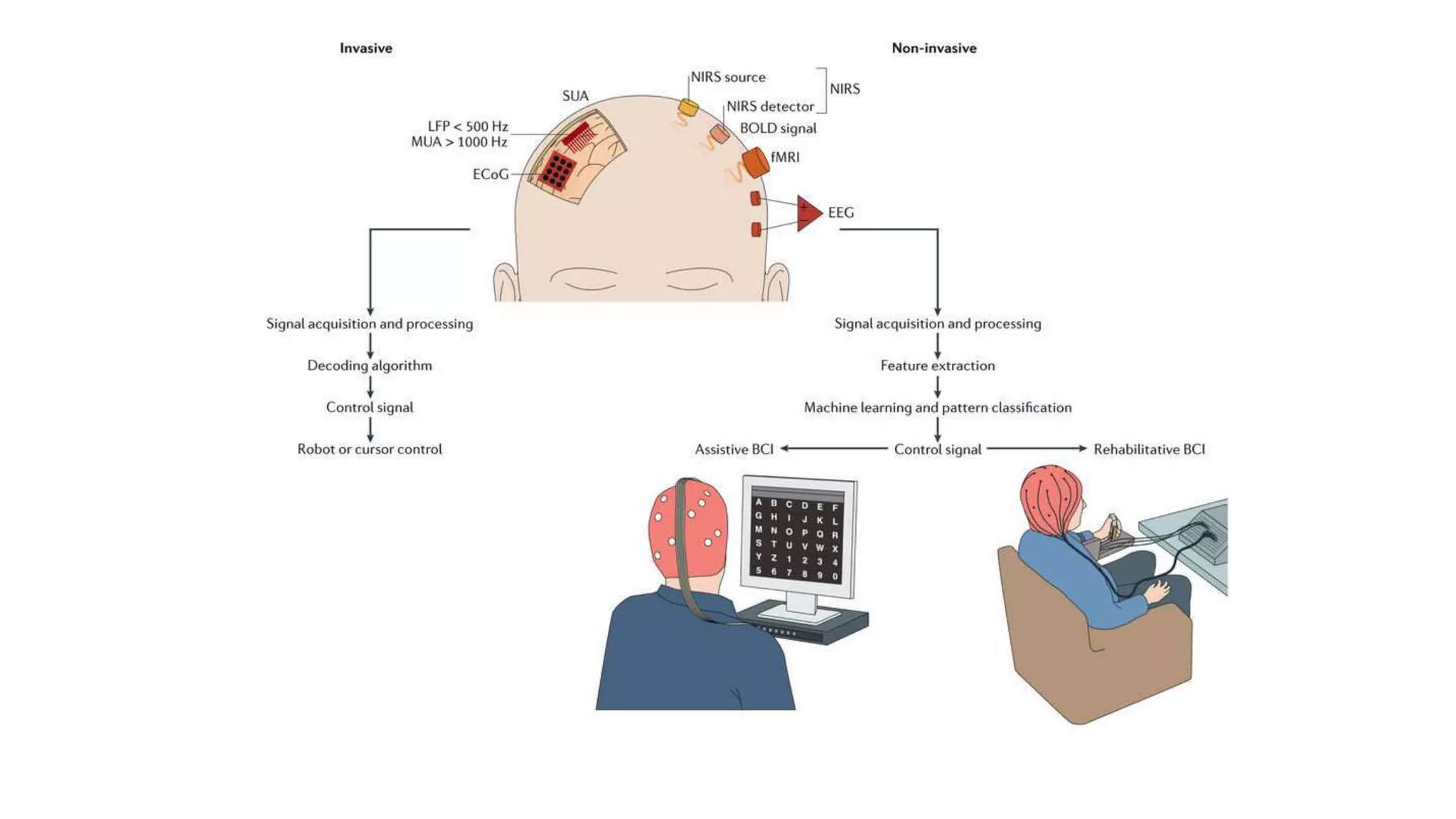
Types
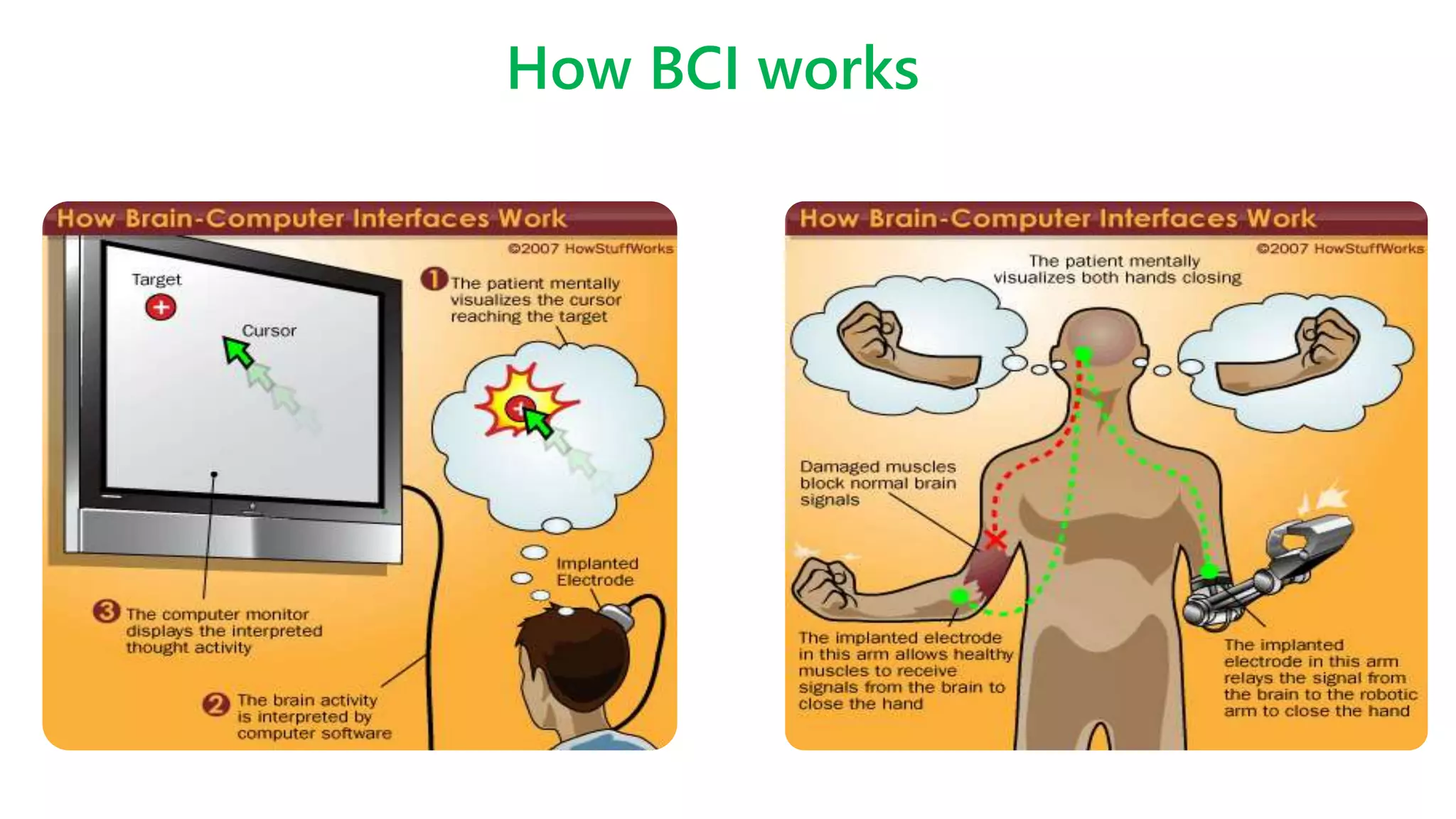
How BCI works
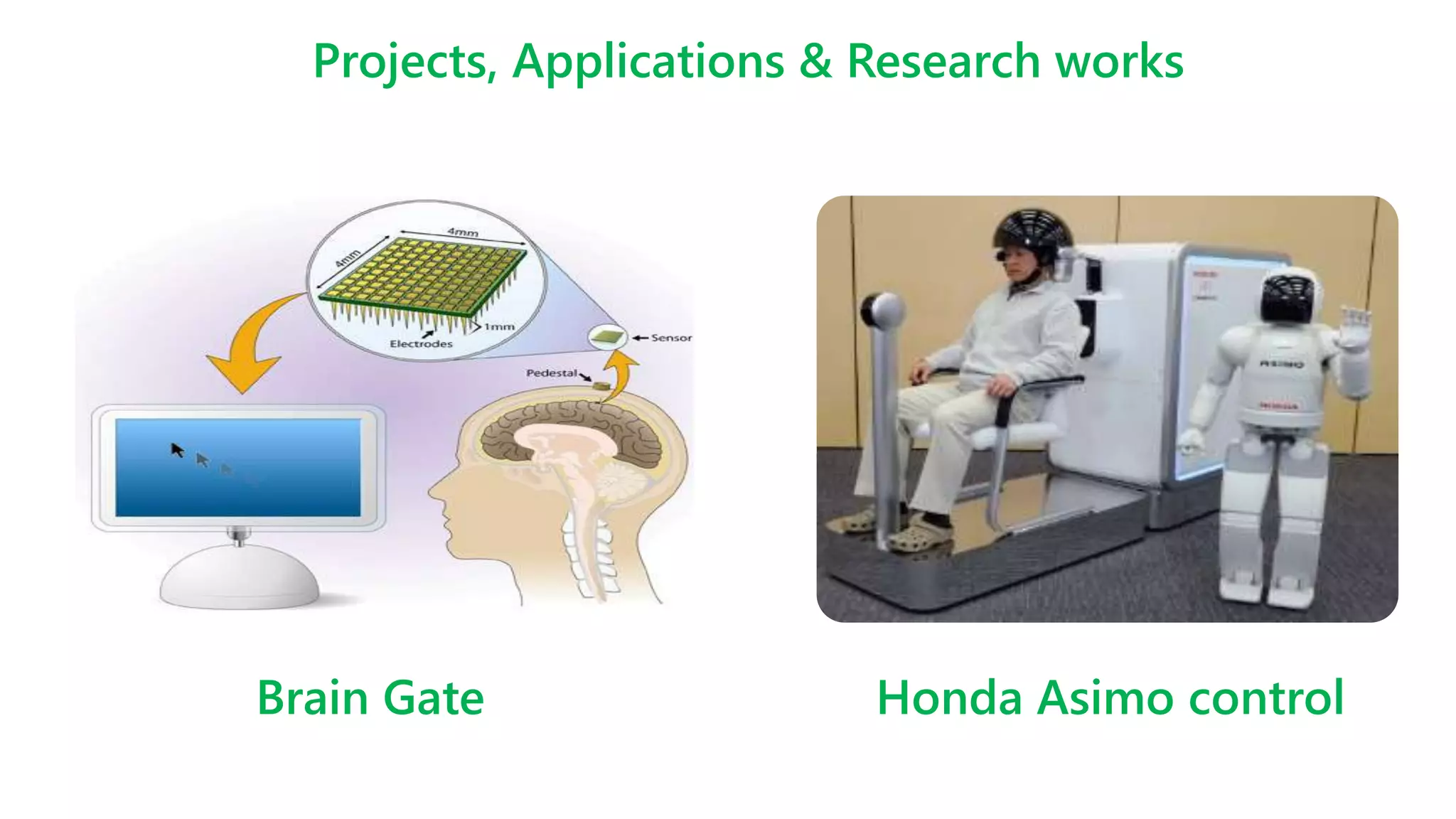
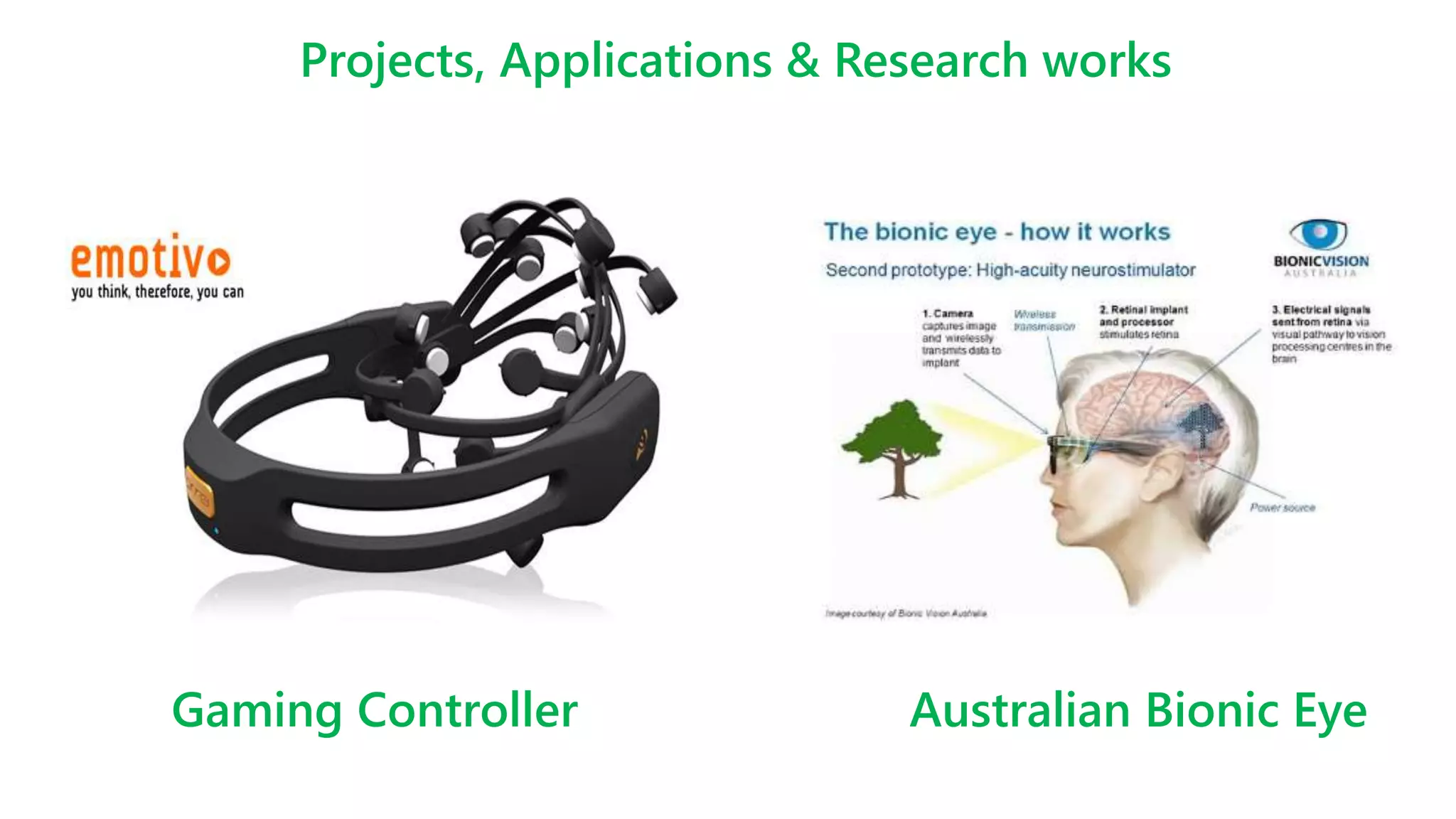
BCI Projects, Applications & Research works
Future
Conclusion
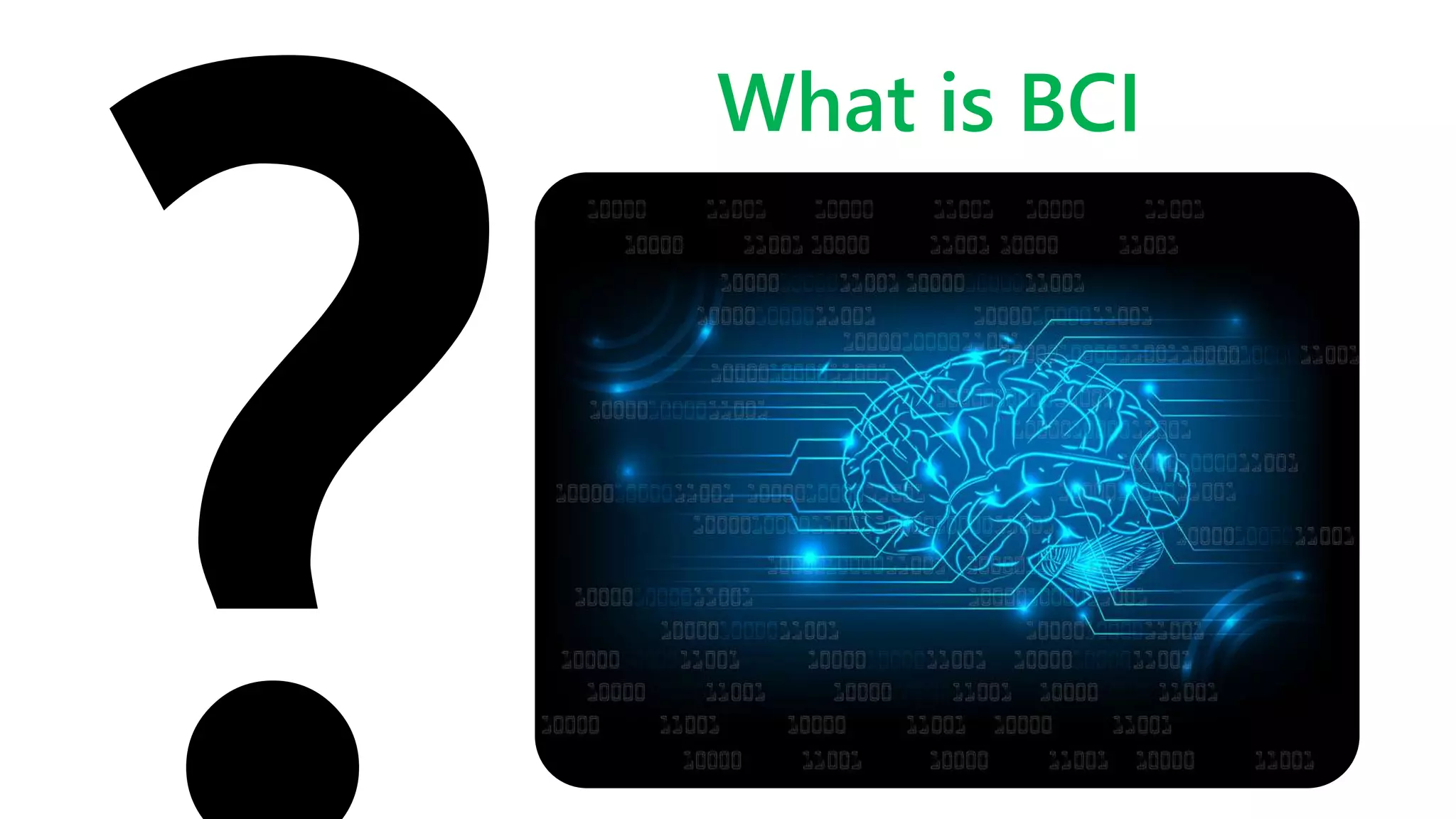
What is BCI
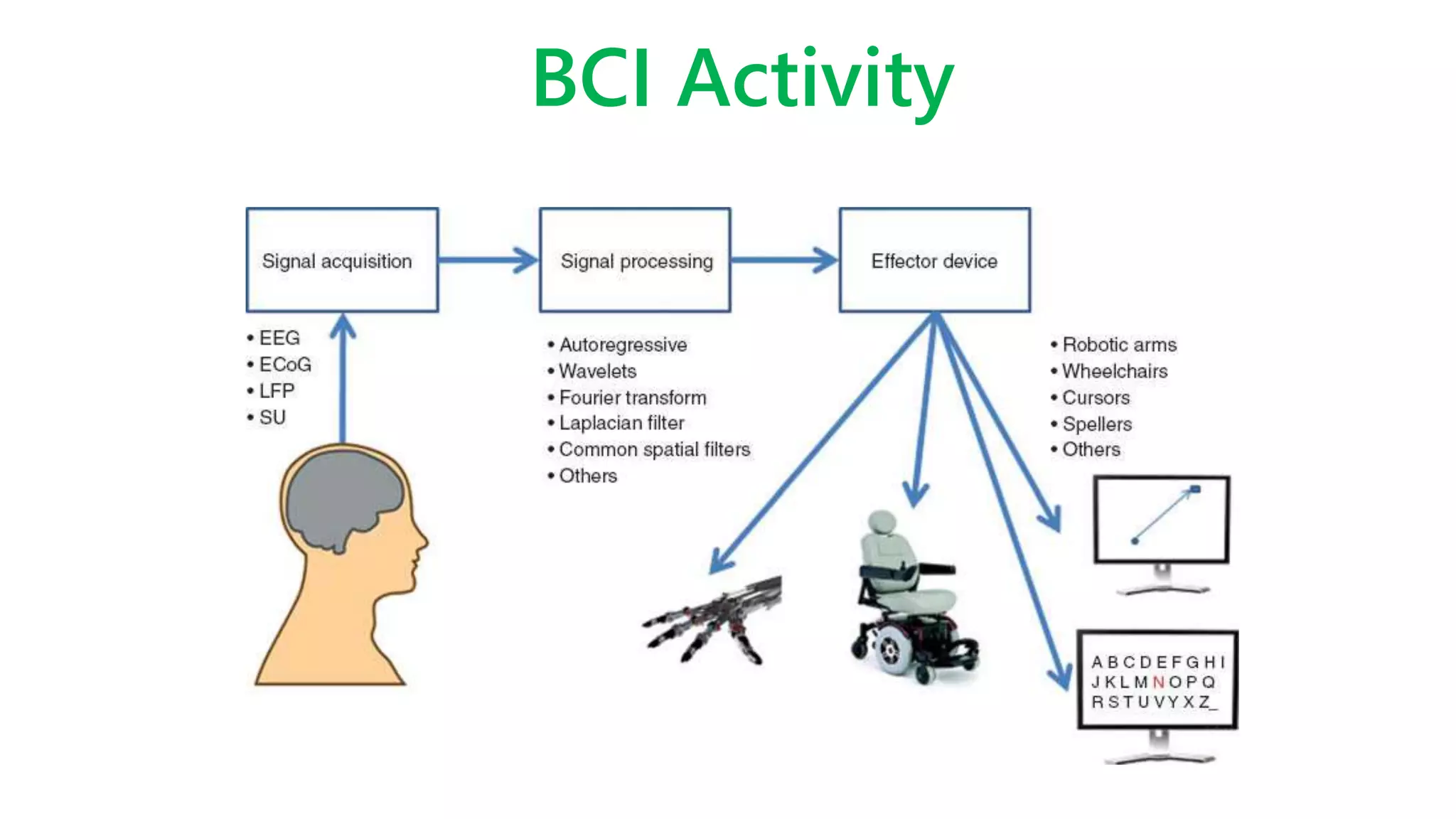
BCI Activity
In 1924, Hans Berger first recorded Human Brain Activity by EEG
In 1970, Research on BCIs began at the UCLA
Major Historical
Event
In 1978, a prototype was implanted into a man blinded in
adulthood
First devices implanted on Humans in 1990s
Matthew Nagle first used BCIs to restore functionality in 2005
Duke University researchers successfully connected the brain of
Two rats
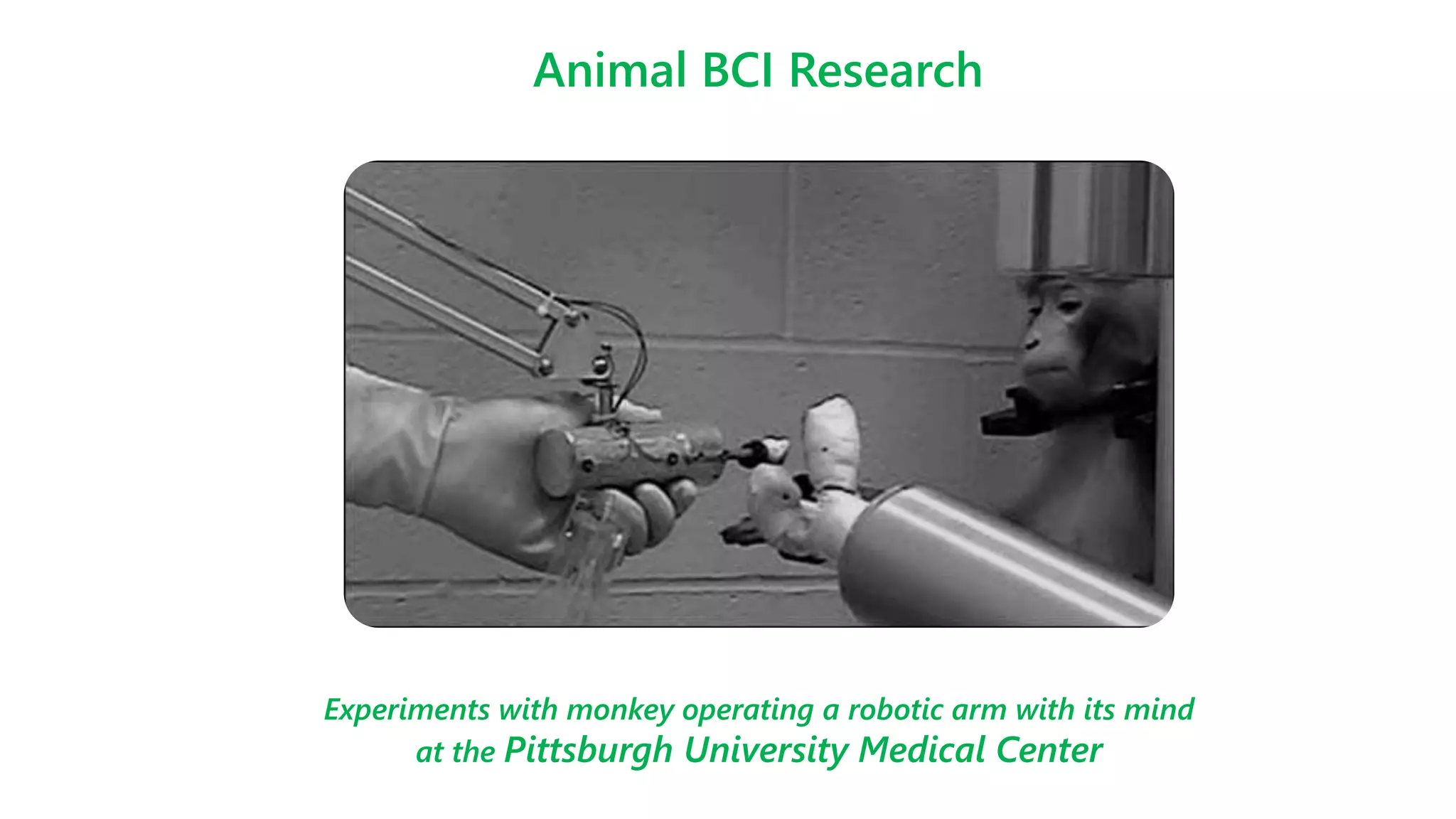
Experiments with monkey operating a robotic arm with its mind
at the Pittsburgh University Medical Center
Animal BCI Research
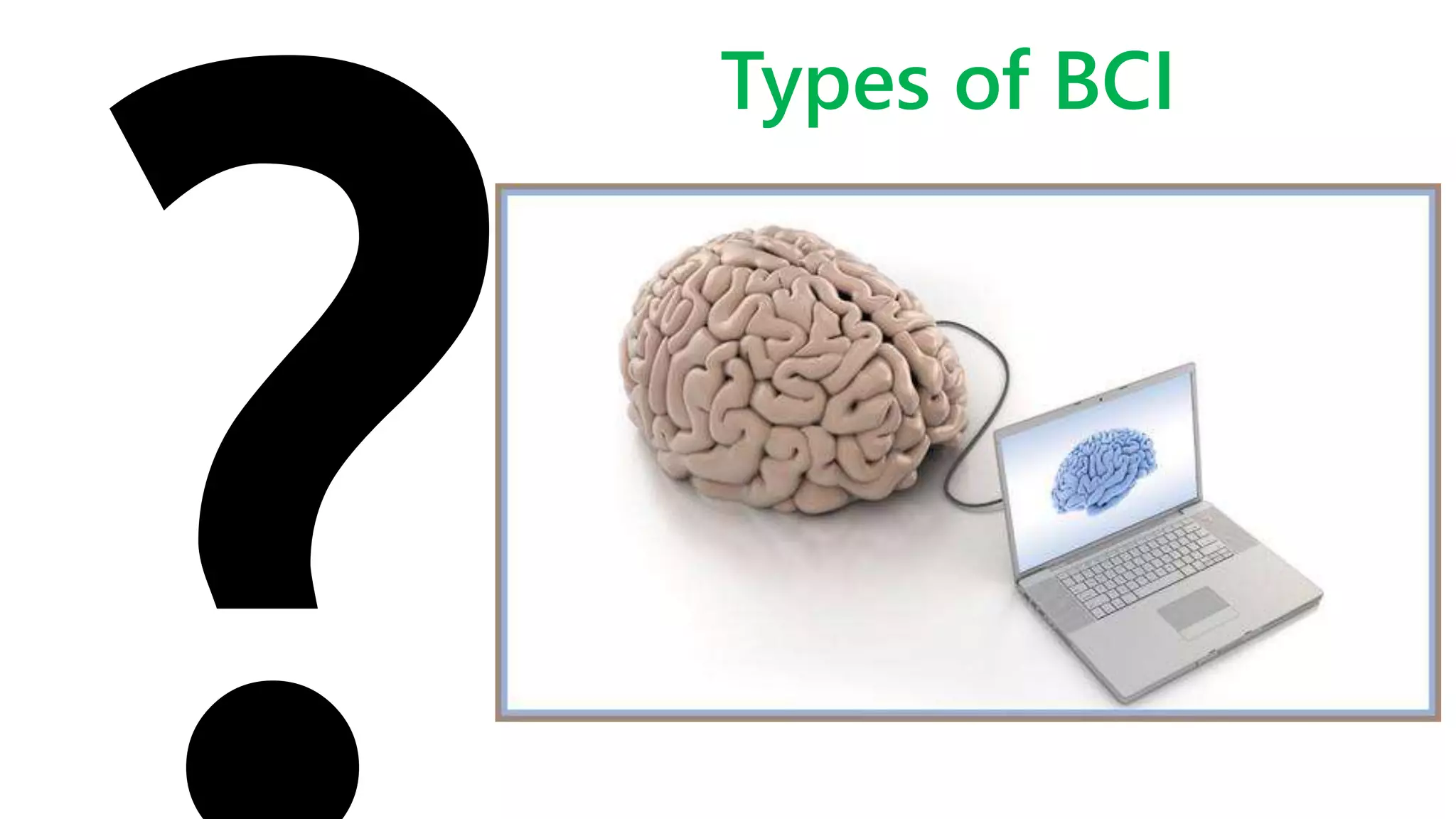
Types of BCI
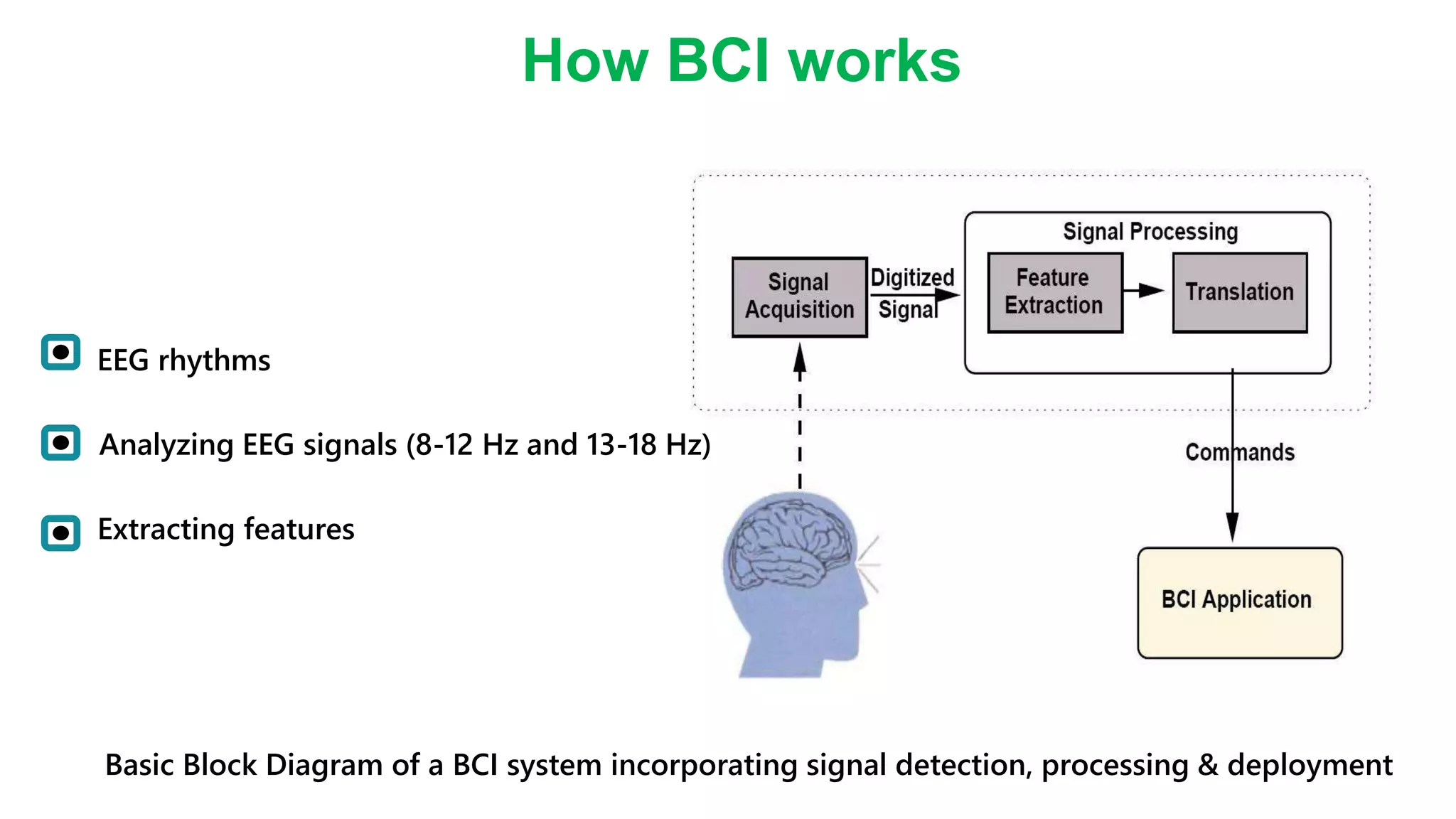
How BCI works
Basic Block Diagram of a BCI system incorporating signal detection, processing & deployment
EEG rhythms
Analyzing EEG signals (8-12 Hz and 13-18 Hz)
Extracting features
How BCI works
Projects, Applications & Research works
Honda Asimo controlBrain Gate
Australian Bionic EyeGaming Controller
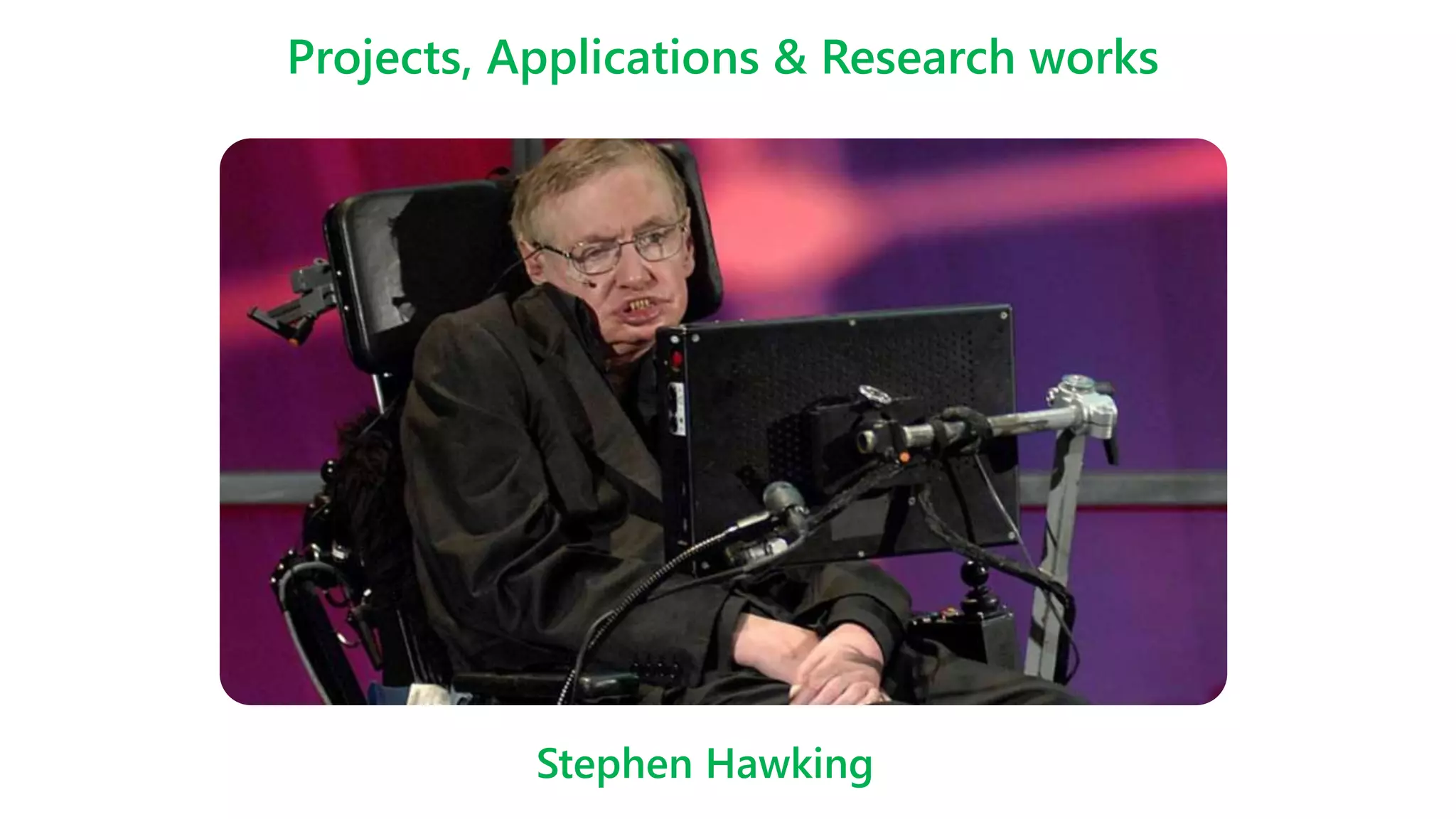
Projects, Applications & Research works
Stephen Hawking
Applicable in wide variety of areas medically or commercially
Control of sub vocalization
Future of BCI Advance EEG processing
Active learning mechanism
Internet access of brain
Neural control prosthetics
Conclusion
BCI is an advancing technology promising paradigm shift in areas
like Machine Control, Human Enhancement, Virtual reality etc.
so, it is potentially high impact technology.
Brian Johnson CEO of Kernel(a company developing neuroprosthetic device)
has said on Black channel -
We are now in the era of self-directed evolution. Genetically,
biologically, neurologically, and physically. I’m just waiting for
a nation-state to raise its hand and say –
“We are the home for human potential.
Bring your technologies and let’s do it.”
References
 https://www.wired.com/story/why-you-will-one-day-have-a-chip-in-your-brain/
 http://www.techradar.com/news/computing/the-future-of-brain-computer-interfaces-revealed-1101287
 https://www.psychologytoday.com/blog/brain-bytes/201704/brain-computer-interfaces-and-the-future-humanity
 https://blog.swiftkey.com/swiftkey-reveals-role-professor-stephen-hawkings-communication-system/
 https://www.space.com/7698-real-science-avatar.html
 https://en.wikipedia.org/wiki/Brain%E2%80%93computer_interface

Brain Computer Interface (BCI)

  • 1.
    What is BrainComputer Interface - BCI History Overview Types How BCI works BCI Projects, Applications & Research works Future Conclusion
  • 2.
  • 3.
  • 4.
    In 1924, HansBerger first recorded Human Brain Activity by EEG In 1970, Research on BCIs began at the UCLA Major Historical Event In 1978, a prototype was implanted into a man blinded in adulthood First devices implanted on Humans in 1990s Matthew Nagle first used BCIs to restore functionality in 2005 Duke University researchers successfully connected the brain of Two rats
  • 5.
    Experiments with monkeyoperating a robotic arm with its mind at the Pittsburgh University Medical Center Animal BCI Research
  • 6.
  • 8.
    How BCI works BasicBlock Diagram of a BCI system incorporating signal detection, processing & deployment EEG rhythms Analyzing EEG signals (8-12 Hz and 13-18 Hz) Extracting features
  • 9.
  • 10.
    Projects, Applications &Research works Honda Asimo controlBrain Gate
  • 11.
    Australian Bionic EyeGamingController Projects, Applications & Research works
  • 12.
    Projects, Applications &Research works Stephen Hawking
  • 13.
    Applicable in widevariety of areas medically or commercially Control of sub vocalization Future of BCI Advance EEG processing Active learning mechanism Internet access of brain Neural control prosthetics
  • 14.
    Conclusion BCI is anadvancing technology promising paradigm shift in areas like Machine Control, Human Enhancement, Virtual reality etc. so, it is potentially high impact technology. Brian Johnson CEO of Kernel(a company developing neuroprosthetic device) has said on Black channel - We are now in the era of self-directed evolution. Genetically, biologically, neurologically, and physically. I’m just waiting for a nation-state to raise its hand and say – “We are the home for human potential. Bring your technologies and let’s do it.”
  • 15.
    References  https://www.wired.com/story/why-you-will-one-day-have-a-chip-in-your-brain/  http://www.techradar.com/news/computing/the-future-of-brain-computer-interfaces-revealed-1101287 https://www.psychologytoday.com/blog/brain-bytes/201704/brain-computer-interfaces-and-the-future-humanity  https://blog.swiftkey.com/swiftkey-reveals-role-professor-stephen-hawkings-communication-system/  https://www.space.com/7698-real-science-avatar.html  https://en.wikipedia.org/wiki/Brain%E2%80%93computer_interface