

PRESENTATION LAYOUT
 Introduction to antimicrobial drugs
 Classification of antimicrobial drugs
 Antibacterial drugs:
- Classification
- Indications
- Side effects
 Antibacterial Resistance
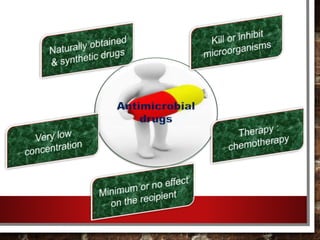
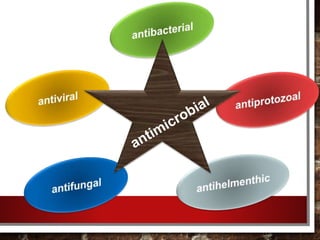
 Antimicrobial drugs are chemotherapeutic drugs
 Two categories:
– Antibiotics : Antimicrobial drugs produced by
microorganisms
– Synthetic drugs : Antimicrobial drugs
synthesized in the lab
Have highly selective toxicity to the pathogenic
microorganisms in host body
Have no or less toxicity to the host
Low propensity for development of resistance
Not induce hypersensitivies in the host
Have rapid and extensive tissue distribution
Be free of interactions with other drugs
Be relatively inexpensive
Ideal antimicrobial drug
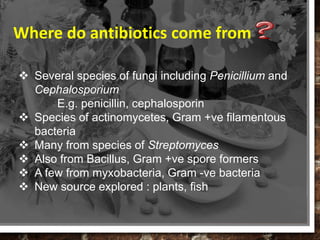
Where do antibiotics come from
 Several species of fungi including Penicillium and
Cephalosporium
E.g. penicillin, cephalosporin
 Species of actinomycetes, Gram +ve filamentous
bacteria
 Many from species of Streptomyces
 Also from Bacillus, Gram +ve spore formers
 A few from myxobacteria, Gram -ve bacteria
 New source explored : plants, fish
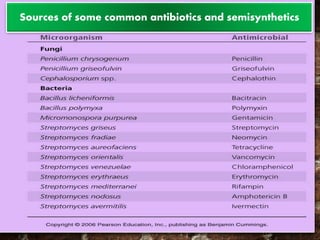
Sources of some common antibiotics and semisynthetics
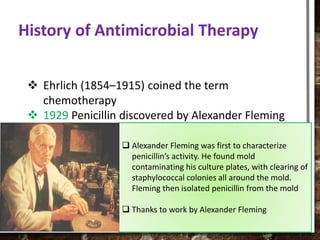
 Ehrlich (1854–1915) coined the term
chemotherapy
 1929 Penicillin discovered by Alexander Fleming
 1940 Florey and Chain mass produced penicillin
for war time use, becomes available to the public
 1935 Sulfa drugs discovered
 1944 Streptomycin discovered by Waksman from
Streptomyces griseus
History of Antimicrobial Therapy
 Alexander Fleming was first to characterize
penicillin’s activity. He found mold
contaminating his culture plates, with clearing of
staphylococcal colonies all around the mold.
Fleming then isolated penicillin from the mold
 Thanks to work by Alexander Fleming
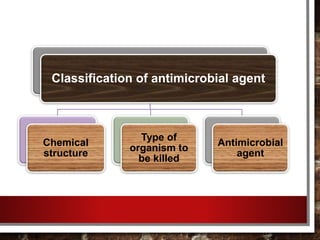
Classification of antimicrobial agent
Chemical
structure
Type of
organism to
be killed
Antimicrobial
agent
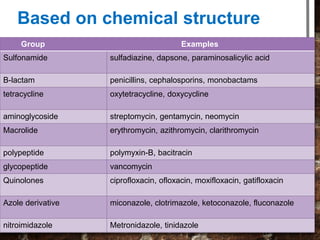
Based on chemical structure
Group Examples
Sulfonamide sulfadiazine, dapsone, paraminosalicylic acid
B-lactam penicillins, cephalosporins, monobactams
tetracycline oxytetracycline, doxycycline
aminoglycoside streptomycin, gentamycin, neomycin
Macrolide erythromycin, azithromycin, clarithromycin
polypeptide polymyxin-B, bacitracin
glycopeptide vancomycin
Quinolones ciprofloxacin, ofloxacin, moxifloxacin, gatifloxacin
Azole derivative miconazole, clotrimazole, ketoconazole, fluconazole
nitroimidazole Metronidazole, tinidazole
Antibacterial drugs
 Drugs active against bacteria
 Natural or synthetic
 Naturally, obtained from microorganisms which
suppress the growth or kill other microorganisms
are k/a antibiotics
 Synthetics are made in lab by bioengineering
 The term antibiotic was first used in 1942
by Selman Waksman
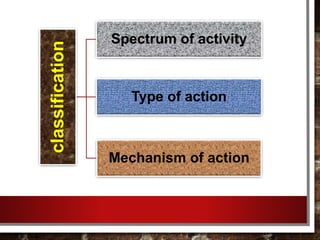
classification
Spectrum of activity
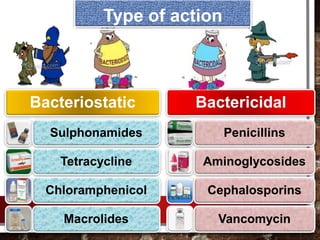
Type of action
Mechanism of action
Bacteriostatic
Sulphonamides
Tetracycline
Chloramphenicol
Macrolides
Bactericidal
Penicillins
Aminoglycosides
Cephalosporins
Vancomycin
Type of action
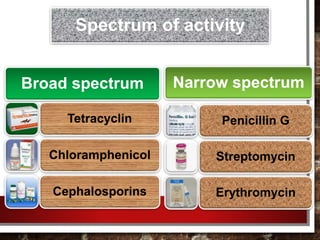
Narrow spectrum
Penicillin G
Streptomycin
Erythromycin
Broad spectrum
Tetracyclin
Chloramphenicol
Cephalosporins
Spectrum of activity
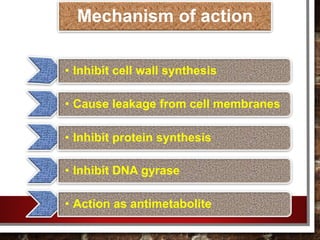
• Inhibit cell wall synthesis
• Cause leakage from cell membranes
• Inhibit protein synthesis
• Inhibit DNA gyrase
• Action as antimetabolite
Mechanism of action
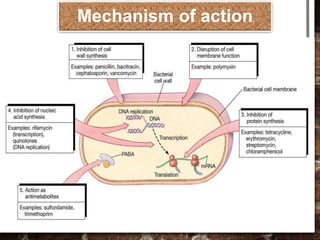
Mechanism of action
Inhibit cell wall synthesis
 These are the drugs that interfere with the cell
wall synthesis process
 These drugs consist β-Lactam rings so called
β-lactam antibiotics
 Bactericidal in nature
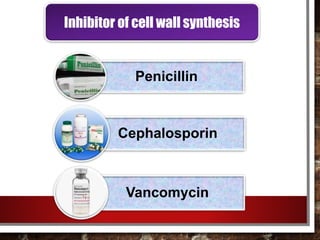
Penicillin
Cephalosporin
Vancomycin
Inhibitor of cell wall synthesis
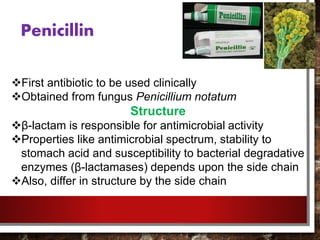
First antibiotic to be used clinically
Obtained from fungus Penicillium notatum
Structure
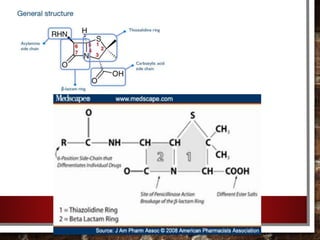
β-lactam is responsible for antimicrobial activity
Properties like antimicrobial spectrum, stability to
stomach acid and susceptibility to bacterial degradative
enzymes (β-lactamases) depends upon the side chain
Also, differ in structure by the side chain
Penicillin
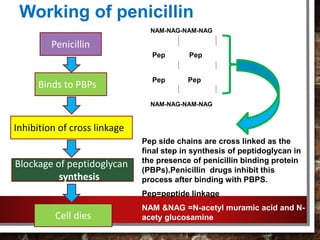
Working of penicillin
NAM-NAG-NAM-NAG
Pep Pep
Pep Pep
NAM-NAG-NAM-NAG
Pep side chains are cross linked as the
final step in synthesis of peptidoglycan in
the presence of penicillin binding protein
(PBPs).Penicillin drugs inhibit this
process after binding with PBPS.
Pep=peptide linkage
NAM &NAG =N-acetyl muramic acid and N-
acety glucosamine
Penicillin
Binds to PBPs
Inhibition of cross linkage
Blockage of peptidoglycan
synthesis
Cell dies
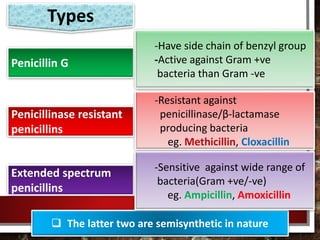
Penicillin G
Penicillinase resistant
penicillins
Extended spectrum
penicillins
-Have side chain of benzyl group
-Active against Gram +ve
bacteria than Gram -ve
-Resistant against
penicillinase/β-lactamase
producing bacteria
eg. Methicillin, Cloxacillin
 The latter two are semisynthetic in nature
-Sensitive against wide range of
bacteria(Gram +ve/-ve)
eg. Ampicillin, Amoxicillin
Types
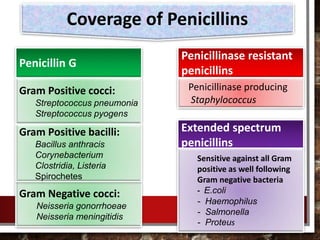
Coverage of Penicillins
Penicillin G
Penicillinase resistant
penicillins
Extended spectrum
penicillins
Gram Positive cocci:
Streptococcus pneumonia
Streptococcus pyogens
Gram Negative cocci:
Neisseria gonorrhoeae
Neisseria meningitidis
Gram Positive bacilli:
Bacillus anthracis
Corynebacterium
Clostridia, Listeria
Spirochetes
Penicillinase producing
Staphylococcus
Sensitive against all Gram
positive as well following
Gram negative bacteria
- E.coli
- Haemophilus
- Salmonella
- Proteus
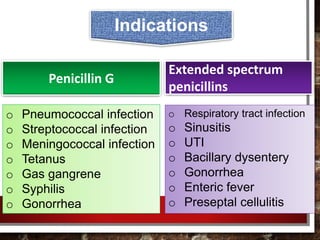
o Pneumococcal infection
o Streptococcal infection
o Meningococcal infection
o Tetanus
o Gas gangrene
o Syphilis
o Gonorrhea
o Respiratory tract infection
o Sinusitis
o UTI
o Bacillary dysentery
o Gonorrhea
o Enteric fever
o Preseptal cellulitis
Penicillin G
Extended spectrum
penicillins
Indications
 Hypersensitivity reaction (rash, itching, urticarial,
fever)
 Pain at i.m. injection site, thrombophlebitis of
injected vein
 Oral penicillin can cause nausea, vomiting or diarrhea
 Toxicity to the brain: mental confusion, convulsions &
coma
Side Effects
Beta-lactamase inhibitors
 Some of the bacteria produces β-lactamase enzyme. This
enzyme causes hydrolysis of β-lactam ring so that the
antibiotic activity of penicillin/ β-lactam drug is destroyed
 This can be prevented by two inhibitors i.e. clavulanic acid
and sulbactam
 These are the enzyme with β-lactam ring but has no
antibacterial activity. It combines with the lactamase
enzyme and thus prevent the destruction of lactam ring of
antibiotic making it potent to show action
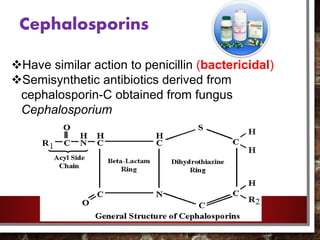
Cephalosporins
Have similar action to penicillin (bactericidal)
Semisynthetic antibiotics derived from
cephalosporin-C obtained from fungus
Cephalosporium
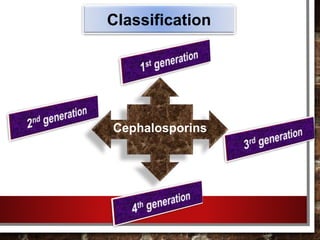
Cephalosporins
Classification
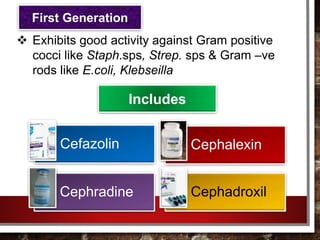
Cefazolin Cephalexin
Cephradine Cephadroxil
Includes
 Exhibits good activity against Gram positive
cocci like Staph.sps, Strep. sps & Gram –ve
rods like E.coli, Klebseilla
First Generation
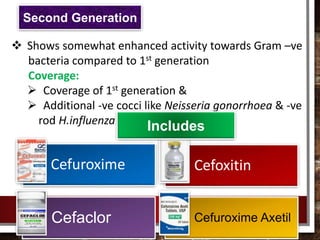
Cefuroxime Cefoxitin
Cefaclor Cefuroxime Axetil
 Shows somewhat enhanced activity towards Gram –ve
bacteria compared to 1st generation
Coverage:
 Coverage of 1st generation &
 Additional -ve cocci like Neisseria gonorrhoea & -ve
rod H.influenza
Second Generation
Includes
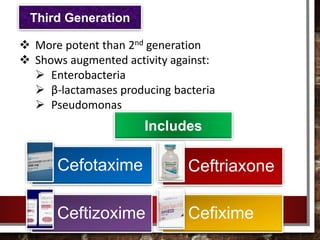
Cefotaxime Ceftriaxone
Ceftizoxime Cefixime
 More potent than 2nd generation
 Shows augmented activity against:
 Enterobacteria
 β-lactamases producing bacteria
 Pseudomonas
Third Generation
Includes
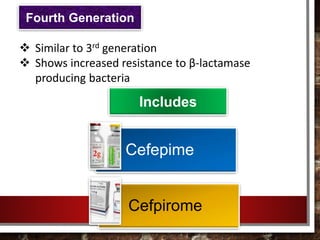
Cefepime
Cefpirome
 Similar to 3rd generation
 Shows increased resistance to β-lactamase
producing bacteria
Fourth Generation
Includes
 Alternative to penicillin allergic patient
 Respiratory , urinary and soft tissue infection
caused by Gram –ve organism
 Septicaemia by Gram –ve bacterai
 Surgical prophylaxis
 Gonorrhoea
 Typhoid
 Preseptal cellulitis & endophthalmitis
Indications
 Pain on intramuscular injection
 Diarrhoea due to alteration of gut ecology
 Hypersensitivity reaction( rashes, asthma,
angioedema and urticaria)
 Nephrotoxicity
Side effect
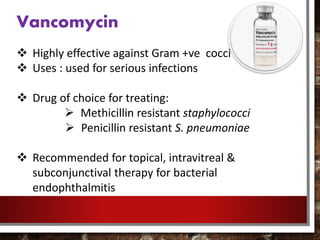
Vancomycin
 Highly effective against Gram +ve cocci
 Uses : used for serious infections
 Drug of choice for treating:
 Methicillin resistant staphylococci
 Penicillin resistant S. pneumoniae
 Recommended for topical, intravitreal &
subconjunctival therapy for bacterial
endophthalmitis
 If used with other ototoxic or nephrotoxic drugs
can cause impaired renal function and lead to
permanent deafness
 Contraindicated in hypersensitivity reaction
Side effect
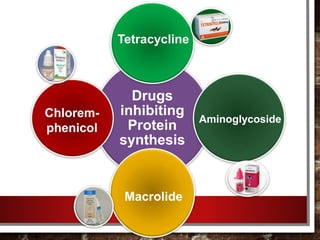
Drugs
inhibiting
Protein
synthesis
Tetracycline
Chlorem-
phenicol
Macrolide
Aminoglycoside
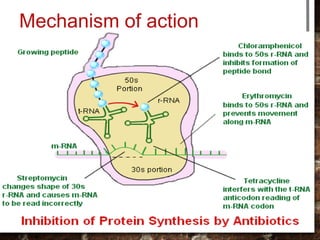
Mechanism of action
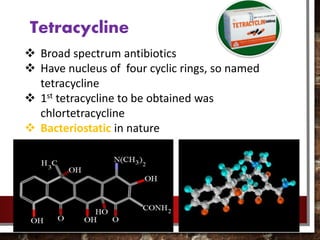
Tetracycline
 Broad spectrum antibiotics
 Have nucleus of four cyclic rings, so named
tetracycline
 1st tetracycline to be obtained was
chlortetracycline
 Bacteriostatic in nature
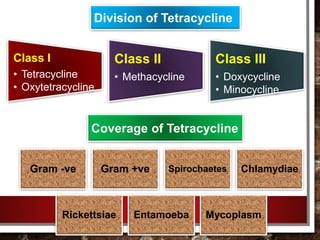
Class I
• Tetracycline
• Oxytetracycline
Class II
• Methacycline
Class III
• Doxycycline
• Minocycline
Gram -ve Gram +ve Spirochaetes Chlamydiae
Rickettsiae Entamoeba Mycoplasm
Division of Tetracycline
Coverage of Tetracycline
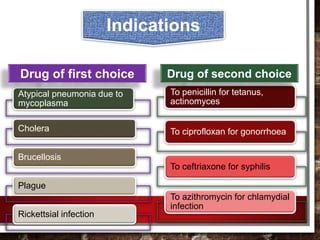
Atypical pneumonia due to
mycoplasma
Cholera
Brucellosis
Plague
Rickettsial infection
To penicillin for tetanus,
actinomyces
To ciprofloxan for gonorrhoea
To ceftriaxone for syphilis
To azithromycin for chlamydial
infection
Drug of first choice Drug of second choice
Indications
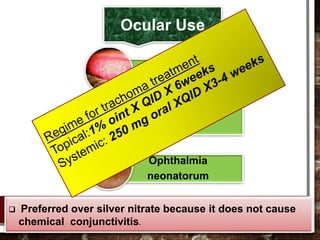
Ocular Use
Trachoma
Conjunctivitis
Ophthalmia
neonatorum
 Preferred over silver nitrate because it does not cause
chemical conjunctivitis.
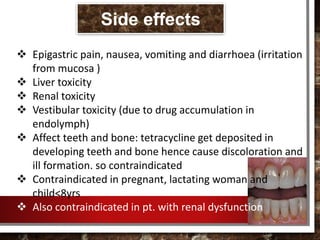
 Epigastric pain, nausea, vomiting and diarrhoea (irritation
from mucosa )
 Liver toxicity
 Renal toxicity
 Vestibular toxicity (due to drug accumulation in
endolymph)
 Affect teeth and bone: tetracycline get deposited in
developing teeth and bone hence cause discoloration and
ill formation. so contraindicated
 Contraindicated in pregnant, lactating woman and
child<8yrs
 Also contraindicated in pt. with renal dysfunction
Side effects
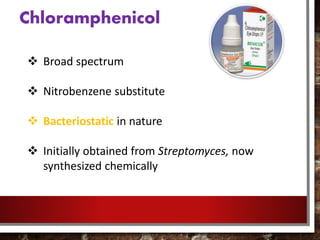
Chloramphenicol
 Broad spectrum
 Nitrobenzene substitute
 Bacteriostatic in nature
 Initially obtained from Streptomyces, now
synthesized chemically
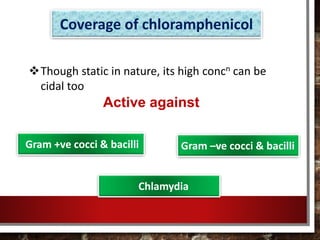
Though static in nature, its high concn can be
cidal too
Active against
Gram +ve cocci & bacilli
Chlamydia
Gram –ve cocci & bacilli
Coverage of chloramphenicol
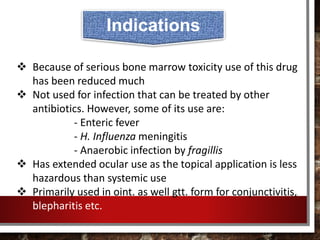
 Because of serious bone marrow toxicity use of this drug
has been reduced much
 Not used for infection that can be treated by other
antibiotics. However, some of its use are:
- Enteric fever
- H. Influenza meningitis
- Anaerobic infection by fragillis
 Has extended ocular use as the topical application is less
hazardous than systemic use
 Primarily used in oint. as well gtt. form for conjunctivitis,
blepharitis etc.
Indications
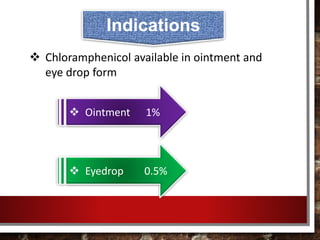
 Chloramphenicol available in ointment and
eye drop form
 Ointment 1%
 Eyedrop 0.5%
Indications
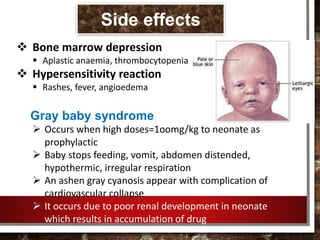
 Bone marrow depression
 Aplastic anaemia, thrombocytopenia
 Hypersensitivity reaction
 Rashes, fever, angioedema
Gray baby syndrome
 Occurs when high doses=1oomg/kg to neonate as
prophylactic
 Baby stops feeding, vomit, abdomen distended,
hypothermic, irregular respiration
 An ashen gray cyanosis appear with complication of
cardiovascular collapse
 It occurs due to poor renal development in neonate
which results in accumulation of drug
Side effects
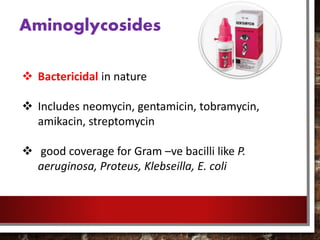
Aminoglycosides
 Bactericidal in nature
 Includes neomycin, gentamicin, tobramycin,
amikacin, streptomycin
 good coverage for Gram –ve bacilli like P.
aeruginosa, Proteus, Klebseilla, E. coli
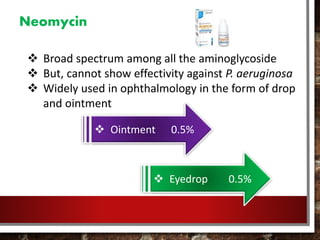
Neomycin
 Broad spectrum among all the aminoglycoside
 But, cannot show effectivity against P. aeruginosa
 Widely used in ophthalmology in the form of drop
and ointment
 Ointment 0.5%
 Eyedrop 0.5%
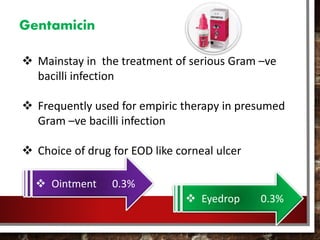
Gentamicin
 Mainstay in the treatment of serious Gram –ve
bacilli infection
 Frequently used for empiric therapy in presumed
Gram –ve bacilli infection
 Choice of drug for EOD like corneal ulcer
 Ointment 0.3%
 Eyedrop 0.3%
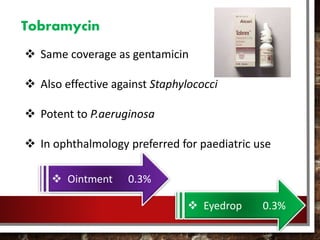
Tobramycin
 Same coverage as gentamicin
 Also effective against Staphylococci
 Potent to P.aeruginosa
 In ophthalmology preferred for paediatric use
 Ointment 0.3%
 Eyedrop 0.3%
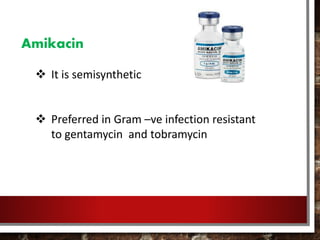
Amikacin
 It is semisynthetic
 Preferred in Gram –ve infection resistant
to gentamycin and tobramycin
 Gram –ve bacillary infection
 Septicaemia, abdominal and pelvic sepsis
 Bacterial endocarditis
 TB
 Plague
Indications
 Ototoxicity: these drugs get accumulated in the
endolymph and perilymph of inner ear and destroy
the hair cell in organ of corti
 Nephrotoxicity: retention of these drugs in proximal
tubular cells disrupts Ca mediated transport system
and cause renal damage
 Neuromuscular paralysis: these drugs cause decrease
in release of Ach
 Allergic reaction: Contact dermatitis
Side effects
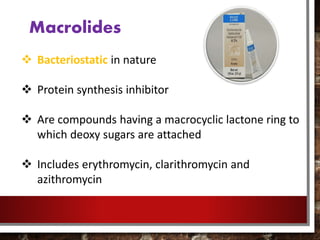
Macrolides
 Bacteriostatic in nature
 Protein synthesis inhibitor
 Are compounds having a macrocyclic lactone ring to
which deoxy sugars are attached
 Includes erythromycin, clarithromycin and
azithromycin
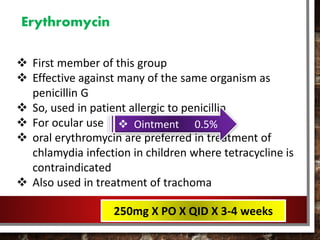
Erythromycin
 First member of this group
 Effective against many of the same organism as
penicillin G
 So, used in patient allergic to penicillin
 For ocular use
 oral erythromycin are preferred in treatment of
chlamydia infection in children where tetracycline is
contraindicated
 Also used in treatment of trachoma
 Ointment 0.5%
250mg X PO X QID X 3-4 weeks
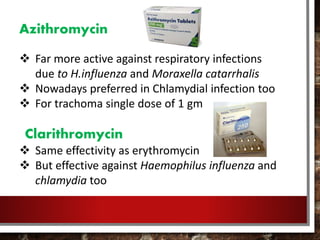
Azithromycin
 Far more active against respiratory infections
due to H.influenza and Moraxella catarrhalis
 Nowadays preferred in Chlamydial infection too
 For trachoma single dose of 1 gm
Clarithromycin
 Same effectivity as erythromycin
 But effective against Haemophilus influenza and
chlamydia too
 Epigastric distress
 Ototoxicity
 Cholestatic jaundice
 In patient with hepatic dysfunction because of their
accumulation in liver as well compromised renal
function because their metabolite are excreted from
renal
Contraindications
Side effects
Fluoroquinolones
Drug interfering with DNA
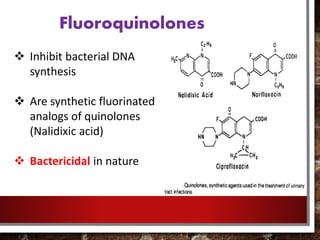
Fluoroquinolones
 Inhibit bacterial DNA
synthesis
 Are synthetic fluorinated
analogs of quinolones
(Nalidixic acid)
 Bactericidal in nature
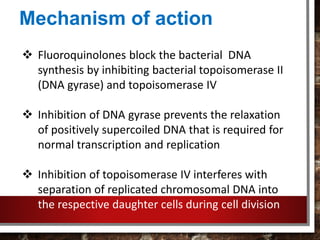
Mechanism of action
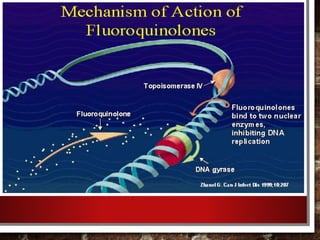
 Fluoroquinolones block the bacterial DNA
synthesis by inhibiting bacterial topoisomerase II
(DNA gyrase) and topoisomerase IV
 Inhibition of DNA gyrase prevents the relaxation
of positively supercoiled DNA that is required for
normal transcription and replication
 Inhibition of topoisomerase IV interferes with
separation of replicated chromosomal DNA into
the respective daughter cells during cell division
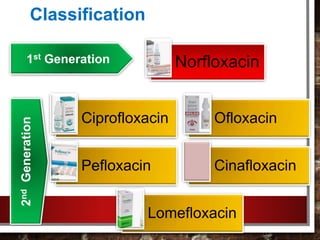
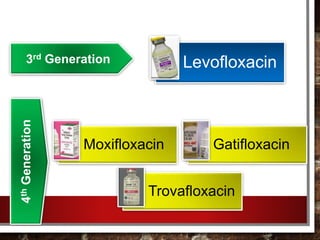
Classification
Ciprofloxacin Ofloxacin
Pefloxacin Cinafloxacin
Lomefloxacin
Norfloxacin
2ndGeneration
1st Generation
Moxifloxacin Gatifloxacin
Trovafloxacin
Levofloxacin3rd Generation
4thGeneration
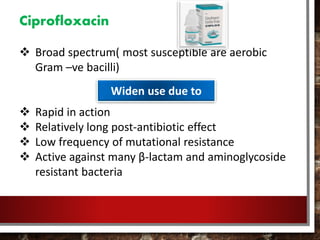
Ciprofloxacin
 Broad spectrum( most susceptible are aerobic
Gram –ve bacilli)
 Rapid in action
 Relatively long post-antibiotic effect
 Low frequency of mutational resistance
 Active against many β-lactam and aminoglycoside
resistant bacteria
Widen use due to
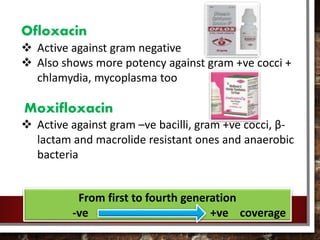
From first to fourth generation
-ve +ve coverage
Ofloxacin
 Active against gram negative
 Also shows more potency against gram +ve cocci +
chlamydia, mycoplasma too
Moxifloxacin
 Active against gram –ve bacilli, gram +ve cocci, β-
lactam and macrolide resistant ones and anaerobic
bacteria
 Prophylaxis and treatment of urinary tract infection
 Bacillary desentry
 Enteric fever
 Diarrhoea due to E.coli
 Gonorrhoea
 Septicaemia
 Respiratory infection
Indications
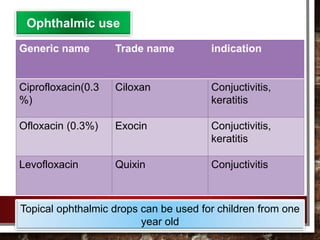
Generic name Trade name indication
Ciprofloxacin(0.3
%)
Ciloxan Conjuctivitis,
keratitis
Ofloxacin (0.3%) Exocin Conjuctivitis,
keratitis
Levofloxacin Quixin Conjuctivitis
Ophthalmic use
Topical ophthalmic drops can be used for children from one
year old
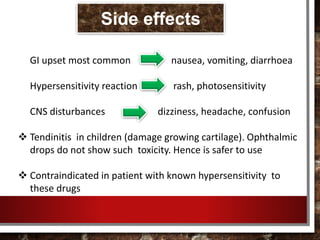
GI upset most common nausea, vomiting, diarrhoea
Hypersensitivity reaction rash, photosensitivity
CNS disturbances dizziness, headache, confusion
 Tendinitis in children (damage growing cartilage). Ophthalmic
drops do not show such toxicity. Hence is safer to use
 Contraindicated in patient with known hypersensitivity to
these drugs
Side effects
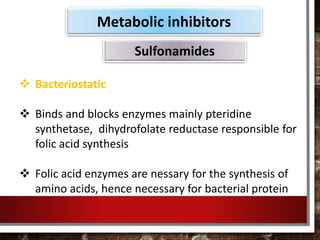
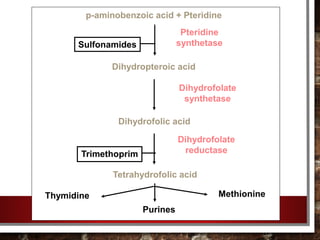
 Bacteriostatic
 Binds and blocks enzymes mainly pteridine
synthetase, dihydrofolate reductase responsible for
folic acid synthesis
 Folic acid enzymes are nessary for the synthesis of
amino acids, hence necessary for bacterial protein
Metabolic inhibitors
Sulfonamides
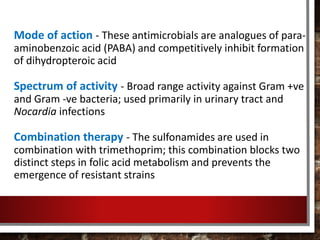
Mode of action - These antimicrobials are analogues of para-
aminobenzoic acid (PABA) and competitively inhibit formation
of dihydropteroic acid
Spectrum of activity - Broad range activity against Gram +ve
and Gram -ve bacteria; used primarily in urinary tract and
Nocardia infections
Combination therapy - The sulfonamides are used in
combination with trimethoprim; this combination blocks two
distinct steps in folic acid metabolism and prevents the
emergence of resistant strains
p-aminobenzoic acid + Pteridine
Dihydropteroic acid
Dihydrofolic acid
Tetrahydrofolic acid
Pteridine
synthetase
Dihydrofolate
synthetase
Dihydrofolate
reductase
Thymidine
Purines
Methionine
Trimethoprim
Sulfonamides
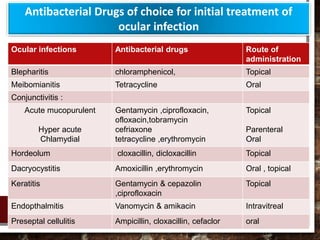
Ocular infections Antibacterial drugs Route of
administration
Blepharitis chloramphenicol, Topical
Meibomianitis Tetracycline Oral
Conjunctivitis :
Acute mucopurulent
Hyper acute
Chlamydial
Gentamycin ,ciprofloxacin,
ofloxacin,tobramycin
cefriaxone
tetracycline ,erythromycin
Topical
Parenteral
Oral
Hordeolum cloxacillin, dicloxacillin Topical
Dacryocystitis Amoxicillin ,erythromycin Oral , topical
Keratitis Gentamycin & cepazolin
,ciprofloxacin
Topical
Endopthalmitis Vanomycin & amikacin Intravitreal
Preseptal cellulitis Ampicillin, cloxacillin, cefaclor oral
Antibacterial Drugs of choice for initial treatment of
ocular infection
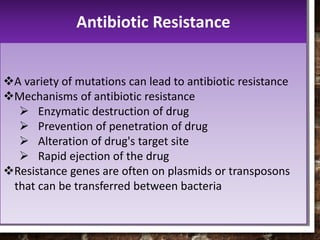
A variety of mutations can lead to antibiotic resistance
Mechanisms of antibiotic resistance
 Enzymatic destruction of drug
 Prevention of penetration of drug
 Alteration of drug's target site
 Rapid ejection of the drug
Resistance genes are often on plasmids or transposons
that can be transferred between bacteria
Antibiotic Resistance
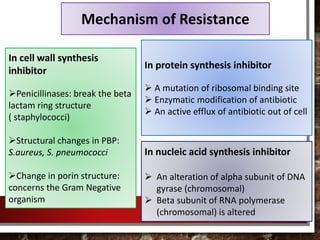
Mechanism of Resistance
In cell wall synthesis
inhibitor
Penicillinases: break the beta
lactam ring structure
( staphylococci)
Structural changes in PBP:
S.aureus, S. pneumococci
Change in porin structure:
concerns the Gram Negative
organism
In protein synthesis inhibitor
 A mutation of ribosomal binding site
 Enzymatic modification of antibiotic
 An active efflux of antibiotic out of cell
In nucleic acid synthesis inhibitor
 An alteration of alpha subunit of DNA
gyrase (chromosomal)
 Beta subunit of RNA polymerase
(chromosomal) is altered
oTextbook of microbiology by Ananthanarayan & Paniker
o Essentials of Medical Pharmacology KD Tripathi
o Basic & Clinical Pharmacology by Bertram G. Katzung
o Ophthalmic Drugs by Graham Hopkins and Richard Pearson
o Internet
References

Antibacterial Agents/ Antibiotics (Ocular Pharmacology)(healthkura.com)

  • 2.
    PRESENTATION LAYOUT  Introductionto antimicrobial drugs  Classification of antimicrobial drugs  Antibacterial drugs: - Classification - Indications - Side effects  Antibacterial Resistance
  • 4.
     Antimicrobial drugsare chemotherapeutic drugs  Two categories: – Antibiotics : Antimicrobial drugs produced by microorganisms – Synthetic drugs : Antimicrobial drugs synthesized in the lab
  • 5.
    Have highly selectivetoxicity to the pathogenic microorganisms in host body Have no or less toxicity to the host Low propensity for development of resistance Not induce hypersensitivies in the host Have rapid and extensive tissue distribution Be free of interactions with other drugs Be relatively inexpensive Ideal antimicrobial drug
  • 6.
    Where do antibioticscome from  Several species of fungi including Penicillium and Cephalosporium E.g. penicillin, cephalosporin  Species of actinomycetes, Gram +ve filamentous bacteria  Many from species of Streptomyces  Also from Bacillus, Gram +ve spore formers  A few from myxobacteria, Gram -ve bacteria  New source explored : plants, fish
  • 7.
    Sources of somecommon antibiotics and semisynthetics
  • 8.
     Ehrlich (1854–1915)coined the term chemotherapy  1929 Penicillin discovered by Alexander Fleming  1940 Florey and Chain mass produced penicillin for war time use, becomes available to the public  1935 Sulfa drugs discovered  1944 Streptomycin discovered by Waksman from Streptomyces griseus History of Antimicrobial Therapy  Alexander Fleming was first to characterize penicillin’s activity. He found mold contaminating his culture plates, with clearing of staphylococcal colonies all around the mold. Fleming then isolated penicillin from the mold  Thanks to work by Alexander Fleming
  • 9.
    Classification of antimicrobialagent Chemical structure Type of organism to be killed Antimicrobial agent
  • 10.
    Based on chemicalstructure Group Examples Sulfonamide sulfadiazine, dapsone, paraminosalicylic acid B-lactam penicillins, cephalosporins, monobactams tetracycline oxytetracycline, doxycycline aminoglycoside streptomycin, gentamycin, neomycin Macrolide erythromycin, azithromycin, clarithromycin polypeptide polymyxin-B, bacitracin glycopeptide vancomycin Quinolones ciprofloxacin, ofloxacin, moxifloxacin, gatifloxacin Azole derivative miconazole, clotrimazole, ketoconazole, fluconazole nitroimidazole Metronidazole, tinidazole
  • 12.
    Antibacterial drugs  Drugsactive against bacteria  Natural or synthetic  Naturally, obtained from microorganisms which suppress the growth or kill other microorganisms are k/a antibiotics  Synthetics are made in lab by bioengineering  The term antibiotic was first used in 1942 by Selman Waksman
  • 13.
    classification Spectrum of activity Typeof action Mechanism of action
  • 14.
  • 15.
    Narrow spectrum Penicillin G Streptomycin Erythromycin Broadspectrum Tetracyclin Chloramphenicol Cephalosporins Spectrum of activity
  • 16.
    • Inhibit cellwall synthesis • Cause leakage from cell membranes • Inhibit protein synthesis • Inhibit DNA gyrase • Action as antimetabolite Mechanism of action
  • 17.
  • 18.
    Inhibit cell wallsynthesis  These are the drugs that interfere with the cell wall synthesis process  These drugs consist β-Lactam rings so called β-lactam antibiotics  Bactericidal in nature
  • 19.
  • 20.
    First antibiotic tobe used clinically Obtained from fungus Penicillium notatum Structure β-lactam is responsible for antimicrobial activity Properties like antimicrobial spectrum, stability to stomach acid and susceptibility to bacterial degradative enzymes (β-lactamases) depends upon the side chain Also, differ in structure by the side chain Penicillin
  • 22.
    Working of penicillin NAM-NAG-NAM-NAG PepPep Pep Pep NAM-NAG-NAM-NAG Pep side chains are cross linked as the final step in synthesis of peptidoglycan in the presence of penicillin binding protein (PBPs).Penicillin drugs inhibit this process after binding with PBPS. Pep=peptide linkage NAM &NAG =N-acetyl muramic acid and N- acety glucosamine Penicillin Binds to PBPs Inhibition of cross linkage Blockage of peptidoglycan synthesis Cell dies
  • 23.
    Penicillin G Penicillinase resistant penicillins Extendedspectrum penicillins -Have side chain of benzyl group -Active against Gram +ve bacteria than Gram -ve -Resistant against penicillinase/β-lactamase producing bacteria eg. Methicillin, Cloxacillin  The latter two are semisynthetic in nature -Sensitive against wide range of bacteria(Gram +ve/-ve) eg. Ampicillin, Amoxicillin Types
  • 24.
    Coverage of Penicillins PenicillinG Penicillinase resistant penicillins Extended spectrum penicillins Gram Positive cocci: Streptococcus pneumonia Streptococcus pyogens Gram Negative cocci: Neisseria gonorrhoeae Neisseria meningitidis Gram Positive bacilli: Bacillus anthracis Corynebacterium Clostridia, Listeria Spirochetes Penicillinase producing Staphylococcus Sensitive against all Gram positive as well following Gram negative bacteria - E.coli - Haemophilus - Salmonella - Proteus
  • 25.
    o Pneumococcal infection oStreptococcal infection o Meningococcal infection o Tetanus o Gas gangrene o Syphilis o Gonorrhea o Respiratory tract infection o Sinusitis o UTI o Bacillary dysentery o Gonorrhea o Enteric fever o Preseptal cellulitis Penicillin G Extended spectrum penicillins Indications
  • 26.
     Hypersensitivity reaction(rash, itching, urticarial, fever)  Pain at i.m. injection site, thrombophlebitis of injected vein  Oral penicillin can cause nausea, vomiting or diarrhea  Toxicity to the brain: mental confusion, convulsions & coma Side Effects
  • 27.
    Beta-lactamase inhibitors  Someof the bacteria produces β-lactamase enzyme. This enzyme causes hydrolysis of β-lactam ring so that the antibiotic activity of penicillin/ β-lactam drug is destroyed  This can be prevented by two inhibitors i.e. clavulanic acid and sulbactam  These are the enzyme with β-lactam ring but has no antibacterial activity. It combines with the lactamase enzyme and thus prevent the destruction of lactam ring of antibiotic making it potent to show action
  • 28.
    Cephalosporins Have similar actionto penicillin (bactericidal) Semisynthetic antibiotics derived from cephalosporin-C obtained from fungus Cephalosporium
  • 29.
  • 30.
    Cefazolin Cephalexin Cephradine Cephadroxil Includes Exhibits good activity against Gram positive cocci like Staph.sps, Strep. sps & Gram –ve rods like E.coli, Klebseilla First Generation
  • 31.
    Cefuroxime Cefoxitin Cefaclor CefuroximeAxetil  Shows somewhat enhanced activity towards Gram –ve bacteria compared to 1st generation Coverage:  Coverage of 1st generation &  Additional -ve cocci like Neisseria gonorrhoea & -ve rod H.influenza Second Generation Includes
  • 32.
    Cefotaxime Ceftriaxone Ceftizoxime Cefixime More potent than 2nd generation  Shows augmented activity against:  Enterobacteria  β-lactamases producing bacteria  Pseudomonas Third Generation Includes
  • 33.
    Cefepime Cefpirome  Similar to3rd generation  Shows increased resistance to β-lactamase producing bacteria Fourth Generation Includes
  • 34.
     Alternative topenicillin allergic patient  Respiratory , urinary and soft tissue infection caused by Gram –ve organism  Septicaemia by Gram –ve bacterai  Surgical prophylaxis  Gonorrhoea  Typhoid  Preseptal cellulitis & endophthalmitis Indications
  • 35.
     Pain onintramuscular injection  Diarrhoea due to alteration of gut ecology  Hypersensitivity reaction( rashes, asthma, angioedema and urticaria)  Nephrotoxicity Side effect
  • 36.
    Vancomycin  Highly effectiveagainst Gram +ve cocci  Uses : used for serious infections  Drug of choice for treating:  Methicillin resistant staphylococci  Penicillin resistant S. pneumoniae  Recommended for topical, intravitreal & subconjunctival therapy for bacterial endophthalmitis
  • 37.
     If usedwith other ototoxic or nephrotoxic drugs can cause impaired renal function and lead to permanent deafness  Contraindicated in hypersensitivity reaction Side effect
  • 38.
  • 39.
  • 40.
    Tetracycline  Broad spectrumantibiotics  Have nucleus of four cyclic rings, so named tetracycline  1st tetracycline to be obtained was chlortetracycline  Bacteriostatic in nature
  • 41.
    Class I • Tetracycline •Oxytetracycline Class II • Methacycline Class III • Doxycycline • Minocycline Gram -ve Gram +ve Spirochaetes Chlamydiae Rickettsiae Entamoeba Mycoplasm Division of Tetracycline Coverage of Tetracycline
  • 42.
    Atypical pneumonia dueto mycoplasma Cholera Brucellosis Plague Rickettsial infection To penicillin for tetanus, actinomyces To ciprofloxan for gonorrhoea To ceftriaxone for syphilis To azithromycin for chlamydial infection Drug of first choice Drug of second choice Indications
  • 43.
    Ocular Use Trachoma Conjunctivitis Ophthalmia neonatorum  Preferredover silver nitrate because it does not cause chemical conjunctivitis.
  • 44.
     Epigastric pain,nausea, vomiting and diarrhoea (irritation from mucosa )  Liver toxicity  Renal toxicity  Vestibular toxicity (due to drug accumulation in endolymph)  Affect teeth and bone: tetracycline get deposited in developing teeth and bone hence cause discoloration and ill formation. so contraindicated  Contraindicated in pregnant, lactating woman and child<8yrs  Also contraindicated in pt. with renal dysfunction Side effects
  • 45.
    Chloramphenicol  Broad spectrum Nitrobenzene substitute  Bacteriostatic in nature  Initially obtained from Streptomyces, now synthesized chemically
  • 46.
    Though static innature, its high concn can be cidal too Active against Gram +ve cocci & bacilli Chlamydia Gram –ve cocci & bacilli Coverage of chloramphenicol
  • 47.
     Because ofserious bone marrow toxicity use of this drug has been reduced much  Not used for infection that can be treated by other antibiotics. However, some of its use are: - Enteric fever - H. Influenza meningitis - Anaerobic infection by fragillis  Has extended ocular use as the topical application is less hazardous than systemic use  Primarily used in oint. as well gtt. form for conjunctivitis, blepharitis etc. Indications
  • 48.
     Chloramphenicol availablein ointment and eye drop form  Ointment 1%  Eyedrop 0.5% Indications
  • 49.
     Bone marrowdepression  Aplastic anaemia, thrombocytopenia  Hypersensitivity reaction  Rashes, fever, angioedema Gray baby syndrome  Occurs when high doses=1oomg/kg to neonate as prophylactic  Baby stops feeding, vomit, abdomen distended, hypothermic, irregular respiration  An ashen gray cyanosis appear with complication of cardiovascular collapse  It occurs due to poor renal development in neonate which results in accumulation of drug Side effects
  • 50.
    Aminoglycosides  Bactericidal innature  Includes neomycin, gentamicin, tobramycin, amikacin, streptomycin  good coverage for Gram –ve bacilli like P. aeruginosa, Proteus, Klebseilla, E. coli
  • 51.
    Neomycin  Broad spectrumamong all the aminoglycoside  But, cannot show effectivity against P. aeruginosa  Widely used in ophthalmology in the form of drop and ointment  Ointment 0.5%  Eyedrop 0.5%
  • 52.
    Gentamicin  Mainstay inthe treatment of serious Gram –ve bacilli infection  Frequently used for empiric therapy in presumed Gram –ve bacilli infection  Choice of drug for EOD like corneal ulcer  Ointment 0.3%  Eyedrop 0.3%
  • 53.
    Tobramycin  Same coverageas gentamicin  Also effective against Staphylococci  Potent to P.aeruginosa  In ophthalmology preferred for paediatric use  Ointment 0.3%  Eyedrop 0.3%
  • 54.
    Amikacin  It issemisynthetic  Preferred in Gram –ve infection resistant to gentamycin and tobramycin
  • 55.
     Gram –vebacillary infection  Septicaemia, abdominal and pelvic sepsis  Bacterial endocarditis  TB  Plague Indications
  • 56.
     Ototoxicity: thesedrugs get accumulated in the endolymph and perilymph of inner ear and destroy the hair cell in organ of corti  Nephrotoxicity: retention of these drugs in proximal tubular cells disrupts Ca mediated transport system and cause renal damage  Neuromuscular paralysis: these drugs cause decrease in release of Ach  Allergic reaction: Contact dermatitis Side effects
  • 57.
    Macrolides  Bacteriostatic innature  Protein synthesis inhibitor  Are compounds having a macrocyclic lactone ring to which deoxy sugars are attached  Includes erythromycin, clarithromycin and azithromycin
  • 58.
    Erythromycin  First memberof this group  Effective against many of the same organism as penicillin G  So, used in patient allergic to penicillin  For ocular use  oral erythromycin are preferred in treatment of chlamydia infection in children where tetracycline is contraindicated  Also used in treatment of trachoma  Ointment 0.5% 250mg X PO X QID X 3-4 weeks
  • 59.
    Azithromycin  Far moreactive against respiratory infections due to H.influenza and Moraxella catarrhalis  Nowadays preferred in Chlamydial infection too  For trachoma single dose of 1 gm Clarithromycin  Same effectivity as erythromycin  But effective against Haemophilus influenza and chlamydia too
  • 60.
     Epigastric distress Ototoxicity  Cholestatic jaundice  In patient with hepatic dysfunction because of their accumulation in liver as well compromised renal function because their metabolite are excreted from renal Contraindications Side effects
  • 61.
  • 62.
    Fluoroquinolones  Inhibit bacterialDNA synthesis  Are synthetic fluorinated analogs of quinolones (Nalidixic acid)  Bactericidal in nature
  • 63.
    Mechanism of action Fluoroquinolones block the bacterial DNA synthesis by inhibiting bacterial topoisomerase II (DNA gyrase) and topoisomerase IV  Inhibition of DNA gyrase prevents the relaxation of positively supercoiled DNA that is required for normal transcription and replication  Inhibition of topoisomerase IV interferes with separation of replicated chromosomal DNA into the respective daughter cells during cell division
  • 65.
  • 66.
  • 67.
    Ciprofloxacin  Broad spectrum(most susceptible are aerobic Gram –ve bacilli)  Rapid in action  Relatively long post-antibiotic effect  Low frequency of mutational resistance  Active against many β-lactam and aminoglycoside resistant bacteria Widen use due to
  • 68.
    From first tofourth generation -ve +ve coverage Ofloxacin  Active against gram negative  Also shows more potency against gram +ve cocci + chlamydia, mycoplasma too Moxifloxacin  Active against gram –ve bacilli, gram +ve cocci, β- lactam and macrolide resistant ones and anaerobic bacteria
  • 69.
     Prophylaxis andtreatment of urinary tract infection  Bacillary desentry  Enteric fever  Diarrhoea due to E.coli  Gonorrhoea  Septicaemia  Respiratory infection Indications
  • 70.
    Generic name Tradename indication Ciprofloxacin(0.3 %) Ciloxan Conjuctivitis, keratitis Ofloxacin (0.3%) Exocin Conjuctivitis, keratitis Levofloxacin Quixin Conjuctivitis Ophthalmic use Topical ophthalmic drops can be used for children from one year old
  • 71.
    GI upset mostcommon nausea, vomiting, diarrhoea Hypersensitivity reaction rash, photosensitivity CNS disturbances dizziness, headache, confusion  Tendinitis in children (damage growing cartilage). Ophthalmic drops do not show such toxicity. Hence is safer to use  Contraindicated in patient with known hypersensitivity to these drugs Side effects
  • 72.
     Bacteriostatic  Bindsand blocks enzymes mainly pteridine synthetase, dihydrofolate reductase responsible for folic acid synthesis  Folic acid enzymes are nessary for the synthesis of amino acids, hence necessary for bacterial protein Metabolic inhibitors Sulfonamides
  • 73.
    Mode of action- These antimicrobials are analogues of para- aminobenzoic acid (PABA) and competitively inhibit formation of dihydropteroic acid Spectrum of activity - Broad range activity against Gram +ve and Gram -ve bacteria; used primarily in urinary tract and Nocardia infections Combination therapy - The sulfonamides are used in combination with trimethoprim; this combination blocks two distinct steps in folic acid metabolism and prevents the emergence of resistant strains
  • 74.
    p-aminobenzoic acid +Pteridine Dihydropteroic acid Dihydrofolic acid Tetrahydrofolic acid Pteridine synthetase Dihydrofolate synthetase Dihydrofolate reductase Thymidine Purines Methionine Trimethoprim Sulfonamides
  • 75.
    Ocular infections Antibacterialdrugs Route of administration Blepharitis chloramphenicol, Topical Meibomianitis Tetracycline Oral Conjunctivitis : Acute mucopurulent Hyper acute Chlamydial Gentamycin ,ciprofloxacin, ofloxacin,tobramycin cefriaxone tetracycline ,erythromycin Topical Parenteral Oral Hordeolum cloxacillin, dicloxacillin Topical Dacryocystitis Amoxicillin ,erythromycin Oral , topical Keratitis Gentamycin & cepazolin ,ciprofloxacin Topical Endopthalmitis Vanomycin & amikacin Intravitreal Preseptal cellulitis Ampicillin, cloxacillin, cefaclor oral Antibacterial Drugs of choice for initial treatment of ocular infection
  • 76.
    A variety ofmutations can lead to antibiotic resistance Mechanisms of antibiotic resistance  Enzymatic destruction of drug  Prevention of penetration of drug  Alteration of drug's target site  Rapid ejection of the drug Resistance genes are often on plasmids or transposons that can be transferred between bacteria Antibiotic Resistance
  • 77.
    Mechanism of Resistance Incell wall synthesis inhibitor Penicillinases: break the beta lactam ring structure ( staphylococci) Structural changes in PBP: S.aureus, S. pneumococci Change in porin structure: concerns the Gram Negative organism In protein synthesis inhibitor  A mutation of ribosomal binding site  Enzymatic modification of antibiotic  An active efflux of antibiotic out of cell In nucleic acid synthesis inhibitor  An alteration of alpha subunit of DNA gyrase (chromosomal)  Beta subunit of RNA polymerase (chromosomal) is altered
  • 79.
    oTextbook of microbiologyby Ananthanarayan & Paniker o Essentials of Medical Pharmacology KD Tripathi o Basic & Clinical Pharmacology by Bertram G. Katzung o Ophthalmic Drugs by Graham Hopkins and Richard Pearson o Internet References