
ANTI GLAUCOMA DRUGS
Bikash Sapkota
16th batch
B. Optometry
Maharajgunj Medical Campus
Nepal
Presentation Layout
 Introduction to glaucoma
 Anti glaucoma drugs:
Classification
Indications
Contraindications
 Summary
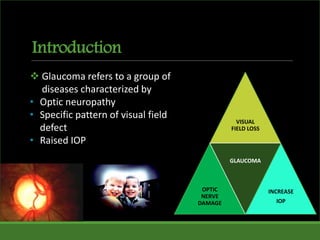
Introduction
VISUAL
FIELD LOSS
OPTIC
NERVE
DAMAGE
GLAUCOMA
INCREASE
IOP
 Glaucoma refers to a group of
diseases characterized by
• Optic neuropathy
• Specific pattern of visual field
defect
• Raised IOP
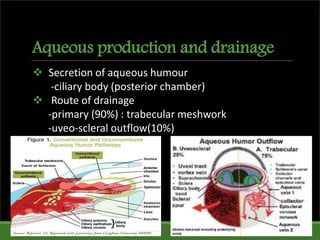
Aqueous production and drainage
 Secretion of aqueous humour
-ciliary body (posterior chamber)
 Route of drainage
-primary (90%) : trabecular meshwork
-uveo-scleral outflow(10%)
Purpose of initiating glaucoma therapy
The ultimate goal of glaucoma treatment is
To preserve enough vision during the patient’s
lifetime to meet their functional needs
 Ideally, treatment should also delay glaucomatous
process
MEDICAL ASPECTS OF GLAUCOMA THERAPY
o When to treat ?
- when glaucomatous damage is documented or future
damage is likely
o What to prescribed ?
- best to try one drug with least ocular & systemic side
effects
- use least amount of medication
- in emergency use 2 drugs
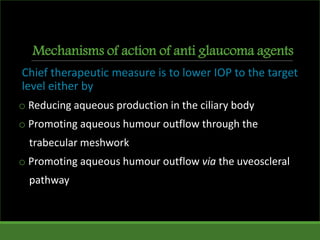
Mechanisms of action of anti glaucoma agents
Chief therapeutic measure is to lower IOP to the target
level either by
o Reducing aqueous production in the ciliary body
o Promoting aqueous humour outflow through the
trabecular meshwork
o Promoting aqueous humour outflow via the uveoscleral
pathway
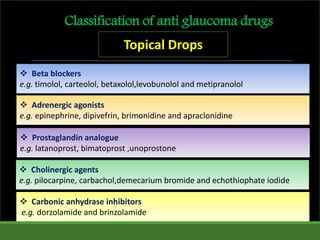
 Beta blockers
e.g. timolol, carteolol, betaxolol,levobunolol and metipranolol
Classification of anti glaucoma drugs
 Adrenergic agonists
e.g. epinephrine, dipivefrin, brimonidine and apraclonidine
 Prostaglandin analogue
e.g. latanoprost, bimatoprost ,unoprostone
 Cholinergic agents
e.g. pilocarpine, carbachol,demecarium bromide and echothiophate iodide
 Carbonic anhydrase inhibitors
e.g. dorzolamide and brinzolamide
Topical Drops
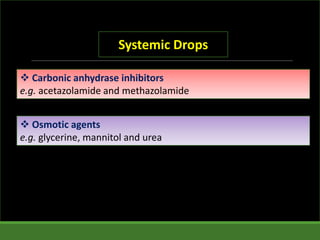
 Carbonic anhydrase inhibitors
e.g. acetazolamide and methazolamide
 Osmotic agents
e.g. glycerine, mannitol and urea
Systemic Drops
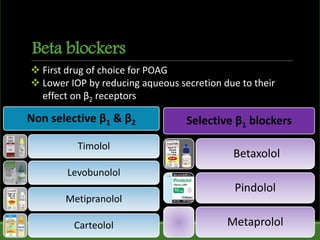
Beta blockers
 First drug of choice for POAG
 Lower IOP by reducing aqueous secretion due to their
effect on β2 receptors
Non selective β1 & β2
Timolol
Levobunolol
Metipranolol
Carteolol
Selective β1 blockers
Betaxolol
Pindolol
Metaprolol
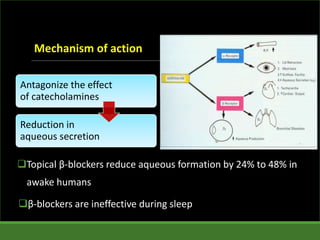
β-blockers are ineffective during sleep
Topical β-blockers reduce aqueous formation by 24% to 48% in
awake humans
Antagonize the effect
of catecholamines
Reduction in
aqueous secretion
Mechanism of action
Beta blockers
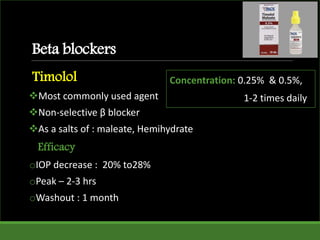
Timolol
Most commonly used agent
Non-selective β blocker
As a salts of : maleate, Hemihydrate
Efficacy
oIOP decrease : 20% to28%
oPeak – 2-3 hrs
oWashout : 1 month
Concentration: 0.25% & 0.5%,
1-2 times daily
Beta blockers
Short term escape:
ļ‚§ Marked initial fall in IOP followed by transient rise with moderate
fall in IOP
Long term drift:
ļ‚§ Slow rise in IOP in patients who were well controlled with many
months of therapy
Beta blockers
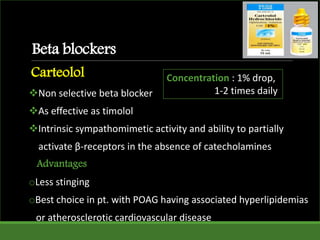
Carteolol
Non selective beta blocker
As effective as timolol
Intrinsic sympathomimetic activity and ability to partially
activate β-receptors in the absence of catecholamines
Advantages
oLess stinging
oBest choice in pt. with POAG having associated hyperlipidemias
or atherosclerotic cardiovascular disease
Concentration : 1% drop,
1-2 times daily
Beta blockers
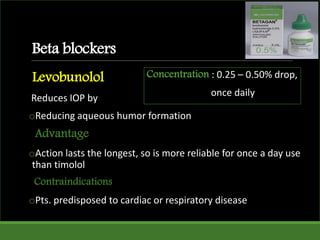
Levobunolol
Reduces IOP by
oReducing aqueous humor formation
Advantage
oAction lasts the longest, so is more reliable for once a day use
than timolol
Contraindications
oPts. predisposed to cardiac or respiratory disease
Concentration : 0.25 – 0.50% drop,
once daily
Beta blockers
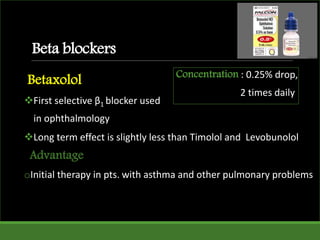
Betaxolol
First selective β1 blocker used
in ophthalmology
Long term effect is slightly less than Timolol and Levobunolol
Advantage
oInitial therapy in pts. with asthma and other pulmonary problems
Concentration : 0.25% drop,
2 times daily
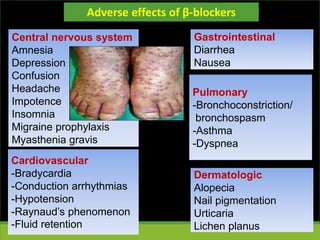
Adverse effects of β-blockers
Cardiovascular
-Bradycardia
-Conduction arrhythmias
-Hypotension
-Raynaud’s phenomenon
-Fluid retention
Pulmonary
-Bronchoconstriction/
bronchospasm
-Asthma
-Dyspnea
Central nervous system
Amnesia
Depression
Confusion
Headache
Impotence
Insomnia
Migraine prophylaxis
Myasthenia gravis
Gastrointestinal
Diarrhea
Nausea
Dermatologic
Alopecia
Nail pigmentation
Urticaria
Lichen planus
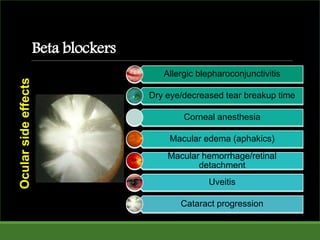
Ocularsideeffects
Beta blockers
Allergic blepharoconjunctivitis
Dry eye/decreased tear breakup time
Corneal anesthesia
Macular edema (aphakics)
Macular hemorrhage/retinal
detachment
Uveitis
Cataract progression
Allergic blepharoconjunctivitis
Dry eye/decreased tear breakup time
Corneal anesthesia
Macular edema (aphakics)
Macular hemorrhage/retinal
detachment
Uveitis
Cataract progression
Beta blockers
Open angle
Glaucoma
Angle closure
Glaucoma
Secondary
Glaucoma
Glaucoma in
children
Indications
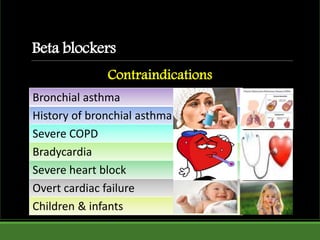
Beta blockers
Bronchial asthma
History of bronchial asthma
Severe COPD
Bradycardia
Severe heart block
Overt cardiac failure
Children & infants
Contraindications
Beta blockers
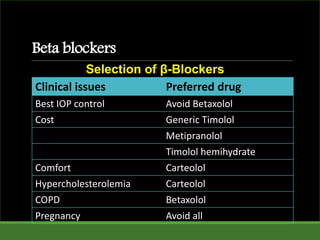
Clinical issues Preferred drug
Best IOP control Avoid Betaxolol
Cost Generic Timolol
Metipranolol
Timolol hemihydrate
Comfort Carteolol
Hypercholesterolemia Carteolol
COPD Betaxolol
Pregnancy Avoid all
Selection of β-Blockers
Adrenergic agonist
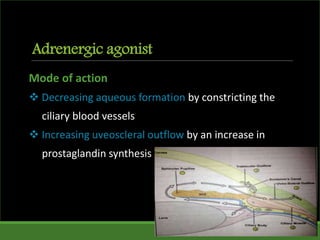
Mode of action
 Decreasing aqueous formation by constricting the
ciliary blood vessels
 Increasing uveoscleral outflow by an increase in
prostaglandin synthesis
Adrenergic agonist
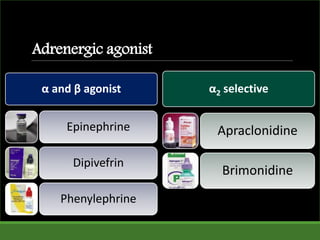
α and β agonist
Epinephrine
Dipivefrin
Phenylephrine
α2 selective
Apraclonidine
Brimonidine
Adrenergic agonist
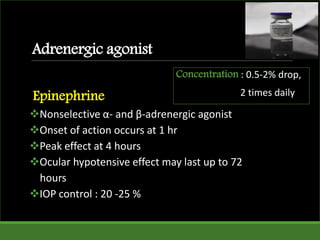
Epinephrine
Nonselective α- and β-adrenergic agonist
Onset of action occurs at 1 hr
Peak effect at 4 hours
Ocular hypotensive effect may last up to 72
hours
IOP control : 20 -25 %
Concentration : 0.5-2% drop,
2 times daily
Adrenergic agonist
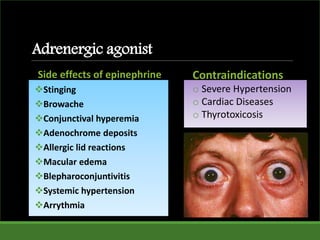
Side effects of epinephrine
Stinging
Browache
Conjunctival hyperemia
Adenochrome deposits
Allergic lid reactions
Macular edema
Blepharoconjuntivitis
Systemic hypertension
Arrythmia
Contraindications
o Severe Hypertension
o Cardiac Diseases
o Thyrotoxicosis
Adrenergic agonist
Dipivefrin
Prodrug
Penetration across the cornea is 17 times more than epinephrine
Better tolerated than epinephrine
Onset of action : 30 minutes, Peak effect : 1hr
IOP reduction :20-24%
Advantage
oLower cardiovascular side effects
oCan be used in pts. of asthma, in young pts. intolerant to
miotics and in those with cataracts
Concentration : 0.1% drop,
2 times daily
Adrenergic agonist
Phenylephrine
Acts on α1 adrenergic receptors
MOA : Induce vasoconstriction and mydriasis to break posterior
synechiae
Can produce mydriasis even in pts. treated with strong
miotics
Concentration : 0.125-10 %drop
Adrenergic agonist
Apraclonidine
α2-adrenergic agonist
Para amino derivative of clonidine
IOP control : 20 % -30 %
Maximal effect is produced 3-5 hours after dosing
Not used as primary treatment due to significant tachyphylaxis
 Mainly indicated in acute pressure spikes in case of laser
iridotomy, trabeculoplasty, and posterior capsulotomy
Concentration : 1% and 0.5%,
twice daily
Adrenergic agonist
Brimonidine
Small effect on uveoscleral
outflow
Neuroprotection
IOP control: 20-30%
Advantage
oCan be used as primary drug in POAG
oLess tachyphylaxis & less rate of allergic
reactions than apraclonidine
Concentration :tartrate 0.2%,
tartrate in purite 0.1%BD, TID
Adrenergic agonist
Ocular
oAllergy
oContact dermatitis
oBlurred vision
oBurning/ stinging
oFollicular conjunctivitis
oHyperemia/itching
oPhotophobia
Side effects
Systemic
oDry mouth
oFatigue
oDrowsiness
oHeadache
oHypotension
oBradycardia in neonates
oHypothermia in neonates
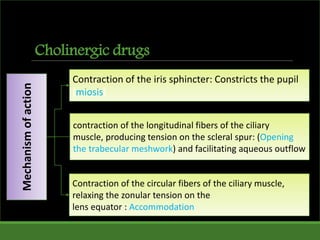
Cholinergic drugs
contraction of the longitudinal fibers of the ciliary
muscle, producing tension on the scleral spur: (Opening
the trabecular meshwork) and facilitating aqueous outflow
Contraction of the circular fibers of the ciliary muscle,
relaxing the zonular tension on the
lens equator : Accommodation
Contraction of the iris sphincter: Constricts the pupil
(miosis)
Mechanismofaction
Classification of Cholinergic Agonists
Direct-acting
Acetylcholine
Methacholine
Pilocarpine ā–Ŗ drop- 0.5, 1, 2, 4, 6 %,gel-4%
Carbachol ā–Ŗ drop-1.5, 3%
Indirect-acting (cholinesterase inhibitors)
Reversible
Physostigmine
Neostigmine
Edrophonium
Demecarium
Irreversible
Echothiophate ā–Ŗ drop-0.125%
Diisopropylfluorophosphate
ā–Ŗ Formulated for topical ocular use
Activate cholinergic receptors directly at the
neuroeffector junctions of the iris sphincter muscle and
ciliary body
Exert their cholinergic effects primarily by inhibiting
cholinesterase, thereby making increased amounts
of acetylcholine available at cholinergic receptors
Cholinergic drugs
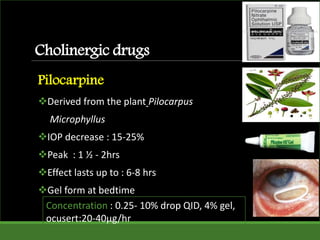
Pilocarpine
Derived from the plant Pilocarpus
Microphyllus
IOP decrease : 15-25%
Peak : 1 ½ - 2hrs
Effect lasts up to : 6-8 hrs
Gel form at bedtime
Concentration : 0.25- 10% drop QID, 4% gel,
ocusert:20-40µg/hr
Ocular pigmentation influences
 Blue eyes show maximal ocular hypotensive responses
 Darkly pigmented eyes demonstrate a relative resistance
to IOP reduction
may require pilocarpine solutions in
concentrations exceeding 4%
Cholinergic drugs
Cholinergic drugs
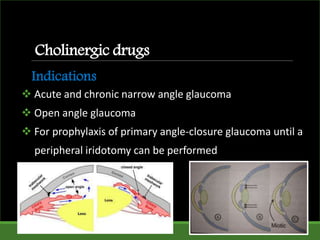
 Acute and chronic narrow angle glaucoma
 Open angle glaucoma
 For prophylaxis of primary angle-closure glaucoma until a
peripheral iridotomy can be performed
Indications
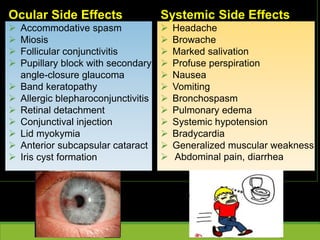
Ocular Side Effects
 Accommodative spasm
 Miosis
 Follicular conjunctivitis
 Pupillary block with secondary
angle-closure glaucoma
 Band keratopathy
 Allergic blepharoconjunctivitis
 Retinal detachment
 Conjunctival injection
 Lid myokymia
 Anterior subcapsular cataract
 Iris cyst formation
Systemic Side Effects
 Headache
 Browache
 Marked salivation
 Profuse perspiration
 Nausea
 Vomiting
 Bronchospasm
 Pulmonary edema
 Systemic hypotension
 Bradycardia
 Generalized muscular weakness
 Abdominal pain, diarrhea
o Presence of cataract
o Patients younger than 40 years of age
o Neovascular and uveitic glaucoma
o History of retinal detachment
o Asthma or history of asthma
o High myopia
o Known hypersensitivity to the drug
Cholinergic drugs
Contraindications
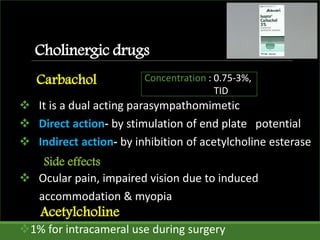
 It is a dual acting parasympathomimetic
 Direct action- by stimulation of end plate potential
 Indirect action- by inhibition of acetylcholine esterase
 Ocular pain, impaired vision due to induced
accommodation & myopia
1% for intracameral use during surgery
Carbachol
Acetylcholine
Cholinergic drugs
Concentration : 0.75-3%,
TID
Side effects
 It is an indirect acting parasympathomimetic
Constriction of sphincter pupillae muscle around
the pupillary margin and thus increases aqueous outflow
Retinal detachment, miosis, cataract, pupillary
block glaucoma, iris cyst, browache and punctal stenosis
Physostigmine
Cholinergic drugs
Concentration : 0.25-0.5% drop
Mechanism
Side effects
Prostaglandin Analogue
Originally discovered in the eye as mediators of the ocular
inflammatory response
Pro-drugs
Converted to active compound by corneal esterases
MOA: Increases uveoscleral outflow
PG stimulates collagenase and metalloproteinase to degrade the
extracellular matrix between ciliary muscle bundles, which in
turn leads to the reduction of hydraulic resistance to uveoscleral
flow
Prostaglandin analogue
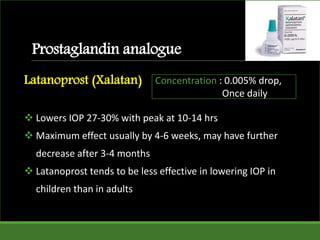
Latanoprost (Xalatan)
 Lowers IOP 27-30% with peak at 10-14 hrs
 Maximum effect usually by 4-6 weeks, may have further
decrease after 3-4 months
 Latanoprost tends to be less effective in lowering IOP in
children than in adults
Concentration : 0.005% drop,
Once daily
Prostaglandin analogue
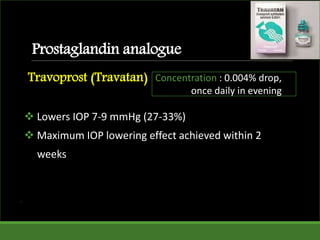
Travoprost (Travatan)
 Lowers IOP 7-9 mmHg (27-33%)
 Maximum IOP lowering effect achieved within 2
weeks
.
Concentration : 0.004% drop,
once daily in evening
Prostaglandin analogue
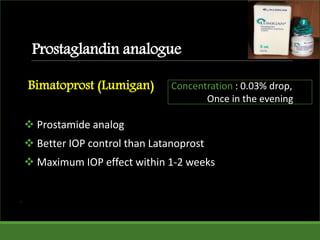
Bimatoprost (Lumigan)
 Prostamide analog
 Better IOP control than Latanoprost
 Maximum IOP effect within 1-2 weeks
.
Concentration : 0.03% drop,
Once in the evening
Prostaglandin analogue
Indications Contraindications
o Primary open angle glaucoma
o Normal tension glaucoma
o Chronic closed angle glaucoma
o Pigment dispersion syndrome
o Exfoliation glaucoma
o Allergy
o Pregnant and nursing mother
o Children
o Uveitic glaucoma
o Immediate postoperative
period
o Pt. with healed or active
herpes simplex keratitis
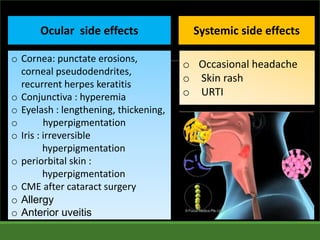
Ocular side effects Systemic side effects
o Cornea: punctate erosions,
corneal pseudodendrites,
recurrent herpes keratitis
o Conjunctiva : hyperemia
o Eyelash : lengthening, thickening,
o hyperpigmentation
o Iris : irreversible
hyperpigmentation
o periorbital skin :
hyperpigmentation
o CME after cataract surgery
o Allergy
o Anterior uveitis
o Occasional headache
o Skin rash
o URTI
Advantage
oOnce daily dosing
oLack of cardiopulmonary side effects
oAdditivity to other anti glaucoma medications
Prostaglandin analogue
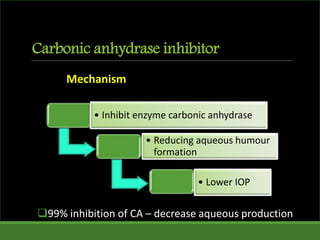
Carbonic anhydrase inhibitor
99% inhibition of CA – decrease aqueous production
• Inhibit enzyme carbonic anhydrase
• Reducing aqueous humour
formation
• Lower IOP
Mechanism of actionMechanism
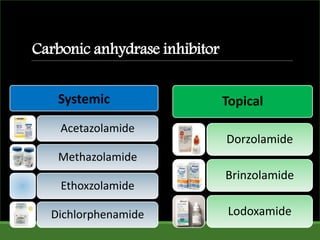
Carbonic anhydrase inhibitor
Systemic
Acetazolamide
Methazolamide
Ethoxzolamide
Dichlorphenamide
Topical
Dorzolamide
Brinzolamide
Lodoxamide
Carbonic anhydrase inhibitor
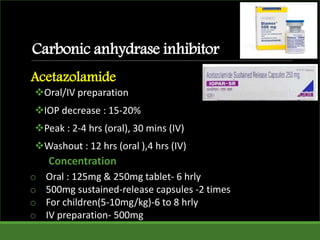
Oral/IV preparation
IOP decrease : 15-20%
Peak : 2-4 hrs (oral), 30 mins (IV)
Washout : 12 hrs (oral ),4 hrs (IV)
Acetazolamide
o Oral : 125mg & 250mg tablet- 6 hrly
o 500mg sustained-release capsules -2 times
o For children(5-10mg/kg)-6 to 8 hrly
o IV preparation- 500mg
Concentration
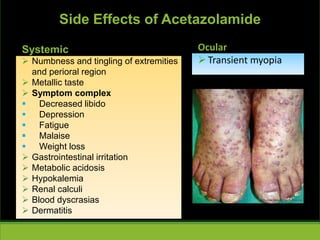
Systemic
 Numbness and tingling of extremities
and perioral region
 Metallic taste
 Symptom complex
ļ‚§ Decreased libido
ļ‚§ Depression
ļ‚§ Fatigue
ļ‚§ Malaise
ļ‚§ Weight loss
 Gastrointestinal irritation
 Metabolic acidosis
 Hypokalemia
 Renal calculi
 Blood dyscrasias
 Dermatitis
Ocular
Transient myopia
Side Effects of Acetazolamide
 Clinically significant liver disease
 Severe chronic obstructive pulmonary disease
 Certain secondary glaucoma
 Renal disease, including kidney stones
 Pregnancy
 Known hypersensitivity to sulfonamides
Contraindications to Acetazolamide
Carbonic anhydrase inhibitor
 Potency > acetazolamide
 Improved intraocular penetration
 Higher water and lipid solubilities
 Increased half life and plasma concn
 Can be given at lower doses than acetazolamide
o Dose : 25-50mg x BD/TDS
o Indication : chronic IOP reduction
Carbonic anhydrase inhibitor
Methazolamide
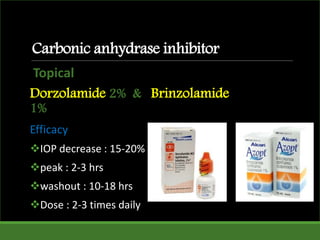
Topical
Dorzolamide 2% & Brinzolamide
1%
Efficacy
IOP decrease : 15-20%
peak : 2-3 hrs
washout : 10-18 hrs
Dose : 2-3 times daily
Carbonic anhydrase inhibitor
Ocular side effects
oInduced myopia
oStinging sensation
oKeratitis, conjunctivitis
oDermatitis
Contrainidications
Pt with known hypersensitivity to sulfonamide
Systemic side effects
o Similar to oral CAI but less likely
Hyperosmotic agents
IV : Mannitol , urea
Oral : glycerol, isosorbide
Mechanism of action
Increase blood osmolality
Osmotic gradient between blood
and vitreous
Water is drawn out of vitreous
Hyperosmotic agents
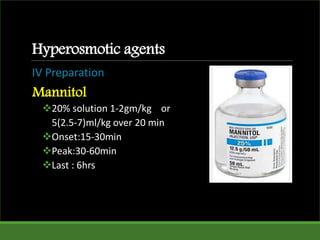
IV Preparation
Mannitol
20% solution 1-2gm/kg or
5(2.5-7)ml/kg over 20 min
Onset:15-30min
Peak:30-60min
Last : 6hrs
Hyperosmotic agents
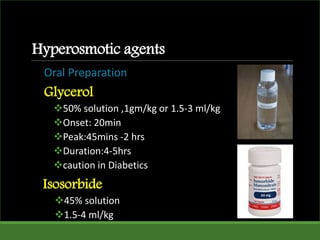
Oral Preparation
Glycerol
50% solution ,1gm/kg or 1.5-3 ml/kg
Onset: 20min
Peak:45mins -2 hrs
Duration:4-5hrs
caution in Diabetics
Isosorbide
45% solution
1.5-4 ml/kg
Hyperosmotic agents
Side effects
Gastrointestinal system
oNausea,vomiting,abdominal cramp
Cardiovascular system
oCHF,angina
CNS
oSubdural hematoma, Headache, confusion,
disorientation,fever
Renal
oDiuresis, anuria, potassium loss
Others
oDiabetic ketoacidosis ,urticaria.
Summary
Open angle glaucoma
1.β-blockers :Timolol, Betoxolol, Levubunolol
2.Miotic : Pilocarpine
3.α adrenergic agonist : Adrenaline, Dipiverdine, Brimonidine
4.Carbonic anhydrase inhibitors : Acetazolamide, Dorzolamide
5.Prostaglandin : Latanoprost
Angle closure glaucoma
Combination of vigorous therapy is employed
1.Beta blocker –Timolol eye drop
2.Miotic – Pilocarpine eye drop every 10 min
3.Hypertonic- mannitol injection (20%)
4.Acetazolamide orally
5.Apraclonidine eye drop
Summary
Mode of action of anti glaucoma drugs
Beta blocker-decrease aqueous secretion
Miotics -increase trabecular outflow
Adrenergic agonist-decrease aqueous secretion
Prostaglandin-increase trabecular and uveaoscleral outflow
Carbonic anhydrase inhibitor-decrease aqueous secretion
Summary
References
 Clinical Ocular Pharmacology by Jimmy D Balett
 Ophthalmic Drugs by Graham Hopkins & Richard Pearson
 Comprehensive Ophthalmology by A.K. Khurana
 AAO-Section 10-Glaucoma
 AAO-Section 2-Fundamentals & Principles of Ophthalmology
 Internet
Anti-glaucoma Drugs /Anti glaucoma eye drops/ Glaucoma Medications (healthkura.com), Ocular Pharmacology

Anti-glaucoma Drugs /Anti glaucoma eye drops/ Glaucoma Medications (healthkura.com), Ocular Pharmacology

  • 1.
    ANTI GLAUCOMA DRUGS BikashSapkota 16th batch B. Optometry Maharajgunj Medical Campus Nepal
  • 2.
    Presentation Layout  Introductionto glaucoma  Anti glaucoma drugs: Classification Indications Contraindications  Summary
  • 3.
    Introduction VISUAL FIELD LOSS OPTIC NERVE DAMAGE GLAUCOMA INCREASE IOP  Glaucomarefers to a group of diseases characterized by • Optic neuropathy • Specific pattern of visual field defect • Raised IOP
  • 4.
    Aqueous production anddrainage  Secretion of aqueous humour -ciliary body (posterior chamber)  Route of drainage -primary (90%) : trabecular meshwork -uveo-scleral outflow(10%)
  • 5.
    Purpose of initiatingglaucoma therapy The ultimate goal of glaucoma treatment is To preserve enough vision during the patient’s lifetime to meet their functional needs  Ideally, treatment should also delay glaucomatous process
  • 6.
    MEDICAL ASPECTS OFGLAUCOMA THERAPY o When to treat ? - when glaucomatous damage is documented or future damage is likely o What to prescribed ? - best to try one drug with least ocular & systemic side effects - use least amount of medication - in emergency use 2 drugs
  • 7.
    Mechanisms of actionof anti glaucoma agents Chief therapeutic measure is to lower IOP to the target level either by o Reducing aqueous production in the ciliary body o Promoting aqueous humour outflow through the trabecular meshwork o Promoting aqueous humour outflow via the uveoscleral pathway
  • 8.
     Beta blockers e.g.timolol, carteolol, betaxolol,levobunolol and metipranolol Classification of anti glaucoma drugs  Adrenergic agonists e.g. epinephrine, dipivefrin, brimonidine and apraclonidine  Prostaglandin analogue e.g. latanoprost, bimatoprost ,unoprostone  Cholinergic agents e.g. pilocarpine, carbachol,demecarium bromide and echothiophate iodide  Carbonic anhydrase inhibitors e.g. dorzolamide and brinzolamide Topical Drops
  • 9.
     Carbonic anhydraseinhibitors e.g. acetazolamide and methazolamide  Osmotic agents e.g. glycerine, mannitol and urea Systemic Drops
  • 10.
    Beta blockers  Firstdrug of choice for POAG  Lower IOP by reducing aqueous secretion due to their effect on β2 receptors Non selective β1 & β2 Timolol Levobunolol Metipranolol Carteolol Selective β1 blockers Betaxolol Pindolol Metaprolol
  • 11.
    β-blockers are ineffectiveduring sleep Topical β-blockers reduce aqueous formation by 24% to 48% in awake humans Antagonize the effect of catecholamines Reduction in aqueous secretion Mechanism of action
  • 12.
    Beta blockers Timolol Most commonlyused agent Non-selective β blocker As a salts of : maleate, Hemihydrate Efficacy oIOP decrease : 20% to28% oPeak – 2-3 hrs oWashout : 1 month Concentration: 0.25% & 0.5%, 1-2 times daily
  • 13.
    Beta blockers Short termescape: ļ‚§ Marked initial fall in IOP followed by transient rise with moderate fall in IOP Long term drift: ļ‚§ Slow rise in IOP in patients who were well controlled with many months of therapy
  • 14.
    Beta blockers Carteolol Non selectivebeta blocker As effective as timolol Intrinsic sympathomimetic activity and ability to partially activate β-receptors in the absence of catecholamines Advantages oLess stinging oBest choice in pt. with POAG having associated hyperlipidemias or atherosclerotic cardiovascular disease Concentration : 1% drop, 1-2 times daily
  • 15.
    Beta blockers Levobunolol Reduces IOPby oReducing aqueous humor formation Advantage oAction lasts the longest, so is more reliable for once a day use than timolol Contraindications oPts. predisposed to cardiac or respiratory disease Concentration : 0.25 – 0.50% drop, once daily
  • 16.
    Beta blockers Betaxolol First selectiveβ1 blocker used in ophthalmology Long term effect is slightly less than Timolol and Levobunolol Advantage oInitial therapy in pts. with asthma and other pulmonary problems Concentration : 0.25% drop, 2 times daily
  • 17.
    Adverse effects ofβ-blockers Cardiovascular -Bradycardia -Conduction arrhythmias -Hypotension -Raynaud’s phenomenon -Fluid retention Pulmonary -Bronchoconstriction/ bronchospasm -Asthma -Dyspnea Central nervous system Amnesia Depression Confusion Headache Impotence Insomnia Migraine prophylaxis Myasthenia gravis Gastrointestinal Diarrhea Nausea Dermatologic Alopecia Nail pigmentation Urticaria Lichen planus
  • 18.
    Ocularsideeffects Beta blockers Allergic blepharoconjunctivitis Dryeye/decreased tear breakup time Corneal anesthesia Macular edema (aphakics) Macular hemorrhage/retinal detachment Uveitis Cataract progression Allergic blepharoconjunctivitis Dry eye/decreased tear breakup time Corneal anesthesia Macular edema (aphakics) Macular hemorrhage/retinal detachment Uveitis Cataract progression
  • 19.
    Beta blockers Open angle Glaucoma Angleclosure Glaucoma Secondary Glaucoma Glaucoma in children Indications
  • 20.
    Beta blockers Bronchial asthma Historyof bronchial asthma Severe COPD Bradycardia Severe heart block Overt cardiac failure Children & infants Contraindications
  • 21.
    Beta blockers Clinical issuesPreferred drug Best IOP control Avoid Betaxolol Cost Generic Timolol Metipranolol Timolol hemihydrate Comfort Carteolol Hypercholesterolemia Carteolol COPD Betaxolol Pregnancy Avoid all Selection of β-Blockers
  • 22.
    Adrenergic agonist Mode ofaction  Decreasing aqueous formation by constricting the ciliary blood vessels  Increasing uveoscleral outflow by an increase in prostaglandin synthesis
  • 23.
    Adrenergic agonist α andβ agonist Epinephrine Dipivefrin Phenylephrine α2 selective Apraclonidine Brimonidine
  • 24.
    Adrenergic agonist Epinephrine Nonselective α-and β-adrenergic agonist Onset of action occurs at 1 hr Peak effect at 4 hours Ocular hypotensive effect may last up to 72 hours IOP control : 20 -25 % Concentration : 0.5-2% drop, 2 times daily
  • 25.
    Adrenergic agonist Side effectsof epinephrine Stinging Browache Conjunctival hyperemia Adenochrome deposits Allergic lid reactions Macular edema Blepharoconjuntivitis Systemic hypertension Arrythmia Contraindications o Severe Hypertension o Cardiac Diseases o Thyrotoxicosis
  • 26.
    Adrenergic agonist Dipivefrin Prodrug Penetration acrossthe cornea is 17 times more than epinephrine Better tolerated than epinephrine Onset of action : 30 minutes, Peak effect : 1hr IOP reduction :20-24% Advantage oLower cardiovascular side effects oCan be used in pts. of asthma, in young pts. intolerant to miotics and in those with cataracts Concentration : 0.1% drop, 2 times daily
  • 27.
    Adrenergic agonist Phenylephrine Acts onα1 adrenergic receptors MOA : Induce vasoconstriction and mydriasis to break posterior synechiae Can produce mydriasis even in pts. treated with strong miotics Concentration : 0.125-10 %drop
  • 28.
    Adrenergic agonist Apraclonidine α2-adrenergic agonist Paraamino derivative of clonidine IOP control : 20 % -30 % Maximal effect is produced 3-5 hours after dosing Not used as primary treatment due to significant tachyphylaxis  Mainly indicated in acute pressure spikes in case of laser iridotomy, trabeculoplasty, and posterior capsulotomy Concentration : 1% and 0.5%, twice daily
  • 29.
    Adrenergic agonist Brimonidine Small effecton uveoscleral outflow Neuroprotection IOP control: 20-30% Advantage oCan be used as primary drug in POAG oLess tachyphylaxis & less rate of allergic reactions than apraclonidine Concentration :tartrate 0.2%, tartrate in purite 0.1%BD, TID
  • 30.
    Adrenergic agonist Ocular oAllergy oContact dermatitis oBlurredvision oBurning/ stinging oFollicular conjunctivitis oHyperemia/itching oPhotophobia Side effects Systemic oDry mouth oFatigue oDrowsiness oHeadache oHypotension oBradycardia in neonates oHypothermia in neonates
  • 31.
    Cholinergic drugs contraction ofthe longitudinal fibers of the ciliary muscle, producing tension on the scleral spur: (Opening the trabecular meshwork) and facilitating aqueous outflow Contraction of the circular fibers of the ciliary muscle, relaxing the zonular tension on the lens equator : Accommodation Contraction of the iris sphincter: Constricts the pupil (miosis) Mechanismofaction
  • 32.
    Classification of CholinergicAgonists Direct-acting Acetylcholine Methacholine Pilocarpine ā–Ŗ drop- 0.5, 1, 2, 4, 6 %,gel-4% Carbachol ā–Ŗ drop-1.5, 3% Indirect-acting (cholinesterase inhibitors) Reversible Physostigmine Neostigmine Edrophonium Demecarium Irreversible Echothiophate ā–Ŗ drop-0.125% Diisopropylfluorophosphate ā–Ŗ Formulated for topical ocular use Activate cholinergic receptors directly at the neuroeffector junctions of the iris sphincter muscle and ciliary body Exert their cholinergic effects primarily by inhibiting cholinesterase, thereby making increased amounts of acetylcholine available at cholinergic receptors
  • 33.
    Cholinergic drugs Pilocarpine Derived fromthe plant Pilocarpus Microphyllus IOP decrease : 15-25% Peak : 1 ½ - 2hrs Effect lasts up to : 6-8 hrs Gel form at bedtime Concentration : 0.25- 10% drop QID, 4% gel, ocusert:20-40µg/hr
  • 34.
    Ocular pigmentation influences Blue eyes show maximal ocular hypotensive responses  Darkly pigmented eyes demonstrate a relative resistance to IOP reduction may require pilocarpine solutions in concentrations exceeding 4% Cholinergic drugs
  • 35.
    Cholinergic drugs  Acuteand chronic narrow angle glaucoma  Open angle glaucoma  For prophylaxis of primary angle-closure glaucoma until a peripheral iridotomy can be performed Indications
  • 36.
    Ocular Side Effects Accommodative spasm  Miosis  Follicular conjunctivitis  Pupillary block with secondary angle-closure glaucoma  Band keratopathy  Allergic blepharoconjunctivitis  Retinal detachment  Conjunctival injection  Lid myokymia  Anterior subcapsular cataract  Iris cyst formation Systemic Side Effects  Headache  Browache  Marked salivation  Profuse perspiration  Nausea  Vomiting  Bronchospasm  Pulmonary edema  Systemic hypotension  Bradycardia  Generalized muscular weakness  Abdominal pain, diarrhea
  • 37.
    o Presence ofcataract o Patients younger than 40 years of age o Neovascular and uveitic glaucoma o History of retinal detachment o Asthma or history of asthma o High myopia o Known hypersensitivity to the drug Cholinergic drugs Contraindications
  • 38.
     It isa dual acting parasympathomimetic  Direct action- by stimulation of end plate potential  Indirect action- by inhibition of acetylcholine esterase  Ocular pain, impaired vision due to induced accommodation & myopia 1% for intracameral use during surgery Carbachol Acetylcholine Cholinergic drugs Concentration : 0.75-3%, TID Side effects
  • 39.
     It isan indirect acting parasympathomimetic Constriction of sphincter pupillae muscle around the pupillary margin and thus increases aqueous outflow Retinal detachment, miosis, cataract, pupillary block glaucoma, iris cyst, browache and punctal stenosis Physostigmine Cholinergic drugs Concentration : 0.25-0.5% drop Mechanism Side effects
  • 40.
    Prostaglandin Analogue Originally discoveredin the eye as mediators of the ocular inflammatory response Pro-drugs Converted to active compound by corneal esterases MOA: Increases uveoscleral outflow PG stimulates collagenase and metalloproteinase to degrade the extracellular matrix between ciliary muscle bundles, which in turn leads to the reduction of hydraulic resistance to uveoscleral flow
  • 41.
    Prostaglandin analogue Latanoprost (Xalatan) Lowers IOP 27-30% with peak at 10-14 hrs  Maximum effect usually by 4-6 weeks, may have further decrease after 3-4 months  Latanoprost tends to be less effective in lowering IOP in children than in adults Concentration : 0.005% drop, Once daily
  • 42.
    Prostaglandin analogue Travoprost (Travatan) Lowers IOP 7-9 mmHg (27-33%)  Maximum IOP lowering effect achieved within 2 weeks . Concentration : 0.004% drop, once daily in evening
  • 43.
    Prostaglandin analogue Bimatoprost (Lumigan) Prostamide analog  Better IOP control than Latanoprost  Maximum IOP effect within 1-2 weeks . Concentration : 0.03% drop, Once in the evening
  • 44.
    Prostaglandin analogue Indications Contraindications oPrimary open angle glaucoma o Normal tension glaucoma o Chronic closed angle glaucoma o Pigment dispersion syndrome o Exfoliation glaucoma o Allergy o Pregnant and nursing mother o Children o Uveitic glaucoma o Immediate postoperative period o Pt. with healed or active herpes simplex keratitis
  • 45.
    Ocular side effectsSystemic side effects o Cornea: punctate erosions, corneal pseudodendrites, recurrent herpes keratitis o Conjunctiva : hyperemia o Eyelash : lengthening, thickening, o hyperpigmentation o Iris : irreversible hyperpigmentation o periorbital skin : hyperpigmentation o CME after cataract surgery o Allergy o Anterior uveitis o Occasional headache o Skin rash o URTI
  • 46.
    Advantage oOnce daily dosing oLackof cardiopulmonary side effects oAdditivity to other anti glaucoma medications Prostaglandin analogue
  • 47.
    Carbonic anhydrase inhibitor 99%inhibition of CA – decrease aqueous production • Inhibit enzyme carbonic anhydrase • Reducing aqueous humour formation • Lower IOP Mechanism of actionMechanism
  • 48.
  • 49.
    Carbonic anhydrase inhibitor Oral/IVpreparation IOP decrease : 15-20% Peak : 2-4 hrs (oral), 30 mins (IV) Washout : 12 hrs (oral ),4 hrs (IV) Acetazolamide o Oral : 125mg & 250mg tablet- 6 hrly o 500mg sustained-release capsules -2 times o For children(5-10mg/kg)-6 to 8 hrly o IV preparation- 500mg Concentration
  • 50.
    Systemic  Numbness andtingling of extremities and perioral region  Metallic taste  Symptom complex ļ‚§ Decreased libido ļ‚§ Depression ļ‚§ Fatigue ļ‚§ Malaise ļ‚§ Weight loss  Gastrointestinal irritation  Metabolic acidosis  Hypokalemia  Renal calculi  Blood dyscrasias  Dermatitis Ocular Transient myopia Side Effects of Acetazolamide
  • 51.
     Clinically significantliver disease  Severe chronic obstructive pulmonary disease  Certain secondary glaucoma  Renal disease, including kidney stones  Pregnancy  Known hypersensitivity to sulfonamides Contraindications to Acetazolamide Carbonic anhydrase inhibitor
  • 52.
     Potency >acetazolamide  Improved intraocular penetration  Higher water and lipid solubilities  Increased half life and plasma concn  Can be given at lower doses than acetazolamide o Dose : 25-50mg x BD/TDS o Indication : chronic IOP reduction Carbonic anhydrase inhibitor Methazolamide
  • 53.
    Topical Dorzolamide 2% &Brinzolamide 1% Efficacy IOP decrease : 15-20% peak : 2-3 hrs washout : 10-18 hrs Dose : 2-3 times daily Carbonic anhydrase inhibitor
  • 54.
    Carbonic anhydrase inhibitor Ocularside effects oInduced myopia oStinging sensation oKeratitis, conjunctivitis oDermatitis Contrainidications Pt with known hypersensitivity to sulfonamide Systemic side effects o Similar to oral CAI but less likely
  • 55.
    Hyperosmotic agents IV :Mannitol , urea Oral : glycerol, isosorbide Mechanism of action Increase blood osmolality Osmotic gradient between blood and vitreous Water is drawn out of vitreous
  • 56.
    Hyperosmotic agents IV Preparation Mannitol 20%solution 1-2gm/kg or 5(2.5-7)ml/kg over 20 min Onset:15-30min Peak:30-60min Last : 6hrs
  • 57.
    Hyperosmotic agents Oral Preparation Glycerol 50%solution ,1gm/kg or 1.5-3 ml/kg Onset: 20min Peak:45mins -2 hrs Duration:4-5hrs caution in Diabetics Isosorbide 45% solution 1.5-4 ml/kg
  • 58.
    Hyperosmotic agents Side effects Gastrointestinalsystem oNausea,vomiting,abdominal cramp Cardiovascular system oCHF,angina CNS oSubdural hematoma, Headache, confusion, disorientation,fever Renal oDiuresis, anuria, potassium loss Others oDiabetic ketoacidosis ,urticaria.
  • 59.
    Summary Open angle glaucoma 1.β-blockers:Timolol, Betoxolol, Levubunolol 2.Miotic : Pilocarpine 3.α adrenergic agonist : Adrenaline, Dipiverdine, Brimonidine 4.Carbonic anhydrase inhibitors : Acetazolamide, Dorzolamide 5.Prostaglandin : Latanoprost
  • 60.
    Angle closure glaucoma Combinationof vigorous therapy is employed 1.Beta blocker –Timolol eye drop 2.Miotic – Pilocarpine eye drop every 10 min 3.Hypertonic- mannitol injection (20%) 4.Acetazolamide orally 5.Apraclonidine eye drop Summary
  • 61.
    Mode of actionof anti glaucoma drugs Beta blocker-decrease aqueous secretion Miotics -increase trabecular outflow Adrenergic agonist-decrease aqueous secretion Prostaglandin-increase trabecular and uveaoscleral outflow Carbonic anhydrase inhibitor-decrease aqueous secretion Summary
  • 62.
    References  Clinical OcularPharmacology by Jimmy D Balett  Ophthalmic Drugs by Graham Hopkins & Richard Pearson  Comprehensive Ophthalmology by A.K. Khurana  AAO-Section 10-Glaucoma  AAO-Section 2-Fundamentals & Principles of Ophthalmology  Internet

Editor's Notes

  • #4Ā Damage to optic nerve is irreversible process Normal IOP is 10-21mmHg
  • #11Ā Beta 2 is present in ciliary epithelium
  • #12Ā  Alpha 1 receptor are located in arteriole, dilator muscle, muller muscle.stimulation will result in hypertension, dilatation, lid retraction. Alpha 2 are located in ciliary epithelium. Its stimluation will cause decrease aqueous production Beta 1- is present in myocardium . Result in tachycardia and increase cardiac output Beta 2 is present in bronchi and ciliary epithelium. Stimulation causes bronchodilatation, and increase aqueous production. Ā 
  • #13Ā If one time daily use is chosen,its better to use drop in the morning Both timolol and betaxolol accumulate in Tenon’s capsule where a reservoir effect may occur allowing gradual release of these agents long after they have been discontinued Not useful in patient already on systemic beta blockers bcoz most of the beta receptors are already blocked
  • #14Ā Short term escape :is due to an increase in the number of β-adrenergic receptors in the ciliary processes under the condition of prolonged β-adrenergic blockade Long term drift : a time-dependent decrease in cellular sensitivity to adrenergic antagonists..tachyphylaxis.
  • #15Ā  They are partial antagonist It has less effect on serum lipid level than timolol
  • #18Ā Amnesia:Partial or total loss of memory Bradycardia:Abnormally slow heartbeat Arrhythmias :An abnormal rate of muscle contractions in the heart Dyspnea:Difficult or labored respiration Alopecia:Loss of hair (especially on the head) Lichen planus: ithchy allergic reaction affecting limbs
  • #24Ā Alpha 1 vasoconstriction of ciliary vessles decreased acqueous formation Alpha 2 ciliary epithelium : decreased secretory activity
  • #26Ā  Instilled epinephrine undergoes oxidation and polymerization to form adrenochrome, a pigment of the melanin family. Adrenochrome deposits are often found in the lower conjunctival cul-de-sac, where they may be mistaken for foreign bodies These deposits generally produce no symptoms Adrenochrome deposits in the conjunctiva may last for years even after discontinuation of the drug
  • #27Ā undergoes biotransformation to epinephrine within the cornea by esterase enzyme Greater penetration due to lipophilic nature Differs from epi in that it lacks benzene group Often combined with echthiophate to reduce iris epithelial cys t
  • #29Ā This para amino derivative decrease penetration to blood brain barrier and thus reduces the risk of systemic hypertension and reduces CNS side effects 1.0% concentration is used to control postsurgical elevations in IOP after anterior segment laser surgery and for short-term IOP control in open-angle glaucoma before filtering procedures
  • #30Ā It is the drug of choice in chronic treatment of glaucoma and in patients with cardiopulmonary disease and who have contraindications to b-blocker Neuroprotection:it promotes ganglion cell survival after ischaemic damage or elevated glutamate level
  • #31Ā Brimonidine alters matrix mellanopreotease in the corneal cells and thus they may contribute to ocular surface disease
  • #34Ā Ocusert:thin elliptical micro units containing drug in reservoir Placed under lower eyelid Delivers drug for 7 days
  • #36Ā During an acute angle-closure attack, the IOP is often in excess of 60 mm Hg.At those high pressures the ischemic iris sphincter is unresponsive to pilocarpine. Topical β-blockers, apraclonidine, or systemic agents are indicated initially to bring the pressure below 50 mm Hg before pilocarpine is administered.
  • #44Ā It means bimatoprost differs sufficiently in both structure and function from other prostaglandin compounds to warrant a new class of ocular hypotensive agents, called prostamides
  • #45Ā In children it is less effective
  • #46Ā No systemic side effect because of low concentration of drug and short plasma half life Increase in iris pigmentation :It usually occurs after 6 months, Ā may persist for 2 years after discontinuation of treatment.:Mechanism is PG may stimulate synthesis of melanin within iris melanocyte but not an increase in melanocyte no.
  • #48Ā (nonpigmented epithelium of ciliary processes)-60% of the aqueous humour formation is dependent on this enzyme. cA is essential to form bicarbonate….bicarbonate formation is essential for aq. Production Most tissues contain carbonic anhydrase in quantities that exceed physiologic requirements. Because of this excess, at least 99% of carbonic anhydrase activity must be inhibited to depress aqueous production significantly
  • #50Ā Acetazolamide has poor lipid solubility and corneal penetration, so not applied topically Carbonic anhydrase is present in the corneal endothelium so drugs that affect it impair its pump mechanism.thus contraindicated in pt. with compromised endothelium and who have gone keratoplasty. In contrast to timolol, which has no significant effect on aqueous flow in sleeping humans, acetazolamide reduces aqueous flow during sleep. In humans, the aqueous flow rate normally decreases approximately 60% during sleep.Acetazolamide suppresses aqueous flow an additional 24% below the nocturnal flow rate.
  • #56Ā Osmotic agents are approved for the short -term management of acute glaucoma in adults and may be used in the reduction of vitreous volume prior to cataract surgery.
  • #57Ā Mannitol must be given intravenously because it is not absorbed from the gastrointestinal tract.
  • #59Ā Hematoma:A localized swelling filled with blood Angina:A heart condition marked by chest pain due to reduced oxygen to the heart Diuresis:Increased secretion of urine Anuria:Inability to urinate Ketoacidosis:Acidosis with an accumulation of ketone bodies; occurs primarily in diabetes mellitus