Antimicrobial Drugs
 Chemotherapy: The use of drugs to treat a disease
 Antimicrobial drugs: Interfere with the growth of
  microbes within a host
 Antibiotic: A substance produced by a microbe that,
  in small amounts, inhibits another microbe
 Selective toxicity: A drug that kills harmful microbes
  without damaging the host
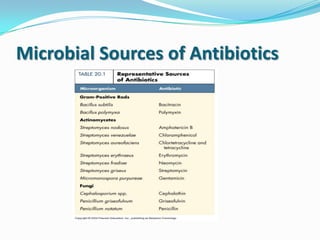
Microbial Sources of Antibiotics
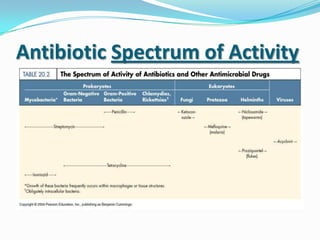
Antibiotic Spectrum of Activity
Antimicrobial Drugs:
Antibiotic: Substance produced by a microorganism that in
 small amounts inhibits the growth of another microbe.
Antibiotic producing microbes include:
  Gram-Positive Rods:
       Bacillus subtilis: Bacitracin
       Bacillus polymyxa: Polymyxin
  Fungi
    Penicillium notatum: Penicillin
    Cephalosporium spp.: Cephalothin
  Actinomycetes:
    Streptomyces venezuelae: Chloramphenicol
    Streptomyces griseus: Streptomycin
    Streptomyces nodosus: Amphotericin B
    Micromonospora purpurea: Gentamycin
• Antibacterials: Relatively easy to develop and find with
  low toxicity because procaryotic cells are very different
  from host cells.
• Antihelminthic, antiprotozoan, and antifungal drugs:
  More difficult to develop because eucaryotic cells resemble
  human cells.
• Antivirals: Most difficult to develop because virus
  reproduces using host cell enzymes and machinery.
    Spectrum of Antimicrobial Activity
   Broad Spectrum: Effective against many different types
    of bacteria (e.g.: both gram positive and negative).
    Examples: Tetracyclin
    Narrow Spectrum Antibiotics: Effective against a
    subset of bacteria (either gram positive and negative).
     Examples: Penicillin, Isoniazid (Mycobacteria only}
Mechanisms of Antimicrobial
Action
 Bacteria have their own enzymes for
    Cell wall formation
    Protein synthesis
    DNA replication
    RNA synthesis
    Synthesis of essential metabolites
 Viruses use host enzymes inside host cells
 Fungi and protozoa have own eukaryotic enzymes

 The more similar the pathogen and host enzymes, the
 more side effects the antimicrobials will have
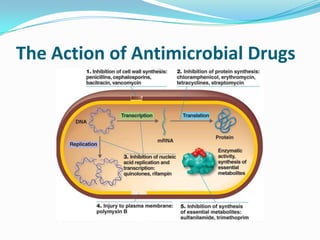
The Action of Antimicrobial Drugs
 Bactericidal
   Kill microbes directly

 Bacteriostatic
   Prevent microbes from growing
The Action of Antimicrobial Drugs
Antimicrobial Mechanisms of Action
   Inhibition of Cell Wall Synthesis: Interfere with
   peptidoglycan synthesis.
       Result in cell lysis.
       Low toxicity.
       E.g.: Penicillin and vancomycin.
  Other antibiotics in the penicillin family (B-lactams):
   Ampicillin, Methicillin, and Oxacillin
Antimicrobial Mechanisms of Action
  Inhibition of Protein Synthesis: Interfere with
   procaryotic (70S) ribosomes, also found in
   mitochondria.
     Most have broad spectrum of activity
    Tetracyclin, chloramphenicol, erythromycin, and
     streptomycin.
Antimicrobial Mechanisms of Action
   Injury to the Plasma Membrane: Cause changes in
   membrane permeability.
      Result in loss of metabolites and/or cell lysis.
      Many polypeptide antibiotics.
       E.g.: Polymyxin B (antibacterial) or miconazole
       (antifungal).
   Inhibition of Nucleic Acid (DNA/RNA) Synthesis:
   Interfere with DNA replication and transcription.
      May be toxic to human cells.
      E.g.: Rifampin and quinolones
Antimicrobial Mechanisms of Action
   Inhibition of Synthesis of Essential Metabolites:
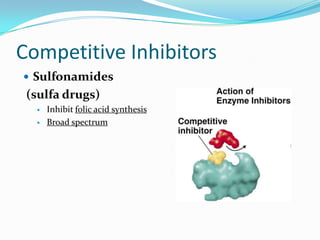
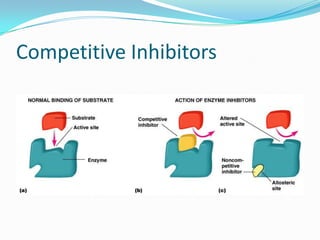
   Involve competitive inhibition of key enzymes.
      Closely resemble substrate of enzyme.
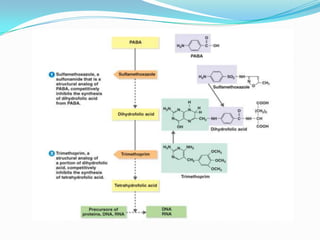
      E.g.: Sulfa drugs inhibit the synthesis of folic acid which is
       necessary for DNA and RNA synthesis.
Inhibitors of Cell Wall Synthesis
 Antibiotics effective against Mycobacteria:
 interfere with mycolic acid synthesis or
 incorporation. This process inhibits the
 synthesis of mycolic acid which required
 for themycobactericidalbacterial cell wall.
 Isoniazid is to rapidly-
 dividing mycobacteria but
 is bacteriostatic if the mycobacterium is
 slow-growing
Isoniazid may cause side effects:

   diarrhea
   vision problems
   eye pain
   numbness or tingling in the hands and feet
   skin rash
   fever
   swollen glands
   sore throat
   unusual bleeding or bruising
   stomach pains or tenderness
Sulfonamides
 AKA “sulfa drugs”
 Effective against a broad range of microorganisms
 Block specific step in biosynthetic pathway of folic
  acid
 Interfere with PABA and folic acid formation, thereby
  destroying bacteria
Competitive Inhibitors
 Sulfonamides
 (sulfa drugs)
     Inhibit folic acid synthesis
     Broad spectrum
Competitive Inhibitors
Sulfonamides’ Side Effects
 Rash
 Nausea
 Drug fever
 Vomiting
 Jaundice
 Blood complications
 Kidney damage
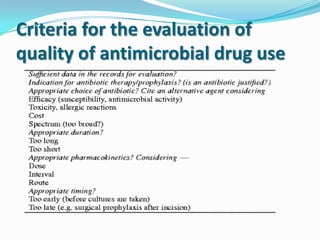
Criteria for the evaluation of
quality of antimicrobial drug use
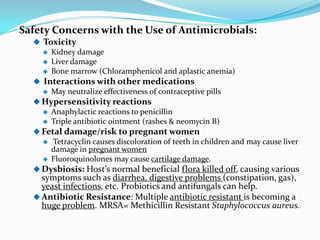
Safety Concerns with the Use of Antimicrobials:
   Toxicity
       Kidney damage
       Liver damage
       Bone marrow (Chloramphenicol and aplastic anemia)
   Interactions with other medications
       May neutralize effectiveness of contraceptive pills
   Hypersensitivity reactions
       Anaphylactic reactions to penicillin
       Triple antibiotic ointment (rashes & neomycin B)
   Fetal damage/risk to pregnant women
       Tetracyclin causes discoloration of teeth in children and may cause liver
        damage in pregnant women
       Fluoroquinolones may cause cartilage damage.
   Dysbiosis: Host’s normal beneficial flora killed off, causing various
    symptoms such as diarrhea, digestive problems (constipation, gas),
    yeast infections, etc. Probiotics and antifungals can help.
   Antibiotic Resistance: Multiple antibiotic resistant is becoming a
    huge problem. MRSA= Methicillin Resistant Staphylococcus aureus.

Chapter 6 antimicrobial drugs

  • 1.
    Antimicrobial Drugs  Chemotherapy:The use of drugs to treat a disease  Antimicrobial drugs: Interfere with the growth of microbes within a host  Antibiotic: A substance produced by a microbe that, in small amounts, inhibits another microbe  Selective toxicity: A drug that kills harmful microbes without damaging the host
  • 2.
  • 3.
  • 4.
    Antimicrobial Drugs: Antibiotic: Substanceproduced by a microorganism that in small amounts inhibits the growth of another microbe. Antibiotic producing microbes include: Gram-Positive Rods:  Bacillus subtilis: Bacitracin  Bacillus polymyxa: Polymyxin Fungi  Penicillium notatum: Penicillin  Cephalosporium spp.: Cephalothin Actinomycetes:  Streptomyces venezuelae: Chloramphenicol  Streptomyces griseus: Streptomycin  Streptomyces nodosus: Amphotericin B  Micromonospora purpurea: Gentamycin
  • 5.
    • Antibacterials: Relativelyeasy to develop and find with low toxicity because procaryotic cells are very different from host cells. • Antihelminthic, antiprotozoan, and antifungal drugs: More difficult to develop because eucaryotic cells resemble human cells. • Antivirals: Most difficult to develop because virus reproduces using host cell enzymes and machinery. Spectrum of Antimicrobial Activity Broad Spectrum: Effective against many different types of bacteria (e.g.: both gram positive and negative). Examples: Tetracyclin  Narrow Spectrum Antibiotics: Effective against a subset of bacteria (either gram positive and negative). Examples: Penicillin, Isoniazid (Mycobacteria only}
  • 6.
    Mechanisms of Antimicrobial Action Bacteria have their own enzymes for  Cell wall formation  Protein synthesis  DNA replication  RNA synthesis  Synthesis of essential metabolites  Viruses use host enzymes inside host cells  Fungi and protozoa have own eukaryotic enzymes  The more similar the pathogen and host enzymes, the more side effects the antimicrobials will have
  • 7.
    The Action ofAntimicrobial Drugs  Bactericidal  Kill microbes directly  Bacteriostatic  Prevent microbes from growing
  • 8.
    The Action ofAntimicrobial Drugs
  • 9.
    Antimicrobial Mechanisms ofAction  Inhibition of Cell Wall Synthesis: Interfere with peptidoglycan synthesis.  Result in cell lysis.  Low toxicity.  E.g.: Penicillin and vancomycin. Other antibiotics in the penicillin family (B-lactams): Ampicillin, Methicillin, and Oxacillin
  • 10.
    Antimicrobial Mechanisms ofAction Inhibition of Protein Synthesis: Interfere with procaryotic (70S) ribosomes, also found in mitochondria.  Most have broad spectrum of activity  Tetracyclin, chloramphenicol, erythromycin, and streptomycin.
  • 11.
    Antimicrobial Mechanisms ofAction  Injury to the Plasma Membrane: Cause changes in membrane permeability.  Result in loss of metabolites and/or cell lysis.  Many polypeptide antibiotics.  E.g.: Polymyxin B (antibacterial) or miconazole (antifungal).  Inhibition of Nucleic Acid (DNA/RNA) Synthesis: Interfere with DNA replication and transcription.  May be toxic to human cells.  E.g.: Rifampin and quinolones
  • 12.
    Antimicrobial Mechanisms ofAction  Inhibition of Synthesis of Essential Metabolites: Involve competitive inhibition of key enzymes.  Closely resemble substrate of enzyme.  E.g.: Sulfa drugs inhibit the synthesis of folic acid which is necessary for DNA and RNA synthesis.
  • 13.
    Inhibitors of CellWall Synthesis  Antibiotics effective against Mycobacteria: interfere with mycolic acid synthesis or incorporation. This process inhibits the synthesis of mycolic acid which required for themycobactericidalbacterial cell wall. Isoniazid is to rapidly- dividing mycobacteria but is bacteriostatic if the mycobacterium is slow-growing
  • 14.
    Isoniazid may causeside effects:  diarrhea  vision problems  eye pain  numbness or tingling in the hands and feet  skin rash  fever  swollen glands  sore throat  unusual bleeding or bruising  stomach pains or tenderness
  • 15.
    Sulfonamides  AKA “sulfadrugs”  Effective against a broad range of microorganisms  Block specific step in biosynthetic pathway of folic acid  Interfere with PABA and folic acid formation, thereby destroying bacteria
  • 16.
    Competitive Inhibitors  Sulfonamides (sulfa drugs)  Inhibit folic acid synthesis  Broad spectrum
  • 17.
  • 19.
    Sulfonamides’ Side Effects Rash  Nausea  Drug fever  Vomiting  Jaundice  Blood complications  Kidney damage
  • 20.
    Criteria for theevaluation of quality of antimicrobial drug use
  • 21.
    Safety Concerns withthe Use of Antimicrobials:  Toxicity  Kidney damage  Liver damage  Bone marrow (Chloramphenicol and aplastic anemia)  Interactions with other medications  May neutralize effectiveness of contraceptive pills  Hypersensitivity reactions  Anaphylactic reactions to penicillin  Triple antibiotic ointment (rashes & neomycin B)  Fetal damage/risk to pregnant women  Tetracyclin causes discoloration of teeth in children and may cause liver damage in pregnant women  Fluoroquinolones may cause cartilage damage.  Dysbiosis: Host’s normal beneficial flora killed off, causing various symptoms such as diarrhea, digestive problems (constipation, gas), yeast infections, etc. Probiotics and antifungals can help.  Antibiotic Resistance: Multiple antibiotic resistant is becoming a huge problem. MRSA= Methicillin Resistant Staphylococcus aureus.