Antimicrobial  Therapy
Now, more DRUGS Major classes
The Drugs Penicillins Cephalosporins Tetracyclines Macrolides Fluroquinolones
Penicillins Natural Penicillins Penicillin G (Crysticillin AS) Penicillin VK (Veetids, Pen-Vee K) Penicillinase-resistant penicillins Cloxacillin (Tegopen, Cloxapen) Dicloxacillin (Dynapen, Dicloxacil) Nafcillin (Unipen, Nafcil) Oxacillin (Prostaphlin, Bactocill)
Penicillins Aminopenicillins Ampicillin (Omnipen, Ampican, Polycillin) Amoxicillin (Amoxil, Polymox, Trimox) Bacampicillin (Spectrobid) Amoxicillin + potassium clavenulate (Augmentin) Ampicillin sulbactam (Unasyn) Extended Spectrum Carbenicillin (Geocillin) Mezlocillin (Mezlin) Piperacillin (Pipracil) Piperacillin sodium + tazobactam sodium (Zosyn) Ticarcillin (Ticar) Ticarcillin + potassium clavenulate (Timentin)
Indications: Penicillins Non-penicillinase producing staphylococci & streptococci and MOST G(+) organisms Some G(-) and MOST anaerobic Beta-lactam       activity against G(+), G(-) & anaerobic organisms Amoxicillin + clavenulate       spectrum Ampicillin + sulbactam    widest spectrum Staphylococcus sp.
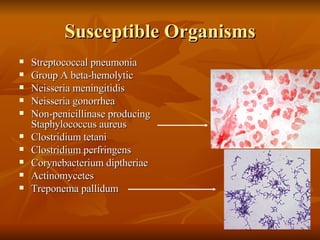
Susceptible Organisms Streptococcal pneumonia Group A beta-hemolytic Neisseria meningitidis Neisseria gonorrhea Non-penicillinase producing Staphylococcus aureus Clostridium tetani Clostridium perfringens Corynebacterium diptheriae Actinomycetes Treponema pallidum
Indications Otitis media Streptococcal pharyngitis Sinusitis Pneumococcal pneumonia Animal bite Impetigo Syphilis Gonorrhea Bacterial endocarditis prophylaxis
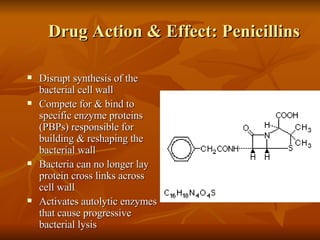
Drug Action & Effect: Penicillins Disrupt synthesis of the bacterial cell wall Compete for & bind to specific enzyme proteins (PBPs) responsible for building & reshaping the bacterial wall  Bacteria can no longer lay protein cross links across cell wall Activates autolytic enzymes that cause progressive bacterial lysis Penicillin G
Mechanisms of Resistance Formation of Beta-lactamases (penicillinases) EXAMPLE: S. aureus resistance to PCN-G Diminished permeability of the drug through the bacterial outer cell membrane Decreased binding of the drug at its target sites on the inner bacterial membrane Inhibitors of beta-lactamases (clavulanic acid, sulbactam, tazobactam) used in combination with PCNs to prevent their inactivation
Drug Treatment Principles Oral    mild to moderately severe infections  Parenteral    severe infections Broad Spectrum Penicillins    may be used empirically  while awaiting culture results Penicillin V    group A beta-hemolytic streptococci  Penicillin G (IM)    drug of choice for syphilis Amoxicillin    first line for otitis media
Monitoring: Penicillins Parenteral     monitor x 30 min for allergic anaphylaxis    Renal fxn, lytes, cardiac Penicillinase-resistant penicillin     check UA, BUN, creat Penicillin G    hyperkalemia-rare Parenteral ticarcillin or penicillin G     sodium loading
Patient Variables Geriatrics High sodium content    danger for cardiac/renal Pediatrics < 3 months old    check maternal allergy    clearance at birth       significantly in 1 st  year S&E NOT established for carbenicillin, piperacillin, &   -lactamase Penapar VK contains aspartame    NOT for PKU Gender    effectiveness of OC    use backup method Crosses placenta & excreted in breast milk
Education: Penicillins Take on empty stomach 1 hr before or 2 hr after meals with full glass of water Notify provider: rash, itching, hives, severe diarrhea, SOB, urticaria, black tongue, sore throat, vomiting, fever, swollen joints, unusual bleeding or bruising Patients with PCN allergy should wear MedicAlert bracelet Reconstituted solutions stable x 14 days if refrigerated
Contraindications/Precautions Do NOT use if Hx hypersensitivity to: penicillins, cephalosporins, or imipenem Do NOT treat severe infections with PO during acute stage Risk of cross-sensitivity with cephalosporins Ticarcillin, mezlocillin, piperacillin    hemorrhagic manifestations Synergism with: aminoglycosides Probenecid       serum concentrations of PCN CF    higher incidence of side effects Streptococcal    Tx must be sufficient to prevent endocarditis/rheumatic heart disease  Resistance & superinfection Pseudomembranous colitis Some products contain tartrazine or sulfites    hypersensitivity
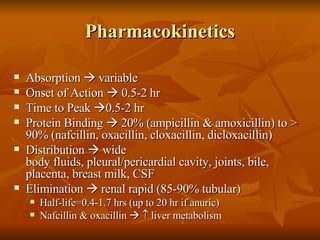
Pharmacokinetics Absorption    variable Onset of Action    0.5-2 hr Time to Peak   0.5-2 hr Protein Binding    20% (ampicillin & amoxicillin) to > 90% (nafcillin, oxacillin, cloxacillin, dicloxacillin) Distribution    wide body fluids, pleural/pericardial cavity, joints, bile, placenta, breast milk, CSF Elimination    renal rapid (85-90% tubular) Half-life=0.4-1.7 hrs (up to 20 hr if anuric) Nafcillin & oxacillin       liver metabolism
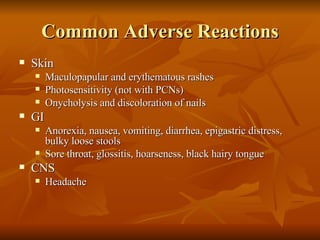
Common Adverse Reactions Skin Maculopapular and erythematous rashes Photosensitivity (not with PCNs) Onycholysis and discoloration of nails GI Anorexia, nausea, vomiting, diarrhea, epigastric distress, bulky loose stools Sore throat, glossitis, hoarseness, black hairy tongue CNS Headache
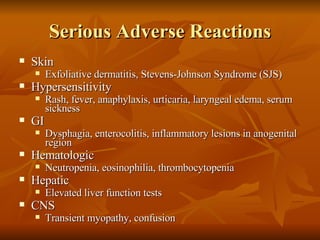
Serious Adverse Reactions Skin Exfoliative dermatitis, Stevens-Johnson Syndrome (SJS) Hypersensitivity Rash, fever, anaphylaxis, urticaria, laryngeal edema, serum sickness GI Dysphagia, enterocolitis, inflammatory lesions in anogenital region Hematologic Neutropenia, eosinophilia, thrombocytopenia Hepatic Elevated liver function tests CNS Transient myopathy, confusion
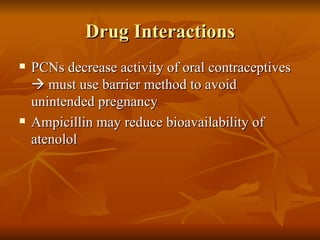
Drug Interactions PCNs decrease activity of oral contraceptives    must use barrier method to avoid unintended pregnancy Ampicillin may reduce bioavailability of atenolol
Drug Interactions Beta blockers may potentiate anaphylactic reactions to PCN Tetracycline decreases effectiveness of PCNs Probenecid inhibits renal tubular secretion of PCNs Allopurinol increases risk of ampicillin-induced rash
Adverse Effects & Drug Interactions You should be familiar with side effects & interactions You are NOT expected to memorize dosages You should look at comparative pharmacokinetics among drugs in the same class
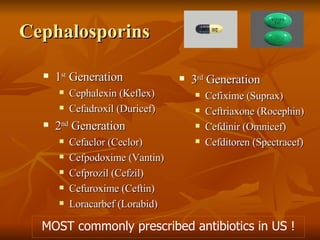
Cephalosporins 1 st  Generation Cephalexin (Keflex) Cefadroxil (Duricef) 2 nd  Generation Cefaclor (Ceclor) Cefpodoxime (Vantin) Cefprozil (Cefzil) Cefuroxime (Ceftin) Loracarbef (Lorabid) 3 rd  Generation Cefixime (Suprax) Ceftriaxone (Rocephin) Cefdinir (Omnicef) Cefditoren (Spectracef) MOST commonly prescribed antibiotics in US !
Indications: Cephalosporins 1 st  generation    UTI, skin & soft tissue    most active against G(+)    moderate activity against some G(-) & no activity against others 2 nd  & 3 rd  generation       G(-) activity across generations at expense of G(+) also    $$$ 2 nd  generation    good activity against E. coli   second line Tx for OM & sinusitis 3 rd  generation    broadest spectrum    very effective against G(-) but G(+) sharply reduced Minimal toxicity even at high doses    wide therapeutic window does not require monitoring Penetrates CSF
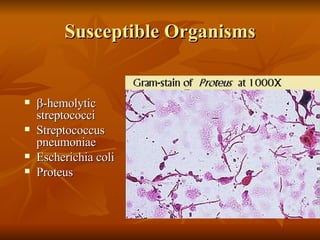
Susceptible Organisms  -hemolytic streptococci Streptococcus pneumoniae Escherichia coli Proteus
Action & Effect: Cephalosporins  -lactam antibiotics    resist bacterial enzymes  (esp.   -lactamase)    interfere with synthesis of peptidoglycan in the cell wall    makes the cell wall osmotically unstable Are bacteriCIDAL    more effective against RAPIDLY growing organisms RESISTANCE: occurs by hydrolysis of the beta-lactam ring by beta-lactamases Cephtriaxone
Drug Treatment Principles Oral    mild to moderately severe infections  Parenteral    severe infections 1 st  generation: Keflex Q6 hr vs Duricef BID (Q12) 2 nd  generation:  Manufacturers suggest BID dosing . . .    BUT literature does NOT support! 3 rd  generation: Rocephin IM or IV only    used for Tx of STDs    Tx of pneumonia in elderly residing in SNFs
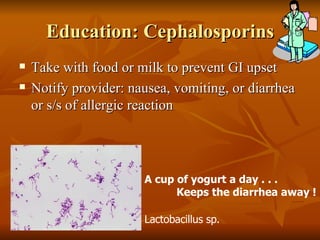
Education: Cephalosporins Take with food or milk to prevent GI upset Notify provider: nausea, vomiting, or diarrhea or s/s of allergic reaction Lactobacillus sp. A cup of yogurt a day . . . Keeps the diarrhea away !
Pharmacokinetics, Dosages & Administration Information CONTRAINDICATIONS: allergic reaction WARNINGS/PRECAUTIONS: Cross-sensitivity with penicillins Serum sickness-like reactions, seizures, coagulation abnormalities Superinfection Give IM deep into muscle PHARMACOKINETICS: Renal excretion    use with caution/adjust dosage for renal impairment DRUG INTERACTIONS: Disulfuram-like reaction if parenteral taken with alcohol May potentiate aminoglycoside nephrotoxicity Probenecid    may increase & prolong serum levels
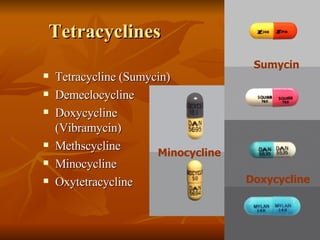
Tetracyclines Tetracycline (Sumycin) Demeclocycline Doxycycline (Vibramycin) Methscycline Minocycline Oxytetracycline Sumycin Doxycycline Minocycline
Indications: Tetracyclines Active against wide range of organisms 1 st  drug of choice in Tx of rickettsial infections, vibrio cholera & chlamydia trachomatis Used in combination with metronidazole and bismuth subsalicylate for PUD associated with Helicobacter pylori Also used to treat acne, PID, UTI Doxycycline    prevent malaria Appropriate as first line therapy for patients with true allergy to other first line therapies NOT active against fungi or viruses G(-) activity limited d/t development of resistant strains Doxycycline & minocycline    more activity against Bacteroides fragilis & Clostridia
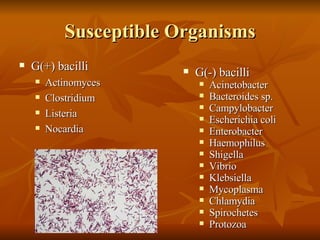
Susceptible Organisms G(+) bacilli Actinomyces Clostridium Listeria Nocardia G(-) bacilli Acinetobacter Bacteroides sp. Campylobacter Escherichia coli Enterobacter Haemophilus Shigella Vibrio  Klebsiella Mycoplasma Chlamydia Spirochetes  Protozoa
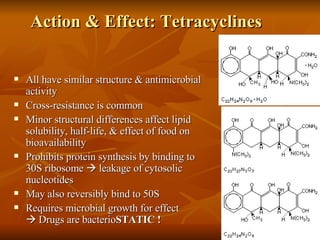
Action & Effect: Tetracyclines All have similar structure & antimicrobial activity Cross-resistance is common Minor structural differences affect lipid solubility, half-life, & effect of food on bioavailability Prohibits protein synthesis by binding to 30S ribosome    leakage of cytosolic nucleotides May also reversibly bind to 50S Requires microbial growth for effect    Drugs are bacterio STATIC ! Minocycline Doxycycline Tetracycline
Drug Treatment Principles Wide spectrum    good for empiric therapy 1 st  choice for rickettsial infections 2 nd  consideration for many other infections Appropriate for patients with allergy to other antibiotics Except for doxycycline & minocycline, tetracyclines chelate with Ca, Mg, Zn & Fe    take on empty stomach 1 hr before or 2 hrs after meals – do NOT take with milk or antacids Doxycycline & minocycline are highly lipid soluble    readily penetrate CSF, brain, eye & prostate Excreted unchanged in urine & feces Reduce dose/interval for renal impairment (doxycycline & minocycline do not require dose adjustment) Doxycycline MOST useful tetracycline in primary care !
Patient Variables Geriatrics Well absorbed    serum levels with renal impairment BUT for doxy- and minocycline primary route of excretion is biliary    so impaired renal function does not affect drug half-life    GOOD choice for elderly especially if renal fxn a concern ! Pediatrics Should NOT be given to children < age 8    drugs will cause permanent damage to teeth & bones Pregnancy & Lactation Readily crosses to placenta & into breast milk    will affect fetal tooth & bone development     NEVER give to pregnant or lactating women !!!
Monitoring & Education: Tetracyclines Baseline renal & hepatic fxn repeat Q3 mo for chronic therapy Loss of appetite, jaundice or abdominal pain    may indicate hepatotoxicity    promptly report any changes Change in mental status    may indicate intracranial hypertension    promptly report any changes Take with full glass of water to prevent ulceration Take all tetracyclines except for doxy- & minocycline on an emptying stomach & do NOT take with milk or antacids Photosensitivity    use sunscreen
Warnings/Precautions: Tetracyclines Photosensitivity    use sunscreen Long-term Democycline Tx    diabetes insipidus syndrome Minocycline    light-headedness, dizziness, vertigo, tinnitus    use caution during hazardous tasks For individuals with renal impairment    potential for accumulation & hepatotoxicity Tetracyclines (except doxycycline) may    BUN Headaches, blurred vision    intracranial hypertension Use of old/degraded medication    renal toxicity    discard any old/unused medication Superinfection (yeast/fungal) Some products may contain sulfites    reaction in sensitive individuals
Pharmacokinetics & Adverse Effects: Tetracyclines Excreted unchanged in the urine via glomerular filtration    reduction in dose/interval required in renal impairment Secondary biliary excretion route Associated with GI intolerance: anorexia, nausea, vomiting, diarrhea, esophagitis, & esophageal ulceraton Doxycycline associated with less nephrotoxicity IRREVERSIBLE hyperpigmentation of deciduous and permanent teeth & inhibition of bone growth    ICP    bulging fontanels & pseudotumor cerebri Dizzines, tinnitus, visual disturbances Hypersensitivity mild rash    urticaria    exfoliative dermatitis    angioedema & systemic anaphylaxis Hemolytic anemia, thrombocytopenia, neutropenia, eosinophilia, pseudomembranous colitis, phlebitis
Drug Interactions: Tetracyclines Barbiturates, phenytoin, & carbamazepine do NOT increase the half-life of tetracycline as they do with doxycycline Do NOT take with food or milk Tetracycline may potentiate the effects of oral anticoagulants via impairing PT activity or by   vitamin K production by intestinal flora    monitor PT carefully Medication is not removed with dialysis    if overdosed drink milk + take antacids to impair absorption.
Drug Class: Macrolides Erythromycin  Erythromycin Base Erythromycin Estolate Erythromycin Stearate Erythromycin Ethylsuccinate Newer macrolides Azithromycin (Zithromax) Clarithromycin (Biaxin) Dirithromycin (Dynabac) Troleandomycin (TAO)
Indications: Macrolides Otitis media Gonorrhea Acute bronchitis or pneumonia in COPD Community-acquired pneumonia Pharyngitis Sinusitis Erysipelas (S. pyogenes) Impetigo (strept or staph) Lyme disease (Borellia burgdorferi)
Activity: Macrolides Similar antibacterial spectrum across agents Newer macrolides  added effectiveness against G(-) bacteria & anaerobes Valued for unique ability to treat atypical pathogens seen in community-acquired pneumonia Clarithromycin Increased potency against G(-) bacteria & anaerobes Azithromycin Less active than erythromycin against most staphylococci & streptococci BUT more potent against other organisms Azithromycin & Clarithromycin Used for more complicated infections
Action & Effect: Macrolides May be bactericidal or bacteriostatic Characterized by similar antibacterial spectrum Coverage varies according to specific drug b Inhibit protein synthesis by stimulating dissociation of RNA from the ribosome
Drug Treatment Principles: Macrolides Good first-line choice for uncomplicated infections Erythromycin Inexpensive & good substitute for cephalosporin or penicillin Strength of erythromycin products expressed as erythromycin base equivalents  Azithromycin Extended half-life & QD dosing, free of many drug interactions
Drug Treatment Principles: Macrolides Cause several changes in P450    inhibits metabolism of: Theophylline, phenytoin (dilantin), carbamazepine (tegretol) Use with caution in presence of severe renal or hepatic impairment Dirithromycin Does NOT alter P450    no clinically significant adverse drug interactions Erythromycin estolate Most commonly associated with hepatotoxicity
Pharmacokinetics: Macrolides Pharmacokinetics May be affected by alterations in bioavailability, protein binding, rate of metabolism or excretion Depend on P450 3A4 as major route of metabolism    toxicity may occur when route blocked Key differences in pharmacokinetics (see table 63-2 p. 677 Edmunds)
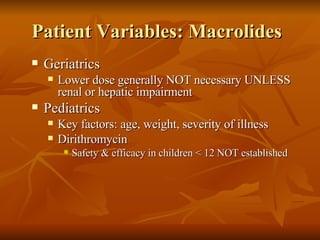
Patient Variables: Macrolides Geriatrics Lower dose generally NOT necessary UNLESS renal or hepatic impairment Pediatrics Key factors: age, weight, severity of illness Dirithromycin Safety & efficacy in children < 12 NOT established
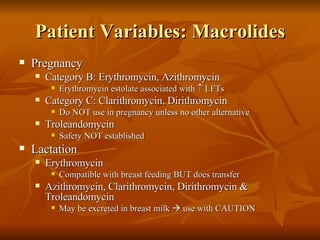
Patient Variables: Macrolides Pregnancy Category B: Erythromycin, Azithromycin Erythromycin estolate associated with    LFTs Category C: Clarithromycin, Dirithromycin  Do NOT use in pregnancy unless no other alternative Troleandomycin Safety NOT established Lactation Erythromycin  Compatible with breast feeding BUT does transfer  Azithromycin, Clarithromycin, Dirithromycin &  Troleandomycin  May be excreted in breast milk    use with CAUTION
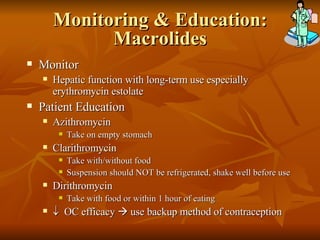
Monitoring & Education: Macrolides Monitor Hepatic function with long-term use especially erythromycin estolate Patient Education Azithromycin Take on empty stomach Clarithromycin Take with/without food Suspension should NOT be refrigerated, shake well before use Dirithromycin Take with food or within 1 hour of eating    OC efficacy    use backup method of contraception
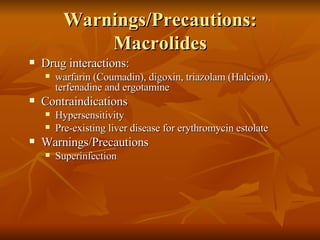
Warnings/Precautions: Macrolides Drug interactions:  warfarin (Coumadin), digoxin, triazolam (Halcion), terfenadine and ergotamine Contraindications Hypersensitivity Pre-existing liver disease for erythromycin estolate Warnings/Precautions Superinfection
Adverse Effects: Macrolides Adverse effects Most frequent dose-related side effects: Abdominal cramping & discomfort, anorexia, nausea, vomiting, diarrhea  Newer macrolides rarely cause GI side effects Mild allergic reactions: rash with/without pruritis, urticaria, bullous fixed eruptions, eczema Isolated reports of reversible hearing loss in renal impairment or high doses Rare cardiac events: ventricular arrhythmias including  V-tach & torsades de pointes in individuals with prolonged QT Troleandomycin Associated with allergic cholestatic hepatitis
Drug Class: Fluoroquinolones Quinolones Cinoxacin Nalidixic acid Fluoroquinolones Ciprofloxacin (Cipro) Enoxacin (Penetrex) Grepafloxacin (Raxar) Levofloxacin (Levaquin) Lomefloxacin (Maxaquin) Norfloxacin (Noroxin) Ofloxacin (Floxin) Sparfloxacin (Zagam) Trovafloxacin (Trovan)
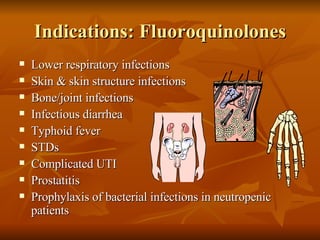
Indications: Fluoroquinolones Lower respiratory infections Skin & skin structure infections Bone/joint infections Infectious diarrhea Typhoid fever STDs Complicated UTI Prostatitis Prophylaxis of bacterial infections in neutropenic patients
Activity: Fluoroquinolones Bactericidal Broad range of activity against both G(+) and G(-) Greater activity against staphylococci & pseudomonas Non-fluorinated    use limited to UTIs Narrow spectrum of activity    mainly G(-) Poor tissue penetration Rapid development of resistant strains Cardiotoxicity at higher doses required for tissue penetration Fluorinated    Greater utility Better safety profile Broader spectrum of activity Less tendency for resistance Excellent oral absorption
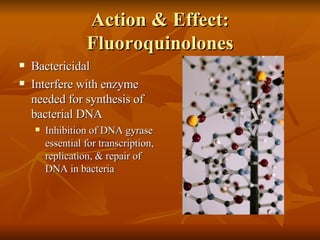
Action & Effect: Fluoroquinolones Bactericidal Interfere with enzyme needed for synthesis of bacterial DNA Inhibition of DNA gyrase essential for transcription, replication, & repair of DNA in bacteria
Drug Treatment Principles: Fluoroquinolones NOT considered first line therapy Use depends on severity of infection Reserved for moderate to severe or complicated infections Exacerbation of bronchitis, community acquired pneumonia, skin, bone, genital infections NOT for use in Simple UTIs, sinusitis, otitis Penetration in CNS NOT enough to be effective Resistance develops quickly Potential for severe adverse effects:  CNS toxicity & cardiac arrhythmias Trovafloxacin Significant hepatotoxicity    use limited to acute care
Patient Variables: Fluoroquinolones Renal Impairment Metabolized in liver but renal excretion    adjust dose Pediatrics NOT currently approved for use in children Use restricted for when there is NO safer alternative RISK    arthralgias, joint swelling, permanent articular damage
Patient Variables: Fluoroquinolones Geriatrics Adjust dose based on renal function Pregnancy Category C Lactation Breast milk concentrations = serum in 2 hours NOT recommended for nursing mothers d/t risk of articular damage in children
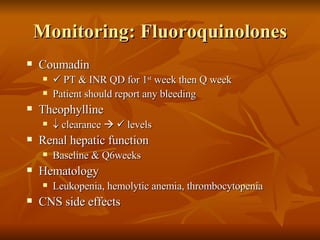
Monitoring: Fluoroquinolones Coumadin    PT & INR QD for 1 st  week then Q week  Patient should report any bleeding Theophylline    clearance       levels Renal hepatic function Baseline & Q6weeks Hematology  Leukopenia, hemolytic anemia, thrombocytopenia CNS side effects
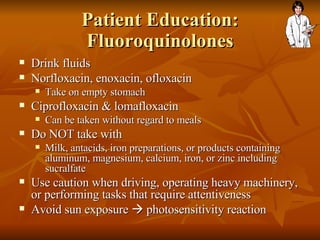
Patient Education: Fluoroquinolones Drink fluids Norfloxacin, enoxacin, ofloxacin Take on empty stomach Ciprofloxacin & lomafloxacin Can be taken without regard to meals Do NOT take with Milk, antacids, iron preparations, or products containing aluminum, magnesium, calcium, iron, or zinc including sucralfate Use caution when driving, operating heavy machinery, or performing tasks that require attentiveness Avoid sun exposure    photosensitivity reaction
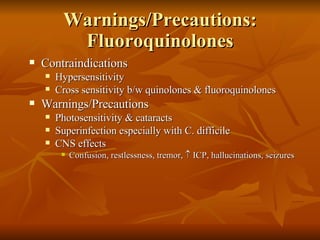
Warnings/Precautions:   Fluoroquinolones Contraindications Hypersensitivity Cross sensitivity b/w quinolones & fluoroquinolones Warnings/Precautions Photosensitivity & cataracts Superinfection especially with C. difficile CNS effects Confusion, restlessness, tremor,    ICP, hallucinations, seizures
Pharmacokinetics: Fluoroquinolones Well absorbed after oral administration Widely distributed to most body tissues & fluids High tissue concentrations in: Kidneys, gall bladder, liver, lungs, cervix, endometrium, prostate, & phagocytes High fluid concentrations achieved in  Urine, sputum, bile Ciprofloxacin & ofloxacin distributed to Skin, fat, muscle, bone, cartilage, CSF NOT removed by peritoneal or hemodialysis Key differences in pharmacokinetics [seeTable 64-2 p. 683 Edmunds)]
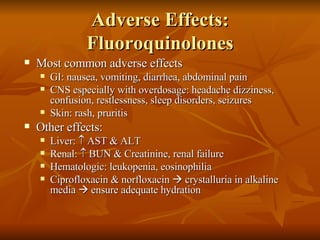
Adverse Effects: Fluoroquinolones Most common adverse effects GI: nausea, vomiting, diarrhea, abdominal pain CNS especially with overdosage: headache dizziness, confusion, restlessness, sleep disorders, seizures Skin: rash, pruritis Other effects: Liver:    AST & ALT Renal:    BUN & Creatinine, renal failure Hematologic: leukopenia, eosinophilia Ciprofloxacin & norfloxacin    crystalluria in alkaline media    ensure adequate hydration
Drug Interactions: Fluoroquinolones Reduced absorption    give 2 hr before or 6 hr after Antacids, vitamins, enteral formulas, sucralfate & medications containing divalent or trivalent cations  (e.g., Mg, Ca, Zn, Al) Through P450 inhibition, may reduce metabolism of Theophylline and caffeine, especially with enoxacin & ciprofloxacin preferred drug = ofloxacin or lomafloxacin Warfarin       PT & INR at beginning of therapy

Antimicrobial

  • 1.
  • 2.
    Now, more DRUGSMajor classes
  • 3.
    The Drugs PenicillinsCephalosporins Tetracyclines Macrolides Fluroquinolones
  • 4.
    Penicillins Natural PenicillinsPenicillin G (Crysticillin AS) Penicillin VK (Veetids, Pen-Vee K) Penicillinase-resistant penicillins Cloxacillin (Tegopen, Cloxapen) Dicloxacillin (Dynapen, Dicloxacil) Nafcillin (Unipen, Nafcil) Oxacillin (Prostaphlin, Bactocill)
  • 5.
    Penicillins Aminopenicillins Ampicillin(Omnipen, Ampican, Polycillin) Amoxicillin (Amoxil, Polymox, Trimox) Bacampicillin (Spectrobid) Amoxicillin + potassium clavenulate (Augmentin) Ampicillin sulbactam (Unasyn) Extended Spectrum Carbenicillin (Geocillin) Mezlocillin (Mezlin) Piperacillin (Pipracil) Piperacillin sodium + tazobactam sodium (Zosyn) Ticarcillin (Ticar) Ticarcillin + potassium clavenulate (Timentin)
  • 6.
    Indications: Penicillins Non-penicillinaseproducing staphylococci & streptococci and MOST G(+) organisms Some G(-) and MOST anaerobic Beta-lactam   activity against G(+), G(-) & anaerobic organisms Amoxicillin + clavenulate   spectrum Ampicillin + sulbactam  widest spectrum Staphylococcus sp.
  • 7.
    Susceptible Organisms Streptococcalpneumonia Group A beta-hemolytic Neisseria meningitidis Neisseria gonorrhea Non-penicillinase producing Staphylococcus aureus Clostridium tetani Clostridium perfringens Corynebacterium diptheriae Actinomycetes Treponema pallidum
  • 8.
    Indications Otitis mediaStreptococcal pharyngitis Sinusitis Pneumococcal pneumonia Animal bite Impetigo Syphilis Gonorrhea Bacterial endocarditis prophylaxis
  • 9.
    Drug Action &Effect: Penicillins Disrupt synthesis of the bacterial cell wall Compete for & bind to specific enzyme proteins (PBPs) responsible for building & reshaping the bacterial wall Bacteria can no longer lay protein cross links across cell wall Activates autolytic enzymes that cause progressive bacterial lysis Penicillin G
  • 10.
    Mechanisms of ResistanceFormation of Beta-lactamases (penicillinases) EXAMPLE: S. aureus resistance to PCN-G Diminished permeability of the drug through the bacterial outer cell membrane Decreased binding of the drug at its target sites on the inner bacterial membrane Inhibitors of beta-lactamases (clavulanic acid, sulbactam, tazobactam) used in combination with PCNs to prevent their inactivation
  • 11.
    Drug Treatment PrinciplesOral  mild to moderately severe infections Parenteral  severe infections Broad Spectrum Penicillins  may be used empirically while awaiting culture results Penicillin V  group A beta-hemolytic streptococci Penicillin G (IM)  drug of choice for syphilis Amoxicillin  first line for otitis media
  • 12.
    Monitoring: Penicillins Parenteral  monitor x 30 min for allergic anaphylaxis  Renal fxn, lytes, cardiac Penicillinase-resistant penicillin  check UA, BUN, creat Penicillin G  hyperkalemia-rare Parenteral ticarcillin or penicillin G  sodium loading
  • 13.
    Patient Variables GeriatricsHigh sodium content  danger for cardiac/renal Pediatrics < 3 months old  check maternal allergy  clearance at birth   significantly in 1 st year S&E NOT established for carbenicillin, piperacillin, &  -lactamase Penapar VK contains aspartame  NOT for PKU Gender  effectiveness of OC  use backup method Crosses placenta & excreted in breast milk
  • 14.
    Education: Penicillins Takeon empty stomach 1 hr before or 2 hr after meals with full glass of water Notify provider: rash, itching, hives, severe diarrhea, SOB, urticaria, black tongue, sore throat, vomiting, fever, swollen joints, unusual bleeding or bruising Patients with PCN allergy should wear MedicAlert bracelet Reconstituted solutions stable x 14 days if refrigerated
  • 15.
    Contraindications/Precautions Do NOTuse if Hx hypersensitivity to: penicillins, cephalosporins, or imipenem Do NOT treat severe infections with PO during acute stage Risk of cross-sensitivity with cephalosporins Ticarcillin, mezlocillin, piperacillin  hemorrhagic manifestations Synergism with: aminoglycosides Probenecid   serum concentrations of PCN CF  higher incidence of side effects Streptococcal  Tx must be sufficient to prevent endocarditis/rheumatic heart disease Resistance & superinfection Pseudomembranous colitis Some products contain tartrazine or sulfites  hypersensitivity
  • 16.
    Pharmacokinetics Absorption  variable Onset of Action  0.5-2 hr Time to Peak  0.5-2 hr Protein Binding  20% (ampicillin & amoxicillin) to > 90% (nafcillin, oxacillin, cloxacillin, dicloxacillin) Distribution  wide body fluids, pleural/pericardial cavity, joints, bile, placenta, breast milk, CSF Elimination  renal rapid (85-90% tubular) Half-life=0.4-1.7 hrs (up to 20 hr if anuric) Nafcillin & oxacillin   liver metabolism
  • 17.
    Common Adverse ReactionsSkin Maculopapular and erythematous rashes Photosensitivity (not with PCNs) Onycholysis and discoloration of nails GI Anorexia, nausea, vomiting, diarrhea, epigastric distress, bulky loose stools Sore throat, glossitis, hoarseness, black hairy tongue CNS Headache
  • 18.
    Serious Adverse ReactionsSkin Exfoliative dermatitis, Stevens-Johnson Syndrome (SJS) Hypersensitivity Rash, fever, anaphylaxis, urticaria, laryngeal edema, serum sickness GI Dysphagia, enterocolitis, inflammatory lesions in anogenital region Hematologic Neutropenia, eosinophilia, thrombocytopenia Hepatic Elevated liver function tests CNS Transient myopathy, confusion
  • 19.
    Drug Interactions PCNsdecrease activity of oral contraceptives  must use barrier method to avoid unintended pregnancy Ampicillin may reduce bioavailability of atenolol
  • 20.
    Drug Interactions Betablockers may potentiate anaphylactic reactions to PCN Tetracycline decreases effectiveness of PCNs Probenecid inhibits renal tubular secretion of PCNs Allopurinol increases risk of ampicillin-induced rash
  • 21.
    Adverse Effects &Drug Interactions You should be familiar with side effects & interactions You are NOT expected to memorize dosages You should look at comparative pharmacokinetics among drugs in the same class
  • 22.
    Cephalosporins 1 st Generation Cephalexin (Keflex) Cefadroxil (Duricef) 2 nd Generation Cefaclor (Ceclor) Cefpodoxime (Vantin) Cefprozil (Cefzil) Cefuroxime (Ceftin) Loracarbef (Lorabid) 3 rd Generation Cefixime (Suprax) Ceftriaxone (Rocephin) Cefdinir (Omnicef) Cefditoren (Spectracef) MOST commonly prescribed antibiotics in US !
  • 23.
    Indications: Cephalosporins 1st generation  UTI, skin & soft tissue  most active against G(+)  moderate activity against some G(-) & no activity against others 2 nd & 3 rd generation   G(-) activity across generations at expense of G(+) also  $$$ 2 nd generation  good activity against E. coli  second line Tx for OM & sinusitis 3 rd generation  broadest spectrum  very effective against G(-) but G(+) sharply reduced Minimal toxicity even at high doses  wide therapeutic window does not require monitoring Penetrates CSF
  • 24.
    Susceptible Organisms -hemolytic streptococci Streptococcus pneumoniae Escherichia coli Proteus
  • 25.
    Action & Effect:Cephalosporins  -lactam antibiotics  resist bacterial enzymes (esp.  -lactamase)  interfere with synthesis of peptidoglycan in the cell wall  makes the cell wall osmotically unstable Are bacteriCIDAL  more effective against RAPIDLY growing organisms RESISTANCE: occurs by hydrolysis of the beta-lactam ring by beta-lactamases Cephtriaxone
  • 26.
    Drug Treatment PrinciplesOral  mild to moderately severe infections Parenteral  severe infections 1 st generation: Keflex Q6 hr vs Duricef BID (Q12) 2 nd generation: Manufacturers suggest BID dosing . . .  BUT literature does NOT support! 3 rd generation: Rocephin IM or IV only  used for Tx of STDs  Tx of pneumonia in elderly residing in SNFs
  • 27.
    Education: Cephalosporins Takewith food or milk to prevent GI upset Notify provider: nausea, vomiting, or diarrhea or s/s of allergic reaction Lactobacillus sp. A cup of yogurt a day . . . Keeps the diarrhea away !
  • 28.
    Pharmacokinetics, Dosages &Administration Information CONTRAINDICATIONS: allergic reaction WARNINGS/PRECAUTIONS: Cross-sensitivity with penicillins Serum sickness-like reactions, seizures, coagulation abnormalities Superinfection Give IM deep into muscle PHARMACOKINETICS: Renal excretion  use with caution/adjust dosage for renal impairment DRUG INTERACTIONS: Disulfuram-like reaction if parenteral taken with alcohol May potentiate aminoglycoside nephrotoxicity Probenecid  may increase & prolong serum levels
  • 29.
    Tetracyclines Tetracycline (Sumycin)Demeclocycline Doxycycline (Vibramycin) Methscycline Minocycline Oxytetracycline Sumycin Doxycycline Minocycline
  • 30.
    Indications: Tetracyclines Activeagainst wide range of organisms 1 st drug of choice in Tx of rickettsial infections, vibrio cholera & chlamydia trachomatis Used in combination with metronidazole and bismuth subsalicylate for PUD associated with Helicobacter pylori Also used to treat acne, PID, UTI Doxycycline  prevent malaria Appropriate as first line therapy for patients with true allergy to other first line therapies NOT active against fungi or viruses G(-) activity limited d/t development of resistant strains Doxycycline & minocycline  more activity against Bacteroides fragilis & Clostridia
  • 31.
    Susceptible Organisms G(+)bacilli Actinomyces Clostridium Listeria Nocardia G(-) bacilli Acinetobacter Bacteroides sp. Campylobacter Escherichia coli Enterobacter Haemophilus Shigella Vibrio Klebsiella Mycoplasma Chlamydia Spirochetes Protozoa
  • 32.
    Action & Effect:Tetracyclines All have similar structure & antimicrobial activity Cross-resistance is common Minor structural differences affect lipid solubility, half-life, & effect of food on bioavailability Prohibits protein synthesis by binding to 30S ribosome  leakage of cytosolic nucleotides May also reversibly bind to 50S Requires microbial growth for effect  Drugs are bacterio STATIC ! Minocycline Doxycycline Tetracycline
  • 33.
    Drug Treatment PrinciplesWide spectrum  good for empiric therapy 1 st choice for rickettsial infections 2 nd consideration for many other infections Appropriate for patients with allergy to other antibiotics Except for doxycycline & minocycline, tetracyclines chelate with Ca, Mg, Zn & Fe  take on empty stomach 1 hr before or 2 hrs after meals – do NOT take with milk or antacids Doxycycline & minocycline are highly lipid soluble  readily penetrate CSF, brain, eye & prostate Excreted unchanged in urine & feces Reduce dose/interval for renal impairment (doxycycline & minocycline do not require dose adjustment) Doxycycline MOST useful tetracycline in primary care !
  • 34.
    Patient Variables GeriatricsWell absorbed  serum levels with renal impairment BUT for doxy- and minocycline primary route of excretion is biliary  so impaired renal function does not affect drug half-life  GOOD choice for elderly especially if renal fxn a concern ! Pediatrics Should NOT be given to children < age 8  drugs will cause permanent damage to teeth & bones Pregnancy & Lactation Readily crosses to placenta & into breast milk  will affect fetal tooth & bone development  NEVER give to pregnant or lactating women !!!
  • 35.
    Monitoring & Education:Tetracyclines Baseline renal & hepatic fxn repeat Q3 mo for chronic therapy Loss of appetite, jaundice or abdominal pain  may indicate hepatotoxicity  promptly report any changes Change in mental status  may indicate intracranial hypertension  promptly report any changes Take with full glass of water to prevent ulceration Take all tetracyclines except for doxy- & minocycline on an emptying stomach & do NOT take with milk or antacids Photosensitivity  use sunscreen
  • 36.
    Warnings/Precautions: Tetracyclines Photosensitivity  use sunscreen Long-term Democycline Tx  diabetes insipidus syndrome Minocycline  light-headedness, dizziness, vertigo, tinnitus  use caution during hazardous tasks For individuals with renal impairment  potential for accumulation & hepatotoxicity Tetracyclines (except doxycycline) may  BUN Headaches, blurred vision  intracranial hypertension Use of old/degraded medication  renal toxicity  discard any old/unused medication Superinfection (yeast/fungal) Some products may contain sulfites  reaction in sensitive individuals
  • 37.
    Pharmacokinetics & AdverseEffects: Tetracyclines Excreted unchanged in the urine via glomerular filtration  reduction in dose/interval required in renal impairment Secondary biliary excretion route Associated with GI intolerance: anorexia, nausea, vomiting, diarrhea, esophagitis, & esophageal ulceraton Doxycycline associated with less nephrotoxicity IRREVERSIBLE hyperpigmentation of deciduous and permanent teeth & inhibition of bone growth  ICP  bulging fontanels & pseudotumor cerebri Dizzines, tinnitus, visual disturbances Hypersensitivity mild rash  urticaria  exfoliative dermatitis  angioedema & systemic anaphylaxis Hemolytic anemia, thrombocytopenia, neutropenia, eosinophilia, pseudomembranous colitis, phlebitis
  • 38.
    Drug Interactions: TetracyclinesBarbiturates, phenytoin, & carbamazepine do NOT increase the half-life of tetracycline as they do with doxycycline Do NOT take with food or milk Tetracycline may potentiate the effects of oral anticoagulants via impairing PT activity or by  vitamin K production by intestinal flora  monitor PT carefully Medication is not removed with dialysis  if overdosed drink milk + take antacids to impair absorption.
  • 39.
    Drug Class: MacrolidesErythromycin Erythromycin Base Erythromycin Estolate Erythromycin Stearate Erythromycin Ethylsuccinate Newer macrolides Azithromycin (Zithromax) Clarithromycin (Biaxin) Dirithromycin (Dynabac) Troleandomycin (TAO)
  • 40.
    Indications: Macrolides Otitismedia Gonorrhea Acute bronchitis or pneumonia in COPD Community-acquired pneumonia Pharyngitis Sinusitis Erysipelas (S. pyogenes) Impetigo (strept or staph) Lyme disease (Borellia burgdorferi)
  • 41.
    Activity: Macrolides Similarantibacterial spectrum across agents Newer macrolides added effectiveness against G(-) bacteria & anaerobes Valued for unique ability to treat atypical pathogens seen in community-acquired pneumonia Clarithromycin Increased potency against G(-) bacteria & anaerobes Azithromycin Less active than erythromycin against most staphylococci & streptococci BUT more potent against other organisms Azithromycin & Clarithromycin Used for more complicated infections
  • 42.
    Action & Effect:Macrolides May be bactericidal or bacteriostatic Characterized by similar antibacterial spectrum Coverage varies according to specific drug b Inhibit protein synthesis by stimulating dissociation of RNA from the ribosome
  • 43.
    Drug Treatment Principles:Macrolides Good first-line choice for uncomplicated infections Erythromycin Inexpensive & good substitute for cephalosporin or penicillin Strength of erythromycin products expressed as erythromycin base equivalents Azithromycin Extended half-life & QD dosing, free of many drug interactions
  • 44.
    Drug Treatment Principles:Macrolides Cause several changes in P450  inhibits metabolism of: Theophylline, phenytoin (dilantin), carbamazepine (tegretol) Use with caution in presence of severe renal or hepatic impairment Dirithromycin Does NOT alter P450  no clinically significant adverse drug interactions Erythromycin estolate Most commonly associated with hepatotoxicity
  • 45.
    Pharmacokinetics: Macrolides PharmacokineticsMay be affected by alterations in bioavailability, protein binding, rate of metabolism or excretion Depend on P450 3A4 as major route of metabolism  toxicity may occur when route blocked Key differences in pharmacokinetics (see table 63-2 p. 677 Edmunds)
  • 46.
    Patient Variables: MacrolidesGeriatrics Lower dose generally NOT necessary UNLESS renal or hepatic impairment Pediatrics Key factors: age, weight, severity of illness Dirithromycin Safety & efficacy in children < 12 NOT established
  • 47.
    Patient Variables: MacrolidesPregnancy Category B: Erythromycin, Azithromycin Erythromycin estolate associated with  LFTs Category C: Clarithromycin, Dirithromycin Do NOT use in pregnancy unless no other alternative Troleandomycin Safety NOT established Lactation Erythromycin Compatible with breast feeding BUT does transfer Azithromycin, Clarithromycin, Dirithromycin & Troleandomycin May be excreted in breast milk  use with CAUTION
  • 48.
    Monitoring & Education:Macrolides Monitor Hepatic function with long-term use especially erythromycin estolate Patient Education Azithromycin Take on empty stomach Clarithromycin Take with/without food Suspension should NOT be refrigerated, shake well before use Dirithromycin Take with food or within 1 hour of eating  OC efficacy  use backup method of contraception
  • 49.
    Warnings/Precautions: Macrolides Druginteractions: warfarin (Coumadin), digoxin, triazolam (Halcion), terfenadine and ergotamine Contraindications Hypersensitivity Pre-existing liver disease for erythromycin estolate Warnings/Precautions Superinfection
  • 50.
    Adverse Effects: MacrolidesAdverse effects Most frequent dose-related side effects: Abdominal cramping & discomfort, anorexia, nausea, vomiting, diarrhea Newer macrolides rarely cause GI side effects Mild allergic reactions: rash with/without pruritis, urticaria, bullous fixed eruptions, eczema Isolated reports of reversible hearing loss in renal impairment or high doses Rare cardiac events: ventricular arrhythmias including V-tach & torsades de pointes in individuals with prolonged QT Troleandomycin Associated with allergic cholestatic hepatitis
  • 51.
    Drug Class: FluoroquinolonesQuinolones Cinoxacin Nalidixic acid Fluoroquinolones Ciprofloxacin (Cipro) Enoxacin (Penetrex) Grepafloxacin (Raxar) Levofloxacin (Levaquin) Lomefloxacin (Maxaquin) Norfloxacin (Noroxin) Ofloxacin (Floxin) Sparfloxacin (Zagam) Trovafloxacin (Trovan)
  • 52.
    Indications: Fluoroquinolones Lowerrespiratory infections Skin & skin structure infections Bone/joint infections Infectious diarrhea Typhoid fever STDs Complicated UTI Prostatitis Prophylaxis of bacterial infections in neutropenic patients
  • 53.
    Activity: Fluoroquinolones BactericidalBroad range of activity against both G(+) and G(-) Greater activity against staphylococci & pseudomonas Non-fluorinated  use limited to UTIs Narrow spectrum of activity  mainly G(-) Poor tissue penetration Rapid development of resistant strains Cardiotoxicity at higher doses required for tissue penetration Fluorinated  Greater utility Better safety profile Broader spectrum of activity Less tendency for resistance Excellent oral absorption
  • 54.
    Action & Effect:Fluoroquinolones Bactericidal Interfere with enzyme needed for synthesis of bacterial DNA Inhibition of DNA gyrase essential for transcription, replication, & repair of DNA in bacteria
  • 55.
    Drug Treatment Principles:Fluoroquinolones NOT considered first line therapy Use depends on severity of infection Reserved for moderate to severe or complicated infections Exacerbation of bronchitis, community acquired pneumonia, skin, bone, genital infections NOT for use in Simple UTIs, sinusitis, otitis Penetration in CNS NOT enough to be effective Resistance develops quickly Potential for severe adverse effects: CNS toxicity & cardiac arrhythmias Trovafloxacin Significant hepatotoxicity  use limited to acute care
  • 56.
    Patient Variables: FluoroquinolonesRenal Impairment Metabolized in liver but renal excretion  adjust dose Pediatrics NOT currently approved for use in children Use restricted for when there is NO safer alternative RISK  arthralgias, joint swelling, permanent articular damage
  • 57.
    Patient Variables: FluoroquinolonesGeriatrics Adjust dose based on renal function Pregnancy Category C Lactation Breast milk concentrations = serum in 2 hours NOT recommended for nursing mothers d/t risk of articular damage in children
  • 58.
    Monitoring: Fluoroquinolones Coumadin PT & INR QD for 1 st week then Q week Patient should report any bleeding Theophylline  clearance   levels Renal hepatic function Baseline & Q6weeks Hematology Leukopenia, hemolytic anemia, thrombocytopenia CNS side effects
  • 59.
    Patient Education: FluoroquinolonesDrink fluids Norfloxacin, enoxacin, ofloxacin Take on empty stomach Ciprofloxacin & lomafloxacin Can be taken without regard to meals Do NOT take with Milk, antacids, iron preparations, or products containing aluminum, magnesium, calcium, iron, or zinc including sucralfate Use caution when driving, operating heavy machinery, or performing tasks that require attentiveness Avoid sun exposure  photosensitivity reaction
  • 60.
    Warnings/Precautions: Fluoroquinolones Contraindications Hypersensitivity Cross sensitivity b/w quinolones & fluoroquinolones Warnings/Precautions Photosensitivity & cataracts Superinfection especially with C. difficile CNS effects Confusion, restlessness, tremor,  ICP, hallucinations, seizures
  • 61.
    Pharmacokinetics: Fluoroquinolones Wellabsorbed after oral administration Widely distributed to most body tissues & fluids High tissue concentrations in: Kidneys, gall bladder, liver, lungs, cervix, endometrium, prostate, & phagocytes High fluid concentrations achieved in Urine, sputum, bile Ciprofloxacin & ofloxacin distributed to Skin, fat, muscle, bone, cartilage, CSF NOT removed by peritoneal or hemodialysis Key differences in pharmacokinetics [seeTable 64-2 p. 683 Edmunds)]
  • 62.
    Adverse Effects: FluoroquinolonesMost common adverse effects GI: nausea, vomiting, diarrhea, abdominal pain CNS especially with overdosage: headache dizziness, confusion, restlessness, sleep disorders, seizures Skin: rash, pruritis Other effects: Liver:  AST & ALT Renal:  BUN & Creatinine, renal failure Hematologic: leukopenia, eosinophilia Ciprofloxacin & norfloxacin  crystalluria in alkaline media  ensure adequate hydration
  • 63.
    Drug Interactions: FluoroquinolonesReduced absorption  give 2 hr before or 6 hr after Antacids, vitamins, enteral formulas, sucralfate & medications containing divalent or trivalent cations (e.g., Mg, Ca, Zn, Al) Through P450 inhibition, may reduce metabolism of Theophylline and caffeine, especially with enoxacin & ciprofloxacin preferred drug = ofloxacin or lomafloxacin Warfarin   PT & INR at beginning of therapy