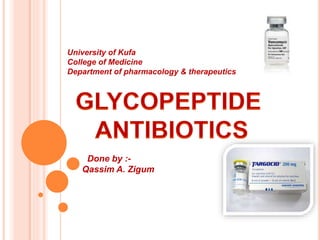
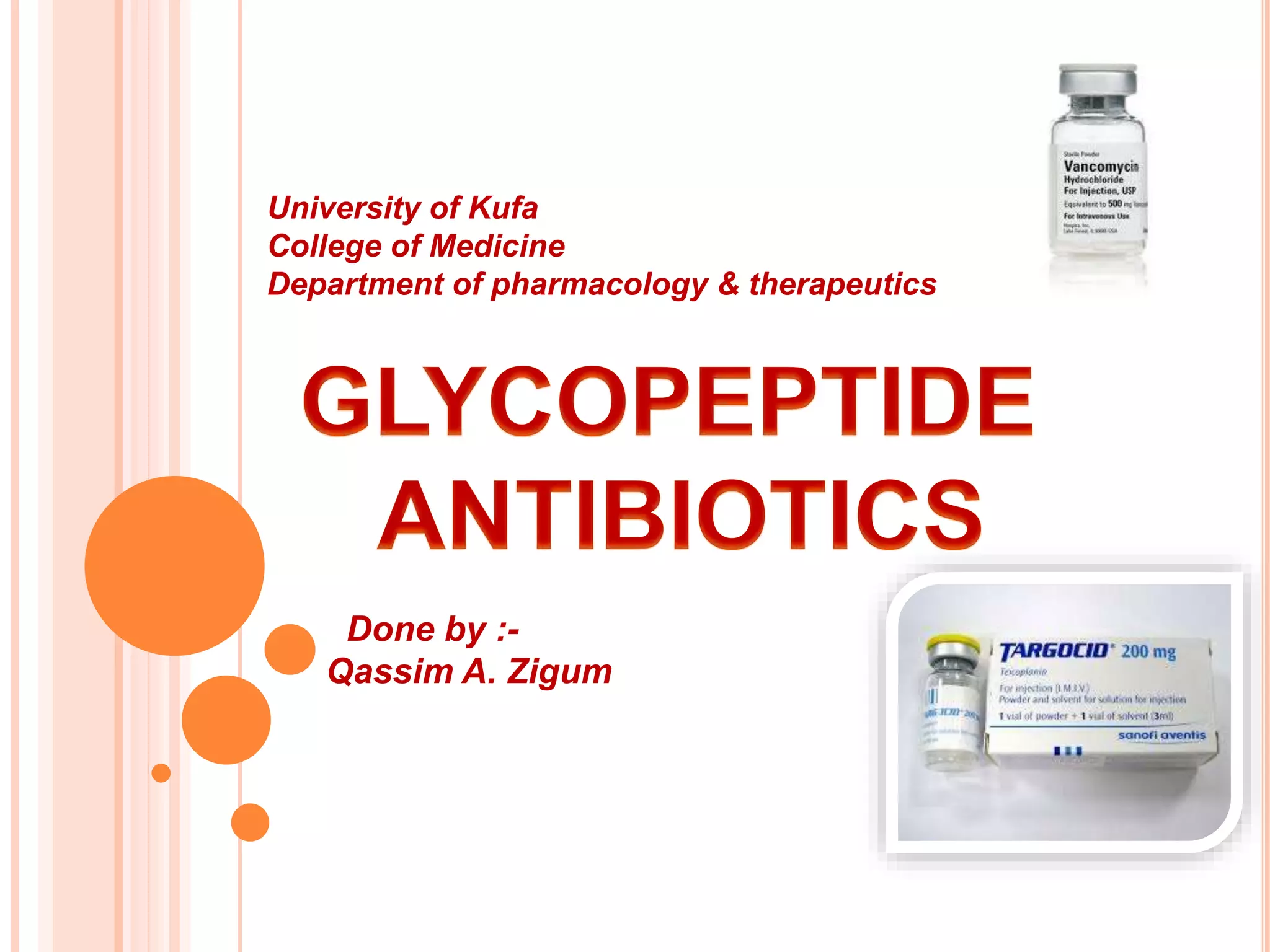
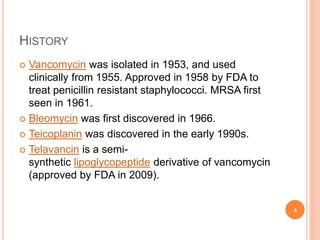
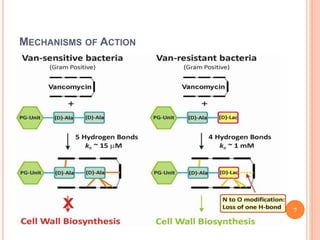
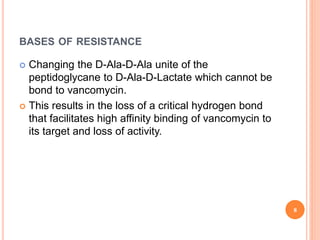
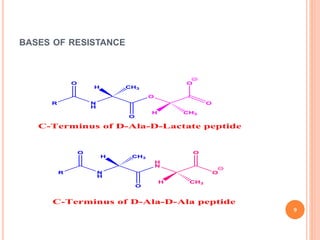
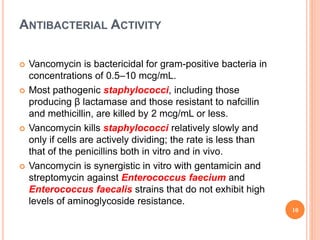
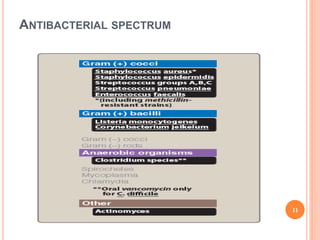
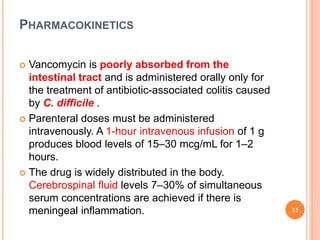
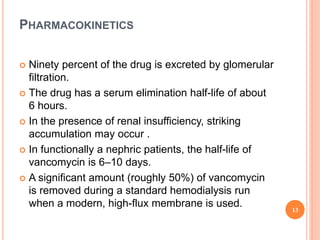
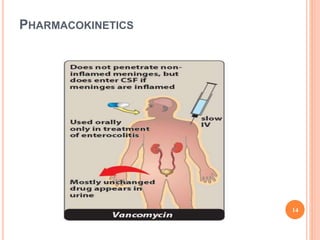
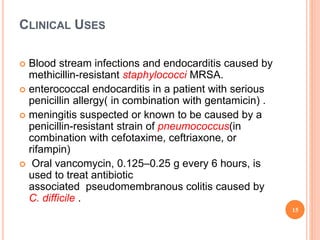
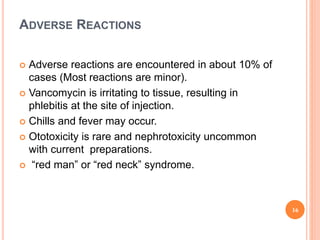
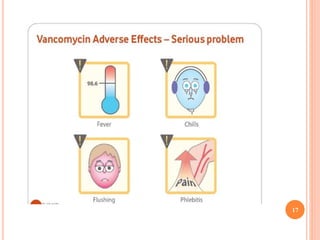
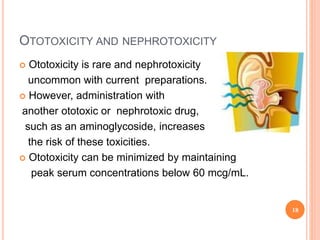
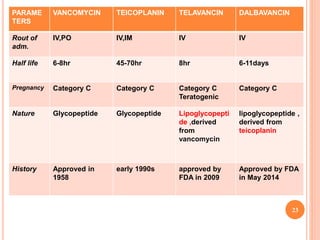
Vancomycin is a glycopeptide antibiotic produced by bacteria. It works by binding to D-Ala-D-Ala sites on bacterial cell walls, inhibiting cell wall synthesis. It is administered intravenously and excreted renally. Vancomycin is used to treat serious infections caused by gram-positive bacteria like MRSA and is generally well-tolerated though it can cause histamine-related flushing. Other glycopeptide antibiotics discussed include teicoplanin, telavancin, and dalbavancin, which have similar mechanisms of action to vancomycin but varying pharmacokinetic properties and clinical applications.






![ONFH[AVN HIP] -TRIPLE REGIME -A NOVAL SURGICAL CONCEPT .pptx](https://cdn.slidesharecdn.com/ss_thumbnails/onfhavnhip2026koaconcalicutdrgokuldevdrmashraf-260210064517-213ec005-thumbnail.jpg?width=640&height=640&fit=bounds)


![CTEV [ clubfoot] DR ARUN LAL ,DR MOHAMED ASHRAF travancore medical college k...](https://cdn.slidesharecdn.com/ss_thumbnails/ctevclubfootdrarunlaldrmohamedashraftravancoremedicalcollegekollamkeralaindia-260208063247-18fc466c-thumbnail.jpg?width=640&height=640&fit=bounds)


