Othman Al-Abbadi, M.D
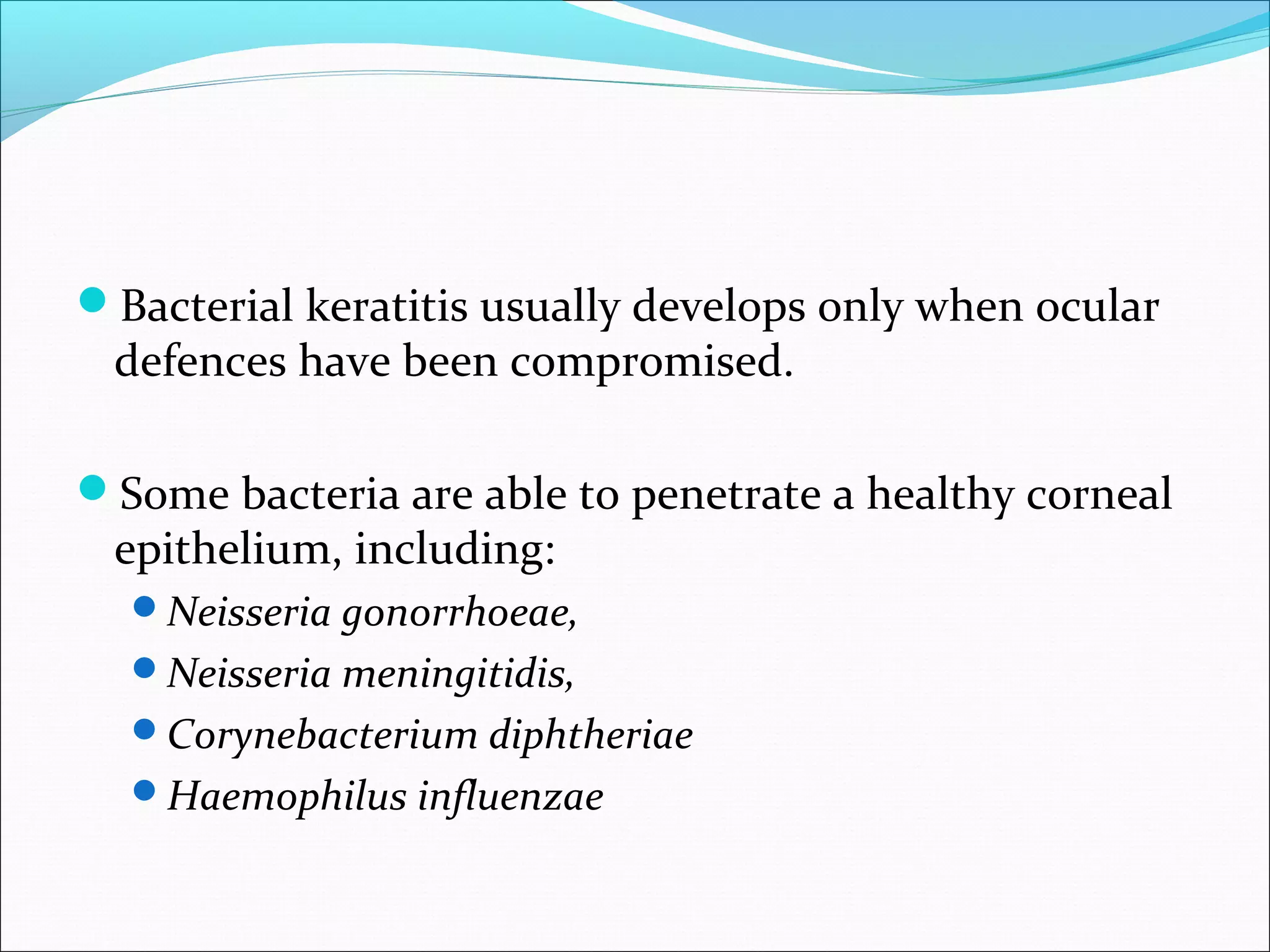
Bacterial keratitis usually develops only when ocular
defences have been compromised.
Some bacteria are able to penetrate a healthy corneal
epithelium, including:
Neisseria gonorrhoeae,
Neisseria meningitidis,
Corynebacterium diphtheriae
Haemophilus influenzae
Common pathogens
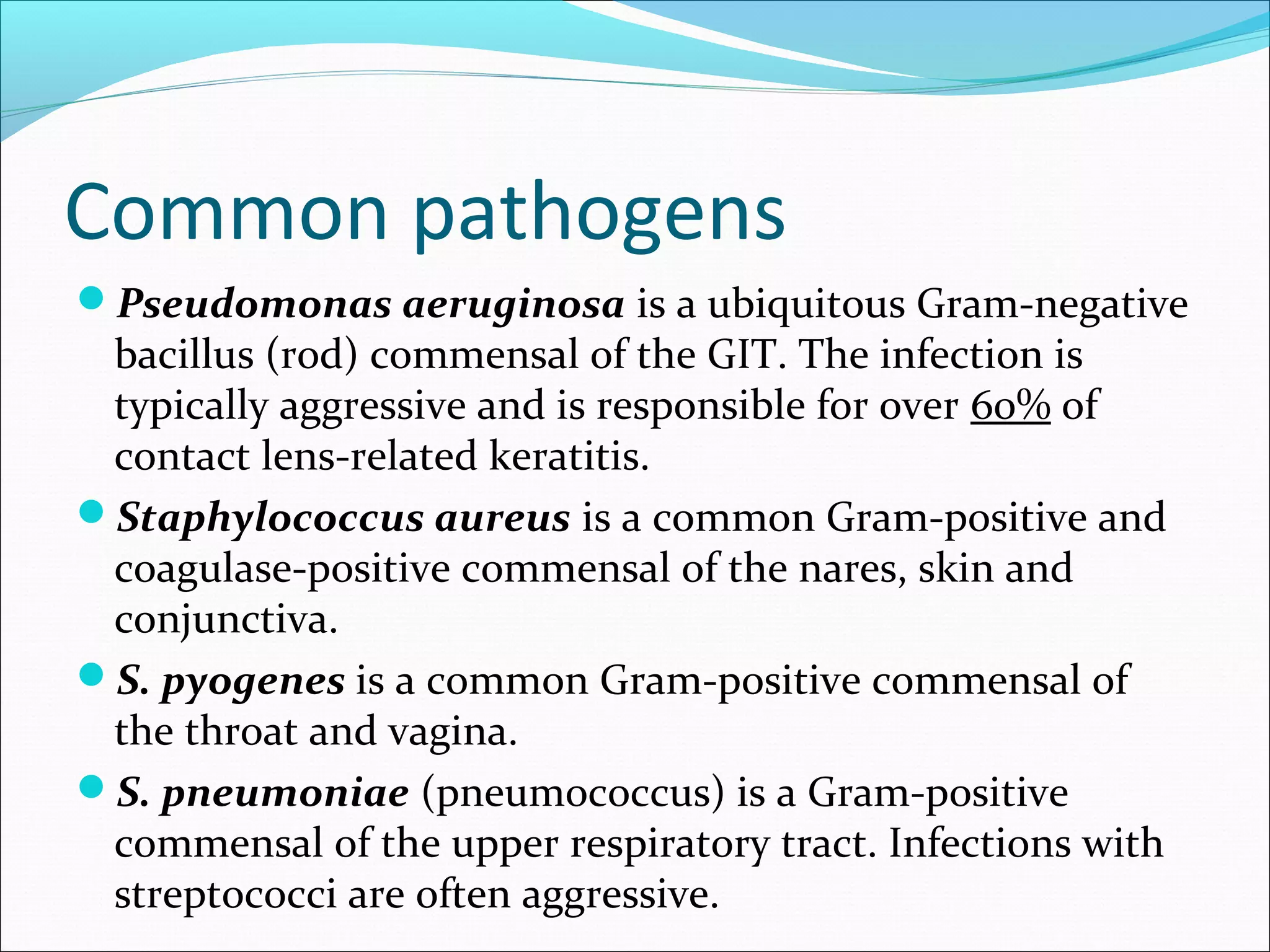
Pseudomonas aeruginosa is a ubiquitous Gram-negative
bacillus (rod) commensal of the GIT. The infection is
typically aggressive and is responsible for over 60% of
contact lens-related keratitis.
Staphylococcus aureus is a common Gram-positive and
coagulase-positive commensal of the nares, skin and
conjunctiva.
S. pyogenes is a common Gram-positive commensal of
the throat and vagina.
S. pneumoniae (pneumococcus) is a Gram-positive
commensal of the upper respiratory tract. Infections with
streptococci are often aggressive.
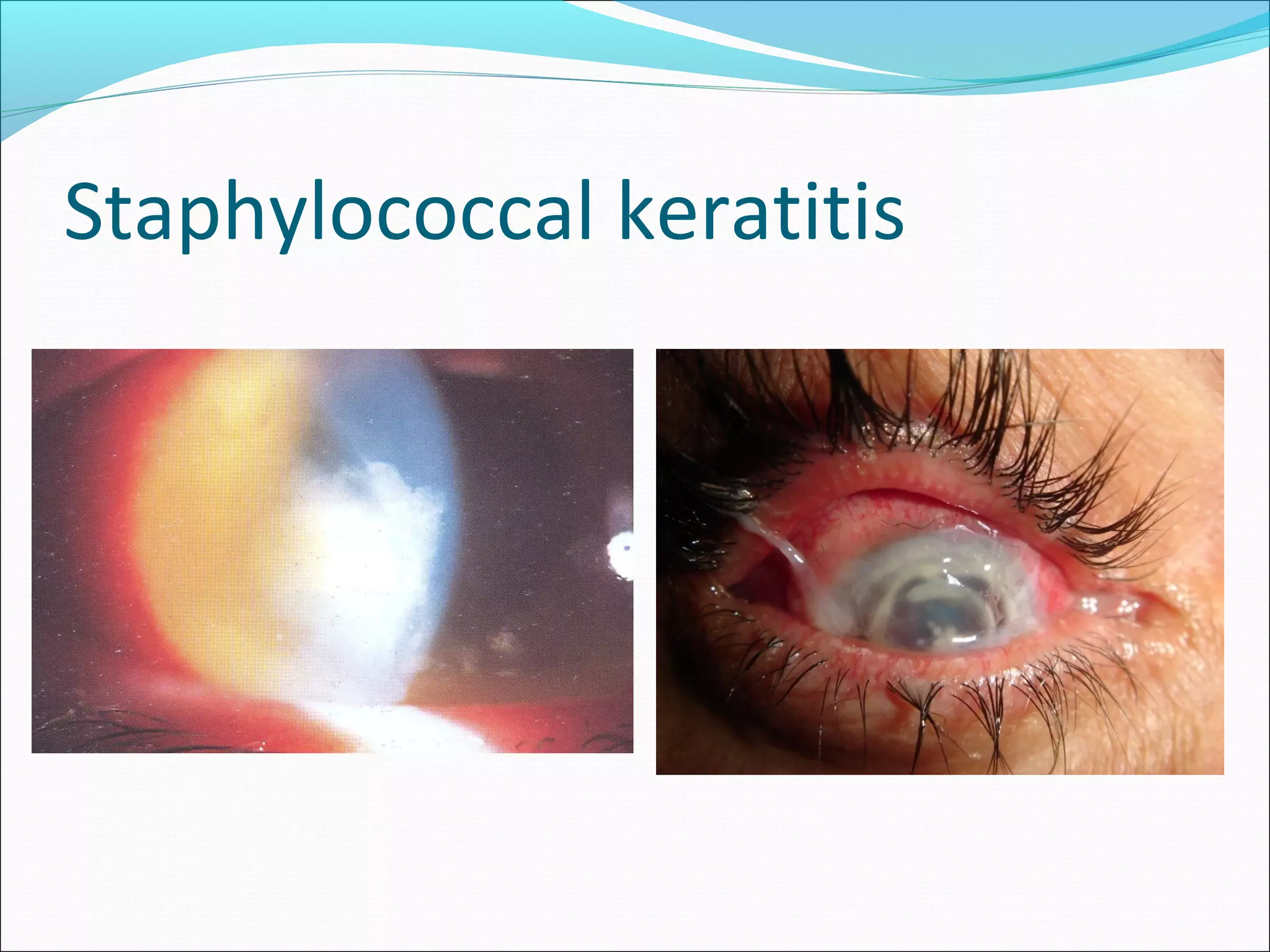
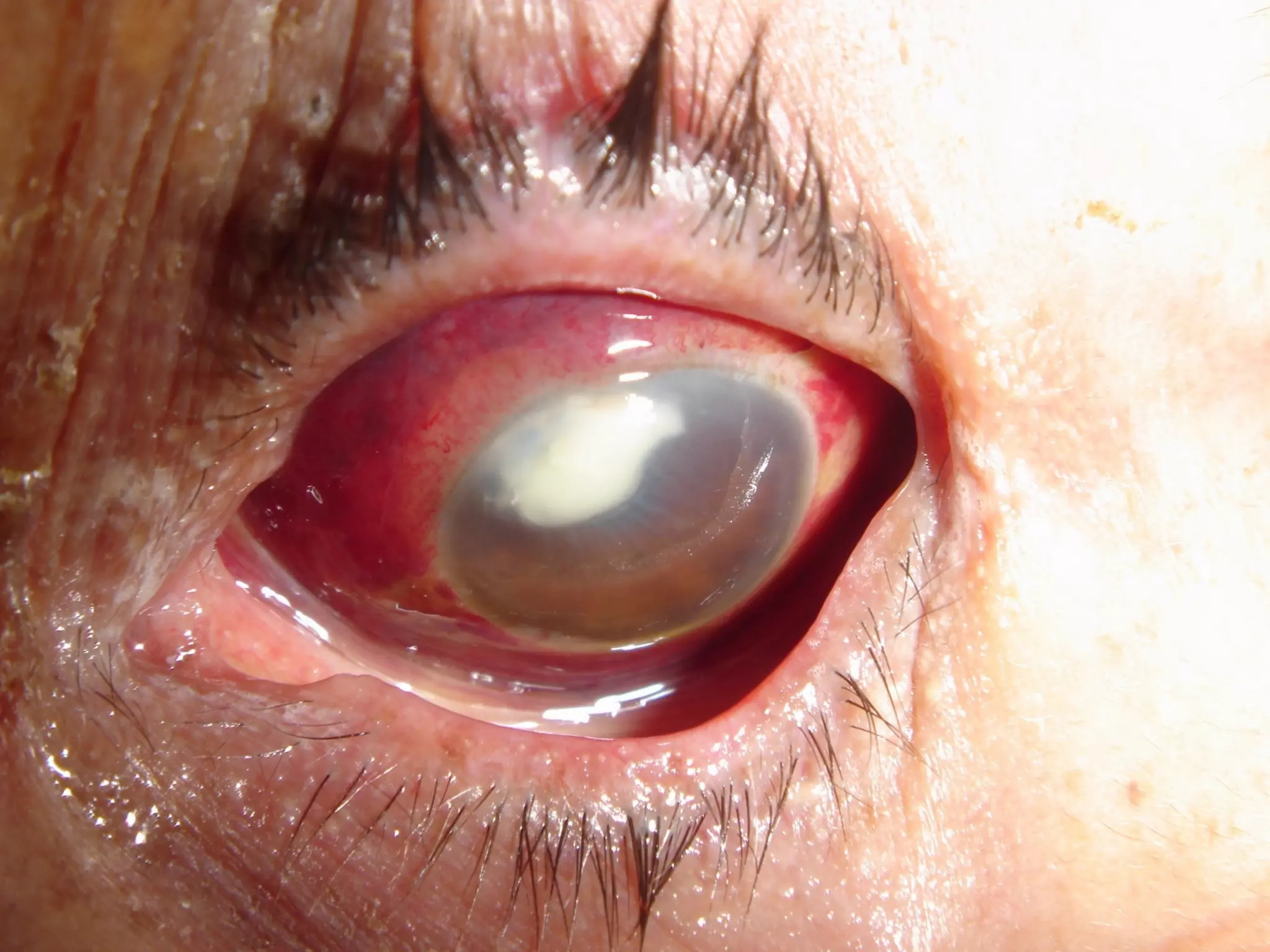
Severe staphylococcal keratitis
Staphylococcal keratitis
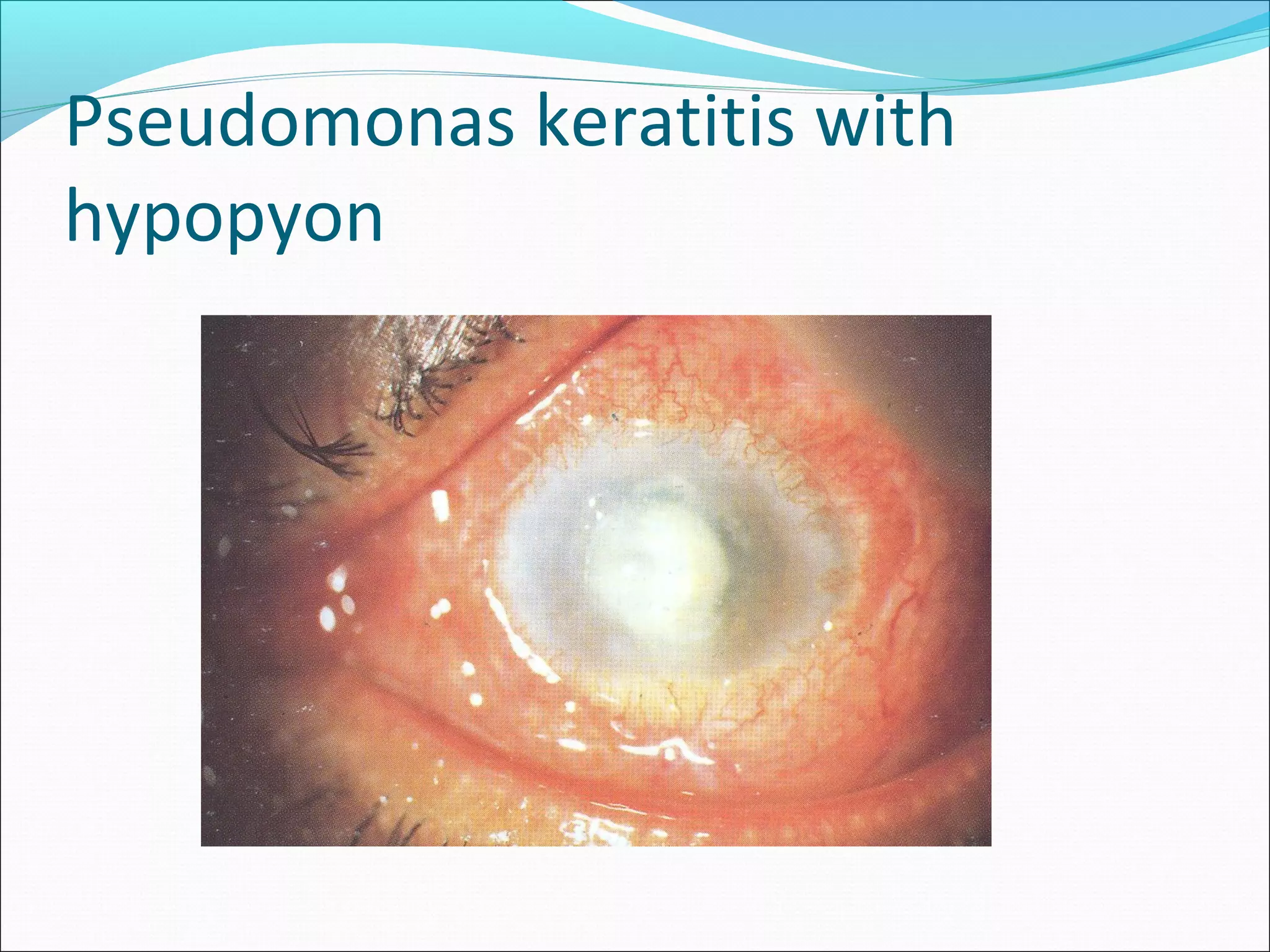
Pseudomonas keratitis with
hypopyon
Advanced pseudomonas keratitis
Risk factors
Contact lens wear, particularly if extended, is the most
important risk factor. Corneal epithelial compromise
secondary to hypoxia and minor trauma is thought to be
important, as is bacterial adherence to the lens surface. Soft
lenses are at higher risk than those of rigid lenses.
Trauma, including refractive surgery, has been linked to
bacterial infection.
Ocular surface disease such as herpetic keratitis, bullous
keratopathy, dry eye, chronic blepharitis, trichiasis and
entropion, exposure, severe allergic eye disease and corneal
anaesthesia.
Other factors include local or systemic immunosuppression,
diabetes and vitamin A deficiency.
Symptoms
Pain,
Photophobia,
Blurred vision,
Mucopurulent or purulent discharge.
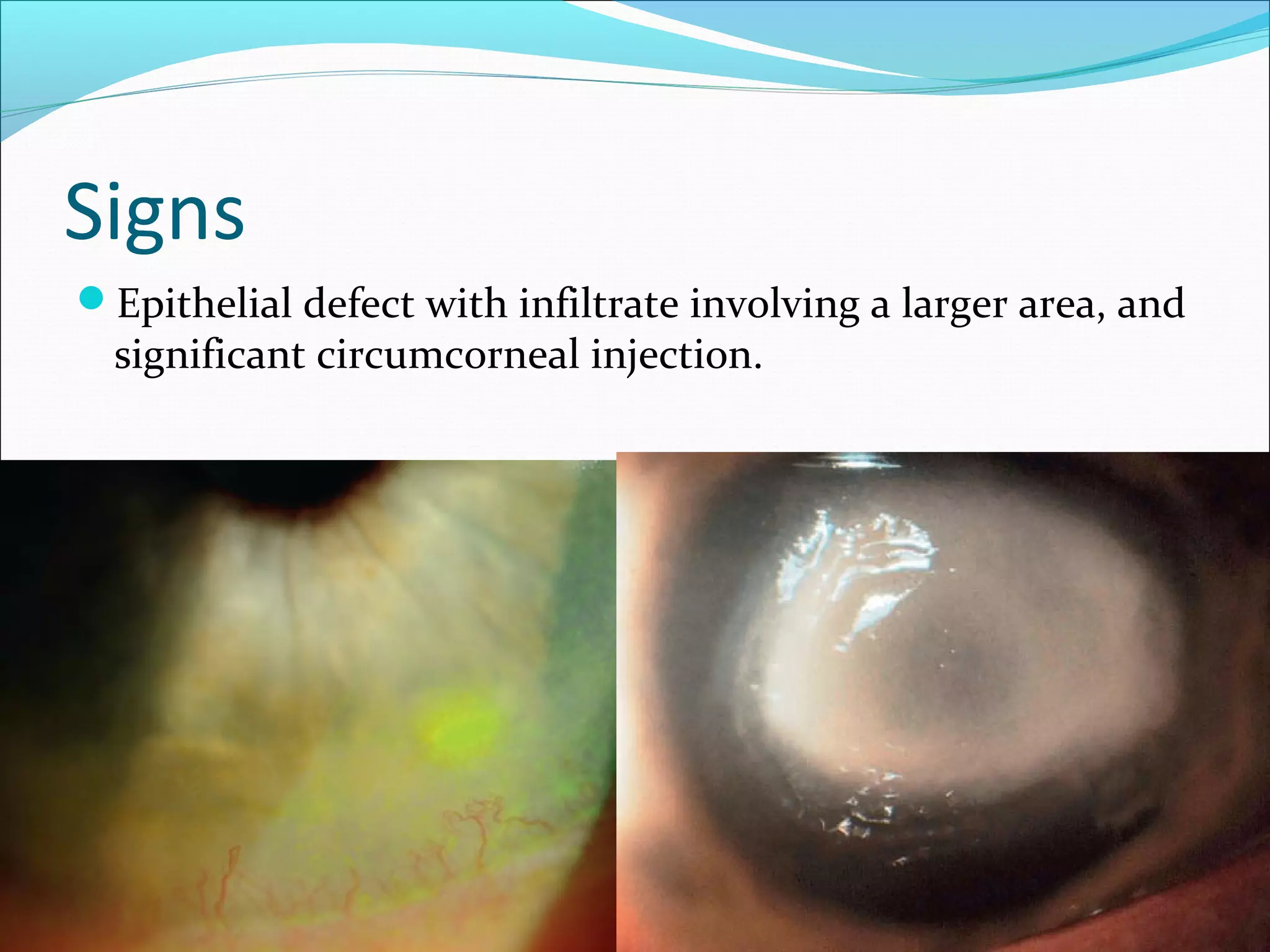
Signs
Epithelial defect with infiltrate involving a larger area, and
significant circumcorneal injection.
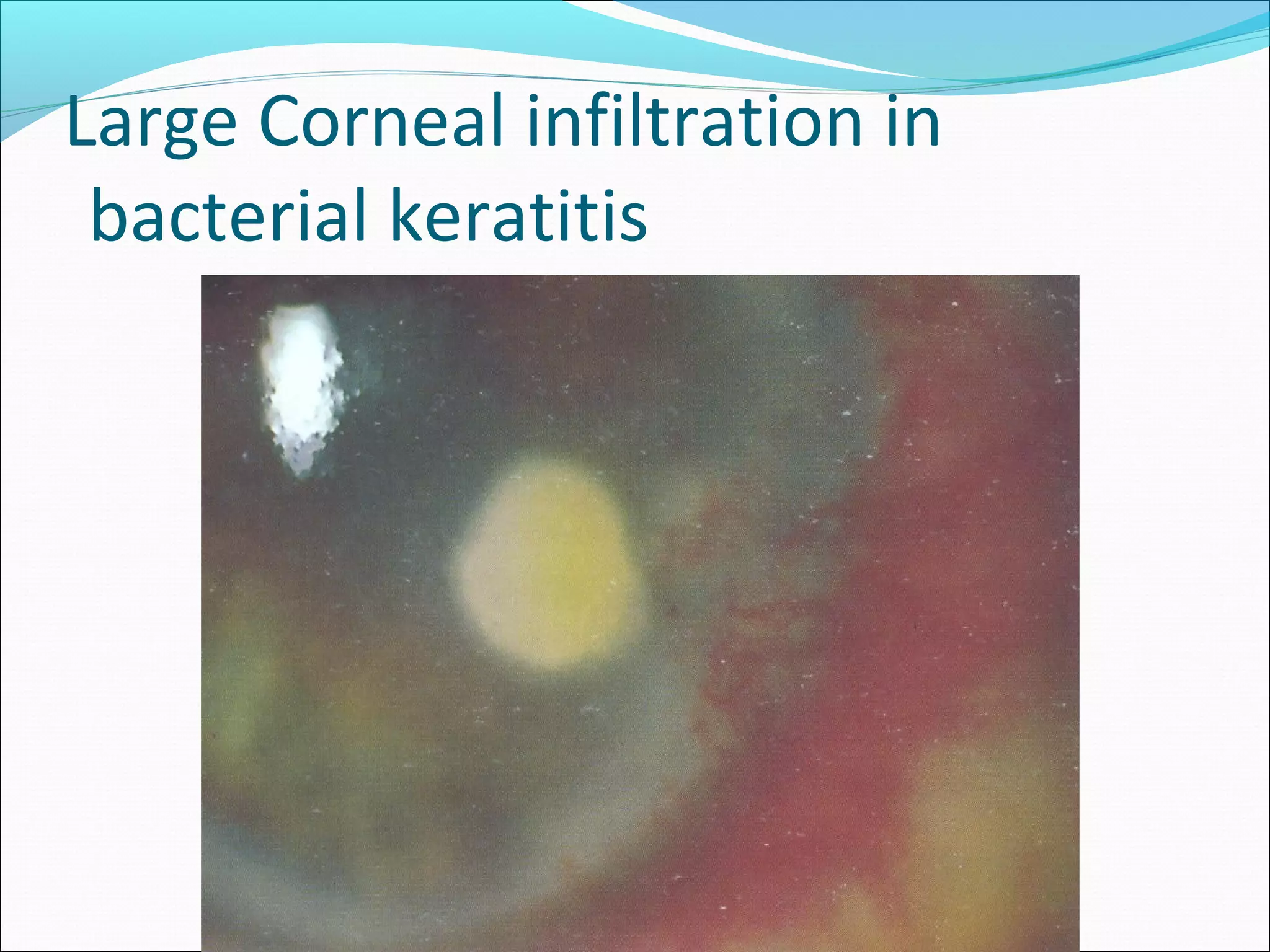
Large Corneal infiltration in
bacterial keratitis
Signs
Stromal oedema, folds in
Descemet membrane and
anterior uveitis, commonly
with a hypopyon and
posterior synechiae in
moderate–severe keratitis.
Plaque-like keratic
precipitates can form on the
endothelium contiguous
with the affected stroma.
Chemosis and eyelid
swelling in moderate–
severe cases.
Signs
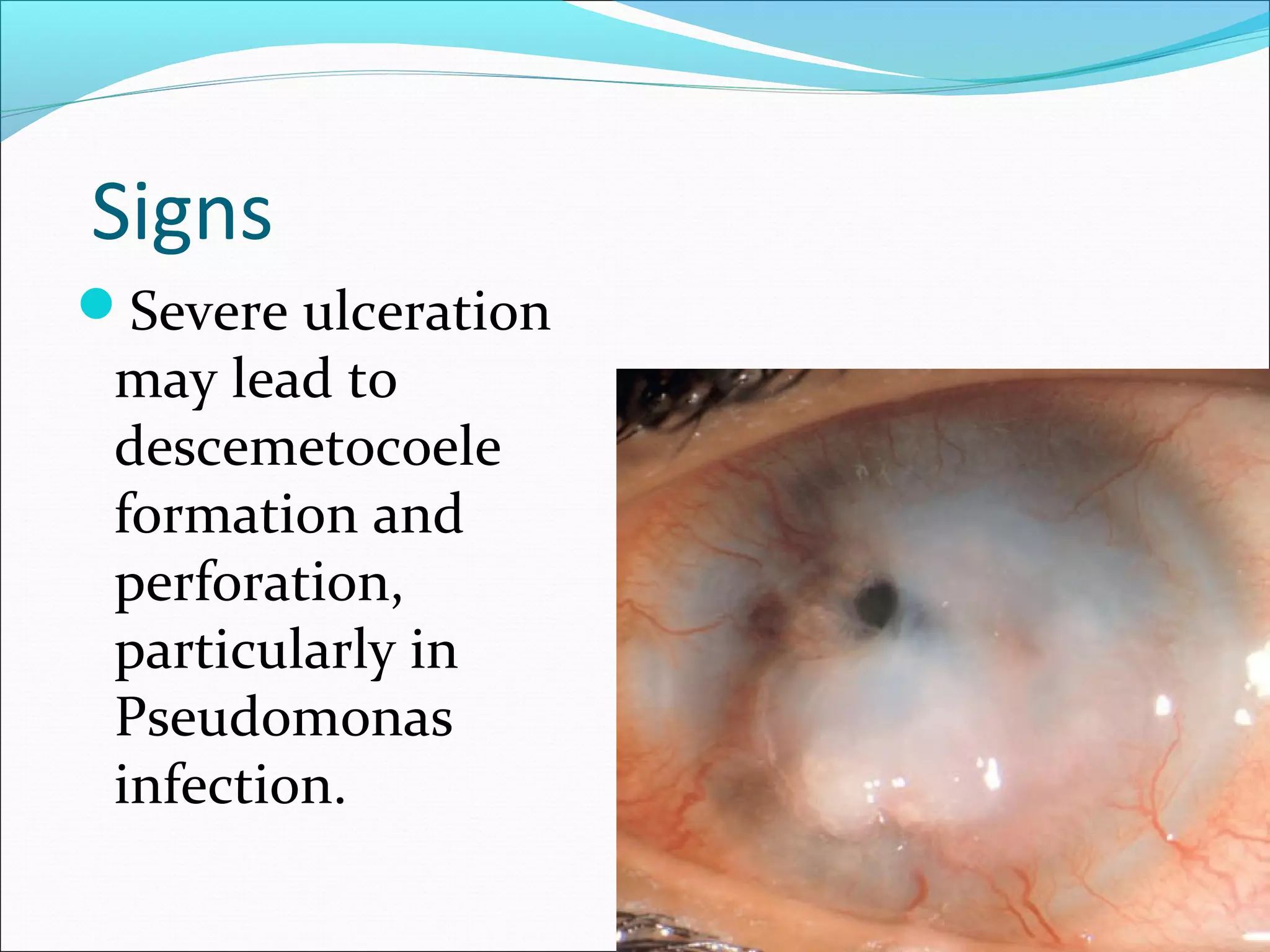
Severe ulceration
may lead to
descemetocoele
formation and
perforation,
particularly in
Pseudomonas
infection.
Signs
Scleritis can develop, particularly with severe
perilimbal infection.
Endophthalmitis is rare in the absence of
perforation.
Improvement is usually heralded by a reduction in eyelid
oedema and chemosis, shrinking of the epithelial defect,
decreasing infiltrate density and a reduction in anterior
chamber signs.
○ Subsequent scarring may be severe, including
vascularization; in addition to opacification irregular
astigmatism may limit vision
Differential diagnoses
Keratitis due to other microorganisms (fungi,
acanthamoeba, stromal herpes simplex keratitis and
mycobacteria),
Marginal keratitis,
Sterile inflammatory corneal infiltrates associated
with contact lens wear,
Peripheral ulcerative keratitis,
Toxic keratitis.
Investigations
Corneal scraping for culture & sensitivity
If small infiltrate, without epithelial defect & away from
visual axis, then it’s not required.
Conjunctival swabs
Contact lens cases, as well as bottles of solution and
lenses themselves… The case should not be cleaned by
the patient first!
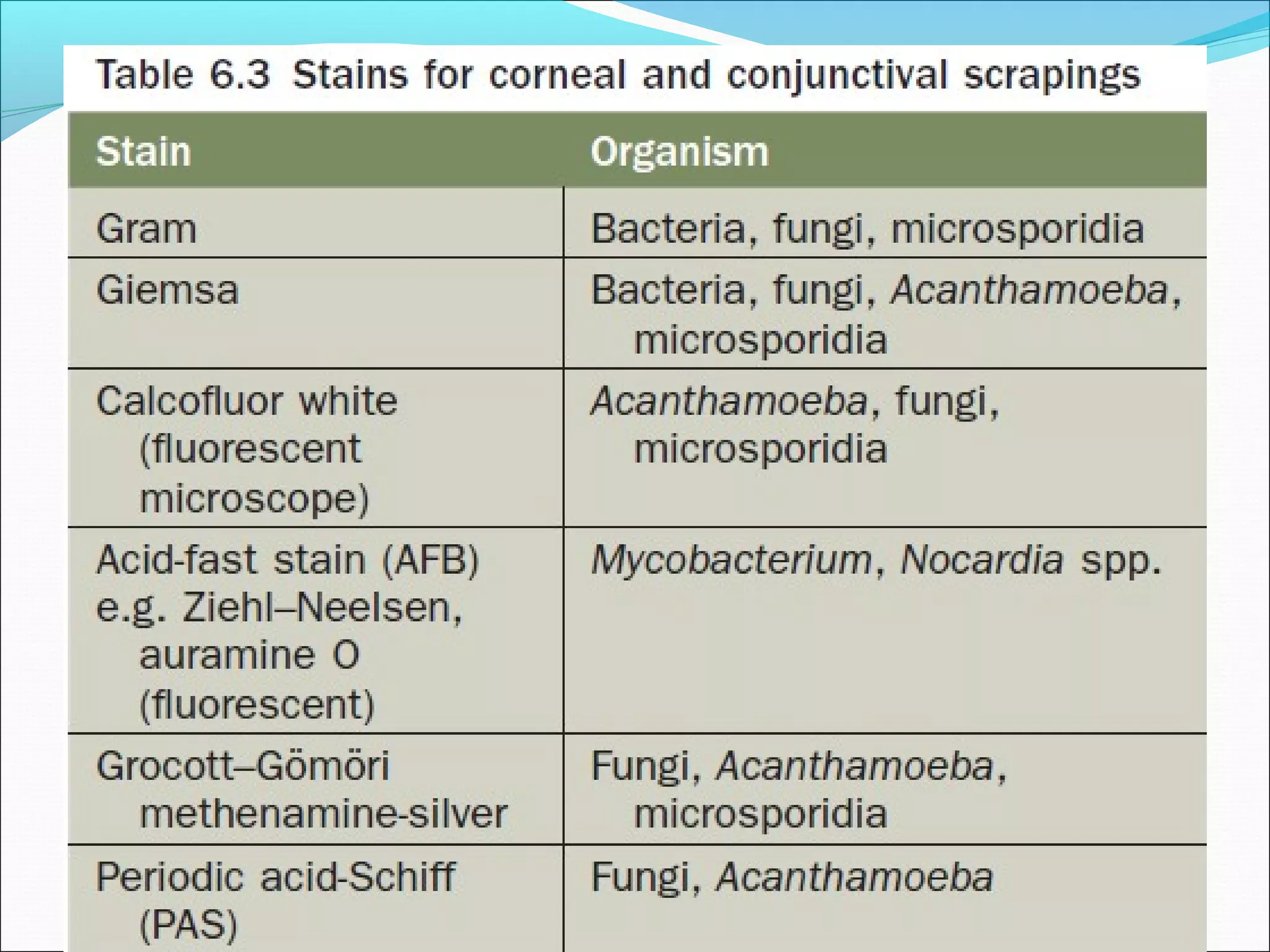
Gram staining
Management
Hospital admission should be considered for patients
who are not likely to comply or are unable to self-
administer treatment. It should also be considered for
aggressive disease, particularly if involving an only eye.
Discontinuation of contact lens wear is mandatory.
A clear plastic eye shield should be worn between eye
drop instillations if significant thinning (or perforation) is
present.
Decision to treat
Intensive treatment may not be required for small infiltrates
that are clinically sterile and may be treated by lower-
frequency topical antibiotic and/or steroid, and by
temporary cessation of contact lens wear.
It is important to note that the causative organism cannot be
defined reliably from the ulcer’s appearance.
Empirical broad-spectrum treatment is usually initiated
before microscopy results are available.
Antibiotic choice
Monotherapy
Greater convenience & lower surface toxicity
Fluoroquinolone is the usual choice for empirical
monotherapy and appears to be about as effective as
duotherapy.
Moxifloxacin has superior ocular penetration.
Ciprofloxacin instillation is associated with white
corneal precipitates that may delay epithelial healing.
Ciprofloxacin corneal precipitates
Deposits of ciprofloxacin
Antibiotic choice
Duotherapy
Aggressive disease or if microscopy suggests
streptococci or a specific microorganism that may be
more effectively treated by a tailored regimen
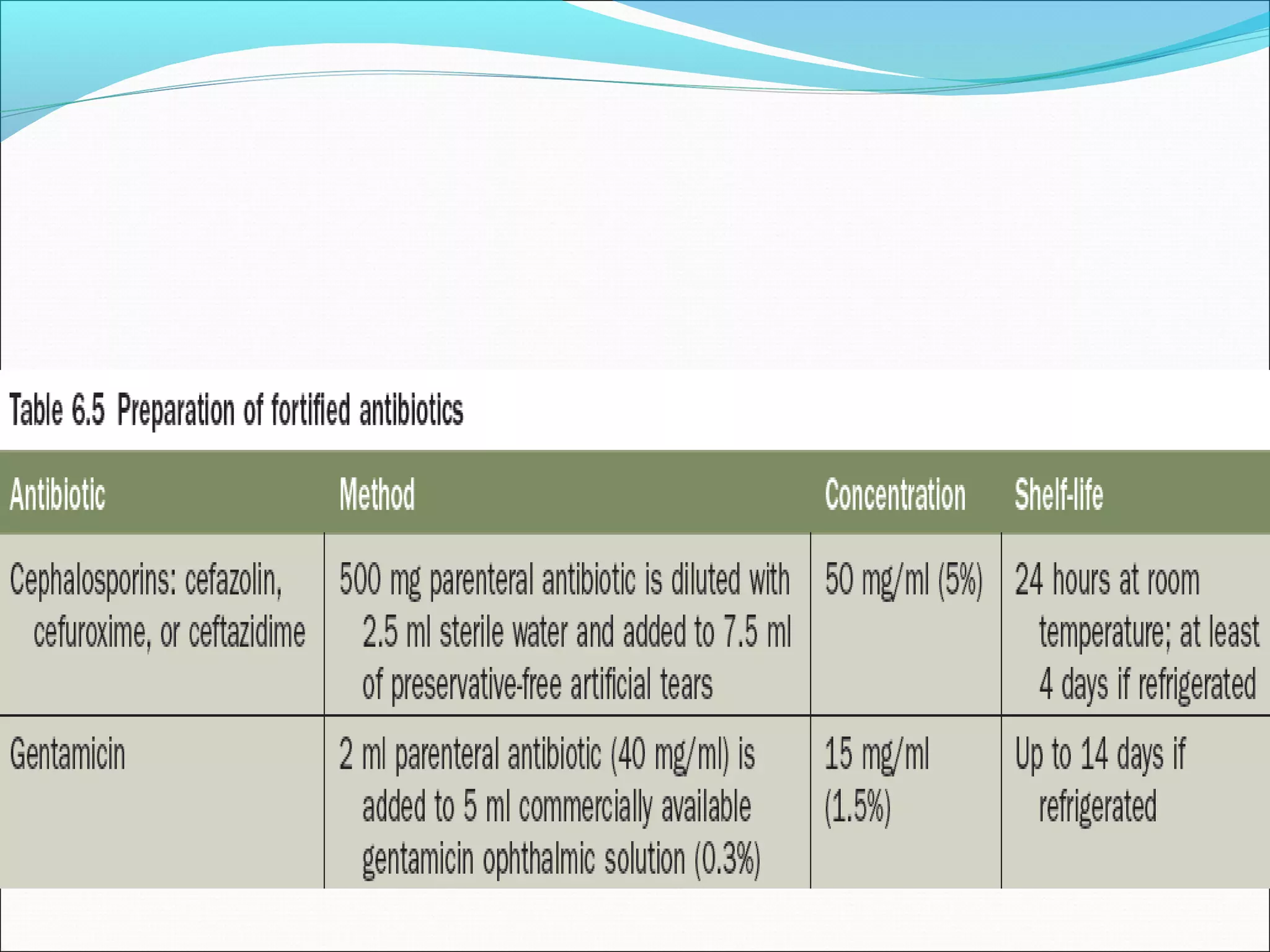
Combination of two fortified antibiotics, typically a
cephalosporin and an aminoglycoside, in order to cover
common Gram-positive and Gram-negative pathogens.
Disadvantages of fortified antibiotics include high cost,
limited availability, contamination risk, short shelf-life
and the need for refrigeration.
Subconjunctival antibiotics
Only indicated if there is poor compliance with topical
treatment.
Mydriatics
Prevent the formation of posterior synechiae and to
reduce pain
Steroids
Reduce host inflammation, improve comfort, and
minimize corneal scarring.
However, they promote replication of some
microorganisms, particularly fungi, herpes simplex
and mycobacteria
Contraindicated if a fungal or mycobacterial agent is
suspected.
By suppressing inflammation, they also retard the
eye’s response to bacteria and this can be clinically
significant, particularly if an antibiotic is of limited
effect or bacteriostatic rather than bactericidal.
Steroids
Evidence that they improve the final visual outcome
is mainly empirical, but the recent Steroids for
Corneal Ulcers Trial (SCUT) found no eventual
benefit in most cases, though severe cases (counting
fingers vision or large ulcers involving the central 4
mm of the cornea) tended to do better.
Epithelialization may be retarded by steroids and
they should be avoided if there is significant thinning
or delayed epithelial healing; corneal melting can
occasionally be precipitated or worsened.
Steroids
Many authorities do not commence topical steroids
until evidence of clinical improvement is seen with
antibiotics alone, typically 24–48 hours after starting
treatment. Others delay their use at least until the
sensitivity of the isolate to antibiotics has been
demonstrated, or do not use them at all.
Regimens vary from minimal strength preparations at
low frequency to dexamethasone 0.1% every 2 hours; a
reasonable regimen is prednisolone 0.5–1% four times
daily.
Steroids
Early discontinuation may lead to a rebound
recurrence of sterile inflammation.
The threshold for topical steroid use may be lower in
cases of corneal graft infection, as they may reduce
the risk of rejection
Systemic antibiotics
Potential for systemic involvement
N. meningitidis, treated with IM benzylpenicillin, ceftriaxone or
cefotaxime, or oral ciprofloxacin.
H. influenzae infection should be treated with oral amoxicillin with
clavulanic acid.
N. gonorrhoeae requires a third-generation cephalosporin such as
ceftriaxone.
Severe corneal thinning with threatened or actual
perforation requires:
Ciprofloxacin for its antibacterial activity.
Tetracycline (e.g. doxycycline 100 mg twice daily) for its
anticollagenase effect.
Scleral involvement may respond to oral or intravenous
treatment.
Corneal thinning
Perforation
Bandage contact lens for small perforation in which
infection is controlled.
Tissue glue is often adequate for slightly larger
dehiscences.
PKP or corneal patch graft may be necessary for larger
perforations, or in those where infection is extensive
or inadequately controlled.
Visual Rehabilitation
Keratoplasty (lamellar may be adequate) may be
required for residual dense corneal scarring.
Rigid contact lenses may be required for irregular
astigmatism but are generally only introduced at least
3 months after re-epithelialization.
Cataract surgery may be required because secondary
lens opacities are common following severe
inflammation.
Bacterial keratitis

Bacterial keratitis

  • 1.
  • 2.
    Bacterial keratitis usuallydevelops only when ocular defences have been compromised. Some bacteria are able to penetrate a healthy corneal epithelium, including: Neisseria gonorrhoeae, Neisseria meningitidis, Corynebacterium diphtheriae Haemophilus influenzae
  • 3.
    Common pathogens Pseudomonas aeruginosais a ubiquitous Gram-negative bacillus (rod) commensal of the GIT. The infection is typically aggressive and is responsible for over 60% of contact lens-related keratitis. Staphylococcus aureus is a common Gram-positive and coagulase-positive commensal of the nares, skin and conjunctiva. S. pyogenes is a common Gram-positive commensal of the throat and vagina. S. pneumoniae (pneumococcus) is a Gram-positive commensal of the upper respiratory tract. Infections with streptococci are often aggressive.
  • 4.
  • 5.
  • 6.
  • 7.
  • 9.
    Risk factors Contact lenswear, particularly if extended, is the most important risk factor. Corneal epithelial compromise secondary to hypoxia and minor trauma is thought to be important, as is bacterial adherence to the lens surface. Soft lenses are at higher risk than those of rigid lenses. Trauma, including refractive surgery, has been linked to bacterial infection. Ocular surface disease such as herpetic keratitis, bullous keratopathy, dry eye, chronic blepharitis, trichiasis and entropion, exposure, severe allergic eye disease and corneal anaesthesia. Other factors include local or systemic immunosuppression, diabetes and vitamin A deficiency.
  • 10.
  • 11.
    Signs Epithelial defect withinfiltrate involving a larger area, and significant circumcorneal injection.
  • 12.
    Large Corneal infiltrationin bacterial keratitis
  • 13.
    Signs Stromal oedema, foldsin Descemet membrane and anterior uveitis, commonly with a hypopyon and posterior synechiae in moderate–severe keratitis. Plaque-like keratic precipitates can form on the endothelium contiguous with the affected stroma. Chemosis and eyelid swelling in moderate– severe cases.
  • 14.
    Signs Severe ulceration may leadto descemetocoele formation and perforation, particularly in Pseudomonas infection.
  • 15.
    Signs Scleritis can develop,particularly with severe perilimbal infection. Endophthalmitis is rare in the absence of perforation.
  • 16.
    Improvement is usuallyheralded by a reduction in eyelid oedema and chemosis, shrinking of the epithelial defect, decreasing infiltrate density and a reduction in anterior chamber signs. ○ Subsequent scarring may be severe, including vascularization; in addition to opacification irregular astigmatism may limit vision
  • 17.
    Differential diagnoses Keratitis dueto other microorganisms (fungi, acanthamoeba, stromal herpes simplex keratitis and mycobacteria), Marginal keratitis, Sterile inflammatory corneal infiltrates associated with contact lens wear, Peripheral ulcerative keratitis, Toxic keratitis.
  • 18.
    Investigations Corneal scraping forculture & sensitivity If small infiltrate, without epithelial defect & away from visual axis, then it’s not required. Conjunctival swabs Contact lens cases, as well as bottles of solution and lenses themselves… The case should not be cleaned by the patient first! Gram staining
  • 21.
    Management Hospital admission shouldbe considered for patients who are not likely to comply or are unable to self- administer treatment. It should also be considered for aggressive disease, particularly if involving an only eye. Discontinuation of contact lens wear is mandatory. A clear plastic eye shield should be worn between eye drop instillations if significant thinning (or perforation) is present.
  • 22.
    Decision to treat Intensivetreatment may not be required for small infiltrates that are clinically sterile and may be treated by lower- frequency topical antibiotic and/or steroid, and by temporary cessation of contact lens wear. It is important to note that the causative organism cannot be defined reliably from the ulcer’s appearance. Empirical broad-spectrum treatment is usually initiated before microscopy results are available.
  • 23.
    Antibiotic choice Monotherapy Greater convenience& lower surface toxicity Fluoroquinolone is the usual choice for empirical monotherapy and appears to be about as effective as duotherapy. Moxifloxacin has superior ocular penetration. Ciprofloxacin instillation is associated with white corneal precipitates that may delay epithelial healing.
  • 24.
  • 25.
  • 26.
    Antibiotic choice Duotherapy Aggressive diseaseor if microscopy suggests streptococci or a specific microorganism that may be more effectively treated by a tailored regimen Combination of two fortified antibiotics, typically a cephalosporin and an aminoglycoside, in order to cover common Gram-positive and Gram-negative pathogens. Disadvantages of fortified antibiotics include high cost, limited availability, contamination risk, short shelf-life and the need for refrigeration.
  • 31.
    Subconjunctival antibiotics Only indicatedif there is poor compliance with topical treatment. Mydriatics Prevent the formation of posterior synechiae and to reduce pain
  • 32.
    Steroids Reduce host inflammation,improve comfort, and minimize corneal scarring. However, they promote replication of some microorganisms, particularly fungi, herpes simplex and mycobacteria Contraindicated if a fungal or mycobacterial agent is suspected. By suppressing inflammation, they also retard the eye’s response to bacteria and this can be clinically significant, particularly if an antibiotic is of limited effect or bacteriostatic rather than bactericidal.
  • 33.
    Steroids Evidence that theyimprove the final visual outcome is mainly empirical, but the recent Steroids for Corneal Ulcers Trial (SCUT) found no eventual benefit in most cases, though severe cases (counting fingers vision or large ulcers involving the central 4 mm of the cornea) tended to do better. Epithelialization may be retarded by steroids and they should be avoided if there is significant thinning or delayed epithelial healing; corneal melting can occasionally be precipitated or worsened.
  • 34.
    Steroids Many authorities donot commence topical steroids until evidence of clinical improvement is seen with antibiotics alone, typically 24–48 hours after starting treatment. Others delay their use at least until the sensitivity of the isolate to antibiotics has been demonstrated, or do not use them at all. Regimens vary from minimal strength preparations at low frequency to dexamethasone 0.1% every 2 hours; a reasonable regimen is prednisolone 0.5–1% four times daily.
  • 35.
    Steroids Early discontinuation maylead to a rebound recurrence of sterile inflammation. The threshold for topical steroid use may be lower in cases of corneal graft infection, as they may reduce the risk of rejection
  • 36.
    Systemic antibiotics Potential forsystemic involvement N. meningitidis, treated with IM benzylpenicillin, ceftriaxone or cefotaxime, or oral ciprofloxacin. H. influenzae infection should be treated with oral amoxicillin with clavulanic acid. N. gonorrhoeae requires a third-generation cephalosporin such as ceftriaxone. Severe corneal thinning with threatened or actual perforation requires: Ciprofloxacin for its antibacterial activity. Tetracycline (e.g. doxycycline 100 mg twice daily) for its anticollagenase effect. Scleral involvement may respond to oral or intravenous treatment.
  • 37.
  • 38.
    Perforation Bandage contact lensfor small perforation in which infection is controlled. Tissue glue is often adequate for slightly larger dehiscences. PKP or corneal patch graft may be necessary for larger perforations, or in those where infection is extensive or inadequately controlled.
  • 40.
    Visual Rehabilitation Keratoplasty (lamellarmay be adequate) may be required for residual dense corneal scarring. Rigid contact lenses may be required for irregular astigmatism but are generally only introduced at least 3 months after re-epithelialization. Cataract surgery may be required because secondary lens opacities are common following severe inflammation.