PHYSIOLOGY OF VISUAL
CYCLE
Othman Al-Abbadi, M.D
INDEX
 Vitamin A
 Dietary sources
 Absorption & storage
 Transport
 Utilization
 Visual pigments
 Rhodopsin
 Cone pigments
 Light-induced changes
 Rhodopsin bleaching
 Rhodopsin regeneration
 Visual cycle
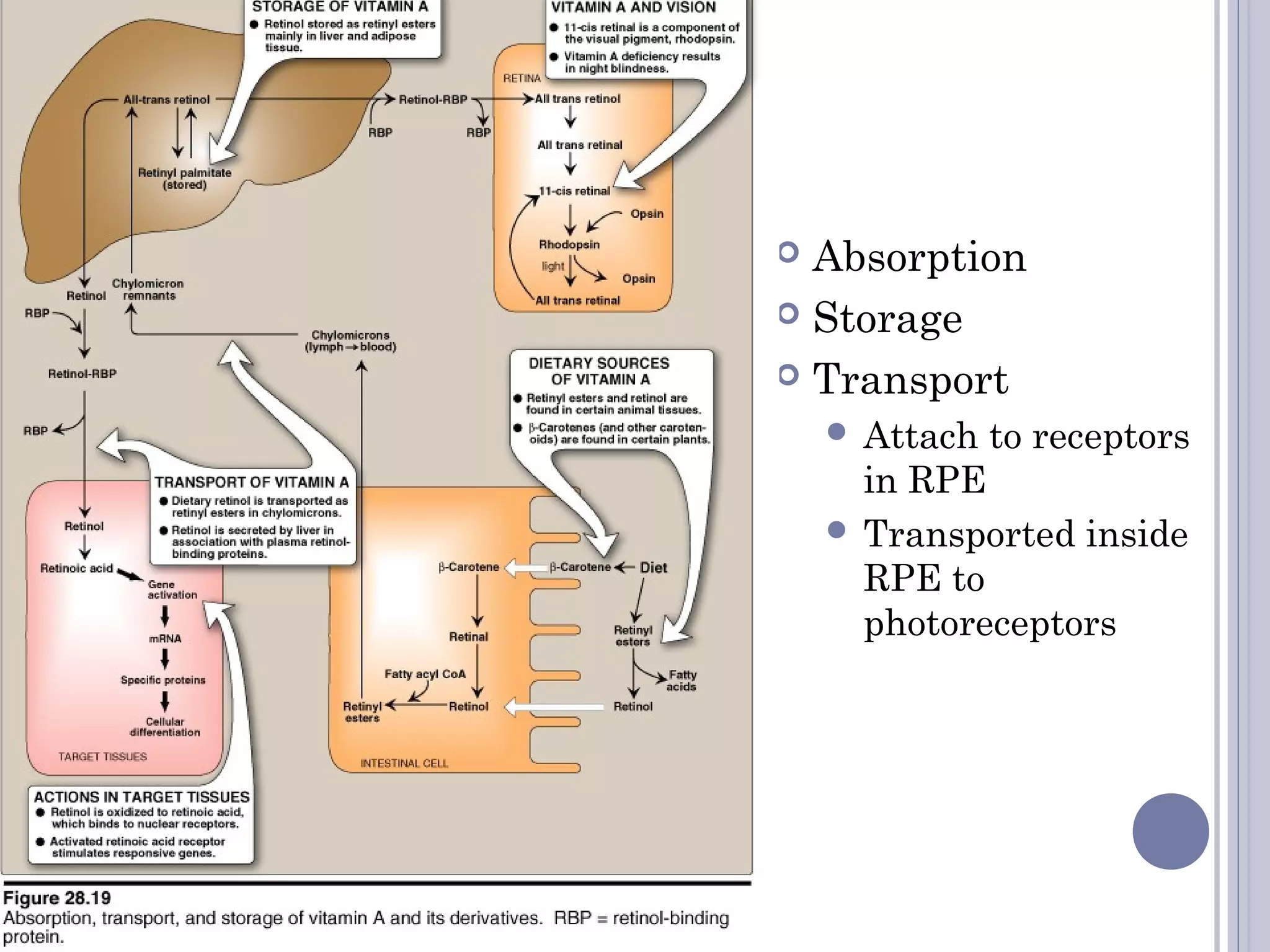
DIETARY SOURCES
DIETARY SOURCES
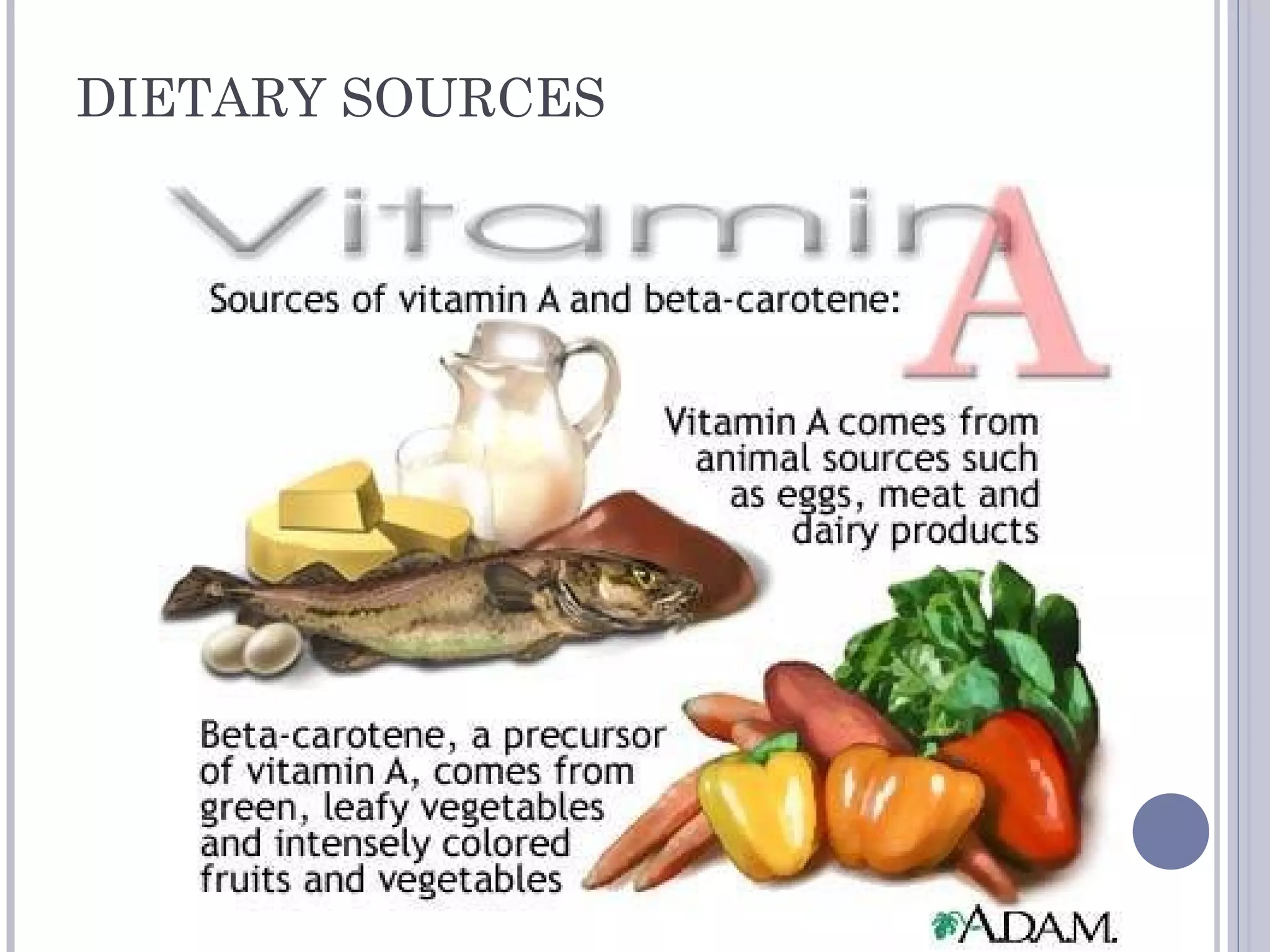
 Dietary sources of vitamin A include animal food
& plant food.
 Animal food contain vitamin A as Retnol.
 The liver is always the best source
 Plant foods contain vitamin A as Carotenes
which is a precursor.
 Carotenes must be converted to Retinol by
metabolic activity in the wall of the small
intestine.
 Three types of carotenes (alpha, beta, & gamma)
are present in plant food
 Beta Carotenes yield 2 molecules of vitamin A,
while Alpha & Gamma yield one molecule.
 Absorption
 Storage
 Transport
 Attach to receptors
in RPE
 Transported inside
RPE to
photoreceptors
UTILIZATION OF VITAMIN A
 Retinol passes through RPE to phtoreceptors
unchanged.
 Oxidation of Retinol to Retinene (11-cis Retinal)
by Retinene Reductase in photoreceptor outer
segment.
 Retinene combines with Opsin to form
Rhodopsin.
 The freshly formed Rhodopsin is incorporated
into the newly forming double discs at the
innermost portion of outer segment of
photoreceptors.
VISUAL PIGMENTS
 Substances that have the property of absorbing
light.
 The peak of each pigment’s absorption curve is
called “absorption maximum.”
RHODOPSIN
 Membrane-bound glycolipid.
 Consists of Scotopsin & Retinal.
 Molecular weight of 40,000
 Fat soluble
 Sensitive to heat & chemical agents which
denature the protein.
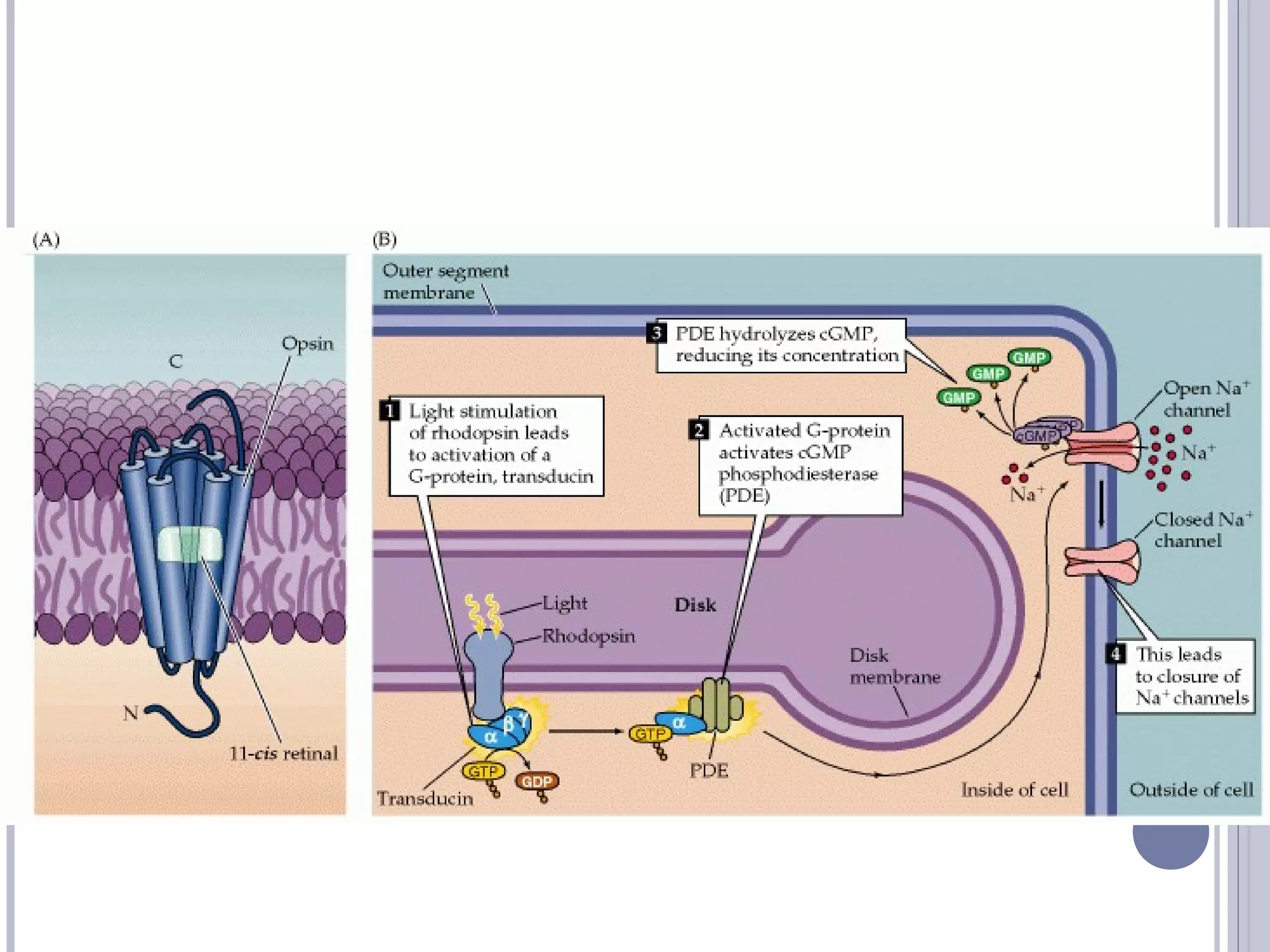
 Scotopsin is a 348 amino acid protein & crosses
the disc membrane 7 times.
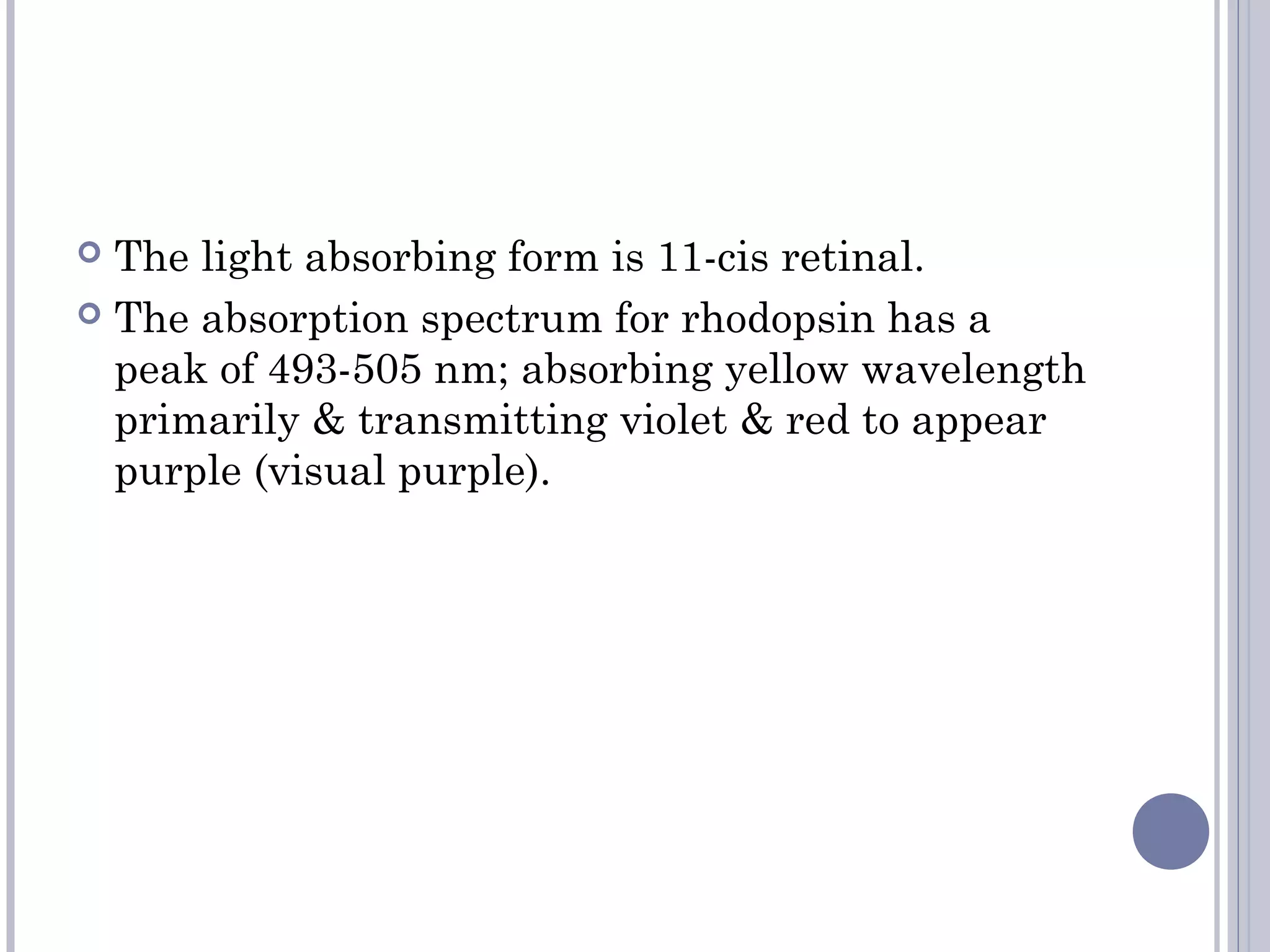
 The light absorbing form is 11-cis retinal.
 The absorption spectrum for rhodopsin has a
peak of 493-505 nm; absorbing yellow wavelength
primarily & transmitting violet & red to appear
purple (visual purple).
CONE PIGMENTS
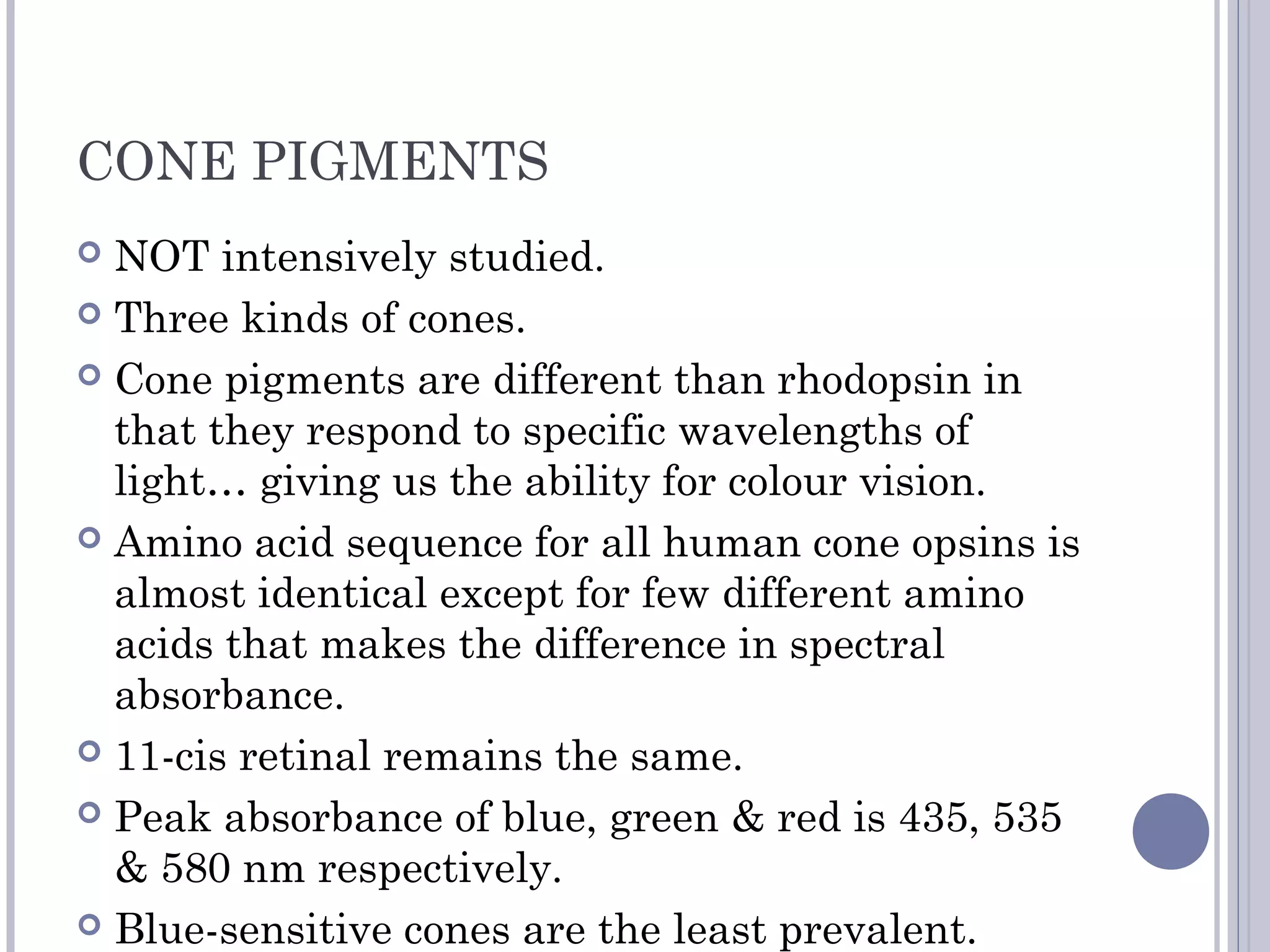
 NOT intensively studied.
 Three kinds of cones.
 Cone pigments are different than rhodopsin in
that they respond to specific wavelengths of
light… giving us the ability for colour vision.
 Amino acid sequence for all human cone opsins is
almost identical except for few different amino
acids that makes the difference in spectral
absorbance.
 11-cis retinal remains the same.
 Peak absorbance of blue, green & red is 435, 535
& 580 nm respectively.
 Blue-sensitive cones are the least prevalent.
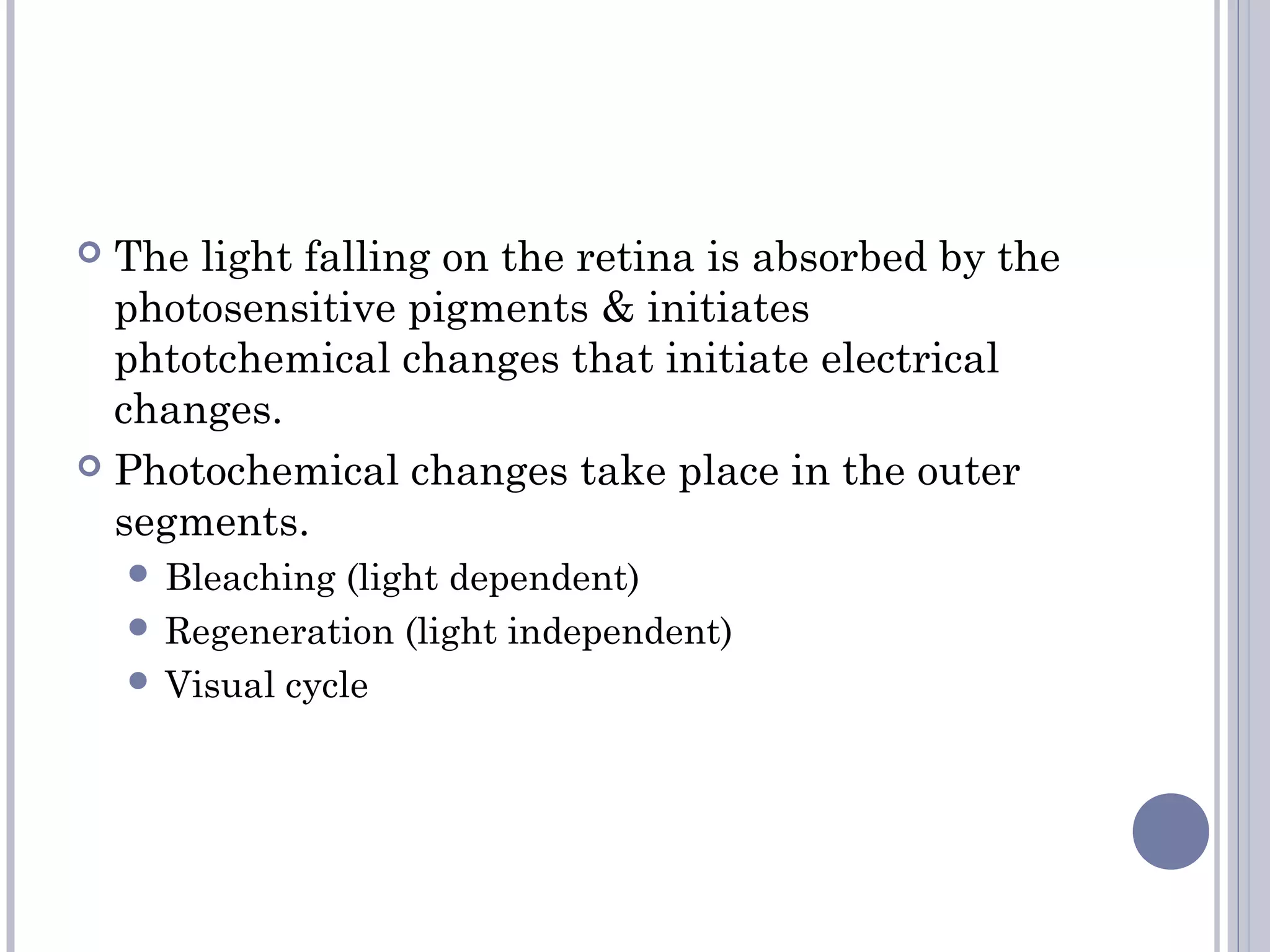
 The light falling on the retina is absorbed by the
photosensitive pigments & initiates
phtotchemical changes that initiate electrical
changes.
 Photochemical changes take place in the outer
segments.
 Bleaching (light dependent)
 Regeneration (light independent)
 Visual cycle
RHODOPSIN –RETINAL VISUAL CYCLE IN
THE RODS.
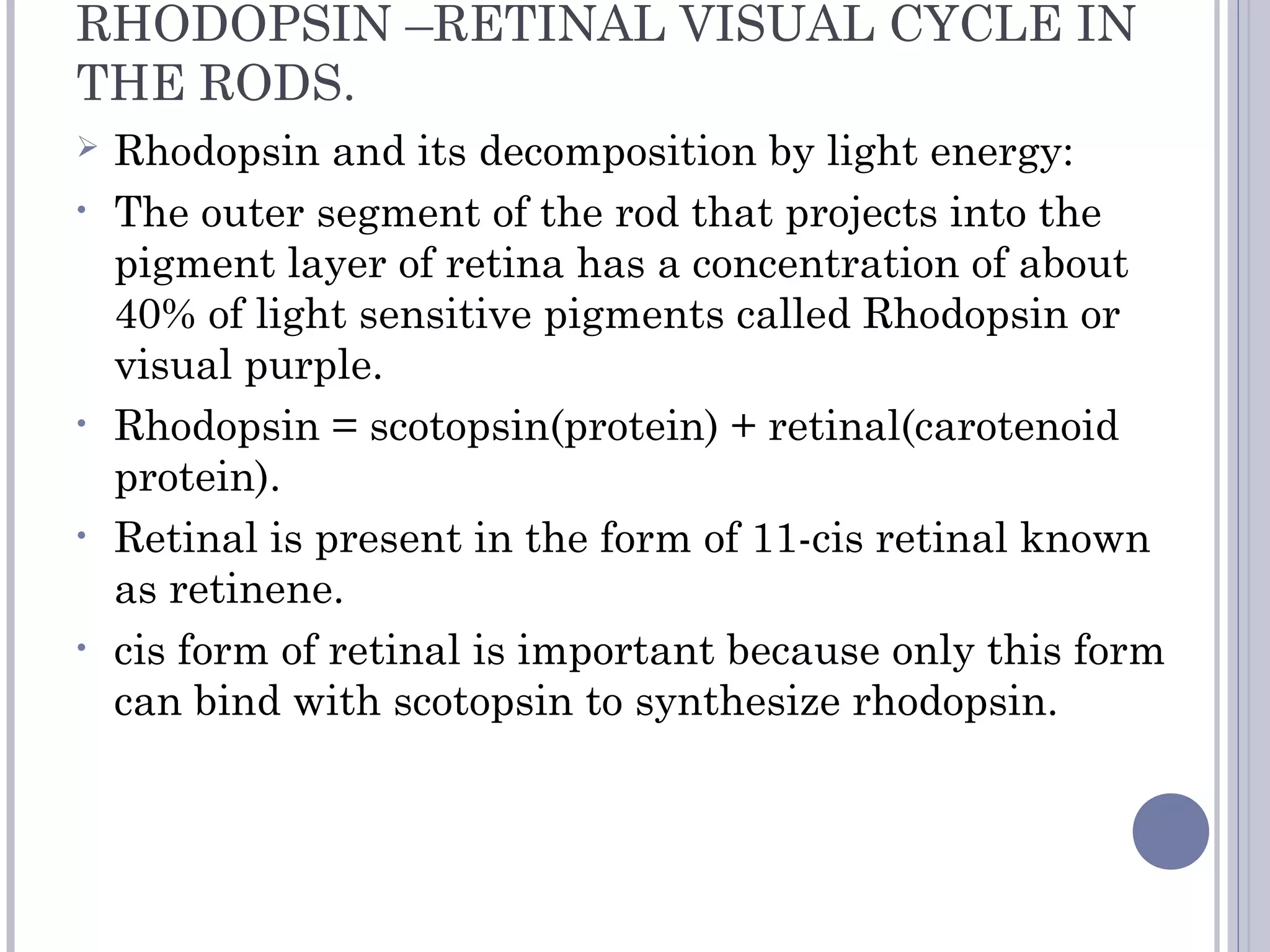
 Rhodopsin and its decomposition by light energy:
• The outer segment of the rod that projects into the
pigment layer of retina has a concentration of about
40% of light sensitive pigments called Rhodopsin or
visual purple.
• Rhodopsin = scotopsin(protein) + retinal(carotenoid
protein).
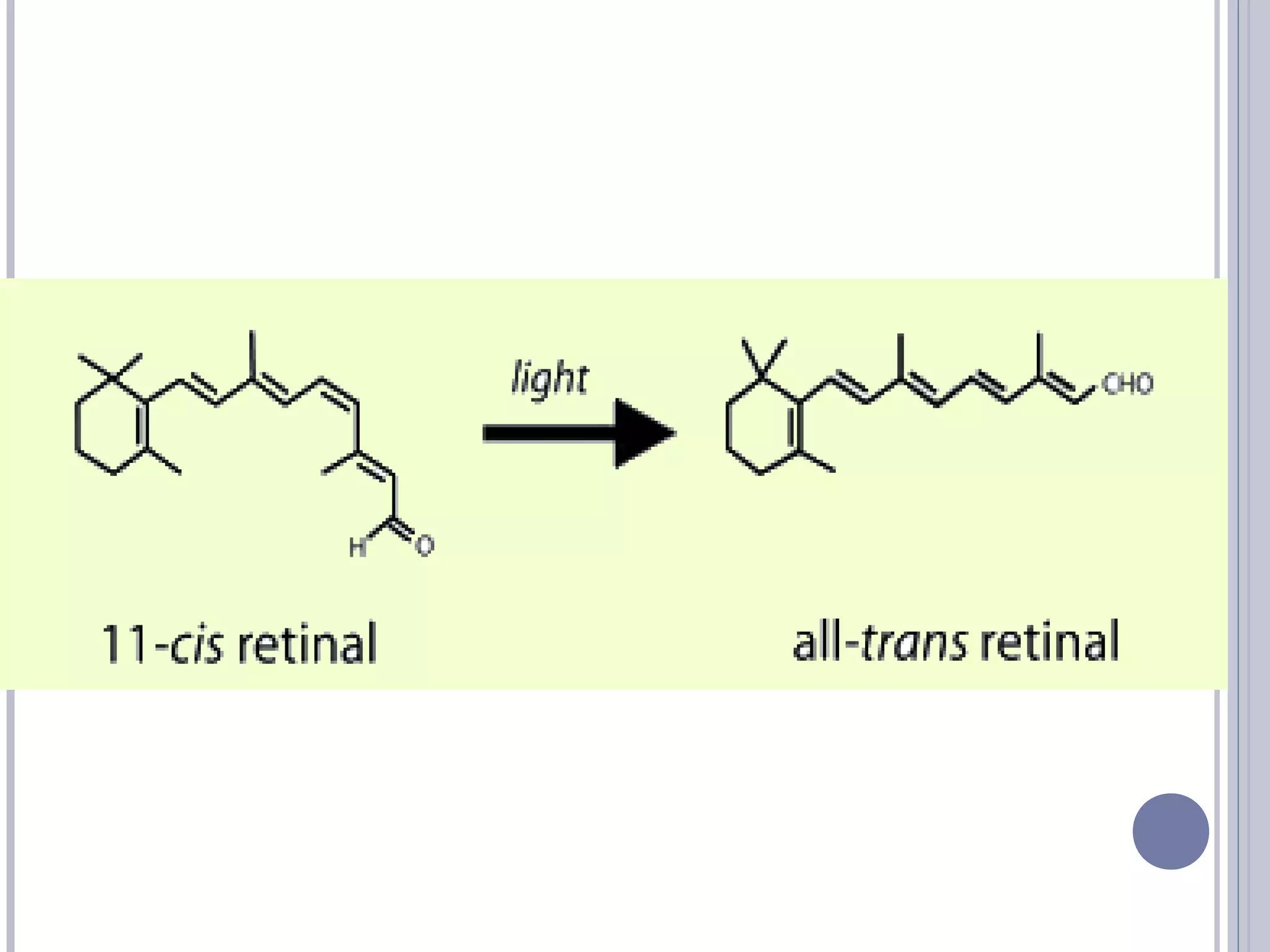
• Retinal is present in the form of 11-cis retinal known
as retinene.
• cis form of retinal is important because only this form
can bind with scotopsin to synthesize rhodopsin.
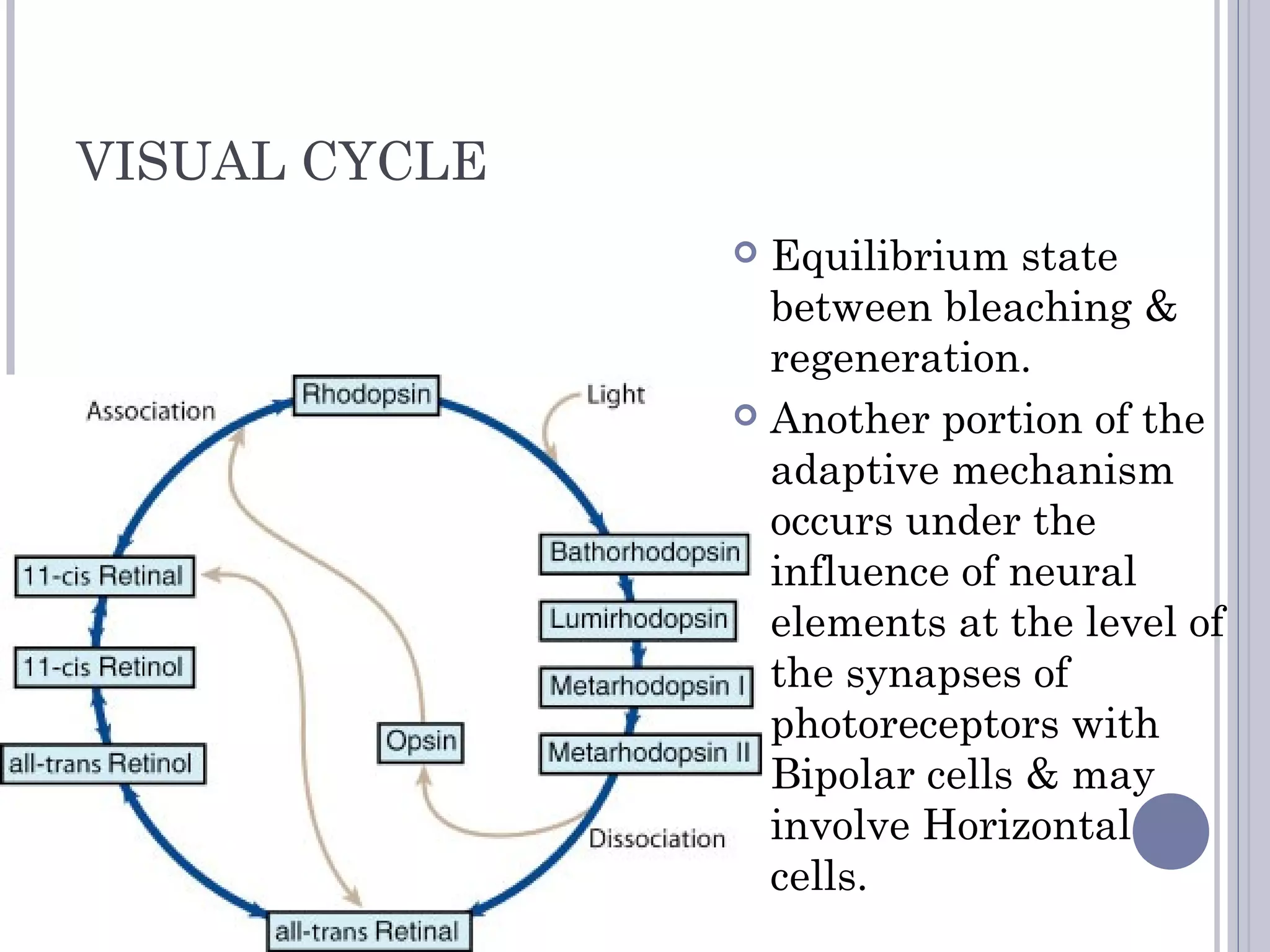
CHANGES OCCURING IN
RHODOPSIN
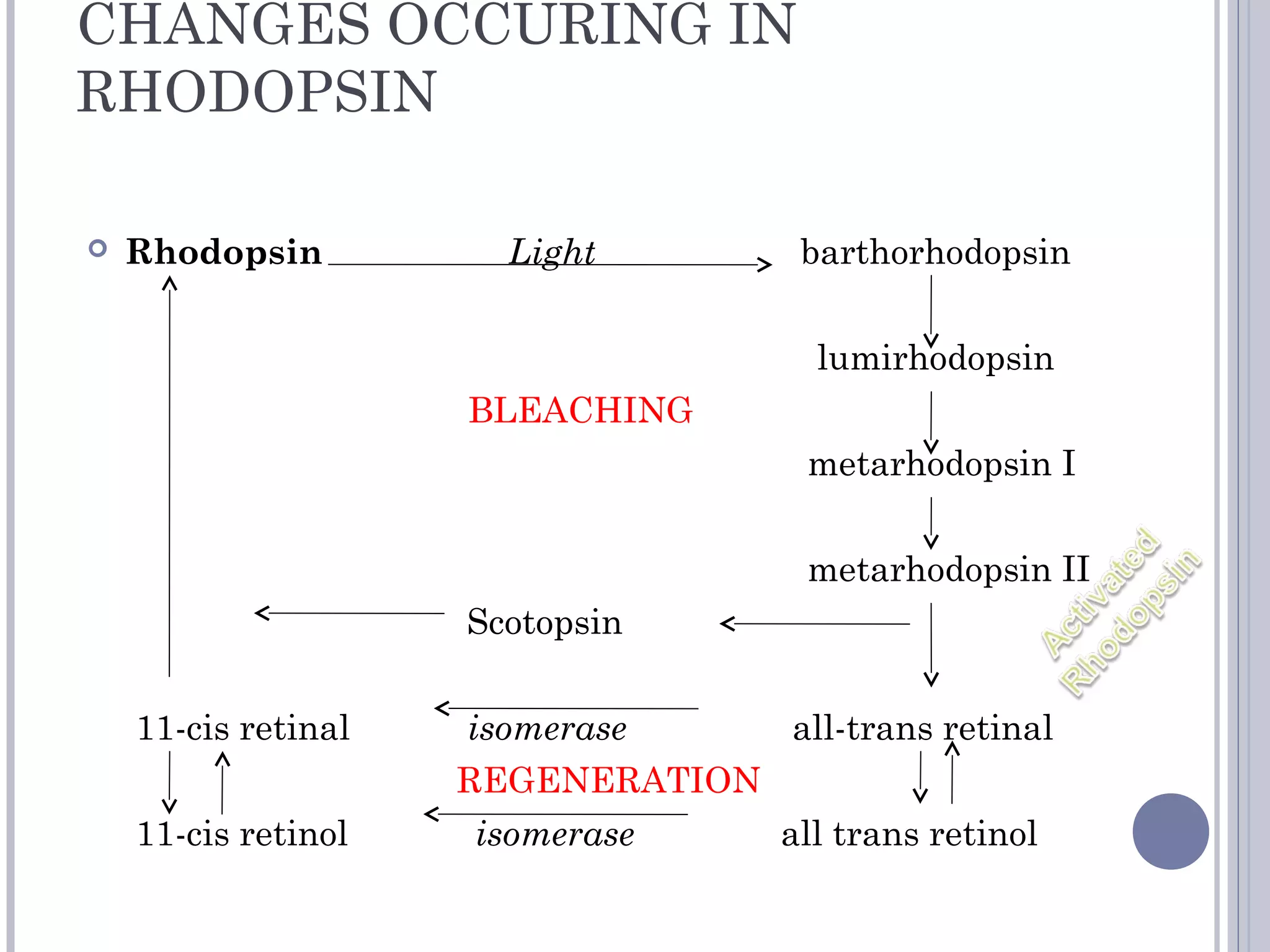
 Rhodopsin Light barthorhodopsin
lumirhodopsin
BLEACHING
metarhodopsin I
metarhodopsin II
Scotopsin
11-cis retinal isomerase all-trans retinal
REGENERATION
11-cis retinol isomerase all trans retinol
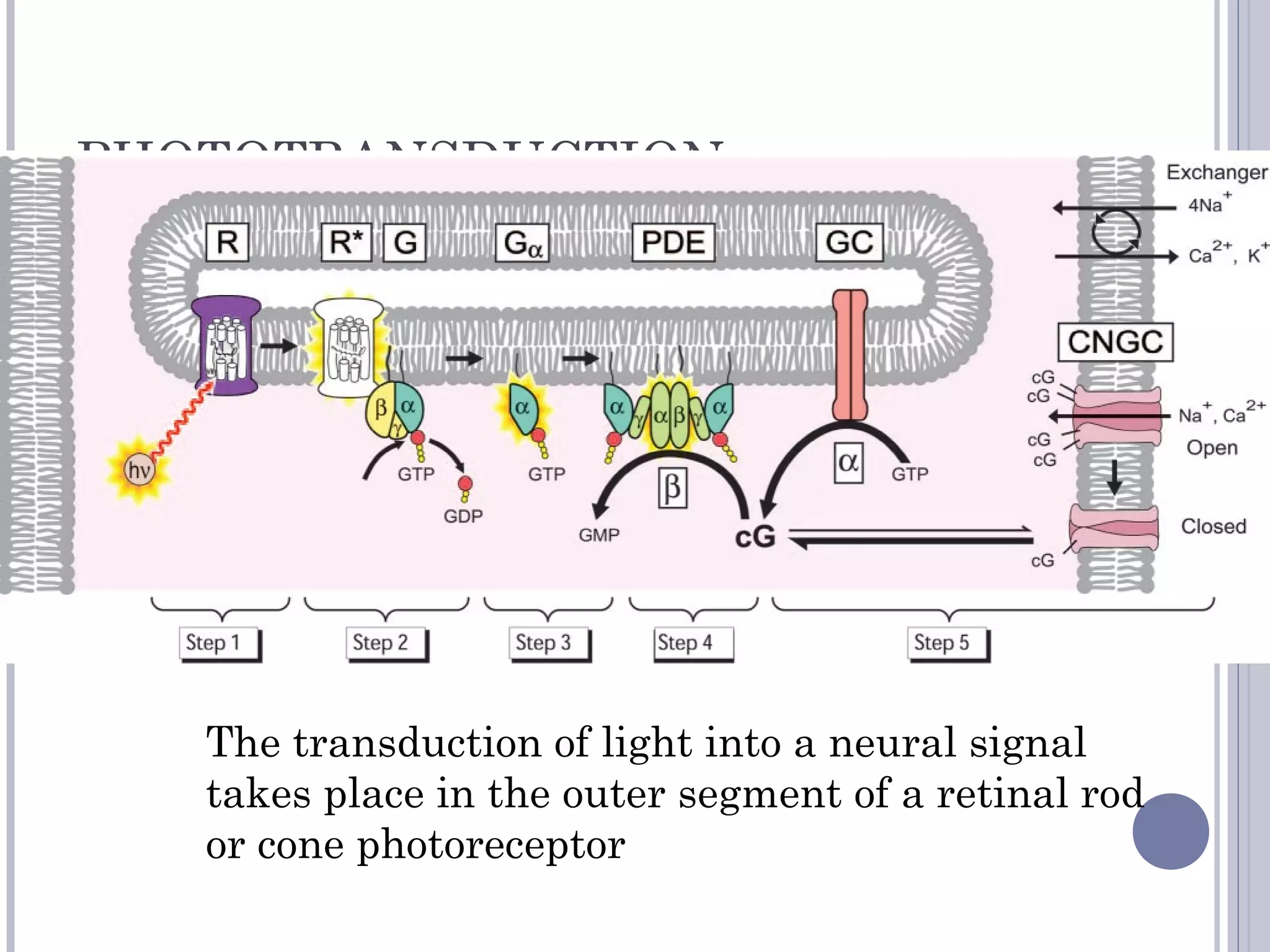
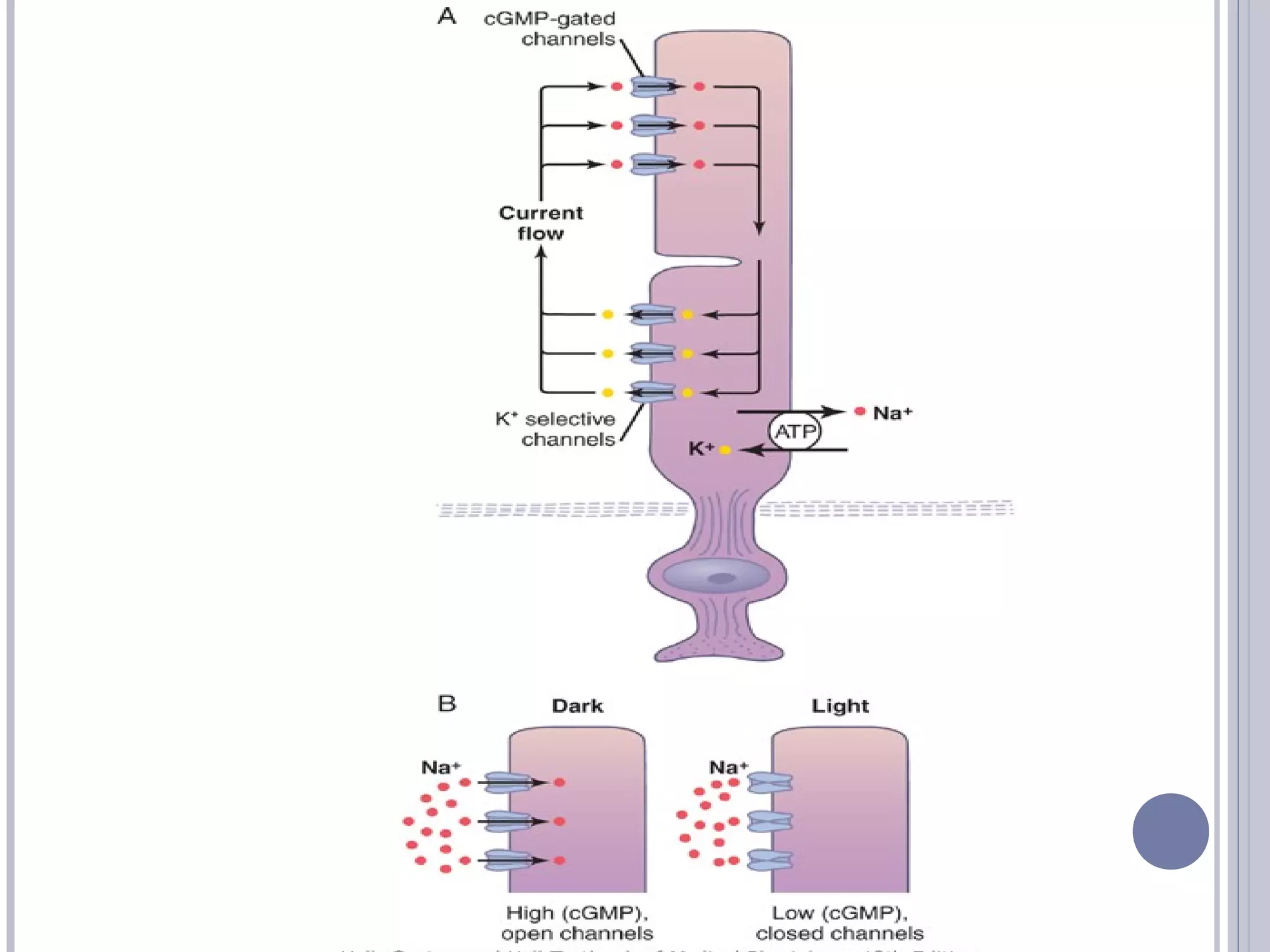
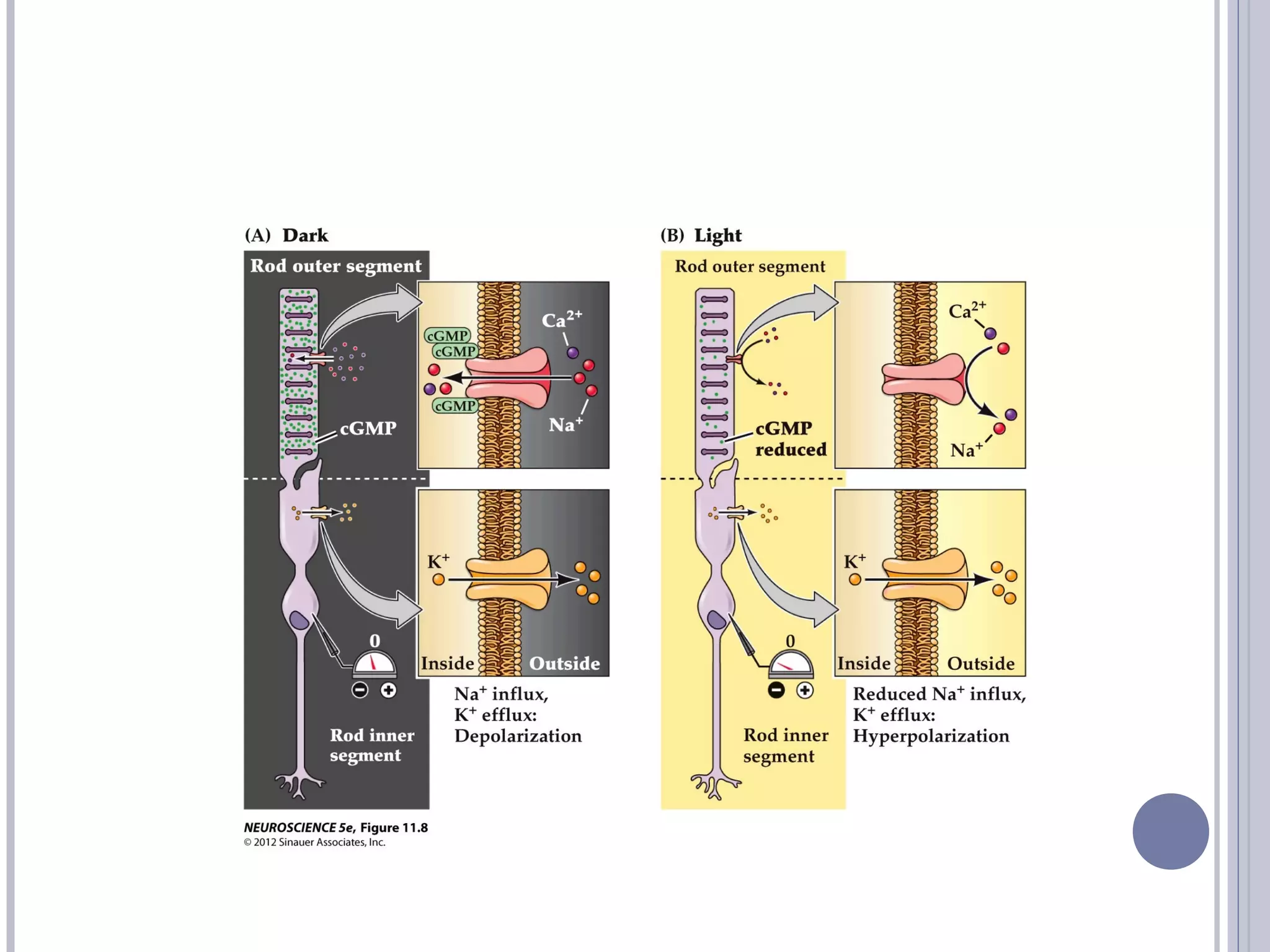
PHOTOTRANSDUCTION
The transduction of light into a neural signal
takes place in the outer segment of a retinal rod
or cone photoreceptor
VISUAL CYCLE
 Equilibrium state
between bleaching &
regeneration.
 Another portion of the
adaptive mechanism
occurs under the
influence of neural
elements at the level of
the synapses of
photoreceptors with
Bipolar cells & may
involve Horizontal
cells.
DIFFERENCES THAN OTHER
RECEPTORS
 Receptor potential of photoreceptors is local
graded potential. (not all or non)
 Hyperpolarization rather than depolarization.
THANK YOU

Physiology of visual cycle

  • 1.
  • 2.
    INDEX  Vitamin A Dietary sources  Absorption & storage  Transport  Utilization  Visual pigments  Rhodopsin  Cone pigments  Light-induced changes  Rhodopsin bleaching  Rhodopsin regeneration  Visual cycle
  • 3.
  • 4.
    DIETARY SOURCES  Dietarysources of vitamin A include animal food & plant food.  Animal food contain vitamin A as Retnol.  The liver is always the best source  Plant foods contain vitamin A as Carotenes which is a precursor.  Carotenes must be converted to Retinol by metabolic activity in the wall of the small intestine.  Three types of carotenes (alpha, beta, & gamma) are present in plant food  Beta Carotenes yield 2 molecules of vitamin A, while Alpha & Gamma yield one molecule.
  • 5.
     Absorption  Storage Transport  Attach to receptors in RPE  Transported inside RPE to photoreceptors
  • 6.
    UTILIZATION OF VITAMINA  Retinol passes through RPE to phtoreceptors unchanged.  Oxidation of Retinol to Retinene (11-cis Retinal) by Retinene Reductase in photoreceptor outer segment.  Retinene combines with Opsin to form Rhodopsin.  The freshly formed Rhodopsin is incorporated into the newly forming double discs at the innermost portion of outer segment of photoreceptors.
  • 7.
    VISUAL PIGMENTS  Substancesthat have the property of absorbing light.  The peak of each pigment’s absorption curve is called “absorption maximum.”
  • 8.
    RHODOPSIN  Membrane-bound glycolipid. Consists of Scotopsin & Retinal.  Molecular weight of 40,000  Fat soluble  Sensitive to heat & chemical agents which denature the protein.  Scotopsin is a 348 amino acid protein & crosses the disc membrane 7 times.
  • 9.
     The lightabsorbing form is 11-cis retinal.  The absorption spectrum for rhodopsin has a peak of 493-505 nm; absorbing yellow wavelength primarily & transmitting violet & red to appear purple (visual purple).
  • 10.
    CONE PIGMENTS  NOTintensively studied.  Three kinds of cones.  Cone pigments are different than rhodopsin in that they respond to specific wavelengths of light… giving us the ability for colour vision.  Amino acid sequence for all human cone opsins is almost identical except for few different amino acids that makes the difference in spectral absorbance.  11-cis retinal remains the same.  Peak absorbance of blue, green & red is 435, 535 & 580 nm respectively.  Blue-sensitive cones are the least prevalent.
  • 11.
     The lightfalling on the retina is absorbed by the photosensitive pigments & initiates phtotchemical changes that initiate electrical changes.  Photochemical changes take place in the outer segments.  Bleaching (light dependent)  Regeneration (light independent)  Visual cycle
  • 12.
    RHODOPSIN –RETINAL VISUALCYCLE IN THE RODS.  Rhodopsin and its decomposition by light energy: • The outer segment of the rod that projects into the pigment layer of retina has a concentration of about 40% of light sensitive pigments called Rhodopsin or visual purple. • Rhodopsin = scotopsin(protein) + retinal(carotenoid protein). • Retinal is present in the form of 11-cis retinal known as retinene. • cis form of retinal is important because only this form can bind with scotopsin to synthesize rhodopsin.
  • 13.
    CHANGES OCCURING IN RHODOPSIN Rhodopsin Light barthorhodopsin lumirhodopsin BLEACHING metarhodopsin I metarhodopsin II Scotopsin 11-cis retinal isomerase all-trans retinal REGENERATION 11-cis retinol isomerase all trans retinol
  • 16.
    PHOTOTRANSDUCTION The transduction oflight into a neural signal takes place in the outer segment of a retinal rod or cone photoreceptor
  • 20.
    VISUAL CYCLE  Equilibriumstate between bleaching & regeneration.  Another portion of the adaptive mechanism occurs under the influence of neural elements at the level of the synapses of photoreceptors with Bipolar cells & may involve Horizontal cells.
  • 21.
    DIFFERENCES THAN OTHER RECEPTORS Receptor potential of photoreceptors is local graded potential. (not all or non)  Hyperpolarization rather than depolarization.
  • 22.