





Fungal Keratitis is one of the most difficult forms of
microbial keratitis to diagnose & to treat successfully.
Fungus are eukaryotic heterotrophic organisms &
typically forms reproductive spores.
Fugus may be a part of normal external ocular flora. (
3-28% of normal eyes)
Most commonly seen are:
Aspergillus
Rhodotorula
Candida
Penicillium
Cladosporium
Alternaria
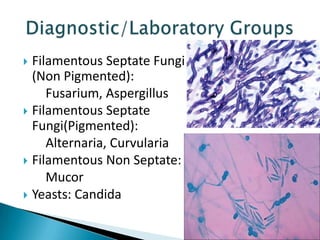
Filamentous Septate Fungi
(Non Pigmented):
Fusarium, Aspergillus
 Filamentous Septate
Fungi(Pigmented):
Alternaria, Curvularia
 Filamentous Non Septate:
Mucor
 Yeasts: Candida

Overall incidence is low- 6-20%
 Aspergillus most common organism
worldwide.
 Incidence varies geographically:
Northern US: Candida, Aspergillus
Southern US: Fusarium
 In India: Aspergillus (27-64%)
Fusarium (6-32%)
Penicilliun (2-29%)

Fungi gain entry into stroma through a defect
in epithelial barrier.
 In stroma, cause tissue necrosis & host
inflammatory reaction.
 Fungus can penetrate deep into stroma &
through intact descemet’s membrane.
 Blood borne growth inhibiting factors may not
reach avascular structures of eye like cornea
so fungi continues to grow & persists i.e. why
conjunctival flap help in control of fungal
infection.










Trauma (M/C)
Contact lens use.
Cosmetic Lens- filamentous
Therapeutic Lens- Yeasts
Overall Bacterial infection more common
with
contact lens users
Topical Medications- Corticosteroids
Anaesthetic Abuse
Broad Spectrum Antibiotics
Corneal Sx- Penetrating Keratoplasty, LASIK.
Chronic Keratitis- Herpes Simplex, Herpes
Zoster,Vernal/allergic keratitis
Immunocompromised State- HIV, Leprosy


Symptoms:

Foreign body Sensation
Slow onset increasing Pain
Clinical signs are more severe than symptoms.


Signs:
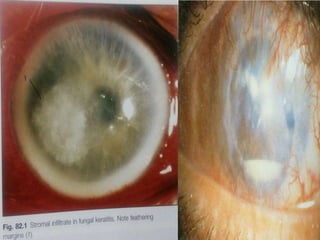
Nonspecific: Conjunctival injection
Epithelial defect
Anterior chamber reaction
Specific:
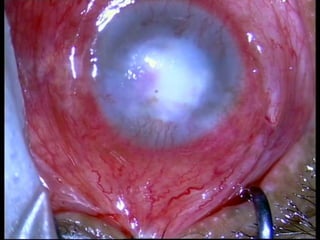
Infiltrate
Feathery Margins
Elevated edges
Rough Textured
Satellite lesions
Endothelial Plaque
Gray/Brown Pigmentation( s/o Dematiceous
Fungi like Curvularia)
Hypopyon ( Non Sterile, thick & immobile)
Yellow line of demarcation
Immune Ring (Wesseley)
Gram Stain
Giemsa Stain
Grocott’s Methamine Silver
PAS Stain
lectins
 Fluoroscent Microscopy
Acridine Orange
Calcoflour white
 Smear: Potassium Hydroxide Wet Mount
(10-20%)


Stains:


Culture Media:

Should include same media for general infectious
keratitis work up.
 Sheep Blood Agar
 Chocolate Agar
 Sabouraud’s dextrose Agar
 Thioglycollate Broth
 Brain Heart Infusion Broth / Solid Media
Positive culture expected in 90% cases,
within 72 hrs in 83% cases
within 1 week in 97% cases
Increasing Humidity of medium by placing inoculated
agar plates in Plastic bags enhance fungal growth.


Newer Methods
Electron Microscopy
Polymerase Chain Reaction

SCRAPING
Advantage:
Provide initial debridement of organisms
Improve penetration of drugs
Methods:
 Surgical Blade
 Diamond tipped motorized burr
 Diagnostic Superficial Keratectomy/Corneal
Biopsy
Done in Minor OT with Topical Anaesthesia
2-3 mm dermatologic trephine on anterior
corneal stroma incorporating both clinically
infected & adjacent clear cornea.(Avoiding
Visual Axis)
 Femtosecond Laser
 27 guage hypodermic needle
 6-0 silk suture


Anterior Chamber Tap:
Hypopyon or Endothelial Plaque
ANTIFUNGALS


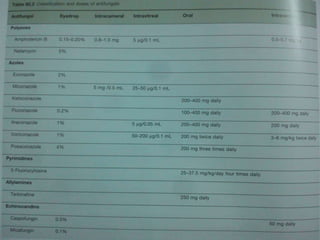
POLYENES:

Amphotericin B, Natamycin

Binds to ergosterol in fungal cell membrane &
cause the membrane to become leaky.


AZOLES:

Ketoconazole, Fluconazole,
Voriconazole

Inhibits CYP P450 14 a-demethylase enzyme
involved in conversion of lanosterol to
ergosterol


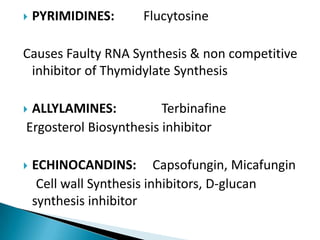
PYRIMIDINES:

Flucytosine

Causes Faulty RNA Synthesis & non competitive
inhibitor of Thymidylate Synthesis
ALLYLAMINES:
Terbinafine
Ergosterol Biosynthesis inhibitor





ECHINOCANDINS: Capsofungin, Micafungin
Cell wall Synthesis inhibitors, D-glucan
synthesis inhibitor
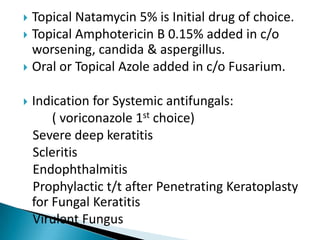
Topical Natamycin 5% is Initial drug of choice.
 Topical Amphotericin B 0.15% added in c/o
worsening, candida & aspergillus.
 Oral or Topical Azole added in c/o Fusarium.




Indication for Systemic antifungals:
( voriconazole 1st choice)
Severe deep keratitis
Scleritis
Endophthalmitis
Prophylactic t/t after Penetrating Keratoplasty
for Fungal Keratitis
Virulent Fungus
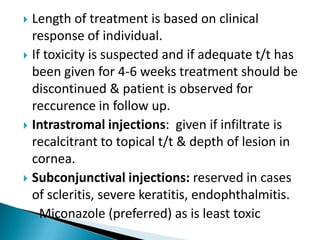
Length of treatment is based on clinical
response of individual.
 If toxicity is suspected and if adequate t/t has
been given for 4-6 weeks treatment should be
discontinued & patient is observed for
reccurence in follow up.
 Intrastromal injections: given if infiltrate is
recalcitrant to topical t/t & depth of lesion in
cornea.
 Subconjunctival injections: reserved in cases
of scleritis, severe keratitis, endophthalmitis.
Miconazole (preferred) as is least toxic



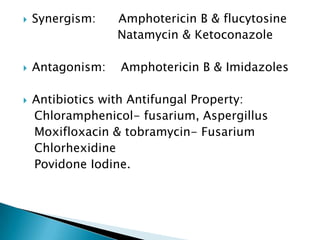
Synergism:

Amphotericin B & flucytosine
Natamycin & Ketoconazole



Antagonism:

Amphotericin B & Imidazoles



Antibiotics with Antifungal Property:
Chloramphenicol- fusarium, Aspergillus
Moxifloxacin & tobramycin- Fusarium
Chlorhexidine
Povidone Iodine.
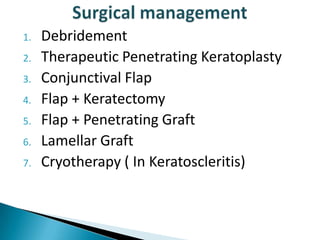
1.
2.
3.
4.
5.

6.
7.

Debridement
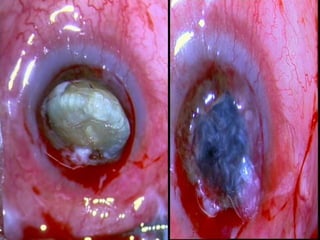
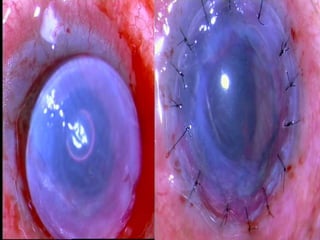
Therapeutic Penetrating Keratoplasty
Conjunctival Flap
Flap + Keratectomy
Flap + Penetrating Graft
Lamellar Graft
Cryotherapy ( In Keratoscleritis)
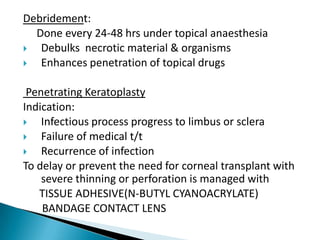
Debridement:
Done every 24-48 hrs under topical anaesthesia

Debulks necrotic material & organisms

Enhances penetration of topical drugs
Penetrating Keratoplasty
Indication:

Infectious process progress to limbus or sclera

Failure of medical t/t

Recurrence of infection
To delay or prevent the need for corneal transplant with
severe thinning or perforation is managed with
TISSUE ADHESIVE(N-BUTYL CYANOACRYLATE)
BANDAGE CONTACT LENS
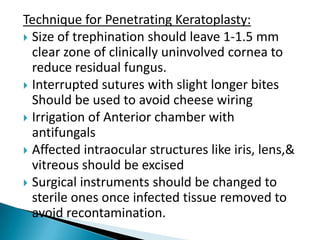
Technique for Penetrating Keratoplasty:
 Size of trephination should leave 1-1.5 mm
clear zone of clinically uninvolved cornea to
reduce residual fungus.
 Interrupted sutures with slight longer bites
Should be used to avoid cheese wiring
 Irrigation of Anterior chamber with
antifungals
 Affected intraocular structures like iris, lens,&
vitreous should be excised
 Surgical instruments should be changed to
sterile ones once infected tissue removed to
avoid recontamination.
If endophthalmitis is suspected:
Intraocular Antifungal injected at the time of
keratoplasty. ( Preferably Amphotericin B)
 After PK:
Topical antifungals continued to prevent recurrence.
If pathology reports are negative for organism at
edge of corneal specimen STOP antifungals after 2
weeks and follow up patient for recurrence.
If Pathology reports are positive t/t continued for 6-8
weeks.
 CICLOSPORIN A: Antifungal that also prevent
immune response so can be used in place of steroids

Factors associated with Treatment Failure:
 Large ulcer size (greater than 14mm square)
 Presence of Hypopyon
 Aspergillus as causative organism
Fungal keratitis

Fungal keratitis

  • 2.
       Fungal Keratitis isone of the most difficult forms of microbial keratitis to diagnose & to treat successfully. Fungus are eukaryotic heterotrophic organisms & typically forms reproductive spores. Fugus may be a part of normal external ocular flora. ( 3-28% of normal eyes) Most commonly seen are: Aspergillus Rhodotorula Candida Penicillium Cladosporium Alternaria
  • 3.
    Filamentous Septate Fungi (NonPigmented): Fusarium, Aspergillus  Filamentous Septate Fungi(Pigmented): Alternaria, Curvularia  Filamentous Non Septate: Mucor  Yeasts: Candida 
  • 4.
    Overall incidence islow- 6-20%  Aspergillus most common organism worldwide.  Incidence varies geographically: Northern US: Candida, Aspergillus Southern US: Fusarium  In India: Aspergillus (27-64%) Fusarium (6-32%) Penicilliun (2-29%) 
  • 5.
    Fungi gain entryinto stroma through a defect in epithelial barrier.  In stroma, cause tissue necrosis & host inflammatory reaction.  Fungus can penetrate deep into stroma & through intact descemet’s membrane.  Blood borne growth inhibiting factors may not reach avascular structures of eye like cornea so fungi continues to grow & persists i.e. why conjunctival flap help in control of fungal infection. 
  • 6.
          Trauma (M/C) Contact lensuse. Cosmetic Lens- filamentous Therapeutic Lens- Yeasts Overall Bacterial infection more common with contact lens users Topical Medications- Corticosteroids Anaesthetic Abuse Broad Spectrum Antibiotics Corneal Sx- Penetrating Keratoplasty, LASIK. Chronic Keratitis- Herpes Simplex, Herpes Zoster,Vernal/allergic keratitis Immunocompromised State- HIV, Leprosy
  • 7.
     Symptoms: Foreign body Sensation Slowonset increasing Pain Clinical signs are more severe than symptoms.  Signs: Nonspecific: Conjunctival injection Epithelial defect Anterior chamber reaction Specific: Infiltrate Feathery Margins Elevated edges Rough Textured Satellite lesions Endothelial Plaque Gray/Brown Pigmentation( s/o Dematiceous Fungi like Curvularia) Hypopyon ( Non Sterile, thick & immobile) Yellow line of demarcation Immune Ring (Wesseley)
  • 9.
    Gram Stain Giemsa Stain Grocott’sMethamine Silver PAS Stain lectins  Fluoroscent Microscopy Acridine Orange Calcoflour white  Smear: Potassium Hydroxide Wet Mount (10-20%)  Stains:
  • 10.
     Culture Media: Should includesame media for general infectious keratitis work up.  Sheep Blood Agar  Chocolate Agar  Sabouraud’s dextrose Agar  Thioglycollate Broth  Brain Heart Infusion Broth / Solid Media Positive culture expected in 90% cases, within 72 hrs in 83% cases within 1 week in 97% cases Increasing Humidity of medium by placing inoculated agar plates in Plastic bags enhance fungal growth.
  • 11.
     Newer Methods Electron Microscopy PolymeraseChain Reaction SCRAPING Advantage: Provide initial debridement of organisms Improve penetration of drugs Methods:  Surgical Blade  Diamond tipped motorized burr  Diagnostic Superficial Keratectomy/Corneal Biopsy
  • 12.
    Done in MinorOT with Topical Anaesthesia 2-3 mm dermatologic trephine on anterior corneal stroma incorporating both clinically infected & adjacent clear cornea.(Avoiding Visual Axis)  Femtosecond Laser  27 guage hypodermic needle  6-0 silk suture  Anterior Chamber Tap: Hypopyon or Endothelial Plaque
  • 13.
    ANTIFUNGALS  POLYENES: Amphotericin B, Natamycin Bindsto ergosterol in fungal cell membrane & cause the membrane to become leaky.  AZOLES: Ketoconazole, Fluconazole, Voriconazole Inhibits CYP P450 14 a-demethylase enzyme involved in conversion of lanosterol to ergosterol
  • 14.
     PYRIMIDINES: Flucytosine Causes Faulty RNASynthesis & non competitive inhibitor of Thymidylate Synthesis ALLYLAMINES: Terbinafine Ergosterol Biosynthesis inhibitor   ECHINOCANDINS: Capsofungin, Micafungin Cell wall Synthesis inhibitors, D-glucan synthesis inhibitor
  • 16.
    Topical Natamycin 5%is Initial drug of choice.  Topical Amphotericin B 0.15% added in c/o worsening, candida & aspergillus.  Oral or Topical Azole added in c/o Fusarium.   Indication for Systemic antifungals: ( voriconazole 1st choice) Severe deep keratitis Scleritis Endophthalmitis Prophylactic t/t after Penetrating Keratoplasty for Fungal Keratitis Virulent Fungus
  • 17.
    Length of treatmentis based on clinical response of individual.  If toxicity is suspected and if adequate t/t has been given for 4-6 weeks treatment should be discontinued & patient is observed for reccurence in follow up.  Intrastromal injections: given if infiltrate is recalcitrant to topical t/t & depth of lesion in cornea.  Subconjunctival injections: reserved in cases of scleritis, severe keratitis, endophthalmitis. Miconazole (preferred) as is least toxic 
  • 18.
     Synergism: Amphotericin B &flucytosine Natamycin & Ketoconazole  Antagonism: Amphotericin B & Imidazoles  Antibiotics with Antifungal Property: Chloramphenicol- fusarium, Aspergillus Moxifloxacin & tobramycin- Fusarium Chlorhexidine Povidone Iodine.
  • 19.
    1. 2. 3. 4. 5. 6. 7. Debridement Therapeutic Penetrating Keratoplasty ConjunctivalFlap Flap + Keratectomy Flap + Penetrating Graft Lamellar Graft Cryotherapy ( In Keratoscleritis)
  • 20.
    Debridement: Done every 24-48hrs under topical anaesthesia  Debulks necrotic material & organisms  Enhances penetration of topical drugs Penetrating Keratoplasty Indication:  Infectious process progress to limbus or sclera  Failure of medical t/t  Recurrence of infection To delay or prevent the need for corneal transplant with severe thinning or perforation is managed with TISSUE ADHESIVE(N-BUTYL CYANOACRYLATE) BANDAGE CONTACT LENS
  • 21.
    Technique for PenetratingKeratoplasty:  Size of trephination should leave 1-1.5 mm clear zone of clinically uninvolved cornea to reduce residual fungus.  Interrupted sutures with slight longer bites Should be used to avoid cheese wiring  Irrigation of Anterior chamber with antifungals  Affected intraocular structures like iris, lens,& vitreous should be excised  Surgical instruments should be changed to sterile ones once infected tissue removed to avoid recontamination.
  • 25.
    If endophthalmitis issuspected: Intraocular Antifungal injected at the time of keratoplasty. ( Preferably Amphotericin B)  After PK: Topical antifungals continued to prevent recurrence. If pathology reports are negative for organism at edge of corneal specimen STOP antifungals after 2 weeks and follow up patient for recurrence. If Pathology reports are positive t/t continued for 6-8 weeks.  CICLOSPORIN A: Antifungal that also prevent immune response so can be used in place of steroids 
  • 26.
    Factors associated withTreatment Failure:  Large ulcer size (greater than 14mm square)  Presence of Hypopyon  Aspergillus as causative organism