Corneal Physiology
Through Numbers
Mohammed Bilal Khalil
22/9/2016
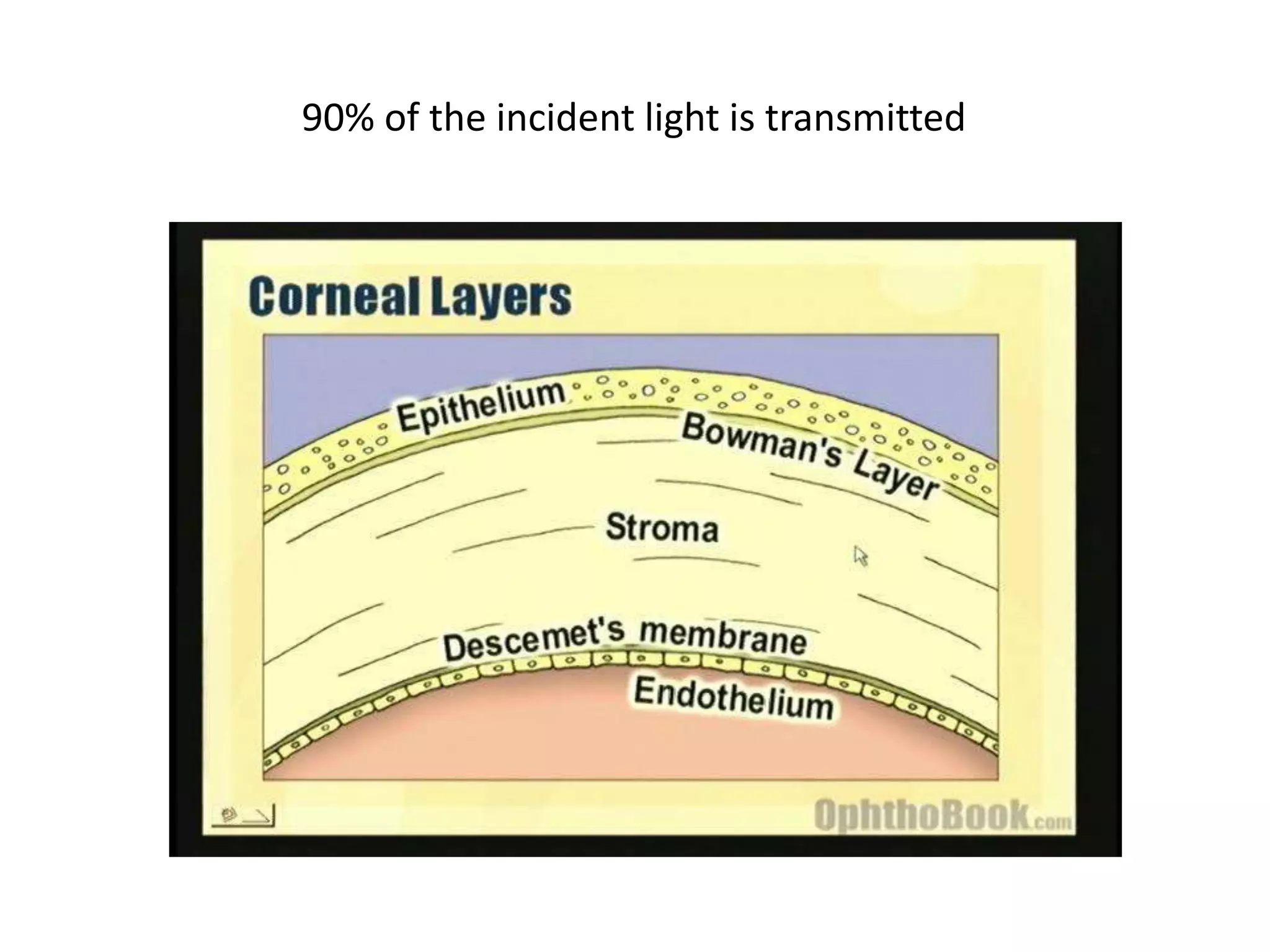
90% of the incident light is transmitted
Corneal Clarity
1-Physical Factors
2-Hydration
PHYSICAL FACTORS
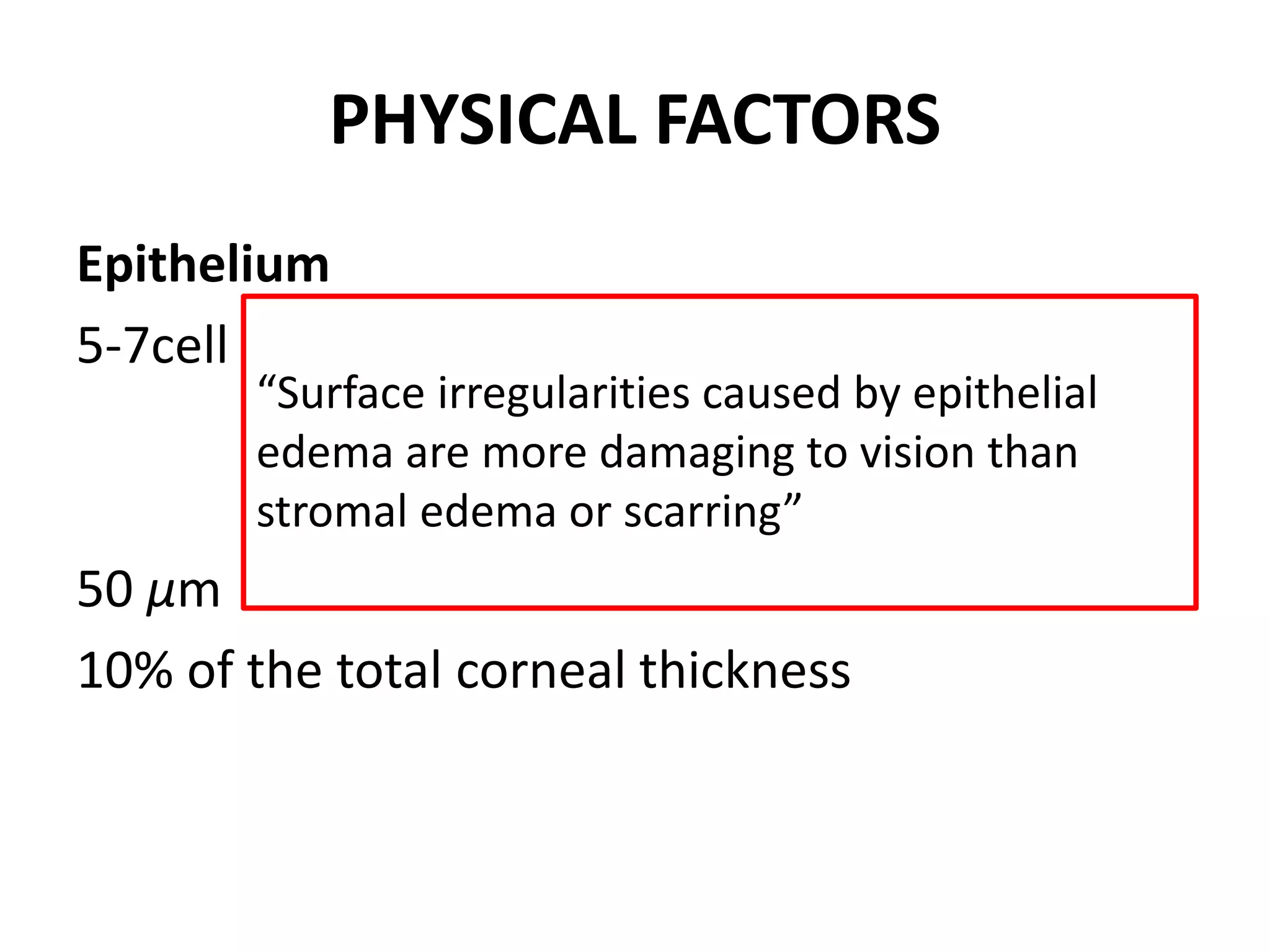
Epithelium
5-7cell layers: flat superficial
deeper winged
columnar basal cells
50 μm
10% of the total corneal thickness
“Surface irregularities caused by epithelial
edema are more damaging to vision than
stromal edema or scarring”
PHYSICAL FACTORS
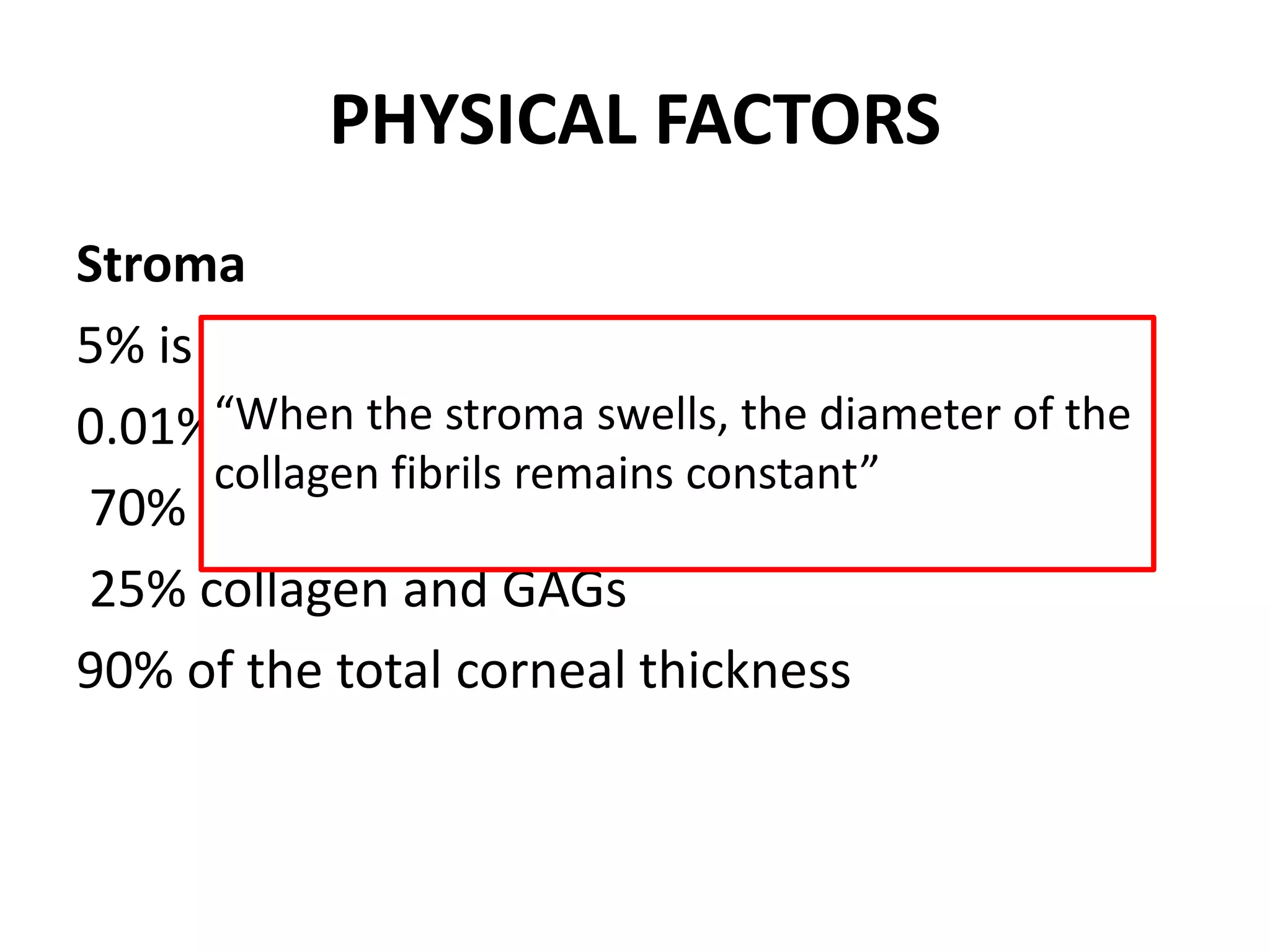
Stroma
5% is keartocytes
0.01% nerves
70% water
25% collagen and GAGs
90% of the total corneal thickness
“When the stroma swells, the diameter of the
collagen fibrils remains constant”
PHYSICAL FACTORS
Endothelium
3000 to 3500 cells/mm2 in the young adult
decreases by about two-thirds in elderly
5 μm
usually if <500 cells/mm2,
depending on the health of the
cells, corneal edema ensues.
CORNEAL HYDRATION
1. Stromal Swelling Pressure
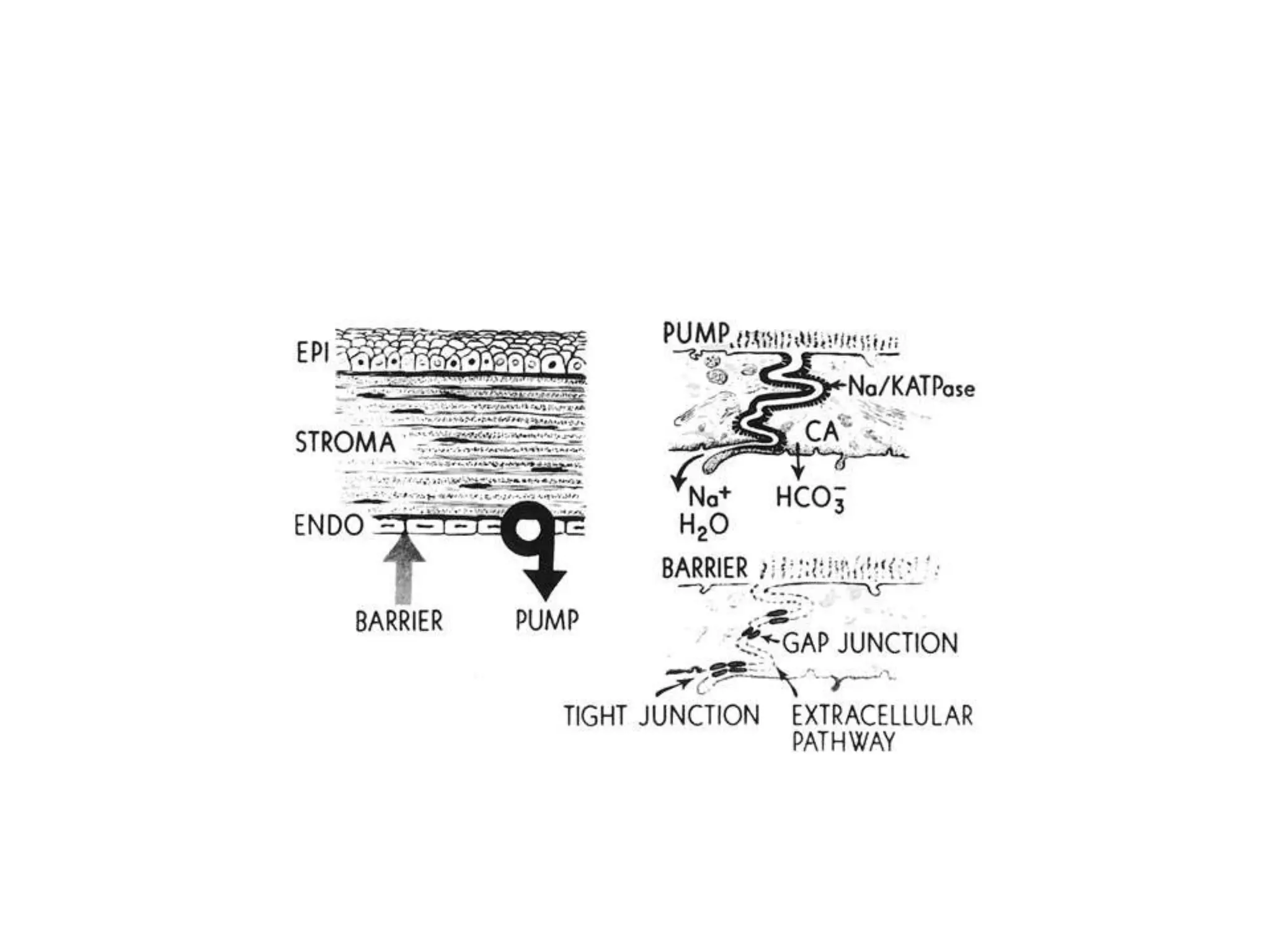
2. Barrier Function
3. Endothelial Pump
4. Evaporation
5. IOP
CORNEAL HYDRATION
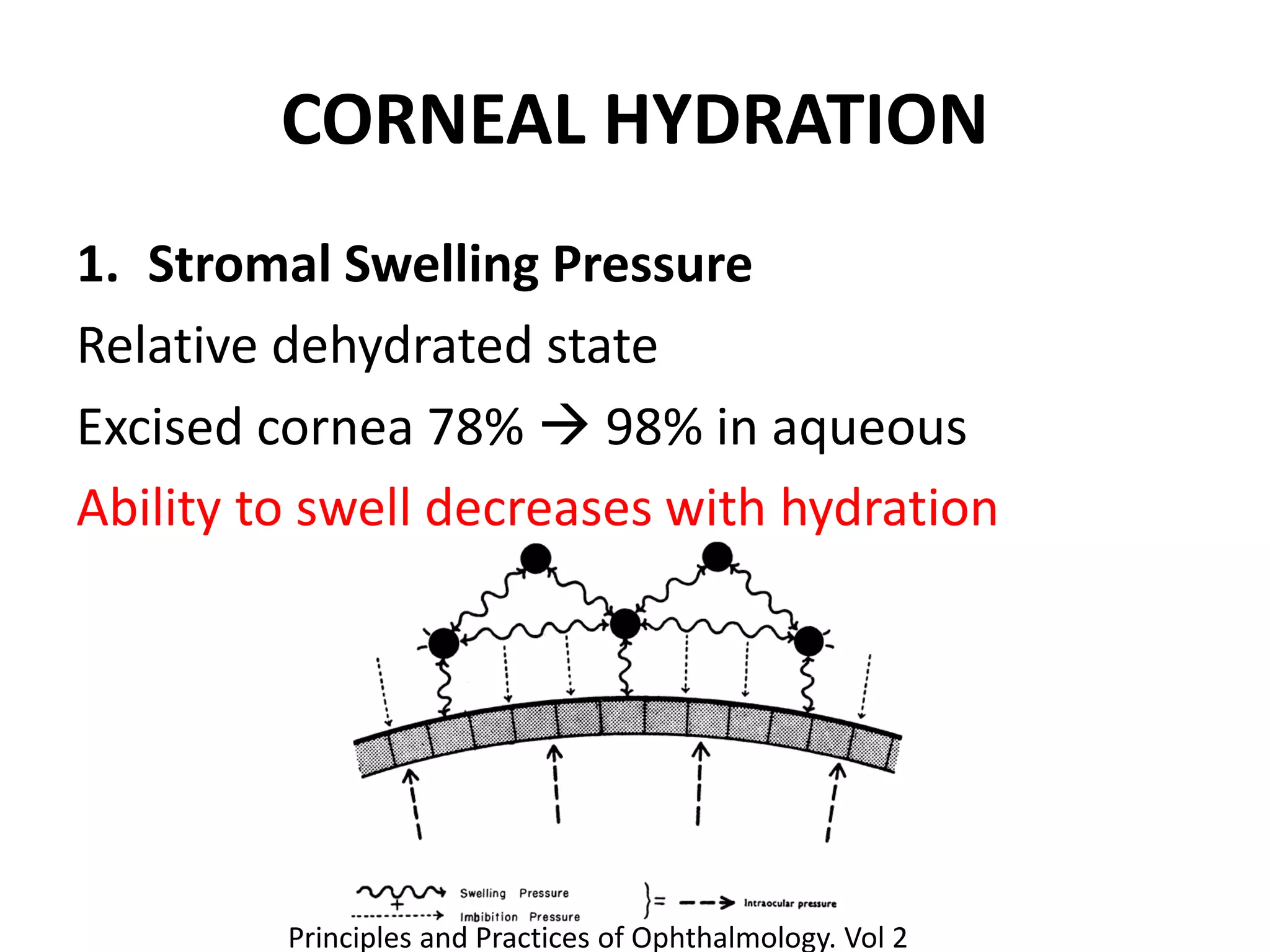
1. Stromal Swelling Pressure
Relative dehydrated state
Excised cornea 78%  98% in aqueous
Ability to swell decreases with hydration
Principles and Practices of Ophthalmology. Vol 2
CORNEAL HYDRATION
1. Stromal Swelling Pressure
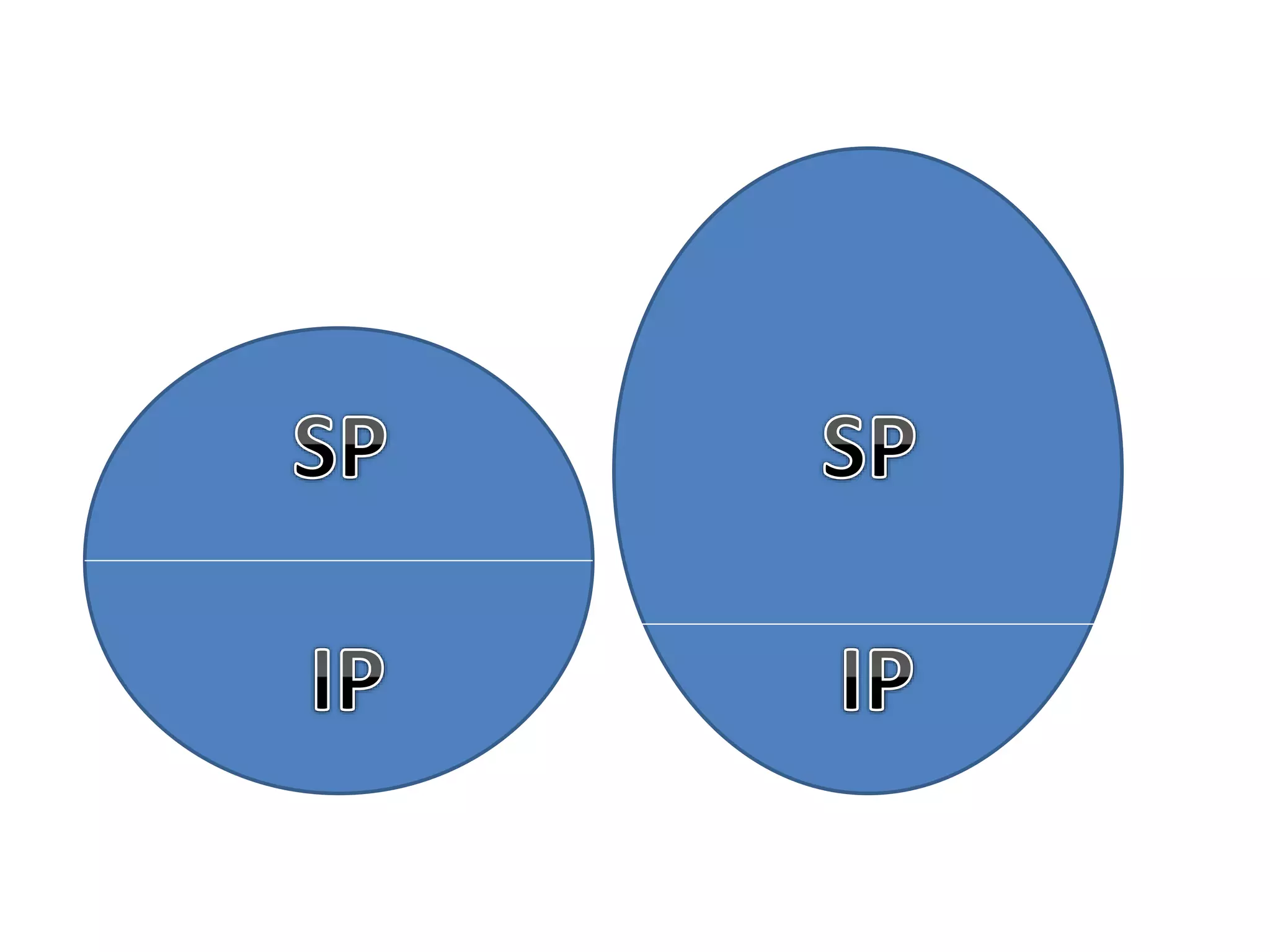
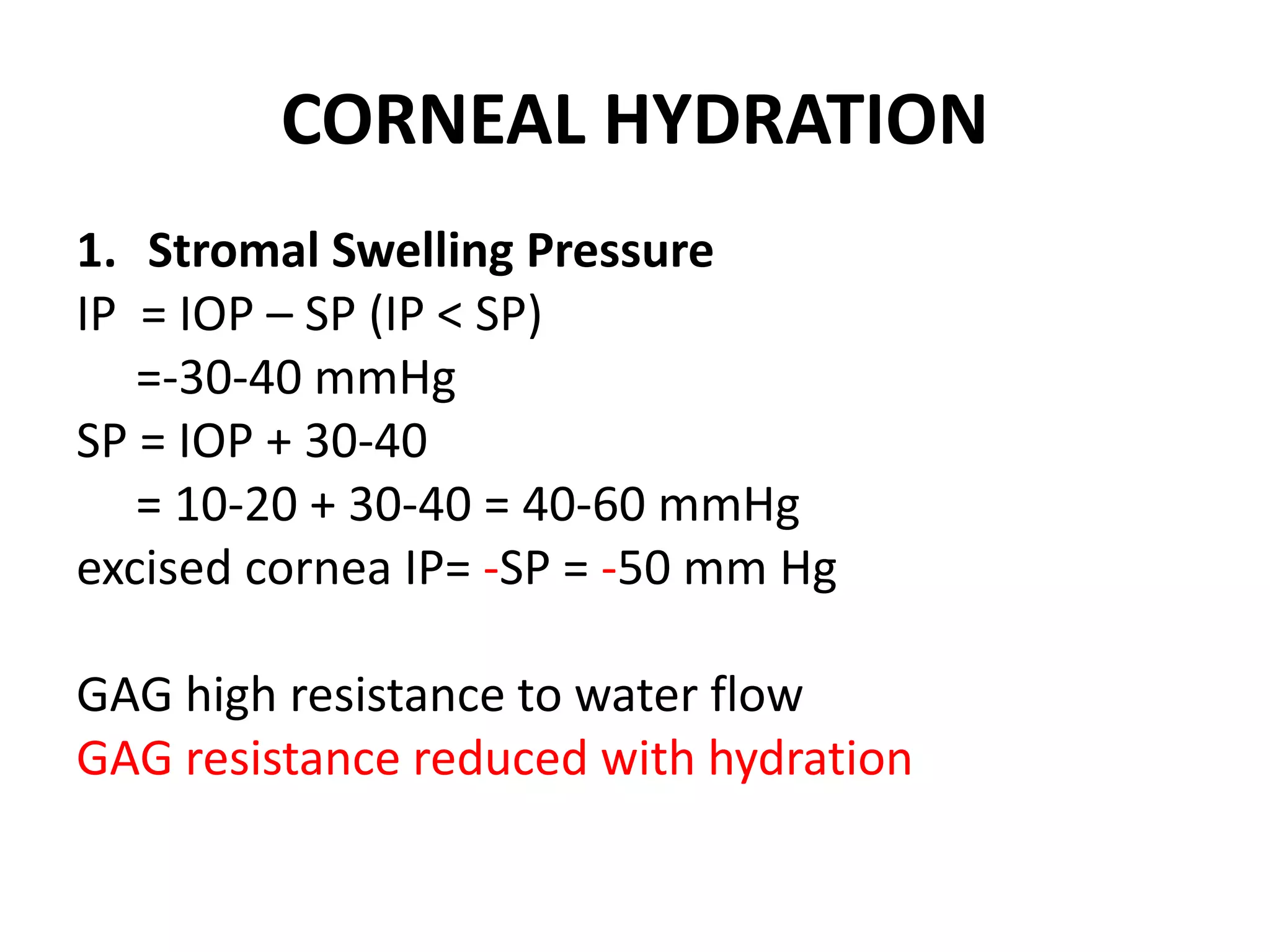
IP = IOP – SP (IP < SP)
=-30-40 mmHg
SP = IOP + 30-40
= 10-20 + 30-40 = 40-60 mmHg
excised cornea IP= -SP = -50 mm Hg
GAG high resistance to water flow
GAG resistance reduced with hydration
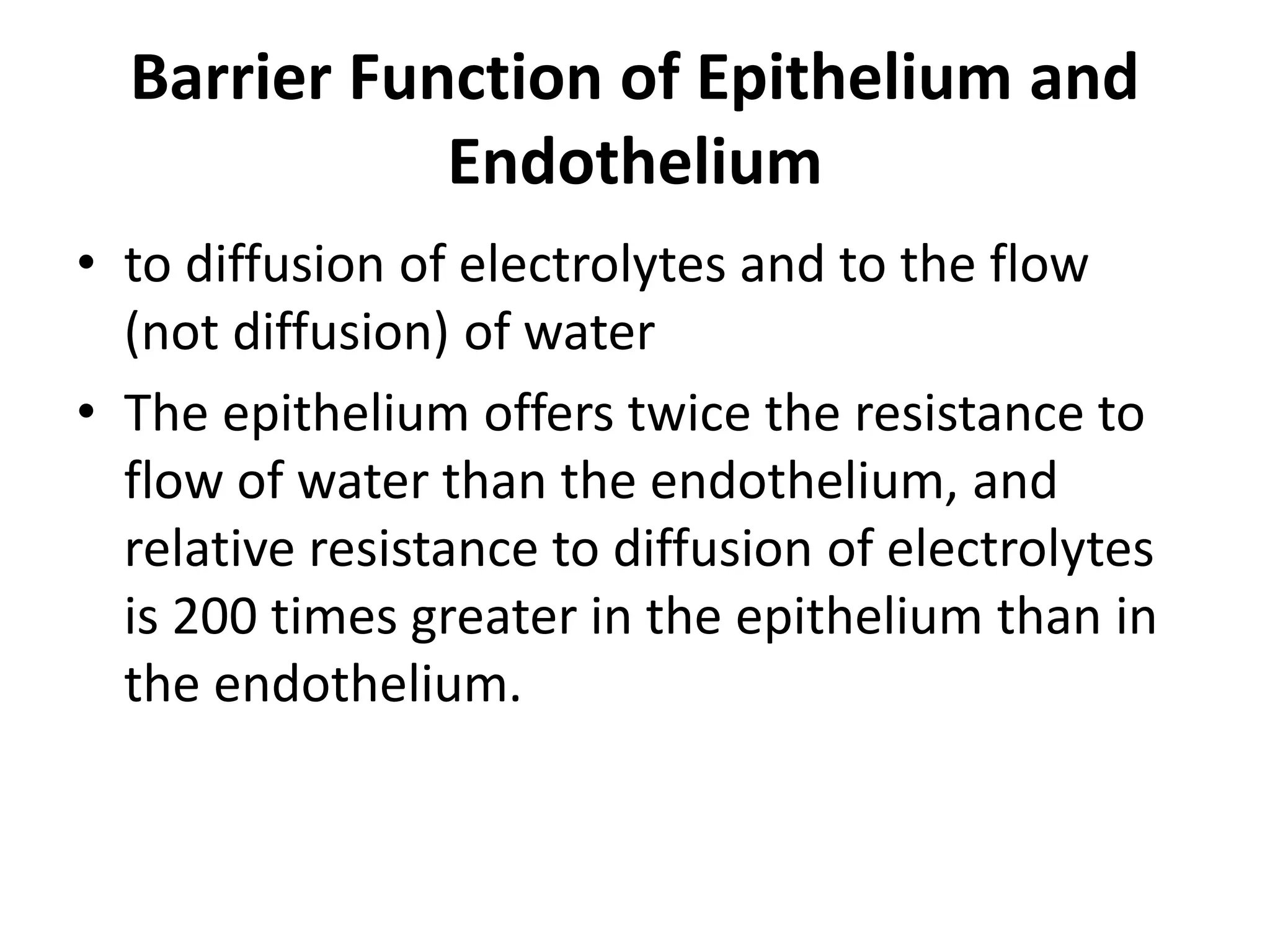
Barrier Function of Epithelium and
Endothelium
• to diffusion of electrolytes and to the flow
(not diffusion) of water
• The epithelium offers twice the resistance to
flow of water than the endothelium, and
relative resistance to diffusion of electrolytes
is 200 times greater in the epithelium than in
the endothelium.
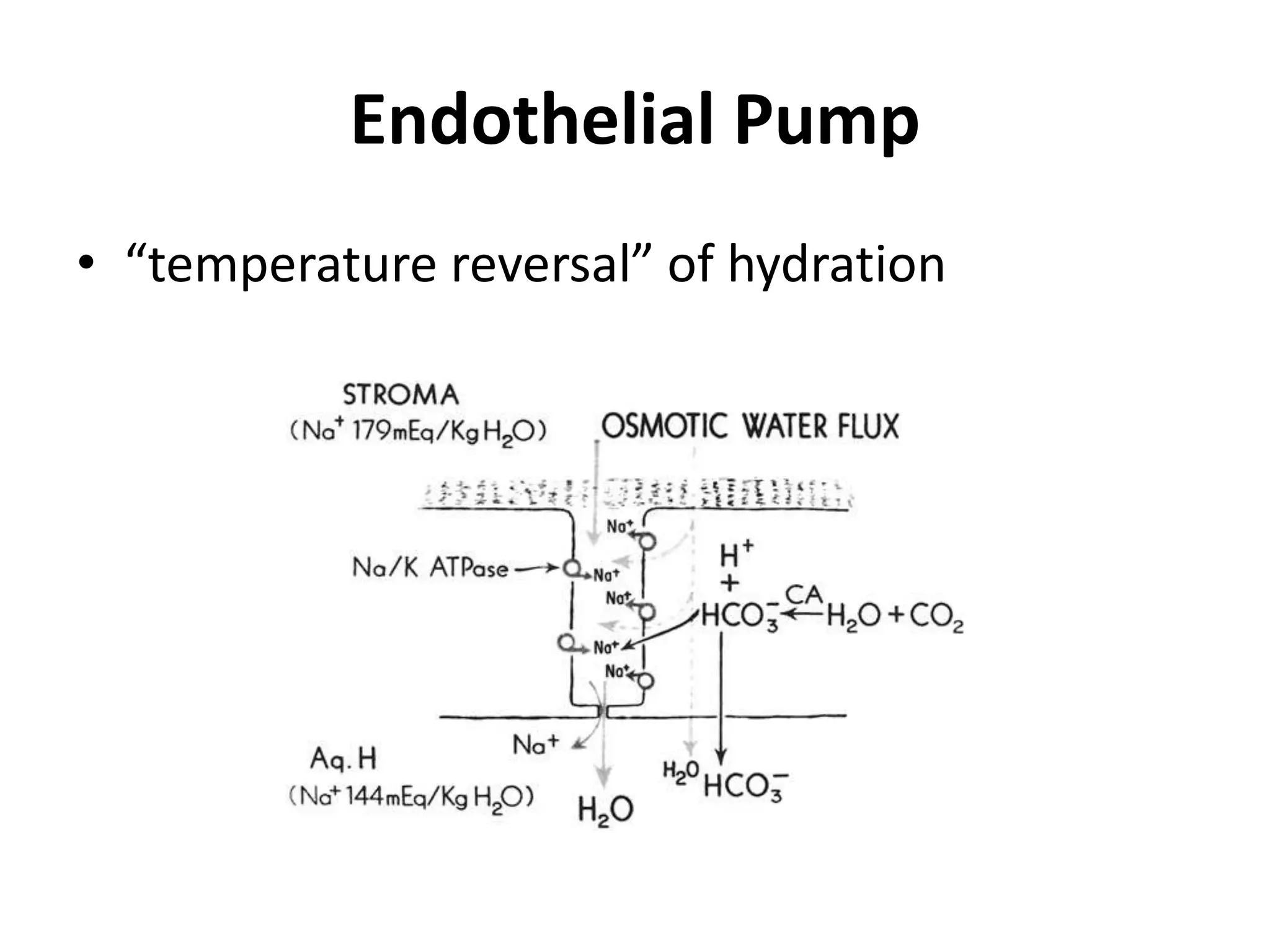
Endothelial Pump
• “temperature reversal” of hydration
Evaporation From the Corneal Surface
• only 4% of thinning occurs in humans as a
result of osmotic extraction of fluid due to
tears made hypertonic by evaporation
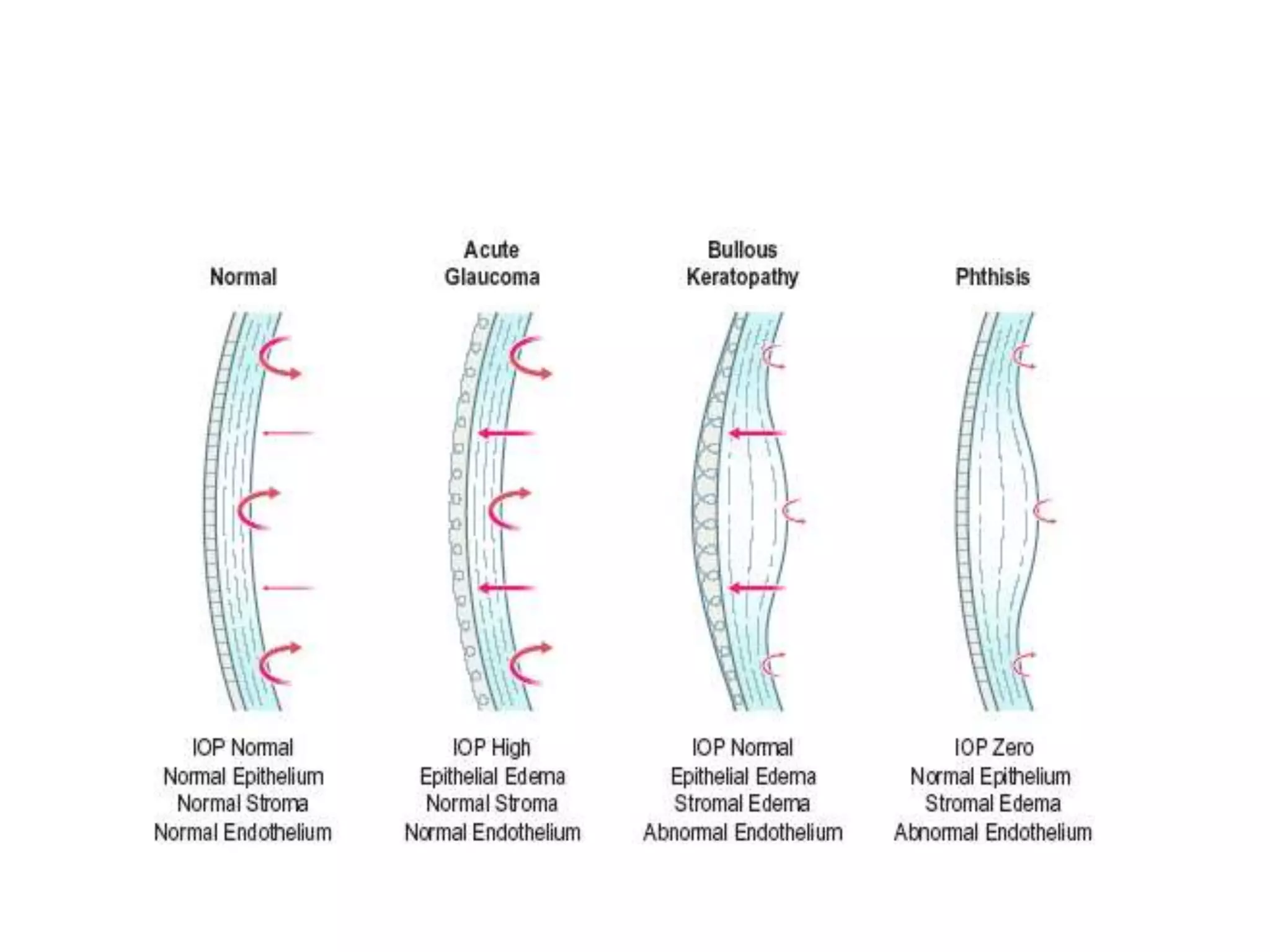
Intraocular Pressure
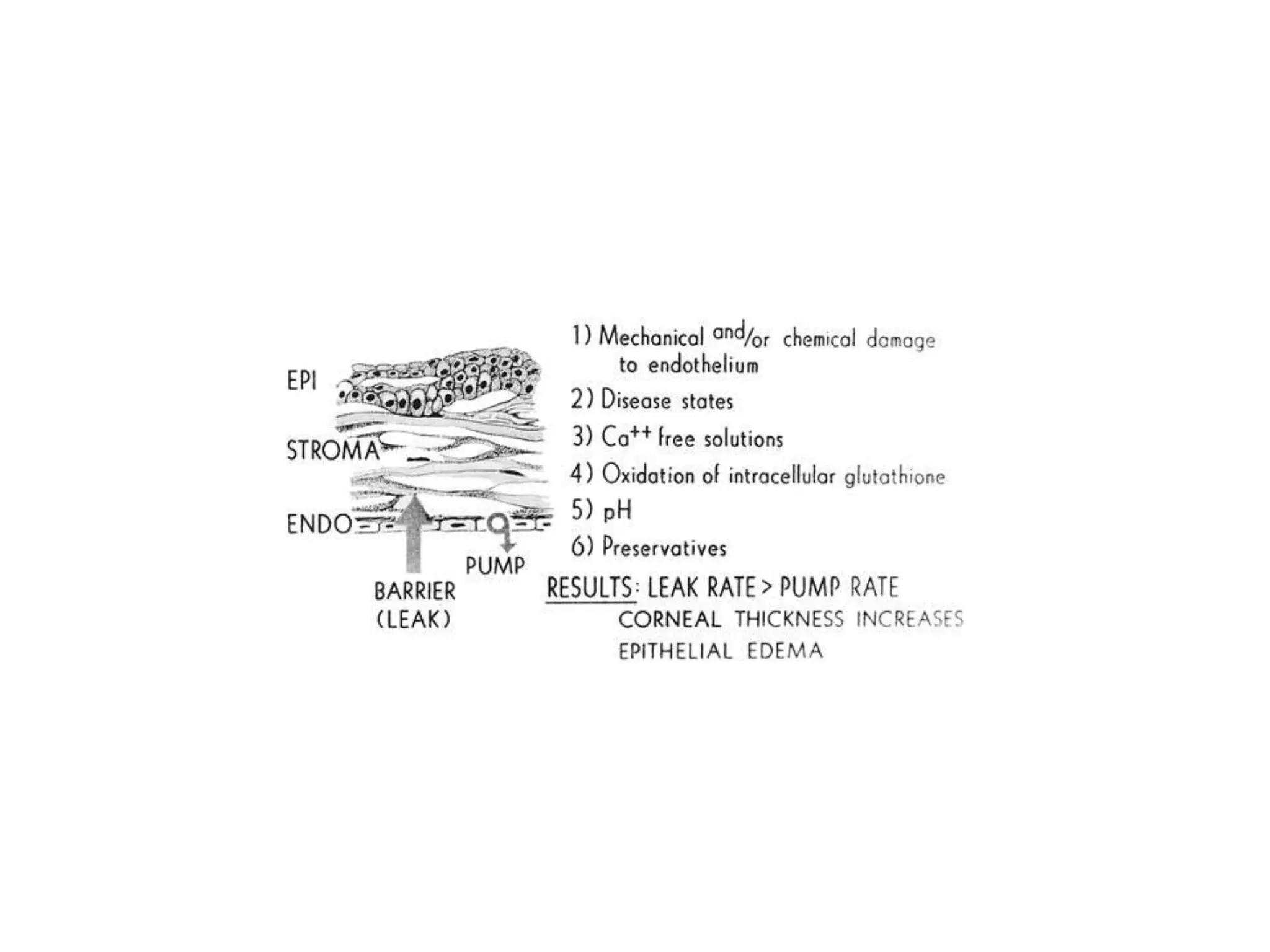
• when the IP becomes positive—that is, when
the IOP exceeds the SP—epithelial edema
ensues
Corneal edema numbers

Corneal edema numbers

  • 1.
    Corneal Physiology Through Numbers MohammedBilal Khalil 22/9/2016 90% of the incident light is transmitted
  • 2.
  • 3.
    PHYSICAL FACTORS Epithelium 5-7cell layers:flat superficial deeper winged columnar basal cells 50 μm 10% of the total corneal thickness “Surface irregularities caused by epithelial edema are more damaging to vision than stromal edema or scarring”
  • 4.
    PHYSICAL FACTORS Stroma 5% iskeartocytes 0.01% nerves 70% water 25% collagen and GAGs 90% of the total corneal thickness “When the stroma swells, the diameter of the collagen fibrils remains constant”
  • 5.
    PHYSICAL FACTORS Endothelium 3000 to3500 cells/mm2 in the young adult decreases by about two-thirds in elderly 5 μm usually if <500 cells/mm2, depending on the health of the cells, corneal edema ensues.
  • 6.
    CORNEAL HYDRATION 1. StromalSwelling Pressure 2. Barrier Function 3. Endothelial Pump 4. Evaporation 5. IOP
  • 7.
    CORNEAL HYDRATION 1. StromalSwelling Pressure Relative dehydrated state Excised cornea 78%  98% in aqueous Ability to swell decreases with hydration Principles and Practices of Ophthalmology. Vol 2
  • 9.
    CORNEAL HYDRATION 1. StromalSwelling Pressure IP = IOP – SP (IP < SP) =-30-40 mmHg SP = IOP + 30-40 = 10-20 + 30-40 = 40-60 mmHg excised cornea IP= -SP = -50 mm Hg GAG high resistance to water flow GAG resistance reduced with hydration
  • 10.
    Barrier Function ofEpithelium and Endothelium • to diffusion of electrolytes and to the flow (not diffusion) of water • The epithelium offers twice the resistance to flow of water than the endothelium, and relative resistance to diffusion of electrolytes is 200 times greater in the epithelium than in the endothelium.
  • 13.
    Endothelial Pump • “temperaturereversal” of hydration
  • 15.
    Evaporation From theCorneal Surface • only 4% of thinning occurs in humans as a result of osmotic extraction of fluid due to tears made hypertonic by evaporation
  • 16.
    Intraocular Pressure • whenthe IP becomes positive—that is, when the IOP exceeds the SP—epithelial edema ensues