ANDA- Abbreviated New 
Drug Application
Definition of a Generic Drug 
 “A drug product that is comparable to a 
brand/reference listed drug product in dosage form, 
strength, route of administration, quality and 
performance characteristics, and intended use”.
Basic Generic Drug Requirements 
 Same active ingredient(s) 
 Same route of administration 
 Same dosage form 
 Same strength 
 Same conditions of use 
 Inactive ingredients already approved in a similar 
NDA
Definition of a ANDA 
 An “Abbreviated New Drug Application” (ANDA) 
is an application for a U.S. generic drug approval for 
an existing licensed medication or approved drug. 
 termed as "abbreviated" because they generally not 
required to include preclinical (animal) and clinical 
(human) data to establish safety and effectiveness.
Hatch-Waxman Act: 
 Hatch-Waxman Act, proposed by Senators Orrin Hatch 
and Henry A. Waxman was approved in 1984, making it 
easier for generic drugs to enter the market. 
 Generic drugs always been available in US market.
 In fact, the US Food and Drug Administration (FDA) 
approved many generic drugs before 1984, using 
three separate approval mechanisms: 
the Abbreviated New Drug Application (ANDA) 
for drugs originally approved before 1962; 
the “paper NDA,” a type of New Drug 
Application (NDA) for generic copies of drugs 
approved after 1962; 
and the monograph system for generic 
antibiotics and insulin.
ANDA 
 Before 1962, NDAs had been approved solely on the basis of data 
demonstrating that the drug was safe, as there were no efficacy 
requirements. 
 Beginning in 1968, drugs that had been approved between 1938 and 1962 
only on the basis of safety were gradually evaluated by FDA’s Drug Efficacy 
Study Implementation (DESI) 
 program for evidence of efficacy by evaluating the drug’s marketing history, 
published clinical studies and the views of outside experts. 
 In a sense, the existence of the DESI program enabled FDA to approve 
ANDAs. 
 FDA began approving ANDAs in 1968 for generic copies of drugs that had 
originally been approved between 1938 and 1962. 
 ANDAs were approved if the generic was bioequivalent to the original 
product (although bioequivalence studies were not always required) and if 
the original had been found effective by the DESI program.
 DESI: Drug Efficacy Study Implementation. 
 When the DESI program was in progress, the agency estimated that there were 
between 5-13 products without NDA’s that were identical and similar to each of 
the 13,000 products that held NDA’s under the 1938 Act. 
 These products contain same active ingredients in the same amount and 
dosage form, often though they claim some unique characteristics i.e., a different 
salt or ester, a different amount, a different dosage form or an extra added 
ingredients. 
 As part of the DESI project the FDA thought to introduce uniformity and control 
over these products. 
 First, the agency said that a copy had to be identical, unless the proponent got 
FDA permission to vary from the innovator. 
 Second, the manufacturer had to obtain an ANDA showing that the product was 
identical. 
 In essence, it was an application that contain all the CMC of a full NDA, but 
omitted any preclinical or clinical data. A number of generic firms opposed even 
these requirements and significant litigation followed.
 Physicians were reporting that CHF patients who had been treated 
carefully with a specific dose of Digoxin, went out of control upon getting 
prescriptions refilled. 
 Investigations revealed that Digoxin, a pre 1938 drug that never subject 
to an NDA, varied from manufacturer to manufacturer not in quantity of 
actual drug per tablet, but in the amount of drug released from the tablet 
into the body. 
 The consequences could be life threatening. 
 The agency responded with an order that each manufacturer submit an 
ANDA that included bioavailability studies showing the rate and extent of 
absorption into the body. 
 Thus, was born an idea of bioequivalence: that competing products not 
only be pharmaceutically identical but also show no significant difference 
in the rate and extent of absorption in controlled bioavailability studies.
 The ANDA process and bioequivalence permitted the agency for the first time to 
declare individual generic products to be therapeutically equivalent to approved 
brand drug. 
 The FDA began making such declarations in 1975, 1976 and 1979, the agency 
began to publish them in orange book. 
 The generics doesn’t have a great competitive threat because state pharmacy 
laws did not permit the substitution of a generic drug for the innovator drug. 
 In 1979 the federal trade commission revealed a model state drug product 
selection law, which guided state legislatures how to amend pharmacy laws to 
permit druggists to substitute equivalent generics for innovators without the 
permission of the prescribing physicians.
Paper NDAs : 
 In 1978, FDA expanded the generic approval program with the paper 
NDA mechanism 
 approving generic copies of drugs that had been approved as new 
drugs after 1962 (i.e., drugs that had not been subject to the DESI 
review) 
 based upon published studies to support safety and efficacy that the 
generic applicant submitted in an NDA. 
 Bioequivalence studies were required in some cases. 
 Nineteen original products served as reference drugs for 47 paper 
NDAs approved by FDA between January 1979 and June 1983. 
Additional paper NDAs were approved by FDA’s Division of Anti- 
Infective Drug Products August 1983
Monographs for Antibiotics and Insulin 
 Generic copies of antibiotics and insulin were approved under a 
monograph system from 1945 to 1997. 
 The generic copy was required to: 
• meet originator product specifications as published in an 
FDA monograph 
• be shown to be bioequivalent to the originator product 
• undergo batch release testing by FDA (until batch release 
testing was fully eliminated in 1982) 
 For antibiotics, the original marketing application was called a 
“Form 5” and the generic drug application was called a “Form 6.”
Hatch-Waxman Act 
 Before the Hatch-Waxman Act was approved, only about 35% of 
brand name drugs had to content with a generic competitor; nowadays 
nearly all drugs are faced with generic copycats. 
 The Hatch-Waxman bill (known officially as the Drug Price Competition 
and Patent Term Restoration Act) brought the following changes: 
1. Generic drugs no longer needed to prove their safety and efficacy. 
Under the bill, generic drug manufacturers need only submit an 
Abbreviated New Drug Application (ANDA) to prove their product’s 
bioequivalence to the original branded drug. This is a cheaper process 
for manufacturers. 
2. Generic drugs are granted a 180-day period of exclusivity. Either the 
first drug to file an ANDA, or the first group of drugs, is granted this 
period.
3. Manufacturers filing ANDAs can only do so for drugs that have 
not been patented. 
4. ANDAs can only be filed when a branded drug’s patent has 
expired. 
5. Generic drugs cannot go on to the market until the branded 
patent has expired. 
6. Branded drug patents must not have been infringed or proven 
invalid. (If a patent is shown to be invalid, the FDA must wait 30 
months until it approves a generic.) 
7. Because branded drugs lose so much of their revenue when 
generic drugs are introduced, the Act provides them with patent 
extensions options, which now average about three years.
 Under Hatch-Waxman, generic 
manufacturers may now seek FDA approval 
to market the 
 generic drug before the expiration of the 
patent of the branded product, via the 
Abbreviated New Drug Application (ANDA) 
Process
Abbreviated New Drug Application (ANDA): 
Generics 
 An ANDA contains data which when submitted to FDA's Center for Drug 
Evaluation and Research, Office of Generic Drugs, provides for the review and 
ultimate approval of a generic drug product. 
 Once approved, an applicant may manufacture and market the generic drug 
product to provide a safe, effective, low cost alternative to the American public. 
 A generic drug product is one that is comparable to an innovator drug product 
in dosage form, strength, route of administration, quality, performance 
characteristics. 
 Generic applicants must scientifically demonstrate that their product is 
bioequivalent. 
 One way to demonstrate bioequivalence is to measure the time it takes the 
generic drug to reach the bloodstream in 24 to 36hrs healthy, volunteers. 
 This gives the rate of absorption, or bioavailability, of the generic drug, which 
they can then compare to that of the innovator drug.
Goal of ANDA: 
 Whether the drug is safe and effective in its proposed use(s), and 
whether the benefits of the drug outweigh the risks. 
 Whether the drug's proposed labeling (package insert) is appropriate, 
and what it should contain. 
 Whether the methods used in manufacturing the drug and the controls 
used to maintain the drug's quality are adequate to preserve the drug's 
identity, strength, quality, and purity. 
 To reduce the price of the drug. 
 To reduce the time development. 
 Increase the bioavailability of the drug in comparison to references list 
drug.
Abbreviated or Supplemental NDA: 
 Abbreviated NDA: includes.. 
Generic drug 
New combination of approved drugs 
Proportion of ingredients in combination is 
changed 
 Supplemental NDA: includes.. 
New intended use of the drug (labeling change) 
Dose, method or duration of administration is 
changed 
Change in manufacturing process or location
Format of ANDA : 
 Three copies of application are required, 
 an archival copy, 
 a review copy 
 and a field copy
ARCHIVAL COPY 
 The Archival Copy Contains all sections of the NDA, including 
the cover letter, Form FDA-356h (Application to Market a New 
Drug, Biologic, or an Antibiotic for Human Use), the 
administrative sections, Comprehensive NDA index, and All 
technical sections. 
 It must contain four copies of the Labeling section. 
 It must contain three additional copies of the CMC and 
Methods Validation Package in a separate binder. 
 The archival copy is the only copy that contains the Case 
Report Tabulation and Case Report Forms.
REVIEW COPY 
 The Review Copy Intended for reviewers in the 
corresponding technical disciplines. 
 In addition to the appropriate technical section, each 
review copy also includes The cover letter, Form FDA- 
356h, The administrative sections, Comprehensive NDA 
index Individual table of contents, The Labeling section, 
and The Application Summary.
FIELD COPY 
 The Field Copy required since 1993 for use by FDA 
inspectors during pre approval facilities inspections. 
 It includes the Cover letter and Form FDA-356h, the 
administrative sections, the comprehensive NDA index 
Individual table of contents, The Labeling section, The 
Application Summary, and CMC and Methods Validation 
Package
 ANDA includes the following: 
 Application form 
 Table of contents 
 Basis for ANDA submission 
 Conditions of use
ANDA contents 
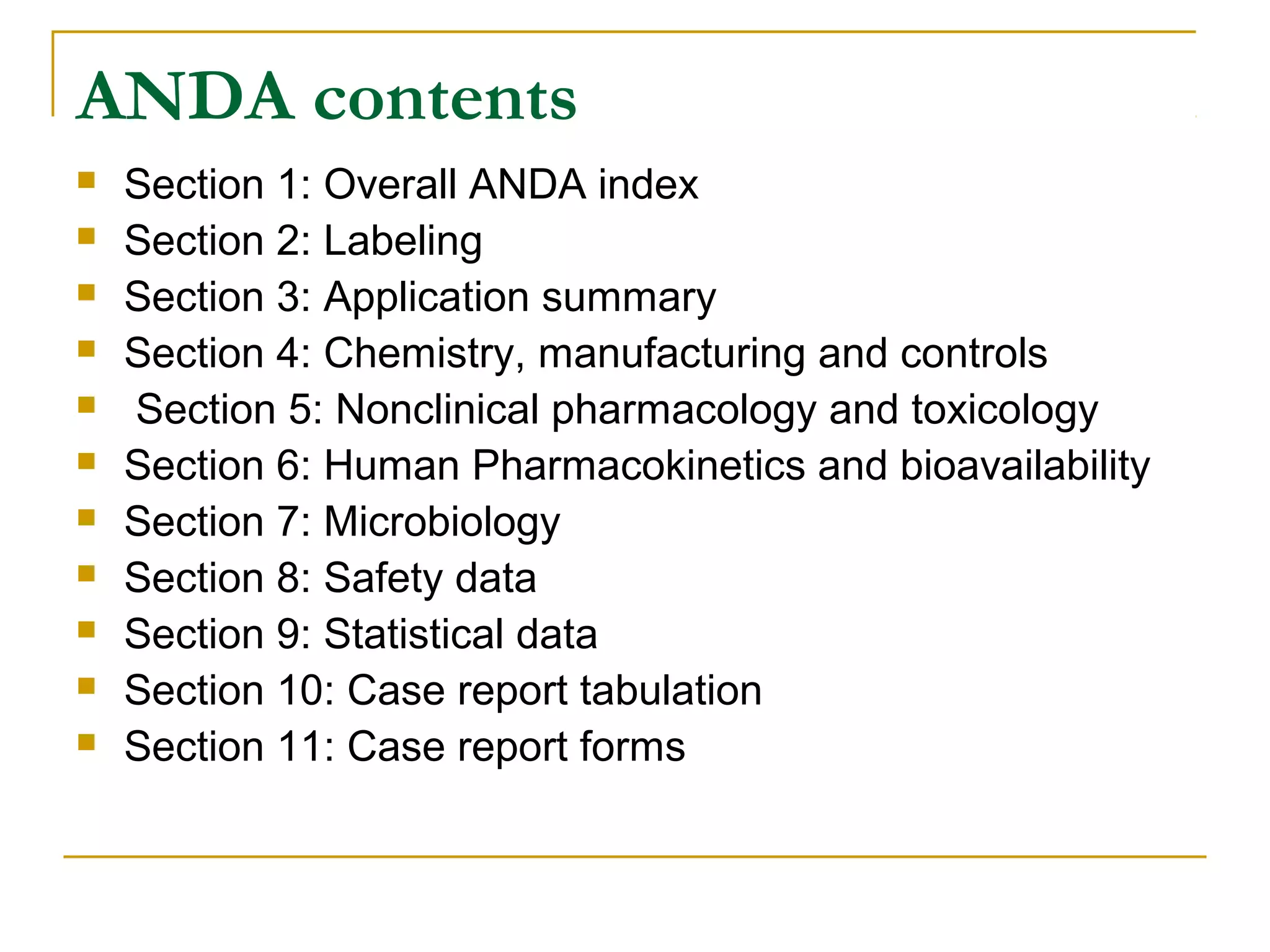
 Section 1: Overall ANDA index 
 Section 2: Labeling 
 Section 3: Application summary 
 Section 4: Chemistry, manufacturing and controls 
 Section 5: Nonclinical pharmacology and toxicology 
 Section 6: Human Pharmacokinetics and bioavailability 
 Section 7: Microbiology 
 Section 8: Safety data 
 Section 9: Statistical data 
 Section 10: Case report tabulation 
 Section 11: Case report forms
Overall ANDA index 
 The NDA index is a comprehensive table of 
contents that enables the reviewers to find 
specific information in this massive document 
quickly.
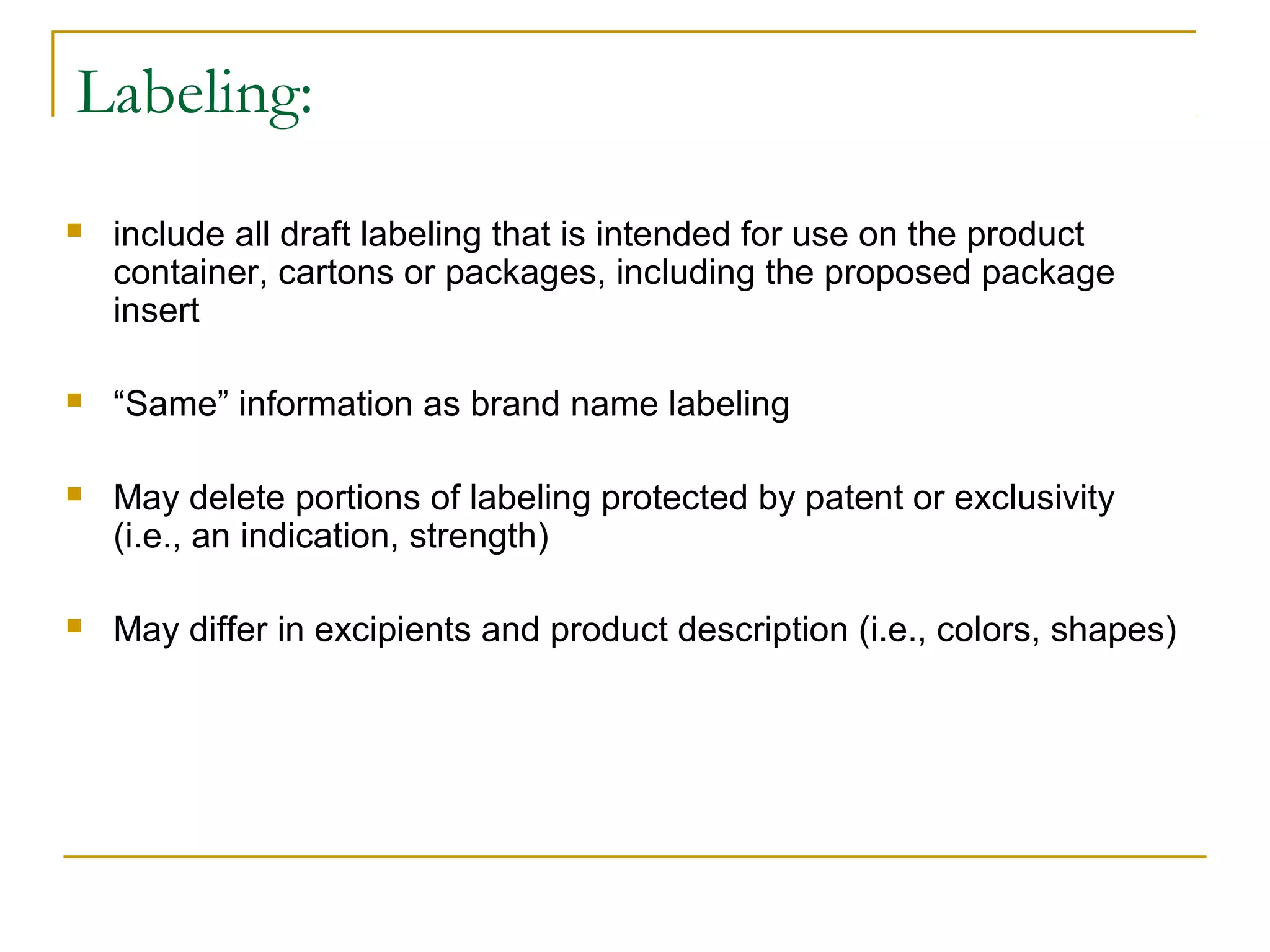
Labeling: 
 include all draft labeling that is intended for use on the product 
container, cartons or packages, including the proposed package 
insert 
 “Same” information as brand name labeling 
 May delete portions of labeling protected by patent or exclusivity 
(i.e., an indication, strength) 
 May differ in excipients and product description (i.e., colors, shapes)
Application summary 
 Pharmacology class, scientific rational, intended 
use, and potential clinical benefits 
 Foreign marketing history 
 Chemistry, Manufacturing and control summary 
 Nonclinical pharmacology and toxicology summary 
 Human pharmacokinetics and bioavailability 
summary 
 Microbiology summary 
 Clinical data summary and results of statistical 
analysis 
 Discussion of benefit/risk relationship
Chemistry, Manufacturing and Controls 
(CMC): 
 Components and composition 
 Manufacturing and Controls 
 Batch formulation and records 
 Description of facilities 
 Specifications and testing 
 Packaging 
 Stability
Nonclinical pharmacology and toxicology 
 Provide individual study reports, including pharmacology, 
toxicology, ADME studies. 
 Effects related to the therapeutic indication, such as the 
pharmacodynamic ED50 in dose- ranging studies and 
the mechanism of action (if known) 
 Interactions with other drugs (or cross-reference the 
location of the information in any of the above subsection
Human Pharmacokinetics and 
bioavailability 
 data from Phase I safety and tolerance studies in 
healthy volunteers 
 Summary of analytical method used in in-vivo 
biopharmaceutic study 
 Pilot or background studies 
 Bioavailibility or bioequivalence studies 
 Pharmacokinetic studies 
 In vitro studies
Microbiology: 
Includes for anti infective drug products. 
requires the following technical information and data:- 
 A complete description of the biochemical basis of the drug 
action on microbial physiology 
 The drugs antimicrobial spectrum 
 Describe any known mechanism of resistance to the drug and 
provide information/data of any known epidemiologic studies 
demonstrating prevalence to resistance factor 
 Clinical microbiology laboratory methods 
Assure the sterility of the product through the manufacturing 
process – especially important with injectable drug products.
Safety data 
 Statements in draft labeling 
 Contra indications 
 Warnings 
 Precautions 
 Adverse events
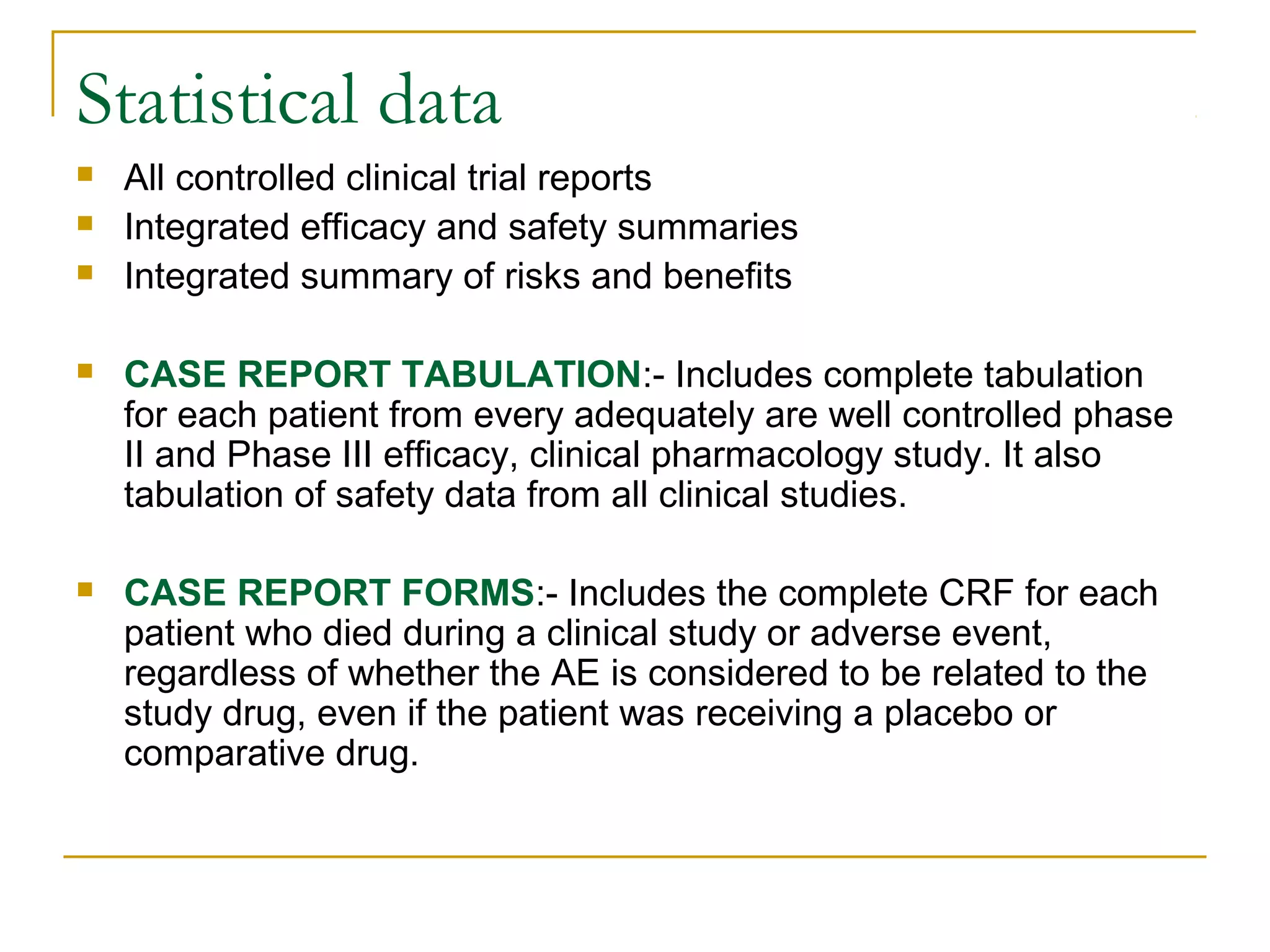
Statistical data 
 All controlled clinical trial reports 
 Integrated efficacy and safety summaries 
 Integrated summary of risks and benefits 
 CASE REPORT TABULATION:- Includes complete tabulation 
for each patient from every adequately are well controlled phase 
II and Phase III efficacy, clinical pharmacology study. It also 
tabulation of safety data from all clinical studies. 
 CASE REPORT FORMS:- Includes the complete CRF for each 
patient who died during a clinical study or adverse event, 
regardless of whether the AE is considered to be related to the 
study drug, even if the patient was receiving a placebo or 
comparative drug.
Inspections/Testing: 
 Assure manufacturing facilities are in compliance with current 
good manufacturing practices (cGMPs) 
 Assure bioequivalence sites are in compliance with current 
good clinical practices (cGCPs) 
 Conducted primarily by Field/Office of Regulatory Affairs with 
support from Center (Office of Compliance) and assigned 
geographically 
 Labs are in the Office of Regulatory Affairs and the Center
Bioequivalence: 
A generic drug is considered to be 
bioequivalent to the brand name drug if: 
 The rate and extent of absorption do not 
show a significant difference from listed drug, 
or 
 The extent of absorption does not show a 
significant difference and any difference in 
rate is intentional or not medically significant.
Bioequivalence – contd:
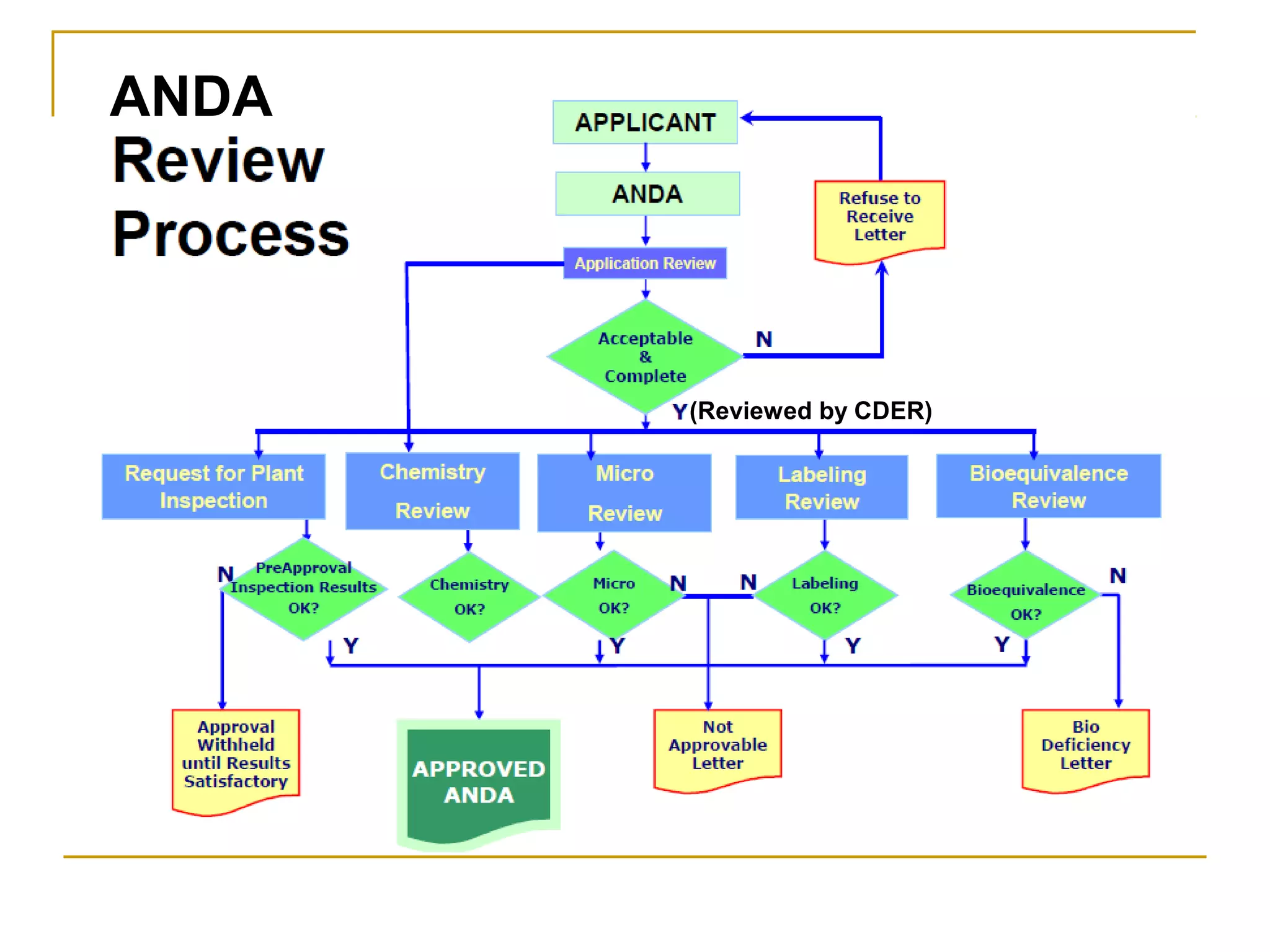
ANDA 
(Reviewed by CDER)
Center for Drug Evaluation and 
Research – (CDER) 
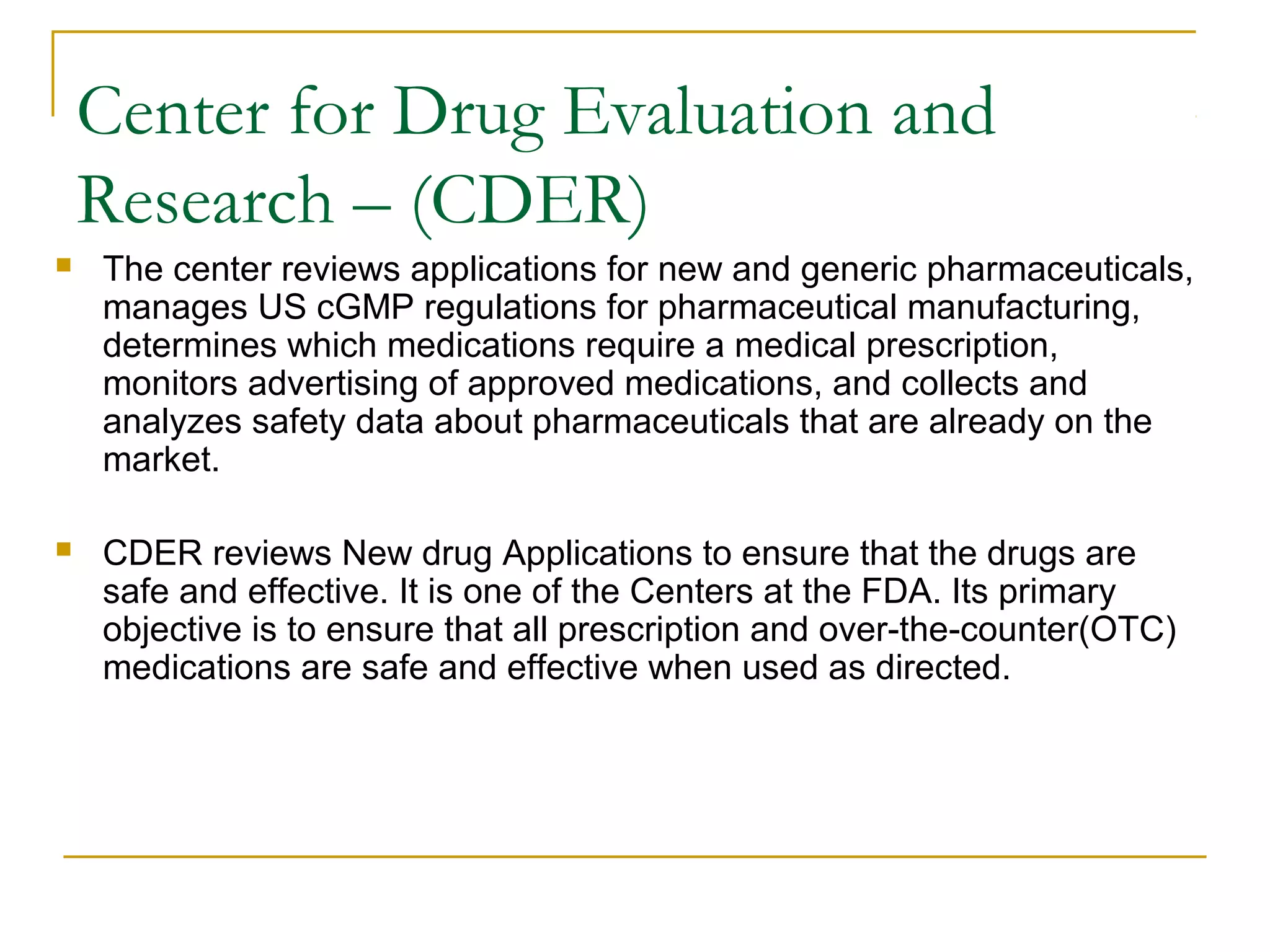
 The center reviews applications for new and generic pharmaceuticals, 
manages US cGMP regulations for pharmaceutical manufacturing, 
determines which medications require a medical prescription, 
monitors advertising of approved medications, and collects and 
analyzes safety data about pharmaceuticals that are already on the 
market. 
 CDER reviews New drug Applications to ensure that the drugs are 
safe and effective. It is one of the Centers at the FDA. Its primary 
objective is to ensure that all prescription and over-the-counter(OTC) 
medications are safe and effective when used as directed.
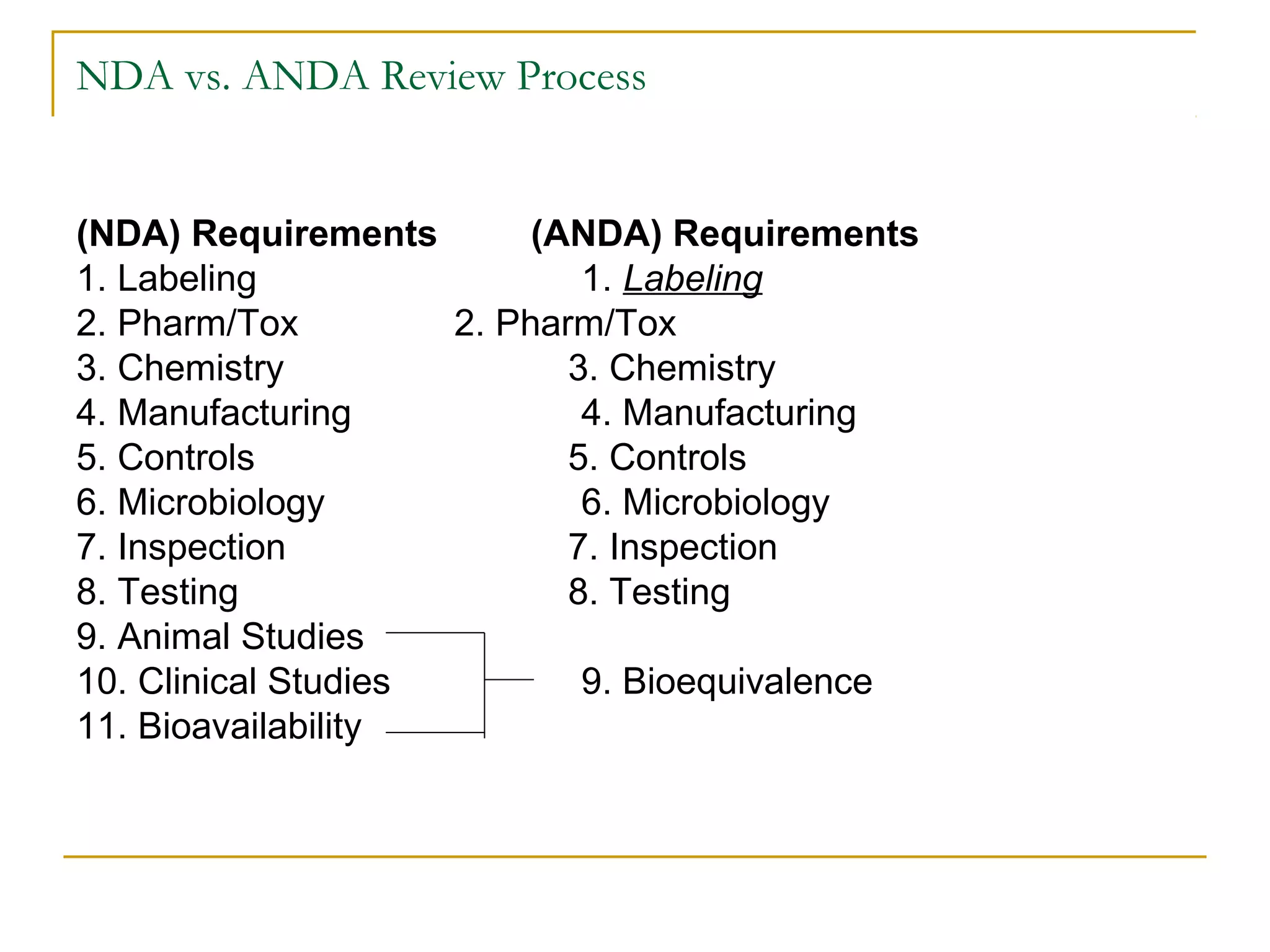
NDA vs. ANDA Review Process 
(NDA) Requirements (ANDA) Requirements 
1. Labeling 1. Labeling 
2. Pharm/Tox 2. Pharm/Tox 
3. Chemistry 3. Chemistry 
4. Manufacturing 4. Manufacturing 
5. Controls 5. Controls 
6. Microbiology 6. Microbiology 
7. Inspection 7. Inspection 
8. Testing 8. Testing 
9. Animal Studies 
10. Clinical Studies 9. Bioequivalence 
11. Bioavailability
Conclusion: 
NDA ANDA 
Applicable for new drug Applicable for generic drug 
Take longer time ( 12-15 
Compare to NDA less time 
years) 
taken(1-2 years) 
More expenditure of money Comparatively less 
Cost of drugs are more Cost of drugs are less 
Nonclinical studies and clinical 
investigations are essential 
Nonclinical studies and clinical 
investigations are nonessential 
except bioavailability and 
bioequivalence
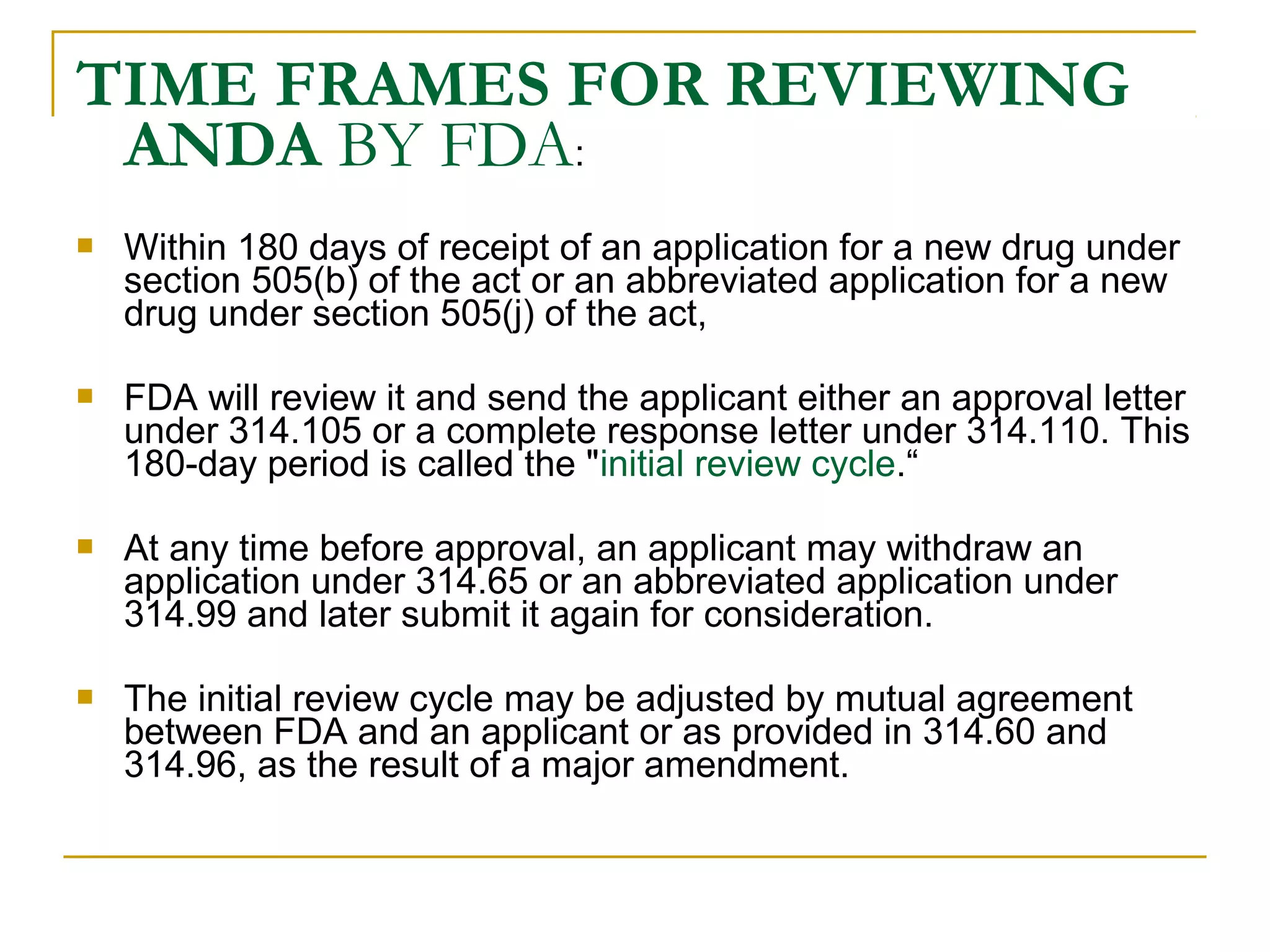
TIME FRAMES FOR REVIEWING 
ANDA BY FDA: 
 Within 180 days of receipt of an application for a new drug under 
section 505(b) of the act or an abbreviated application for a new 
drug under section 505(j) of the act, 
 FDA will review it and send the applicant either an approval letter 
under 314.105 or a complete response letter under 314.110. This 
180-day period is called the "initial review cycle.“ 
 At any time before approval, an applicant may withdraw an 
application under 314.65 or an abbreviated application under 
314.99 and later submit it again for consideration. 
 The initial review cycle may be adjusted by mutual agreement 
between FDA and an applicant or as provided in 314.60 and 
314.96, as the result of a major amendment.
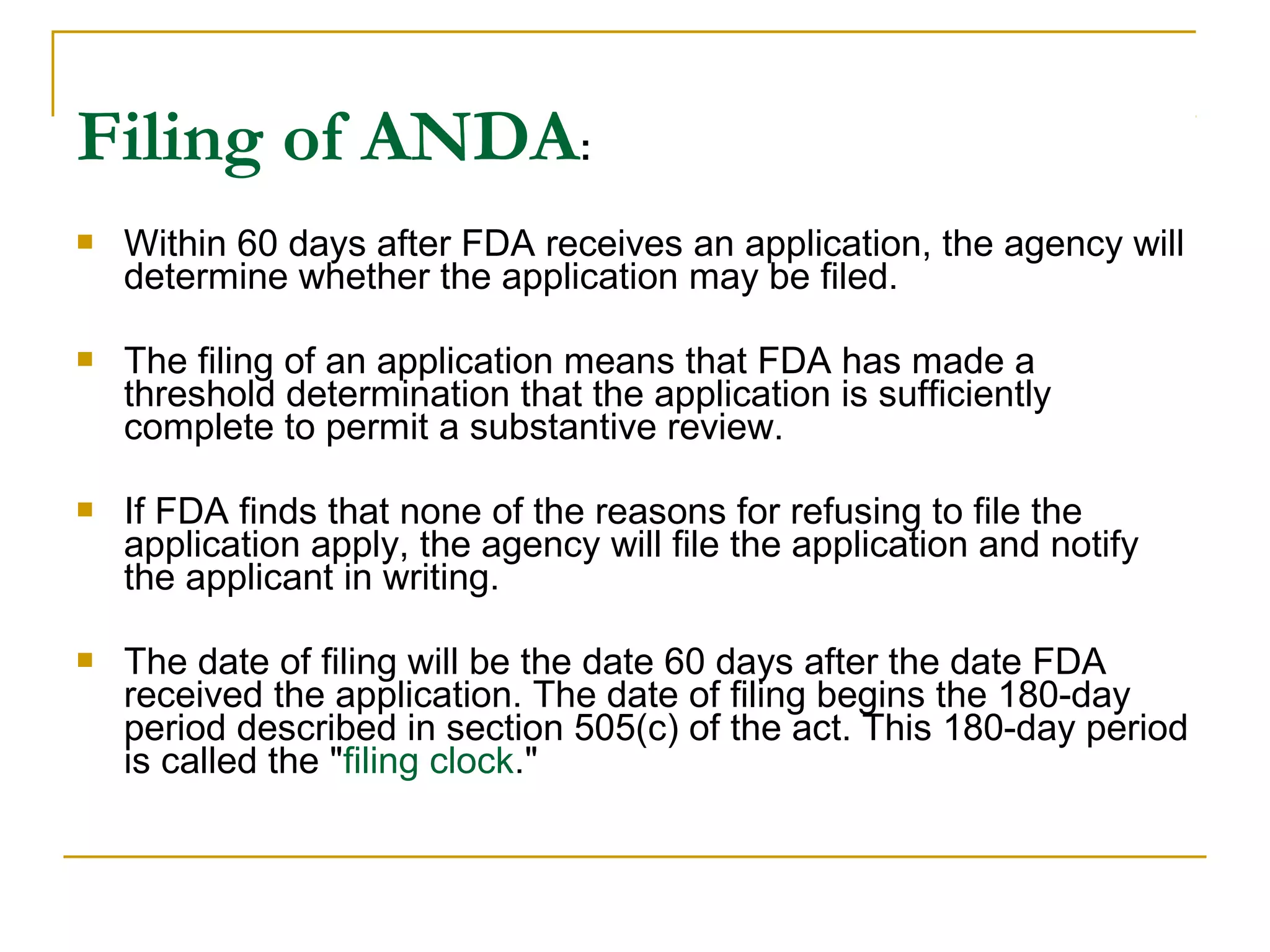
Filing of ANDA: 
 Within 60 days after FDA receives an application, the agency will 
determine whether the application may be filed. 
 The filing of an application means that FDA has made a 
threshold determination that the application is sufficiently 
complete to permit a substantive review. 
 If FDA finds that none of the reasons for refusing to file the 
application apply, the agency will file the application and notify 
the applicant in writing. 
 The date of filing will be the date 60 days after the date FDA 
received the application. The date of filing begins the 180-day 
period described in section 505(c) of the act. This 180-day period 
is called the "filing clock."
APPROVAL OF ANDA: 
 FDA will approve an application and issue the applicant 
an approval letter on the basis of draft labeling if the only 
deficiencies in the application concern editorial or similar 
minor deficiencies in the draft labeling. 
 Such approval will be conditioned upon the applicant 
incorporating the specified labeling changes exactly as 
directed, and upon the applicant submitting to FDA a 
copy of the final printed labeling prior to marketing.
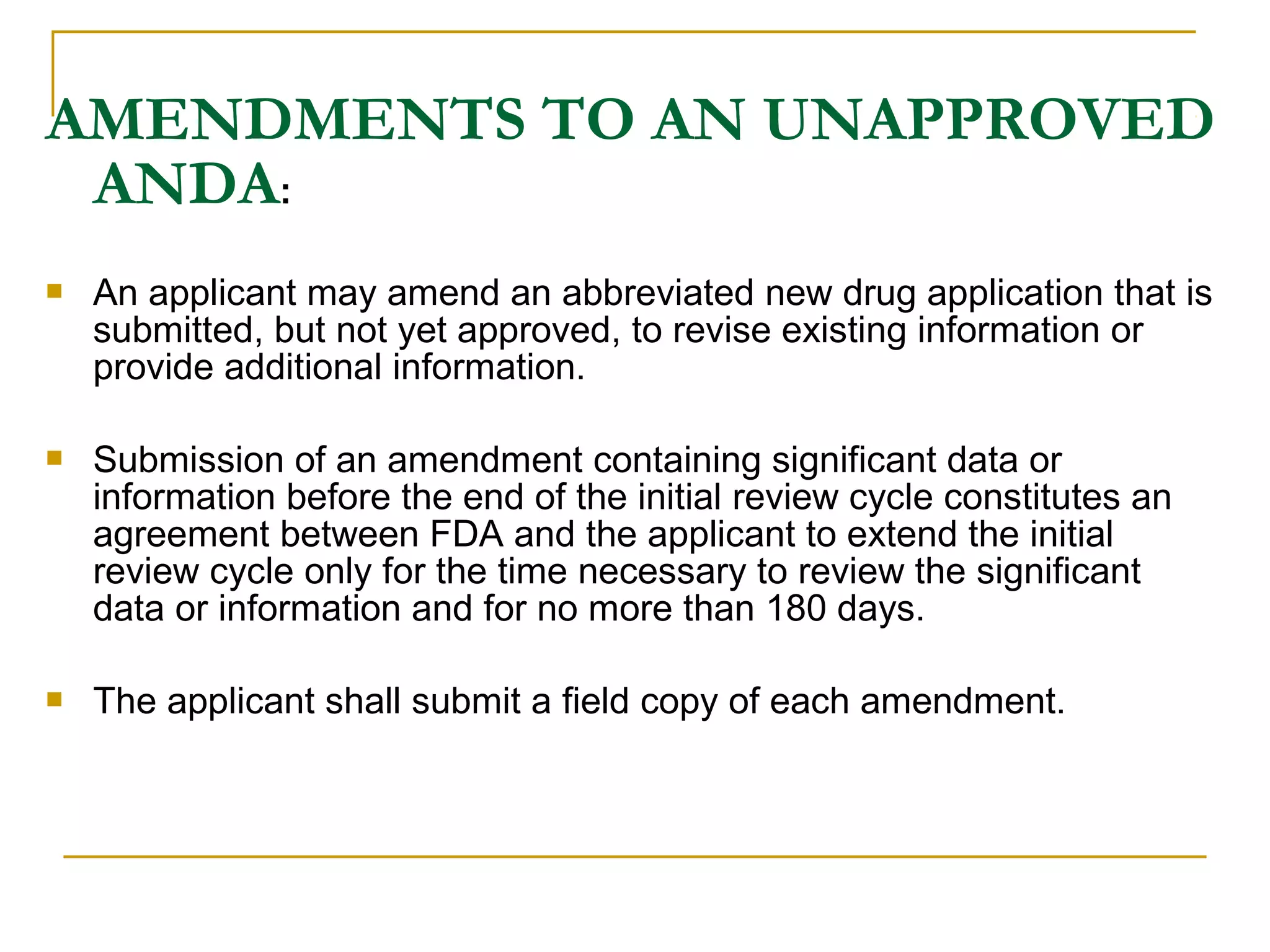
AMENDMENTS TO AN UNAPPROVED 
ANDA: 
 An applicant may amend an abbreviated new drug application that is 
submitted, but not yet approved, to revise existing information or 
provide additional information. 
 Submission of an amendment containing significant data or 
information before the end of the initial review cycle constitutes an 
agreement between FDA and the applicant to extend the initial 
review cycle only for the time necessary to review the significant 
data or information and for no more than 180 days. 
 The applicant shall submit a field copy of each amendment.
Brand Name----Generic Name----Availibility in 2011 
Uroxatral------------------------- alfuzosin------------------------July 
Zyprexa---------------------------olanzapine----------------------October 
Lipitor-----------------------------atorvastatin--------------------November 
Caduet----------------------------amlodipine----------------------November 
Tazorac----------------------------tazarotene cream---------------November
Brand Name----Generic Name----Availibility in 2012 
Lexapro---------------------------escitalopram--------------------February 
Entocort EC-----------------------budesonide----------------------February 
Avandia---------------------------rosiglitazone--------------------March 
Avandaryl-------------------------glimepiride---------------------March 
Avandamet-----------------------metformin-----------------------March 
Boniva----------------------------ibandronate---------------------March 
Seroquel--------------------------quetiapine-----------------------March 
Avapro----------------------------irbesartan----------------------March 
Avalide---------------------------hydrochlorothiazide-------------March 
Provigil---------------------------modafinil------------------------April 
Plavix-----------------------------clopidogrel----------------------May 
Viramune-------------------------nevirapine-----------------------May 
Lescol-----------------------------fluvastatin----------------------June 
Tricor-----------------------------fenofibrate----------------------July 
Clarinex--------------------------desloratadine--------------------July 
Singulair--------------------------montelukast---------------------August 
Actos-----------------------------pioglitazone----------------------August
References: 
 http://www.fda.gov/cder/guidance/index.htm. 
 Modern pharmaceutics 4th edition by Banker and Rhodes. 
 Burgers Medicinal Chemistry and drug discovery – Vol-II. 
 A Text Book of Pharmaceutical medicine 5th Edition by John 
p.Griffin and John O’Grady. 
 Comprehensive Medicinal chemistry by Hansch, Sammer, 
Taylor. 
 The Theory and Practice of Industrial Pharmacy by Leon 
Lachman.