Chem 12
Chapter 15 Pg 599-605, 608-611
• Acid-base titration is a process for
calculating the concentration of a known
volume of acid or base.
ACID-BASE REACTIONS
ACID-BASE REACTIONS
Titrations
Titrations
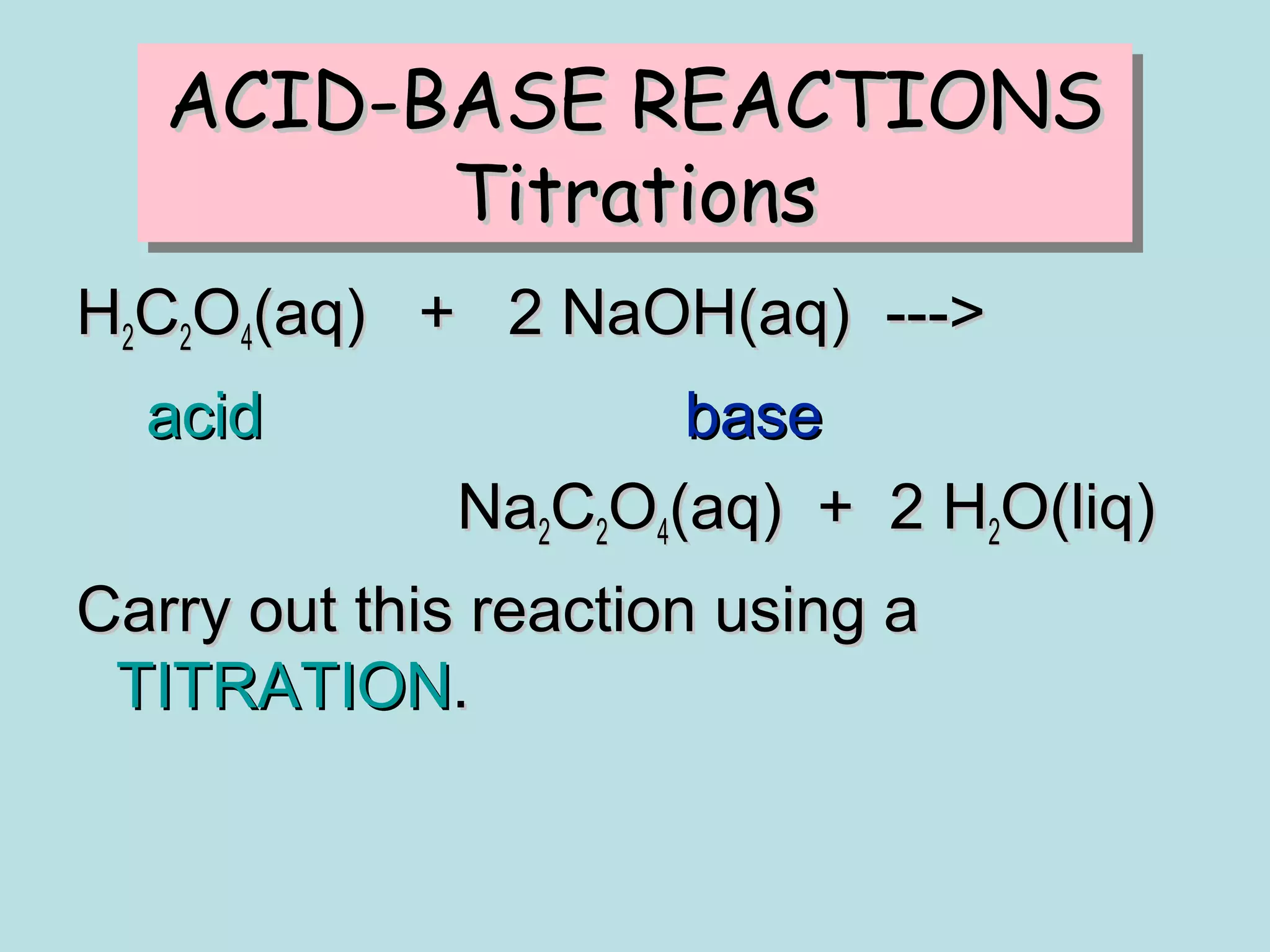
H2C2O4(aq) + 2 NaOH(aq) --->
acid

base
Na2C2O4(aq) + 2 H2O(liq)

Carry out this reaction using a
TITRATION.
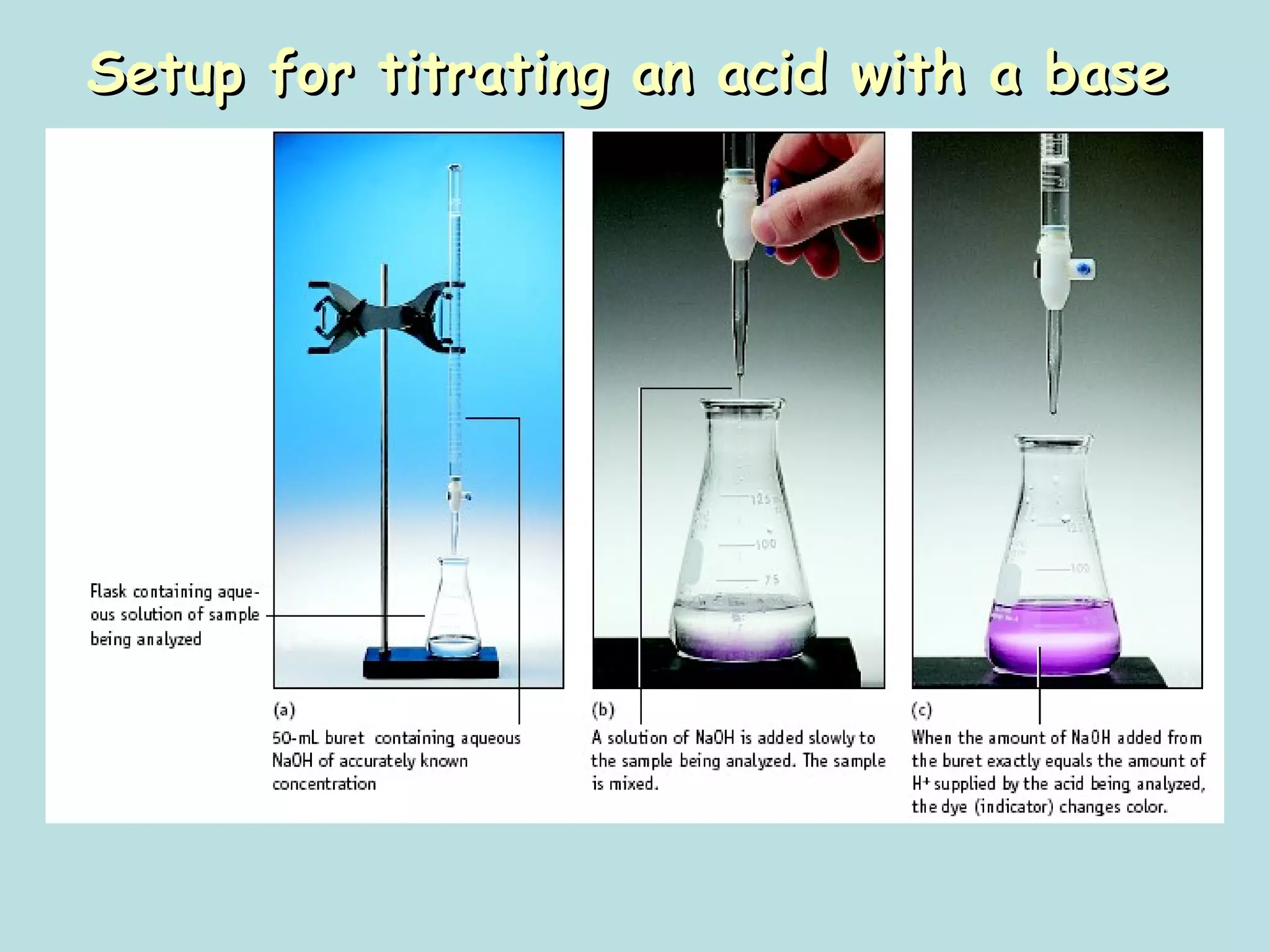
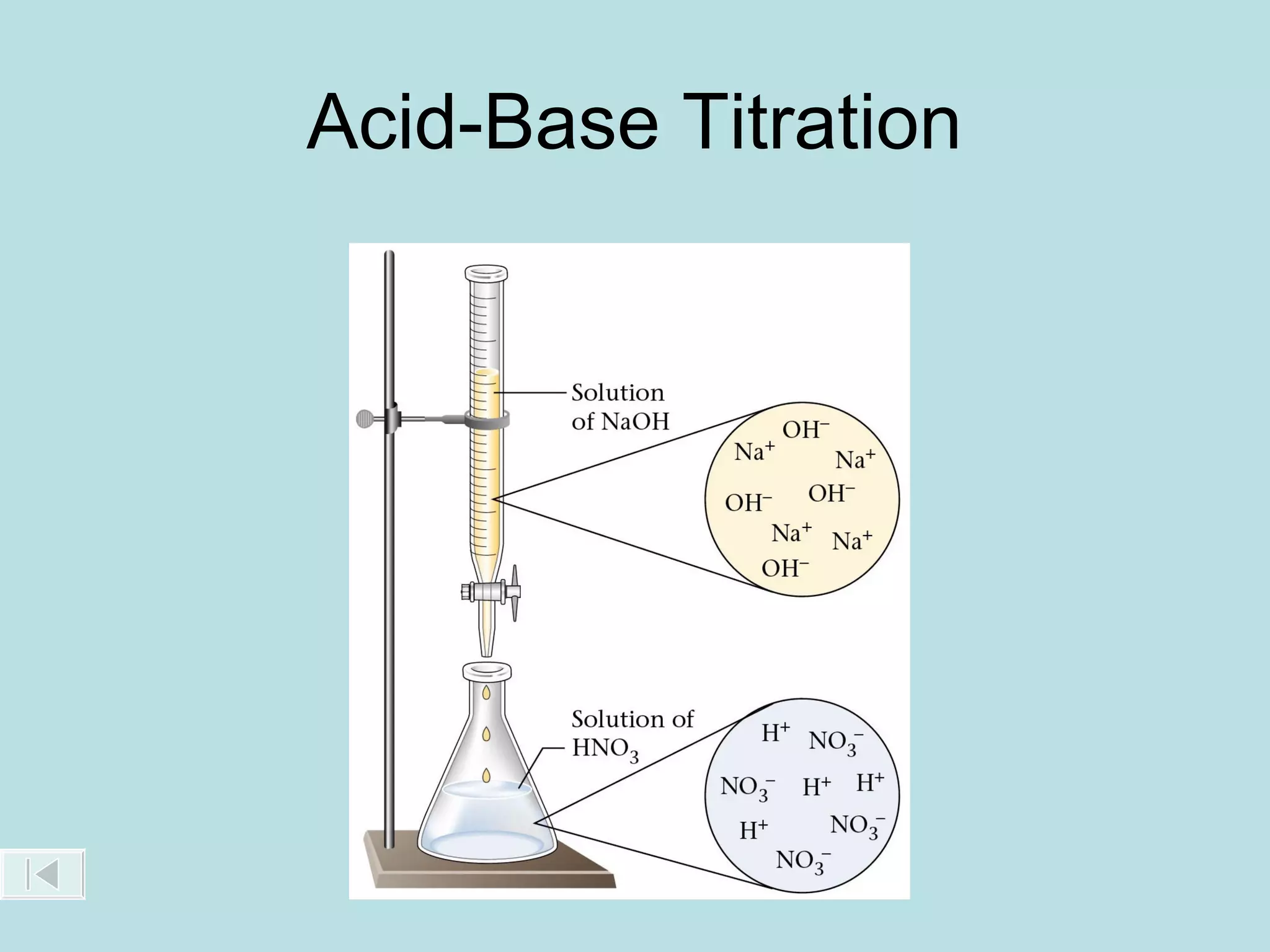
Setup for titrating an acid with a base
Sample Problem
• In this sample titration, we are trying to
determine the concentration of 20.00
mL of HCl. In the titration we will be
neutralizing the HCl with 0.150 M NaOH.
• Step 1: The NaOH, the titrant, is placed in
the buret. The titrant is the solution of
known concentration that is added from
the buret.
• Step 2: The HCl is placed in the
Erlenmeyer flask along with approximately
20.00 mL of distilled water and 2-3 drops
of phenolphthalein indicator. Since the
solution in the flask is acidic,
phenolphthalein is colourless.
• Step 3: NaOH is added to the HCl in the
flask. When the NaOH comes in contact
with the solution in the flask, it turns pink
and then the pink colour quickly
disappears. This is because the OH- from
the NaOH interact with the
phenolphthalein to change the
phenolphthalein from colourless to pink.
• The solution becomes clear again as the
hydronium ions from the hydrochloric acid
neutralize the added hydroxide ions. As
more NaOH is added, it takes longer for
the pink colour to disappear.
• As it starts taking longer for the pink colour
to disappear, the sodium hydroxide is
added a drop at a time.
Acid-Base Titration
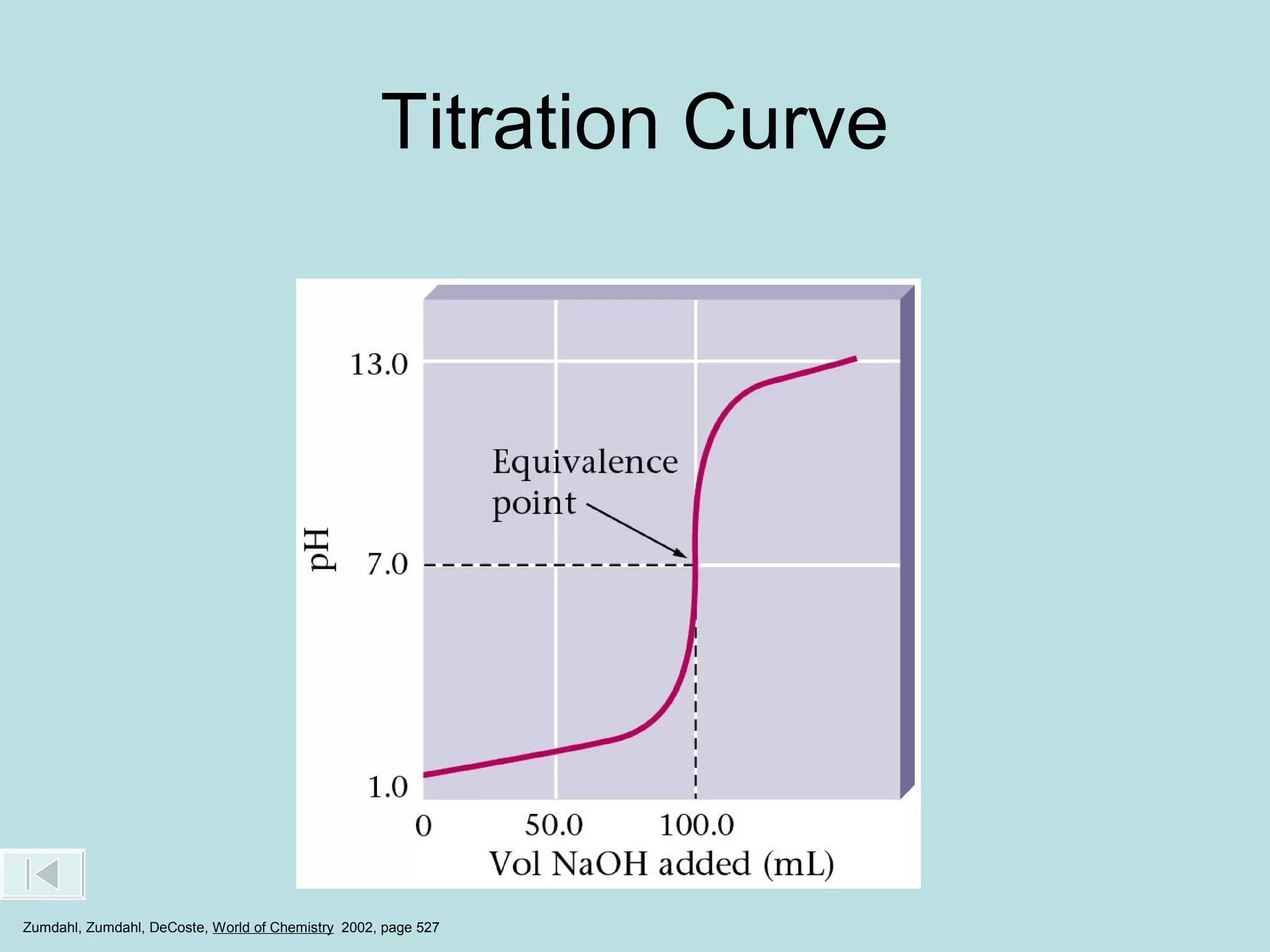
• The equivalence point of the titration is
reached when equal numbers of moles of
hydronium and hydroxide ions have been
reacted.
• When this happens in this titration, the pH
of the solution in the flask is 7.0 and the
phenolphthalein indicator is colourless.
• This would be a good time to stop,
however the indicator is still colourless, so
must keep going.
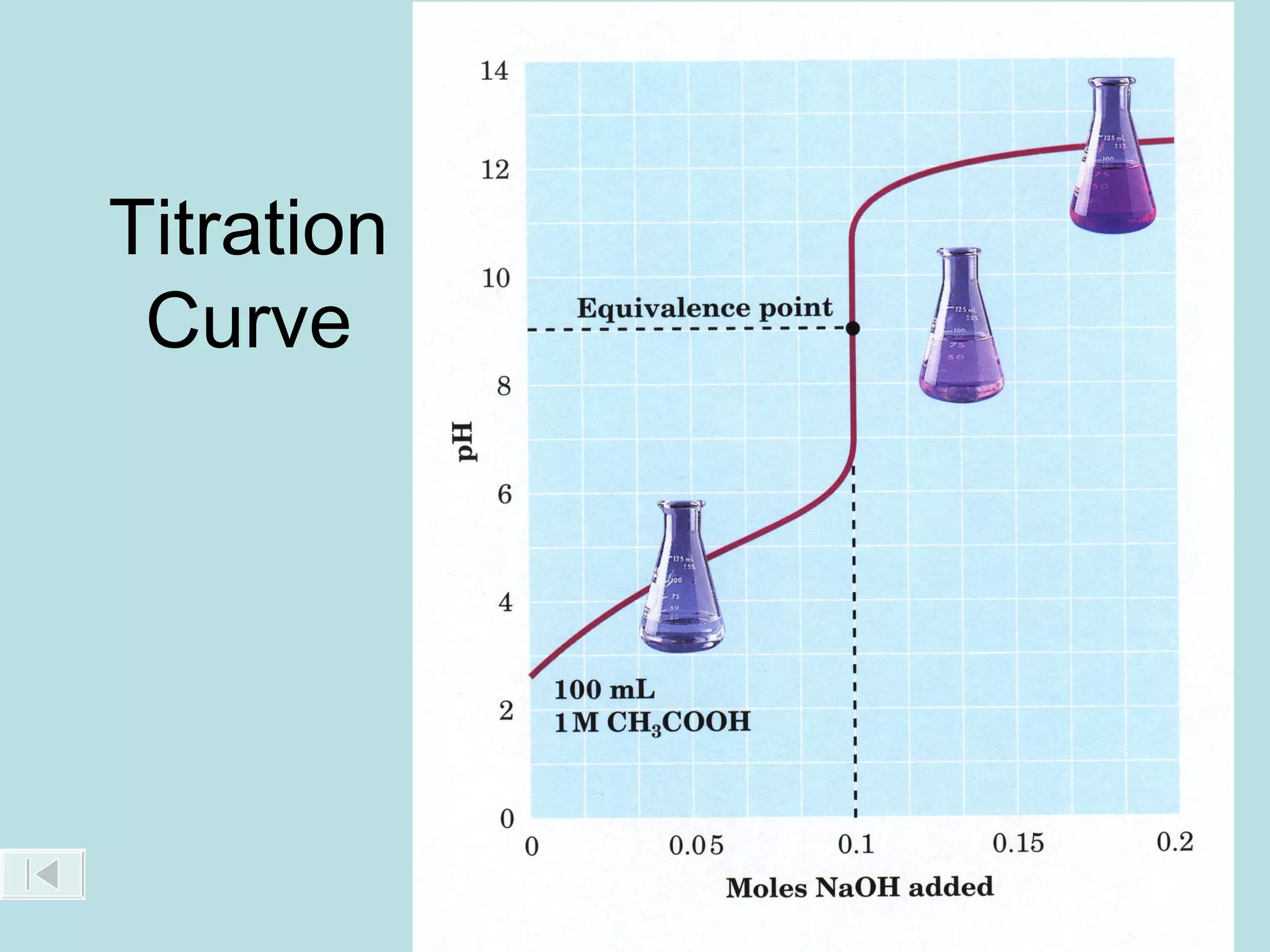
Titration
Curve
• Step 4: Add as little excess NaOH as
possible. We want to add a single drop of
NaOH to the colourless solution in the
flask and have the solution in the flask turn
pink and stay pink while the contents of
the flask are swirled.
• This permanent colour change in the
indicator is known as the endpoint of the
titration and the titration is over.
Titration Curve

Zumdahl, Zumdahl, DeCoste, World of Chemistry 2002, page 527
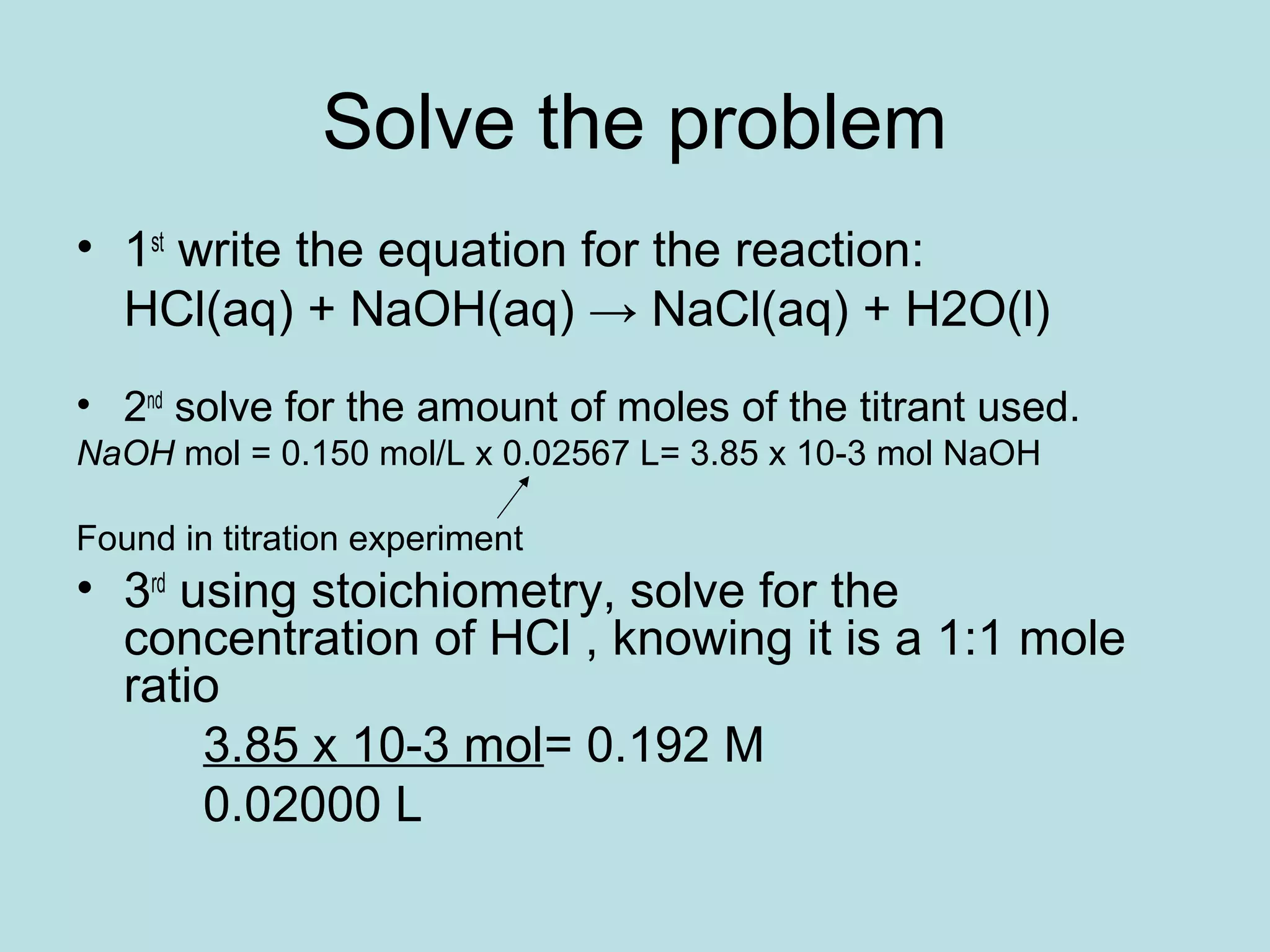
Solve the problem
• 1st write the equation for the reaction:
HCl(aq) + NaOH(aq) → NaCl(aq) + H2O(l)
• 2nd solve for the amount of moles of the titrant used.
NaOH mol = 0.150 mol/L x 0.02567 L= 3.85 x 10⁻³ mol NaOH
Found in titration experiment

• 3rd using stoichiometry, solve for the
concentration of HCl , knowing it is a 1:1 mole
ratio
3.85 x 10⁻³ mol= 0.192 M
0.02000 L
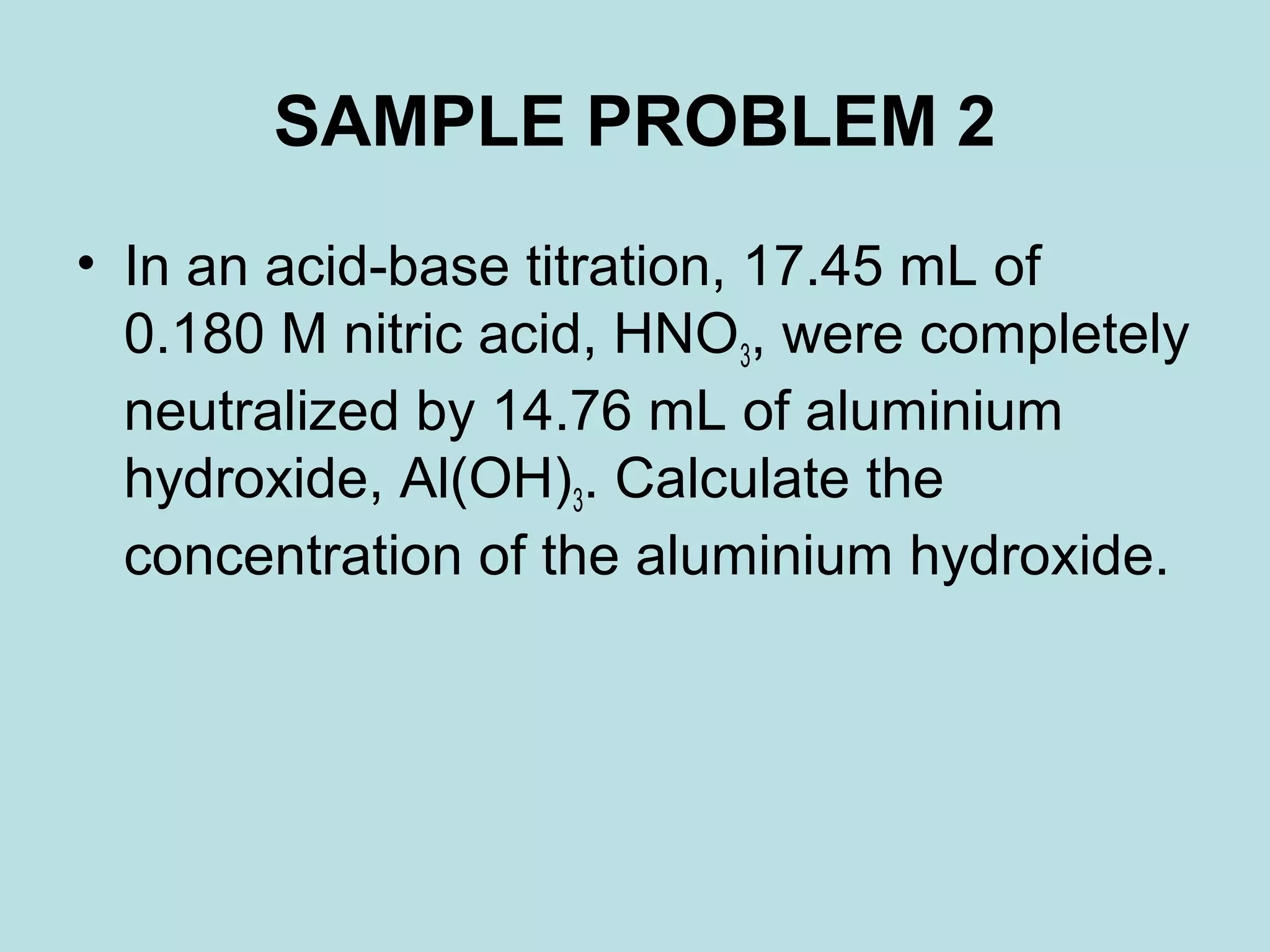
SAMPLE PROBLEM 2
• In an acid-base titration, 17.45 mL of
0.180 M nitric acid, HNO3, were completely
neutralized by 14.76 mL of aluminium
hydroxide, Al(OH)3. Calculate the
concentration of the aluminium hydroxide.
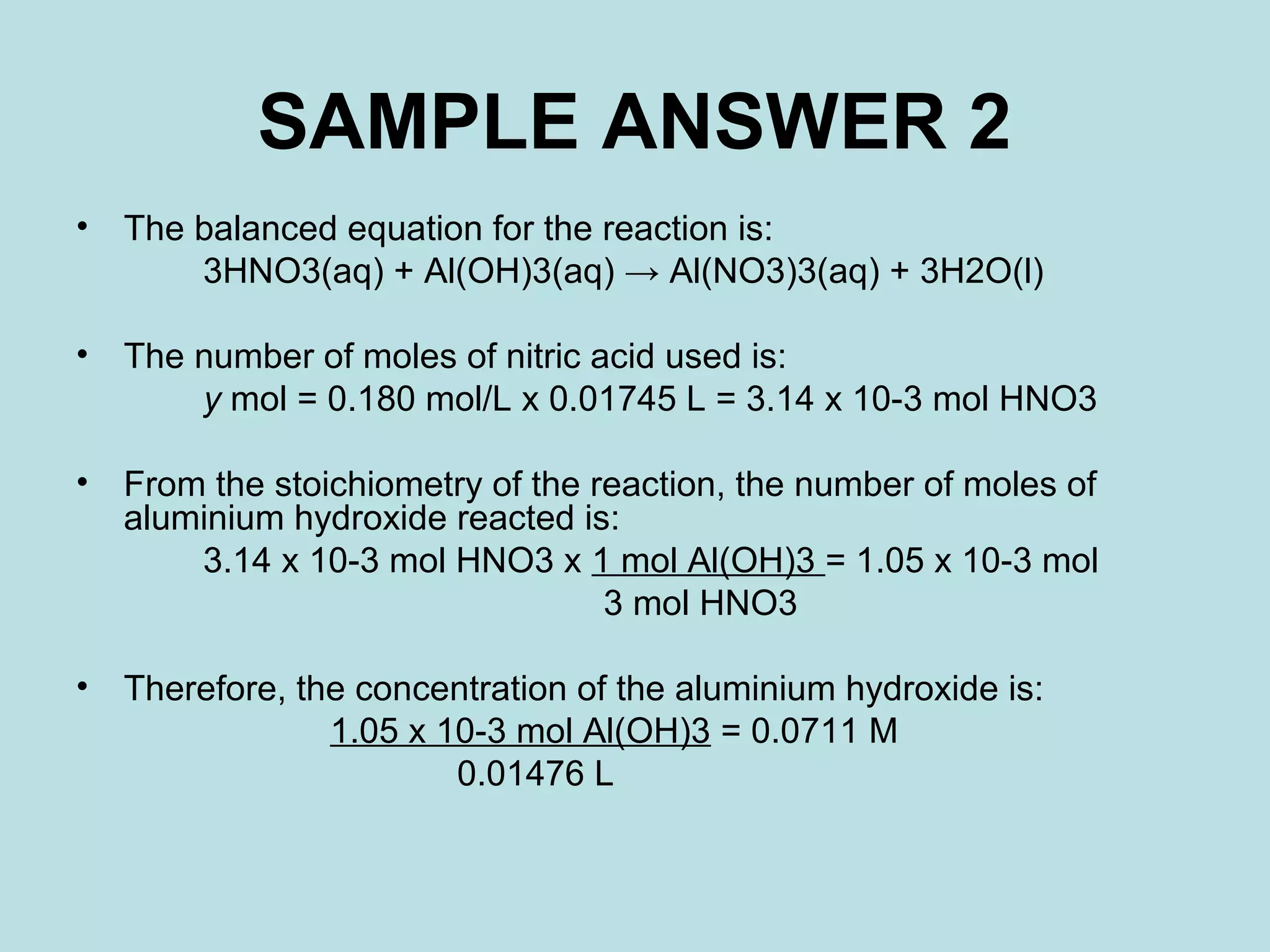
SAMPLE ANSWER 2
•

The balanced equation for the reaction is:
3HNO3(aq) + Al(OH)3(aq) → Al(NO3)3(aq) + 3H2O(l)

•

The number of moles of nitric acid used is:
y mol = 0.180 mol/L x 0.01745 L = 3.14 x 10⁻³ mol HNO3

•

From the stoichiometry of the reaction, the number of moles of
aluminium hydroxide reacted is:
3.14 x 10⁻³ mol HNO3 x 1 mol Al(OH)3 = 1.05 x 10⁻³ mol
3 mol HNO3

•

Therefore, the concentration of the aluminium hydroxide is:
1.05 x 10⁻³ mol Al(OH)3 = 0.0711 M
0.01476 L
Practice:
• Page 602 # 17-19

Acid-Base Titration & Calculations

  • 1.
    Chem 12 Chapter 15Pg 599-605, 608-611
  • 2.
    • Acid-base titrationis a process for calculating the concentration of a known volume of acid or base.
  • 3.
    ACID-BASE REACTIONS ACID-BASE REACTIONS Titrations Titrations H2C2O4(aq)+ 2 NaOH(aq) ---> acid base Na2C2O4(aq) + 2 H2O(liq) Carry out this reaction using a TITRATION.
  • 4.
    Setup for titratingan acid with a base
  • 5.
    Sample Problem • Inthis sample titration, we are trying to determine the concentration of 20.00 mL of HCl. In the titration we will be neutralizing the HCl with 0.150 M NaOH.
  • 6.
    • Step 1:The NaOH, the titrant, is placed in the buret. The titrant is the solution of known concentration that is added from the buret.
  • 7.
    • Step 2:The HCl is placed in the Erlenmeyer flask along with approximately 20.00 mL of distilled water and 2-3 drops of phenolphthalein indicator. Since the solution in the flask is acidic, phenolphthalein is colourless.
  • 8.
    • Step 3:NaOH is added to the HCl in the flask. When the NaOH comes in contact with the solution in the flask, it turns pink and then the pink colour quickly disappears. This is because the OH- from the NaOH interact with the phenolphthalein to change the phenolphthalein from colourless to pink.
  • 9.
    • The solutionbecomes clear again as the hydronium ions from the hydrochloric acid neutralize the added hydroxide ions. As more NaOH is added, it takes longer for the pink colour to disappear. • As it starts taking longer for the pink colour to disappear, the sodium hydroxide is added a drop at a time.
  • 10.
  • 11.
    • The equivalencepoint of the titration is reached when equal numbers of moles of hydronium and hydroxide ions have been reacted. • When this happens in this titration, the pH of the solution in the flask is 7.0 and the phenolphthalein indicator is colourless. • This would be a good time to stop, however the indicator is still colourless, so must keep going.
  • 12.
  • 13.
    • Step 4:Add as little excess NaOH as possible. We want to add a single drop of NaOH to the colourless solution in the flask and have the solution in the flask turn pink and stay pink while the contents of the flask are swirled. • This permanent colour change in the indicator is known as the endpoint of the titration and the titration is over.
  • 14.
    Titration Curve Zumdahl, Zumdahl,DeCoste, World of Chemistry 2002, page 527
  • 15.
    Solve the problem •1st write the equation for the reaction: HCl(aq) + NaOH(aq) → NaCl(aq) + H2O(l) • 2nd solve for the amount of moles of the titrant used. NaOH mol = 0.150 mol/L x 0.02567 L= 3.85 x 10⁻³ mol NaOH Found in titration experiment • 3rd using stoichiometry, solve for the concentration of HCl , knowing it is a 1:1 mole ratio 3.85 x 10⁻³ mol= 0.192 M 0.02000 L
  • 16.
    SAMPLE PROBLEM 2 •In an acid-base titration, 17.45 mL of 0.180 M nitric acid, HNO3, were completely neutralized by 14.76 mL of aluminium hydroxide, Al(OH)3. Calculate the concentration of the aluminium hydroxide.
  • 17.
    SAMPLE ANSWER 2 • Thebalanced equation for the reaction is: 3HNO3(aq) + Al(OH)3(aq) → Al(NO3)3(aq) + 3H2O(l) • The number of moles of nitric acid used is: y mol = 0.180 mol/L x 0.01745 L = 3.14 x 10⁻³ mol HNO3 • From the stoichiometry of the reaction, the number of moles of aluminium hydroxide reacted is: 3.14 x 10⁻³ mol HNO3 x 1 mol Al(OH)3 = 1.05 x 10⁻³ mol 3 mol HNO3 • Therefore, the concentration of the aluminium hydroxide is: 1.05 x 10⁻³ mol Al(OH)3 = 0.0711 M 0.01476 L
  • 18.