Downloaded 89 times
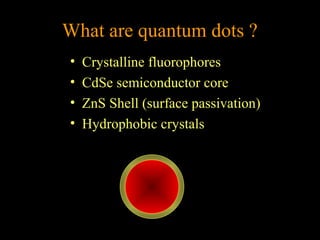

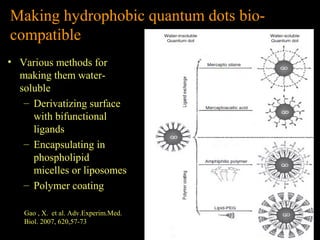
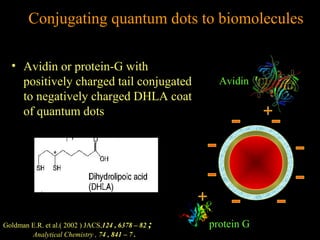
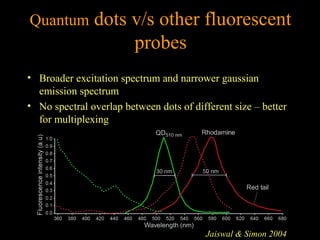
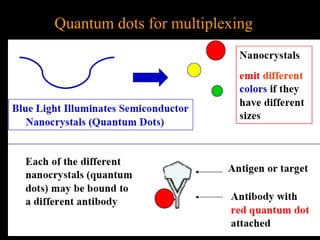

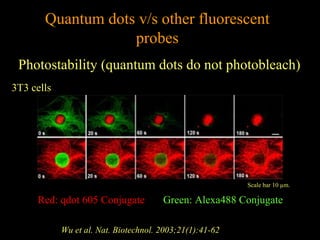
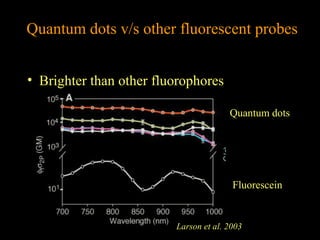
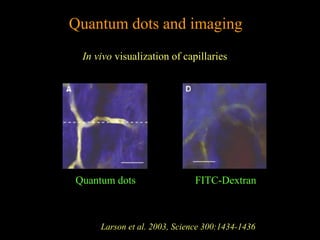
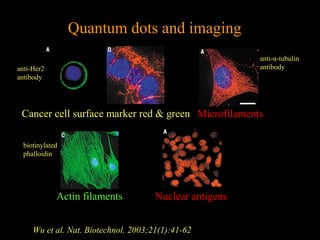
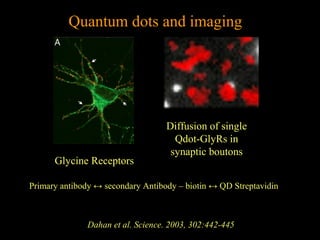
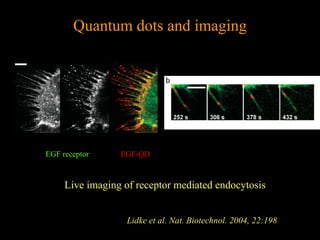
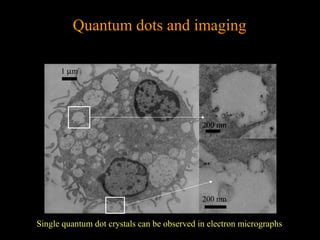
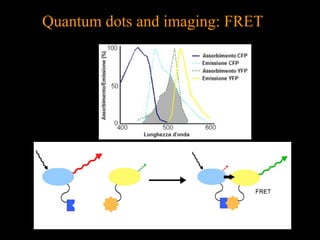

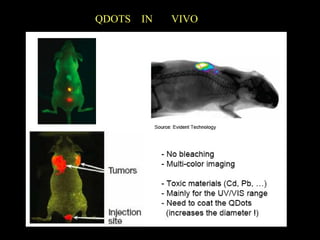

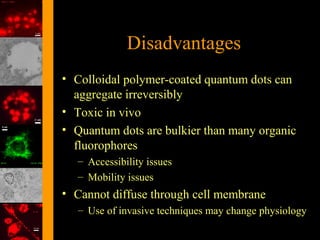

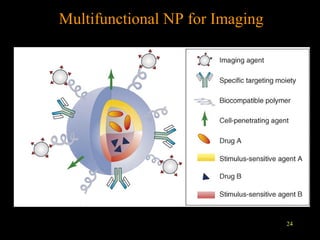


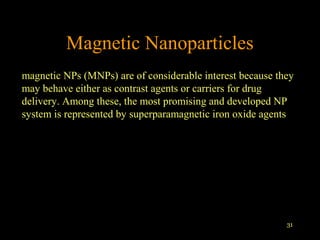


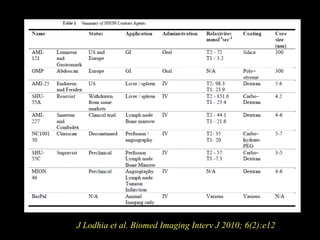


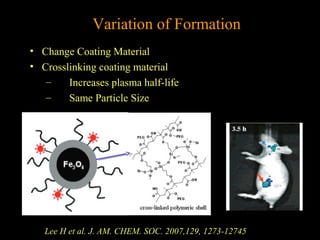
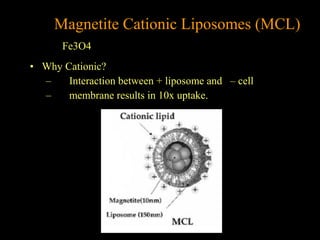









Quantum dots have unique optical properties that make them useful fluorescent probes for cellular and in vivo imaging. They have broad absorption spectra and narrow, size-dependent emission spectra. Making hydrophobic quantum dots water-soluble involves coating them with bifunctional ligands, encapsulating them in micelles or liposomes, or polymer coating. Quantum dots can be conjugated to biomolecules like avidin and used for multiplexed imaging. They have advantages over organic dyes like greater photostability and brightness. Quantum dots have been used for various cellular imaging applications as well as in vivo imaging of vasculature, receptors, and other targets.


