


The document discusses the properties of nanomaterials, including their optical, electrical, mechanical, magnetic, and chemical characteristics, which are significantly influenced by their nanoscale size (1-100 nm). It highlights how size affects light absorption, electrical conductivity, mechanical strength, and reactivity, leading to unique behaviors such as superparamagnetism and changes in melting points. Additionally, it illustrates the differences in properties between bulk materials and nanoparticles, emphasizing their potential applications in various fields.
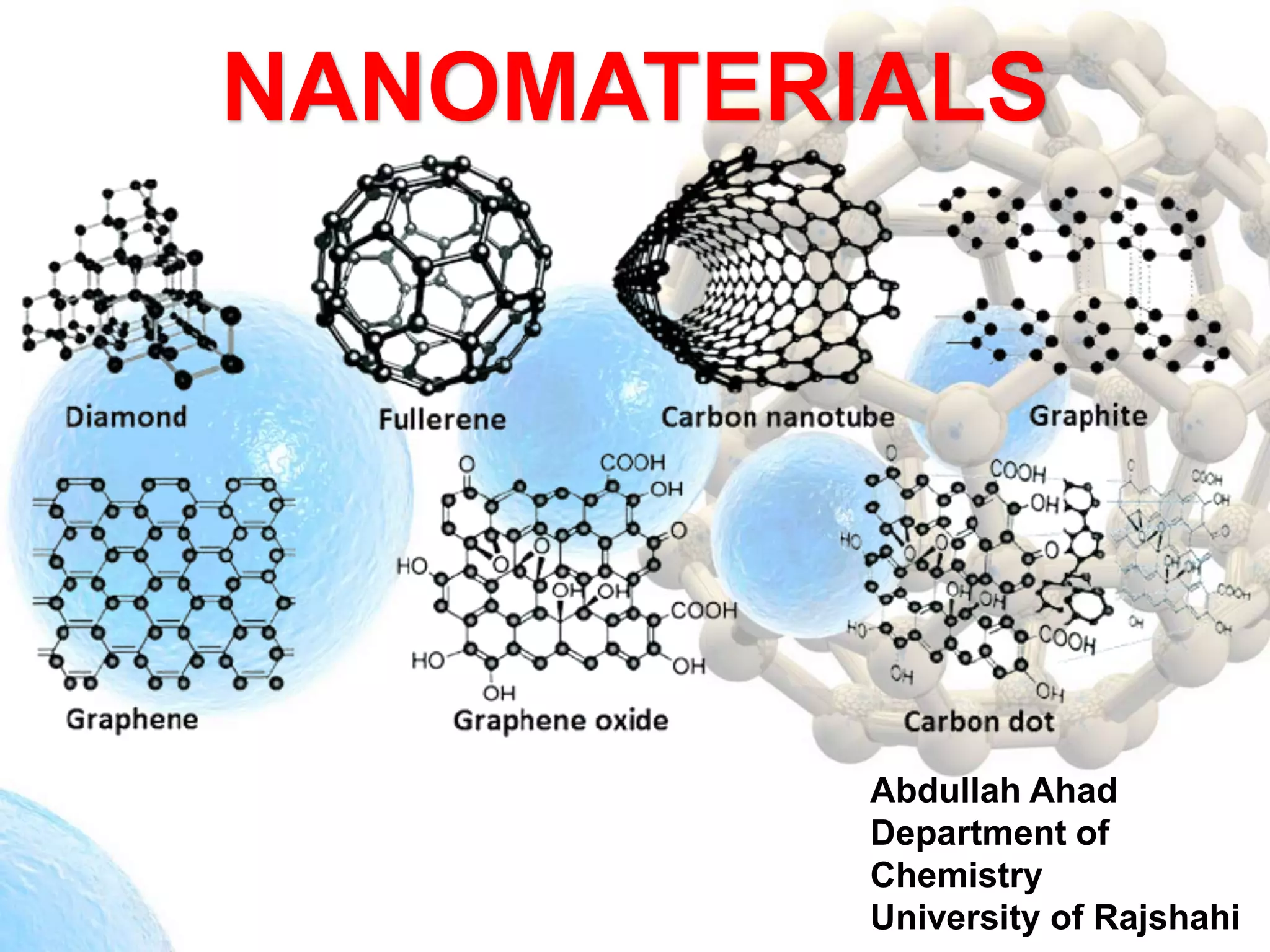
Overview of nanomaterials and their significance in chemistry, presented by Abdullah Ahad from the University of Rajshahi.
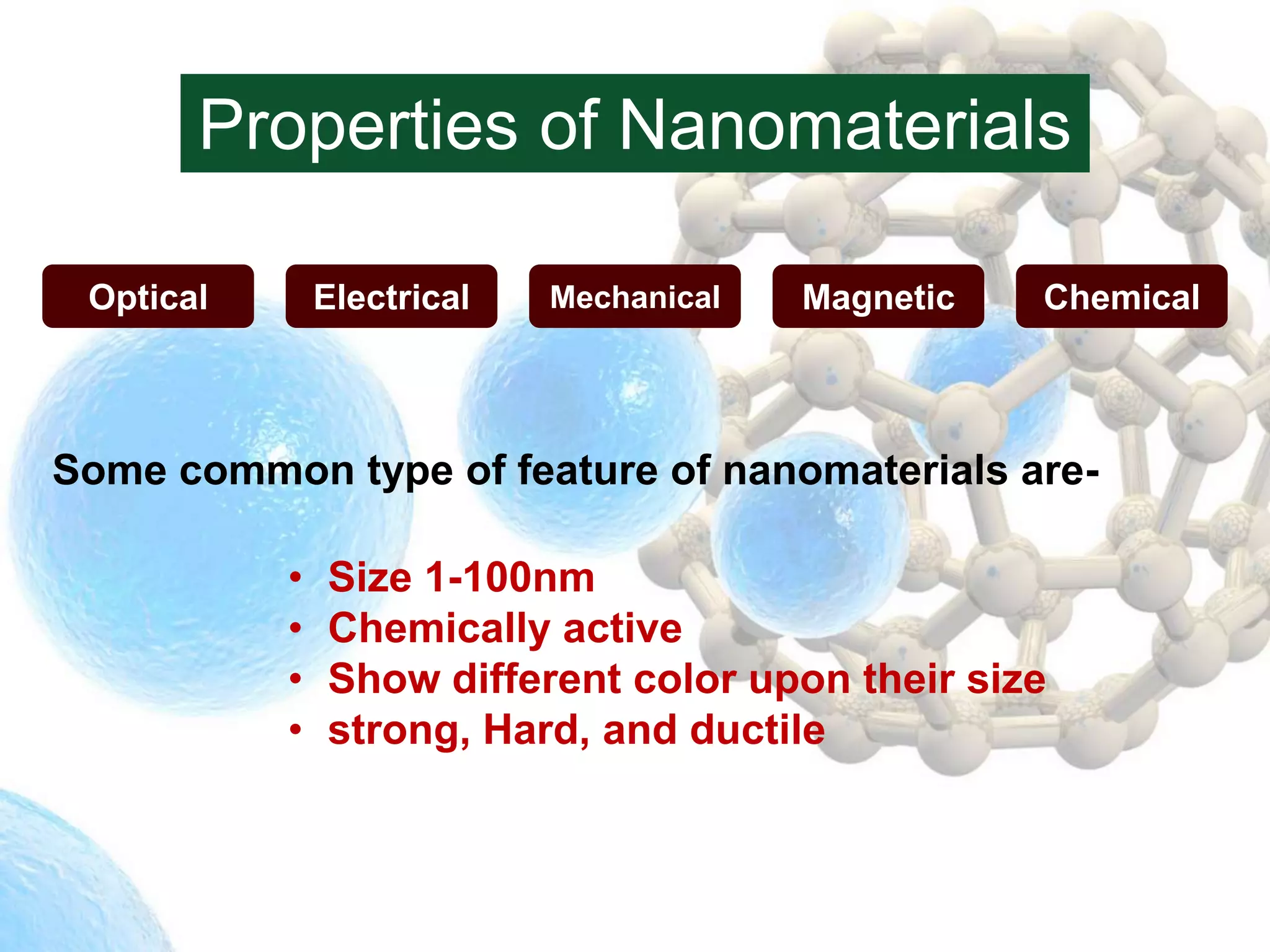
Nanomaterials possess unique properties such as size (1-100nm), chemical activity, color variation, and mechanical strength.
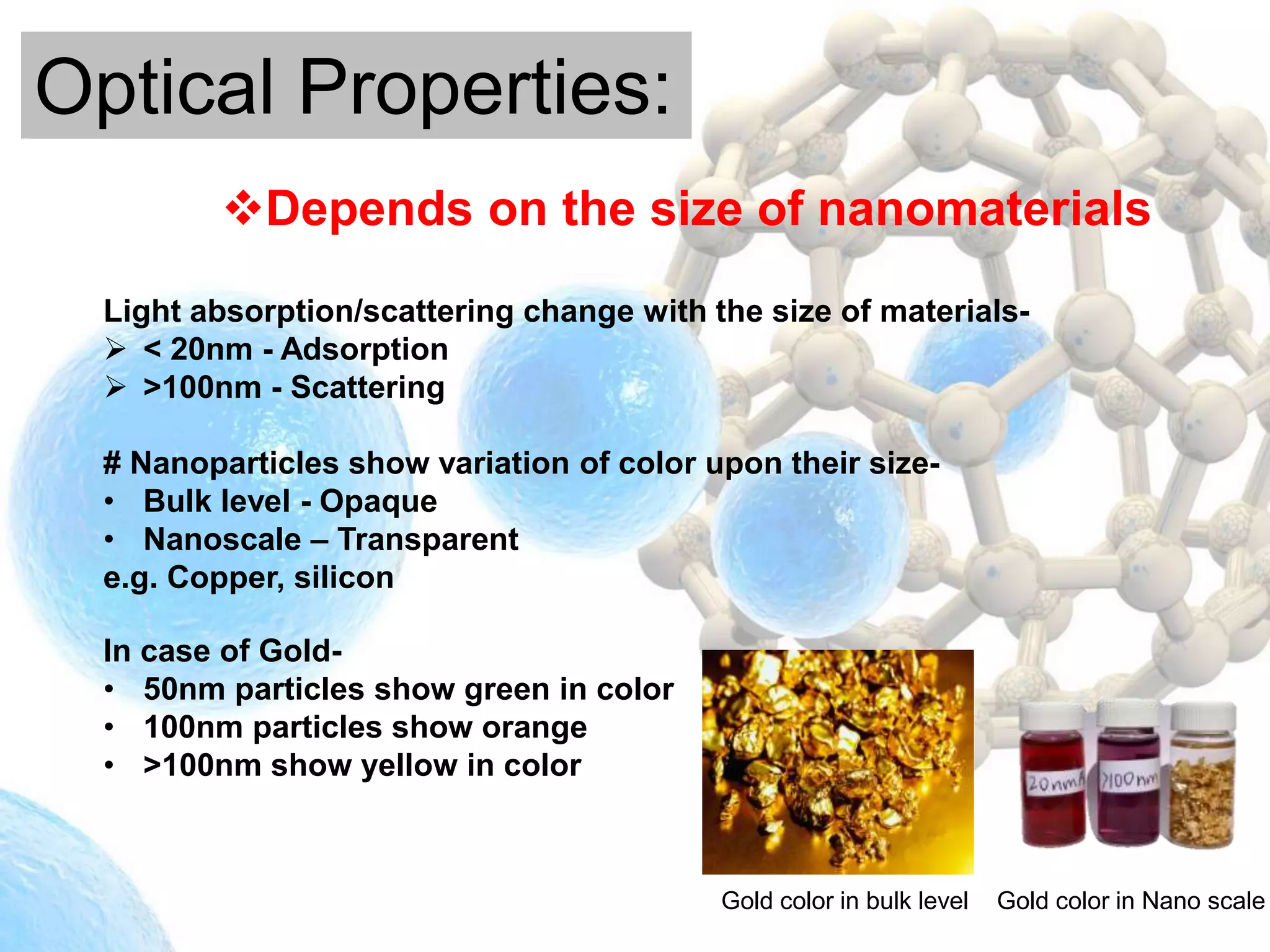
Optical properties vary with size; examples include the color change in gold nanoparticles based on size.
Electrical conductivity in nanomaterials changes with size, influenced by surface structure and electronic structure.
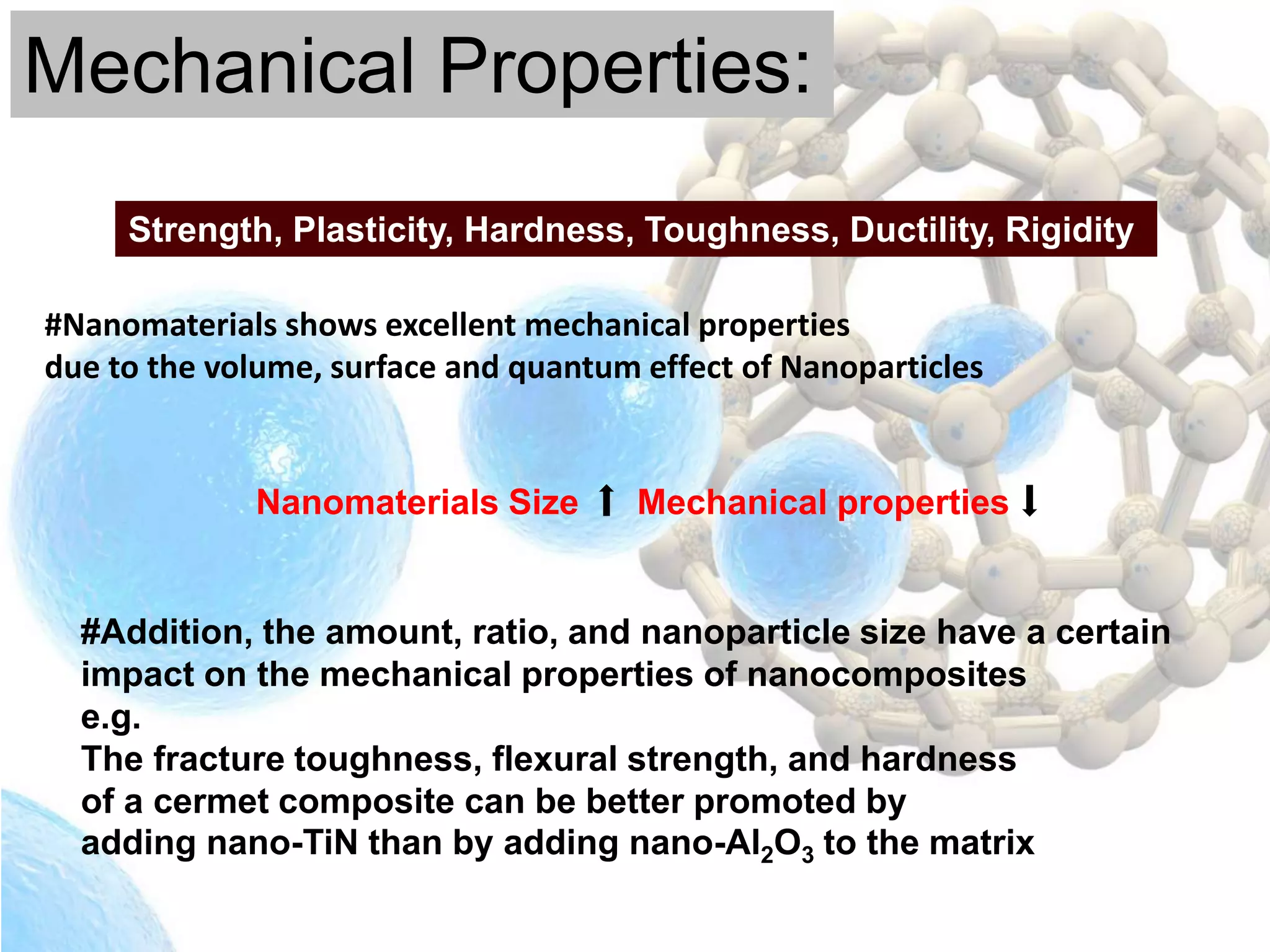
Nanomaterials exhibit superior mechanical properties influenced by size, volume, and surface effects.
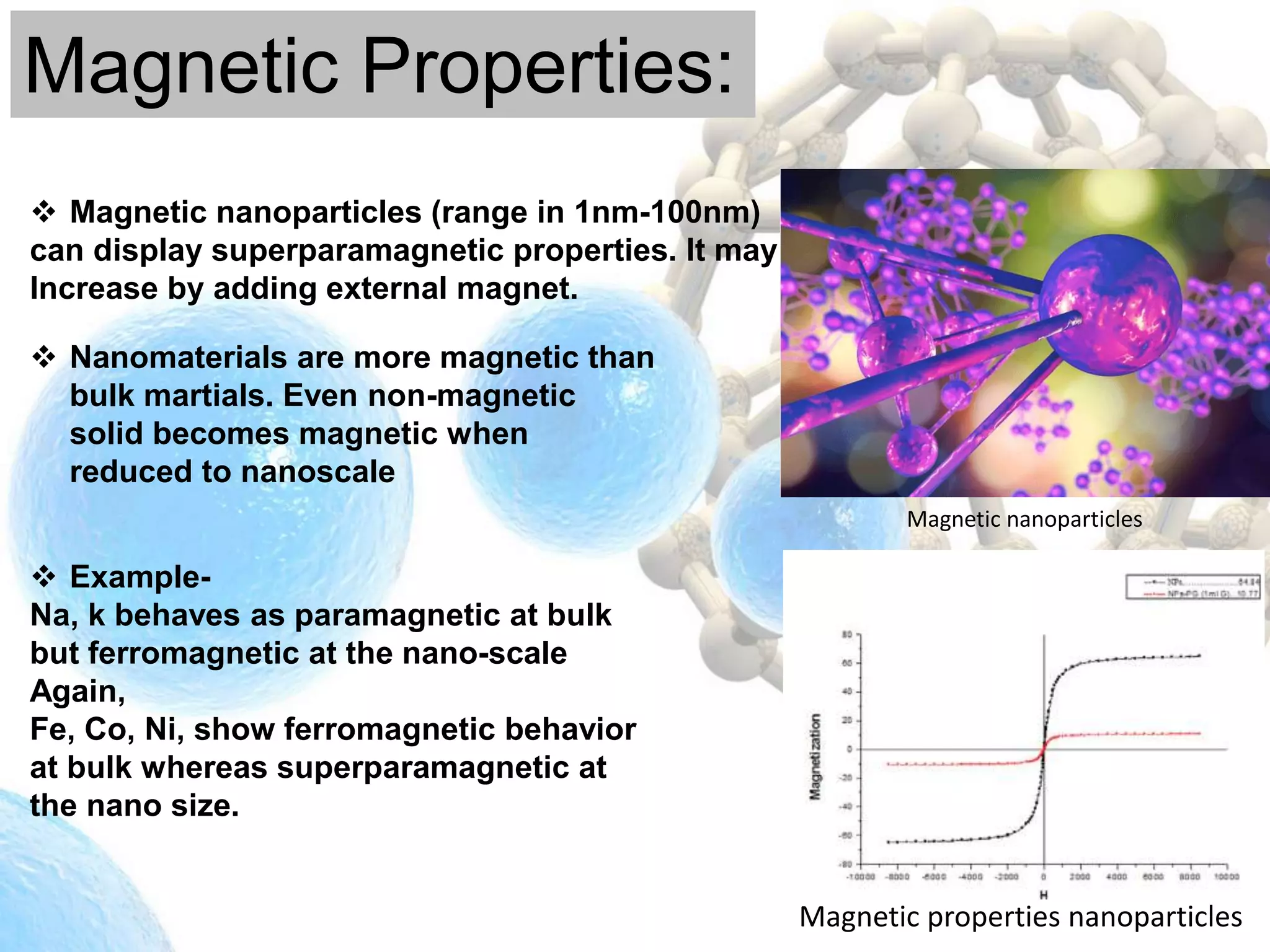
Magnetic nanoparticles (1-100nm) can display unique behaviors like superparamagnetism, differing from bulk materials.
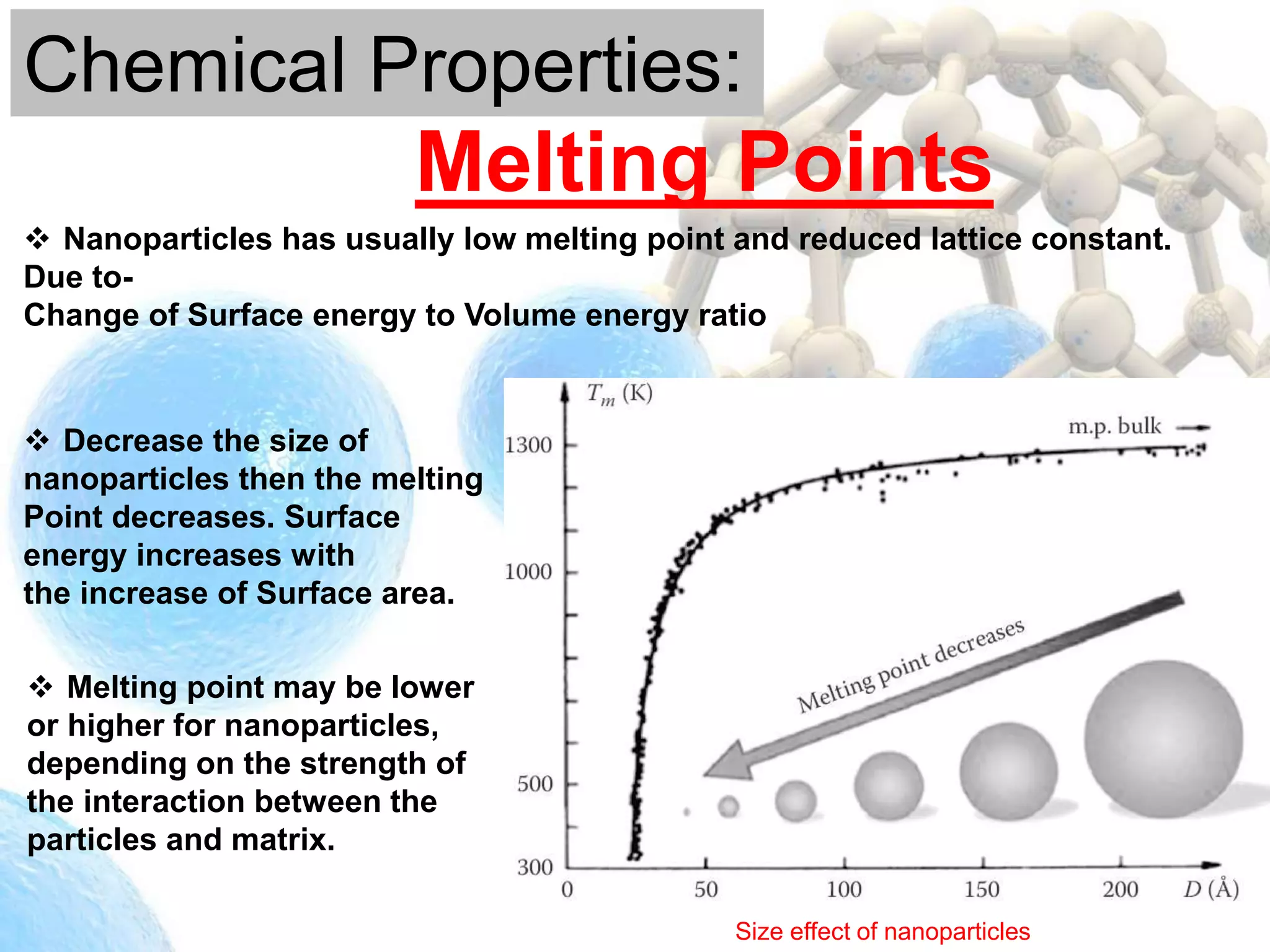
Nanoparticles generally have lower melting points and altered energy ratios due to reduced sizes.
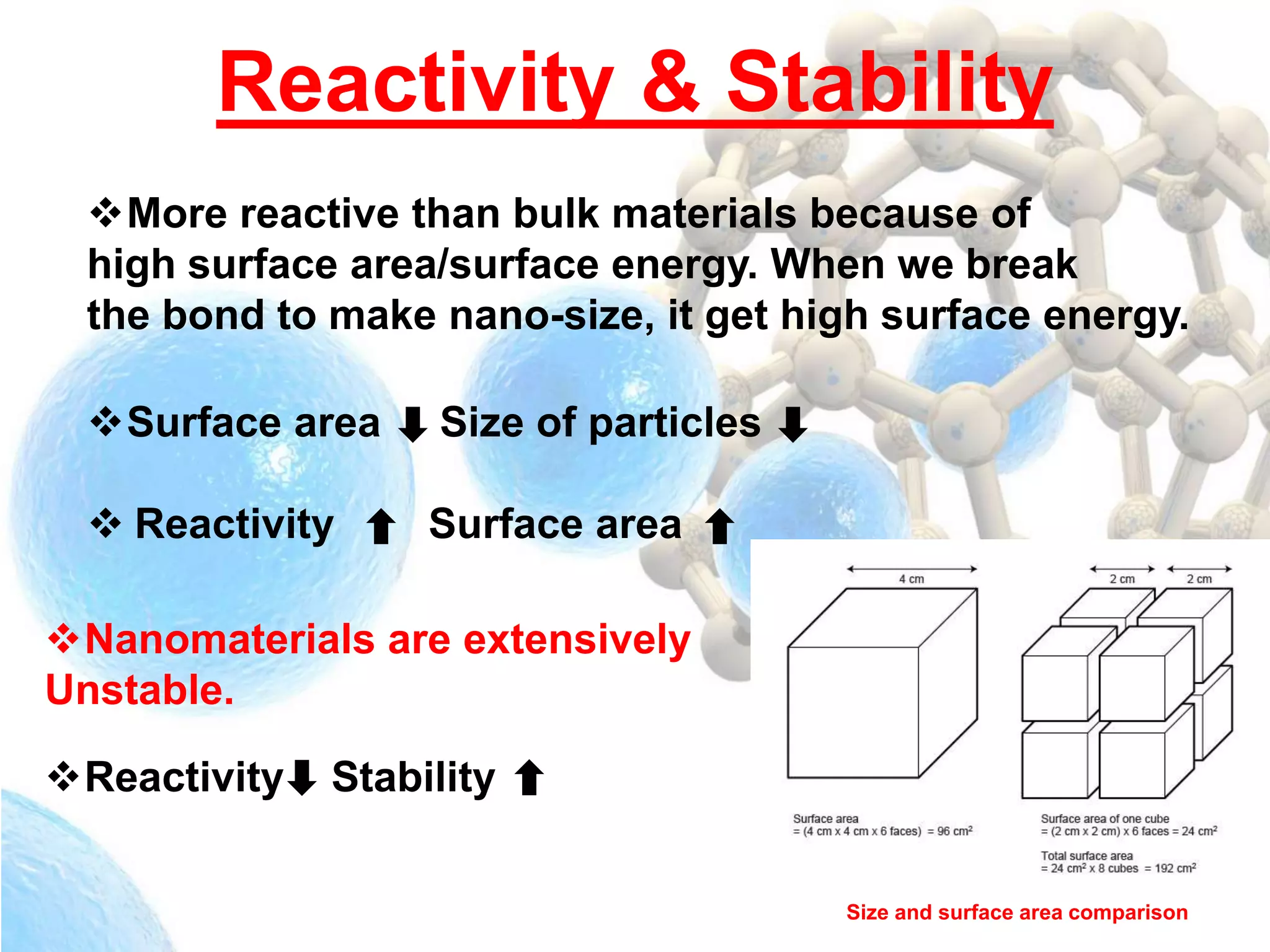
High surface area increases reactivity in nanomaterials, contributing to their instability compared to larger materials.
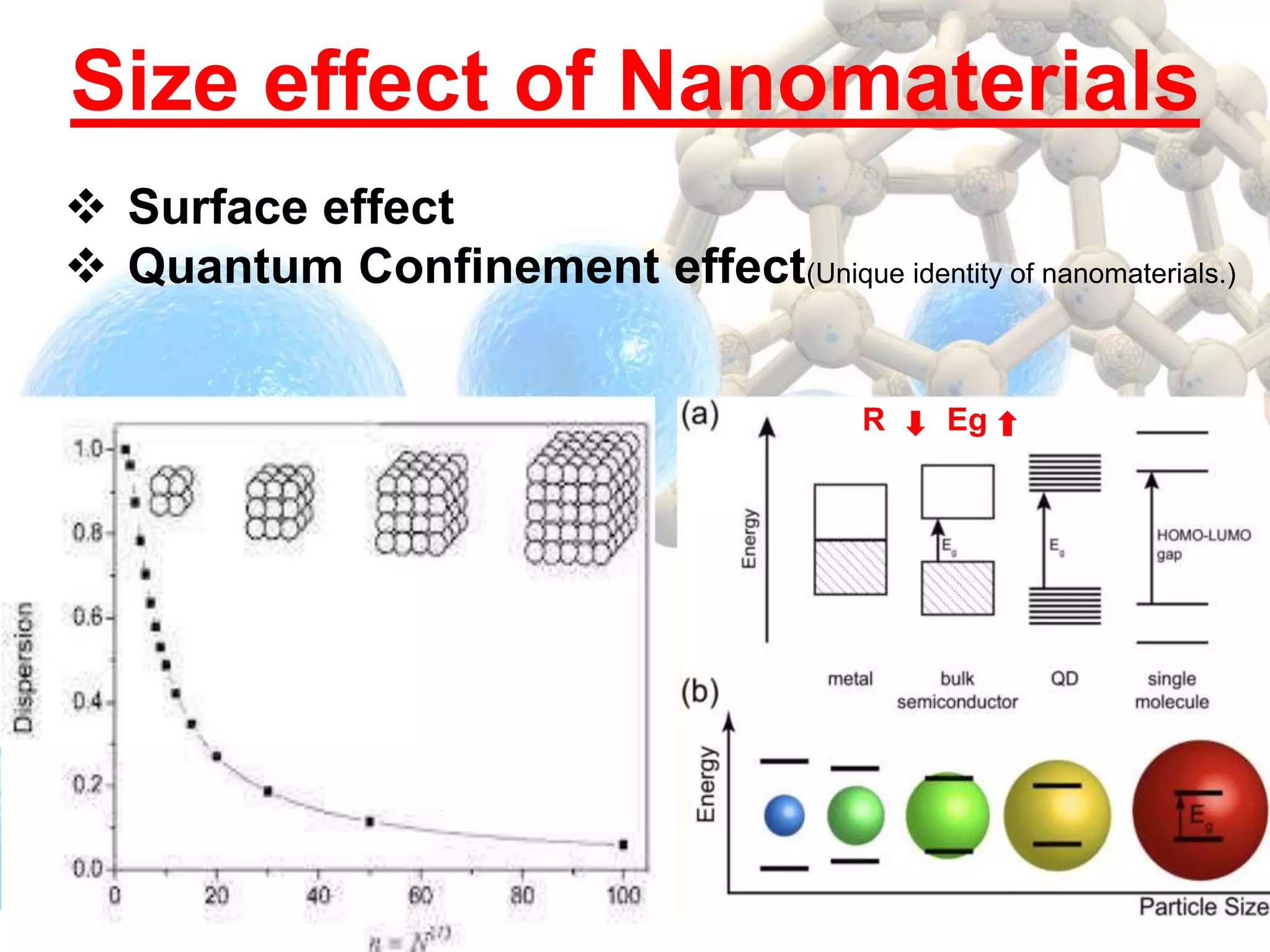
Key effects such as surface and quantum confinement impact the unique characteristics of nanomaterials.
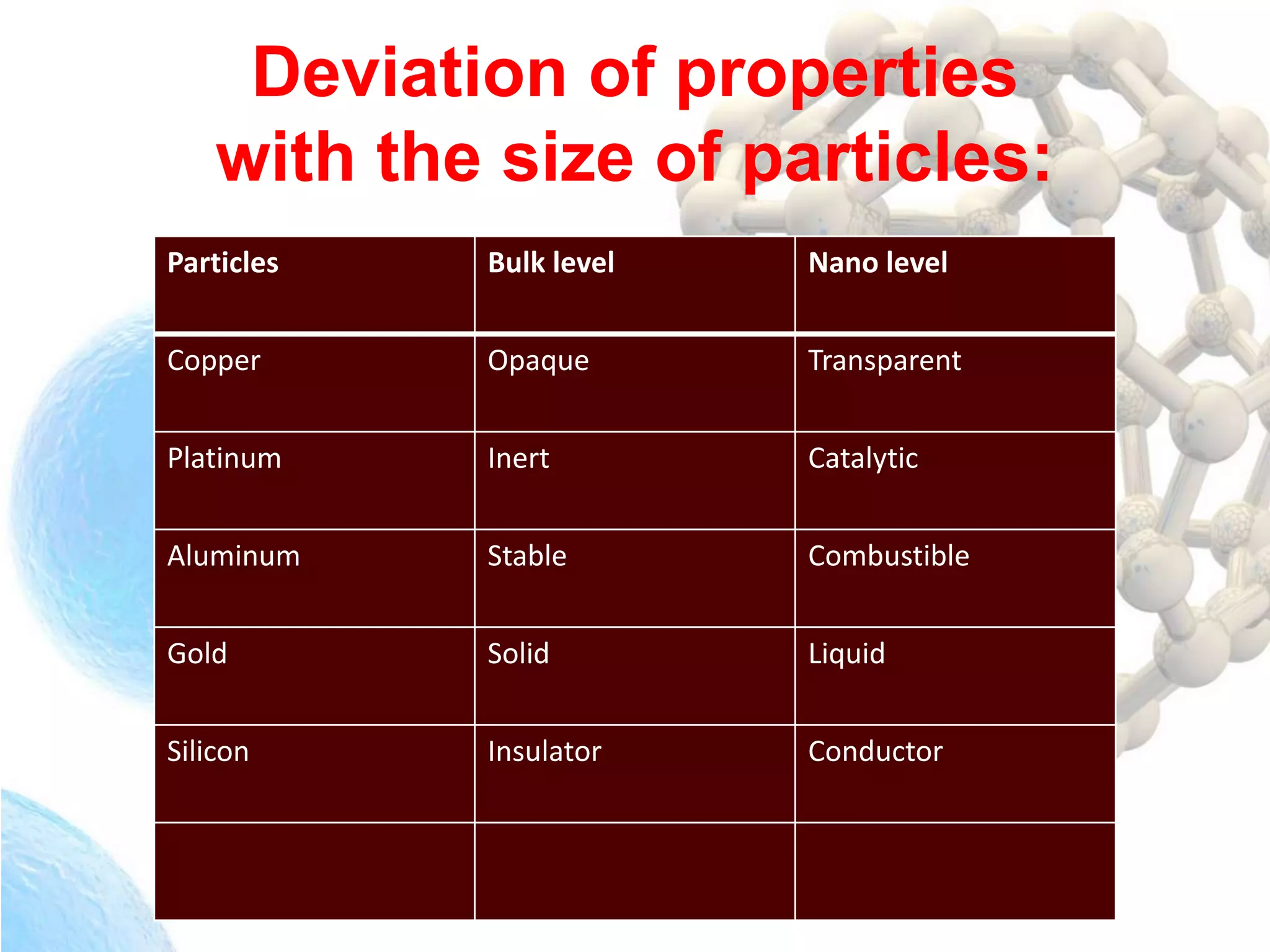
Comparison of material properties between bulk and nano levels, demonstrating significant changes.
Final thank you note, summarizing the presentation.


