Nanomaterials in Drug
Delivery
Antonio Di Martino
dimartino@ft.utb.cz
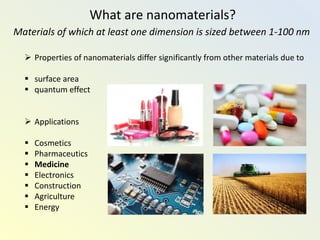
What are nanomaterials?
Materials of which at least one dimension is sized between 1-100 nm
 Properties of nanomaterials differ significantly from other materials due to
 surface area
 quantum effect
 Applications
 Cosmetics
 Pharmaceutics
 Medicine
 Electronics
 Construction
 Agriculture
 Energy
Why nanomaterials in drug delivery ?
High surface area
 bind
 adsorb
 carry
Size smaller than
cells  reach difficult access compartments
High permeability and
retention effect (EPR)
 administration of genes, proteins
 target the RE cells
 passive targeting
wide range of molecules
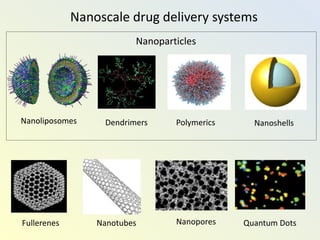
Nanoscale drug delivery systems
Nanoparticles
Nanoliposomes Dendrimers Polymerics Nanoshells
Fullerenes Nanotubes Nanopores Quantum Dots
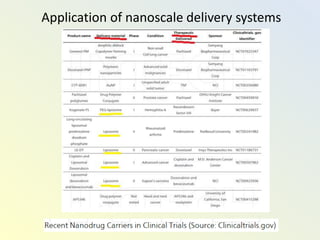
Application of nanoscale delivery systems
Liposomes
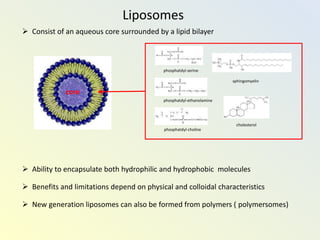
 Consist of an aqueous core surrounded by a lipid bilayer
 New generation liposomes can also be formed from polymers ( polymersomes)
 Ability to encapsulate both hydrophilic and hydrophobic molecules
 Benefits and limitations depend on physical and colloidal characteristics
phosphatdyl-ethanolamine
phosphatdyl-serine
phosphatdyl-choline
core
cholesterol
sphingomyelin
How to prepare liposomes?
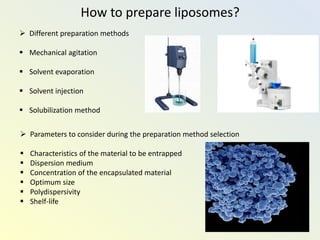
 Different preparation methods
 Mechanical agitation
 Solvent evaporation
 Solvent injection
 Solubilization method
 Parameters to consider during the preparation method selection
 Characteristics of the material to be entrapped
 Dispersion medium
 Concentration of the encapsulated material
 Optimum size
 Polydispersivity
 Shelf-life
Drug loading
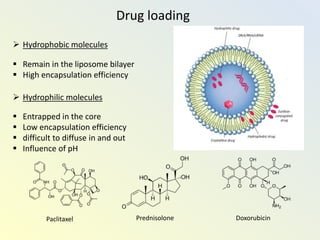
 Hydrophobic molecules
 Remain in the liposome bilayer
 High encapsulation efficiency
 Hydrophilic molecules
 Entrapped in the core
 Low encapsulation efficiency
 difficult to diffuse in and out
 Influence of pH
DoxorubicinPaclitaxel Prednisolone
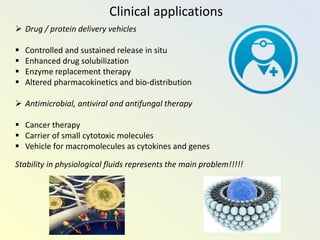
Clinical applications
 Drug / protein delivery vehicles
 Controlled and sustained release in situ
 Enhanced drug solubilization
 Enzyme replacement therapy
 Altered pharmacokinetics and bio-distribution
 Antimicrobial, antiviral and antifungal therapy
 Cancer therapy
 Carrier of small cytotoxic molecules
 Vehicle for macromolecules as cytokines and genes
Stability in physiological fluids represents the main problem!!!!!
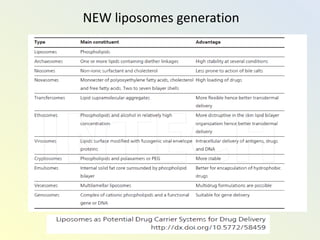
NEW liposomes generation
Conclusions
Development of nano-carriers is bringing lots of hope and
enthusiasm in the drug delivery research
Improve therapeutic efficiency
Enhance selectivity
Reduction of side effects
Ameliorate the patients quality of life

Nanomaterials in Drug Delivery

  • 1.
    Nanomaterials in Drug Delivery AntonioDi Martino dimartino@ft.utb.cz
  • 2.
    What are nanomaterials? Materialsof which at least one dimension is sized between 1-100 nm  Properties of nanomaterials differ significantly from other materials due to  surface area  quantum effect  Applications  Cosmetics  Pharmaceutics  Medicine  Electronics  Construction  Agriculture  Energy
  • 3.
    Why nanomaterials indrug delivery ? High surface area  bind  adsorb  carry Size smaller than cells  reach difficult access compartments High permeability and retention effect (EPR)  administration of genes, proteins  target the RE cells  passive targeting wide range of molecules
  • 4.
    Nanoscale drug deliverysystems Nanoparticles Nanoliposomes Dendrimers Polymerics Nanoshells Fullerenes Nanotubes Nanopores Quantum Dots
  • 5.
    Application of nanoscaledelivery systems
  • 6.
    Liposomes  Consist ofan aqueous core surrounded by a lipid bilayer  New generation liposomes can also be formed from polymers ( polymersomes)  Ability to encapsulate both hydrophilic and hydrophobic molecules  Benefits and limitations depend on physical and colloidal characteristics phosphatdyl-ethanolamine phosphatdyl-serine phosphatdyl-choline core cholesterol sphingomyelin
  • 7.
    How to prepareliposomes?  Different preparation methods  Mechanical agitation  Solvent evaporation  Solvent injection  Solubilization method  Parameters to consider during the preparation method selection  Characteristics of the material to be entrapped  Dispersion medium  Concentration of the encapsulated material  Optimum size  Polydispersivity  Shelf-life
  • 8.
    Drug loading  Hydrophobicmolecules  Remain in the liposome bilayer  High encapsulation efficiency  Hydrophilic molecules  Entrapped in the core  Low encapsulation efficiency  difficult to diffuse in and out  Influence of pH DoxorubicinPaclitaxel Prednisolone
  • 9.
    Clinical applications  Drug/ protein delivery vehicles  Controlled and sustained release in situ  Enhanced drug solubilization  Enzyme replacement therapy  Altered pharmacokinetics and bio-distribution  Antimicrobial, antiviral and antifungal therapy  Cancer therapy  Carrier of small cytotoxic molecules  Vehicle for macromolecules as cytokines and genes Stability in physiological fluids represents the main problem!!!!!
  • 10.
  • 11.
    Conclusions Development of nano-carriersis bringing lots of hope and enthusiasm in the drug delivery research Improve therapeutic efficiency Enhance selectivity Reduction of side effects Ameliorate the patients quality of life