Downloaded 236 times
- 1 / 29
- 2 / 29
- 3 / 29
- 4 / 29
- 5 / 29
- 6 / 29
- 7 / 29
- 8 / 29
- 9 / 29
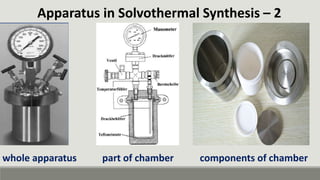
- 10 / 29
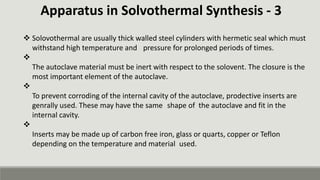
- 11 / 29
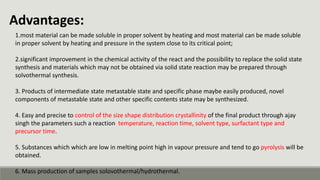
- 12 / 29

- 13 / 29
- 14 / 29
- 15 / 29
- 16 / 29
- 17 / 29
- 18 / 29
 Most read
- 19 / 29
 Most read
- 20 / 29
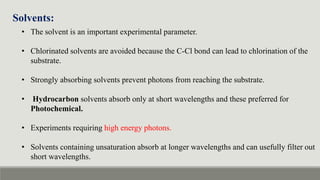
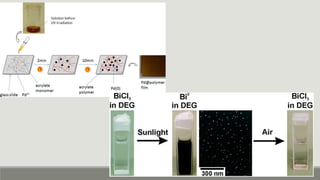
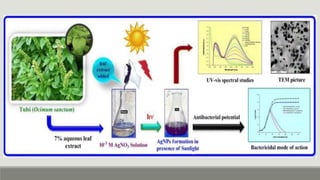
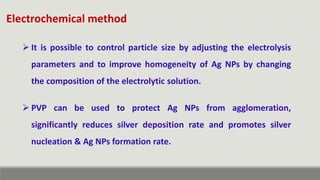
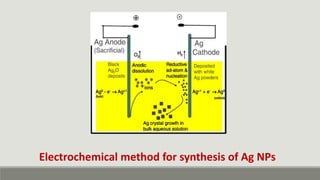
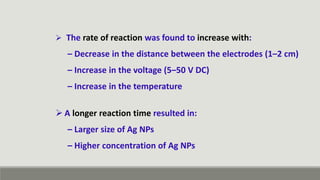
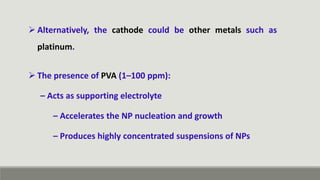
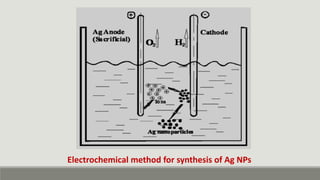


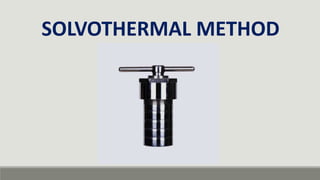
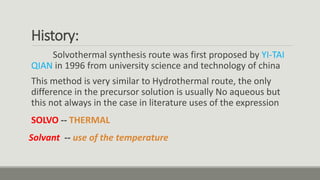
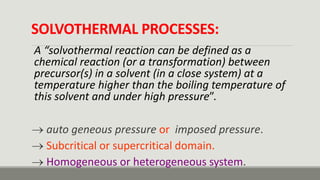
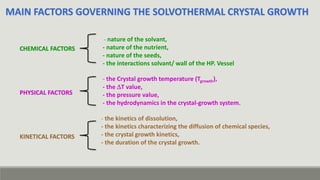
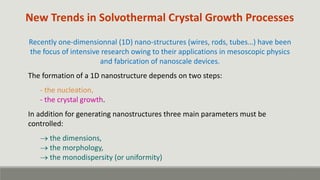
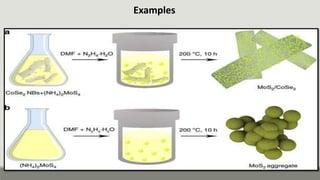
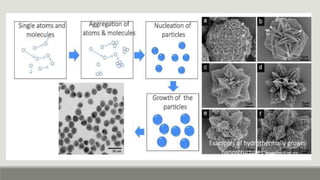
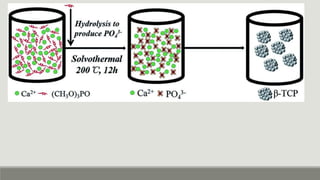
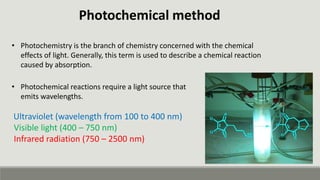
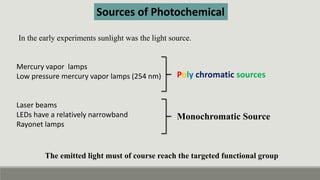
The document summarizes three common methods for synthesizing nanomaterials: solvothermal, photochemical, and electrochemical. The solvothermal method involves chemical reactions between precursors in a solvent at high temperature and pressure. Key factors like the solvent, temperature, and duration can control the size, morphology, and uniformity of synthesized nanostructures. The photochemical method uses light sources like UV lamps to initiate chemical reactions. The solvent and wavelength of light are important parameters. The electrochemical method applies a voltage between electrodes in an electrolytic solution to reduce metal ions and form nanoparticles. Parameters like voltage, temperature, electrolyte composition and reaction time can influence nanoparticle size and concentration.


