Synthesis and Characterization of
nanoparticle
By Mohd. Azam
Mentor: Prof. Ravindra Dhar
Center of Material Science
(University of Allahabad)
History of Nanomaterials
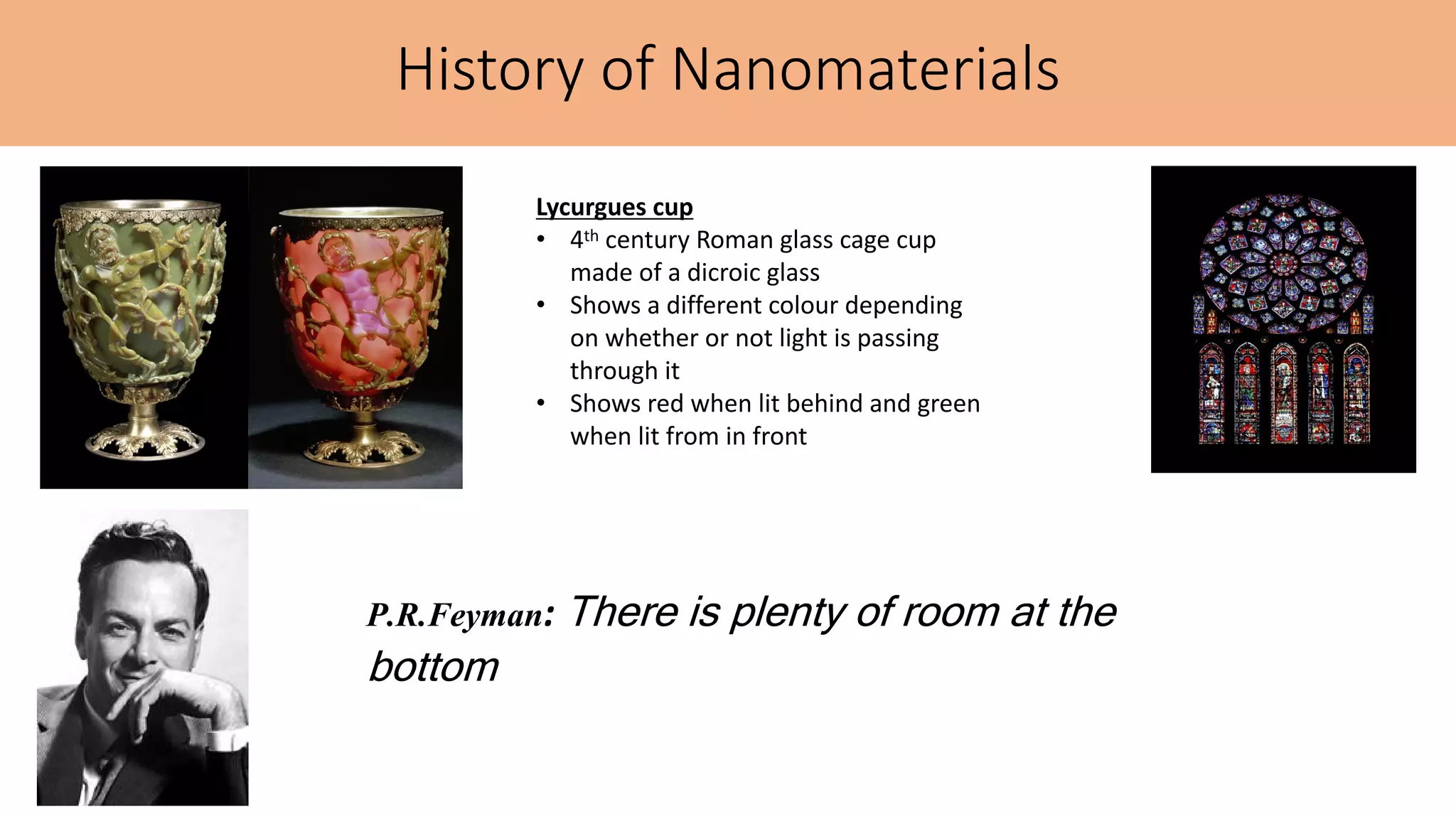
Lycurgues cup
• 4th century Roman glass cage cup
made of a dicroic glass
• Shows a different colour depending
on whether or not light is passing
through it
• Shows red when lit behind and green
when lit from in front
P.R.Feyman: There is plenty of room at the
bottom
Classification of Nanostructured Materials(NSMs)
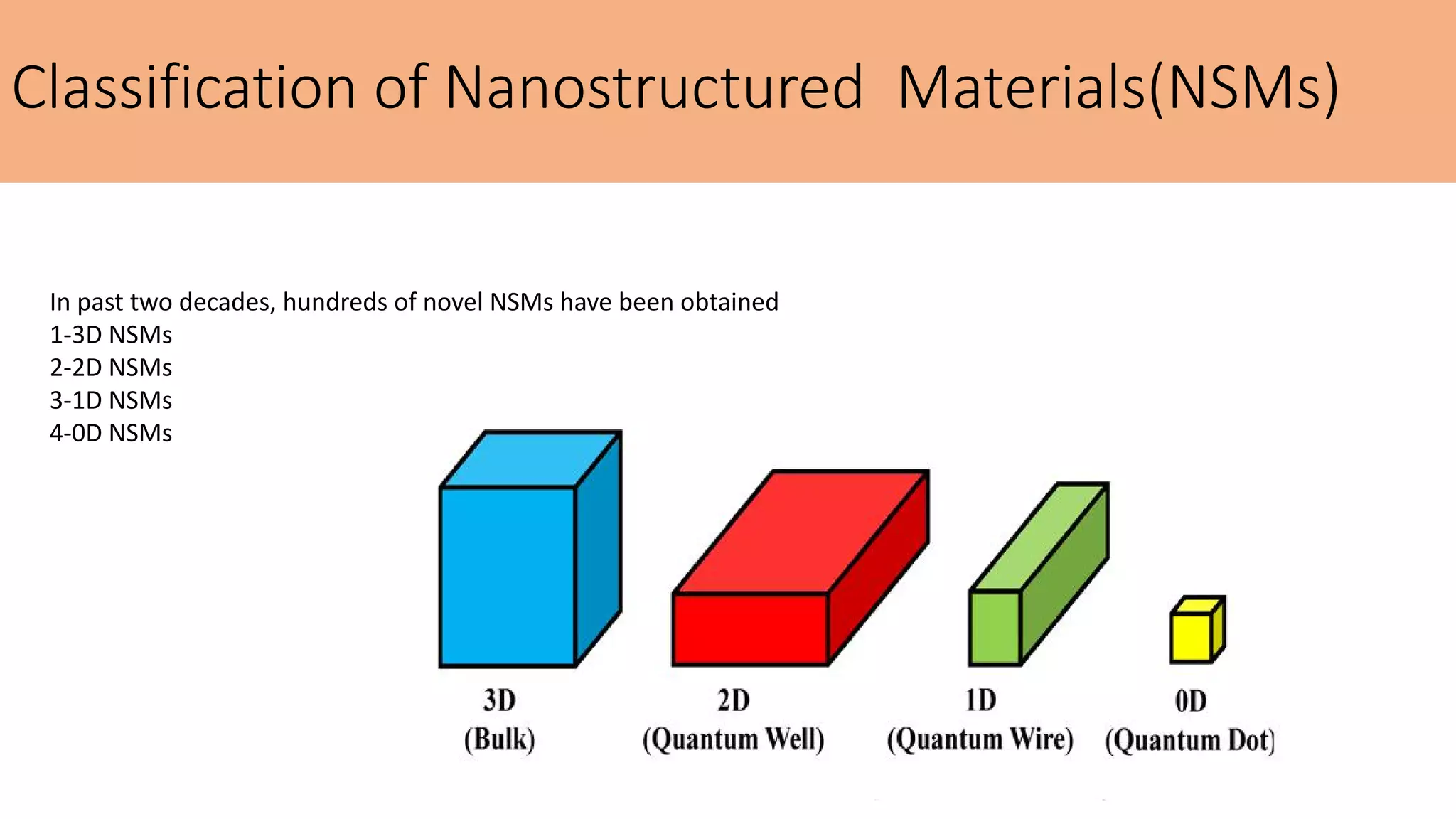
In past two decades, hundreds of novel NSMs have been obtained
1-3D NSMs
2-2D NSMs
3-1D NSMs
4-0D NSMs
Properties of Nano Particles
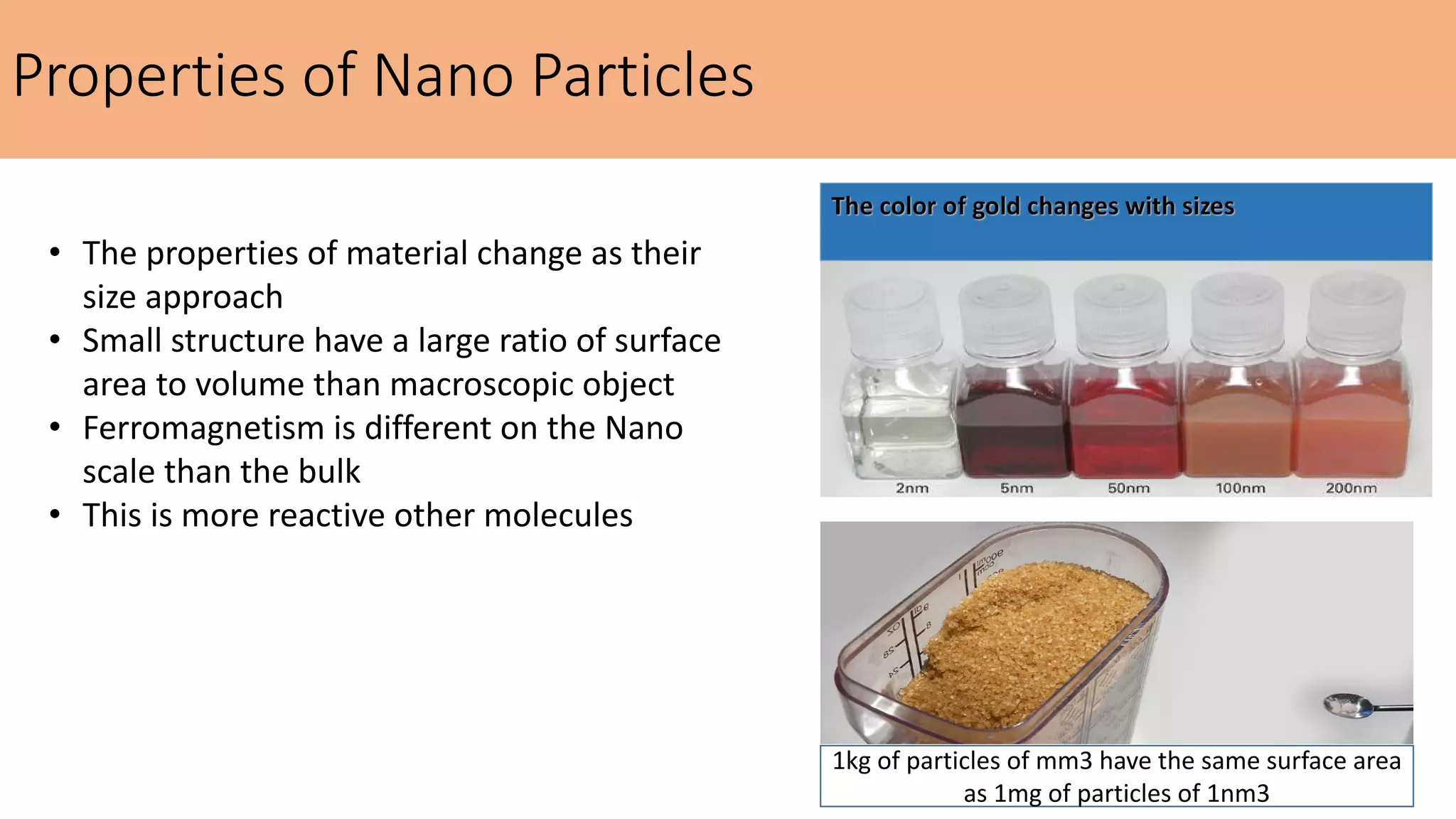
• The properties of material change as their
size approach
• Small structure have a large ratio of surface
area to volume than macroscopic object
• Ferromagnetism is different on the Nano
scale than the bulk
• This is more reactive other molecules
1kg of particles of mm3 have the same surface area
as 1mg of particles of 1nm3
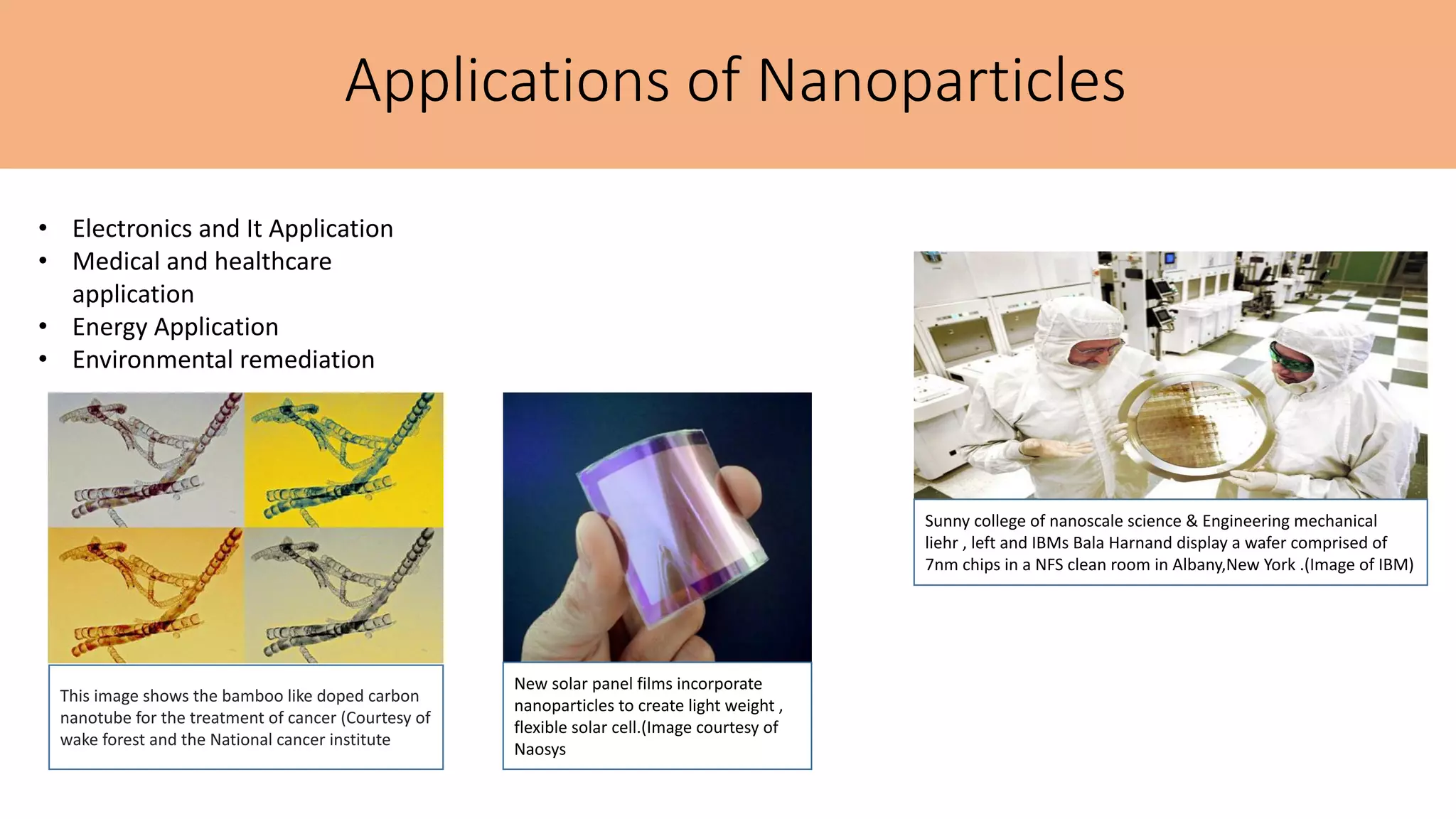
Applications of Nanoparticles
• Electronics and It Application
• Medical and healthcare
application
• Energy Application
• Environmental remediation
Sunny college of nanoscale science & Engineering mechanical
liehr , left and IBMs Bala Harnand display a wafer comprised of
7nm chips in a NFS clean room in Albany,New York .(Image of IBM)
This image shows the bamboo like doped carbon
nanotube for the treatment of cancer (Courtesy of
wake forest and the National cancer institute
New solar panel films incorporate
nanoparticles to create light weight ,
flexible solar cell.(Image courtesy of
Naosys
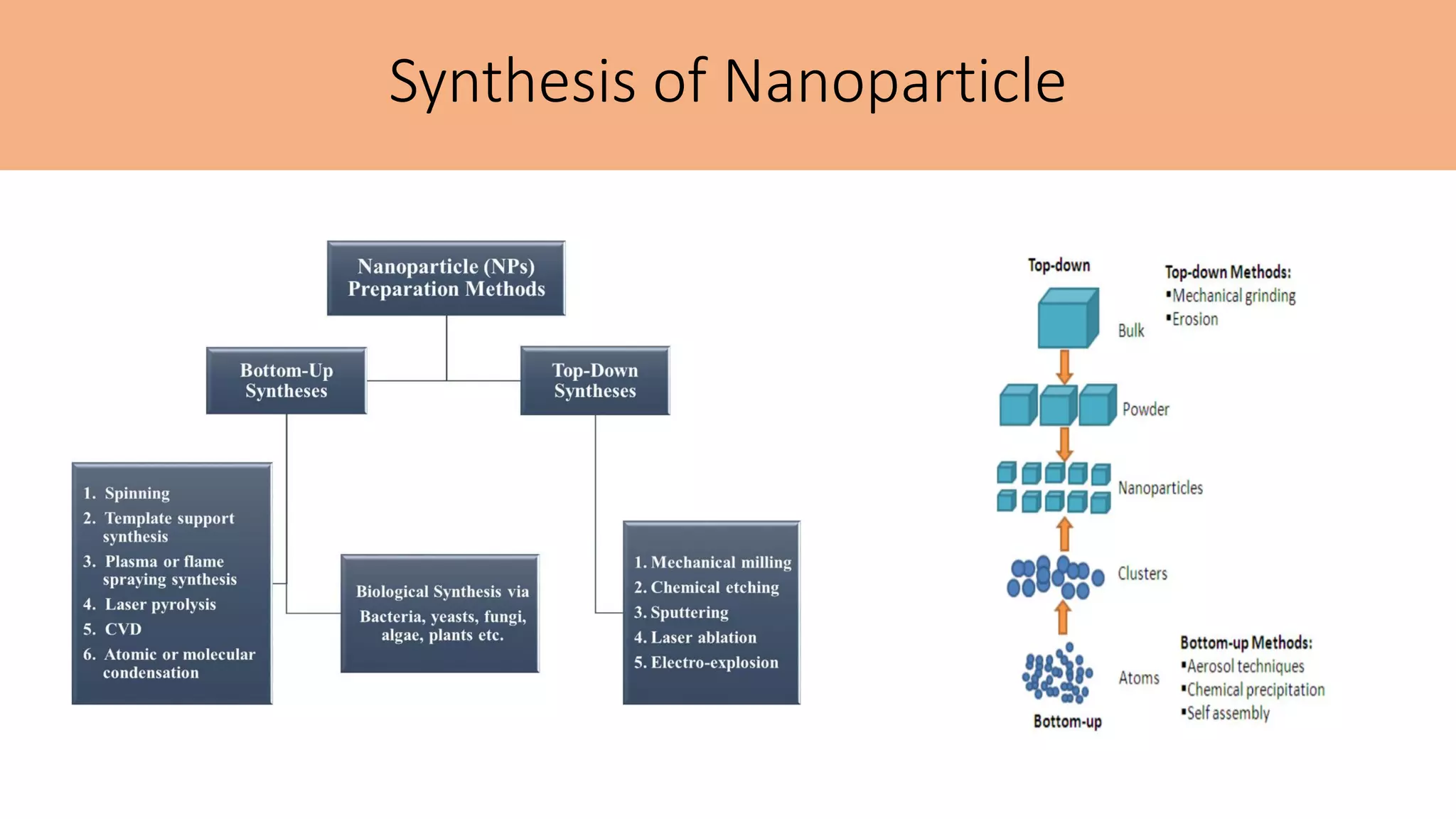
Synthesis of Nanoparticle
There are some features to consider that are
common to all the methods
• control of particle size, size distribution, shape, crystal structure and
composition distribution
• improvement of the purity of nanoparticles (lower impurities)
• control of aggregation
• stabilization of physical properties, structures and reactants
• higher reproducibility
• higher mass production, scale-up and lower costs
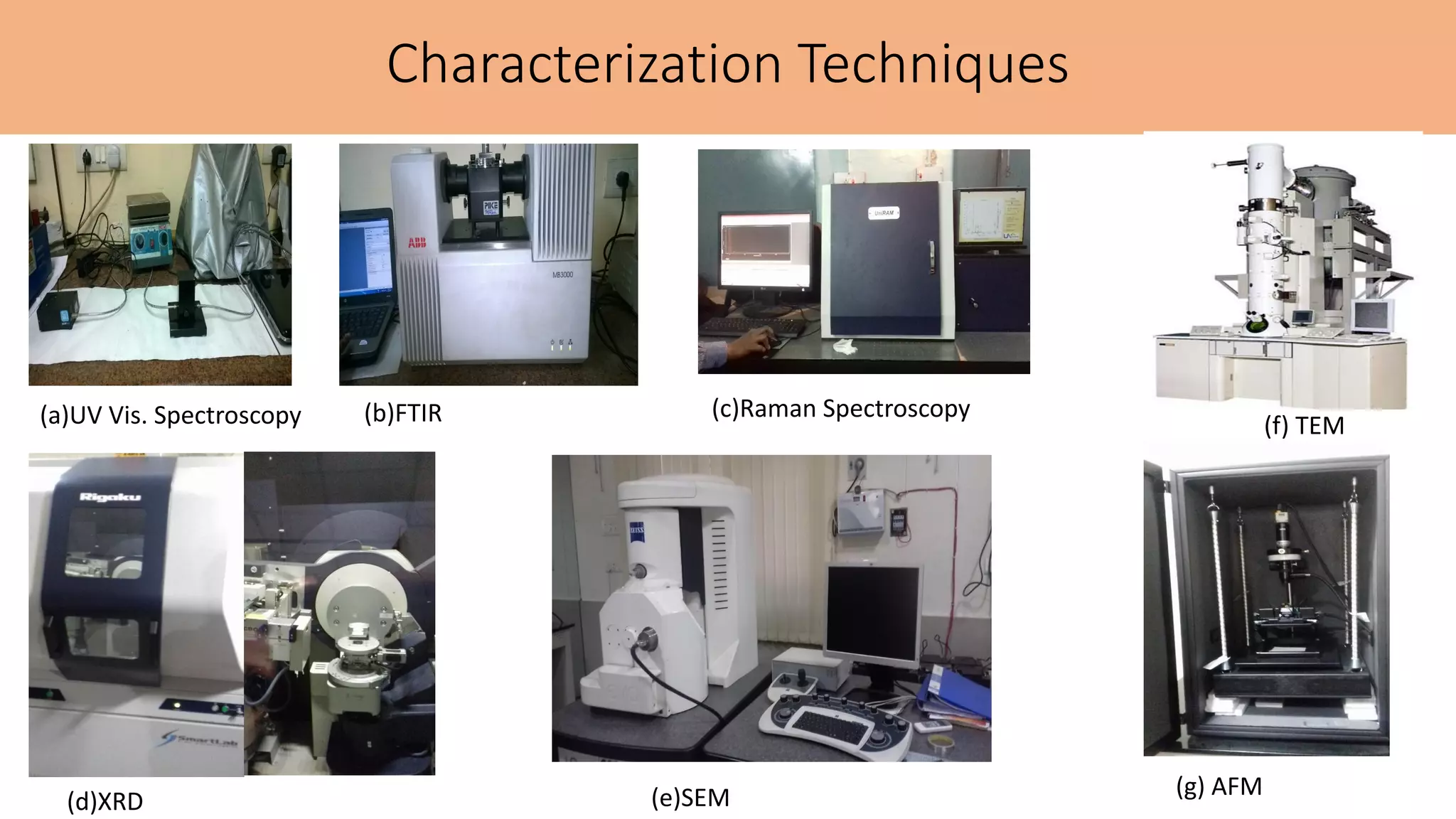
Characterization Techniques
(a)UV Vis. Spectroscopy (b)FTIR (c)Raman Spectroscopy
(d)XRD (e)SEM (g) AFM
(f) TEM
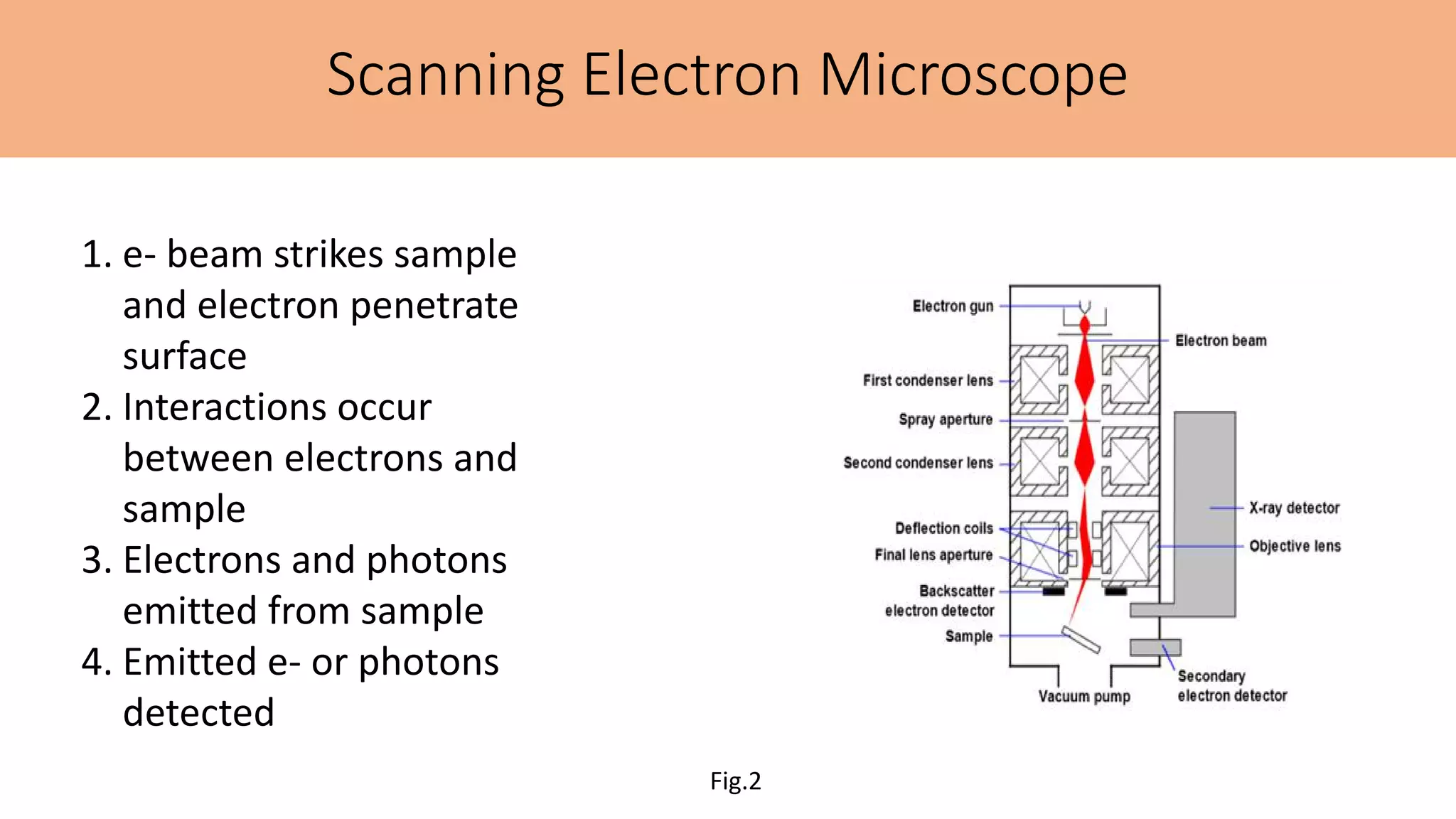
Scanning Electron Microscope
1. e- beam strikes sample
and electron penetrate
surface
2. Interactions occur
between electrons and
sample
3. Electrons and photons
emitted from sample
4. Emitted e- or photons
detected
Fig.2
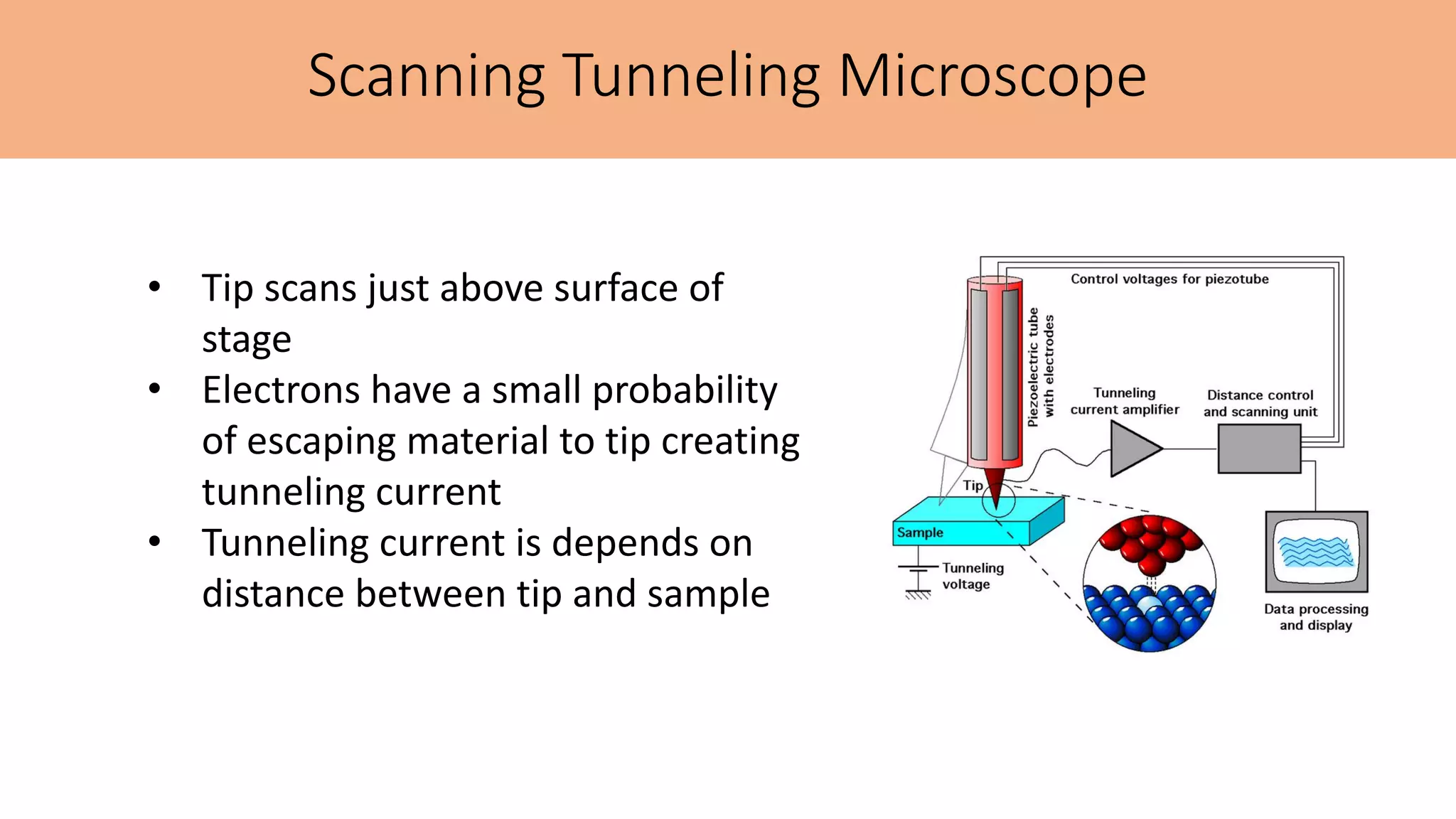
Scanning Tunneling Microscope
• Tip scans just above surface of
stage
• Electrons have a small probability
of escaping material to tip creating
tunneling current
• Tunneling current is depends on
distance between tip and sample
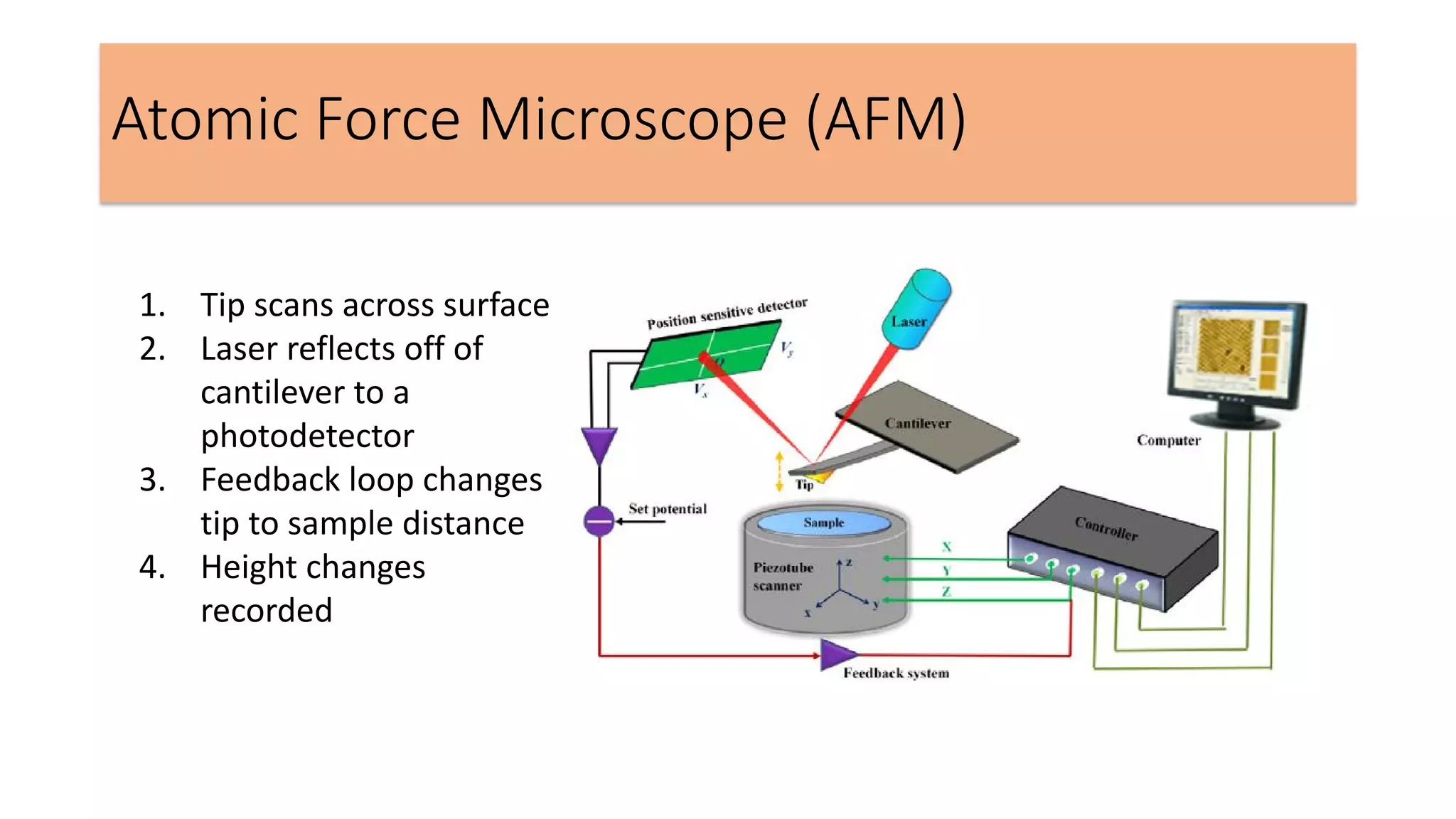
Atomic Force Microscope (AFM)
1. Tip scans across surface
2. Laser reflects off of
cantilever to a
photodetector
3. Feedback loop changes
tip to sample distance
4. Height changes
recorded
References
Slide 1 1 Vert, Michel; DHellwich, Karl-Heinz; Hess, Michael; Hodge, Philip; Kubisa, Przemyslaw; Rinaudo,
Marguerite; Schuéoi, Yoshiharu;, François (2012)
2 Granqvist, C.; Buhrman, R.; Wyns, J.; Sievers, A. (1976). "Far-Infrared Absorption in Ultrafine Al
Particles". Physical Review Letters. 37 (10): 625–629
3 http://www.britishmuseum.org/research/collection_online/collection_object_details/collection
_image_gallery.aspx?assetId=36154001&objectId=61219&partId=1#more-views
4 https://upload.wikimedia.org/wikipedia/commons/3/31/Chartres_-_cath%C3%A9drale_-
_rosace_nord.jpg
5 https://www.nobelprize.org/nobel_prizes/physics/laureates/1965/feynman-bio.html
Slide 2 1 J.N. Tiwari et al. / Progress in Materials Science 57 (2012) 724–803
2 http://www.mdpi.com/1996-1944/6/12/5763/htm
Slide 3 https://en.wikipedia.org/wiki/Nanoparticle#/media/File:Vergelijk_nanodeeltje.jpg
slide4 https://www.nano.gov/you/nanotechnology-benefits
References
Slide 5 https://ars.els-cdn.com/content/image/1-s2.0-S1878535217300990-gr14_lrg.jpg
Slide 7 https://ysjournal.com/wp-content/uploads/2015/09/Transmission-Electron-
Microscope.jpg
Slide 8 https://www.nanoscience.com/files/1515/1018/4279/Schematic-of-scanning-electron-
microscope.jpg
https://www.nanoscience.com/technology/sem-technology/how-sem-works
Slide 9 http://www.iap.tuwien.ac.at/www/surface/stm_gallery/stm_schematic
https://www.nobelprize.org/educational/physics/microscopes/scanning
Slide 10 J Phys. D:Appl. Phys.47(2014) 013001
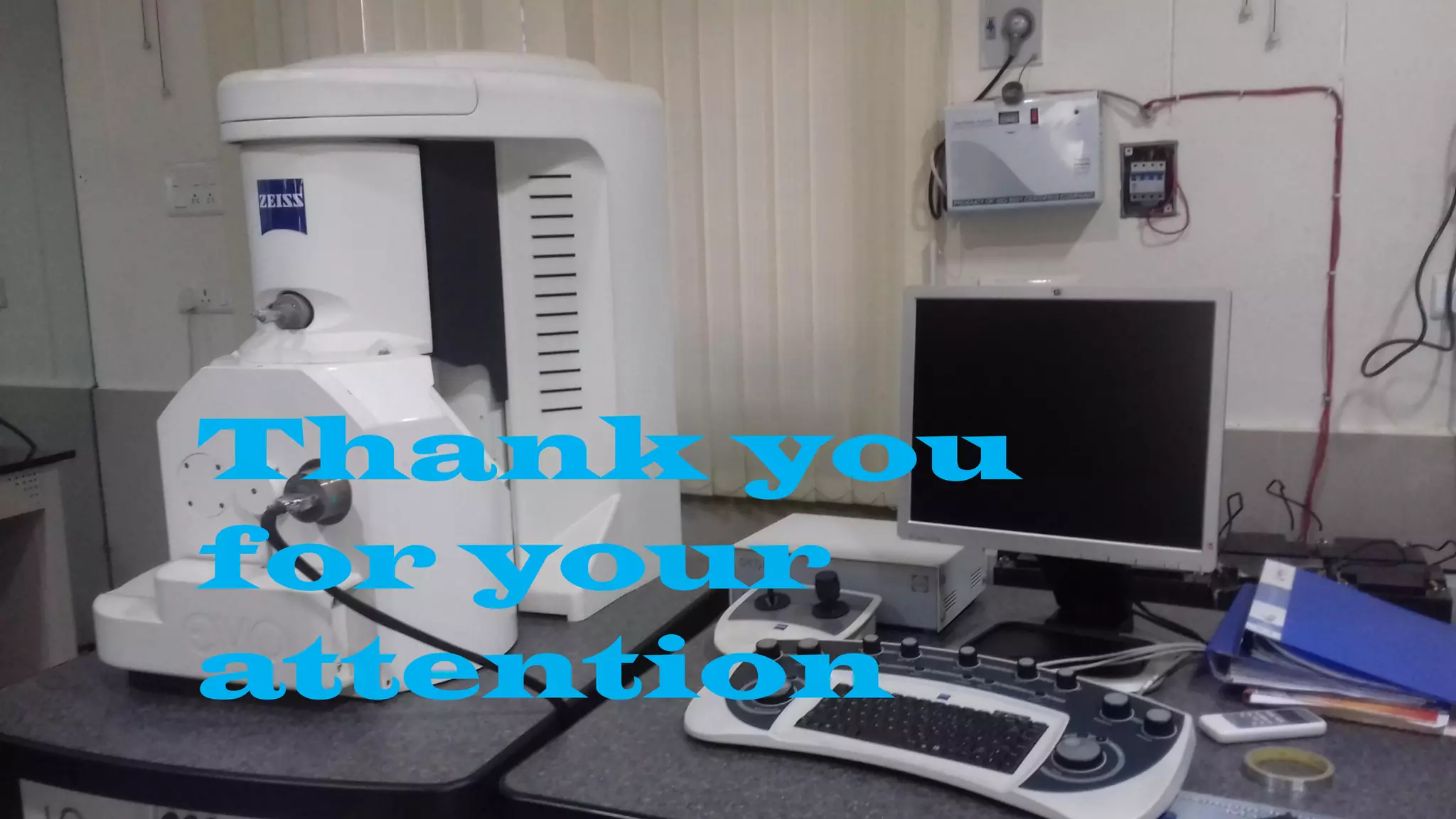
Thank you
for your
attention

Synthesis and Characterization of nanoparticle

  • 1.
    Synthesis and Characterizationof nanoparticle By Mohd. Azam Mentor: Prof. Ravindra Dhar Center of Material Science (University of Allahabad)
  • 2.
    History of Nanomaterials Lycurguescup • 4th century Roman glass cage cup made of a dicroic glass • Shows a different colour depending on whether or not light is passing through it • Shows red when lit behind and green when lit from in front P.R.Feyman: There is plenty of room at the bottom
  • 3.
    Classification of NanostructuredMaterials(NSMs) In past two decades, hundreds of novel NSMs have been obtained 1-3D NSMs 2-2D NSMs 3-1D NSMs 4-0D NSMs
  • 4.
    Properties of NanoParticles • The properties of material change as their size approach • Small structure have a large ratio of surface area to volume than macroscopic object • Ferromagnetism is different on the Nano scale than the bulk • This is more reactive other molecules 1kg of particles of mm3 have the same surface area as 1mg of particles of 1nm3
  • 5.
    Applications of Nanoparticles •Electronics and It Application • Medical and healthcare application • Energy Application • Environmental remediation Sunny college of nanoscale science & Engineering mechanical liehr , left and IBMs Bala Harnand display a wafer comprised of 7nm chips in a NFS clean room in Albany,New York .(Image of IBM) This image shows the bamboo like doped carbon nanotube for the treatment of cancer (Courtesy of wake forest and the National cancer institute New solar panel films incorporate nanoparticles to create light weight , flexible solar cell.(Image courtesy of Naosys
  • 6.
  • 7.
    There are somefeatures to consider that are common to all the methods • control of particle size, size distribution, shape, crystal structure and composition distribution • improvement of the purity of nanoparticles (lower impurities) • control of aggregation • stabilization of physical properties, structures and reactants • higher reproducibility • higher mass production, scale-up and lower costs
  • 8.
    Characterization Techniques (a)UV Vis.Spectroscopy (b)FTIR (c)Raman Spectroscopy (d)XRD (e)SEM (g) AFM (f) TEM
  • 9.
    Scanning Electron Microscope 1.e- beam strikes sample and electron penetrate surface 2. Interactions occur between electrons and sample 3. Electrons and photons emitted from sample 4. Emitted e- or photons detected Fig.2
  • 10.
    Scanning Tunneling Microscope •Tip scans just above surface of stage • Electrons have a small probability of escaping material to tip creating tunneling current • Tunneling current is depends on distance between tip and sample
  • 11.
    Atomic Force Microscope(AFM) 1. Tip scans across surface 2. Laser reflects off of cantilever to a photodetector 3. Feedback loop changes tip to sample distance 4. Height changes recorded
  • 12.
    References Slide 1 1Vert, Michel; DHellwich, Karl-Heinz; Hess, Michael; Hodge, Philip; Kubisa, Przemyslaw; Rinaudo, Marguerite; Schuéoi, Yoshiharu;, François (2012) 2 Granqvist, C.; Buhrman, R.; Wyns, J.; Sievers, A. (1976). "Far-Infrared Absorption in Ultrafine Al Particles". Physical Review Letters. 37 (10): 625–629 3 http://www.britishmuseum.org/research/collection_online/collection_object_details/collection _image_gallery.aspx?assetId=36154001&objectId=61219&partId=1#more-views 4 https://upload.wikimedia.org/wikipedia/commons/3/31/Chartres_-_cath%C3%A9drale_- _rosace_nord.jpg 5 https://www.nobelprize.org/nobel_prizes/physics/laureates/1965/feynman-bio.html Slide 2 1 J.N. Tiwari et al. / Progress in Materials Science 57 (2012) 724–803 2 http://www.mdpi.com/1996-1944/6/12/5763/htm Slide 3 https://en.wikipedia.org/wiki/Nanoparticle#/media/File:Vergelijk_nanodeeltje.jpg slide4 https://www.nano.gov/you/nanotechnology-benefits
  • 13.
    References Slide 5 https://ars.els-cdn.com/content/image/1-s2.0-S1878535217300990-gr14_lrg.jpg Slide7 https://ysjournal.com/wp-content/uploads/2015/09/Transmission-Electron- Microscope.jpg Slide 8 https://www.nanoscience.com/files/1515/1018/4279/Schematic-of-scanning-electron- microscope.jpg https://www.nanoscience.com/technology/sem-technology/how-sem-works Slide 9 http://www.iap.tuwien.ac.at/www/surface/stm_gallery/stm_schematic https://www.nobelprize.org/educational/physics/microscopes/scanning Slide 10 J Phys. D:Appl. Phys.47(2014) 013001
  • 14.