IB Topics 3 and 7
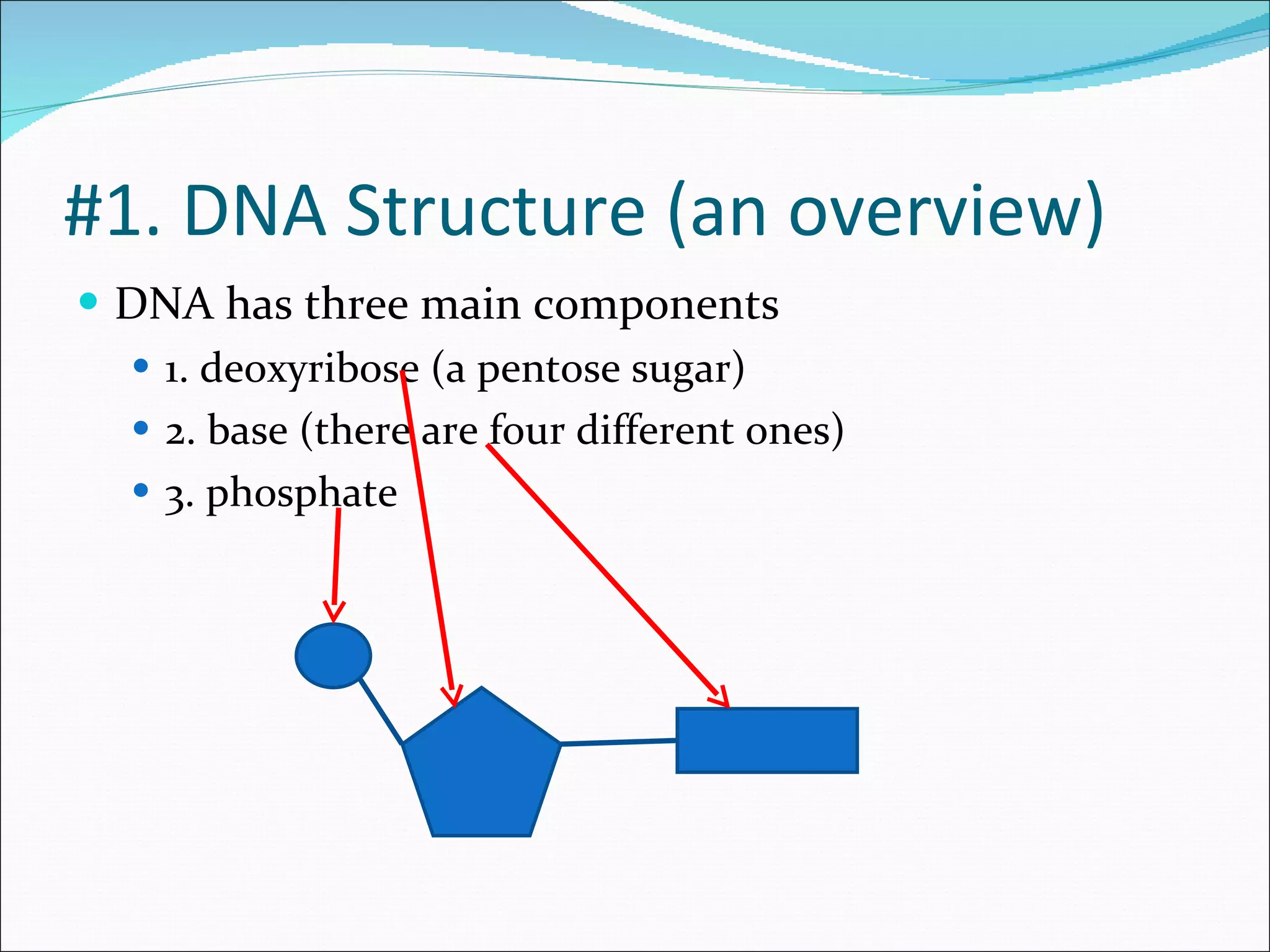
#1. DNA Structure (an overview) DNA has three main components 1. deoxyribose (a pentose sugar) 2. base (there are four different ones) 3. phosphate
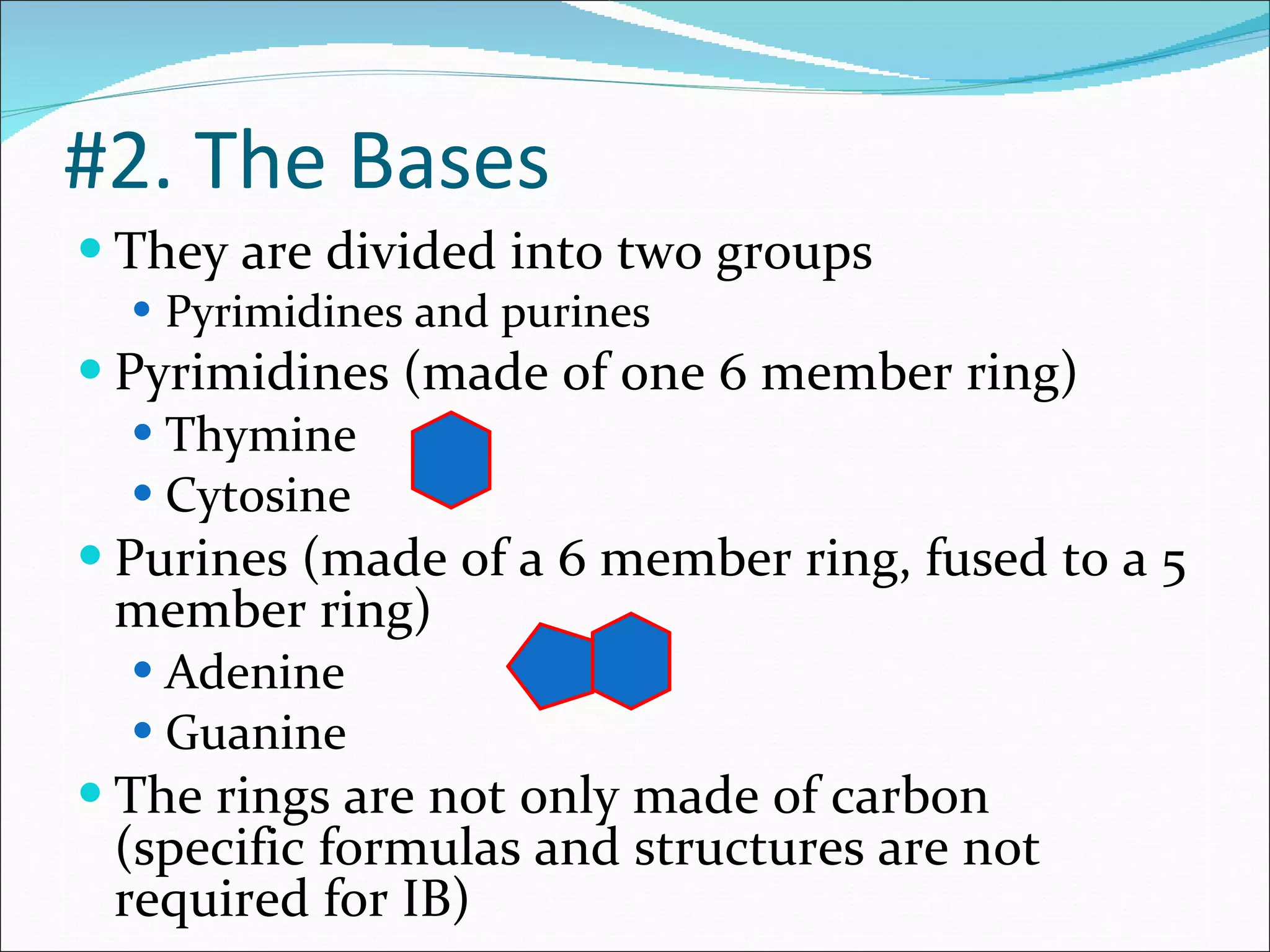
#2. The Bases They are divided into two groups Pyrimidines and purines Pyrimidines (made of one 6 member ring) Thymine Cytosine Purines (made of a 6 member ring, fused to a 5 member ring)  Adenine Guanine The rings are not only made of carbon (specific formulas and structures are not required for IB)
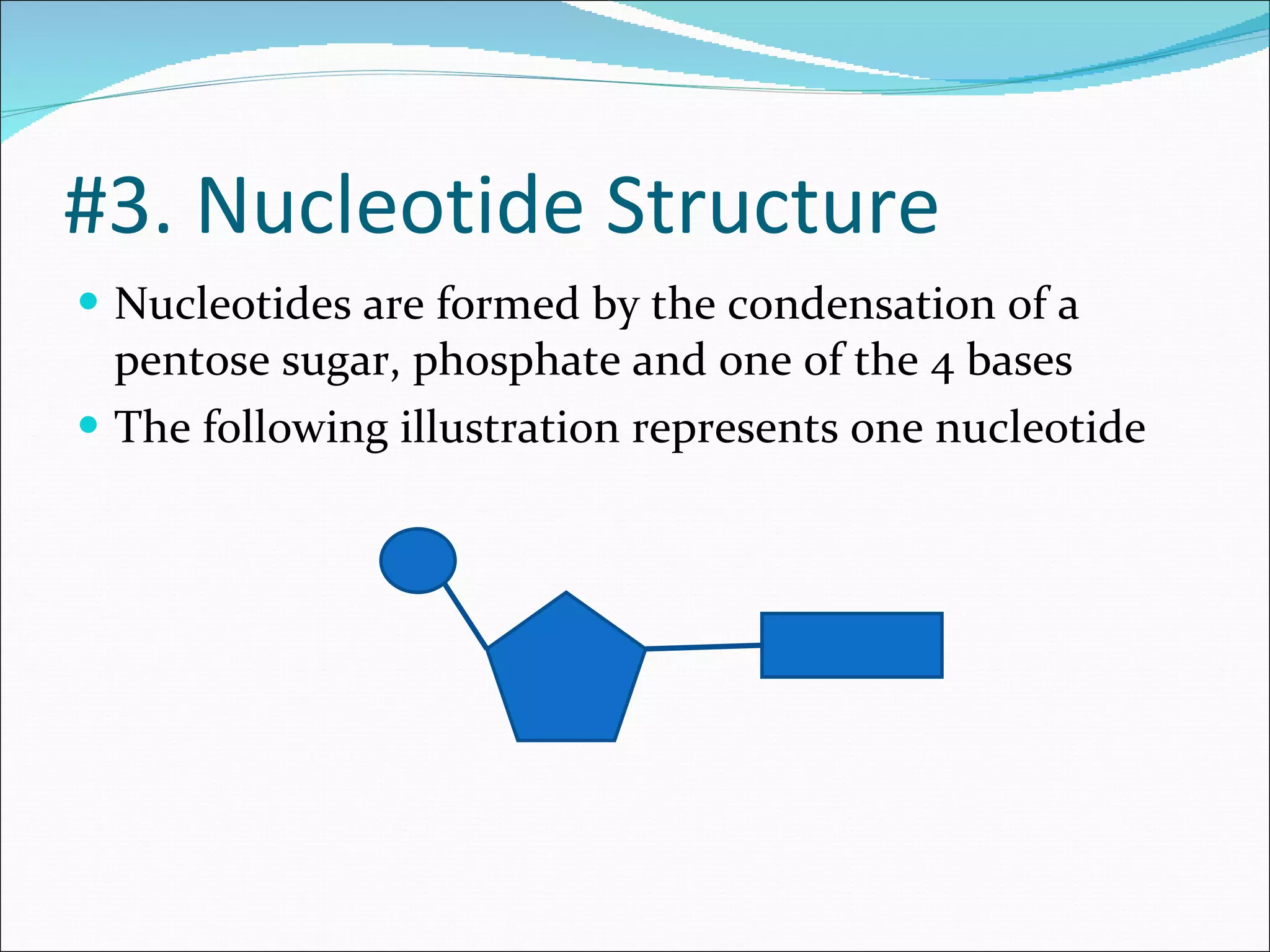
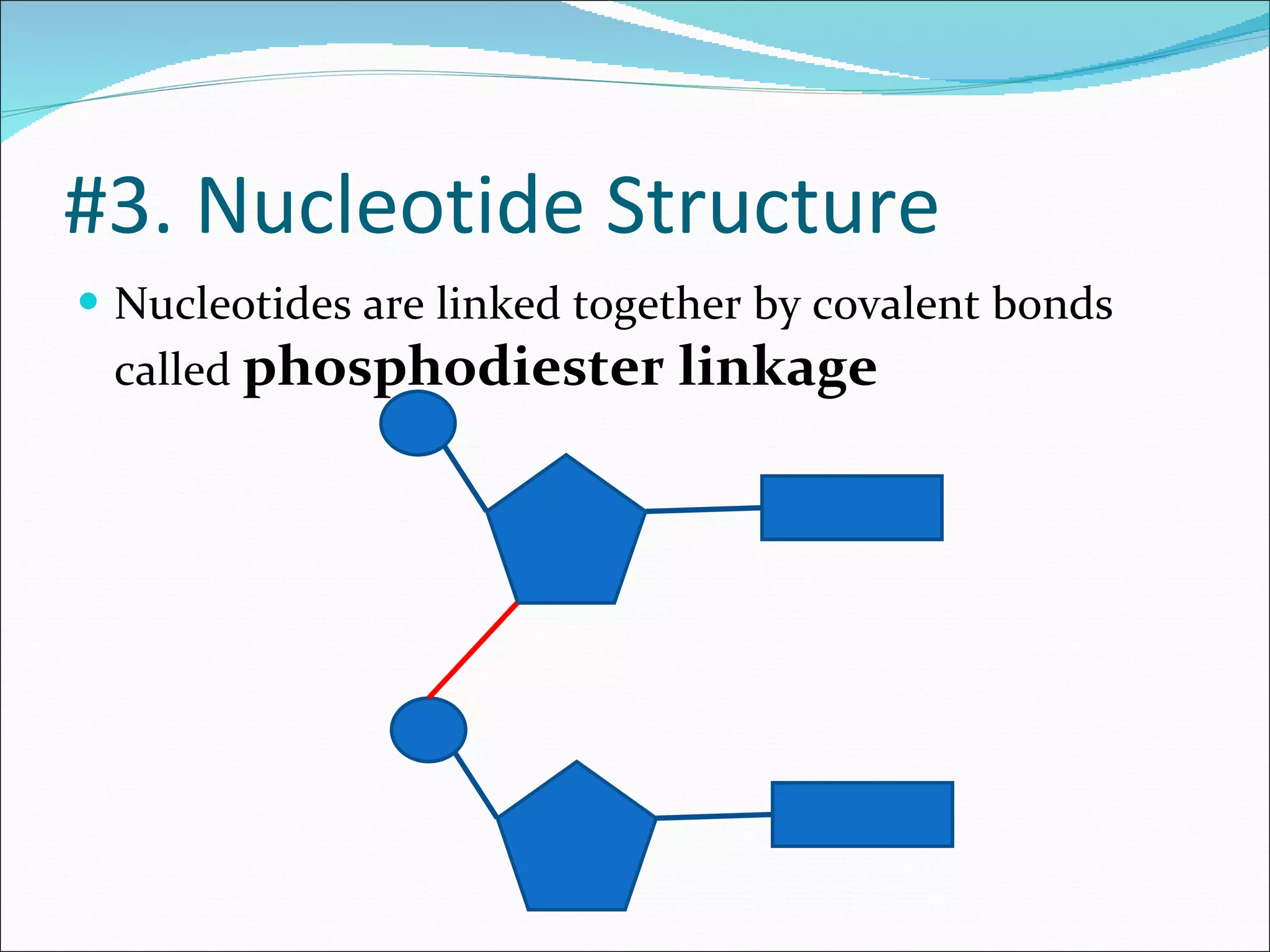
#3. Nucleotide Structure Nucleotides are formed by the condensation of a pentose sugar, phosphate and one of the 4 bases The following illustration represents one nucleotide
Nucleotides are linked together by covalent bonds called  phosphodiester linkage #3. Nucleotide Structure
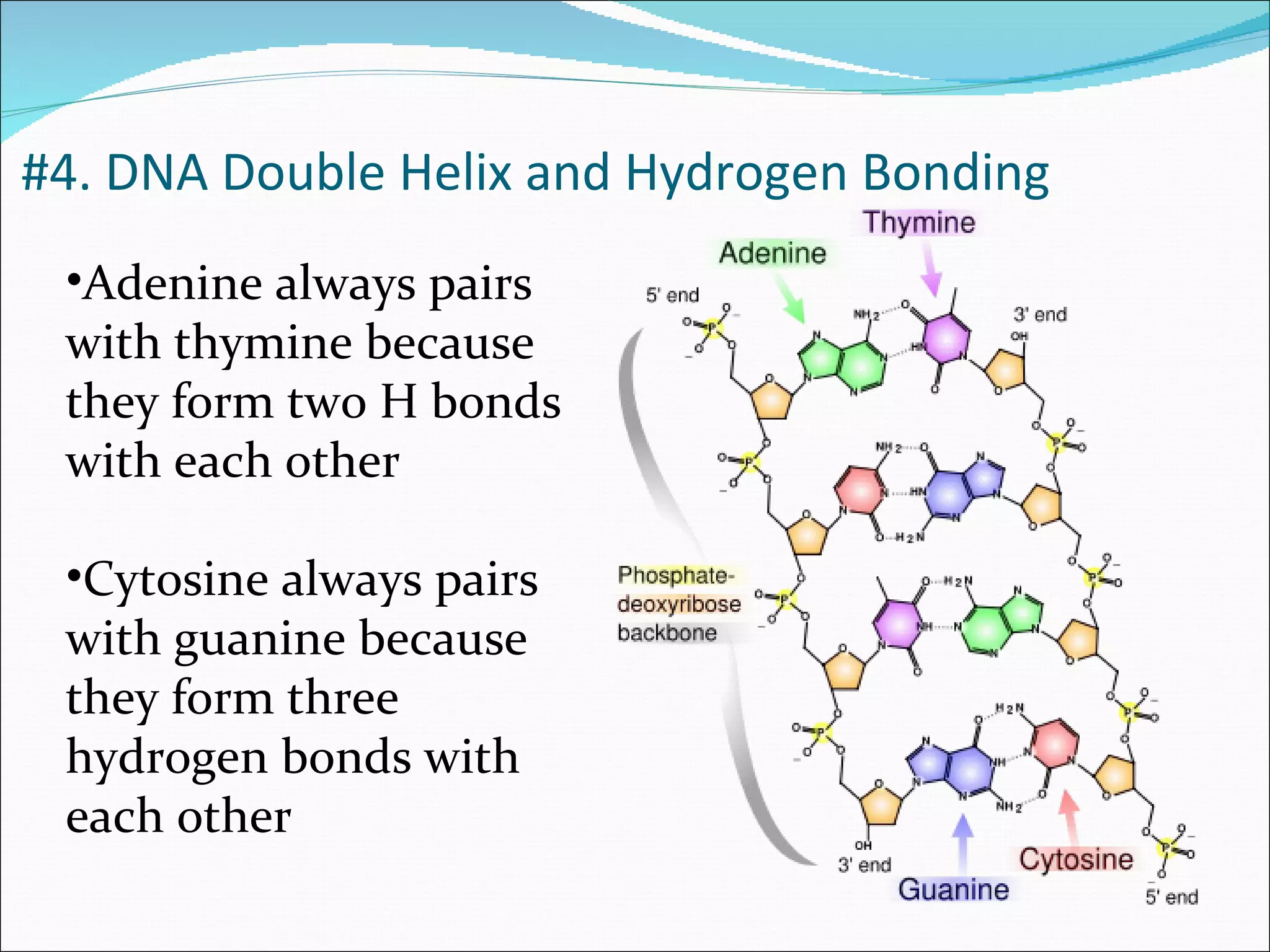
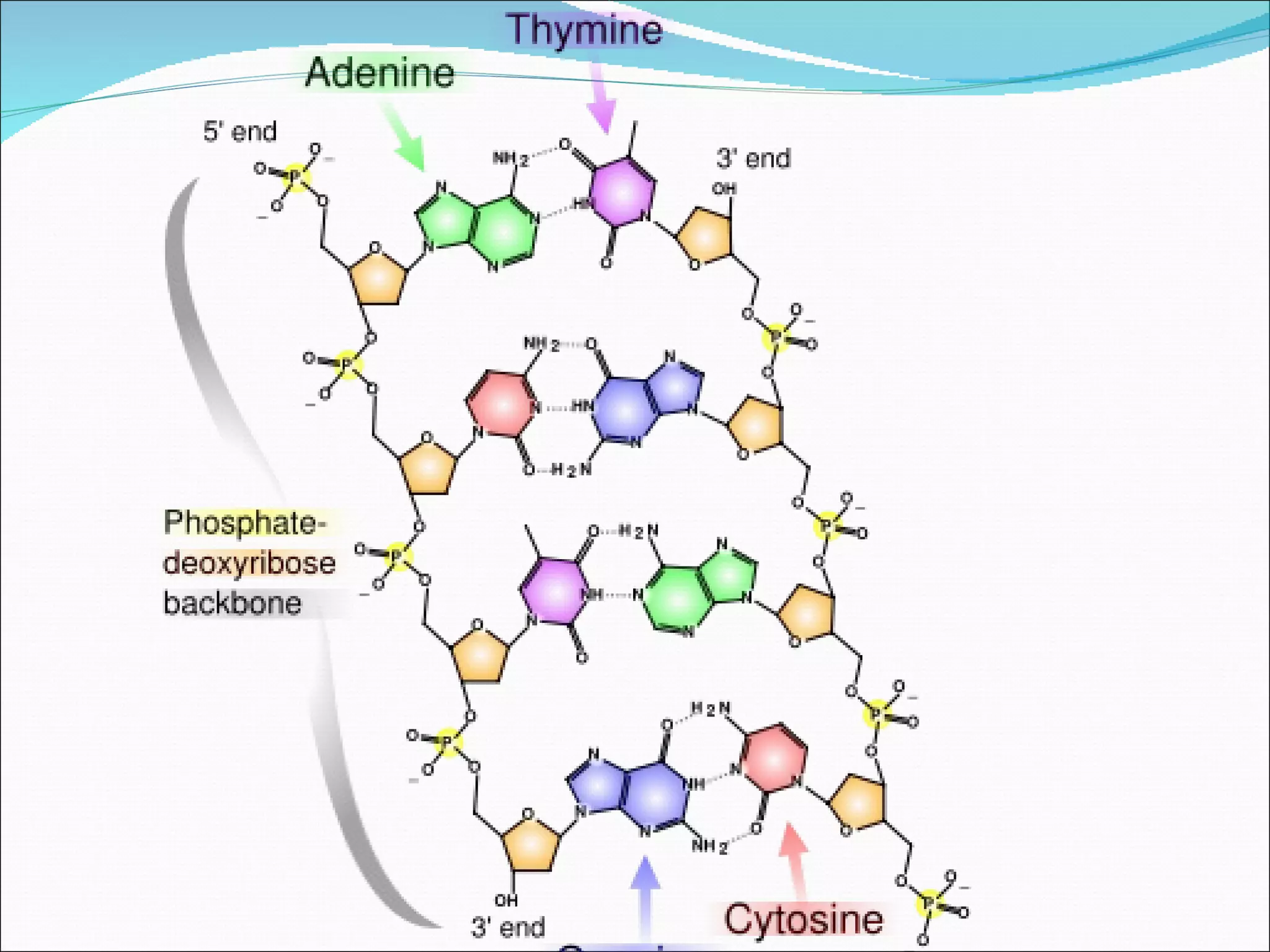
#4. DNA Double Helix and Hydrogen Bonding Made of two strands of nucleotides that are joined together by hydrogen bonding Hydrogen bonding occurs as a result of complimentary base pairing Adenine and thymine pair up Cytosine and guanine pair up Each pair is connected through hydrogen bonding Hydrogen bonding always occurs between one pyrimidine and one purine
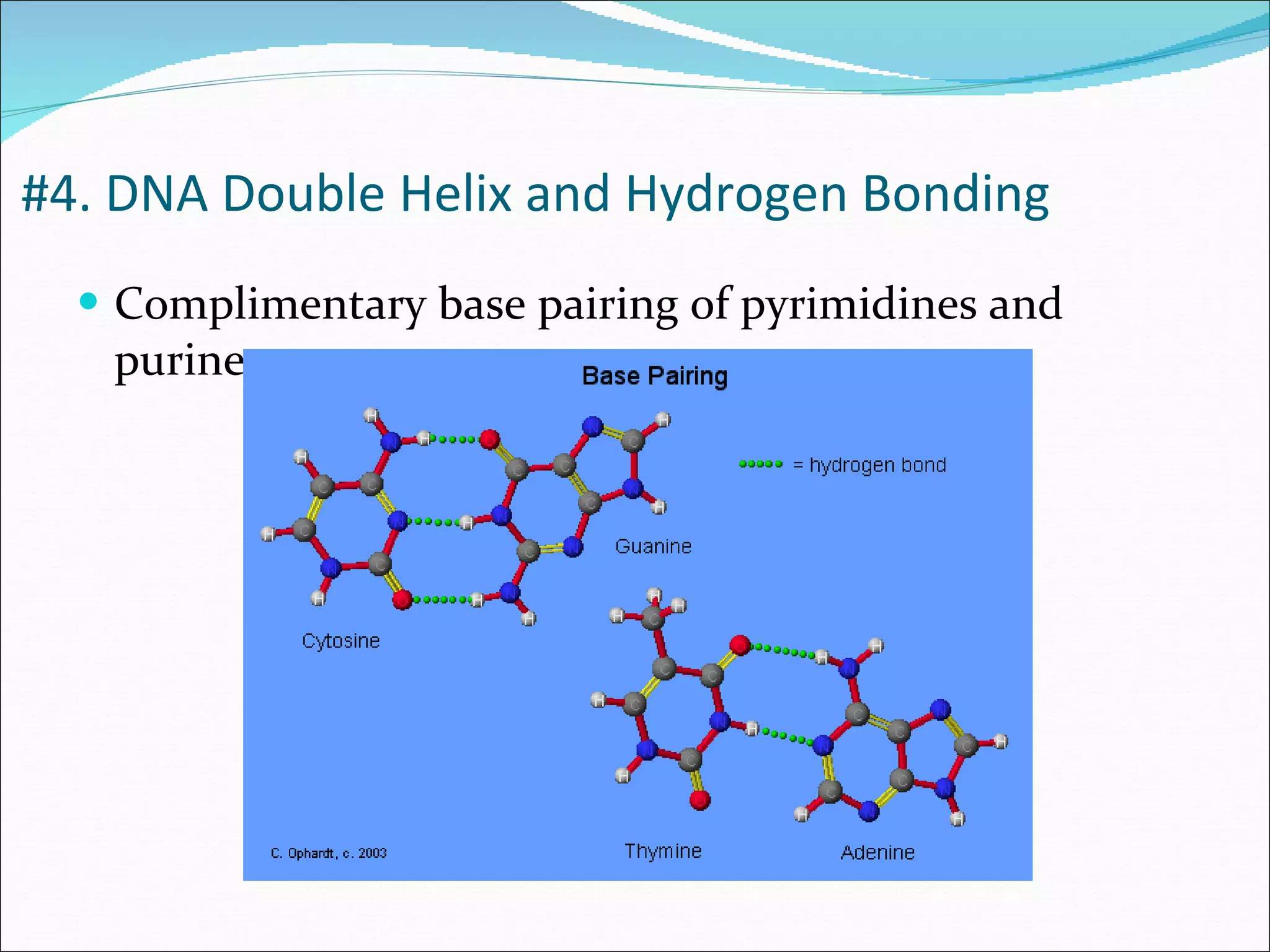
Complimentary base pairing of pyrimidines and purines #4. DNA Double Helix and Hydrogen Bonding
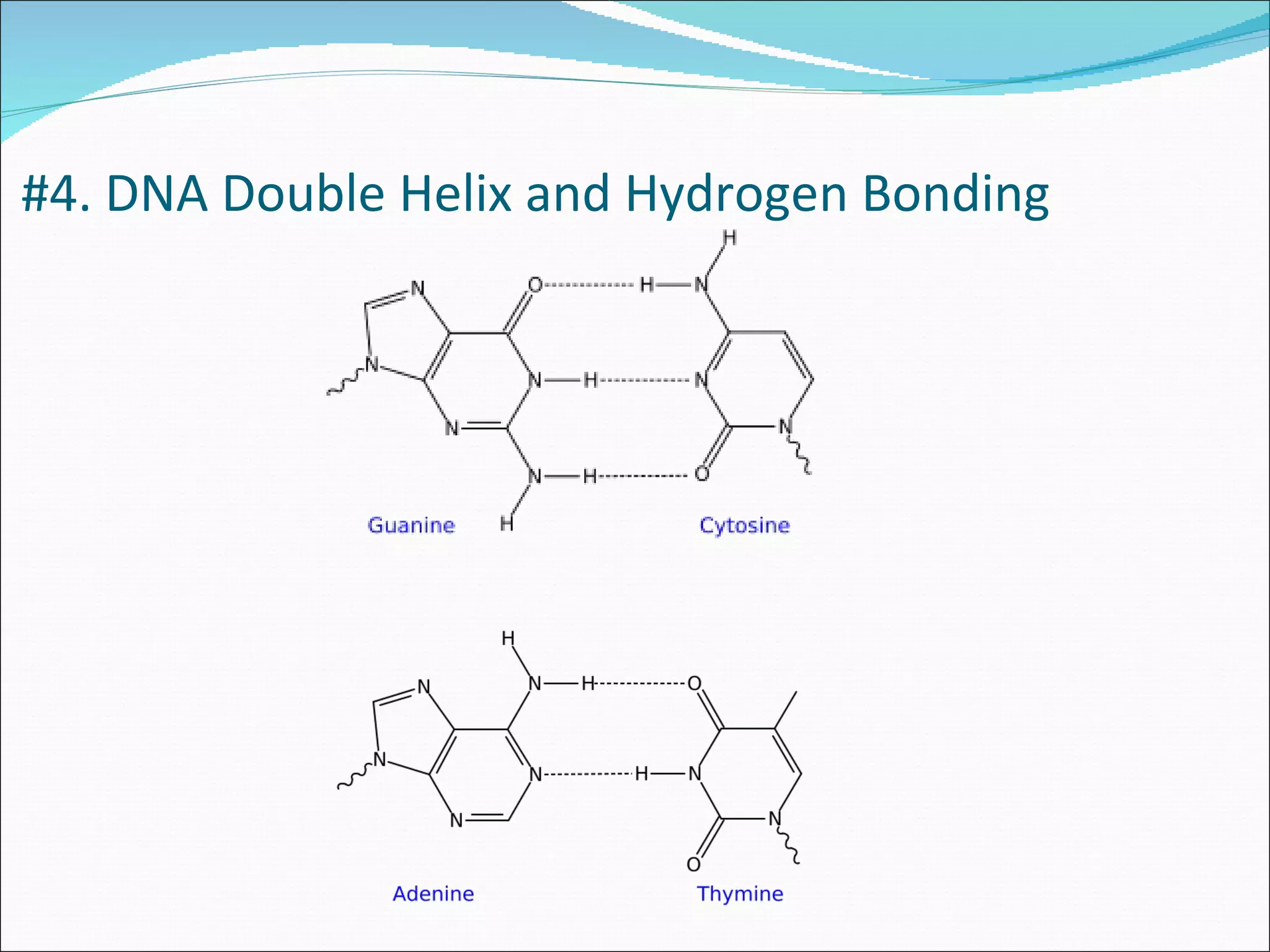
#4. DNA Double Helix and Hydrogen Bonding
Adenine always pairs with thymine because they form two H bonds with each other Cytosine always pairs with guanine because they form three hydrogen bonds with each other #4. DNA Double Helix and Hydrogen Bonding
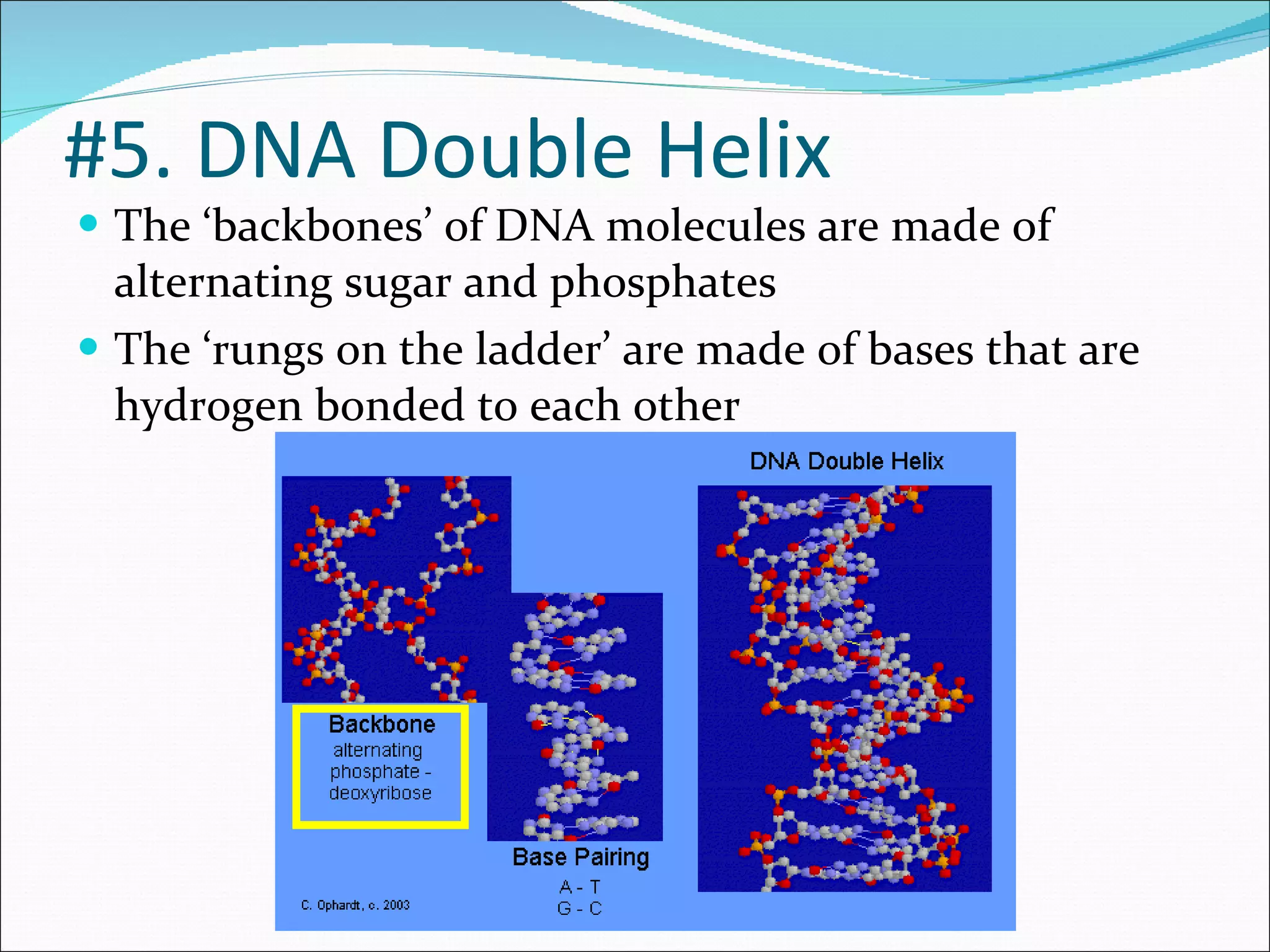
The ‘backbones’ of DNA molecules are made of alternating sugar and phosphates  The ‘rungs on the ladder’ are made of bases that are hydrogen bonded to each other #5. DNA Double Helix
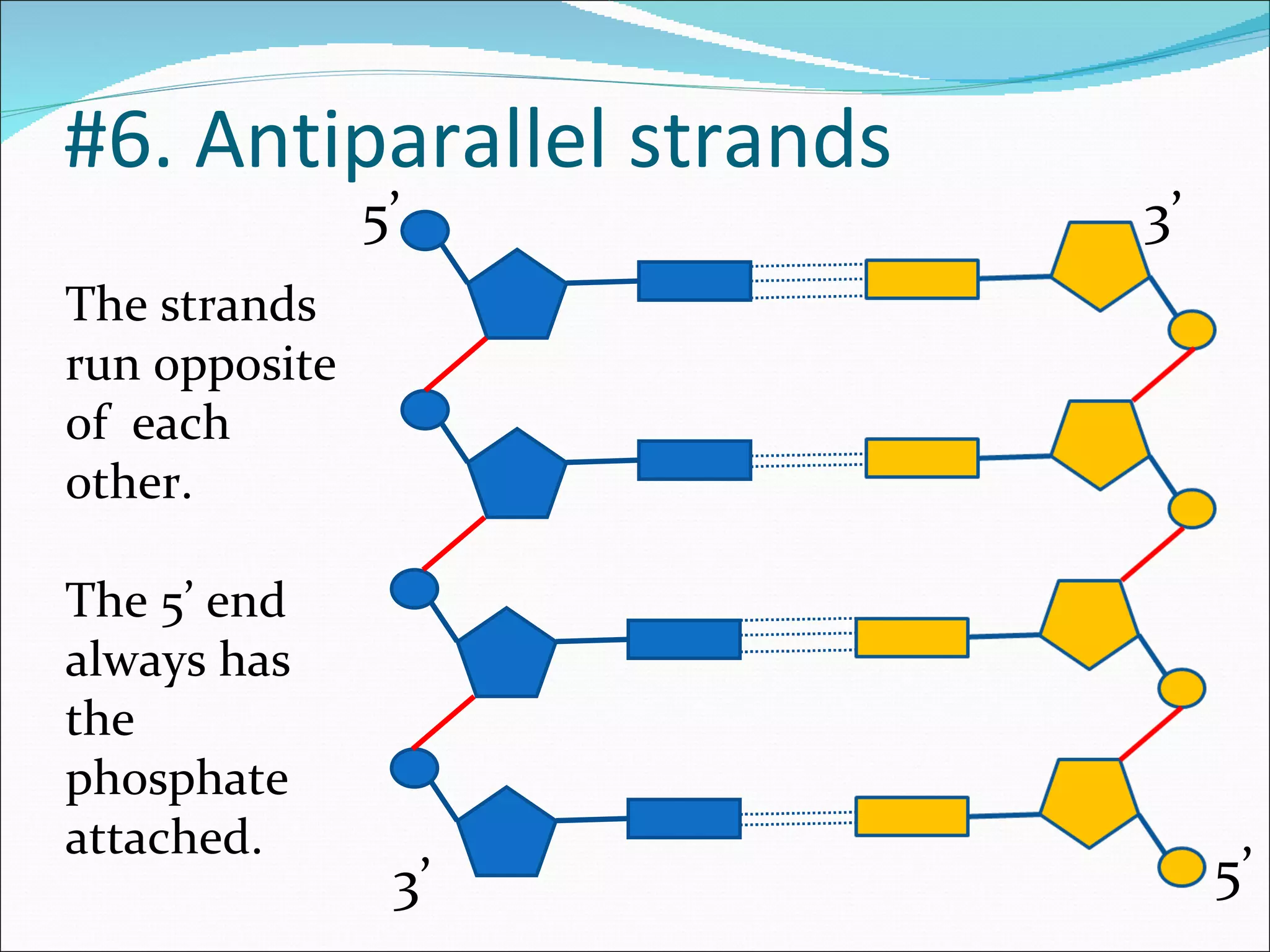
#6. Antiparallel strands The strands  run opposite of  each other. The 5’ end always has the phosphate attached. 5’ 3’ 3’ 5’
Assignment (in your notebook) 1. Draw the structure of ribose and number the carbons 2. Draw a schematic representation of a nucleotide. Label the sugar, base and phosphate. 3. What are the complimentary base pairs to a DNA strand  that has the following order A T A C C T G A A T? 4.  Draw a schematic representation of an unwound DNA double helix using the base pairs from your answer in question 3.  Include the number of hydrogen bonds between each base pair.  Be sure to label all of the bases and the 5’ and 3’ ends of the structure.
 
#6. When phosphodiester links are formed . . .  A. When the covalent bonds are formed between nucleotides the attach  in the direction of 5’ ->3 ’ B. The 5’ end of one nucleotide attaches to the 3’ end of the previous nucleotide
#7. Nucleosome structure Nucleosome are the basic unit of chromatin organization In eukaryotes DNA is associated with proteins (in prokaryotes the DNA is naked) Nucleosomes = basic beadlike unit of DNA packing Made of a segment of DNA wound around a protein core that is composed of 2 copies of each of 4 types of histones
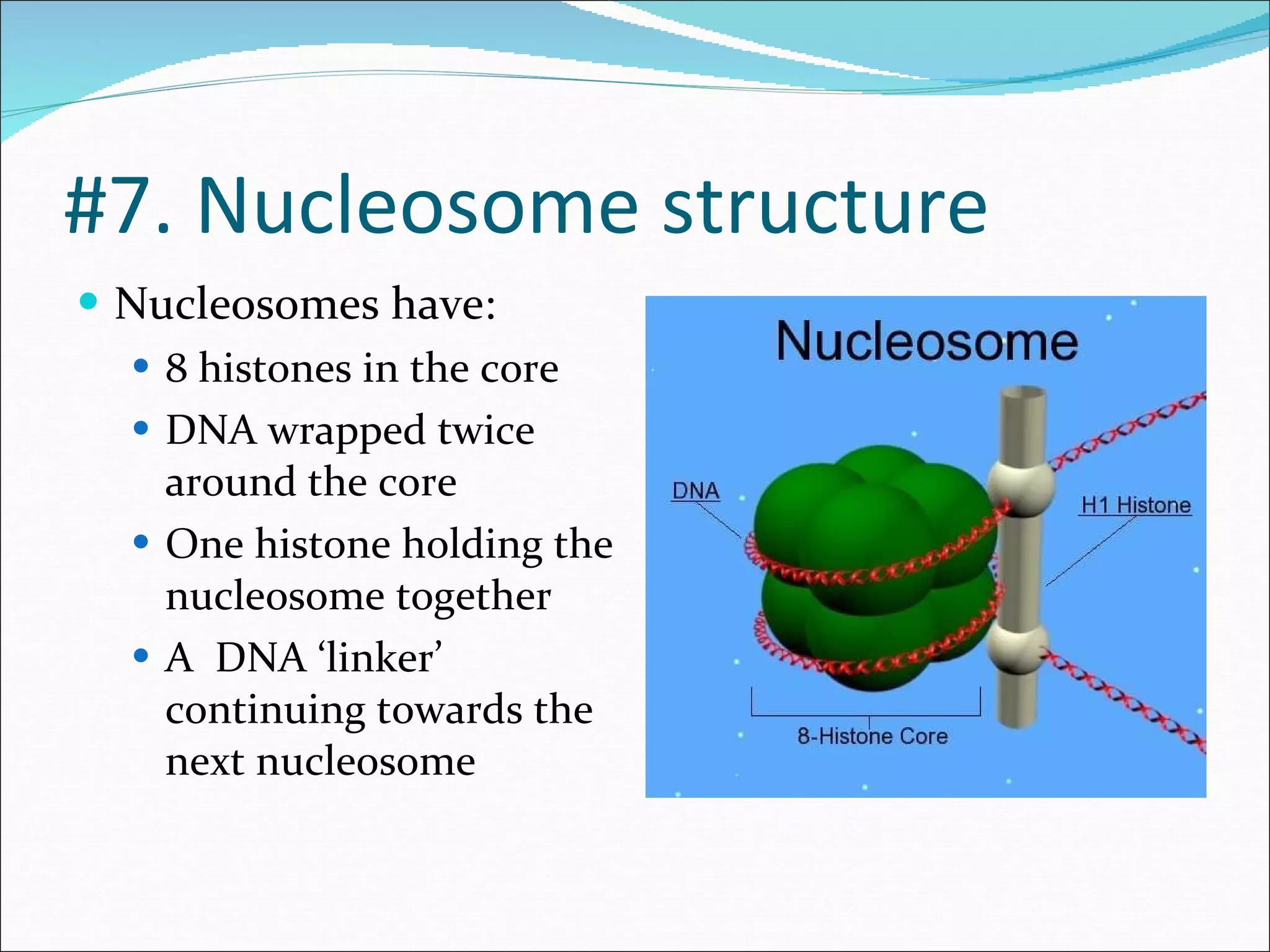
Nucleosomes have: 8 histones in the core DNA wrapped twice around the core One histone holding the nucleosome together A  DNA ‘linker’ continuing towards the next nucleosome #7. Nucleosome structure
The DNA has a negatively charged backbone (because of the phosphate groups) The proteins (the histones) are positively charged The DNA and proteins are electromagnetically attracted to each other to form chromatin #7. Nucleosome structure
#8. Genes Genes=units of genetic information (hereditary information) Order of nucleotides make up the genetic code Genes can contain the information for one polypeptide Genes can also regulate how other genes are expressed All cells of an organism contain the same genetic information but they do not all express the same genes THIS IS CELL DIFFERENTIATION Cells differentiate by genes that are activated
Repetitive sequences-part of the non-coding section of DNA Function-unknown Can be used in DNA profiling (DNA fingerprinting) #8. Genes

DNA Structure PowerPoint

  • 1.
  • 2.
    #1. DNA Structure(an overview) DNA has three main components 1. deoxyribose (a pentose sugar) 2. base (there are four different ones) 3. phosphate
  • 3.
    #2. The BasesThey are divided into two groups Pyrimidines and purines Pyrimidines (made of one 6 member ring) Thymine Cytosine Purines (made of a 6 member ring, fused to a 5 member ring) Adenine Guanine The rings are not only made of carbon (specific formulas and structures are not required for IB)
  • 4.
    #3. Nucleotide StructureNucleotides are formed by the condensation of a pentose sugar, phosphate and one of the 4 bases The following illustration represents one nucleotide
  • 5.
    Nucleotides are linkedtogether by covalent bonds called phosphodiester linkage #3. Nucleotide Structure
  • 6.
    #4. DNA DoubleHelix and Hydrogen Bonding Made of two strands of nucleotides that are joined together by hydrogen bonding Hydrogen bonding occurs as a result of complimentary base pairing Adenine and thymine pair up Cytosine and guanine pair up Each pair is connected through hydrogen bonding Hydrogen bonding always occurs between one pyrimidine and one purine
  • 7.
    Complimentary base pairingof pyrimidines and purines #4. DNA Double Helix and Hydrogen Bonding
  • 8.
    #4. DNA DoubleHelix and Hydrogen Bonding
  • 9.
    Adenine always pairswith thymine because they form two H bonds with each other Cytosine always pairs with guanine because they form three hydrogen bonds with each other #4. DNA Double Helix and Hydrogen Bonding
  • 10.
    The ‘backbones’ ofDNA molecules are made of alternating sugar and phosphates The ‘rungs on the ladder’ are made of bases that are hydrogen bonded to each other #5. DNA Double Helix
  • 11.
    #6. Antiparallel strandsThe strands run opposite of each other. The 5’ end always has the phosphate attached. 5’ 3’ 3’ 5’
  • 12.
    Assignment (in yournotebook) 1. Draw the structure of ribose and number the carbons 2. Draw a schematic representation of a nucleotide. Label the sugar, base and phosphate. 3. What are the complimentary base pairs to a DNA strand that has the following order A T A C C T G A A T? 4. Draw a schematic representation of an unwound DNA double helix using the base pairs from your answer in question 3. Include the number of hydrogen bonds between each base pair. Be sure to label all of the bases and the 5’ and 3’ ends of the structure.
  • 13.
  • 14.
    #6. When phosphodiesterlinks are formed . . . A. When the covalent bonds are formed between nucleotides the attach in the direction of 5’ ->3 ’ B. The 5’ end of one nucleotide attaches to the 3’ end of the previous nucleotide
  • 15.
    #7. Nucleosome structureNucleosome are the basic unit of chromatin organization In eukaryotes DNA is associated with proteins (in prokaryotes the DNA is naked) Nucleosomes = basic beadlike unit of DNA packing Made of a segment of DNA wound around a protein core that is composed of 2 copies of each of 4 types of histones
  • 16.
    Nucleosomes have: 8histones in the core DNA wrapped twice around the core One histone holding the nucleosome together A DNA ‘linker’ continuing towards the next nucleosome #7. Nucleosome structure
  • 17.
    The DNA hasa negatively charged backbone (because of the phosphate groups) The proteins (the histones) are positively charged The DNA and proteins are electromagnetically attracted to each other to form chromatin #7. Nucleosome structure
  • 18.
    #8. Genes Genes=unitsof genetic information (hereditary information) Order of nucleotides make up the genetic code Genes can contain the information for one polypeptide Genes can also regulate how other genes are expressed All cells of an organism contain the same genetic information but they do not all express the same genes THIS IS CELL DIFFERENTIATION Cells differentiate by genes that are activated
  • 19.
    Repetitive sequences-part ofthe non-coding section of DNA Function-unknown Can be used in DNA profiling (DNA fingerprinting) #8. Genes