Terpenoids
Prepared by
Dr. N.GOPINATHAN
ASSISTANT PROFESSOR
DEPARTMENT OF PHARMACEUTICAL CHEMISTRY
FACULTY OF PHARMACY
SRI RAMACHANDRA UNIVERSITY
CHENNAI-116
TAMILNADU
INDIA
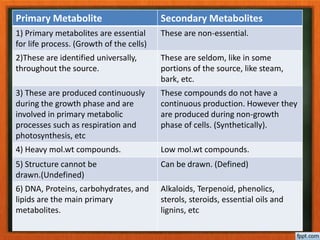
Primary Metabolite Secondary Metabolites
1) Primary metabolites are essential
for life process. (Growth of the cells)
These are non-essential.
2)These are identified universally,
throughout the source.
These are seldom, like in some
portions of the source, like steam,
bark, etc.
3) These are produced continuously
during the growth phase and are
involved in primary metabolic
processes such as respiration and
photosynthesis, etc
These compounds do not have a
continuous production. However they
are produced during non-growth
phase of cells. (Synthetically).
4) Heavy mol.wt compounds. Low mol.wt compounds.
5) Structure cannot be
drawn.(Undefined)
Can be drawn. (Defined)
6) DNA, Proteins, carbohydrates, and
lipids are the main primary
metabolites.
Alkaloids, Terpenoid, phenolics,
sterols, steroids, essential oils and
lignins, etc
Definition
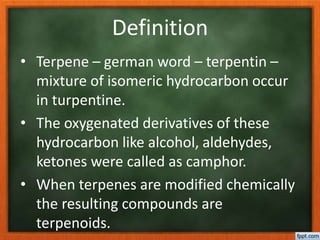
• Terpene – german word – terpentin –
mixture of isomeric hydrocarbon occur
in turpentine.
• The oxygenated derivatives of these
hydrocarbon like alcohol, aldehydes,
ketones were called as camphor.
• When terpenes are modified chemically
the resulting compounds are
terpenoids.
• Terpene represents only
hydrocarbon of molecular fomula
[C5H8]2
.
• Terpenoids with general formula
[C5H8] n as well as their
oxygenated, hydrogenated and
dehydrogenated derivatives.
• Terpenoids are optically active.
• The suffix ene signifies unsaturated
hydrocarbon so it is inappropriate to
include the compounds such as
alcohols, aldehydes and ketones.
• The terpenoids composed of isoprene
units they are called as isoprenoids.
• Major terphenoids occur in plant
kingdom but few obtain from other
source.
• Most of the fragrance component of
plant are volatile and isolated by steam
distillation is called as essential oil.
• Due to their pleasant smelling nature
the mono and sesquiterpenoids are of
considerable commercial importance
particularly in perfumery.
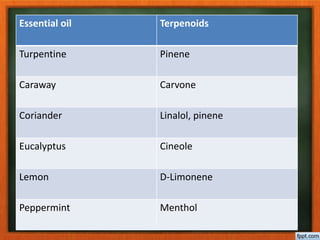
Essential oil Terpenoids
Turpentine Pinene
Caraway Carvone
Coriander Linalol, pinene
Eucalyptus Cineole
Lemon D-Limonene
Peppermint Menthol
• The di and tri terpenoids are non
volatile obtained from gums and
resins of plant without perfumery
value.
• The tetra terpenoids constitute a
group of compounds called
carotenoids
• Rubber is the most important
polyterpenoid
Why terpenoids in pharmacy?
• Terpenoids shows
biological activity like
insecticidal, anthelmintic
and antiseptic action thus
useful in pharmacy.
Properties
• Colorless liquid lighter than water.
• Boils between 150 – 180 ◦ C
• Few are solids
• Optically active
• Unsaturated compound with one or
more double bond.
• It undergoes addition reaction,
Polymerization and dehydrogenation
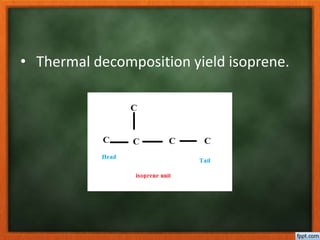
• Thermal decomposition yield isoprene.
Classification based on number of isoprene unit
Terpenoids no of isoprene Molecular formula
Hemiterpene or isoprene 1 C5H8
Monoterpenoids 2 C10H16
Sesquiterpenoids 3 C15 H24
Diterpenoids 4 C20 H32
Sesterterpenoids 5 C25H40
Triterpenoids 6 C 30 H48
Tetraterpenoids 8 C40H64
Polyterpenoids n [C5H8]n
Terpenoids subdivided into subclasses according
to number of rings present in the molecule
• Acyclic terpenoid– open chain-citral
• Monocyclic terpenoid – one ring - limonene
• Bicyclic terpenoid – two ring - camphor
• Tricyclic terpenoid- three ring
• Tetracyclic terpenoid – four ring
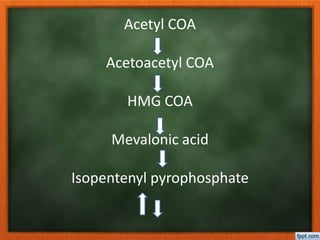
Acetyl COA
Acetoacetyl COA
HMG COA
Mevalonic acid
Isopentenyl pyrophosphate
Dimethyl Allyl Pyrophosphate
Geranyl Pyrophosphate [Monoterpenoid
c1O]
Farnesyl pyrophosphate [
Sesquiterpenoids- C15]
GGPPDiterpenoids
C20
Carotenoids
C40
Polyterpenoids
C40
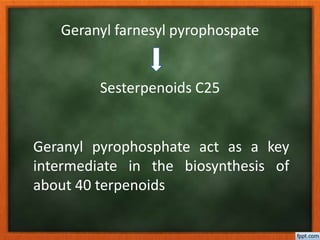
Geranyl farnesyl pyrophospate
Sesterpenoids C25
Geranyl pyrophosphate act as a key
intermediate in the biosynthesis of
about 40 terpenoids
Thank you

1.Terpenoids introduction

  • 1.
    Terpenoids Prepared by Dr. N.GOPINATHAN ASSISTANTPROFESSOR DEPARTMENT OF PHARMACEUTICAL CHEMISTRY FACULTY OF PHARMACY SRI RAMACHANDRA UNIVERSITY CHENNAI-116 TAMILNADU INDIA
  • 2.
    Primary Metabolite SecondaryMetabolites 1) Primary metabolites are essential for life process. (Growth of the cells) These are non-essential. 2)These are identified universally, throughout the source. These are seldom, like in some portions of the source, like steam, bark, etc. 3) These are produced continuously during the growth phase and are involved in primary metabolic processes such as respiration and photosynthesis, etc These compounds do not have a continuous production. However they are produced during non-growth phase of cells. (Synthetically). 4) Heavy mol.wt compounds. Low mol.wt compounds. 5) Structure cannot be drawn.(Undefined) Can be drawn. (Defined) 6) DNA, Proteins, carbohydrates, and lipids are the main primary metabolites. Alkaloids, Terpenoid, phenolics, sterols, steroids, essential oils and lignins, etc
  • 3.
    Definition • Terpene –german word – terpentin – mixture of isomeric hydrocarbon occur in turpentine. • The oxygenated derivatives of these hydrocarbon like alcohol, aldehydes, ketones were called as camphor. • When terpenes are modified chemically the resulting compounds are terpenoids.
  • 4.
    • Terpene representsonly hydrocarbon of molecular fomula [C5H8]2 . • Terpenoids with general formula [C5H8] n as well as their oxygenated, hydrogenated and dehydrogenated derivatives. • Terpenoids are optically active.
  • 5.
    • The suffixene signifies unsaturated hydrocarbon so it is inappropriate to include the compounds such as alcohols, aldehydes and ketones. • The terpenoids composed of isoprene units they are called as isoprenoids. • Major terphenoids occur in plant kingdom but few obtain from other source.
  • 6.
    • Most ofthe fragrance component of plant are volatile and isolated by steam distillation is called as essential oil. • Due to their pleasant smelling nature the mono and sesquiterpenoids are of considerable commercial importance particularly in perfumery.
  • 7.
    Essential oil Terpenoids TurpentinePinene Caraway Carvone Coriander Linalol, pinene Eucalyptus Cineole Lemon D-Limonene Peppermint Menthol
  • 8.
    • The diand tri terpenoids are non volatile obtained from gums and resins of plant without perfumery value. • The tetra terpenoids constitute a group of compounds called carotenoids • Rubber is the most important polyterpenoid
  • 9.
    Why terpenoids inpharmacy? • Terpenoids shows biological activity like insecticidal, anthelmintic and antiseptic action thus useful in pharmacy.
  • 10.
    Properties • Colorless liquidlighter than water. • Boils between 150 – 180 ◦ C • Few are solids • Optically active • Unsaturated compound with one or more double bond. • It undergoes addition reaction, Polymerization and dehydrogenation
  • 11.
  • 12.
    Classification based onnumber of isoprene unit Terpenoids no of isoprene Molecular formula Hemiterpene or isoprene 1 C5H8 Monoterpenoids 2 C10H16 Sesquiterpenoids 3 C15 H24 Diterpenoids 4 C20 H32 Sesterterpenoids 5 C25H40 Triterpenoids 6 C 30 H48 Tetraterpenoids 8 C40H64 Polyterpenoids n [C5H8]n
  • 13.
    Terpenoids subdivided intosubclasses according to number of rings present in the molecule • Acyclic terpenoid– open chain-citral • Monocyclic terpenoid – one ring - limonene • Bicyclic terpenoid – two ring - camphor • Tricyclic terpenoid- three ring • Tetracyclic terpenoid – four ring
  • 14.
    Acetyl COA Acetoacetyl COA HMGCOA Mevalonic acid Isopentenyl pyrophosphate
  • 15.
    Dimethyl Allyl Pyrophosphate GeranylPyrophosphate [Monoterpenoid c1O] Farnesyl pyrophosphate [ Sesquiterpenoids- C15] GGPPDiterpenoids C20 Carotenoids C40 Polyterpenoids C40
  • 16.
    Geranyl farnesyl pyrophospate SesterpenoidsC25 Geranyl pyrophosphate act as a key intermediate in the biosynthesis of about 40 terpenoids
  • 17.