Determination of
Structure of
Terpenoid
Prepared by
Dr. N.GOPINATHAN
ASSISTANT PROFESSOR
DEPARTMENT OF PHARMACEUTICAL CHEMISTRY
FACULTY OF PHARMACY
SRI RAMACHANDRA UNIVERSITY
CHENNAI-116
TAMILNADU
INDIA
General structural elucidation
• Determination of molecular
formulae of a pure specimen –
elemental analysis.
• If it is optically active, its specific
rotation is measured. It helps to
distinguish the two or more possible
structure as in limonene and
carvone.
• Analytical method
• Synthetic
• Physical
• Knowledge of a molecular
rearrangement
• Synthesis
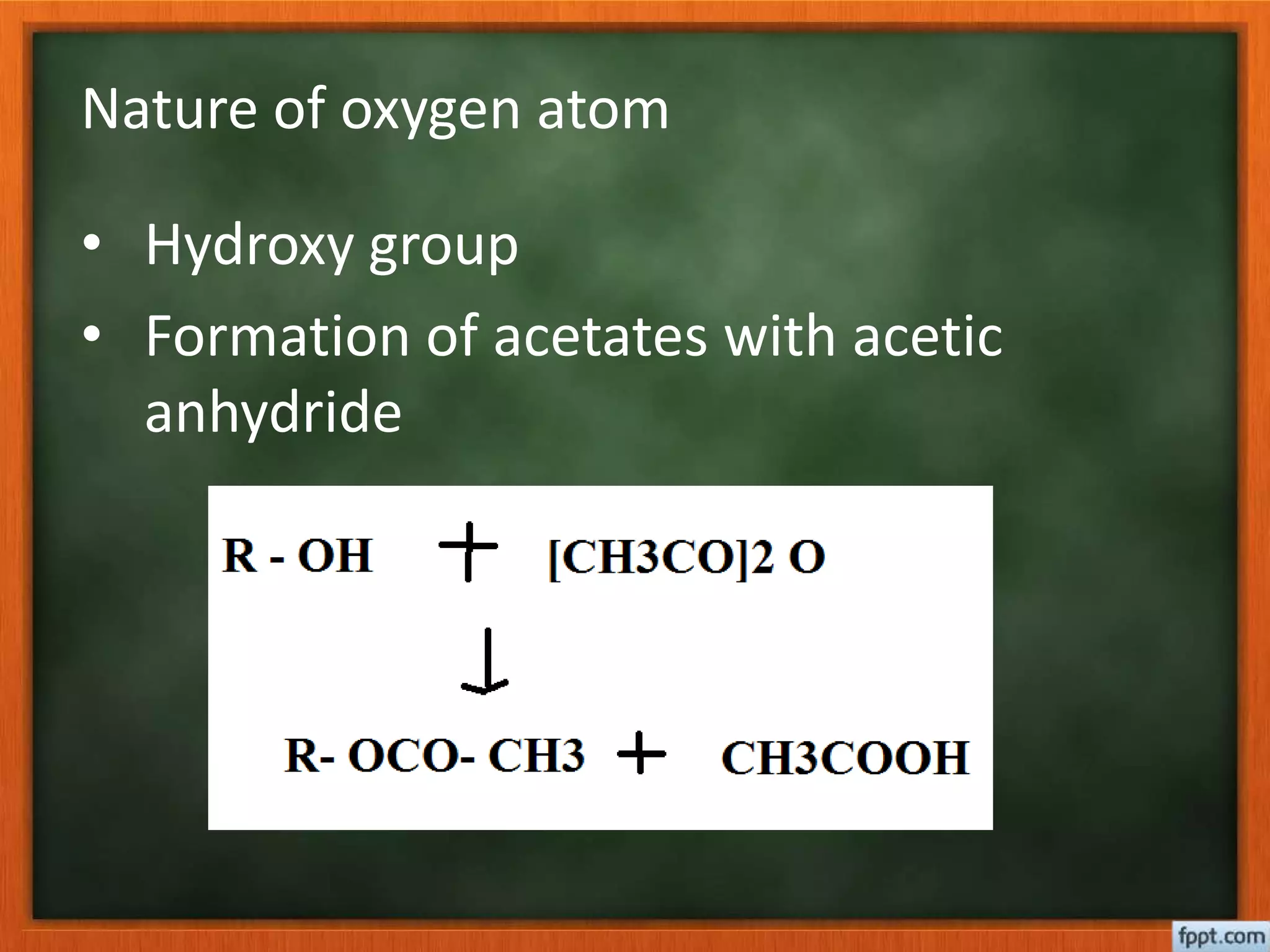
Nature of oxygen atom
• Hydroxy group
• Formation of acetates with acetic
anhydride
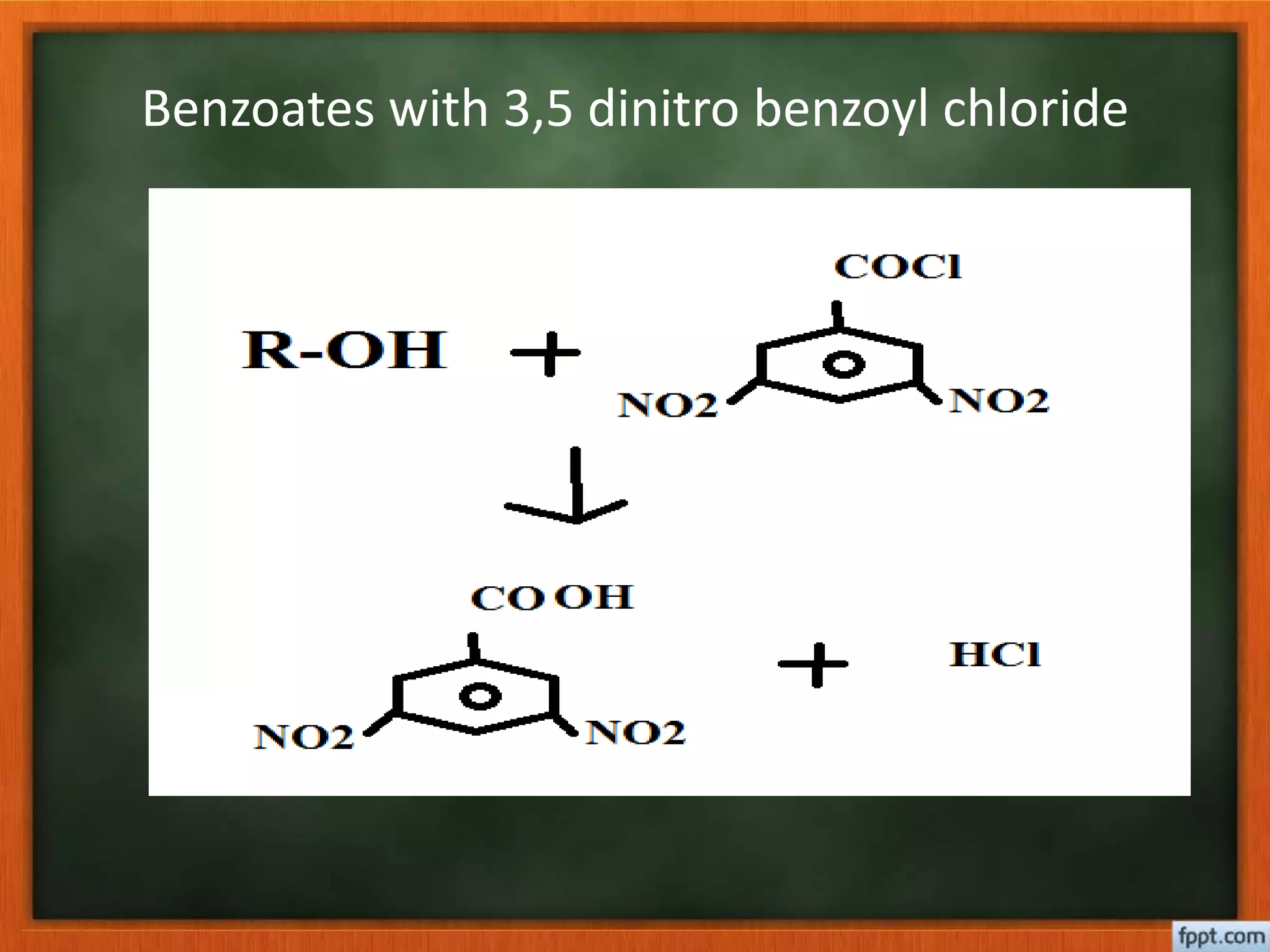
Benzoates with 3,5 dinitro benzoyl chloride
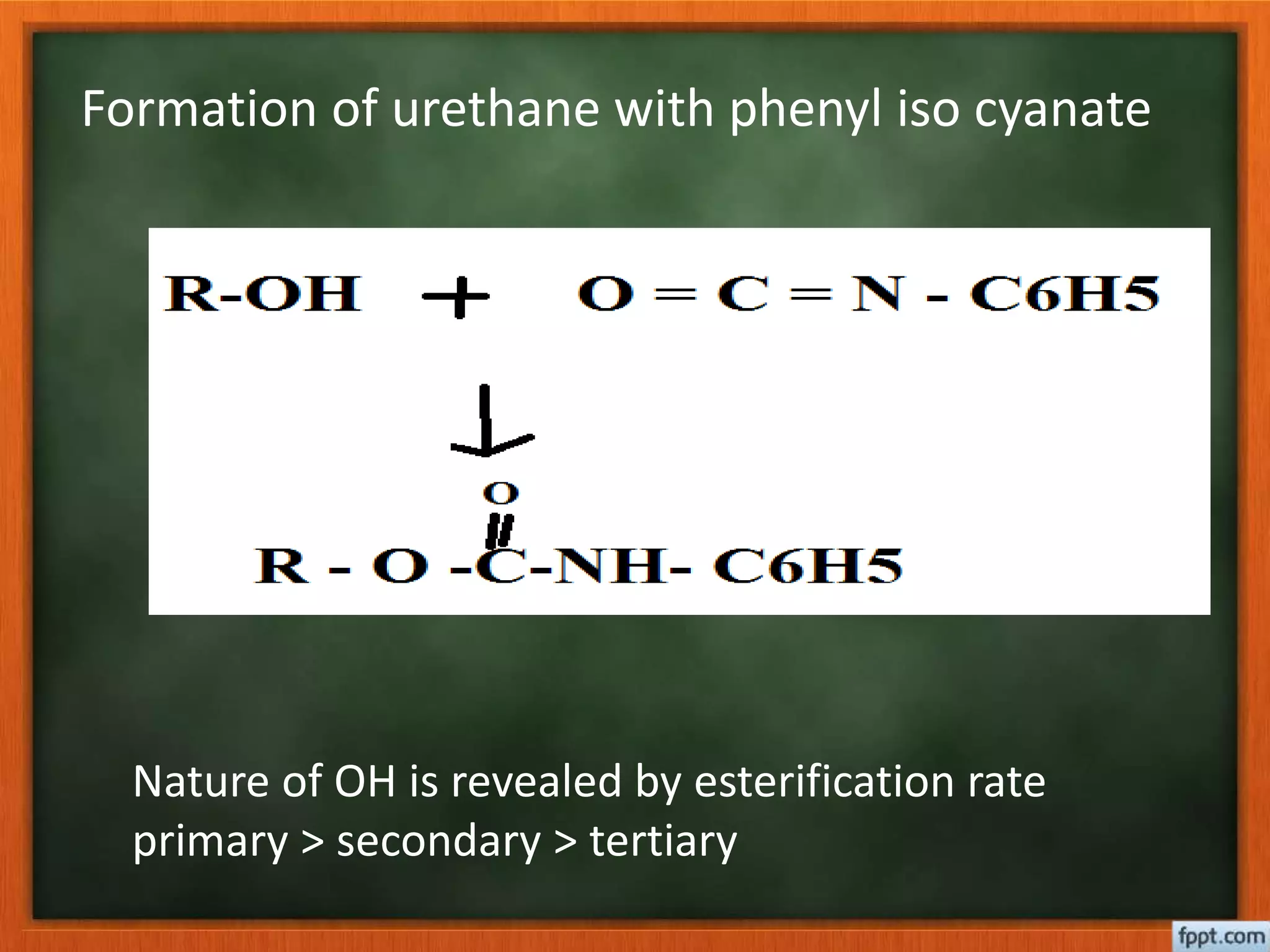
Formation of urethane with phenyl iso cyanate
Nature of OH is revealed by esterification rate
primary > secondary > tertiary
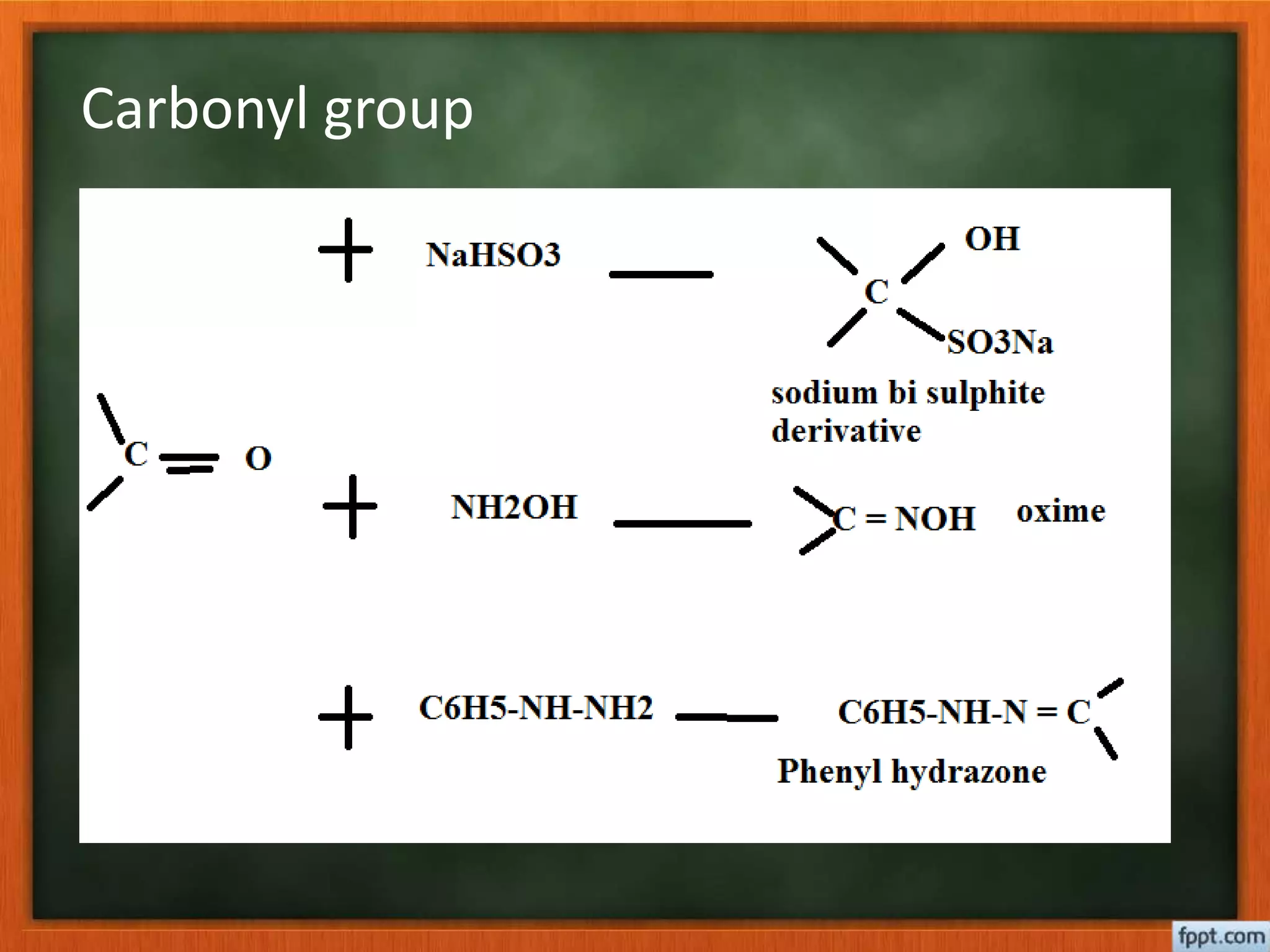
Carbonyl group
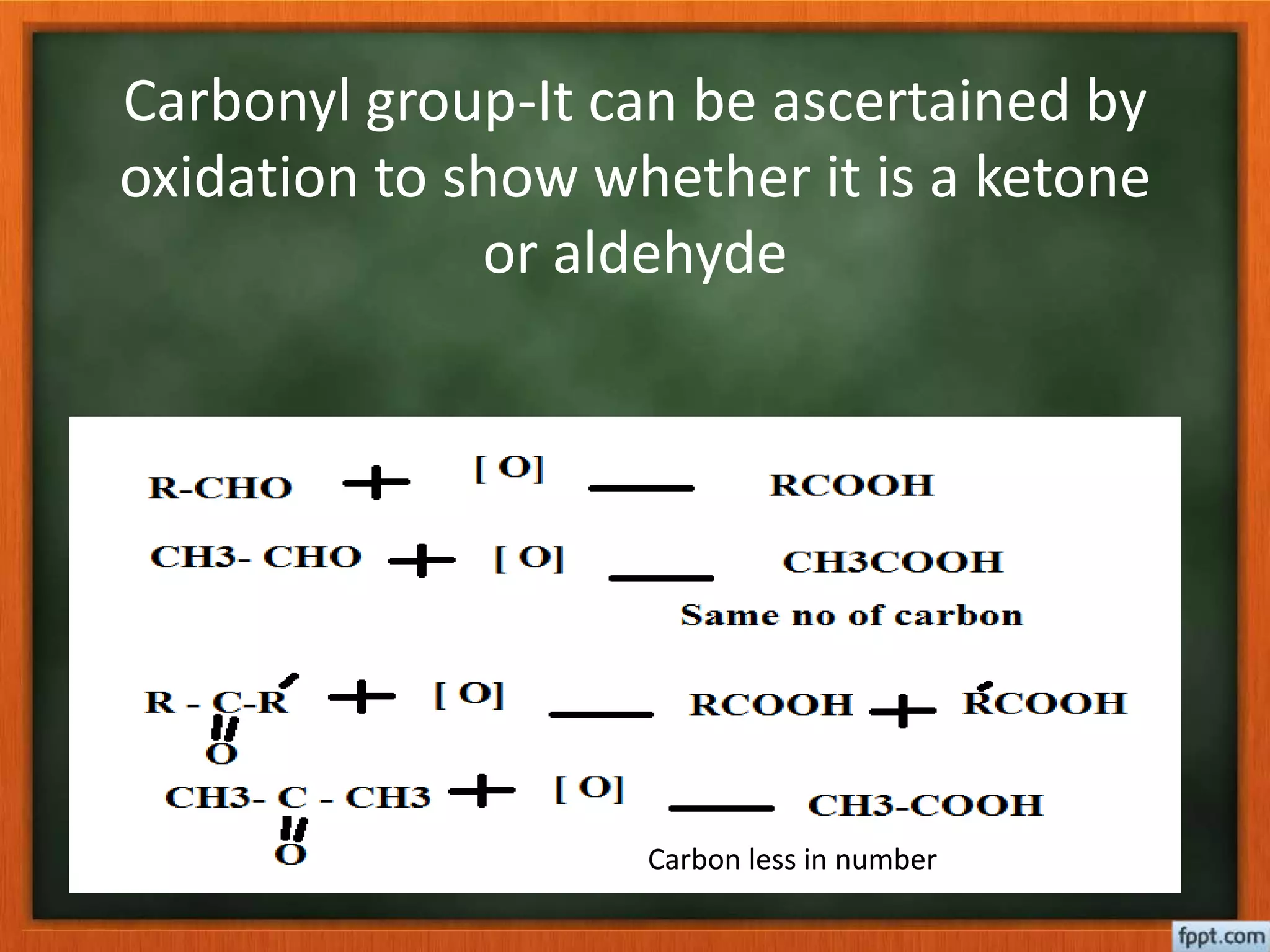
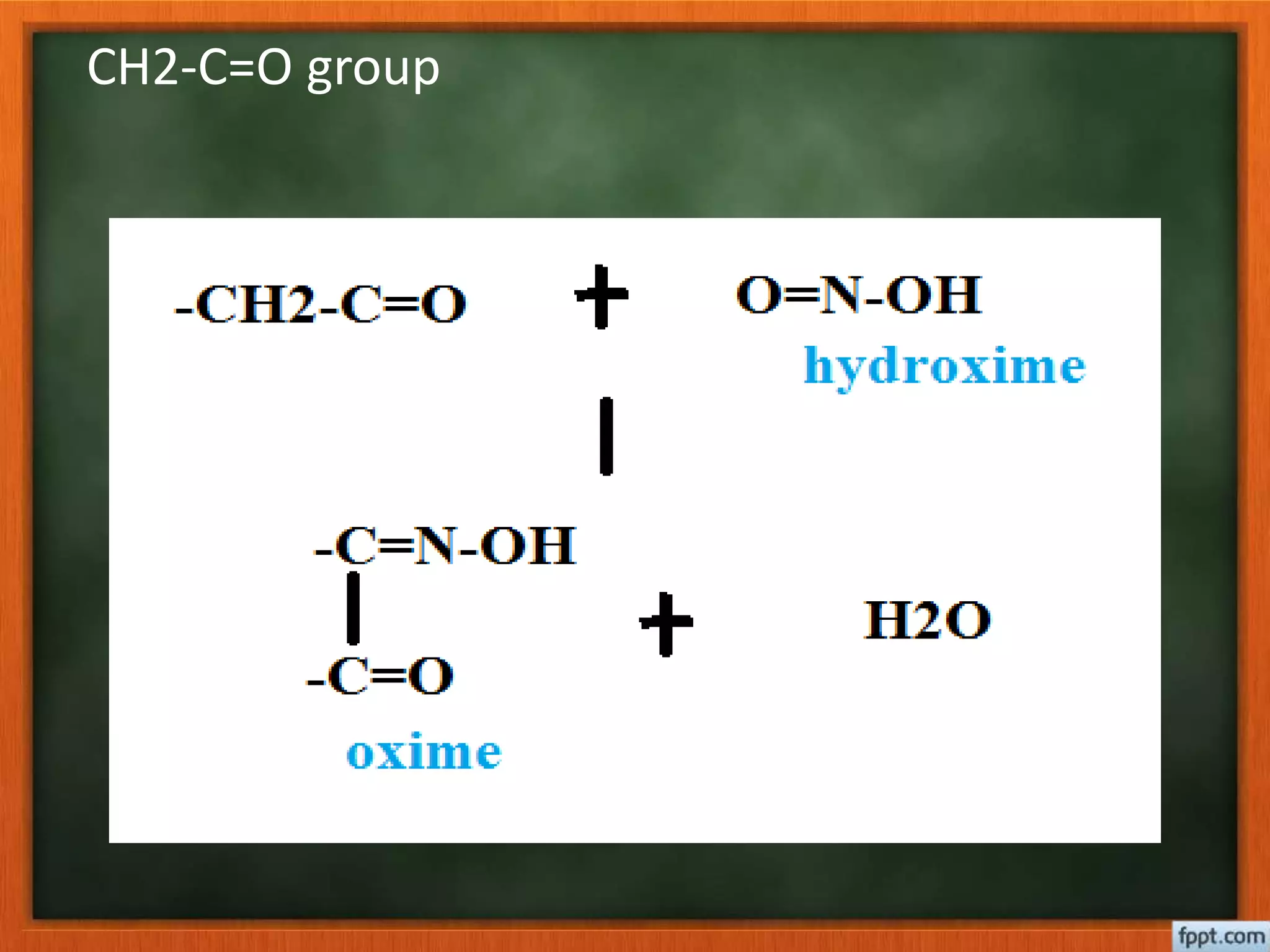
Carbonyl group-It can be ascertained by
oxidation to show whether it is a ketone
or aldehyde
Carbon less in number
CH2-C=O group
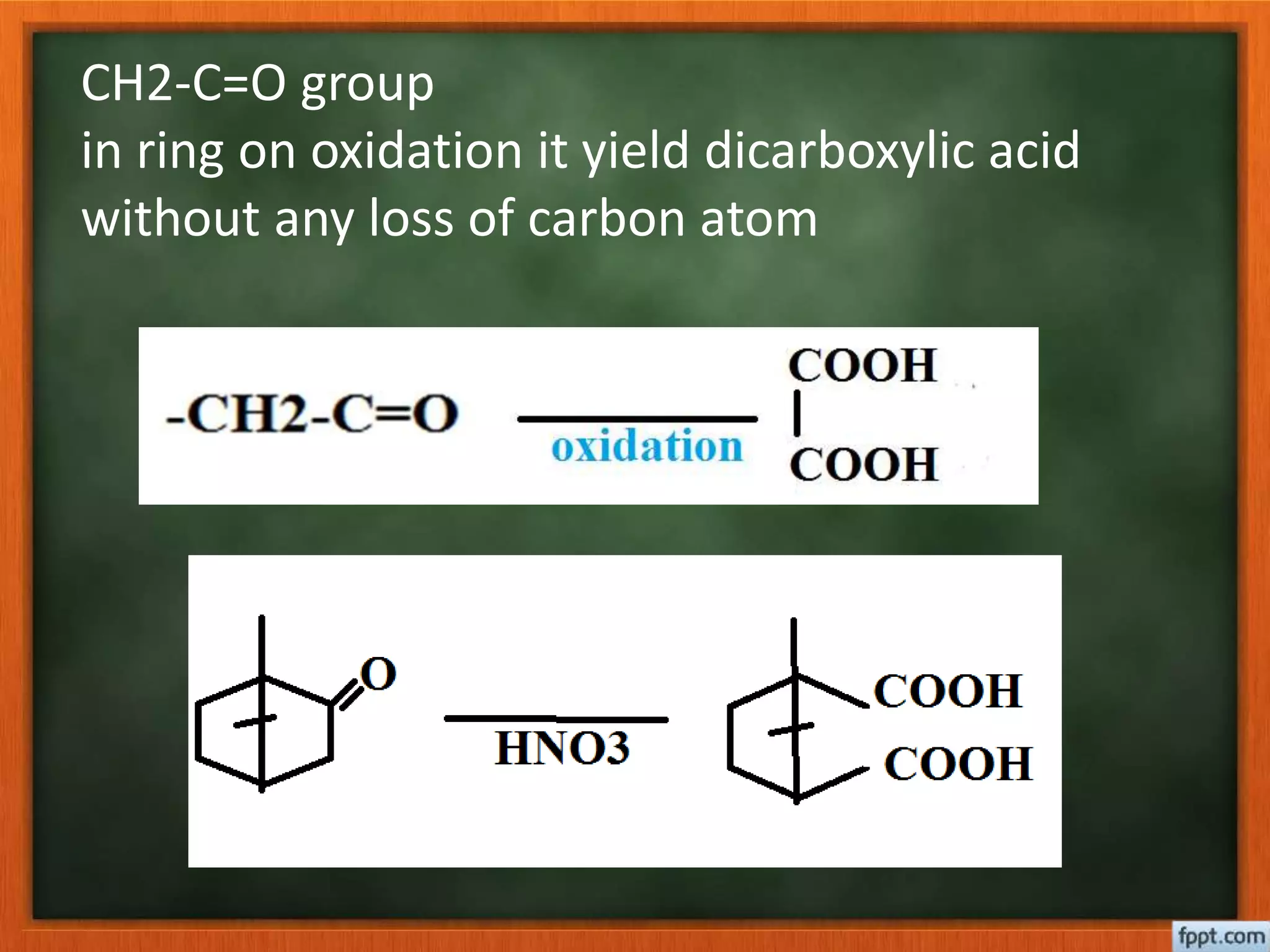
CH2-C=O group
in ring on oxidation it yield dicarboxylic acid
without any loss of carbon atom
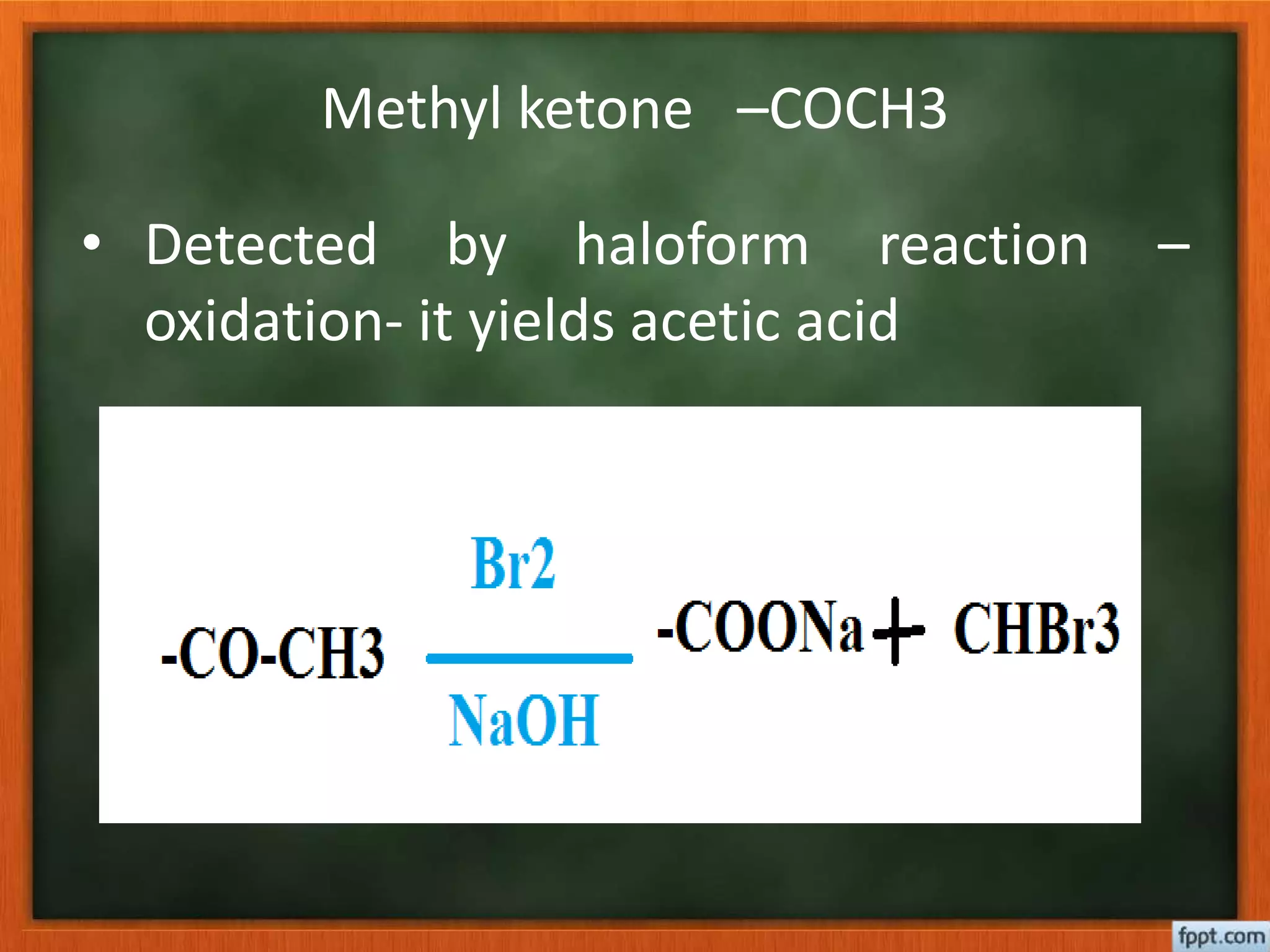
Methyl ketone –COCH3
• Detected by haloform reaction –
oxidation- it yields acetic acid
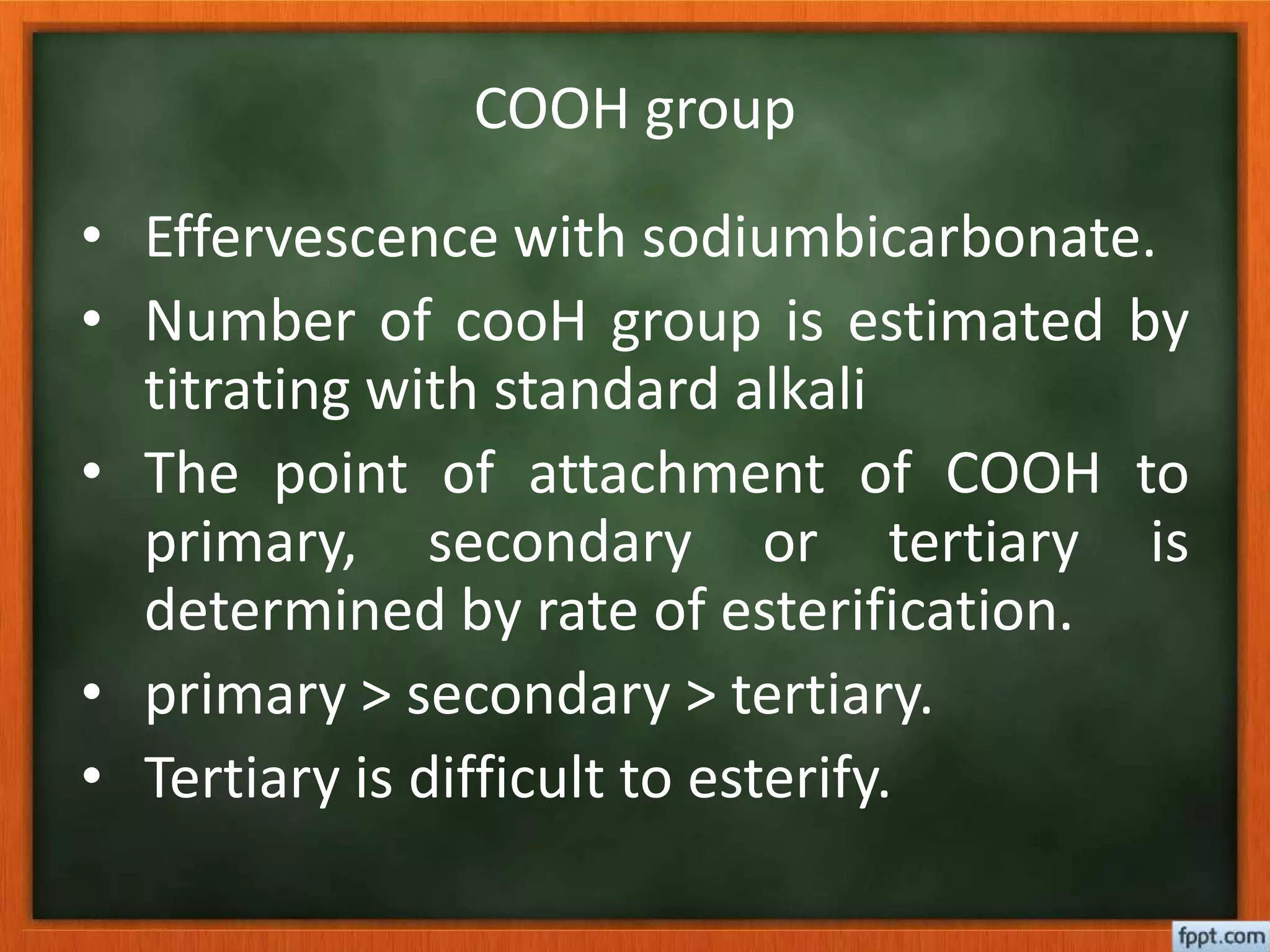
COOH group
• Effervescence with sodiumbicarbonate.
• Number of cooH group is estimated by
titrating with standard alkali
• The point of attachment of COOH to
primary, secondary or tertiary is
determined by rate of esterification.
• primary > secondary > tertiary.
• Tertiary is difficult to esterify.
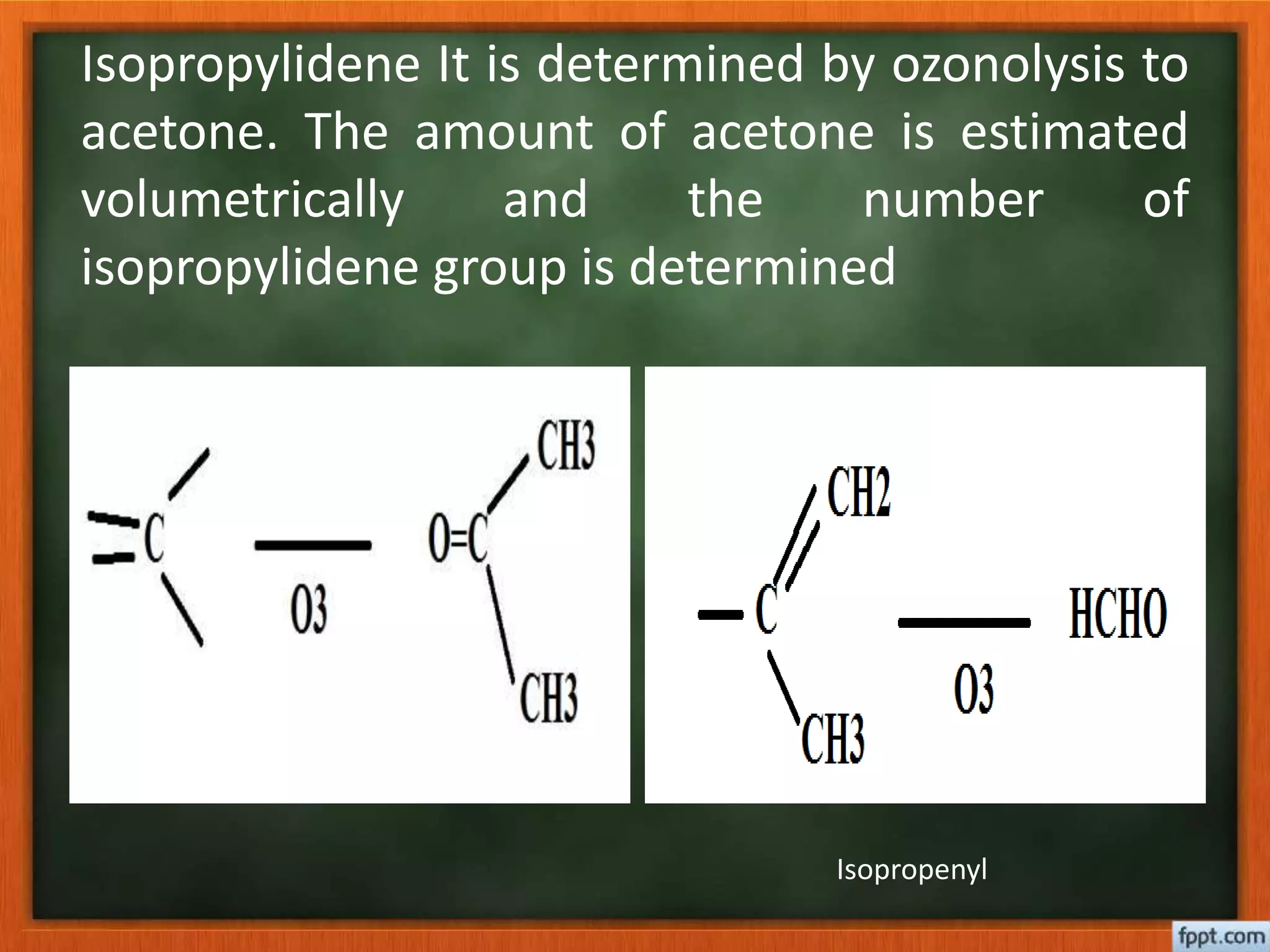
Isopropylidene It is determined by ozonolysis to
acetone. The amount of acetone is estimated
volumetrically and the number of
isopropylidene group is determined
Isopropenyl
Presence of unsaturation is ascertained by
addition product.
From number of consumption of H2 molecule the number
of double bond can be estimated
The number of halogen consumed would give the
amount of unsaturation
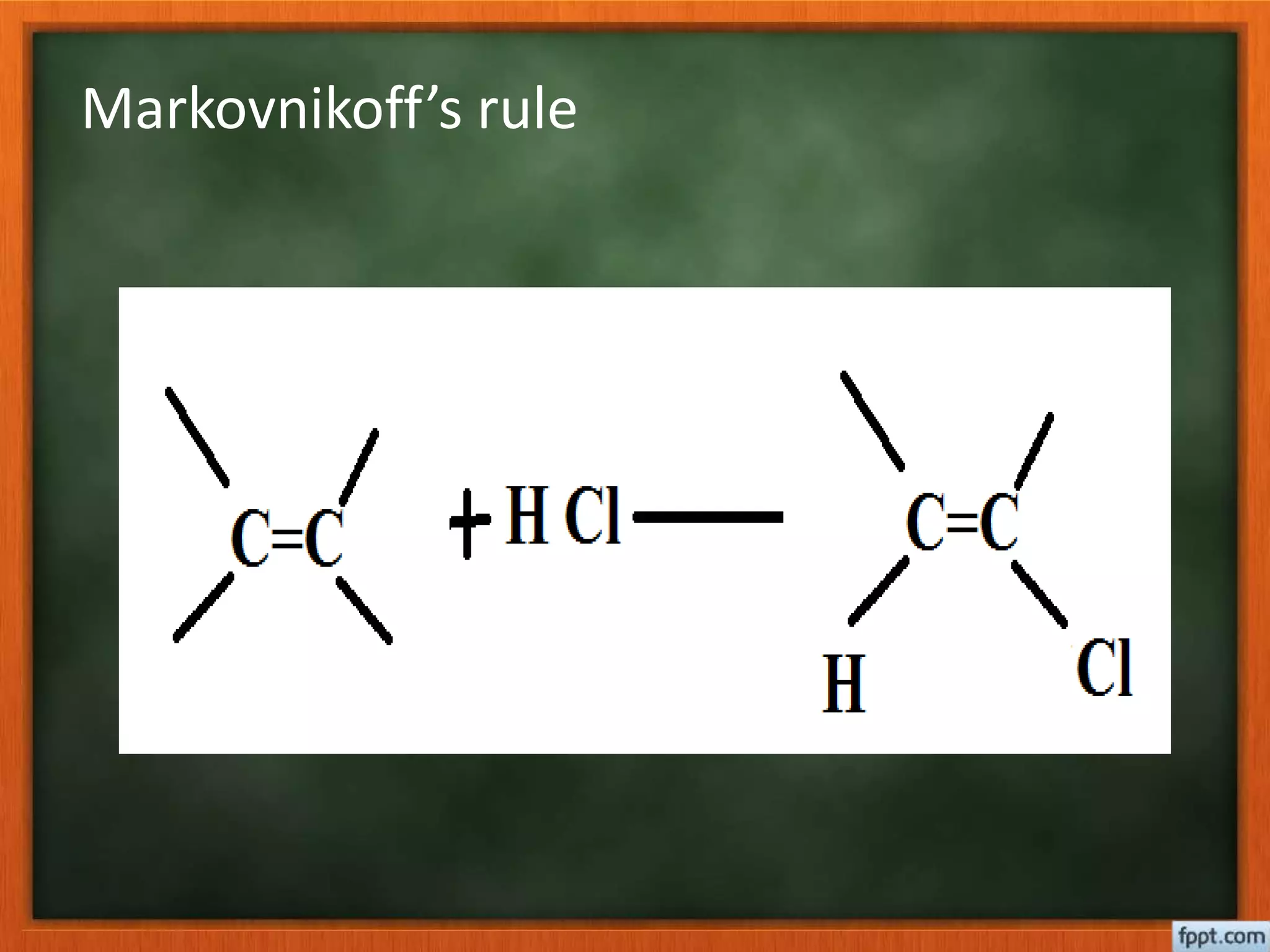
Markovnikoff’s rule
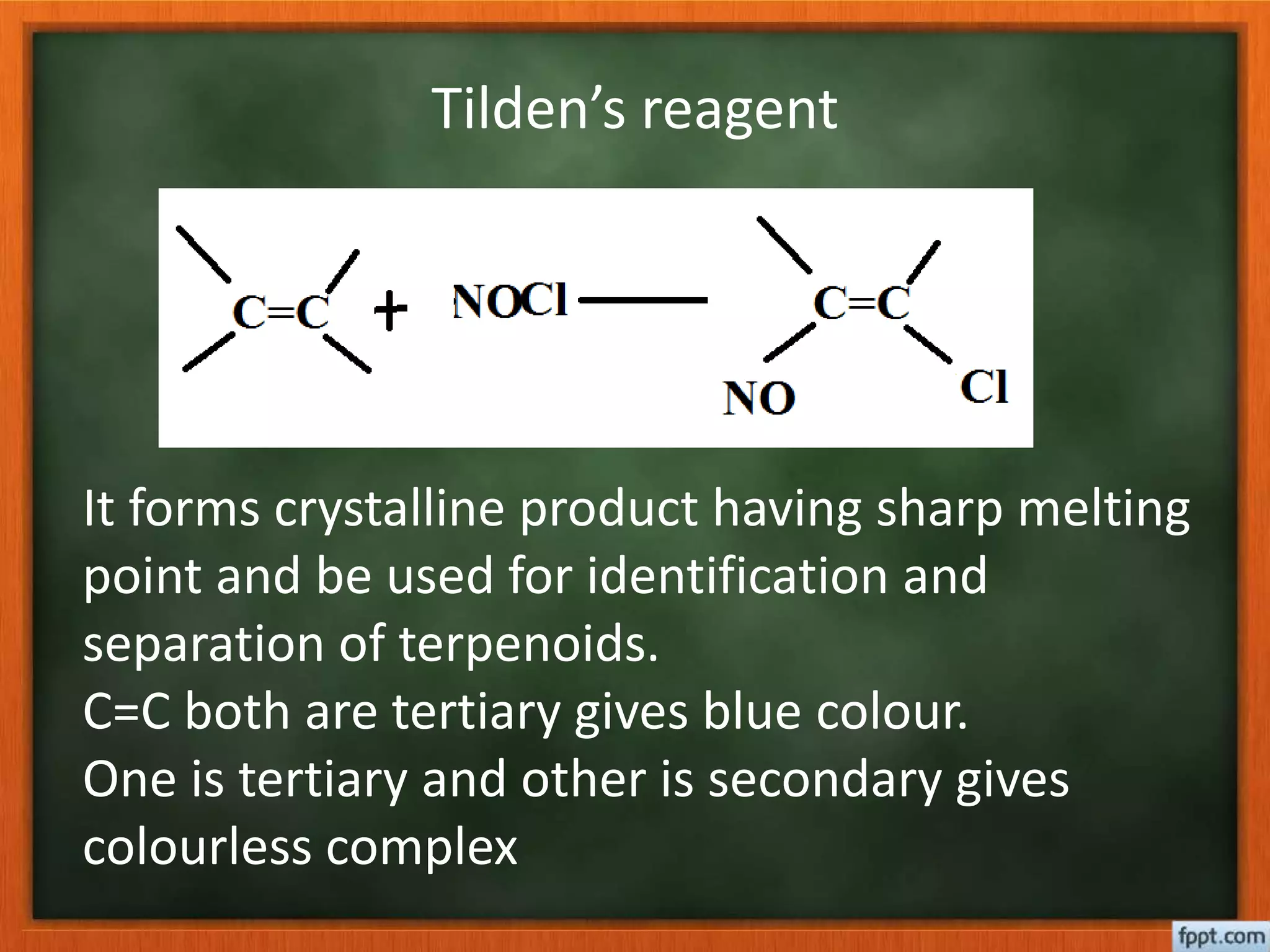
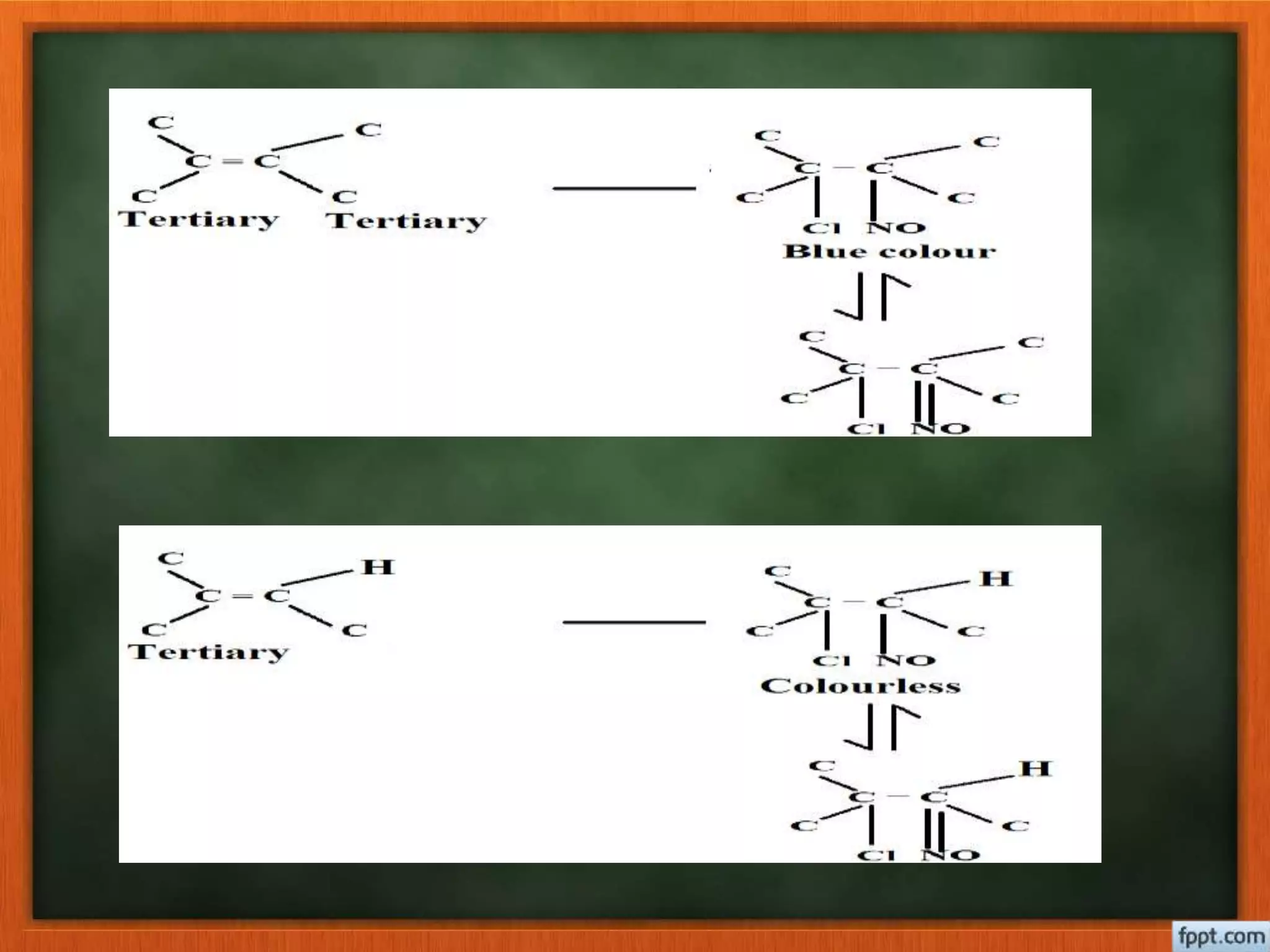
Tilden’s reagent
It forms crystalline product having sharp melting
point and be used for identification and
separation of terpenoids.
C=C both are tertiary gives blue colour.
One is tertiary and other is secondary gives
colourless complex
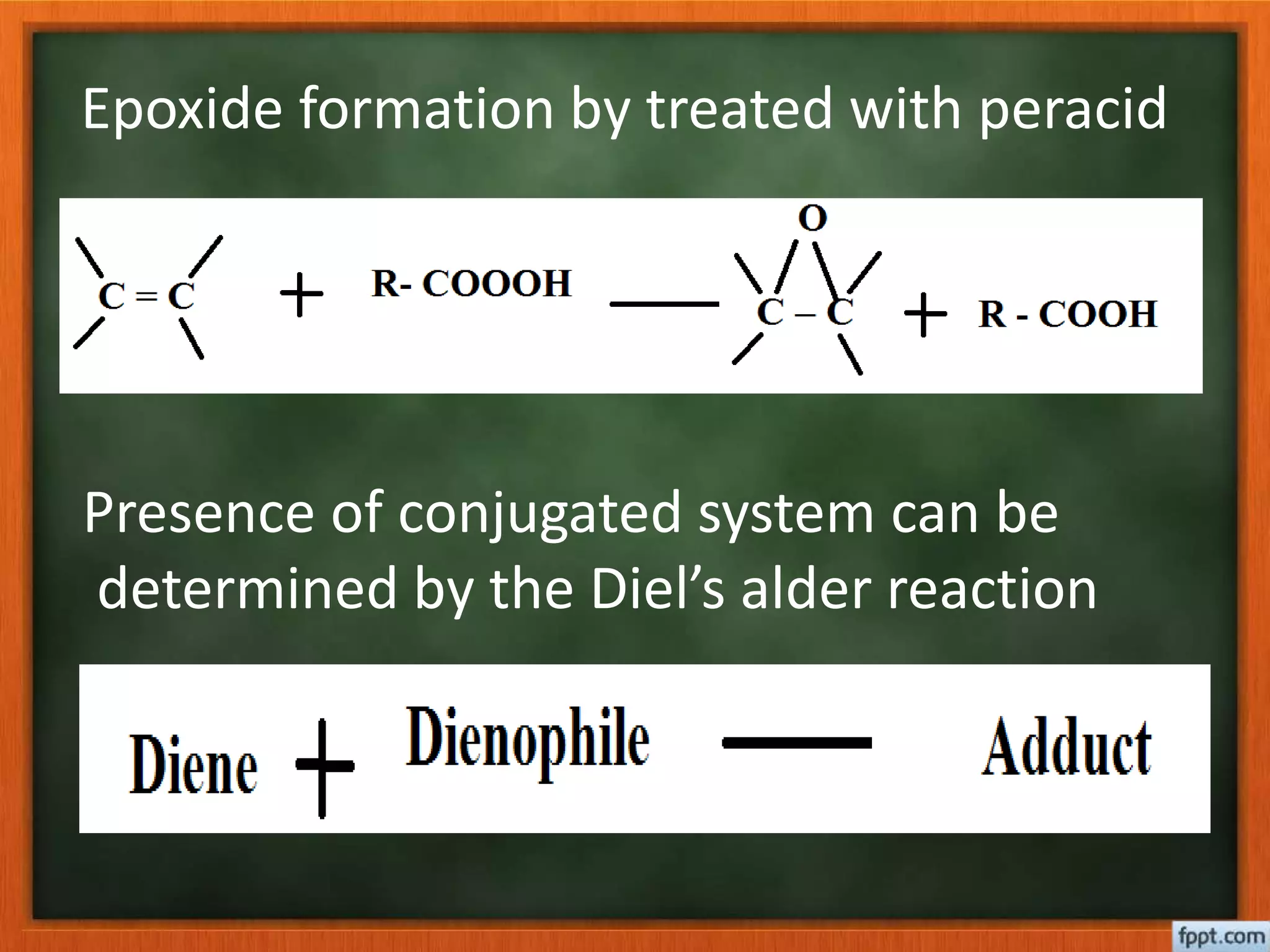
Epoxide formation by treated with peracid
Presence of conjugated system can be
determined by the Diel’s alder reaction
Number of rings
• From number of olefinic double
bonds, nature of functional
groups and molecular formula of
terpenoid, It is possible to find
out the molecular formula of the
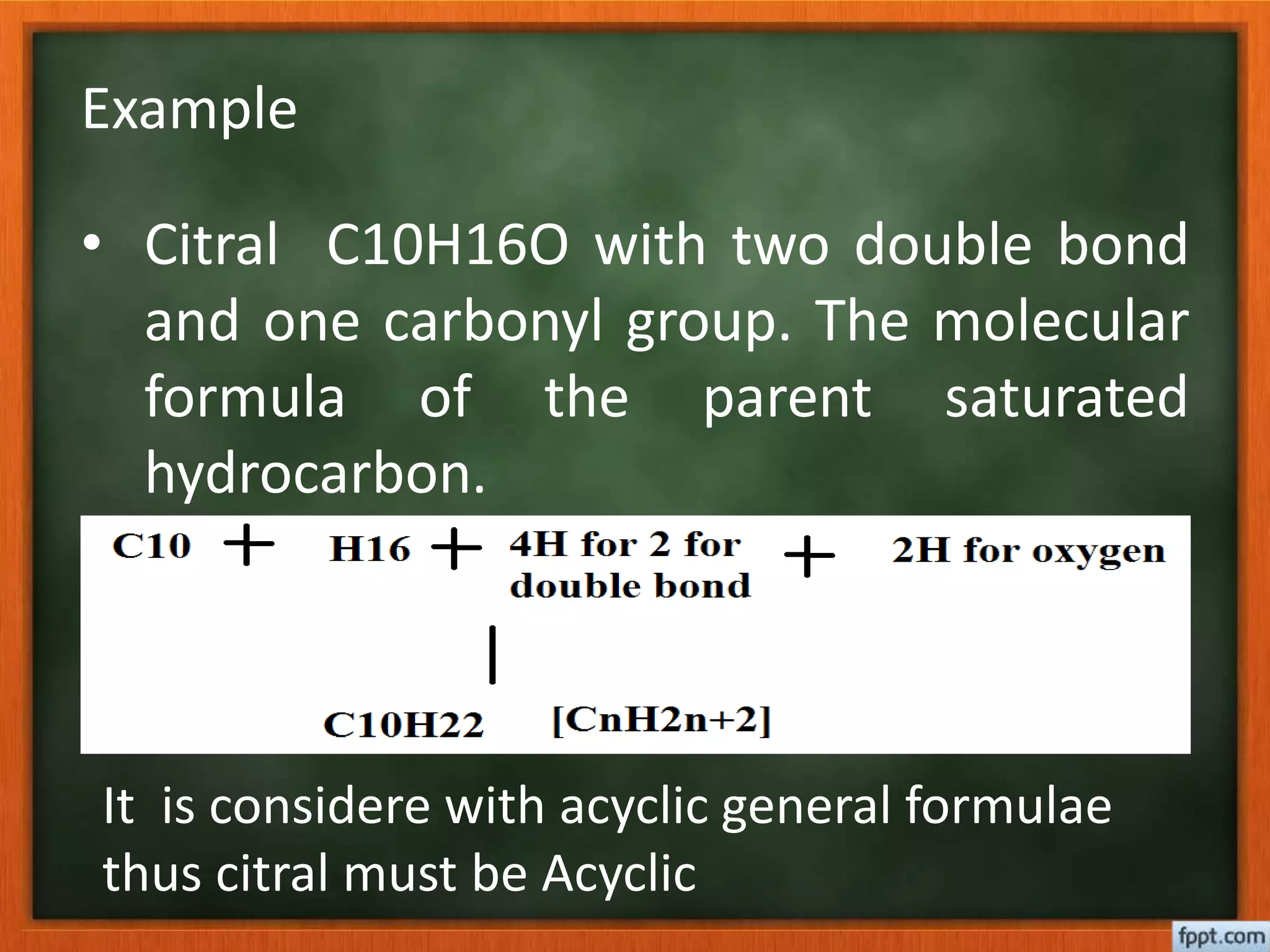
parent saturated hydrocarbon.
Example
• Citral C10H16O with two double bond
and one carbonyl group. The molecular
formula of the parent saturated
hydrocarbon.
It is considere with acyclic general formulae
thus citral must be Acyclic
From molecular refraction, the nature of carbon
skeleton of sesquiterpenoids can be ascertained
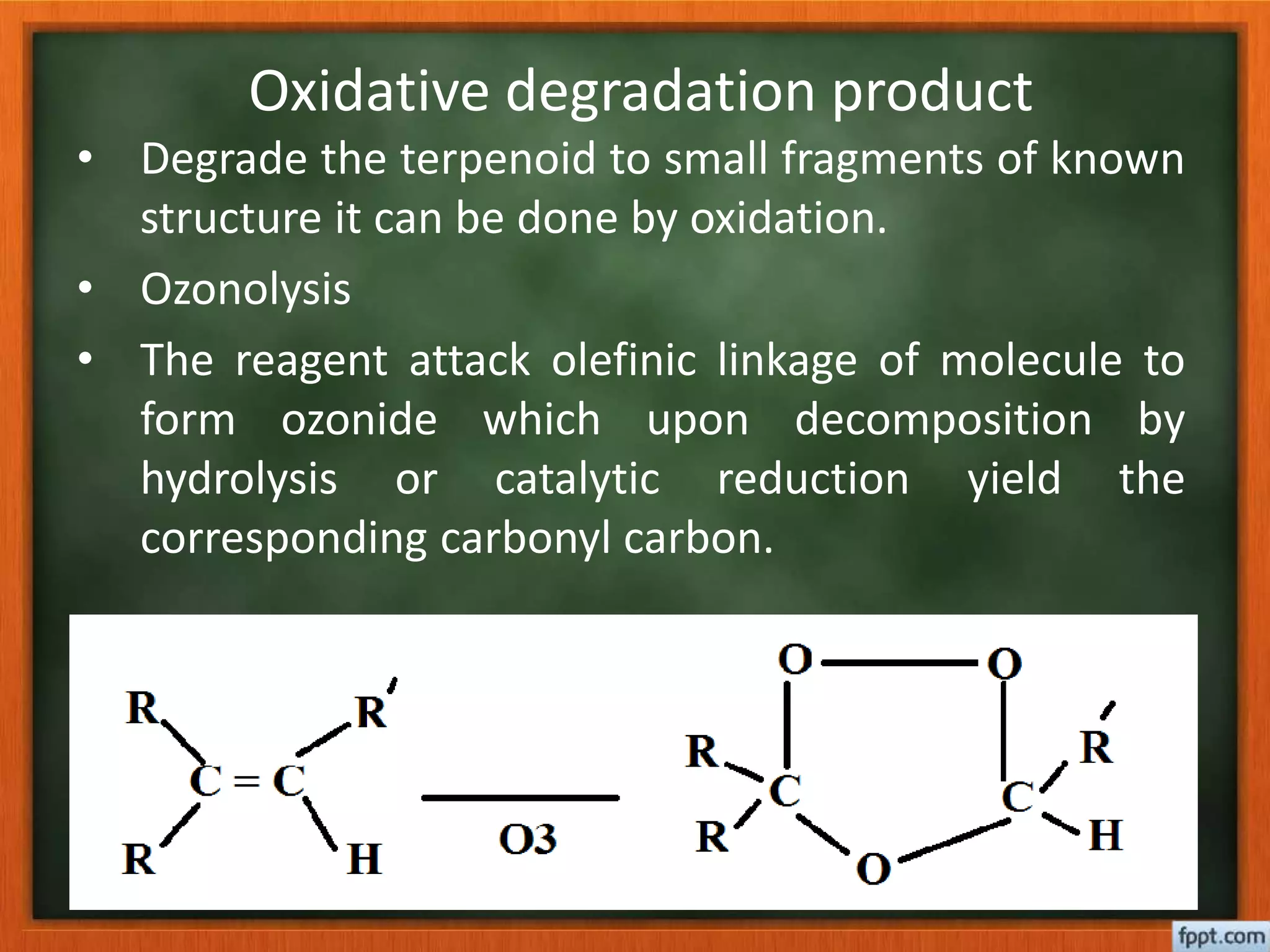
Oxidative degradation product
• Degrade the terpenoid to small fragments of known
structure it can be done by oxidation.
• Ozonolysis
• The reagent attack olefinic linkage of molecule to
form ozonide which upon decomposition by
hydrolysis or catalytic reduction yield the
corresponding carbonyl carbon.
• Ozonolysis locate position of double bond in
a molecule.
• The formation of acetone and
formaldehyde reveals the presence of
isopropylidene and terminal double bond
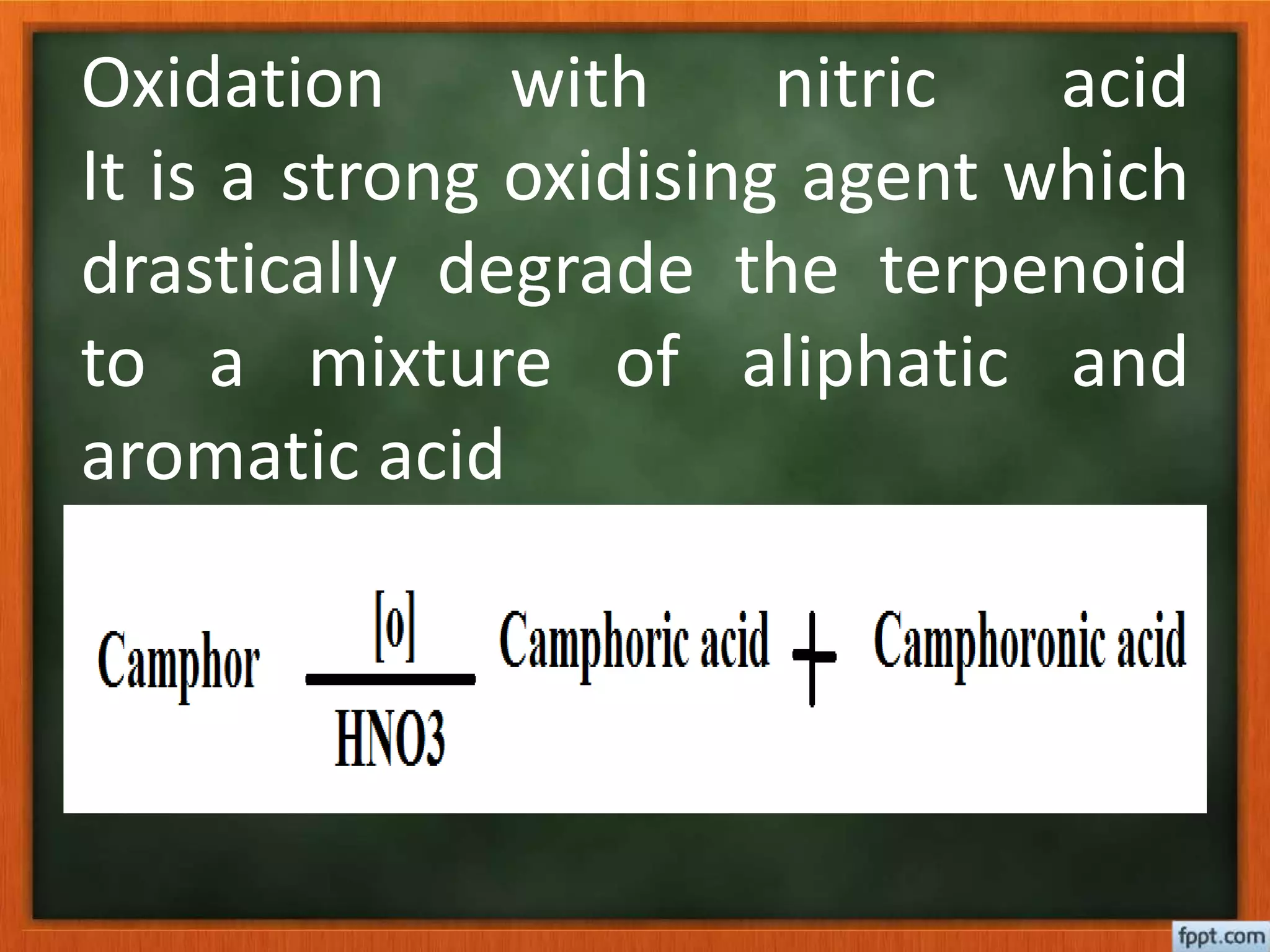
Oxidation with nitric acid
It is a strong oxidising agent which
drastically degrade the terpenoid
to a mixture of aliphatic and
aromatic acid
Haloform reaction
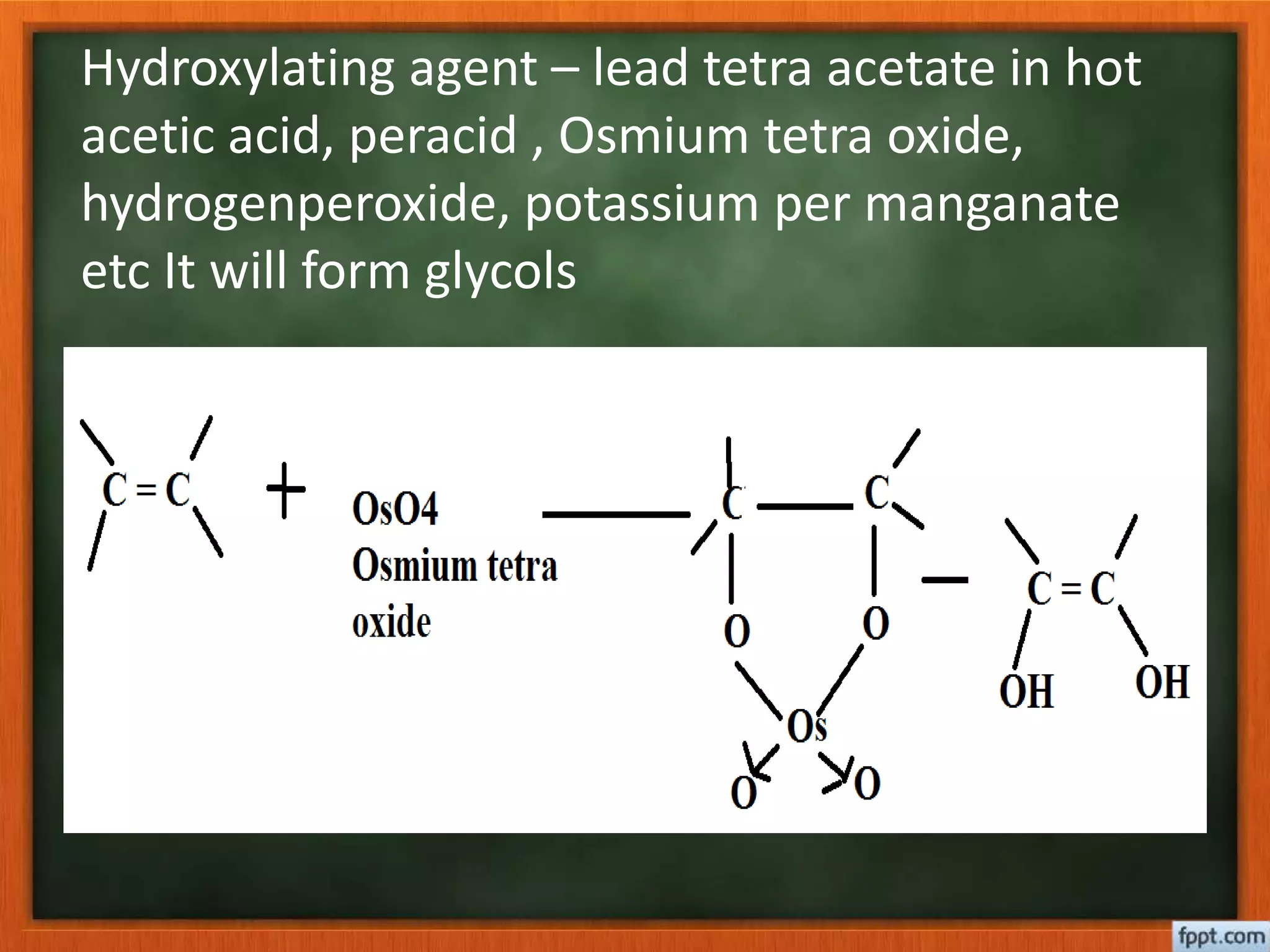
Hydroxylating agent – lead tetra acetate in hot
acetic acid, peracid , Osmium tetra oxide,
hydrogenperoxide, potassium per manganate
etc It will form glycols
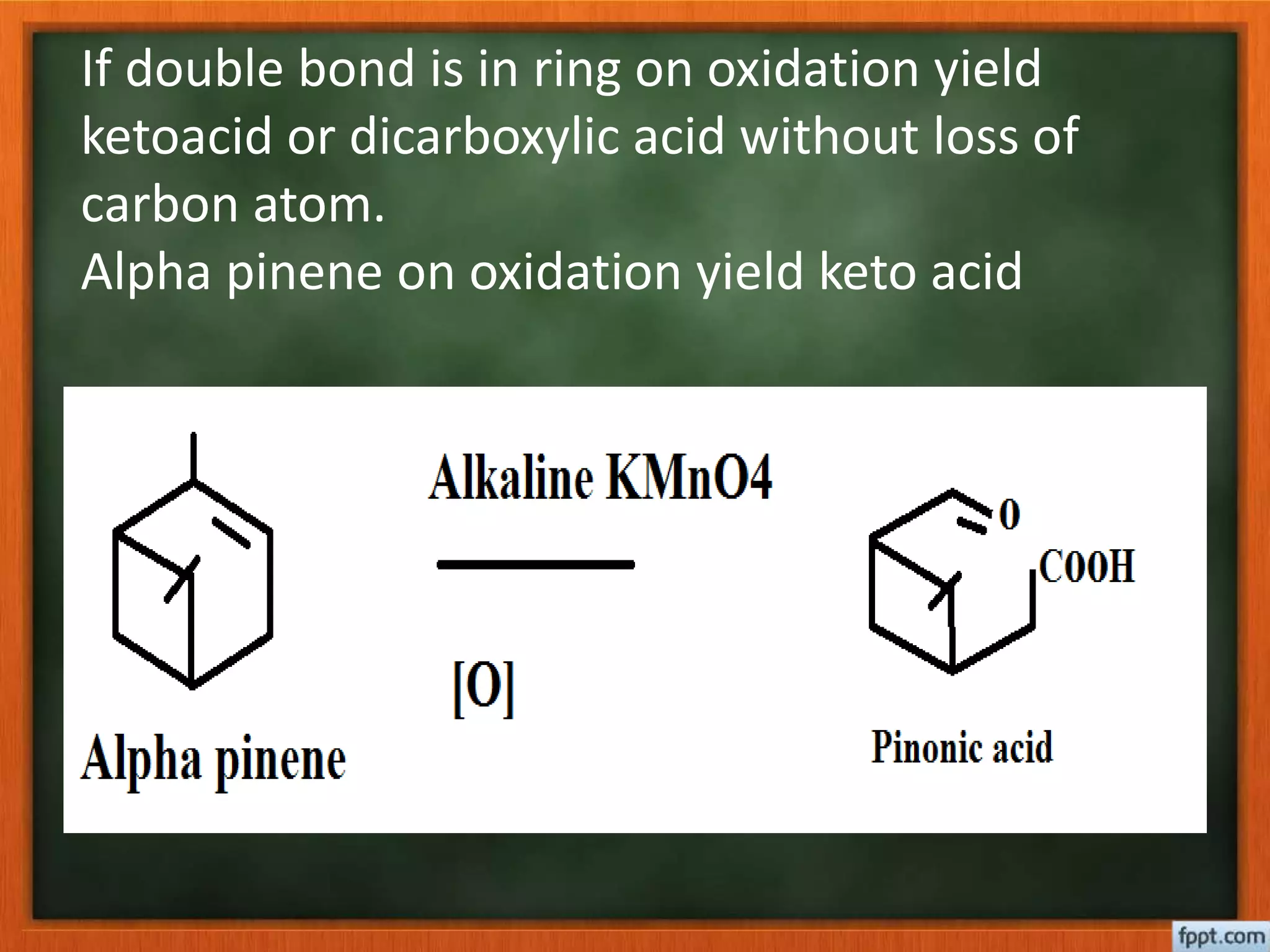
If double bond is in ring on oxidation yield
ketoacid or dicarboxylic acid without loss of
carbon atom.
Alpha pinene on oxidation yield keto acid
Dehydration
when terpenoid with alcohol or ketonic group
heated with dehydrating agent, these lose a
molecule of water and converted into simple
aromatic compound
When open chain terpenoids are
dehydrated with dehydrating agent they
yield cyclic compound
Dehydrogenation
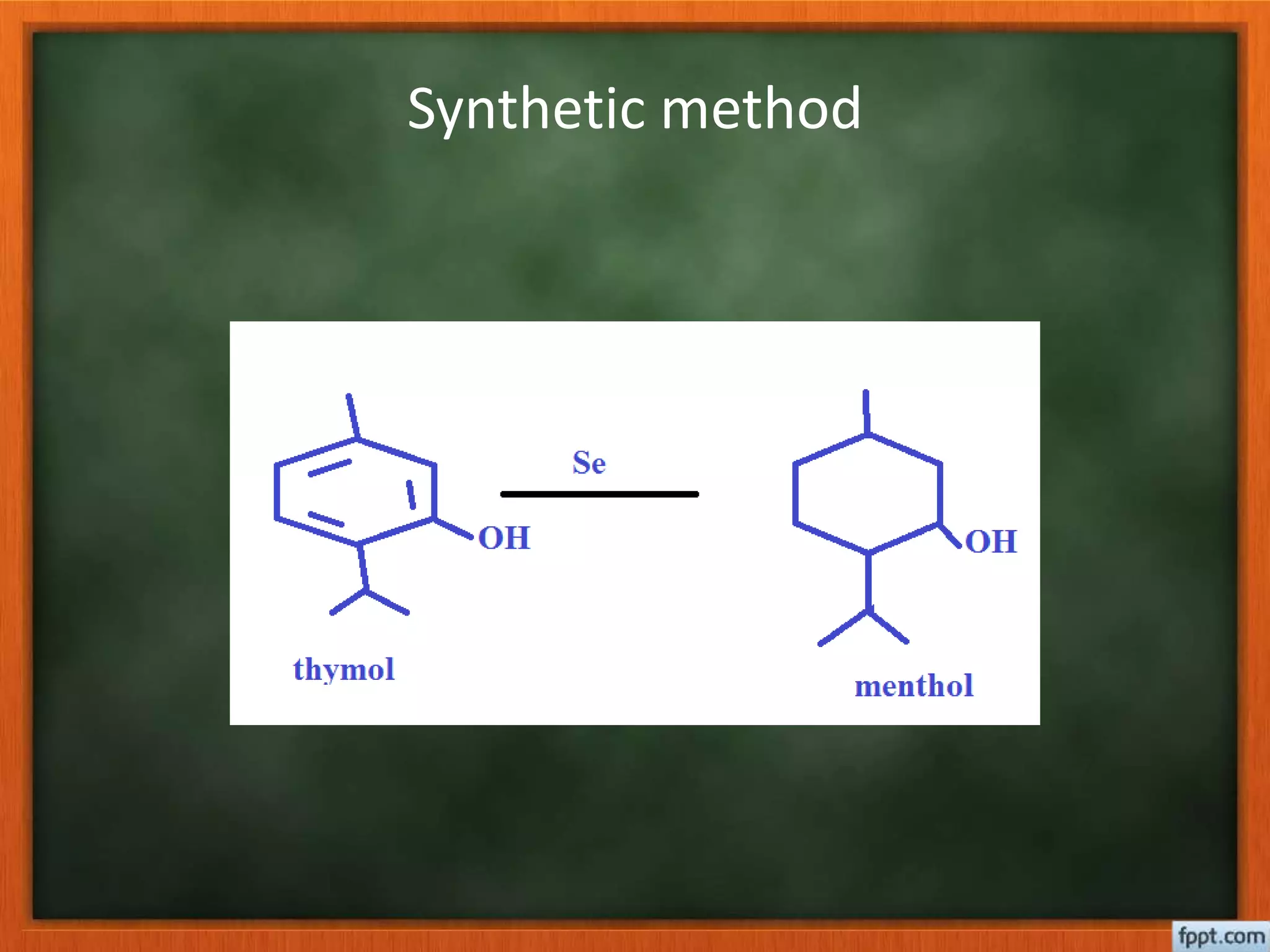
• When terpenoid is heated with Zn, I, Br,S,Se
and palladium they are converted into
aromatic compound of known structure.
• If it is unknown which can be determined
by synthesis.
• By this method the skeleton structure and
position of side chain in original terpenoids
can be determined.
Dehydrogenation
Synthetic method
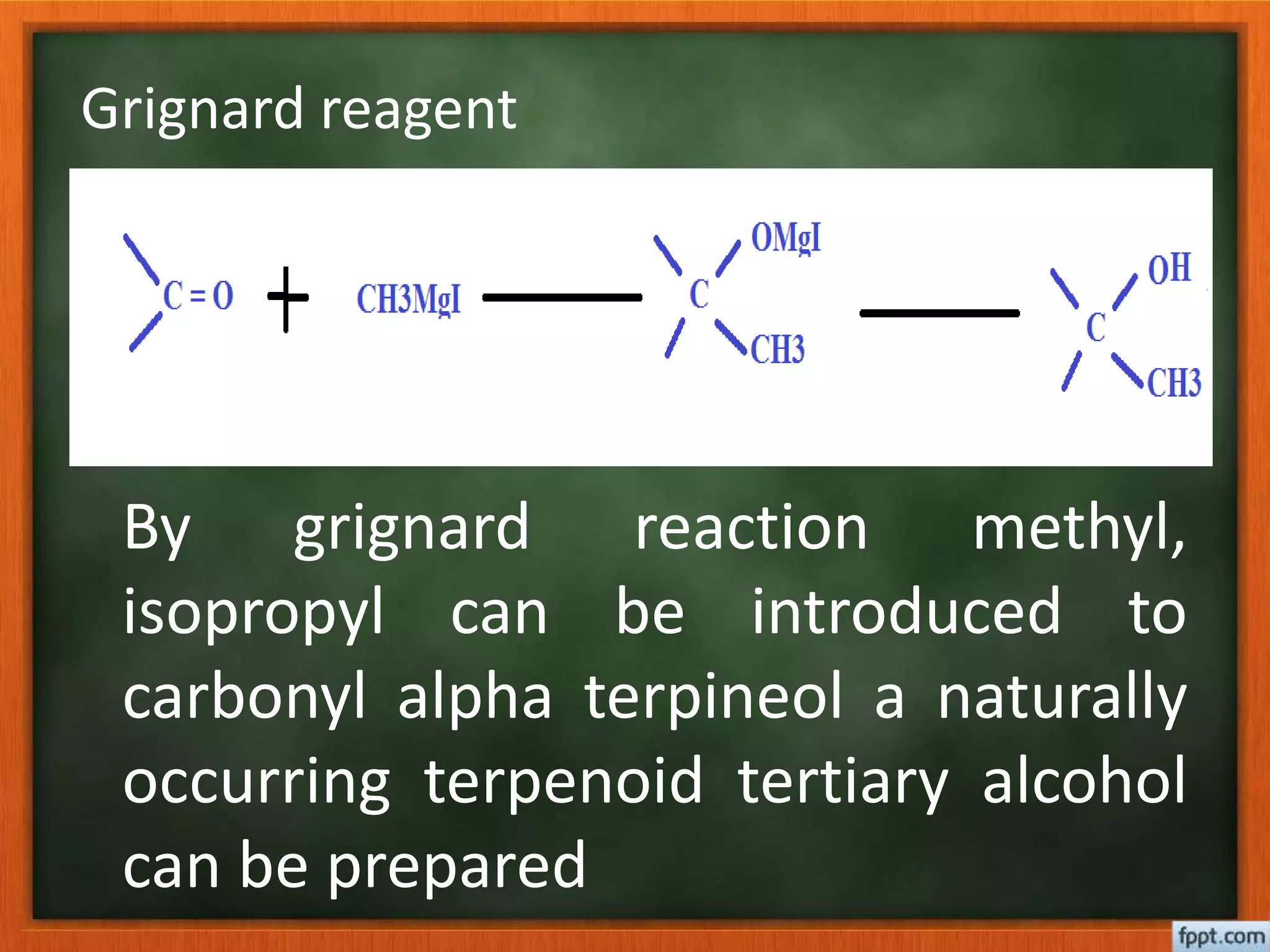
Grignard reagent
By grignard reaction methyl,
isopropyl can be introduced to
carbonyl alpha terpineol a naturally
occurring terpenoid tertiary alcohol
can be prepared
Reformatsky reaction- alpha substituted ester
treated with carbonyl [ aldehyde / ketone /
ester ] in the presence of zinc to form beta
hydroxy ester.later which is treated with dilute
acid to yield beta hydroxy acid which may
further converted to unsaturated acid or
hydrocarbon
Physical methods
• UV- detection of conjugation.
• IR
• NMR
• Mass spectroscopy
• Optical rotation
• X ray analysis
• Knowledge about rearrangement
• synthesis
THANK YOU

5.Determination of structure of terpenoid

  • 1.
    Determination of Structure of Terpenoid Preparedby Dr. N.GOPINATHAN ASSISTANT PROFESSOR DEPARTMENT OF PHARMACEUTICAL CHEMISTRY FACULTY OF PHARMACY SRI RAMACHANDRA UNIVERSITY CHENNAI-116 TAMILNADU INDIA
  • 2.
    General structural elucidation •Determination of molecular formulae of a pure specimen – elemental analysis. • If it is optically active, its specific rotation is measured. It helps to distinguish the two or more possible structure as in limonene and carvone.
  • 3.
    • Analytical method •Synthetic • Physical • Knowledge of a molecular rearrangement • Synthesis
  • 4.
    Nature of oxygenatom • Hydroxy group • Formation of acetates with acetic anhydride
  • 5.
    Benzoates with 3,5dinitro benzoyl chloride
  • 6.
    Formation of urethanewith phenyl iso cyanate Nature of OH is revealed by esterification rate primary > secondary > tertiary
  • 7.
  • 8.
    Carbonyl group-It canbe ascertained by oxidation to show whether it is a ketone or aldehyde Carbon less in number
  • 9.
  • 10.
    CH2-C=O group in ringon oxidation it yield dicarboxylic acid without any loss of carbon atom
  • 11.
    Methyl ketone –COCH3 •Detected by haloform reaction – oxidation- it yields acetic acid
  • 12.
    COOH group • Effervescencewith sodiumbicarbonate. • Number of cooH group is estimated by titrating with standard alkali • The point of attachment of COOH to primary, secondary or tertiary is determined by rate of esterification. • primary > secondary > tertiary. • Tertiary is difficult to esterify.
  • 13.
    Isopropylidene It isdetermined by ozonolysis to acetone. The amount of acetone is estimated volumetrically and the number of isopropylidene group is determined Isopropenyl
  • 14.
    Presence of unsaturationis ascertained by addition product. From number of consumption of H2 molecule the number of double bond can be estimated The number of halogen consumed would give the amount of unsaturation
  • 15.
  • 16.
    Tilden’s reagent It formscrystalline product having sharp melting point and be used for identification and separation of terpenoids. C=C both are tertiary gives blue colour. One is tertiary and other is secondary gives colourless complex
  • 18.
    Epoxide formation bytreated with peracid Presence of conjugated system can be determined by the Diel’s alder reaction
  • 19.
    Number of rings •From number of olefinic double bonds, nature of functional groups and molecular formula of terpenoid, It is possible to find out the molecular formula of the parent saturated hydrocarbon.
  • 20.
    Example • Citral C10H16Owith two double bond and one carbonyl group. The molecular formula of the parent saturated hydrocarbon. It is considere with acyclic general formulae thus citral must be Acyclic
  • 21.
    From molecular refraction,the nature of carbon skeleton of sesquiterpenoids can be ascertained
  • 22.
    Oxidative degradation product •Degrade the terpenoid to small fragments of known structure it can be done by oxidation. • Ozonolysis • The reagent attack olefinic linkage of molecule to form ozonide which upon decomposition by hydrolysis or catalytic reduction yield the corresponding carbonyl carbon.
  • 23.
    • Ozonolysis locateposition of double bond in a molecule. • The formation of acetone and formaldehyde reveals the presence of isopropylidene and terminal double bond
  • 24.
    Oxidation with nitricacid It is a strong oxidising agent which drastically degrade the terpenoid to a mixture of aliphatic and aromatic acid
  • 25.
  • 26.
    Hydroxylating agent –lead tetra acetate in hot acetic acid, peracid , Osmium tetra oxide, hydrogenperoxide, potassium per manganate etc It will form glycols
  • 27.
    If double bondis in ring on oxidation yield ketoacid or dicarboxylic acid without loss of carbon atom. Alpha pinene on oxidation yield keto acid
  • 28.
    Dehydration when terpenoid withalcohol or ketonic group heated with dehydrating agent, these lose a molecule of water and converted into simple aromatic compound
  • 29.
    When open chainterpenoids are dehydrated with dehydrating agent they yield cyclic compound
  • 30.
    Dehydrogenation • When terpenoidis heated with Zn, I, Br,S,Se and palladium they are converted into aromatic compound of known structure. • If it is unknown which can be determined by synthesis. • By this method the skeleton structure and position of side chain in original terpenoids can be determined.
  • 31.
  • 32.
  • 33.
    Grignard reagent By grignardreaction methyl, isopropyl can be introduced to carbonyl alpha terpineol a naturally occurring terpenoid tertiary alcohol can be prepared
  • 34.
    Reformatsky reaction- alphasubstituted ester treated with carbonyl [ aldehyde / ketone / ester ] in the presence of zinc to form beta hydroxy ester.later which is treated with dilute acid to yield beta hydroxy acid which may further converted to unsaturated acid or hydrocarbon
  • 35.
    Physical methods • UV-detection of conjugation. • IR • NMR • Mass spectroscopy • Optical rotation • X ray analysis • Knowledge about rearrangement • synthesis
  • 36.