TERPENES
INTRODUCTION,CLASSIFICATION,
BIOSYNTHESIS AND IMPORTANCE
BY NAVEED UL MUSHTAQ
SECONDARY METABOLITES
• Plants produce a large, diverse array of organic
compounds that appear to have no direct function
in growth, development, photosynthesis,
respiration, solute transport, translocation, protein
synthesis, nutrient assimilation differentiation, or
the formation of carbohydrates.
• These substances are known as secondary
metabolites, secondary products, or natural
products.
• Secondary metabolites also differ from primary
metabolites in having a restricted distribution in
the plant kingdom.
Secondary Metabolites Are Divided into
Three Major Groups
• Plant secondary metabolites can be divided
into three chemically distinct groups:
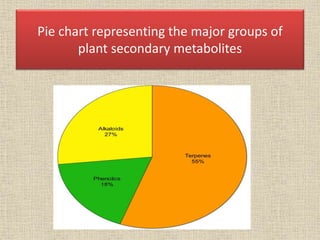
Terpenes(25,000 types)
Phenolics (8,000 types) and
Nitrogen- containing compounds
• The terpenes, or terpenoids, constitute the
largest class of secondary products.
• Terpenoids - oxygen-containing terpenes.
Pie chart representing the major groups of
plant secondary metabolites
TERPENES
• The term terpenes originates from turpentine
(lat. balsamum terebinthinae). Turpentine, the
so-called "resin of pine trees", is the viscous
pleasantly smelling,insoluble in water which
flows upon cutting or carving the bark and the
new wood of several pine tree species
(Pinaceae).
• Turpentine contains the "resin acids" and
some hydrocarbons, which were originally
referred to as terpenes.
Terpenes are Formed by the Fusion of Five-
Carbon Isoprene Units
• All terpenes are derived from the union of five-
carbon elements that have the branched carbon
skeleton of isopentane.
• The basic structural elements of terpenes are
sometimes called isoprene units because
terpenes can decompose at high temperatures to
give isoprene.
• All terpenes are occasionally referred to as
isoprenoids.
CLASSIFICATION OF TERPENES
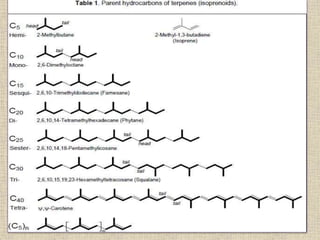
• Terpenes are classified by the number of five-
carbon units they contain.
• Ten-carbon terpenes, which contain two C5 units,
are called monoterpenes
• 15-carbon terpenes (three C5 units) are
sesquiterpenes
• 20-carbon terpenes (four C5 units) are
diterpenes.
• Larger terpenes include triterpenes (30 carbons),
tetraterpenes (40 carbons),and poly terpenoids
([C5]n carbons, where n > 8).
There Are Two Pathways for Terpenes
Biosynthesis
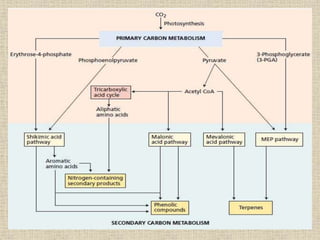
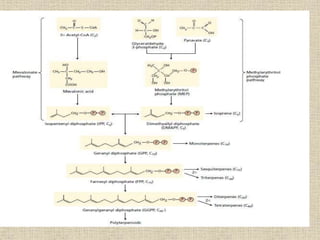
• Terpenes are biosynthesized from primary
metabolites in at least two different ways. In the
well-studied mevalonic acid pathway, three
molecules of acetyl-CoA are joined together
stepwise to form mevalonic acid.
• This key six-carbon intermediate is then
pyrophosphorylated, decarboxylated, and
dehydrated to yield isopentenyl diphosphate
(IPP).
• IPP is the activated five-carbon building block of
terpenes.
Biosynthesis
• IPP also can be formed from intermediates of
glycolysis or the photosynthetic carbon reduction
cycle via a separate set of reactions called the
methylerythritol phosphate (MEP) pathway
• It operates in chloroplasts and other plastids
• Glyceraldehyde-3-phosphate and two carbon
atoms derived from pyruvate appear to combine
to generate an intermediate that is eventually
converted to IPP.
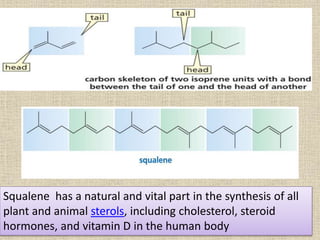
Squalene has a natural and vital part in the synthesis of all
plant and animal sterols, including cholesterol, steroid
hormones, and vitamin D in the human body
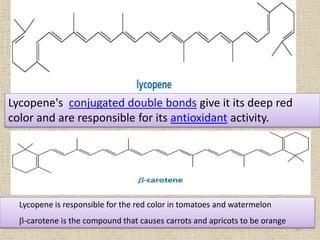
Lycopene is responsible for the red color in tomatoes and watermelon
-carotene is the compound that causes carrots and apricots to be orange
14
Lycopene's conjugated double bonds give it its deep red
color and are responsible for its antioxidant activity.
IMPORTANCE
• Biologically, the monoterpenes have been found to possess a
variety of biological effects, including antibacterial, sedative,
antitumor, cytotoxic, anti-inflammatory, insecticidal,
molluscidal and others.
• They have historically been important ingredients individually
in medicinal and economic products including cosmetics and
other fragrant products.
• One of the best known and most often used monoterpenes is
menthol which has been used as a topical antipruritic, a
counterirritant in external analgesic preparations, as
antiseptic and as a flavoring agent in chewing gums,
toothpaste and tobacco products such as cigarettes.
IMPORTANCE
• In drug discovery research reports, linalool, a
monoterpene alcohol found in the essential oils
from many aromatic plants was determined to
be able to moderately inhibit cell proliferation.
• Miliusol, miliusate and miliusane demonstrated
potent cytotoxic activity against a panel of cancer
cell lines.
• Horticulturally, the pyrethrins from Pyrethrum
cinerariaefolium flowers have been used as
potent natural insecticides.
IMPORTANCE
• Cumene is a terpene that has been used in
bioremediation studies
Terpenes

Terpenes

  • 1.
  • 2.
    SECONDARY METABOLITES • Plantsproduce a large, diverse array of organic compounds that appear to have no direct function in growth, development, photosynthesis, respiration, solute transport, translocation, protein synthesis, nutrient assimilation differentiation, or the formation of carbohydrates. • These substances are known as secondary metabolites, secondary products, or natural products. • Secondary metabolites also differ from primary metabolites in having a restricted distribution in the plant kingdom.
  • 3.
    Secondary Metabolites AreDivided into Three Major Groups • Plant secondary metabolites can be divided into three chemically distinct groups: Terpenes(25,000 types) Phenolics (8,000 types) and Nitrogen- containing compounds • The terpenes, or terpenoids, constitute the largest class of secondary products. • Terpenoids - oxygen-containing terpenes.
  • 4.
    Pie chart representingthe major groups of plant secondary metabolites
  • 5.
    TERPENES • The termterpenes originates from turpentine (lat. balsamum terebinthinae). Turpentine, the so-called "resin of pine trees", is the viscous pleasantly smelling,insoluble in water which flows upon cutting or carving the bark and the new wood of several pine tree species (Pinaceae). • Turpentine contains the "resin acids" and some hydrocarbons, which were originally referred to as terpenes.
  • 6.
    Terpenes are Formedby the Fusion of Five- Carbon Isoprene Units • All terpenes are derived from the union of five- carbon elements that have the branched carbon skeleton of isopentane. • The basic structural elements of terpenes are sometimes called isoprene units because terpenes can decompose at high temperatures to give isoprene. • All terpenes are occasionally referred to as isoprenoids.
  • 7.
    CLASSIFICATION OF TERPENES •Terpenes are classified by the number of five- carbon units they contain. • Ten-carbon terpenes, which contain two C5 units, are called monoterpenes • 15-carbon terpenes (three C5 units) are sesquiterpenes • 20-carbon terpenes (four C5 units) are diterpenes. • Larger terpenes include triterpenes (30 carbons), tetraterpenes (40 carbons),and poly terpenoids ([C5]n carbons, where n > 8).
  • 9.
    There Are TwoPathways for Terpenes Biosynthesis • Terpenes are biosynthesized from primary metabolites in at least two different ways. In the well-studied mevalonic acid pathway, three molecules of acetyl-CoA are joined together stepwise to form mevalonic acid. • This key six-carbon intermediate is then pyrophosphorylated, decarboxylated, and dehydrated to yield isopentenyl diphosphate (IPP). • IPP is the activated five-carbon building block of terpenes.
  • 10.
    Biosynthesis • IPP alsocan be formed from intermediates of glycolysis or the photosynthetic carbon reduction cycle via a separate set of reactions called the methylerythritol phosphate (MEP) pathway • It operates in chloroplasts and other plastids • Glyceraldehyde-3-phosphate and two carbon atoms derived from pyruvate appear to combine to generate an intermediate that is eventually converted to IPP.
  • 13.
    Squalene has anatural and vital part in the synthesis of all plant and animal sterols, including cholesterol, steroid hormones, and vitamin D in the human body
  • 14.
    Lycopene is responsiblefor the red color in tomatoes and watermelon -carotene is the compound that causes carrots and apricots to be orange 14 Lycopene's conjugated double bonds give it its deep red color and are responsible for its antioxidant activity.
  • 15.
    IMPORTANCE • Biologically, themonoterpenes have been found to possess a variety of biological effects, including antibacterial, sedative, antitumor, cytotoxic, anti-inflammatory, insecticidal, molluscidal and others. • They have historically been important ingredients individually in medicinal and economic products including cosmetics and other fragrant products. • One of the best known and most often used monoterpenes is menthol which has been used as a topical antipruritic, a counterirritant in external analgesic preparations, as antiseptic and as a flavoring agent in chewing gums, toothpaste and tobacco products such as cigarettes.
  • 16.
    IMPORTANCE • In drugdiscovery research reports, linalool, a monoterpene alcohol found in the essential oils from many aromatic plants was determined to be able to moderately inhibit cell proliferation. • Miliusol, miliusate and miliusane demonstrated potent cytotoxic activity against a panel of cancer cell lines. • Horticulturally, the pyrethrins from Pyrethrum cinerariaefolium flowers have been used as potent natural insecticides.
  • 17.
    IMPORTANCE • Cumene isa terpene that has been used in bioremediation studies