Copy right
By
Dr.N.Gopinathan
Assistant professor
Faculty of pharmacy
SRIHER DU
CHENNAI-INDIA
IPR - World Intellectual Property
Organization (WIPO),
“Intellectual Property, very broadly,
means the legal rights which result
from intellectual activity in the
industrial, scientific, literary and
artistic fields.
Copy right
• Copyright is a branch of Intellectual
Property Rights and an exclusive legal
right given by the judiciary to the creator
on his creation.
• As a creator (he/she/group) has rights to
enjoy financial and other benefits
associated as per the law over the
creation.
Violation of copyright
• Violation of copyright law would lead to
several judiciary consequences.
• On the other hand law permits libraries
to use copyrighted material for research
and academic purpose without any
permission from the copyright holder.
• Further, any violation or an infringement
of fair use of library resources is
punishable under copyright act.
Copy right
A work is
considered to
be original if it
owe its origin
to author and
was not copied
from an
existing work.
To get protection from the copyright
law the work should possess the
following
• The work must be an original one (Original
means, the work has been created from
inspiration and not copied from any other
existing sources. The work must have been
created for the first time)
• It must be fixed in any tangible form
Nature of work under copy right
• The presentation of the work must be in the
expressible and physical form and should be
capable of being to identified in a fixed
form/identified in its existence
or
• Tangible form such as paper, recordings on
optical media, paintings, documents, web
servers etc
To get protection from the copyright
law the work should possess the
following
• Must be First publication
• Work published after the death of author, at the time of death
author must own the citizenship in India
• In case, work published out of India, at that time author must be
citizen of India
Kind of work covered by copyright
include
• Literary works
• Musical works
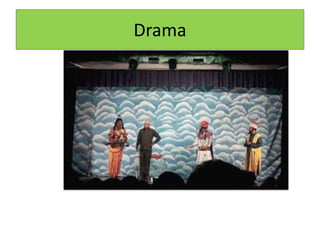
• Dramatic works
• Artistic works
• Cinematograph films
• Architectural works
• Sound recordings
• Computer program/software
•
newspaper,
Kind of work covered by copyright
include
• databases films,
• musical compositions
• choreography
Artistic works such as
• paintings,
• drawings,
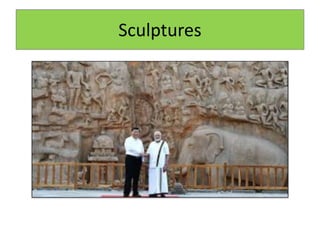
• photographs and sculptures
• architectures
• Advertisement
• map
• technical drawing
Music
Musical composition with or without
words.
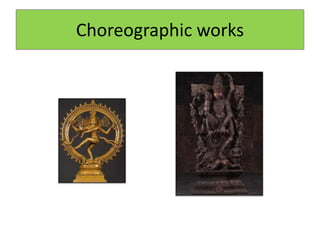
Choreographic works
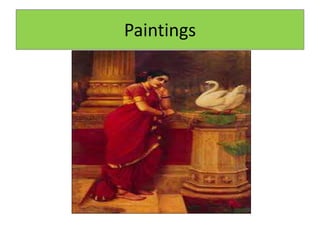
Paintings
Literary work such as books pamphlets
and other writings
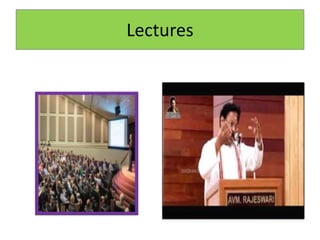
Lectures
Addresses by swami vivekananda in
chicago in 1893
Seminars
Drama
Musical work
Newspaper
Computer programme
Sculptures
Rights of Author/creator
1.Statutory Rights or Negative rights
Copyright law provides an exclusive
legal or statutory right to the original
author on his creation of work. It
imposes a ‘negative duty’ on others
that prohibits from using or getting
benefit from the work without the
consent of the author.
2.Economic Rights
• The economic right provides author to enjoy
the financial benefits.
• The creator can earn royalty by assigning
rights to others either fully or partially.
• As per the international conventions,
generally every national copyright statute
provides following exclusive rights to the
copyright holder.
Economic Rights
• Adaption rights
• Distribution rights
• Public performance rights
• Public display of works rights
• Rental rights
• Reproduction rights
• Translation rights
3.Moral Rights
Copyright law always protects the creator even
after the assignment of copyright work to others
either fully or partially.
Moral rights grant an author the right to have
his name kept on the work forever and protects
from any distortion or modification of the work,
or other offensive action in relation to the work,
which would be damaging to the author’s
reputation.
Limitation and exception
• Educational purpose
• For criticism
• Comment or review
• Journal reporting
• Judicial proceedings
• Research
• The user is exempt from seeking permission of
the copy right owner or creator.
• When in doubt , should either seek permission
or avoid using the work
• Works that have not be fixed in a tangible
form of expression eg- choreographic
• Works consist of information that is common
property and containing no original
authorship eg- calender
• Laws, official decision or news are generally
excluded from copyright protection.
Copyright protection is not provided
for;
• Works not fixed in tangible form
• Titles, names, short phrases, slogans, methods, factual information,
symbols or designs –however trademark law may provide some
protections to these works
• Ideas or concepts, procedures, process, plans, principles,
discoveries, and guidelines –however in such cases patent or trade
secret law may provide protections to these works
• Works that are already in public domain and original authorship is
not traceable are not covered under copyright law
• Copyright works that are already expired
Term of Copyright protection
• Normally current copyright doesn’t require
any kind of registration for its protection.
Once the work created in tangible form, an
author automatically gets the copyright on his
creation.
• 1.The copyright term in respect to published
literary, dramatic, musical and artistic works is
lifetime of the author plus 60 years from the
death of the author.
Term of Copyright protection
• In case of multiple authors the term is 60 years from the death of last
author.
• In case of anonymous and pseudonymous works, the copyright term is 60
years from the date publication.
• Copyright protection for photographs, cinematograph films, and sound
recordings is 60 years from the date of publication.
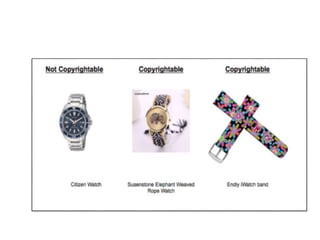
• In the case of works of applied art and photographic works, the minimum
term is 25 years from the creation of such a work.
The infringement of a copyright is
solely held responsible for his
misconduct.
• Performing publicly without any consent of the owner
• Using copyrighted work for any kind of business which
brings financial benefit
• Distributing for the purpose of trade or import
• Reproduction of substantial part of copyrighted work in
any material form
• Circulating among the unauthorized persons
• Adoption or translation of copyright work
without any permission
• Resale or renting of copyrighted material to
other
Reference
•
(9) (PDF) Understanding Copyright Laws:
Infringement, Protection and Exceptions.
Available from:
https://www.researchgate.net/publication/30
1890434_Understanding_Copyright_Laws_Infr
ingement_Protection_and_Exceptions
[accessed Oct 14 2019].
References
• Prakash, Pranesh (2012). Exhaustion: Imports, Exports, and the Doctrine of First Sale in Indian
Copyright Law. NUJS Law Review, Vol 5, Iss. 4, p635-664.
• Uppaluri, Ujwala (2012). The Libraries Exception: What the Amended Copyright Act does (and
should do) for Preserving and Sharing Knowledge in the Digital Era. NUJS Law Review, Vol 5, Iss. 4,
p665-685
• Crews, Kenneth D (2013). Copyright Law for Librarians and educators. American Library
Association.Chicago, ISBN: 97881840882 470.
• Alka Chawla (2013). Law of Copyright. Lexis Nexis Inida. Gurgaon, ISBN: 9788180388354.
• http://www.wipo.int/portal/en/index.html
• http://copyright.gov.in/documents/handbook.html
• http://copyright.gov/title17/circ92.

Copyright

  • 1.
  • 2.
    IPR - WorldIntellectual Property Organization (WIPO), “Intellectual Property, very broadly, means the legal rights which result from intellectual activity in the industrial, scientific, literary and artistic fields.
  • 3.
    Copy right • Copyrightis a branch of Intellectual Property Rights and an exclusive legal right given by the judiciary to the creator on his creation. • As a creator (he/she/group) has rights to enjoy financial and other benefits associated as per the law over the creation.
  • 4.
    Violation of copyright •Violation of copyright law would lead to several judiciary consequences. • On the other hand law permits libraries to use copyrighted material for research and academic purpose without any permission from the copyright holder. • Further, any violation or an infringement of fair use of library resources is punishable under copyright act.
  • 5.
    Copy right A workis considered to be original if it owe its origin to author and was not copied from an existing work.
  • 6.
    To get protectionfrom the copyright law the work should possess the following • The work must be an original one (Original means, the work has been created from inspiration and not copied from any other existing sources. The work must have been created for the first time) • It must be fixed in any tangible form
  • 7.
    Nature of workunder copy right • The presentation of the work must be in the expressible and physical form and should be capable of being to identified in a fixed form/identified in its existence or • Tangible form such as paper, recordings on optical media, paintings, documents, web servers etc
  • 8.
    To get protectionfrom the copyright law the work should possess the following • Must be First publication • Work published after the death of author, at the time of death author must own the citizenship in India • In case, work published out of India, at that time author must be citizen of India
  • 9.
    Kind of workcovered by copyright include • Literary works • Musical works • Dramatic works • Artistic works • Cinematograph films • Architectural works • Sound recordings • Computer program/software • newspaper,
  • 10.
    Kind of workcovered by copyright include • databases films, • musical compositions • choreography Artistic works such as • paintings, • drawings, • photographs and sculptures • architectures • Advertisement • map • technical drawing
  • 11.
  • 12.
    Musical composition withor without words.
  • 13.
  • 14.
  • 16.
    Literary work suchas books pamphlets and other writings
  • 17.
  • 18.
    Addresses by swamivivekananda in chicago in 1893
  • 19.
  • 20.
  • 21.
  • 22.
  • 23.
  • 24.
  • 25.
  • 26.
    1.Statutory Rights orNegative rights Copyright law provides an exclusive legal or statutory right to the original author on his creation of work. It imposes a ‘negative duty’ on others that prohibits from using or getting benefit from the work without the consent of the author.
  • 27.
    2.Economic Rights • Theeconomic right provides author to enjoy the financial benefits. • The creator can earn royalty by assigning rights to others either fully or partially. • As per the international conventions, generally every national copyright statute provides following exclusive rights to the copyright holder.
  • 28.
    Economic Rights • Adaptionrights • Distribution rights • Public performance rights • Public display of works rights • Rental rights • Reproduction rights • Translation rights
  • 29.
    3.Moral Rights Copyright lawalways protects the creator even after the assignment of copyright work to others either fully or partially. Moral rights grant an author the right to have his name kept on the work forever and protects from any distortion or modification of the work, or other offensive action in relation to the work, which would be damaging to the author’s reputation.
  • 30.
    Limitation and exception •Educational purpose • For criticism • Comment or review • Journal reporting • Judicial proceedings • Research • The user is exempt from seeking permission of the copy right owner or creator.
  • 31.
    • When indoubt , should either seek permission or avoid using the work • Works that have not be fixed in a tangible form of expression eg- choreographic • Works consist of information that is common property and containing no original authorship eg- calender • Laws, official decision or news are generally excluded from copyright protection.
  • 32.
    Copyright protection isnot provided for; • Works not fixed in tangible form • Titles, names, short phrases, slogans, methods, factual information, symbols or designs –however trademark law may provide some protections to these works • Ideas or concepts, procedures, process, plans, principles, discoveries, and guidelines –however in such cases patent or trade secret law may provide protections to these works • Works that are already in public domain and original authorship is not traceable are not covered under copyright law • Copyright works that are already expired
  • 33.
    Term of Copyrightprotection • Normally current copyright doesn’t require any kind of registration for its protection. Once the work created in tangible form, an author automatically gets the copyright on his creation. • 1.The copyright term in respect to published literary, dramatic, musical and artistic works is lifetime of the author plus 60 years from the death of the author.
  • 34.
    Term of Copyrightprotection • In case of multiple authors the term is 60 years from the death of last author. • In case of anonymous and pseudonymous works, the copyright term is 60 years from the date publication. • Copyright protection for photographs, cinematograph films, and sound recordings is 60 years from the date of publication. • In the case of works of applied art and photographic works, the minimum term is 25 years from the creation of such a work.
  • 35.
    The infringement ofa copyright is solely held responsible for his misconduct. • Performing publicly without any consent of the owner • Using copyrighted work for any kind of business which brings financial benefit • Distributing for the purpose of trade or import • Reproduction of substantial part of copyrighted work in any material form
  • 36.
    • Circulating amongthe unauthorized persons • Adoption or translation of copyright work without any permission • Resale or renting of copyrighted material to other
  • 37.
    Reference • (9) (PDF) UnderstandingCopyright Laws: Infringement, Protection and Exceptions. Available from: https://www.researchgate.net/publication/30 1890434_Understanding_Copyright_Laws_Infr ingement_Protection_and_Exceptions [accessed Oct 14 2019].
  • 38.
    References • Prakash, Pranesh(2012). Exhaustion: Imports, Exports, and the Doctrine of First Sale in Indian Copyright Law. NUJS Law Review, Vol 5, Iss. 4, p635-664. • Uppaluri, Ujwala (2012). The Libraries Exception: What the Amended Copyright Act does (and should do) for Preserving and Sharing Knowledge in the Digital Era. NUJS Law Review, Vol 5, Iss. 4, p665-685 • Crews, Kenneth D (2013). Copyright Law for Librarians and educators. American Library Association.Chicago, ISBN: 97881840882 470. • Alka Chawla (2013). Law of Copyright. Lexis Nexis Inida. Gurgaon, ISBN: 9788180388354. • http://www.wipo.int/portal/en/index.html • http://copyright.gov.in/documents/handbook.html • http://copyright.gov/title17/circ92.