Glycosides
Dr.N.Gopinathan M.Pharm Ph.D
Assistant Professor
Faculty of Pharmacy
Sri Ramachandra
Medical college and Research institute ( Deemed University)
Chennai, Tamilnadu India.
• They obtained from plant or animal
sources.
• Upon acid or enzymatic hydrolysis
yield one or more sugar moieties
along with non sugar moiety.
• The sugar moiety is called glycone.
• The non sugar moiety is called
aglycone or genin
• Many plants store important chemicals in
the form of inactive glycosides.
• The most important clevage enzymes are
the glycosidic hydrolases and synthetic
enzyme is glycosyl transferases.
• If a glycone group is glucose, then the
molecule is glucoside
• Fructose – Fructoside
• Glucuronic acid - Glucuronide
Definition
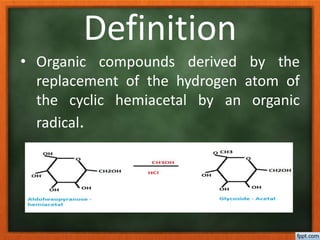
• Organic compounds derived by the
replacement of the hydrogen atom of
the cyclic hemiacetal by an organic
radical.
• The hydroxyl group that is derived
from carbonyl group by ring
formation [C1 in aldoses and C2 in
ketoses] is involved in glycoside
formation this hydroxyl group is
known as Glycosidic hydroxyl group.
• The organic radical linked at
glycosidic hydroxyl group is acid
labile.
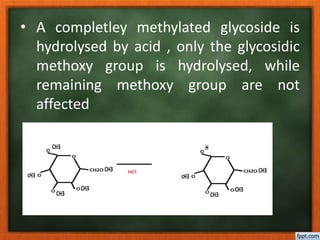
• A completley methylated glycoside is
hydrolysed by acid , only the glycosidic
methoxy group is hydrolysed, while
remaining methoxy group are not
affected
• The nature of the organic radical
attached at the glycosidic hydroxyl
group can be established by acidic
hydrolysis.
• The physiochemical and therapeutic
properties of glycosides depend on the
aglycone part.
• The sugar moiety helps for the
transportation of aglycone portion to
the site of action.
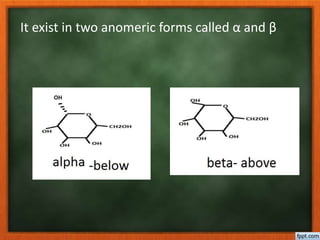
It exist in two anomeric forms called α and β
Glycoside , a sugar bonded through its
anomeric carbon to another group via
• Oxygen – O – glycosidic bond
• Carbon – C – glycosidic bond
• Sulphur – S- Glycosidic bond
• Thioglycoside
• Nitogen – N- glycosidic bond
• Glycoscylamine
Types of Glycosidic bond
• Depending on whether the glycosidic
bond lies above or below the plane of
the cyclic sugar molecule, the glycosides
are classified as α or β.
• Some enzyme α amylase can only
hydrolyse α linkages.
• Emulsin can only affect β linkages.
Classification
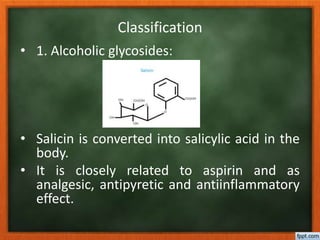
• 1. Alcoholic glycosides:
• Salicin is converted into salicylic acid in the
body.
• It is closely related to aspirin and as
analgesic, antipyretic and antiinflammatory
effect.
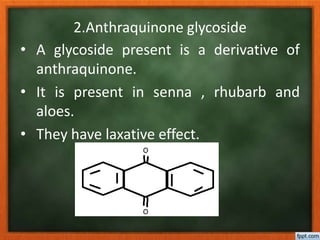
2.Anthraquinone glycoside
• A glycoside present is a derivative of
anthraquinone.
• It is present in senna , rhubarb and
aloes.
• They have laxative effect.
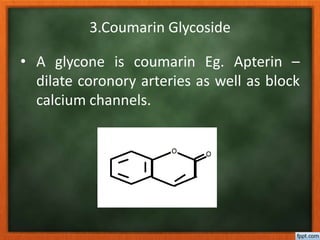
3.Coumarin Glycoside
• A glycone is coumarin Eg. Apterin –
dilate coronory arteries as well as block
calcium channels.
4.Cyanogenic glycoside
• A glycone contain a cyanide group.
• The glycoside can release the poisonous
hydrogen cyanide. Eg. Amygdalin from
almond.
• Cyanogenic glycosides can be found in
fruits [ includes cherries, apples, plums ,
almonds , peaches , apricots and
raspberries ]
• Therefore it has to be washed and
ground under running water prior to
consumption.
• Sorghum expresses cyanogenic
glycosides in roots and thus it is
ressistant to pests such as root
worms.
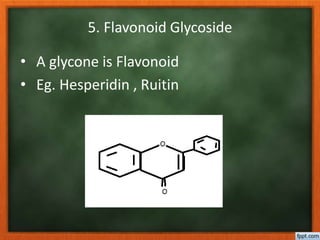
5. Flavonoid Glycoside
• A glycone is Flavonoid
• Eg. Hesperidin , Ruitin
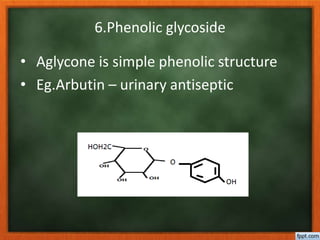
6.Phenolic glycoside
• Aglycone is simple phenolic structure
• Eg.Arbutin – urinary antiseptic
7. Saponin Glycoside
• It gives permanent froth when shaken
with water.
• Haemolysis of RBC.
• Saponin found in liquorice –
expectorant effect
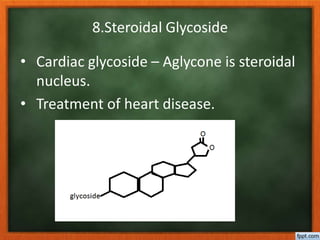
8.Steroidal Glycoside
• Cardiac glycoside – Aglycone is steroidal
nucleus.
• Treatment of heart disease.
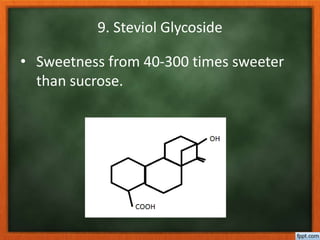
9. Steviol Glycoside
• Sweetness from 40-300 times sweeter
than sucrose.
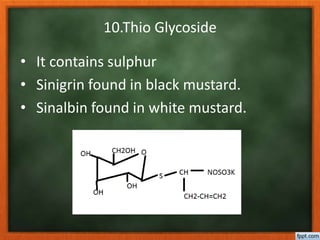
10.Thio Glycoside
• It contains sulphur
• Sinigrin found in black mustard.
• Sinalbin found in white mustard.
Keller-Kiliani test
• Specific for glycosides with 2 des
oxy sugars.
• Glycoside dissolved in glacial acetic
acid containing a trace of ferric
chloride and conc.H2SO4.
• The acetic acid layer turns blue.
Legal test
• A solution of silver diammine ion
indicates the presence of butenolide
ring.
Baljet reaction : Cardenolide with alkaline
picrate solution gives orange colour
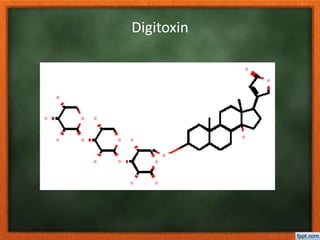
Digitoxin
• It is cardiac glycoside.
• Congestive heart failure treatment
• C10H64O13
• 17 th position lactone ring
• Steroid nucleus.
• 14 beta hydroxy is belived to be
dispensible
• If A/B Cis is converted into A/B trans
Activity will be dropped.
• Steroid nucleus with a unique set of
fused rings, which makes these
agents easily distinguished from the
other steroids.
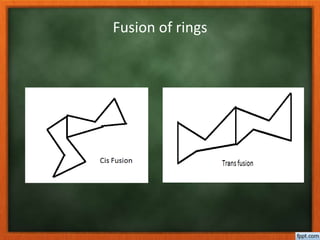
• Ring A/B and C/D are Cis fused
where B/C is trans.
• This type of ring fusion gives
aglycone nucleus of cardiac
glycoside the characteristic U
shape.
• It also carries the two angular
methyl group at C10 & C13.
• Hydroxyl group is located at C3,
the site of sugar attachment.
• Hydroxyl group is located at C14 is
normally unsubstituted.
• The additional OH group is found at
C12 and C16 eg Digitoxigenin,
digoxigenin and gitoxigenin.
• The additional OH group have
significant impart on the
partitioning and pharmacokinetics
for each glycoside.
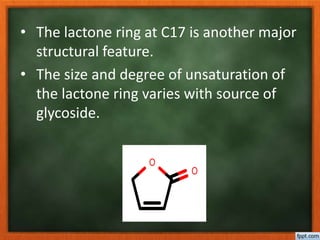
• The lactone ring at C17 is another major
structural feature.
• The size and degree of unsaturation of
the lactone ring varies with source of
glycoside.
O
O
Plant origin have cardenolide, possess α,β
unsaturated lactone ring varies with
source of glycoside.
Animals origin have bufadienolide possess
six membered pyranone ring with two
conjugated double bonds [α pyranone ]
O
O
O
O
Sugars
• The hydroxyl group at C3 of the
aglycone is usually conjugated to a
monosaccharide or a poly
saccharide with β 1,4 glucoside
linkages.
• The most commonly found sugars
are D-glucose, D- digitoxose, L-
rhamnose and D- Cymarose
• The sugar predominately exist in the
cardiac glycoside in the β conformation.
• In some cases sugar existed in the
acetylated form.
• 17 Lactone plays an important role in
receptor binding.
• Unsaturation in the lactone ring is
important saturation cause diminishes
in the activity
Lactone was replaced with open chain
structures of varying electronic and
steric resemblance to the lactone ring
showed the fact that α,β unsaturated
lactone ring at C17 was not an
absolute requirement and that several
α,β unsaturated open chain groups
could be replaced with little or no loss
in activity.
• Analogs possessing an α,β
unsaturated nitrile at C17
had high activity.
• The glycoside linkage is
always β in the case of D-
sugars and α in the case of
L - sugar
Digitoxin
• It is derived from Digitalis
• Digitalis –latin word – digitus –
meaning relating to finger.
• A group of pharmacological active
compound are extracted mostly
from the leaves of the second years
growth.
• Brand name : Crystogin and lanoxin
• The two drugs differ in digoxin has an
additional hydroxyl group at C-3 position
on the B ring Both molecules include a
lactone ring and a triple repeating sugar
called a Glycoside.
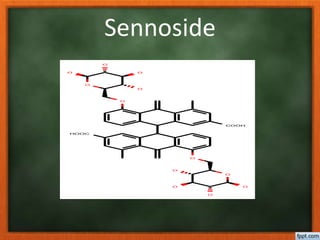
Sennoside
O
COOH
O
HOOC
O
O
O
O
O
O
O
O
O
O
• It is an hydroxy anthracene
glycosides derived from senna
leaves.
• It first stimulates colon activity and
they speeds bowel movements.
• It increases the fluid secretion by
the colon
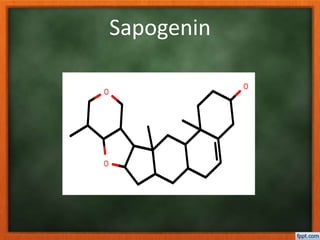
Sapogenin
O
O
O
Fusion of rings
Sapogenin
• The saponins [ latin sapo- Soap ] are
glycosides which lowers the surface
tension of water.
• The genin portion may be
pentacyclic triterpene C30
sapogenin or a c27 steroidal
sapogenin with a spiroketal side
chain [ spirostane ]
• Penta cyclic triterpene sapogenin with a
spiroketal side chain are distributed in
plant kingdom.
• It is used as fish poison owing to their
detergent properties.
• Fish killed by saponins are edible as
ingested saponins
Diosgenin
• It is steroid sapogenin .
• It is extracted from the tubers of
Dioscorea wild yam.
• Its aglycon is used in commercial
synthesis of progesterone, Cortisone
and steroidal product.

Glycosides

  • 1.
    Glycosides Dr.N.Gopinathan M.Pharm Ph.D AssistantProfessor Faculty of Pharmacy Sri Ramachandra Medical college and Research institute ( Deemed University) Chennai, Tamilnadu India.
  • 2.
    • They obtainedfrom plant or animal sources. • Upon acid or enzymatic hydrolysis yield one or more sugar moieties along with non sugar moiety. • The sugar moiety is called glycone. • The non sugar moiety is called aglycone or genin
  • 3.
    • Many plantsstore important chemicals in the form of inactive glycosides. • The most important clevage enzymes are the glycosidic hydrolases and synthetic enzyme is glycosyl transferases. • If a glycone group is glucose, then the molecule is glucoside • Fructose – Fructoside • Glucuronic acid - Glucuronide
  • 4.
    Definition • Organic compoundsderived by the replacement of the hydrogen atom of the cyclic hemiacetal by an organic radical.
  • 5.
    • The hydroxylgroup that is derived from carbonyl group by ring formation [C1 in aldoses and C2 in ketoses] is involved in glycoside formation this hydroxyl group is known as Glycosidic hydroxyl group. • The organic radical linked at glycosidic hydroxyl group is acid labile.
  • 6.
    • A completleymethylated glycoside is hydrolysed by acid , only the glycosidic methoxy group is hydrolysed, while remaining methoxy group are not affected
  • 7.
    • The natureof the organic radical attached at the glycosidic hydroxyl group can be established by acidic hydrolysis. • The physiochemical and therapeutic properties of glycosides depend on the aglycone part. • The sugar moiety helps for the transportation of aglycone portion to the site of action.
  • 8.
    It exist intwo anomeric forms called α and β
  • 9.
    Glycoside , asugar bonded through its anomeric carbon to another group via • Oxygen – O – glycosidic bond • Carbon – C – glycosidic bond • Sulphur – S- Glycosidic bond • Thioglycoside • Nitogen – N- glycosidic bond • Glycoscylamine
  • 10.
    Types of Glycosidicbond • Depending on whether the glycosidic bond lies above or below the plane of the cyclic sugar molecule, the glycosides are classified as α or β. • Some enzyme α amylase can only hydrolyse α linkages. • Emulsin can only affect β linkages.
  • 11.
    Classification • 1. Alcoholicglycosides: • Salicin is converted into salicylic acid in the body. • It is closely related to aspirin and as analgesic, antipyretic and antiinflammatory effect.
  • 12.
    2.Anthraquinone glycoside • Aglycoside present is a derivative of anthraquinone. • It is present in senna , rhubarb and aloes. • They have laxative effect.
  • 13.
    3.Coumarin Glycoside • Aglycone is coumarin Eg. Apterin – dilate coronory arteries as well as block calcium channels.
  • 14.
    4.Cyanogenic glycoside • Aglycone contain a cyanide group. • The glycoside can release the poisonous hydrogen cyanide. Eg. Amygdalin from almond. • Cyanogenic glycosides can be found in fruits [ includes cherries, apples, plums , almonds , peaches , apricots and raspberries ]
  • 15.
    • Therefore ithas to be washed and ground under running water prior to consumption. • Sorghum expresses cyanogenic glycosides in roots and thus it is ressistant to pests such as root worms.
  • 16.
    5. Flavonoid Glycoside •A glycone is Flavonoid • Eg. Hesperidin , Ruitin
  • 17.
    6.Phenolic glycoside • Aglyconeis simple phenolic structure • Eg.Arbutin – urinary antiseptic
  • 18.
    7. Saponin Glycoside •It gives permanent froth when shaken with water. • Haemolysis of RBC. • Saponin found in liquorice – expectorant effect
  • 19.
    8.Steroidal Glycoside • Cardiacglycoside – Aglycone is steroidal nucleus. • Treatment of heart disease.
  • 20.
    9. Steviol Glycoside •Sweetness from 40-300 times sweeter than sucrose.
  • 21.
    10.Thio Glycoside • Itcontains sulphur • Sinigrin found in black mustard. • Sinalbin found in white mustard.
  • 22.
    Keller-Kiliani test • Specificfor glycosides with 2 des oxy sugars. • Glycoside dissolved in glacial acetic acid containing a trace of ferric chloride and conc.H2SO4. • The acetic acid layer turns blue.
  • 23.
    Legal test • Asolution of silver diammine ion indicates the presence of butenolide ring. Baljet reaction : Cardenolide with alkaline picrate solution gives orange colour
  • 24.
  • 25.
    • It iscardiac glycoside. • Congestive heart failure treatment • C10H64O13 • 17 th position lactone ring • Steroid nucleus. • 14 beta hydroxy is belived to be dispensible
  • 26.
    • If A/BCis is converted into A/B trans Activity will be dropped. • Steroid nucleus with a unique set of fused rings, which makes these agents easily distinguished from the other steroids. • Ring A/B and C/D are Cis fused where B/C is trans.
  • 27.
    • This typeof ring fusion gives aglycone nucleus of cardiac glycoside the characteristic U shape. • It also carries the two angular methyl group at C10 & C13. • Hydroxyl group is located at C3, the site of sugar attachment.
  • 28.
    • Hydroxyl groupis located at C14 is normally unsubstituted. • The additional OH group is found at C12 and C16 eg Digitoxigenin, digoxigenin and gitoxigenin. • The additional OH group have significant impart on the partitioning and pharmacokinetics for each glycoside.
  • 29.
    • The lactonering at C17 is another major structural feature. • The size and degree of unsaturation of the lactone ring varies with source of glycoside. O O
  • 30.
    Plant origin havecardenolide, possess α,β unsaturated lactone ring varies with source of glycoside. Animals origin have bufadienolide possess six membered pyranone ring with two conjugated double bonds [α pyranone ] O O O O
  • 31.
    Sugars • The hydroxylgroup at C3 of the aglycone is usually conjugated to a monosaccharide or a poly saccharide with β 1,4 glucoside linkages. • The most commonly found sugars are D-glucose, D- digitoxose, L- rhamnose and D- Cymarose
  • 32.
    • The sugarpredominately exist in the cardiac glycoside in the β conformation. • In some cases sugar existed in the acetylated form. • 17 Lactone plays an important role in receptor binding. • Unsaturation in the lactone ring is important saturation cause diminishes in the activity
  • 33.
    Lactone was replacedwith open chain structures of varying electronic and steric resemblance to the lactone ring showed the fact that α,β unsaturated lactone ring at C17 was not an absolute requirement and that several α,β unsaturated open chain groups could be replaced with little or no loss in activity.
  • 34.
    • Analogs possessingan α,β unsaturated nitrile at C17 had high activity. • The glycoside linkage is always β in the case of D- sugars and α in the case of L - sugar
  • 35.
    Digitoxin • It isderived from Digitalis • Digitalis –latin word – digitus – meaning relating to finger. • A group of pharmacological active compound are extracted mostly from the leaves of the second years growth. • Brand name : Crystogin and lanoxin
  • 36.
    • The twodrugs differ in digoxin has an additional hydroxyl group at C-3 position on the B ring Both molecules include a lactone ring and a triple repeating sugar called a Glycoside.
  • 37.
  • 38.
    • It isan hydroxy anthracene glycosides derived from senna leaves. • It first stimulates colon activity and they speeds bowel movements. • It increases the fluid secretion by the colon
  • 39.
  • 40.
  • 41.
    Sapogenin • The saponins[ latin sapo- Soap ] are glycosides which lowers the surface tension of water. • The genin portion may be pentacyclic triterpene C30 sapogenin or a c27 steroidal sapogenin with a spiroketal side chain [ spirostane ]
  • 42.
    • Penta cyclictriterpene sapogenin with a spiroketal side chain are distributed in plant kingdom. • It is used as fish poison owing to their detergent properties. • Fish killed by saponins are edible as ingested saponins
  • 43.
    Diosgenin • It issteroid sapogenin . • It is extracted from the tubers of Dioscorea wild yam. • Its aglycon is used in commercial synthesis of progesterone, Cortisone and steroidal product.