Bile Acid
Prepared by
Dr. N.GOPINATHAN
ASSISTANT PROFESSOR
DEPARTMENT OF PHARMACEUTICAL CHEMISTRY
FACULTY OF PHARMACY
SRI RAMACHANDRA UNIVERSITY
CHENNAI-116
TAMILNADU
INDIA
• Liver secrete a clear golden
yellow viscous fluid known as
bile.
• It is stored in gall bladder and
mainly used in digestion.
• Bile consist of inorganic ions as
well as organic compound.[ bile
acids, bile pigments, liquids,
fatty acids and cholesterol]
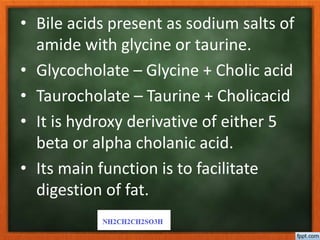
• Bile acids present as sodium salts of
amide with glycine or taurine.
• Glycocholate – Glycine + Cholic acid
• Taurocholate – Taurine + Cholicacid
• It is hydroxy derivative of either 5
beta or alpha cholanic acid.
• Its main function is to facilitate
digestion of fat.
More than 20 natural bile acids have been
characterised eg. Cholic acid, deoxy cholic
acid, chenodeoxy cholic acid and
lithocholic acid.
The position of hydroxyl group may be 3,6,
7,11,12 and 23.
• Almost all the natural bile acids, the
configuration of the hydroxyl group have
been found to be alpha.
• 5 alpha cholanic acid mp is 164 C
• 5 beta cholanic acid mp is 173 C
• It contains steroidal nucleus, COOH at C-24,
1,2,or 3 hydroxyl group in the nucleus.
• A/B rings are cis fused result in Beta series
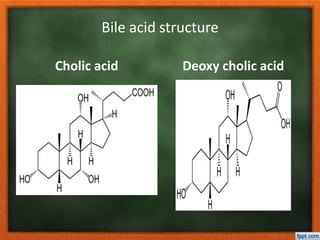
Bile acid structure
Cholic acid Deoxy cholic acid
Biogenesis
• Bile acids are the end product of cholesterol
metabolism.
• Ring skeleton remains intact, while the
isopropyl group of the side chain is
removed.
• C-12 hydroxylation of ring precedes
degradation of the side chain.
• Once the side chain is oxidised, no hydroxyl
group can be introduced into the 12 alpha
position.
Isolation of bile acid
• The peptide linkage is hydrolysed
with alkali from the above solution
free bile acids have been isolated
either by crystallisation from organic
solvents or by treating with ethereal
solution of acids with various
concentration of HCl
• Cholic acid [ 3 α,7 α,12α trihydroxy ]
is extracted from ethereal solution
by 15% HCl.
• Dihydroxy acids [ deoxy and cheno
deoxy cholic acid] are extracted
from ethereal solution by 25% HCl.
• Mono hydroxy acid [ litho cholic acid
] is extracted by concentrated HCl.
Colour reaction – Mylius reaction for cholic acid
• Substance dissolved in ethanol
• Few drops of iodine is added
• On warming gives blue colour in
transmitted light.
• It appears as yellow in reflected light.
Hammersten test
• Cholic acid with 25% HCl
• Violet colour
• Changes to yellow on heating
Pettenkofer reaction
• A solution of sucrose or fructose is
added to solution of bile acid
• Concentrated sulphuric acid is added.
• Red colour changes on warming to
bluish red
Chemistry
• COOH group
• soluble in alkali
• Esterification
• Reduction acid to aldehyde by
Rosen mund reduction , Lithium
Aluminium hydride and tributoxy
aluminium hydride.
OH Group
• For acylation , hydrolysis,
reduction and hydrogenation the
order of reactivity is C-3> >C-7 >
C-12.
• 3 alpha group is more easily
esterified than the other two.
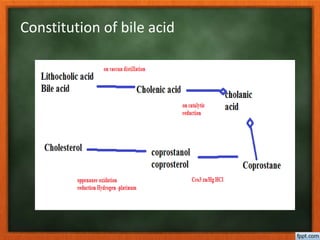
Constitution of bile acid
Conclusion
• Cholesterol and bile acid are structurally
related because they yield same product
cholanic acid.
• Bile acid has same degradative reactions as
that of cholesterol thus the bile acid have
same nucleus as cholesterol
• They differ only in one respect that the double
bond of cholesterol is absent in bile acid.
• On selenum dehydrogenation yield diel,s
hydrocarbon
Side chain of bile acid
• Barbier-wieland
degradation is used to
elucidate the nature of
side chain in bile acid.
Biological role
• This facilitate fat digestion by
emulsifying them and thereby
increase the surface area of the
material for pancreatic enzyme.
• Emulsification – converts insoluble
into water soluble compound which
can be easily absorbed in intestine
Biological role
• They activate the enzyme cholesterol
esterase and pancreatic lipase.
• They cholesterol in solution if the ratio
of the bile acid is to cholesterol falls
than the normal level the cholesterol
precipitates out and form gall stone in
liver and gall bladder
Thank you

5.bileacid

  • 1.
    Bile Acid Prepared by Dr.N.GOPINATHAN ASSISTANT PROFESSOR DEPARTMENT OF PHARMACEUTICAL CHEMISTRY FACULTY OF PHARMACY SRI RAMACHANDRA UNIVERSITY CHENNAI-116 TAMILNADU INDIA
  • 2.
    • Liver secretea clear golden yellow viscous fluid known as bile. • It is stored in gall bladder and mainly used in digestion. • Bile consist of inorganic ions as well as organic compound.[ bile acids, bile pigments, liquids, fatty acids and cholesterol]
  • 3.
    • Bile acidspresent as sodium salts of amide with glycine or taurine. • Glycocholate – Glycine + Cholic acid • Taurocholate – Taurine + Cholicacid • It is hydroxy derivative of either 5 beta or alpha cholanic acid. • Its main function is to facilitate digestion of fat.
  • 4.
    More than 20natural bile acids have been characterised eg. Cholic acid, deoxy cholic acid, chenodeoxy cholic acid and lithocholic acid. The position of hydroxyl group may be 3,6, 7,11,12 and 23.
  • 5.
    • Almost allthe natural bile acids, the configuration of the hydroxyl group have been found to be alpha. • 5 alpha cholanic acid mp is 164 C • 5 beta cholanic acid mp is 173 C • It contains steroidal nucleus, COOH at C-24, 1,2,or 3 hydroxyl group in the nucleus. • A/B rings are cis fused result in Beta series
  • 6.
    Bile acid structure Cholicacid Deoxy cholic acid
  • 7.
    Biogenesis • Bile acidsare the end product of cholesterol metabolism. • Ring skeleton remains intact, while the isopropyl group of the side chain is removed. • C-12 hydroxylation of ring precedes degradation of the side chain. • Once the side chain is oxidised, no hydroxyl group can be introduced into the 12 alpha position.
  • 8.
    Isolation of bileacid • The peptide linkage is hydrolysed with alkali from the above solution free bile acids have been isolated either by crystallisation from organic solvents or by treating with ethereal solution of acids with various concentration of HCl
  • 9.
    • Cholic acid[ 3 α,7 α,12α trihydroxy ] is extracted from ethereal solution by 15% HCl. • Dihydroxy acids [ deoxy and cheno deoxy cholic acid] are extracted from ethereal solution by 25% HCl. • Mono hydroxy acid [ litho cholic acid ] is extracted by concentrated HCl.
  • 10.
    Colour reaction –Mylius reaction for cholic acid • Substance dissolved in ethanol • Few drops of iodine is added • On warming gives blue colour in transmitted light. • It appears as yellow in reflected light.
  • 11.
    Hammersten test • Cholicacid with 25% HCl • Violet colour • Changes to yellow on heating
  • 12.
    Pettenkofer reaction • Asolution of sucrose or fructose is added to solution of bile acid • Concentrated sulphuric acid is added. • Red colour changes on warming to bluish red
  • 13.
    Chemistry • COOH group •soluble in alkali • Esterification • Reduction acid to aldehyde by Rosen mund reduction , Lithium Aluminium hydride and tributoxy aluminium hydride.
  • 14.
    OH Group • Foracylation , hydrolysis, reduction and hydrogenation the order of reactivity is C-3> >C-7 > C-12. • 3 alpha group is more easily esterified than the other two.
  • 15.
  • 16.
    Conclusion • Cholesterol andbile acid are structurally related because they yield same product cholanic acid. • Bile acid has same degradative reactions as that of cholesterol thus the bile acid have same nucleus as cholesterol • They differ only in one respect that the double bond of cholesterol is absent in bile acid. • On selenum dehydrogenation yield diel,s hydrocarbon
  • 17.
    Side chain ofbile acid • Barbier-wieland degradation is used to elucidate the nature of side chain in bile acid.
  • 18.
    Biological role • Thisfacilitate fat digestion by emulsifying them and thereby increase the surface area of the material for pancreatic enzyme. • Emulsification – converts insoluble into water soluble compound which can be easily absorbed in intestine
  • 19.
    Biological role • Theyactivate the enzyme cholesterol esterase and pancreatic lipase. • They cholesterol in solution if the ratio of the bile acid is to cholesterol falls than the normal level the cholesterol precipitates out and form gall stone in liver and gall bladder
  • 20.