FLAVONOIDS 
Prepared by, 
ROSHNI ANN 
BABY, 
M.PHARM 
PART I.
FLAVONOIDS 
•The flavonoids are polyphenolic compounds 
possessing 15 carbon atoms; two benzene rings 
joined by a linear three carbon chain having the 
carbon skeleton C6 - C3 - C6 and they are the plant 
pigments and they are having polar nature and is 
solouble in methanol and water. 
• Flavonoids constitute one of the most characteristic 
classes of compounds in higher plants. Many 
flavonoids are easily recognised as flower pigments 
in most angiosperm families (flowering plants).
• However, their occurence is not restricted to flowers but 
include all parts of the plant. 
• They are secondary metabolite and effective in CNS 
disorders.
Flavonoids 
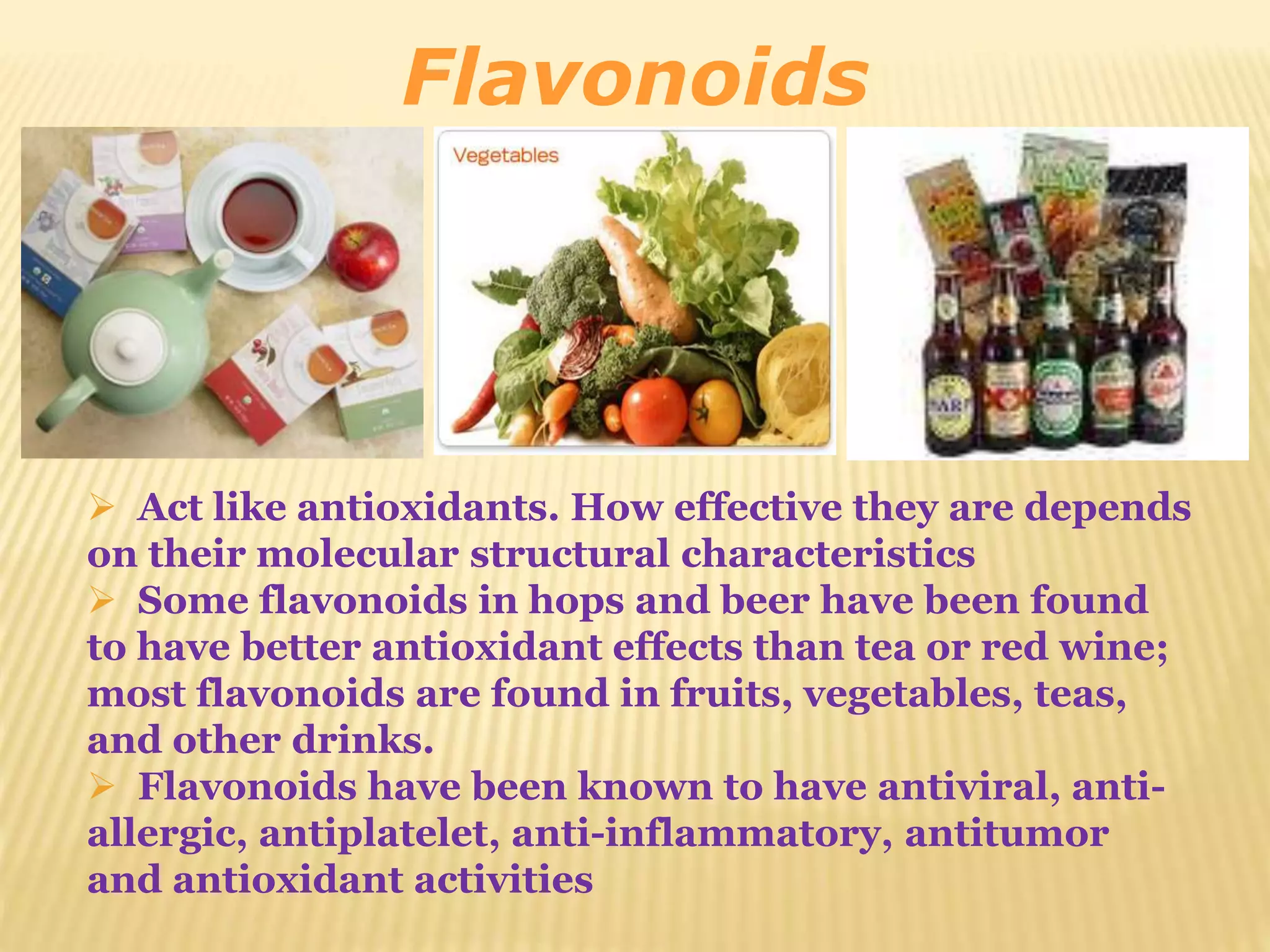
 Act like antioxidants. How effective they are depends 
on their molecular structural characteristics 
 Some flavonoids in hops and beer have been found 
to have better antioxidant effects than tea or red wine; 
most flavonoids are found in fruits, vegetables, teas, 
and other drinks. 
 Flavonoids have been known to have antiviral, anti-allergic, 
antiplatelet, anti-inflammatory, antitumor 
and antioxidant activities
Flavonoids 
 Polyphenolic 
compounds with 15 C 
atoms, 2 benzene rings 
on linear 3 C chain 
 Over 4,000 
flavonoids 
 Easily recognized as 
flower pigments in most 
angiosperm plants but 
are not always flower 
pigments 
 In plants they repair 
damage and shield from 
environmental toxins 
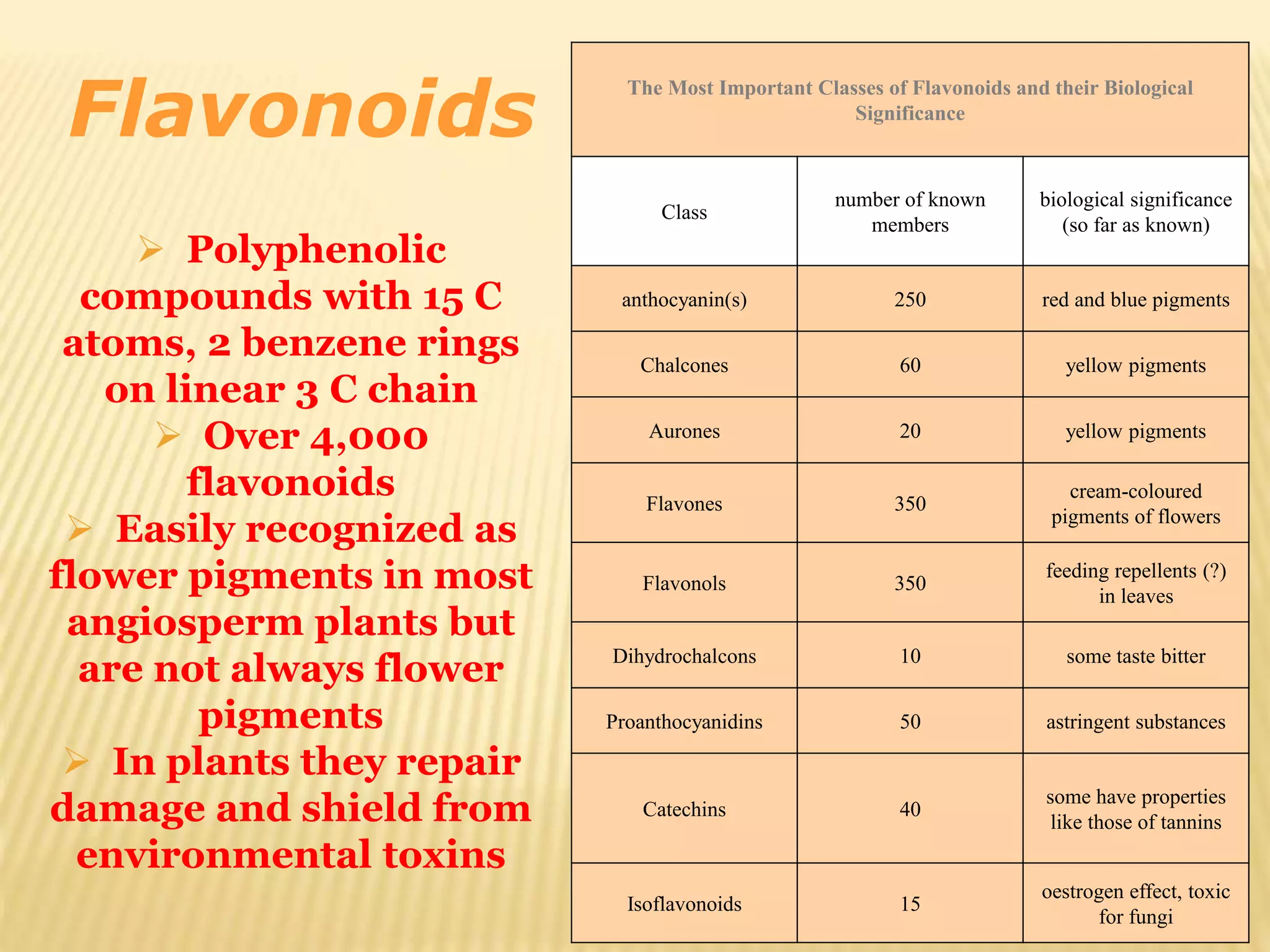
The Most Important Classes of Flavonoids and their Biological 
Significance 
Class 
number of known 
members 
biological significance 
(so far as known) 
anthocyanin(s) 250 red and blue pigments 
Chalcones 60 yellow pigments 
Aurones 20 yellow pigments 
Flavones 350 
cream-coloured 
pigments of flowers 
Flavonols 350 
feeding repellents (?) 
in leaves 
Dihydrochalcons 10 some taste bitter 
Proanthocyanidins 50 astringent substances 
Catechins 40 
some have properties 
like those of tannins 
Isoflavonoids 15 
oestrogen effect, toxic 
for fungi
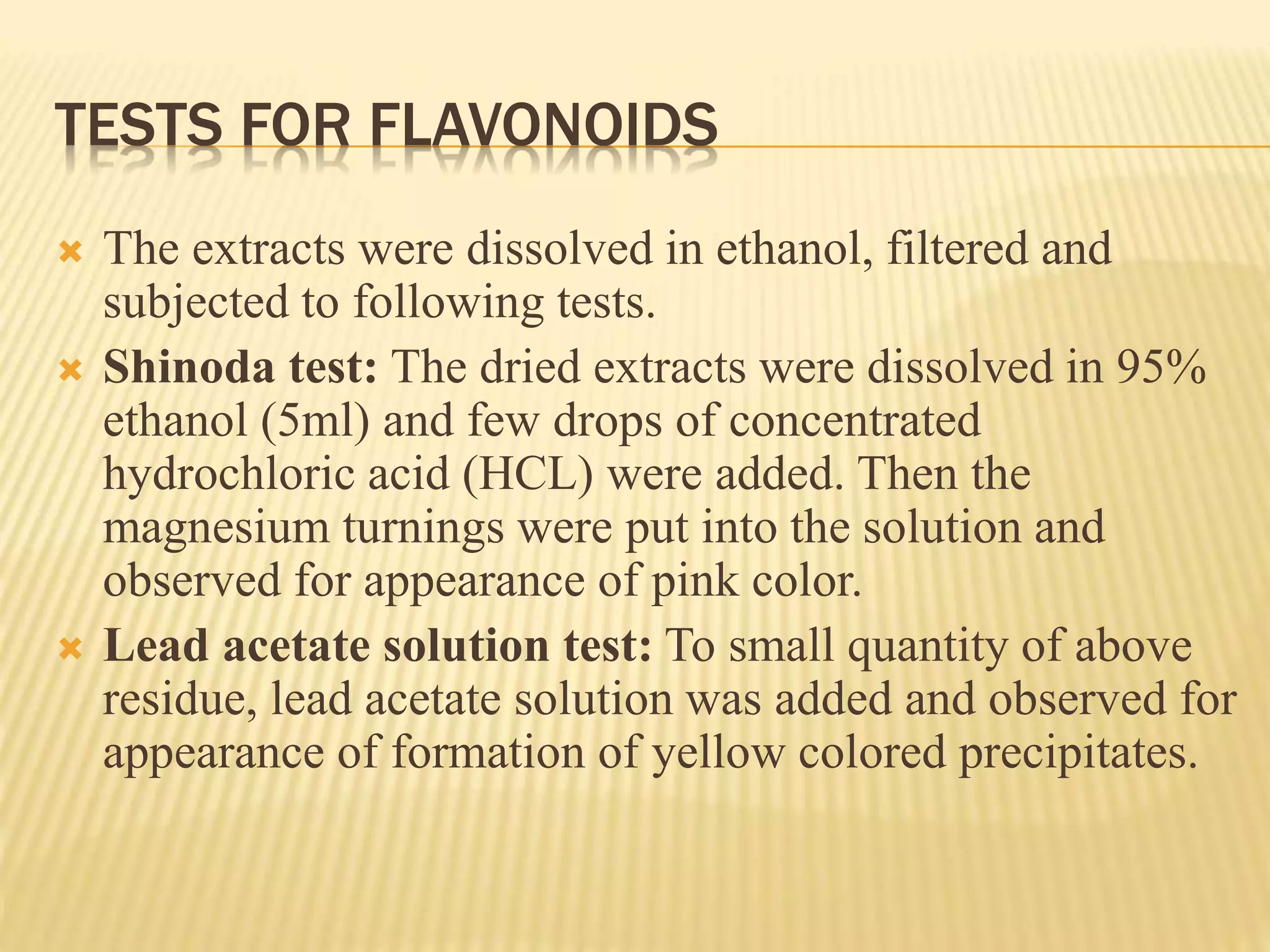
TESTS FOR FLAVONOIDS 
 The extracts were dissolved in ethanol, filtered and 
subjected to following tests. 
 Shinoda test: The dried extracts were dissolved in 95% 
ethanol (5ml) and few drops of concentrated 
hydrochloric acid (HCL) were added. Then the 
magnesium turnings were put into the solution and 
observed for appearance of pink color. 
 Lead acetate solution test: To small quantity of above 
residue, lead acetate solution was added and observed for 
appearance of formation of yellow colored precipitates.
CORE STRUCTURES AND 
NOMENCLATURE 
• The nomenclature of flavonoids 
proper is straight-forward with the 
aromatic ring A condensed to the 
heterocyclic ring C and the 
aromatic ring B most often 
attached at the C2 position. The 
various substituents are listed first 
for the A and C ring and - as 
primed numbers - for the B ring 
(note that the numbering for the 
aromatic rings of the open-chained 
precursor chalcones is reversed). 
• (Harborne JB, ed. (1988) The Flavonoids. 
Advances in Research. Chapman & Hall.) 
OH 
O 
Chalcone 
A 
O O 
B 
O O 
OH 
O 
OH 
Flavanone Dihydroflavonol Flavan-3-ol 
O O 
O O 
OH 
O 
OH 
+ 
Flavone Flavon-3-ol Anthocyanidin 
O 
O 
Isoflavone 
O 
Neoflavone 
A 
B 
C 
Flavonoids Society For Free Radical Biology and Medicine W. Bors
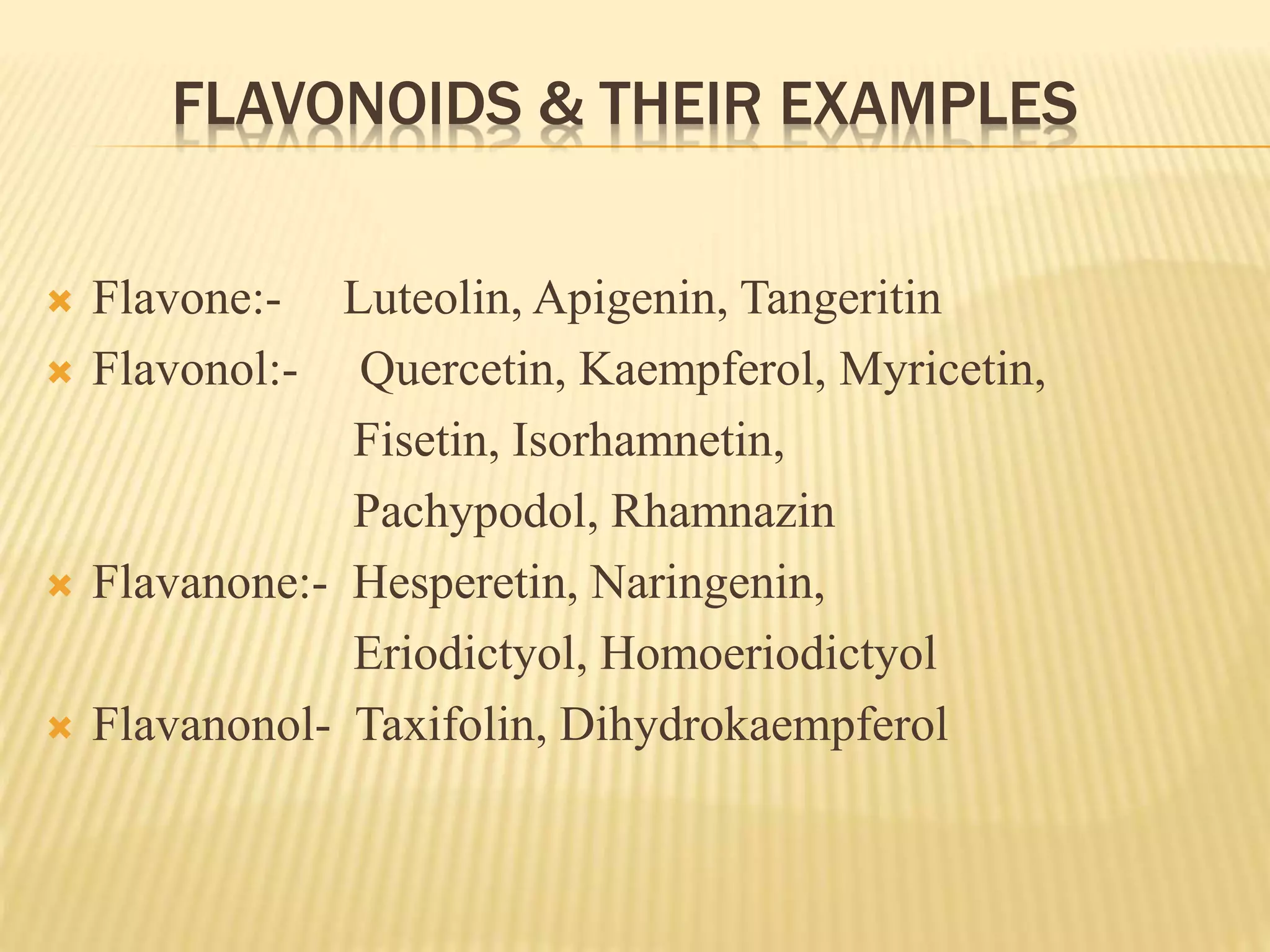
FLAVONOIDS & THEIR EXAMPLES 
 Flavone:- Luteolin, Apigenin, Tangeritin 
 Flavonol:- Quercetin, Kaempferol, Myricetin, 
Fisetin, Isorhamnetin, 
Pachypodol, Rhamnazin 
 Flavanone:- Hesperetin, Naringenin, 
Eriodictyol, Homoeriodictyol 
 Flavanonol- Taxifolin, Dihydrokaempferol
FLAVONES 
 These are yellow pigments which occur in plant 
kingdom either in the free state or as glycosides 
associated with tannins.These are also known as 
anthoxanthins. 
 Chemically they are hydroxylated derivative of 
flavone(2-phenyl-4-chromone) which are partially 
alkylated. 
 In most of the flavones, positions 5 and 7 are 
hydroxylated and also one or more positions 3,4,5 are 
also hydroxylated.Further positions 3’ and 5’ are often 
methylated whereas positions 5,7 and 4’ are usually 
unmethylated.
O 
O 
Chromone 
1 
7 
2' 
 When a flavone is hydrolysed with mineral acid, it yields 
an aglycon and one or more molecules of sugars. The 
sugars are generally glucose, rhamnose etc. Flavones may 
exist as C-glycosyl derivatives as well as O-glycosides, eg: 
vitexin and isovitexin 
G 
HO O 
OH 
O 
OH 
HO O 
G 
OH 
O 
OH 
Vitexin Isovitexin 
O 
O 
Flavone 
2 
4 3 
5 
6 
8 
1' 
3' 
4' 
5' 
6'
PROPERTIES OF FLAVONES 
 Most flavones are yellow solids 
 Most flavones are soluble in water, ethanol and dilute 
acids and alkalis. 
 Flavones are precipitated by lead salt. 
 With ferric chloride, flavones give either a dull green or 
a red brown colour.
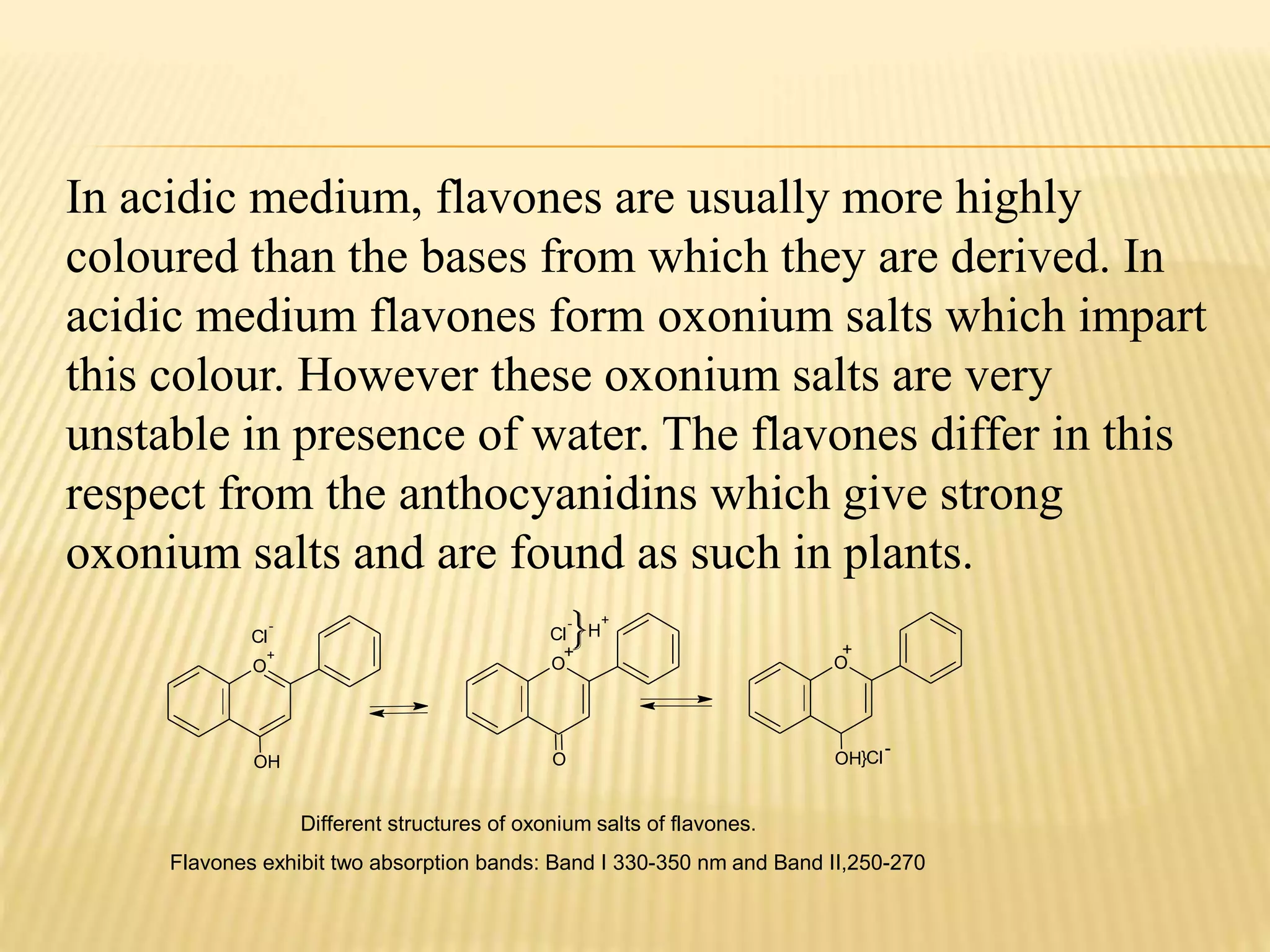
In acidic medium, flavones are usually more highly 
coloured than the bases from which they are derived. In 
acidic medium flavones form oxonium salts which impart 
this colour. However these oxonium salts are very 
unstable in presence of water. The flavones differ in this 
respect from the anthocyanidins which give strong 
oxonium salts and are found as such in plants. 
Cl 
O 
- 
+ 
OH 
- 
+ 
Cl 
O 
O 
H 
+ 
+ 
O 
}Cl 
OH 
- 
Different structures of oxonium salts of flavones. 
Flavones exhibit two absorption bands: Band I 330-350 nm and Band II,250-270
Ground plant material 
Digestion with boiling water 
diluted and treated with lead acetate 
Filteration 
Diluted with water,acidified with HCl and boiled for some hours 
Precipitate of sugar 
free flavonoids 
Exctracted with alcohol & 
carried out fractional crystallisation 
Water extract 
Precipitate of 
tannins 
Flavonoids in 
supernatant liquid 
Acetate free flavonoids
SEPARATION & PURIFICATION OF 
FLAVONES 
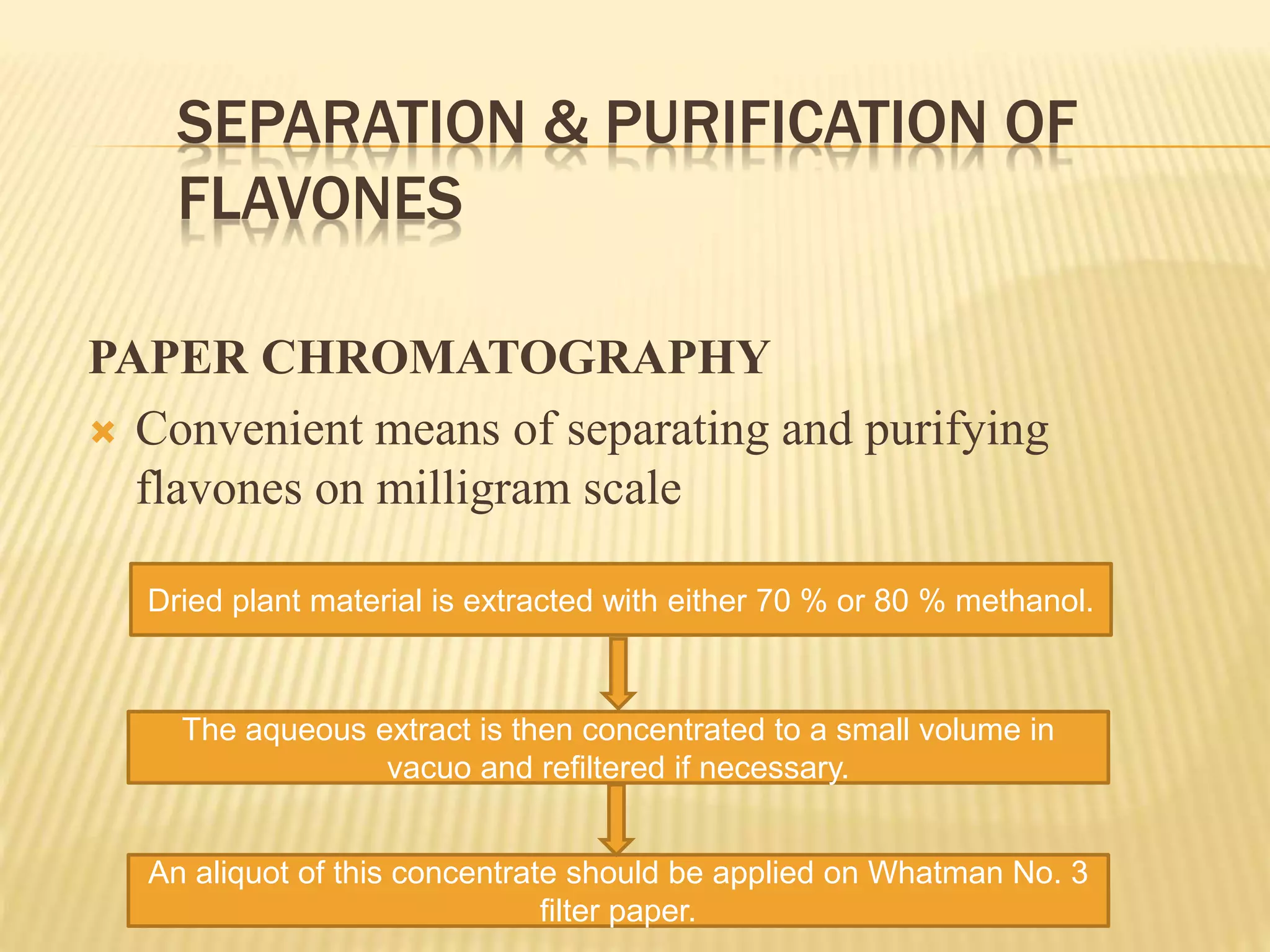
PAPER CHROMATOGRAPHY 
 Convenient means of separating and purifying 
flavones on milligram scale 
Dried plant material is extracted with either 70 % or 80 % methanol. 
The aqueous extract is then concentrated to a small volume in 
vacuo and refiltered if necessary. 
An aliquot of this concentrate should be applied on Whatman No. 3 
filter paper.
Separation of the flavones present in concentrate is generally 
carried out in the solvent mixture BAW(n-butanol-acetic acid-water), 
4:1:5 
Individual bands are eluted and concentrated . 
Further fractioned in water, 5 % acetic acid. 
Purified in n-butanol-ethanol-water(4:1:2.2)
THIN LAYER CHROMATOGRAPHY 
 More sensitive method than paper chromatography. 
 Layers of microcrystalline cellulose is employed. 
 Solvent system same as that of PC. 
 Removal of lipid impurities is essential otherwise 
considerable streacking may occur. 
 Visualisation of plates may be done by viewing the plate in 
UV light(336 nm) either in the presence or absence of 
ammonia vapour.It is often assisted by the use of layers 
which contain a UV-Fluoroscent indicator. Flavonoids 
appear as dark spots against a fluoroscent green 
background. 
 Another useful method of detection is brief exposure of the 
plate to iodine vapours which produce yellow-brown spots 
against white background with most flavonoids. 
 Both methods are non destructive.
COLUMN CHROMATOGRAPHY 
 Used for large scale separations. 
 Adsorbents used include cellulose,celite,magnesol-celite, 
sililic acid,polyamide and sephadex. 
 Polyamide is the widely used separation of the different 
flavone glycosides being achieved by gradient elution with 
water-methanol mixture. 
 Recently separation of flavanol glycosides as their 
molybdate complexes on columns of Sephadex G-25 or 
LH-20 is employed.Elution with water followed by 1 M 
molybdate will separate mixtures of the common flavone 
glycosides on G-25.Alternatively simple mixtures of 
flavanol glycosides and aglycons can be separated on the 
250 mg scale by adsorption on Sephadex I,H-20 and 
subsequent elution with methanol.
GAS LIQUID CHROMATOGRAPHY 
 Not used extensively for the analysis & isolation of 
flavanoids. 
 It is an acceptable method provided the flavanoid is 
derivatized to increase it volatility. Trimethylsilyl ether 
derivatives have been found most effective for this 
purpose, although methyl ether and acetate derivatives 
have also been used. 
 The stationary phases,SE-30 and OV-1 are most 
commonly used for the separation of flavonoids.
GENERAL METHODS FOR THE ELUCIDATION OF 
STRUCTURE OF FLAVONOLS 
 Flavonol shows characteristic bands at 350-390 nm and 150-270 nm in 
ultraviolet spectrum. 
 The molecular formula of flavonol has been found to be C15H10O3 
 It can be acetylated to give an ester shows the presence of a hydroxyl 
group. 
 C15H9O2(OH)+ CH3COCl 
C15H9O2(OCOCH3)+HCl 
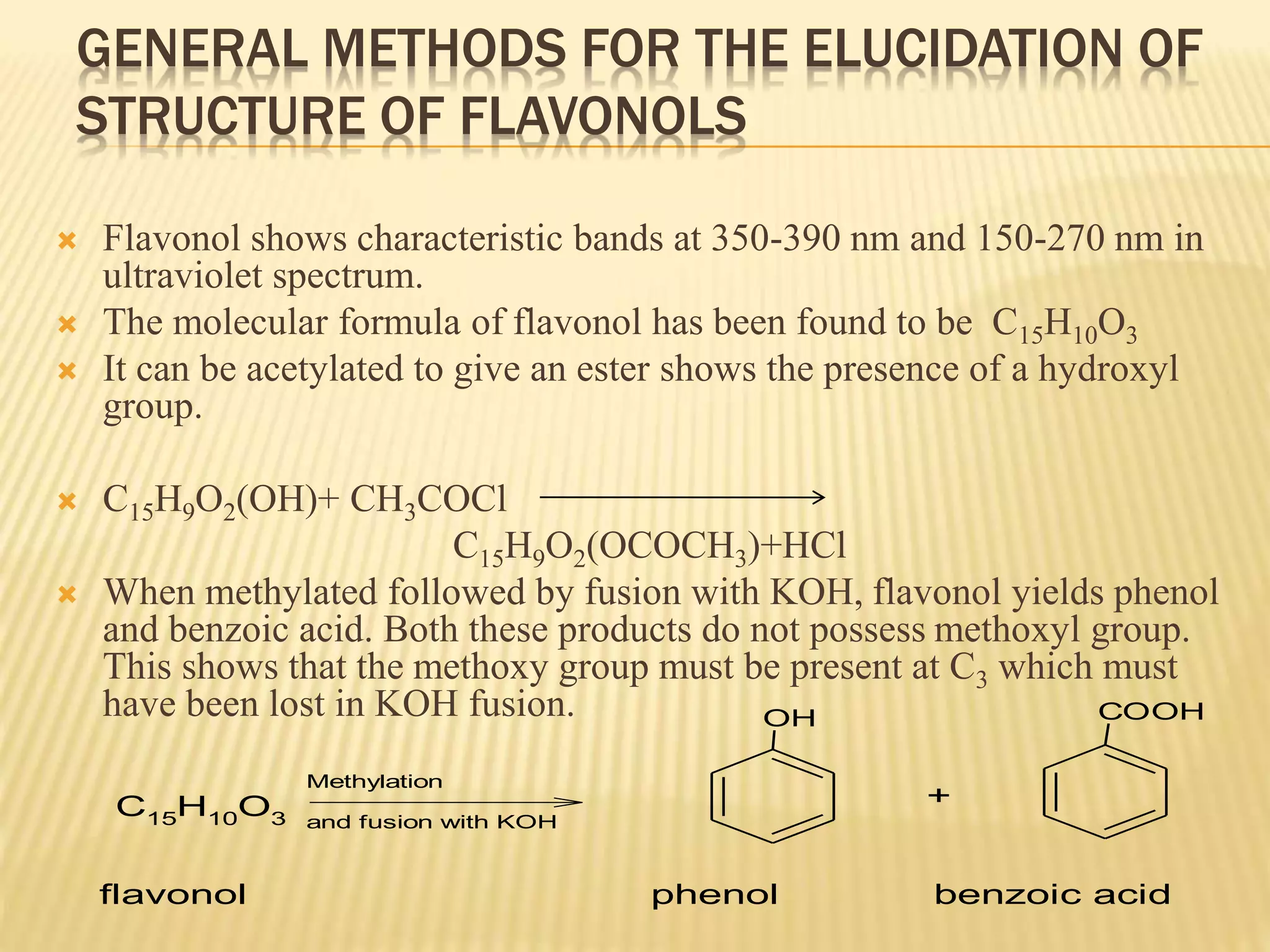
 When methylated followed by fusion with KOH, flavonol yields phenol 
and benzoic acid. Both these products do not possess methoxyl group. 
This shows that the methoxy group must be present at C3 which must 
have been lost in KOH fusion. 
C15H10O3 
Methylation 
and fusion with KOH 
OH 
+ 
COOH 
flavonol phenol benzoic acid
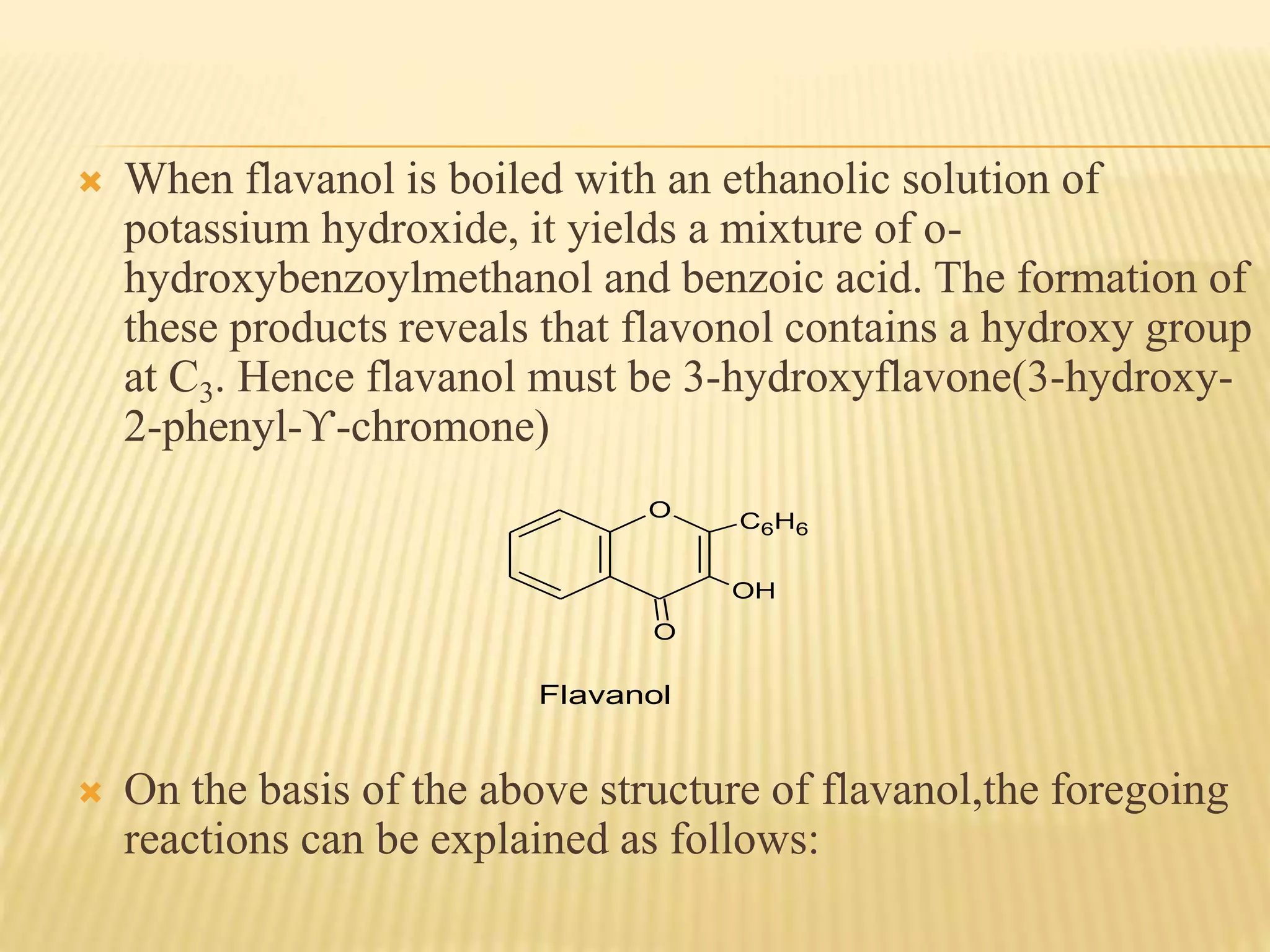
 When flavanol is boiled with an ethanolic solution of 
potassium hydroxide, it yields a mixture of o-hydroxybenzoylmethanol 
and benzoic acid. The formation of 
these products reveals that flavonol contains a hydroxy group 
at C3. Hence flavanol must be 3-hydroxyflavone(3-hydroxy- 
2-phenyl-ϒ-chromone) 
O 
O 
C6H6 
OH 
Flavanol 
 On the basis of the above structure of flavanol,the foregoing 
reactions can be explained as follows:
O 
O 
C6H6 
OH 
Flavanol 
+ CH3COCl 
O 
O 
C6H6 
OCOCH 3 
+ HCl 
Acetyl derivative of flavonol 
O 
O 
C6H6 
OH 
methylation 
(CH3)2SO4/NaOH 
O 
O 
C6H6 
OCH 3 
KOH 
Fusion 
+ 
OH HOOC 
Phenol Benzoic acid 
O 
O 
C6H6 
OH 
KOH 
Boiling 
OH 
O 
OH 
C6H5 
OH 
COC 6H5 
OH 
O 
OH 
OH 
COCH 2OH 
+ C6H5COOH 
o-hydroxybenzoyl methanol Benzoic acid 
a) 
b) 
c)
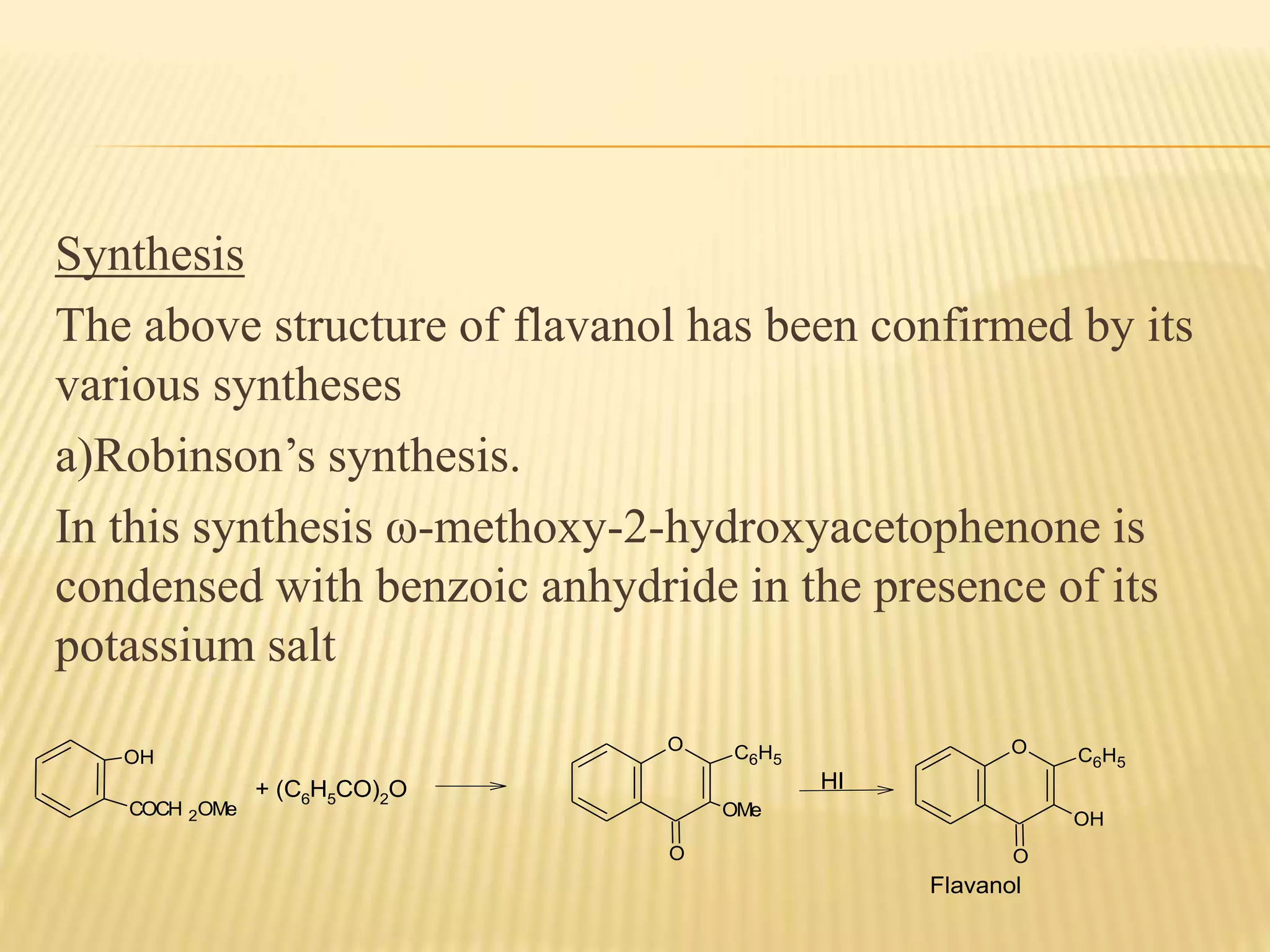
Synthesis 
The above structure of flavanol has been confirmed by its 
various syntheses 
a)Robinson’s synthesis. 
In this synthesis ω-methoxy-2-hydroxyacetophenone is 
condensed with benzoic anhydride in the presence of its 
potassium salt 
OH 
COCH 2OMe 
+ (C6H5CO)2O 
O 
C6H5 
OMe 
O 
HI 
O C6H5 
O 
OH 
Flavanol
QUERCETIN 
 Source: Occurs as glycoside quercetin in the bark 
of Quercus tinctoria. 
 When quercetin is treated with acid,it yields one 
molecule of quercetin and one molecule of 
rhamnose 
HCl 
CHO+ HO CHO212011 215103 
+CH(CHOH)CHO 
3
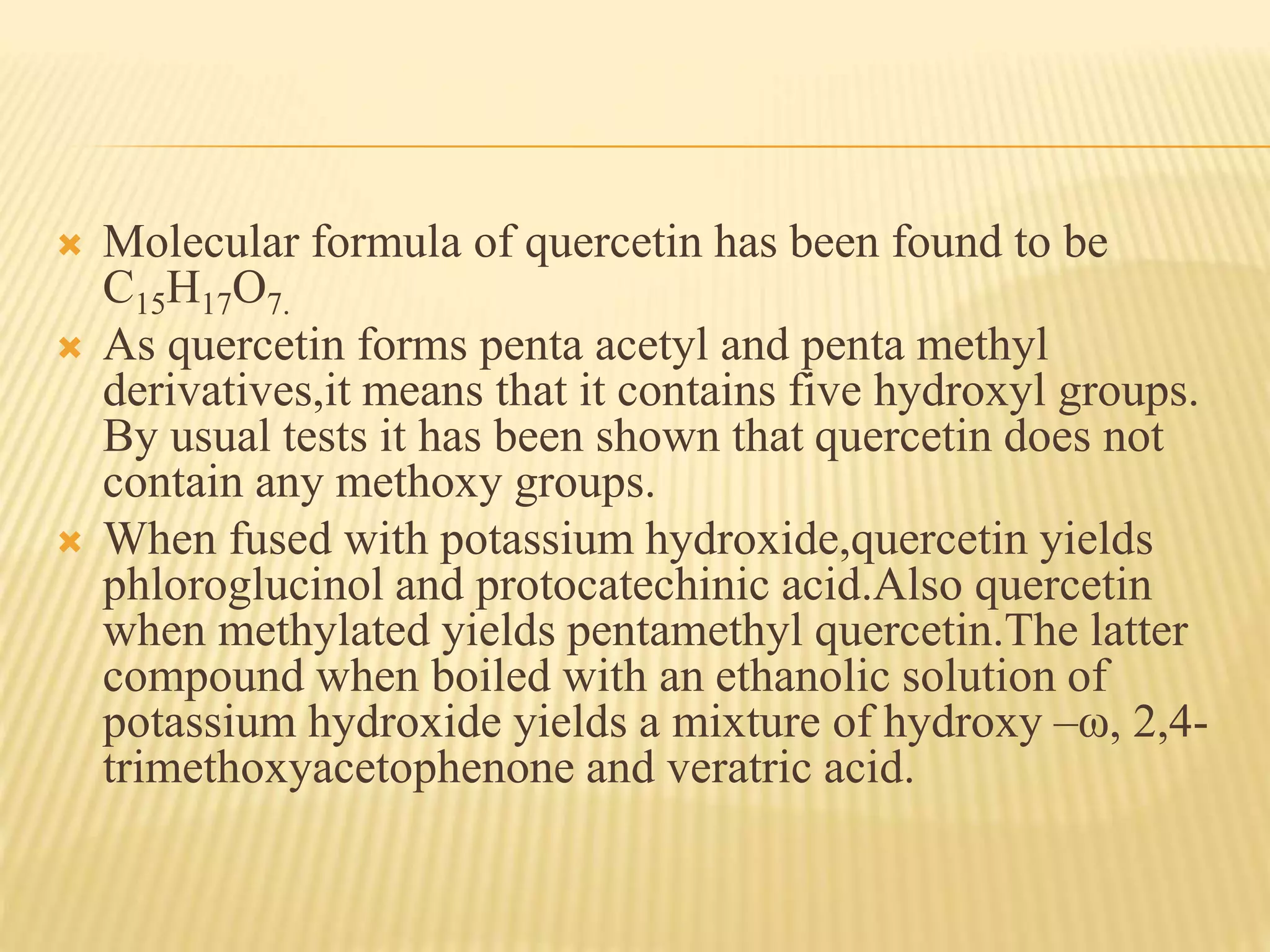
 Molecular formula of quercetin has been found to be 
C15H17O7. 
 As quercetin forms penta acetyl and penta methyl 
derivatives,it means that it contains five hydroxyl groups. 
By usual tests it has been shown that quercetin does not 
contain any methoxy groups. 
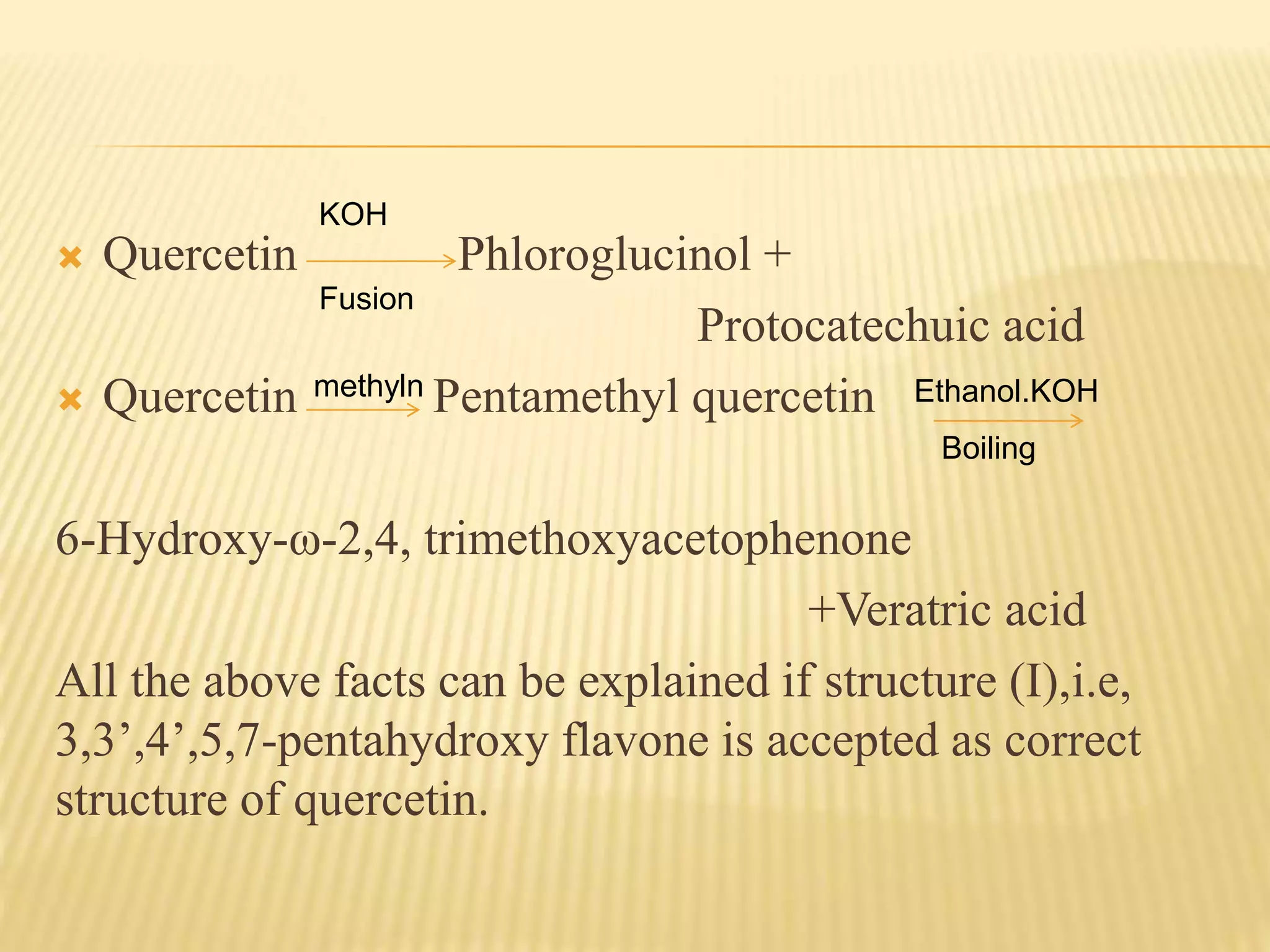
 When fused with potassium hydroxide,quercetin yields 
phloroglucinol and protocatechinic acid.Also quercetin 
when methylated yields pentamethyl quercetin.The latter 
compound when boiled with an ethanolic solution of 
potassium hydroxide yields a mixture of hydroxy –ω, 2,4- 
trimethoxyacetophenone and veratric acid.
KOH 
 Quercetin Phloroglucinol + 
Protocatechuic acid 
Fusion 
methyln Ethanol.KOH 
 Quercetin Pentamethyl quercetin 
6-Hydroxy-ω-2,4, trimethoxyacetophenone 
Boiling 
+Veratric acid 
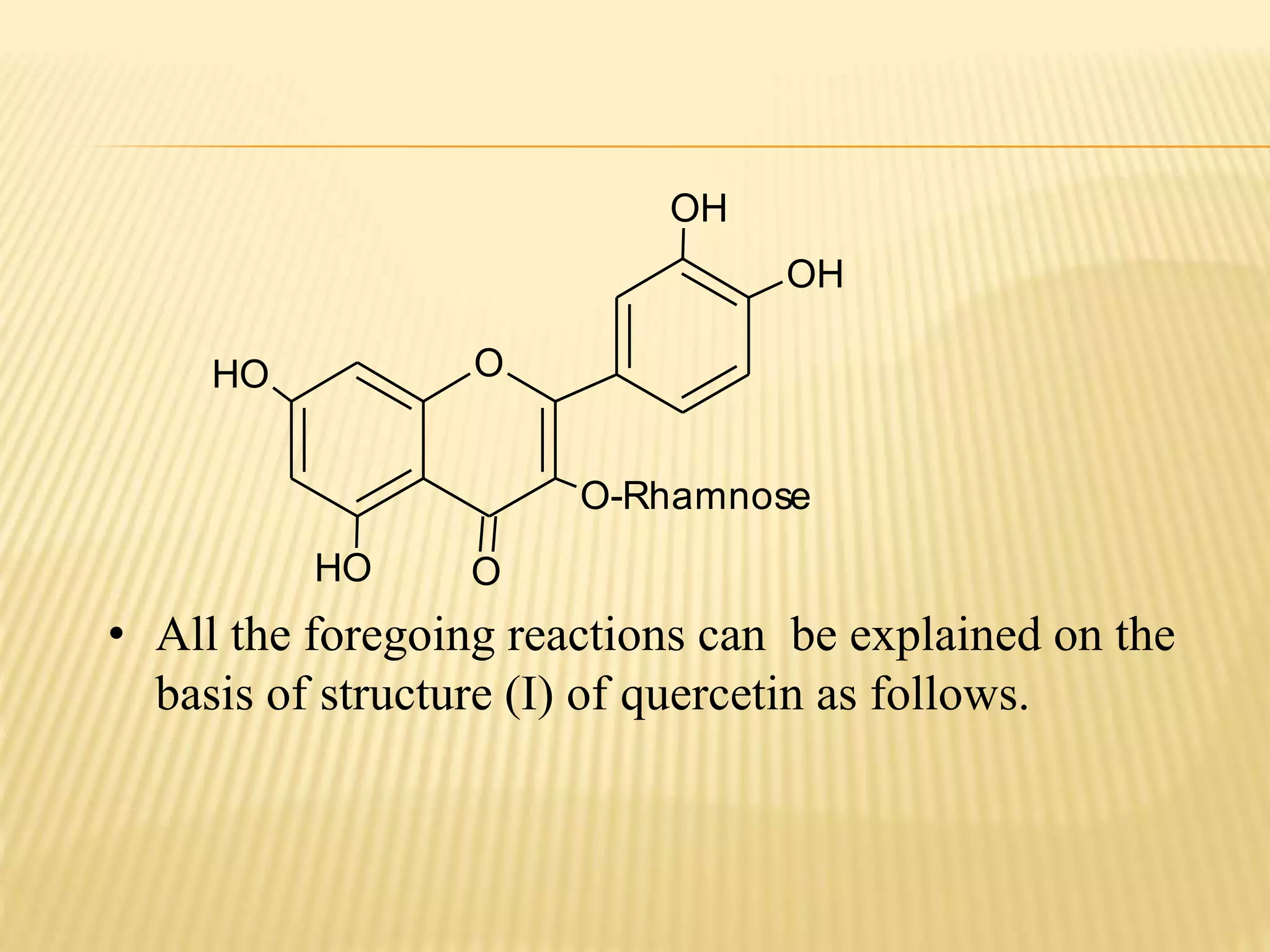
All the above facts can be explained if structure (I),i.e, 
3,3’,4’,5,7-pentahydroxy flavone is accepted as correct 
structure of quercetin.
OH 
O 
HO O 
HO 
OH 
O-Rhamnose 
• All the foregoing reactions can be explained on the 
basis of structure (I) of quercetin as follows.
KOH 
Fusion 
HO OH 
OH 
HO 
COOH 
OH 
+ 
(I) 
Phloroglucinol Protocatechuic acid 
O 
O 
OH 
OH 
OH 
HO 
HO 
OMe 
O 
OMe 
MeO 
O 
OMe 
OMe 
(CH3)2SO4 /methylation 
ethanolic KOH 
MeO 
OMe 
HOOC 
MeO OH 
OMe 
COCH2OMe 
+ 
6-Hydroxy-w-2,4, trimethoxyacetophenone Veratric acid
 Synthesis. 
Finally,the structure of quercetin has been confirmed by its 
various syntheses. 
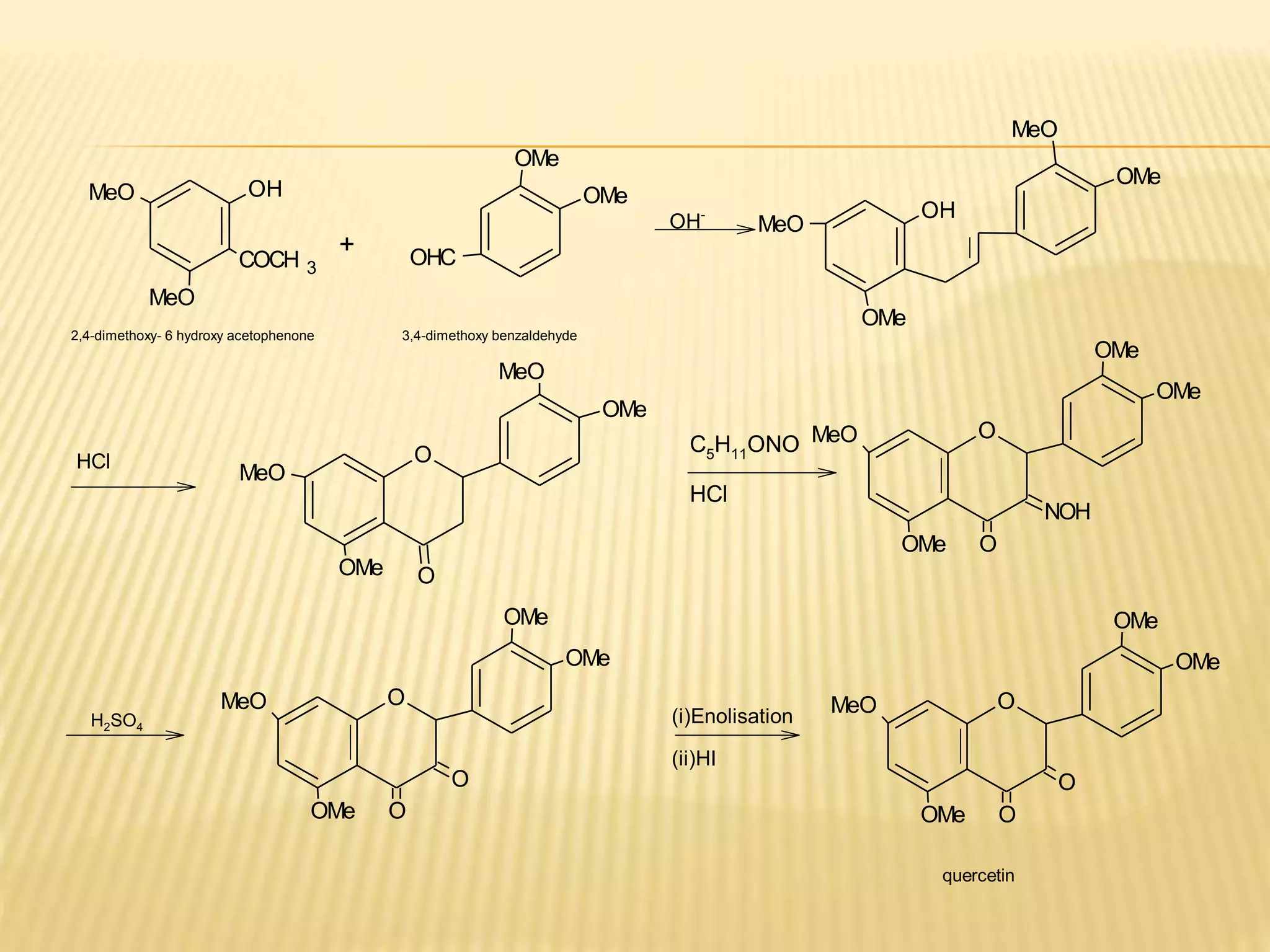
Kostanecki’s synthesis 
In this synthesis,quercetin is obtained by the condensation 
of 2,4-dimethoxy-6-hydroxy acetophenone with 3,4- 
dimethoxy benzaldehyde in the presence of NaOH as 
follows.
MeO 
MeO 
OH 
COCH 3 OHC 
OMe 
OMe 
+ 
OH- 
OMe 
MeO 
OH 
OMe 
MeO 
HCl O 
OMe O 
MeO 
OMe 
MeO 
C5H11ONO 
HCl 
MeO O 
OMe O 
NOH 
OMe 
OMe 
H2SO4 
MeO O 
OMe O 
OMe 
OMe 
O 
(i)Enolisation 
(ii)HI 
MeO O 
OMe O 
OMe 
OMe 
O 
2,4-dimethoxy- 6 hydroxy acetophenone 3,4-dimethoxy benzaldehyde 
quercetin
USES 
 Preliminary research 
 Antiviral 
 Hyperoside (which is the 3-O-galactoside of quercetin) is 
a strong inhibitor of HBsAg and HBeAg secretion 
 Quercitrin and myricetin 3-O-beta-D-galactopyranoside 
inhibit HIV-1 reverse transcriptase, all with IC50 values 
of 60 μM. 
 Quercetin can also inhibit reverse transcriptase, part of 
the replication process of retroviruses. The therapeutic 
relevance of this inhibition has not been established.
 Asthma 
 Quercetin is an effective bronchodilator and helps reduce the 
release of histamine and other allergic or inflammatory chemicals 
in the body. 
 Quercetin has demonstrated significant anti-inflammatory activity 
because of direct inhibition of several initial processes of 
inflammation. 
 Eczema 
 Serum IgE levels are highly elevated in eczema patients, and 
virtually all eczema patients are positive for allergy testing. 
Excessive histamine release can be minimized by the use of 
antioxidants. Quercetin has been shown to be effective in reducing 
IgE levels in rodent models.
 Inflammation 
 Several laboratory studies show quercetin may have anti-inflammatory 
properties, and it is being investigated for a wide 
range of potential health benefits. 
 Quercetin has been reported to be of use in alleviating symptoms 
of pollinosis. An enzymatically modified derivative was found to 
alleviate ocular but not nasal symptoms of pollinosis. 
 Studies done in test tubes have shown quercetin may prevent 
immune cells from releasing histamines which might influence 
symptoms of allergies. 
 A study with rats showed that quercetin effectively reduced 
immediate-release niacin (vitamin B3) flush, in part by means of 
reducing prostaglandin D2 production. A pilot clinical study of 
four humans gave preliminary data supporting this. 
 Quercetin may have properties of a calcineurin inhibitor, similar to 
cyclosporinA and tacrolimus, according to one laboratory study.
 Fibromyalgia 
 Quercetin may be effective in the treatment of fibromyalgia 
because of its potential anti-inflammatory or mast cell inhibitory 
properties shown in laboratory studies 
 Cancer 
 Laboratory studies have investigated Quercetin's potential for use 
in anti-cancer applications. The American Cancer Society says 
quercetin has been promoted as being effective against a wide 
variety of diseases, including cancer.
 Metabolic syndrome 
 Quercetin has been shown to increase energy expenditure in rats, but 
only for short periods (fewer than 8 weeks). Effects of quercetin on 
exercise tolerance in mice have been associated with increased 
mitochondrial biogenesis.In mice, an oral quercetin dose of 12.5 to 
25 mg/kg increased gene expression of mitochondrial biomarkers and 
improved exercise endurance. 
 It has also been claimed that quercetin reduces blood pressure in 
hypertensive and obese subjects in whom LDL cholesterol levels were 
also reduced. 
 In vitro studies showed quercetin and resveratrol combined inhibited 
production of fat cells and vascular smooth muscle cell proliferation. 
 Supplements of quercetin with vitamin C and niacin does not cause any 
significant difference in body mass or composition and has no 
significant effect on inflammatory markers, diagnostic blood 
chemistries, blood pressure, and blood lipid profiles.
 Monoamine-oxidase inhibitor 
 Possibly an active component of heather (Calluna vulgaris), 
quercetin was suspected from a bioassay test on crude extracts to 
selectively inhibit monoamine oxidase, possibly indicating 
pharmacological properties. 
 Prostatitis 
 Quercetin has been found to provides significant symptomatic 
improvement in most men with chronic prostatitis, a condition 
also known as male chronic pelvic pain syndrome.
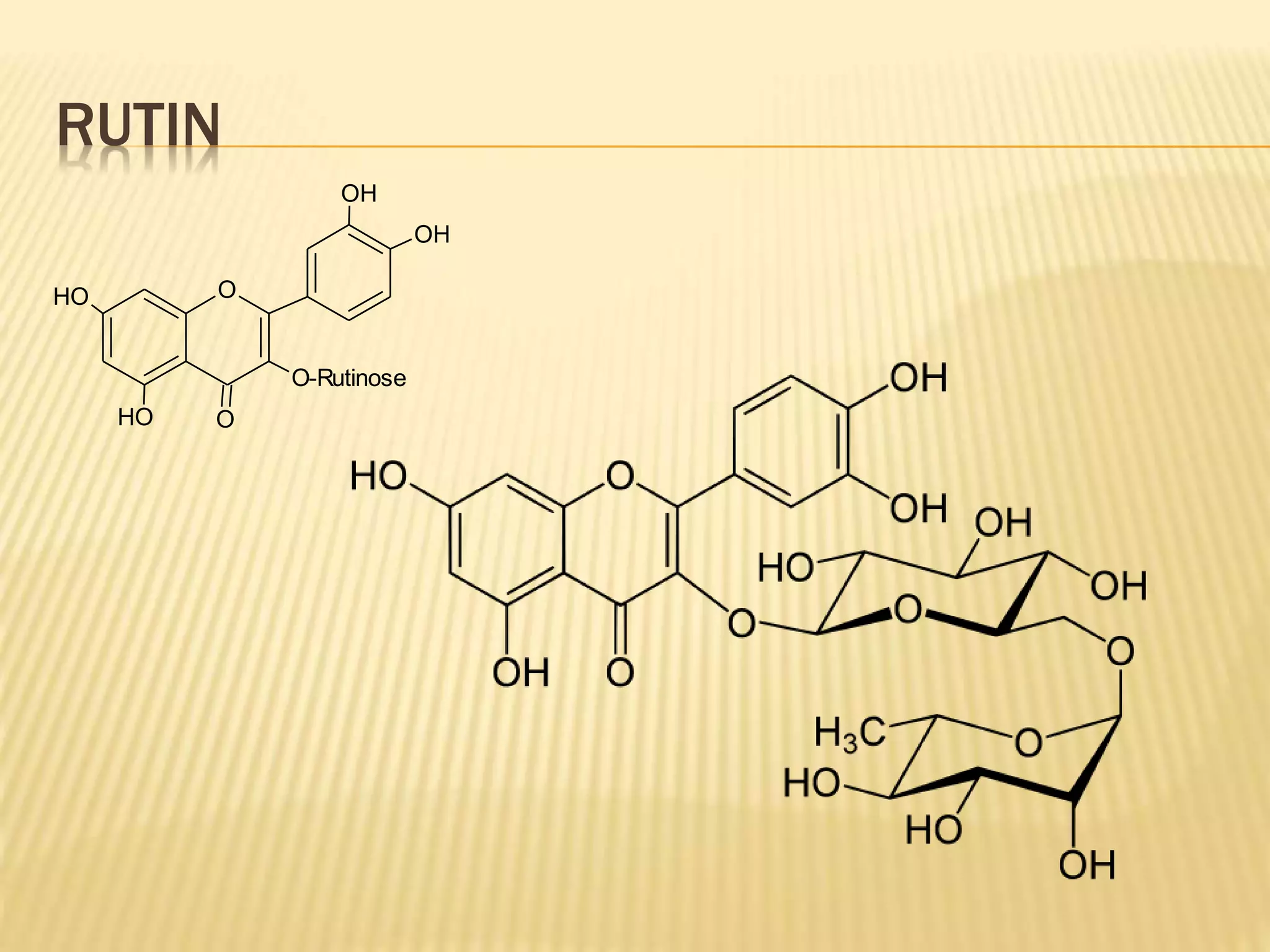
RUTIN 
OH 
O 
HO O 
HO 
OH 
O-Rutinose
 Rutin, also called rutoside, quercetin-3-O-rutinoside and 
sophorin, is the glycoside between the flavonol quercetin 
and the disaccharide rutinose 
 Occurrences 
 Rutin is one of the phenolic compounds found in the invasive 
plant species Carpobrotus edulis and contributes to the 
antibacterial and antioxidant properties of the plant. 
 Its name comes from the name of Ruta graveolens, a plant 
that also contains rutin.
 In food 
 Rutin is a citrus flavonoid glycoside found in many plants including 
buckwheat, the leaves and petioles of Rheum species, and asparagus. 
Tartary buckwheat seeds have been found to contain more rutin (about 
0.8-1.7% dry weight) than common buckwheat seeds (0.01% dry 
weight). Rutin is also found in the fruit of the fava d'anta tree (from 
Brazil), fruits and flowers of the pagoda tree, fruits and fruit rinds 
(especially the citrus fruits orange, grapefruit, lemon, and lime) and 
apple; berries such as mulberry, ash tree fruits, aronia berries and 
cranberries. 
 Rutin is one of the primary flavonols found in 'clingstone' peaches. 
 In the fava d'anta tree, the synthesis is done via a rutin synthase activity.
 Chemical relatives 
 Rutin (quercetin rutinoside), like quercitrin, is a glycoside of the 
flavonoid quercetin. As such, the chemical structures of both are 
very similar, with the difference existing in the hydroxyl 
functional group. 
 Metabolism 
 The enzyme quercitrinase can be found in Aspergillus flavus. It is 
an enzyme in the rutin catabolic pathway.
USES 
 Both quercetin and rutin are used in many countries as 
medications for blood vessel protection, and are ingredients 
of numerous multivitamin preparations and herbal remedies. 
 Role as ligand 
 In humans, it attaches to the iron ion Fe2+, preventing it from 
binding to hydrogen peroxide, which would otherwise create 
a highly reactive free radical that may damage cells. It is also 
an antioxidant. 
 Furthermore, it has been shown to inhibit in vitro the vascular 
endothelial growth factor in subtoxic concentrations, so acts 
as an inhibitor of angiogenesis. This finding may have 
potential relevance for the control of some cancers.
 Health effects 
 While a body of evidence for the effects of rutin and quercetin is 
available in mice, rats, hamsters, and rabbits, as well as in vitro 
studies,no clinical studies directly demonstrate significant, 
positive effects of rutin as dietary supplement in humans. 
 Rutin inhibits platelet aggregation, as well as decreases capillary 
permeability, making the blood thinner and improving circulation. 
 Rutin shows anti-inflammatory activity in some animal and in 
vitro models. 
 Rutin inhibits aldose reductase activity. Aldose reductase is an 
enzyme normally present in the eye and elsewhere in the body. It 
helps change glucose into the sugar alcohol sorbitol.
 Recent studies show rutin could help prevent blood clots, so could 
be used to treat patients at risk of heart attacks and strokes. 
 Some evidence also shows rutin can be used to treat hemorrhoids, 
varicosis, and microangiopathy. 
 Rutin increases thyroid iodide uptake in rats without raising serum 
T3 or T4. 
 Rutin is also an antioxidant; compared to quercetin, acacetin, 
morin, hispidulin, hesperidin, and naringin, it was found to be the 
strongest.However, in other trials, the effects of rutin were lower 
or negligible compared to those of quercetin.
 Hydroxyethylrutosides, synthetic hydroxyethyl 
acetylations of rutin, are used in the treatment of 
chronic venous insufficiency. 
 In veterinary medicine 
 Rutin may have a veterinary use in the management 
of chylothorax in dogs and cats.
REFERENCES 
 1)Organic chemistry of natural products; vol 1 ; 
O.P. Agarwal ; pg no :350-406 
 2)Organic chemistry of natural products ; vol 2; 
Gurdeep. R. Chatwal ; pg no : 2.1 – 2.40 
 3)Organic chemistry ; vol 2 ; stereochemistry & 
chemistry of natural products ; I. L .Finar ; 
5th edition ; pg no : 425
 1.

Flavanoids

  • 2.
    FLAVONOIDS Prepared by, ROSHNI ANN BABY, M.PHARM PART I.
  • 3.
    FLAVONOIDS •The flavonoidsare polyphenolic compounds possessing 15 carbon atoms; two benzene rings joined by a linear three carbon chain having the carbon skeleton C6 - C3 - C6 and they are the plant pigments and they are having polar nature and is solouble in methanol and water. • Flavonoids constitute one of the most characteristic classes of compounds in higher plants. Many flavonoids are easily recognised as flower pigments in most angiosperm families (flowering plants).
  • 4.
    • However, theiroccurence is not restricted to flowers but include all parts of the plant. • They are secondary metabolite and effective in CNS disorders.
  • 5.
    Flavonoids  Actlike antioxidants. How effective they are depends on their molecular structural characteristics  Some flavonoids in hops and beer have been found to have better antioxidant effects than tea or red wine; most flavonoids are found in fruits, vegetables, teas, and other drinks.  Flavonoids have been known to have antiviral, anti-allergic, antiplatelet, anti-inflammatory, antitumor and antioxidant activities
  • 6.
    Flavonoids  Polyphenolic compounds with 15 C atoms, 2 benzene rings on linear 3 C chain  Over 4,000 flavonoids  Easily recognized as flower pigments in most angiosperm plants but are not always flower pigments  In plants they repair damage and shield from environmental toxins The Most Important Classes of Flavonoids and their Biological Significance Class number of known members biological significance (so far as known) anthocyanin(s) 250 red and blue pigments Chalcones 60 yellow pigments Aurones 20 yellow pigments Flavones 350 cream-coloured pigments of flowers Flavonols 350 feeding repellents (?) in leaves Dihydrochalcons 10 some taste bitter Proanthocyanidins 50 astringent substances Catechins 40 some have properties like those of tannins Isoflavonoids 15 oestrogen effect, toxic for fungi
  • 7.
    TESTS FOR FLAVONOIDS  The extracts were dissolved in ethanol, filtered and subjected to following tests.  Shinoda test: The dried extracts were dissolved in 95% ethanol (5ml) and few drops of concentrated hydrochloric acid (HCL) were added. Then the magnesium turnings were put into the solution and observed for appearance of pink color.  Lead acetate solution test: To small quantity of above residue, lead acetate solution was added and observed for appearance of formation of yellow colored precipitates.
  • 8.
    CORE STRUCTURES AND NOMENCLATURE • The nomenclature of flavonoids proper is straight-forward with the aromatic ring A condensed to the heterocyclic ring C and the aromatic ring B most often attached at the C2 position. The various substituents are listed first for the A and C ring and - as primed numbers - for the B ring (note that the numbering for the aromatic rings of the open-chained precursor chalcones is reversed). • (Harborne JB, ed. (1988) The Flavonoids. Advances in Research. Chapman & Hall.) OH O Chalcone A O O B O O OH O OH Flavanone Dihydroflavonol Flavan-3-ol O O O O OH O OH + Flavone Flavon-3-ol Anthocyanidin O O Isoflavone O Neoflavone A B C Flavonoids Society For Free Radical Biology and Medicine W. Bors
  • 9.
    FLAVONOIDS & THEIREXAMPLES  Flavone:- Luteolin, Apigenin, Tangeritin  Flavonol:- Quercetin, Kaempferol, Myricetin, Fisetin, Isorhamnetin, Pachypodol, Rhamnazin  Flavanone:- Hesperetin, Naringenin, Eriodictyol, Homoeriodictyol  Flavanonol- Taxifolin, Dihydrokaempferol
  • 10.
    FLAVONES  Theseare yellow pigments which occur in plant kingdom either in the free state or as glycosides associated with tannins.These are also known as anthoxanthins.  Chemically they are hydroxylated derivative of flavone(2-phenyl-4-chromone) which are partially alkylated.  In most of the flavones, positions 5 and 7 are hydroxylated and also one or more positions 3,4,5 are also hydroxylated.Further positions 3’ and 5’ are often methylated whereas positions 5,7 and 4’ are usually unmethylated.
  • 11.
    O O Chromone 1 7 2'  When a flavone is hydrolysed with mineral acid, it yields an aglycon and one or more molecules of sugars. The sugars are generally glucose, rhamnose etc. Flavones may exist as C-glycosyl derivatives as well as O-glycosides, eg: vitexin and isovitexin G HO O OH O OH HO O G OH O OH Vitexin Isovitexin O O Flavone 2 4 3 5 6 8 1' 3' 4' 5' 6'
  • 12.
    PROPERTIES OF FLAVONES  Most flavones are yellow solids  Most flavones are soluble in water, ethanol and dilute acids and alkalis.  Flavones are precipitated by lead salt.  With ferric chloride, flavones give either a dull green or a red brown colour.
  • 13.
    In acidic medium,flavones are usually more highly coloured than the bases from which they are derived. In acidic medium flavones form oxonium salts which impart this colour. However these oxonium salts are very unstable in presence of water. The flavones differ in this respect from the anthocyanidins which give strong oxonium salts and are found as such in plants. Cl O - + OH - + Cl O O H + + O }Cl OH - Different structures of oxonium salts of flavones. Flavones exhibit two absorption bands: Band I 330-350 nm and Band II,250-270
  • 14.
    Ground plant material Digestion with boiling water diluted and treated with lead acetate Filteration Diluted with water,acidified with HCl and boiled for some hours Precipitate of sugar free flavonoids Exctracted with alcohol & carried out fractional crystallisation Water extract Precipitate of tannins Flavonoids in supernatant liquid Acetate free flavonoids
  • 15.
    SEPARATION & PURIFICATIONOF FLAVONES PAPER CHROMATOGRAPHY  Convenient means of separating and purifying flavones on milligram scale Dried plant material is extracted with either 70 % or 80 % methanol. The aqueous extract is then concentrated to a small volume in vacuo and refiltered if necessary. An aliquot of this concentrate should be applied on Whatman No. 3 filter paper.
  • 16.
    Separation of theflavones present in concentrate is generally carried out in the solvent mixture BAW(n-butanol-acetic acid-water), 4:1:5 Individual bands are eluted and concentrated . Further fractioned in water, 5 % acetic acid. Purified in n-butanol-ethanol-water(4:1:2.2)
  • 17.
    THIN LAYER CHROMATOGRAPHY  More sensitive method than paper chromatography.  Layers of microcrystalline cellulose is employed.  Solvent system same as that of PC.  Removal of lipid impurities is essential otherwise considerable streacking may occur.  Visualisation of plates may be done by viewing the plate in UV light(336 nm) either in the presence or absence of ammonia vapour.It is often assisted by the use of layers which contain a UV-Fluoroscent indicator. Flavonoids appear as dark spots against a fluoroscent green background.  Another useful method of detection is brief exposure of the plate to iodine vapours which produce yellow-brown spots against white background with most flavonoids.  Both methods are non destructive.
  • 18.
    COLUMN CHROMATOGRAPHY Used for large scale separations.  Adsorbents used include cellulose,celite,magnesol-celite, sililic acid,polyamide and sephadex.  Polyamide is the widely used separation of the different flavone glycosides being achieved by gradient elution with water-methanol mixture.  Recently separation of flavanol glycosides as their molybdate complexes on columns of Sephadex G-25 or LH-20 is employed.Elution with water followed by 1 M molybdate will separate mixtures of the common flavone glycosides on G-25.Alternatively simple mixtures of flavanol glycosides and aglycons can be separated on the 250 mg scale by adsorption on Sephadex I,H-20 and subsequent elution with methanol.
  • 19.
    GAS LIQUID CHROMATOGRAPHY  Not used extensively for the analysis & isolation of flavanoids.  It is an acceptable method provided the flavanoid is derivatized to increase it volatility. Trimethylsilyl ether derivatives have been found most effective for this purpose, although methyl ether and acetate derivatives have also been used.  The stationary phases,SE-30 and OV-1 are most commonly used for the separation of flavonoids.
  • 20.
    GENERAL METHODS FORTHE ELUCIDATION OF STRUCTURE OF FLAVONOLS  Flavonol shows characteristic bands at 350-390 nm and 150-270 nm in ultraviolet spectrum.  The molecular formula of flavonol has been found to be C15H10O3  It can be acetylated to give an ester shows the presence of a hydroxyl group.  C15H9O2(OH)+ CH3COCl C15H9O2(OCOCH3)+HCl  When methylated followed by fusion with KOH, flavonol yields phenol and benzoic acid. Both these products do not possess methoxyl group. This shows that the methoxy group must be present at C3 which must have been lost in KOH fusion. C15H10O3 Methylation and fusion with KOH OH + COOH flavonol phenol benzoic acid
  • 21.
     When flavanolis boiled with an ethanolic solution of potassium hydroxide, it yields a mixture of o-hydroxybenzoylmethanol and benzoic acid. The formation of these products reveals that flavonol contains a hydroxy group at C3. Hence flavanol must be 3-hydroxyflavone(3-hydroxy- 2-phenyl-ϒ-chromone) O O C6H6 OH Flavanol  On the basis of the above structure of flavanol,the foregoing reactions can be explained as follows:
  • 22.
    O O C6H6 OH Flavanol + CH3COCl O O C6H6 OCOCH 3 + HCl Acetyl derivative of flavonol O O C6H6 OH methylation (CH3)2SO4/NaOH O O C6H6 OCH 3 KOH Fusion + OH HOOC Phenol Benzoic acid O O C6H6 OH KOH Boiling OH O OH C6H5 OH COC 6H5 OH O OH OH COCH 2OH + C6H5COOH o-hydroxybenzoyl methanol Benzoic acid a) b) c)
  • 23.
    Synthesis The abovestructure of flavanol has been confirmed by its various syntheses a)Robinson’s synthesis. In this synthesis ω-methoxy-2-hydroxyacetophenone is condensed with benzoic anhydride in the presence of its potassium salt OH COCH 2OMe + (C6H5CO)2O O C6H5 OMe O HI O C6H5 O OH Flavanol
  • 24.
    QUERCETIN  Source:Occurs as glycoside quercetin in the bark of Quercus tinctoria.  When quercetin is treated with acid,it yields one molecule of quercetin and one molecule of rhamnose HCl CHO+ HO CHO212011 215103 +CH(CHOH)CHO 3
  • 25.
     Molecular formulaof quercetin has been found to be C15H17O7.  As quercetin forms penta acetyl and penta methyl derivatives,it means that it contains five hydroxyl groups. By usual tests it has been shown that quercetin does not contain any methoxy groups.  When fused with potassium hydroxide,quercetin yields phloroglucinol and protocatechinic acid.Also quercetin when methylated yields pentamethyl quercetin.The latter compound when boiled with an ethanolic solution of potassium hydroxide yields a mixture of hydroxy –ω, 2,4- trimethoxyacetophenone and veratric acid.
  • 26.
    KOH  QuercetinPhloroglucinol + Protocatechuic acid Fusion methyln Ethanol.KOH  Quercetin Pentamethyl quercetin 6-Hydroxy-ω-2,4, trimethoxyacetophenone Boiling +Veratric acid All the above facts can be explained if structure (I),i.e, 3,3’,4’,5,7-pentahydroxy flavone is accepted as correct structure of quercetin.
  • 27.
    OH O HOO HO OH O-Rhamnose • All the foregoing reactions can be explained on the basis of structure (I) of quercetin as follows.
  • 28.
    KOH Fusion HOOH OH HO COOH OH + (I) Phloroglucinol Protocatechuic acid O O OH OH OH HO HO OMe O OMe MeO O OMe OMe (CH3)2SO4 /methylation ethanolic KOH MeO OMe HOOC MeO OH OMe COCH2OMe + 6-Hydroxy-w-2,4, trimethoxyacetophenone Veratric acid
  • 29.
     Synthesis. Finally,thestructure of quercetin has been confirmed by its various syntheses. Kostanecki’s synthesis In this synthesis,quercetin is obtained by the condensation of 2,4-dimethoxy-6-hydroxy acetophenone with 3,4- dimethoxy benzaldehyde in the presence of NaOH as follows.
  • 30.
    MeO MeO OH COCH 3 OHC OMe OMe + OH- OMe MeO OH OMe MeO HCl O OMe O MeO OMe MeO C5H11ONO HCl MeO O OMe O NOH OMe OMe H2SO4 MeO O OMe O OMe OMe O (i)Enolisation (ii)HI MeO O OMe O OMe OMe O 2,4-dimethoxy- 6 hydroxy acetophenone 3,4-dimethoxy benzaldehyde quercetin
  • 31.
    USES  Preliminaryresearch  Antiviral  Hyperoside (which is the 3-O-galactoside of quercetin) is a strong inhibitor of HBsAg and HBeAg secretion  Quercitrin and myricetin 3-O-beta-D-galactopyranoside inhibit HIV-1 reverse transcriptase, all with IC50 values of 60 μM.  Quercetin can also inhibit reverse transcriptase, part of the replication process of retroviruses. The therapeutic relevance of this inhibition has not been established.
  • 32.
     Asthma Quercetin is an effective bronchodilator and helps reduce the release of histamine and other allergic or inflammatory chemicals in the body.  Quercetin has demonstrated significant anti-inflammatory activity because of direct inhibition of several initial processes of inflammation.  Eczema  Serum IgE levels are highly elevated in eczema patients, and virtually all eczema patients are positive for allergy testing. Excessive histamine release can be minimized by the use of antioxidants. Quercetin has been shown to be effective in reducing IgE levels in rodent models.
  • 33.
     Inflammation Several laboratory studies show quercetin may have anti-inflammatory properties, and it is being investigated for a wide range of potential health benefits.  Quercetin has been reported to be of use in alleviating symptoms of pollinosis. An enzymatically modified derivative was found to alleviate ocular but not nasal symptoms of pollinosis.  Studies done in test tubes have shown quercetin may prevent immune cells from releasing histamines which might influence symptoms of allergies.  A study with rats showed that quercetin effectively reduced immediate-release niacin (vitamin B3) flush, in part by means of reducing prostaglandin D2 production. A pilot clinical study of four humans gave preliminary data supporting this.  Quercetin may have properties of a calcineurin inhibitor, similar to cyclosporinA and tacrolimus, according to one laboratory study.
  • 34.
     Fibromyalgia Quercetin may be effective in the treatment of fibromyalgia because of its potential anti-inflammatory or mast cell inhibitory properties shown in laboratory studies  Cancer  Laboratory studies have investigated Quercetin's potential for use in anti-cancer applications. The American Cancer Society says quercetin has been promoted as being effective against a wide variety of diseases, including cancer.
  • 35.
     Metabolic syndrome  Quercetin has been shown to increase energy expenditure in rats, but only for short periods (fewer than 8 weeks). Effects of quercetin on exercise tolerance in mice have been associated with increased mitochondrial biogenesis.In mice, an oral quercetin dose of 12.5 to 25 mg/kg increased gene expression of mitochondrial biomarkers and improved exercise endurance.  It has also been claimed that quercetin reduces blood pressure in hypertensive and obese subjects in whom LDL cholesterol levels were also reduced.  In vitro studies showed quercetin and resveratrol combined inhibited production of fat cells and vascular smooth muscle cell proliferation.  Supplements of quercetin with vitamin C and niacin does not cause any significant difference in body mass or composition and has no significant effect on inflammatory markers, diagnostic blood chemistries, blood pressure, and blood lipid profiles.
  • 36.
     Monoamine-oxidase inhibitor  Possibly an active component of heather (Calluna vulgaris), quercetin was suspected from a bioassay test on crude extracts to selectively inhibit monoamine oxidase, possibly indicating pharmacological properties.  Prostatitis  Quercetin has been found to provides significant symptomatic improvement in most men with chronic prostatitis, a condition also known as male chronic pelvic pain syndrome.
  • 37.
    RUTIN OH O HO O HO OH O-Rutinose
  • 38.
     Rutin, alsocalled rutoside, quercetin-3-O-rutinoside and sophorin, is the glycoside between the flavonol quercetin and the disaccharide rutinose  Occurrences  Rutin is one of the phenolic compounds found in the invasive plant species Carpobrotus edulis and contributes to the antibacterial and antioxidant properties of the plant.  Its name comes from the name of Ruta graveolens, a plant that also contains rutin.
  • 39.
     In food  Rutin is a citrus flavonoid glycoside found in many plants including buckwheat, the leaves and petioles of Rheum species, and asparagus. Tartary buckwheat seeds have been found to contain more rutin (about 0.8-1.7% dry weight) than common buckwheat seeds (0.01% dry weight). Rutin is also found in the fruit of the fava d'anta tree (from Brazil), fruits and flowers of the pagoda tree, fruits and fruit rinds (especially the citrus fruits orange, grapefruit, lemon, and lime) and apple; berries such as mulberry, ash tree fruits, aronia berries and cranberries.  Rutin is one of the primary flavonols found in 'clingstone' peaches.  In the fava d'anta tree, the synthesis is done via a rutin synthase activity.
  • 40.
     Chemical relatives  Rutin (quercetin rutinoside), like quercitrin, is a glycoside of the flavonoid quercetin. As such, the chemical structures of both are very similar, with the difference existing in the hydroxyl functional group.  Metabolism  The enzyme quercitrinase can be found in Aspergillus flavus. It is an enzyme in the rutin catabolic pathway.
  • 41.
    USES  Bothquercetin and rutin are used in many countries as medications for blood vessel protection, and are ingredients of numerous multivitamin preparations and herbal remedies.  Role as ligand  In humans, it attaches to the iron ion Fe2+, preventing it from binding to hydrogen peroxide, which would otherwise create a highly reactive free radical that may damage cells. It is also an antioxidant.  Furthermore, it has been shown to inhibit in vitro the vascular endothelial growth factor in subtoxic concentrations, so acts as an inhibitor of angiogenesis. This finding may have potential relevance for the control of some cancers.
  • 42.
     Health effects  While a body of evidence for the effects of rutin and quercetin is available in mice, rats, hamsters, and rabbits, as well as in vitro studies,no clinical studies directly demonstrate significant, positive effects of rutin as dietary supplement in humans.  Rutin inhibits platelet aggregation, as well as decreases capillary permeability, making the blood thinner and improving circulation.  Rutin shows anti-inflammatory activity in some animal and in vitro models.  Rutin inhibits aldose reductase activity. Aldose reductase is an enzyme normally present in the eye and elsewhere in the body. It helps change glucose into the sugar alcohol sorbitol.
  • 43.
     Recent studiesshow rutin could help prevent blood clots, so could be used to treat patients at risk of heart attacks and strokes.  Some evidence also shows rutin can be used to treat hemorrhoids, varicosis, and microangiopathy.  Rutin increases thyroid iodide uptake in rats without raising serum T3 or T4.  Rutin is also an antioxidant; compared to quercetin, acacetin, morin, hispidulin, hesperidin, and naringin, it was found to be the strongest.However, in other trials, the effects of rutin were lower or negligible compared to those of quercetin.
  • 44.
     Hydroxyethylrutosides, synthetichydroxyethyl acetylations of rutin, are used in the treatment of chronic venous insufficiency.  In veterinary medicine  Rutin may have a veterinary use in the management of chylothorax in dogs and cats.
  • 45.
    REFERENCES  1)Organicchemistry of natural products; vol 1 ; O.P. Agarwal ; pg no :350-406  2)Organic chemistry of natural products ; vol 2; Gurdeep. R. Chatwal ; pg no : 2.1 – 2.40  3)Organic chemistry ; vol 2 ; stereochemistry & chemistry of natural products ; I. L .Finar ; 5th edition ; pg no : 425
  • 46.