Lymphatic System Support Review:
Functions, Conditions & Disorders
The lymphatic system plays a crucial role in maintaining overall health by supporting immune
function, detoxification, and fluid balance. Understanding the importance of lymphatic system
support can help prevent various health conditions and disorders. In this comprehensive review,
we will explore the essential functions of the lymphatic system, common conditions that can
affect its performance, and effective strategies for lymphatic system support. Whether you're
looking to enhance your immune system, reduce swelling, or improve detoxification, this guide
provides valuable insights into maintaining optimal lymphatic health. Keep reading to discover
the best practices for supporting your lymphatic system naturally and effectively.
Lymphatic System Overview
The lymphatic system is a crucial component of the body's immune and circulatory
systems. . It consists of a network of lymph vessels, lymph nodes, and organs such as the
spleen, thymus, and tonsils. This system is responsible for maintaining fluid balance, filtering
waste, and supporting immune function by transporting lymph—a clear fluid containing white
blood cells—throughout the body. It helps defend against infections, remove toxins, and regulate
inflammation. Understanding the lymphatic system's role is essential for maintaining overall
health and preventing various disorders.
What is the Lymphatic System?
The lymphatic system is a complex network of vessels, nodes, and organs that play a crucial
role in maintaining the body's fluid balance and supporting the immune system. It transports
lymph—a clear fluid rich in white blood cells—throughout the body, helping to fight infections
and remove waste products. Key components of the lymphatic system include lymph nodes, the
spleen, thymus, and tonsils. These structures work together to filter harmful substances, destroy
pathogens, and circulate immune cells. By maintaining fluid levels and defending against
infections, the lymphatic system is essential for overall health and well-being.
✅Experience the Benefits of Lymphatic System Support- Act Now!
What Does the Lymphatic System Do?
The lymphatic system serves several critical functions to keep the body healthy and balanced:
●​ Maintaining Fluid Balance: It gathers excess fluid from tissues and channels it back
into the bloodstream, preventing tissue swelling and ensuring stable fluid levels.
●​ Filtering Waste and Toxins: As lymph fluid passes through lymph nodes, harmful
substances like waste products, damaged cells, and debris are removed, supporting the
body’s natural detoxification processes.
●​ Supporting Fat Absorption: The lymphatic system plays a key role in digesting fats. It
absorbs large fat molecules and certain nutrients from the intestines that are too big to
enter the bloodstream directly, then delivers them into circulation.
●​ Boosting Immune Defense: As part of the immune system, the lymphatic system
generates white blood cells (lymphocytes) and other immune cells. These cells patrol the
body, identifying and eliminating harmful invaders such as bacteria, viruses, parasites,
and fungi.
How Does the Lymphatic System Work?
The lymphatic system operates as a network of vessels, nodes, and organs that work together
to maintain fluid balance, support immunity, and remove waste from the body. It begins with tiny
lymph capillaries located throughout body tissues. These capillaries absorb excess fluid, waste
products, and other substances from the surrounding cells. This fluid, now called lymph, travels
through a series of larger lymph vessels.
As lymph moves through these vessels, it passes through lymph nodes—small, bean-shaped
structures that filter out harmful substances like bacteria, viruses, and toxins. Inside the lymph
nodes, specialized white blood cells called lymphocytes detect and attack any foreign invaders,
helping to protect the body from infections.
Once filtered, the lymph continues its journey through the lymphatic system and eventually
drains into the bloodstream through large ducts located near the neck. This process helps
maintain fluid balance and ensures that waste products are efficiently removed from the body.
The lymphatic system relies on muscle movement and breathing to circulate lymph, as it doesn’t
have a pump like the heart. By working continuously, the lymphatic system keeps the body’s
internal environment clean, balanced, and well-defended against potential threats.
Anatomy:
What Are the Lymphatic System Organs?
The lymphatic system is made up of several key organs that work together to maintain fluid
balance, support immunity, and filter waste from the body. Here are the main organs involved:
●​ Bone Marrow: Located inside certain bones, bone marrow produces
lymphocytes—white blood cells that are essential for the immune system. It is the
primary site for the production of B cells, which help protect the body from infections.
●​ Thymus: Found behind the breastbone, the thymus is where T cells mature. These T
cells are a type of lymphocyte that play a critical role in identifying and destroying
harmful pathogens, such as viruses and bacteria.
●​ Lymph Nodes: Small, bean-shaped structures located throughout the body, lymph
nodes filter lymph fluid to remove harmful substances like bacteria, viruses, and toxins.
They also contain lymphocytes that detect and fight infections.
●​ Spleen: Situated in the upper left part of the abdomen, the spleen filters the blood by
removing old or damaged red blood cells and platelets. It also stores white blood cells
and helps fight infections by producing antibodies.
●​ Mucosa-Associated Lymphoid Tissue (MALT): Found in mucous membranes
throughout the body, such as in the digestive tract, respiratory system, and urinary
system, MALT defends against pathogens that enter through these areas. It includes
structures like the tonsils, Peyer’s patches, and the appendix.
What Are the Other Parts of the Lymphatic System?
In addition to its main organs, the lymphatic system is made up of several other important
components that help maintain fluid balance, support immunity, and filter waste. These include:
●​ Lymph is a clear fluid that circulates through the lymphatic system. It contains
white blood cells, especially lymphocytes, which help fight infections. Lymph also carries
waste products, toxins, and excess fluids from body tissues back to the bloodstream.
●​ Lymphatic Vessels: These are a network of thin tubes that transport lymph throughout
the body. They are similar to blood vessels but do not have a central pump like the heart.
Instead, lymph moves through the vessels with the help of muscle contractions and body
movements.
●​ Collecting Ducts: The lymphatic system drains lymph into the bloodstream through two
main collecting ducts—the right lymphatic duct and the thoracic duct. The right lymphatic
duct drains lymph from the upper right side of the body, while the thoracic duct handles
the rest. These ducts empty the filtered lymph into large veins near the neck.
●​ Tonsils and Adenoids: Located at the back of the throat and nasal cavity, tonsils and
adenoids are clusters of lymphoid tissue that help protect the body from inhaled or
ingested pathogens. They produce lymphocytes and antibodies to defend against
bacteria and viruses.
Conditions and Disorders:
What Affects the Lymphatic System?
Several conditions and disorders can impact the lymphatic system, affecting its ability to
maintain fluid balance, support immunity, and remove waste. Some common issues include:
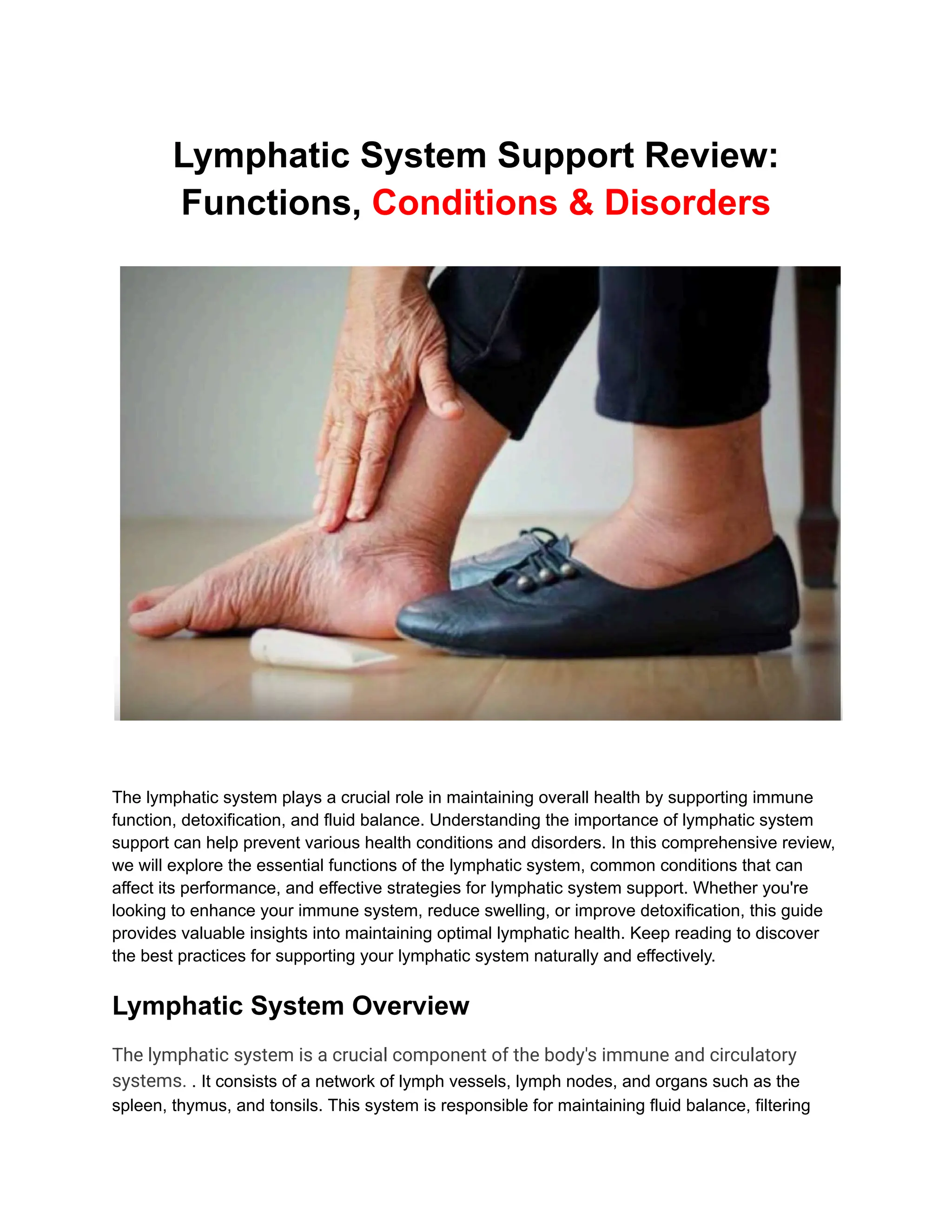
●​ Lymphedema: This condition occurs when lymph fluid builds up in tissues, causing
swelling, usually in the arms or legs. It can result from damage to lymph nodes or
vessels due to surgery, radiation therapy, infections, or inherited genetic conditions.
●​ Lymphadenitis: Inflammation of the lymph nodes, typically caused by an infection.
Affected lymph nodes may become swollen, tender, and painful, often due to bacterial or
viral infections.
●​ Lymphoma: Lymphoma: A cancer that begins in lymphocytes (white blood cells) within
the lymphatic system, categorized into two main types—Hodgkin lymphoma and
non-Hodgkin lymphoma. . Symptoms may include swollen lymph nodes, fatigue, fever,
and unexplained weight loss.
●​ Lymphangitis: Inflammation of the lymphatic vessels, typically due to a bacterial
infection. It can cause red streaks under the skin, fever, and pain. If not treated, it may
result in severe complications.
●​ Castleman Disease: A rare disorder involving an overgrowth of cells in the lymph
nodes. It is not cancer, but it can act like lymphoma and may weaken the immune
system.
●​ Tonsillitis: Inflammation of the tonsils, typically caused by viral or bacterial infections.
Symptoms include a sore throat, difficulty swallowing, and swollen tonsils.
●​ Autoimmune Disorders: Conditions such as lupus and rheumatoid arthritis can impact
the lymphatic system by causing chronic inflammation and swelling of the lymph nodes.
Care:
How Can I Keep My Lymphatic System Healthy?
Maintaining a healthy lymphatic system is essential for supporting immunity, detoxification, and
fluid balance. Here are some effective ways to keep your lymphatic system functioning
optimally:
●​ Stay Active: Regular physical activity, such as walking, jogging, yoga, or stretching,
helps stimulate lymph flow because the lymphatic system relies on muscle movement to
circulate fluid throughout the body.
●​ Stay Hydrated: Drinking enough water is crucial for maintaining proper lymph fluid
consistency and ensuring that toxins are effectively flushed out of the body.
●​ Eat a Healthy Diet: Incorporate nutrient-rich foods, such as fresh fruits, vegetables,
nuts, and seeds, which provide antioxidants and support immune health. Minimize
processed foods, sugar, and excessive salt intake, as they can hinder lymphatic function.
●​ Lymphatic Massage: Gentle massage techniques, like manual lymphatic drainage, can
help stimulate lymph flow and reduce swelling or fluid buildup.
●​ Deep Breathing Exercises: Deep breathing helps promote lymph circulation by creating
pressure changes in the chest, which assist lymph movement. Practice slow, deep
breathing daily for optimal results.
●​ Dry Brushing: Using a natural bristle brush on dry skin before showering can stimulate
lymphatic circulation and promote the removal of toxins through the skin.
●​ Maintain Good Posture: Proper posture supports effective lymph flow, especially in the
neck and upper body. Avoid prolonged sitting or slouching.
●​ Avoid Tight Clothing: Tight clothing can restrict lymph flow. Choose loose-fitting clothes
to avoid blockages.
●​ Limit Toxins: Reduce exposure to environmental toxins such as pollutants, chemicals,
and smoking, as these can burden the lymphatic system.
Lymphatic System Review: Conclusion
The lymphatic system plays a crucial role in maintaining overall health by regulating fluid
balance, supporting immunity, and removing waste and toxins from the body. Comprising lymph
vessels, lymph nodes, and essential organs like the spleen, thymus, and bone marrow, this
complex network works tirelessly to protect the body from infections and diseases.
Understanding the functions of the lymphatic system and recognizing common conditions and
disorders can help you take proactive steps to maintain its health. By staying active, eating a
balanced diet, staying hydrated, and practicing good self-care habits, you can support your
lymphatic system's efficiency and overall well-being.
Prioritizing lymphatic health not only strengthens immunity but also enhances detoxification and
fluid balance, contributing to better energy levels and overall vitality. By adopting healthy lifestyle
choices, you can keep your lymphatic system functioning at its best and protect your long-term
health.
✅Click here to get Lymphatic System Support from official website!
Lymphatic System Review: FAQs
Q: What is the lymphatic system?
​
The lymphatic system is a network of vessels, nodes, and organs that helps maintain fluid
balance, support immunity, and remove waste from the body. It transports lymph, a clear fluid
containing white blood cells, throughout the body to fight infections and detoxify tissues.
Q: Why is the lymphatic system important?
​
The lymphatic system is crucial for immune defense, fluid balance, and waste removal. It helps
protect the body from harmful pathogens, prevents tissue swelling, and assists in the absorption
of fats and fat-soluble nutrients.
Q: What are the main organs of the lymphatic system?
The primary organs include the bone marrow, thymus, lymph nodes, spleen, and
mucosa-associated lymphoid tissue (MALT). Other important components are lymph, lymphatic
vessels, collecting ducts, tonsils, and adenoids.
Q: What conditions can affect the lymphatic system?
​
Common conditions include lymphedema (swelling due to fluid buildup), lymphadenitis (inflamed
lymph nodes), lymphoma (cancer of lymphocytes), and lymphangitis (inflammation of lymphatic
vessels). Autoimmune disorders and infections can also impact lymphatic function.
Q: How can I keep my lymphatic system healthy?
To maintain a healthy lymphatic system, stay active, drink plenty of water, eat a balanced diet
rich in antioxidants, practice deep breathing, avoid tight clothing, and consider lymphatic
massage or dry brushing to stimulate lymph flow.
Q: Can lymphatic issues be treated?
​
Yes, many lymphatic conditions can be managed with medical treatment, lifestyle changes, and
supportive therapies such as compression garments, physical therapy, and medication. Early
diagnosis and appropriate care are essential for effective management.
Q: When should I see a doctor about my lymphatic system?
​
If you notice unexplained swelling, persistent fatigue, pain, fever, or swollen lymph nodes that
don’t improve, it’s important to consult a healthcare professional for an accurate diagnosis and
appropriate treatment.
Resources: https://nirahealthy.com/lymphatic-system-support-review/

Lymphatic System Support Review_ Functions, Conditions & Disorders (1).pdf

  • 1.
    Lymphatic System SupportReview: Functions, Conditions & Disorders The lymphatic system plays a crucial role in maintaining overall health by supporting immune function, detoxification, and fluid balance. Understanding the importance of lymphatic system support can help prevent various health conditions and disorders. In this comprehensive review, we will explore the essential functions of the lymphatic system, common conditions that can affect its performance, and effective strategies for lymphatic system support. Whether you're looking to enhance your immune system, reduce swelling, or improve detoxification, this guide provides valuable insights into maintaining optimal lymphatic health. Keep reading to discover the best practices for supporting your lymphatic system naturally and effectively. Lymphatic System Overview The lymphatic system is a crucial component of the body's immune and circulatory systems. . It consists of a network of lymph vessels, lymph nodes, and organs such as the spleen, thymus, and tonsils. This system is responsible for maintaining fluid balance, filtering
  • 2.
    waste, and supportingimmune function by transporting lymph—a clear fluid containing white blood cells—throughout the body. It helps defend against infections, remove toxins, and regulate inflammation. Understanding the lymphatic system's role is essential for maintaining overall health and preventing various disorders. What is the Lymphatic System? The lymphatic system is a complex network of vessels, nodes, and organs that play a crucial role in maintaining the body's fluid balance and supporting the immune system. It transports lymph—a clear fluid rich in white blood cells—throughout the body, helping to fight infections and remove waste products. Key components of the lymphatic system include lymph nodes, the spleen, thymus, and tonsils. These structures work together to filter harmful substances, destroy pathogens, and circulate immune cells. By maintaining fluid levels and defending against infections, the lymphatic system is essential for overall health and well-being. ✅Experience the Benefits of Lymphatic System Support- Act Now! What Does the Lymphatic System Do? The lymphatic system serves several critical functions to keep the body healthy and balanced: ●​ Maintaining Fluid Balance: It gathers excess fluid from tissues and channels it back into the bloodstream, preventing tissue swelling and ensuring stable fluid levels. ●​ Filtering Waste and Toxins: As lymph fluid passes through lymph nodes, harmful substances like waste products, damaged cells, and debris are removed, supporting the body’s natural detoxification processes. ●​ Supporting Fat Absorption: The lymphatic system plays a key role in digesting fats. It absorbs large fat molecules and certain nutrients from the intestines that are too big to enter the bloodstream directly, then delivers them into circulation. ●​ Boosting Immune Defense: As part of the immune system, the lymphatic system generates white blood cells (lymphocytes) and other immune cells. These cells patrol the body, identifying and eliminating harmful invaders such as bacteria, viruses, parasites, and fungi.
  • 3.
    How Does theLymphatic System Work? The lymphatic system operates as a network of vessels, nodes, and organs that work together to maintain fluid balance, support immunity, and remove waste from the body. It begins with tiny lymph capillaries located throughout body tissues. These capillaries absorb excess fluid, waste products, and other substances from the surrounding cells. This fluid, now called lymph, travels through a series of larger lymph vessels. As lymph moves through these vessels, it passes through lymph nodes—small, bean-shaped structures that filter out harmful substances like bacteria, viruses, and toxins. Inside the lymph nodes, specialized white blood cells called lymphocytes detect and attack any foreign invaders, helping to protect the body from infections. Once filtered, the lymph continues its journey through the lymphatic system and eventually drains into the bloodstream through large ducts located near the neck. This process helps maintain fluid balance and ensures that waste products are efficiently removed from the body. The lymphatic system relies on muscle movement and breathing to circulate lymph, as it doesn’t have a pump like the heart. By working continuously, the lymphatic system keeps the body’s internal environment clean, balanced, and well-defended against potential threats. Anatomy: What Are the Lymphatic System Organs? The lymphatic system is made up of several key organs that work together to maintain fluid balance, support immunity, and filter waste from the body. Here are the main organs involved: ●​ Bone Marrow: Located inside certain bones, bone marrow produces lymphocytes—white blood cells that are essential for the immune system. It is the primary site for the production of B cells, which help protect the body from infections. ●​ Thymus: Found behind the breastbone, the thymus is where T cells mature. These T cells are a type of lymphocyte that play a critical role in identifying and destroying harmful pathogens, such as viruses and bacteria. ●​ Lymph Nodes: Small, bean-shaped structures located throughout the body, lymph nodes filter lymph fluid to remove harmful substances like bacteria, viruses, and toxins. They also contain lymphocytes that detect and fight infections. ●​ Spleen: Situated in the upper left part of the abdomen, the spleen filters the blood by removing old or damaged red blood cells and platelets. It also stores white blood cells and helps fight infections by producing antibodies. ●​ Mucosa-Associated Lymphoid Tissue (MALT): Found in mucous membranes throughout the body, such as in the digestive tract, respiratory system, and urinary system, MALT defends against pathogens that enter through these areas. It includes structures like the tonsils, Peyer’s patches, and the appendix.
  • 4.
    What Are theOther Parts of the Lymphatic System? In addition to its main organs, the lymphatic system is made up of several other important components that help maintain fluid balance, support immunity, and filter waste. These include: ●​ Lymph is a clear fluid that circulates through the lymphatic system. It contains white blood cells, especially lymphocytes, which help fight infections. Lymph also carries waste products, toxins, and excess fluids from body tissues back to the bloodstream. ●​ Lymphatic Vessels: These are a network of thin tubes that transport lymph throughout the body. They are similar to blood vessels but do not have a central pump like the heart. Instead, lymph moves through the vessels with the help of muscle contractions and body movements. ●​ Collecting Ducts: The lymphatic system drains lymph into the bloodstream through two main collecting ducts—the right lymphatic duct and the thoracic duct. The right lymphatic duct drains lymph from the upper right side of the body, while the thoracic duct handles the rest. These ducts empty the filtered lymph into large veins near the neck. ●​ Tonsils and Adenoids: Located at the back of the throat and nasal cavity, tonsils and adenoids are clusters of lymphoid tissue that help protect the body from inhaled or ingested pathogens. They produce lymphocytes and antibodies to defend against bacteria and viruses. Conditions and Disorders: What Affects the Lymphatic System? Several conditions and disorders can impact the lymphatic system, affecting its ability to maintain fluid balance, support immunity, and remove waste. Some common issues include: ●​ Lymphedema: This condition occurs when lymph fluid builds up in tissues, causing swelling, usually in the arms or legs. It can result from damage to lymph nodes or vessels due to surgery, radiation therapy, infections, or inherited genetic conditions. ●​ Lymphadenitis: Inflammation of the lymph nodes, typically caused by an infection. Affected lymph nodes may become swollen, tender, and painful, often due to bacterial or viral infections. ●​ Lymphoma: Lymphoma: A cancer that begins in lymphocytes (white blood cells) within the lymphatic system, categorized into two main types—Hodgkin lymphoma and non-Hodgkin lymphoma. . Symptoms may include swollen lymph nodes, fatigue, fever, and unexplained weight loss. ●​ Lymphangitis: Inflammation of the lymphatic vessels, typically due to a bacterial infection. It can cause red streaks under the skin, fever, and pain. If not treated, it may result in severe complications. ●​ Castleman Disease: A rare disorder involving an overgrowth of cells in the lymph nodes. It is not cancer, but it can act like lymphoma and may weaken the immune system.
  • 5.
    ●​ Tonsillitis: Inflammationof the tonsils, typically caused by viral or bacterial infections. Symptoms include a sore throat, difficulty swallowing, and swollen tonsils. ●​ Autoimmune Disorders: Conditions such as lupus and rheumatoid arthritis can impact the lymphatic system by causing chronic inflammation and swelling of the lymph nodes. Care: How Can I Keep My Lymphatic System Healthy? Maintaining a healthy lymphatic system is essential for supporting immunity, detoxification, and fluid balance. Here are some effective ways to keep your lymphatic system functioning optimally: ●​ Stay Active: Regular physical activity, such as walking, jogging, yoga, or stretching, helps stimulate lymph flow because the lymphatic system relies on muscle movement to circulate fluid throughout the body. ●​ Stay Hydrated: Drinking enough water is crucial for maintaining proper lymph fluid consistency and ensuring that toxins are effectively flushed out of the body. ●​ Eat a Healthy Diet: Incorporate nutrient-rich foods, such as fresh fruits, vegetables, nuts, and seeds, which provide antioxidants and support immune health. Minimize processed foods, sugar, and excessive salt intake, as they can hinder lymphatic function. ●​ Lymphatic Massage: Gentle massage techniques, like manual lymphatic drainage, can help stimulate lymph flow and reduce swelling or fluid buildup. ●​ Deep Breathing Exercises: Deep breathing helps promote lymph circulation by creating pressure changes in the chest, which assist lymph movement. Practice slow, deep breathing daily for optimal results. ●​ Dry Brushing: Using a natural bristle brush on dry skin before showering can stimulate lymphatic circulation and promote the removal of toxins through the skin. ●​ Maintain Good Posture: Proper posture supports effective lymph flow, especially in the neck and upper body. Avoid prolonged sitting or slouching. ●​ Avoid Tight Clothing: Tight clothing can restrict lymph flow. Choose loose-fitting clothes to avoid blockages. ●​ Limit Toxins: Reduce exposure to environmental toxins such as pollutants, chemicals, and smoking, as these can burden the lymphatic system. Lymphatic System Review: Conclusion
  • 6.
    The lymphatic systemplays a crucial role in maintaining overall health by regulating fluid balance, supporting immunity, and removing waste and toxins from the body. Comprising lymph vessels, lymph nodes, and essential organs like the spleen, thymus, and bone marrow, this complex network works tirelessly to protect the body from infections and diseases. Understanding the functions of the lymphatic system and recognizing common conditions and disorders can help you take proactive steps to maintain its health. By staying active, eating a balanced diet, staying hydrated, and practicing good self-care habits, you can support your lymphatic system's efficiency and overall well-being. Prioritizing lymphatic health not only strengthens immunity but also enhances detoxification and fluid balance, contributing to better energy levels and overall vitality. By adopting healthy lifestyle choices, you can keep your lymphatic system functioning at its best and protect your long-term health. ✅Click here to get Lymphatic System Support from official website! Lymphatic System Review: FAQs Q: What is the lymphatic system? ​ The lymphatic system is a network of vessels, nodes, and organs that helps maintain fluid balance, support immunity, and remove waste from the body. It transports lymph, a clear fluid containing white blood cells, throughout the body to fight infections and detoxify tissues. Q: Why is the lymphatic system important? ​ The lymphatic system is crucial for immune defense, fluid balance, and waste removal. It helps protect the body from harmful pathogens, prevents tissue swelling, and assists in the absorption of fats and fat-soluble nutrients. Q: What are the main organs of the lymphatic system? The primary organs include the bone marrow, thymus, lymph nodes, spleen, and mucosa-associated lymphoid tissue (MALT). Other important components are lymph, lymphatic vessels, collecting ducts, tonsils, and adenoids. Q: What conditions can affect the lymphatic system?
  • 7.
    ​ Common conditions includelymphedema (swelling due to fluid buildup), lymphadenitis (inflamed lymph nodes), lymphoma (cancer of lymphocytes), and lymphangitis (inflammation of lymphatic vessels). Autoimmune disorders and infections can also impact lymphatic function. Q: How can I keep my lymphatic system healthy? To maintain a healthy lymphatic system, stay active, drink plenty of water, eat a balanced diet rich in antioxidants, practice deep breathing, avoid tight clothing, and consider lymphatic massage or dry brushing to stimulate lymph flow. Q: Can lymphatic issues be treated? ​ Yes, many lymphatic conditions can be managed with medical treatment, lifestyle changes, and supportive therapies such as compression garments, physical therapy, and medication. Early diagnosis and appropriate care are essential for effective management. Q: When should I see a doctor about my lymphatic system? ​ If you notice unexplained swelling, persistent fatigue, pain, fever, or swollen lymph nodes that don’t improve, it’s important to consult a healthcare professional for an accurate diagnosis and appropriate treatment. Resources: https://nirahealthy.com/lymphatic-system-support-review/