LYMPHATIC SYSTEM
Dr. itzaz Aslam
Pathology
ANATOMY
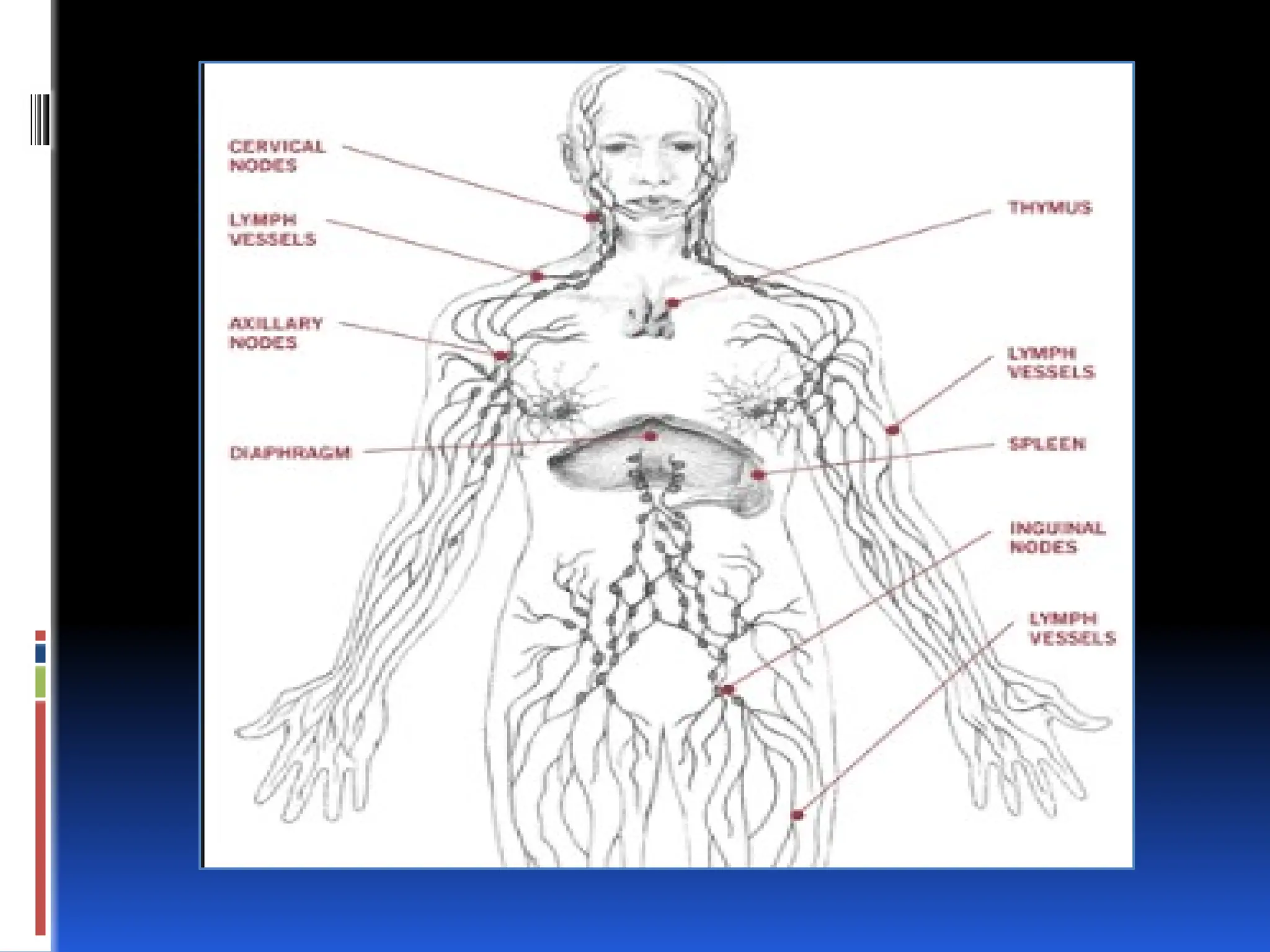
 The lymphatic system is part of the
circulatory system, comprised of a
network of conduits/vessels called
lymphatic vessels that carry a clear
fluid called lymph directed towards
the heart through thoracic duct.
ANATOMY
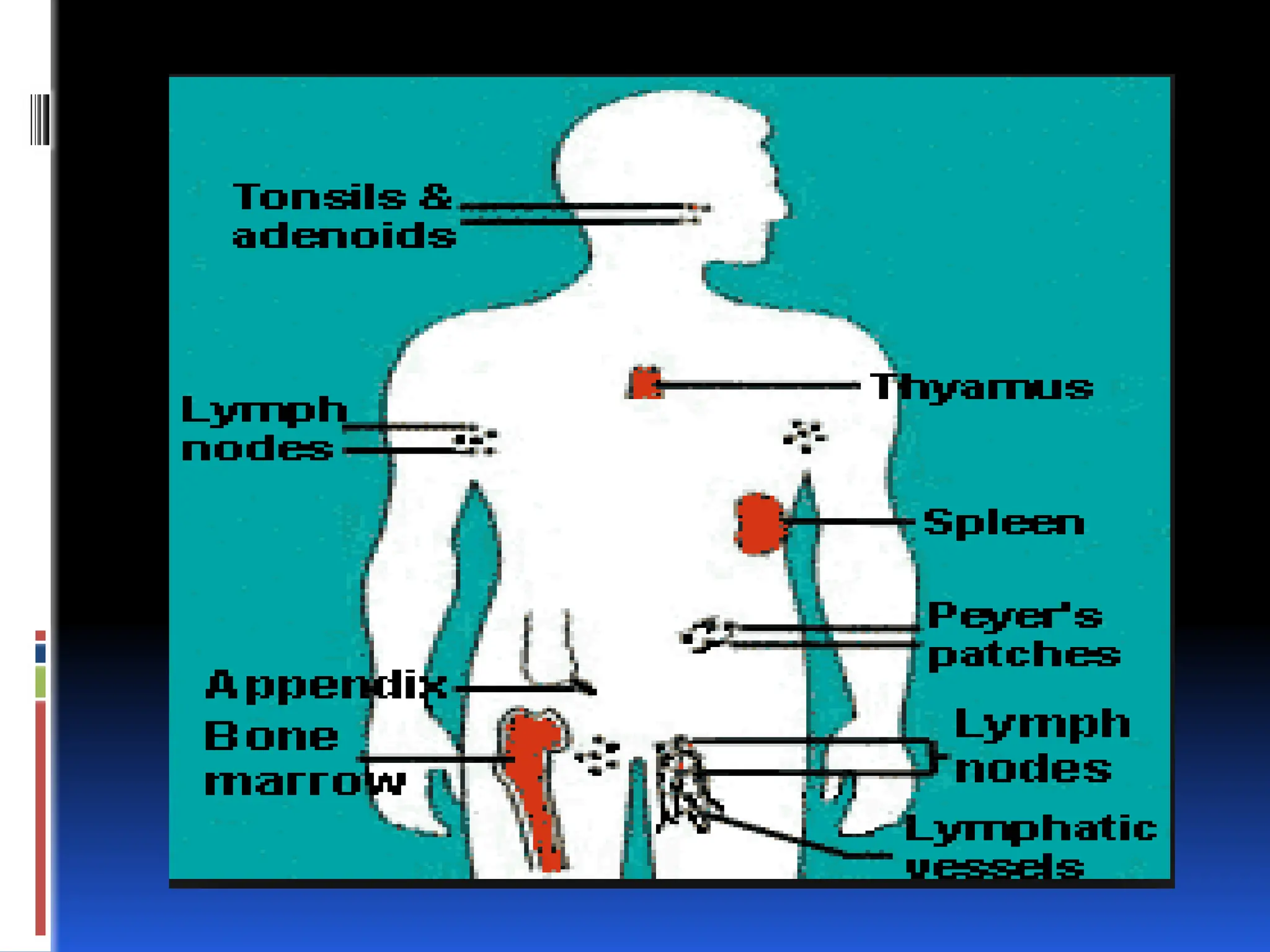
 Lymphatic vessels
 Lymphatic Organs :
Lymph Nodes
Spleen
Thymus
Tonsils
Bone Marrow
 Lymphatic Tissue :
Peyer Patches
Lymphoid tissue aggregates in digestive system
FUNCTIONS
 It is responsible for the removal of
interstitial fluid from tissues
 It absorbs and transports fatty acids
and fats as chyle from the digestive
system
 It transports white blood cells to and
from the lymph nodes .
FUNCTIONS
 Antibodies are manufactured by the lymph
system. Antibodies are specialized proteins
that the body produces in response to invasion
by a foreign substance.
 The lymph transports antigen-presenting cells
(APCs), to the lymph nodes where an immune
response is stimulated so lymphatic system
plays an important part in the immune system.
PHYSIOLOGY OF LYMPHATICS
 The circulatory system processes an average
of 20 litres of blood per day through
capillary filtration which removes plasma
while leaving the blood cells. Roughly 17
litres of the filtered plasma actually get
reabsorbed directly into the blood vessels,
while the remaining 3 litres are left behind in
the interstitial fluid. The primary function of
the lymph system is to provide an accessory
route for these excess 3 litres per day to get
returned to the blood. Lymph is essentially
recycled blood plasma.
PHYSIOLOGY OF LYMPHATICS
 The lymph system is the body's drainage
system. It is composed of a network of vessels
and small structures called lymph nodes.
Along the way, these fluids are forced to
percolate through the lymph nodes so that
they can be filtered. Harmful organisms are
trapped and destroyed by the specialized
white blood cells, called lymphocytes, that are
present in these nodes. Lymphocytes are also
added to the lymph that flows out of nodes.
Eventually, the lymph vessels empty into the
lymphatic ducts, which drain into subclavian
vein.
DISEASES OF LYMPHATIC
System
 Lymphedema is the swelling caused by
the accumulation of lymph fluid, which
may occur if the lymphatic system is
damaged or has malformations. It
usually affects limbs,e.g.; elephantiasis,
lymphatic filariasis.
DISEASES OF LYMPHATIC
SYSTEM
 Swollen lymph nodes
(Lymphadenopathy): infections,
infectious mononucleosis, and cancer,
e.g. Hodgkin's and non-Hodgkin
lymphoma, and metastasis of cancerous
cells via the lymphatic system.
DISEASES OF LYMPHATIC
SYSTEM
 Lymphangiomatosis is a disease
involving multiple cysts or lesions
formed from lymphatic vessels.
 Lymphangiosarcoma is a malignant
soft tissue tumor, whereas
lymphangioma is a benign tumor
CAUSES OF LYMPHANGITIS & LYMPHADENITIS
VIRUS : Acute HIV ; Primary Herpes Simplex
PARASITES : . Rickettsiasis,
 Plague,
 Primary Syphilis,
 Brucellosis ,
 Trypanosomiasis
 Leishmaniasis,
 Schistosomiasis
 Trichinosis,
 Leprosy and
 Lymphatic Filariasis,
THANX

1.LYMPHATIC SYSTEM physiology & explanation

  • 2.
  • 3.
    ANATOMY  The lymphaticsystem is part of the circulatory system, comprised of a network of conduits/vessels called lymphatic vessels that carry a clear fluid called lymph directed towards the heart through thoracic duct.
  • 5.
    ANATOMY  Lymphatic vessels Lymphatic Organs : Lymph Nodes Spleen Thymus Tonsils Bone Marrow  Lymphatic Tissue : Peyer Patches Lymphoid tissue aggregates in digestive system
  • 7.
    FUNCTIONS  It isresponsible for the removal of interstitial fluid from tissues  It absorbs and transports fatty acids and fats as chyle from the digestive system  It transports white blood cells to and from the lymph nodes .
  • 8.
    FUNCTIONS  Antibodies aremanufactured by the lymph system. Antibodies are specialized proteins that the body produces in response to invasion by a foreign substance.  The lymph transports antigen-presenting cells (APCs), to the lymph nodes where an immune response is stimulated so lymphatic system plays an important part in the immune system.
  • 9.
    PHYSIOLOGY OF LYMPHATICS The circulatory system processes an average of 20 litres of blood per day through capillary filtration which removes plasma while leaving the blood cells. Roughly 17 litres of the filtered plasma actually get reabsorbed directly into the blood vessels, while the remaining 3 litres are left behind in the interstitial fluid. The primary function of the lymph system is to provide an accessory route for these excess 3 litres per day to get returned to the blood. Lymph is essentially recycled blood plasma.
  • 10.
    PHYSIOLOGY OF LYMPHATICS The lymph system is the body's drainage system. It is composed of a network of vessels and small structures called lymph nodes. Along the way, these fluids are forced to percolate through the lymph nodes so that they can be filtered. Harmful organisms are trapped and destroyed by the specialized white blood cells, called lymphocytes, that are present in these nodes. Lymphocytes are also added to the lymph that flows out of nodes. Eventually, the lymph vessels empty into the lymphatic ducts, which drain into subclavian vein.
  • 11.
    DISEASES OF LYMPHATIC System Lymphedema is the swelling caused by the accumulation of lymph fluid, which may occur if the lymphatic system is damaged or has malformations. It usually affects limbs,e.g.; elephantiasis, lymphatic filariasis.
  • 12.
    DISEASES OF LYMPHATIC SYSTEM Swollen lymph nodes (Lymphadenopathy): infections, infectious mononucleosis, and cancer, e.g. Hodgkin's and non-Hodgkin lymphoma, and metastasis of cancerous cells via the lymphatic system.
  • 13.
    DISEASES OF LYMPHATIC SYSTEM Lymphangiomatosis is a disease involving multiple cysts or lesions formed from lymphatic vessels.  Lymphangiosarcoma is a malignant soft tissue tumor, whereas lymphangioma is a benign tumor
  • 14.
    CAUSES OF LYMPHANGITIS& LYMPHADENITIS VIRUS : Acute HIV ; Primary Herpes Simplex PARASITES : . Rickettsiasis,  Plague,  Primary Syphilis,  Brucellosis ,  Trypanosomiasis  Leishmaniasis,  Schistosomiasis  Trichinosis,  Leprosy and  Lymphatic Filariasis,
  • 15.