Respiratory System
• It is a system that consist of organs and
structures used for the process of
respiration in an organism
• Involved in the intake and exchange of
oxygen and carbon dioxide
• Gas exchange
• Immunity functions
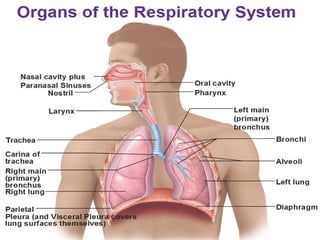
Nostril
• It is the part of the respiratory system in
which the air enters into and exits from
the body
Nasal Cavity
• A large air-filled space above and behind
the nose in the middle of the face
• The air passing the nasal cavity is warmed
within 1 degree of the body temperature
• Cilia – removes dusts and pathogens from
the air as it flows through the nasal cavity
Pharynx
• It is part of the throat that is behind the
mouth and nasal cavity and above the
esophagus and the larynx
• A tubular structure that allows the air to
pass through from the nose to the lungs
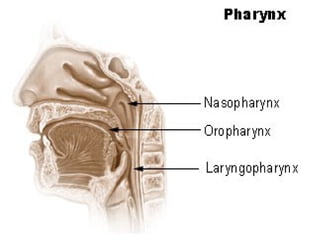
• Nasopharynx – upper portion of the
pharynx that is behind the nose and
surrounded by muscles that can continue
the respiratory function
Larynx
• Commonly known as the “voice box”
• Sounds are generated in the larynx; where
pitch and volume are manipulated
• Prevention of foreign objects from
entering the lungs by coughing out
Trachea
• Also called as the “windpipe”
• A cartilaginous tube that connects the
pharynx and the larynx to the lungs
• Passageway of air
• 10-16 centimeters in length
Bronchi
• Airway in the respiratory tract that
conducts air into the lungs
• Right Main Bronchus – wider, shorter and
more vertical than the left bronchus. It
enters in the right side of the lung
• Left Main Bronchus – longer than the right
bronchus. It enters in the left side of the
lung
Lungs
• Primary organs of respiration in humans
• Located in the chest on either side of the
heart in the rib cage
• Right Lung – has 3 lobes
• Left Lung – has 2 lobes
• Its function are breathing, respiration and
protection from infection
Inhalation
• Drawing in oxygen into the lungs
• It is a vital process in human life
• Contraction of muscles in the rib cage; this
causes the expansion of the chest cavity
• Contraction of the diaphragm
Exhalation
• Flow of the air out of the organism
• The main reason of exhalation is to get rid
of the carbon dioxide, which is a waste
product of the gas exchange, inside the
body
Respiratory System
Respiratory System
Respiratory System

Respiratory System

  • 2.
    Respiratory System • Itis a system that consist of organs and structures used for the process of respiration in an organism • Involved in the intake and exchange of oxygen and carbon dioxide • Gas exchange • Immunity functions
  • 4.
    Nostril • It isthe part of the respiratory system in which the air enters into and exits from the body
  • 5.
    Nasal Cavity • Alarge air-filled space above and behind the nose in the middle of the face • The air passing the nasal cavity is warmed within 1 degree of the body temperature • Cilia – removes dusts and pathogens from the air as it flows through the nasal cavity
  • 7.
    Pharynx • It ispart of the throat that is behind the mouth and nasal cavity and above the esophagus and the larynx • A tubular structure that allows the air to pass through from the nose to the lungs • Nasopharynx – upper portion of the pharynx that is behind the nose and surrounded by muscles that can continue the respiratory function
  • 9.
    Larynx • Commonly knownas the “voice box” • Sounds are generated in the larynx; where pitch and volume are manipulated • Prevention of foreign objects from entering the lungs by coughing out
  • 12.
    Trachea • Also calledas the “windpipe” • A cartilaginous tube that connects the pharynx and the larynx to the lungs • Passageway of air • 10-16 centimeters in length
  • 14.
    Bronchi • Airway inthe respiratory tract that conducts air into the lungs • Right Main Bronchus – wider, shorter and more vertical than the left bronchus. It enters in the right side of the lung • Left Main Bronchus – longer than the right bronchus. It enters in the left side of the lung
  • 16.
    Lungs • Primary organsof respiration in humans • Located in the chest on either side of the heart in the rib cage • Right Lung – has 3 lobes • Left Lung – has 2 lobes • Its function are breathing, respiration and protection from infection
  • 20.
    Inhalation • Drawing inoxygen into the lungs • It is a vital process in human life • Contraction of muscles in the rib cage; this causes the expansion of the chest cavity • Contraction of the diaphragm
  • 22.
    Exhalation • Flow ofthe air out of the organism • The main reason of exhalation is to get rid of the carbon dioxide, which is a waste product of the gas exchange, inside the body