

Brain
computer
interface
By:- Jaykrishna Thakkar
Sy.Msc.it(integrated)
CONTENT
Introduction
Principal behind BCI
How BCI works
Types of BCI
Application of BCI
Advantages
conclusion
INTRODUCTION
• Brain Computer Interface is a direct technological interface between a
brain & a computer system not requires a motor output from the
user.
• It is abbreviated as BCI.
• It is also known as Direct Neural Interface (DNI) & Brain – Machine
Interface (BMI).
CONTINUED..
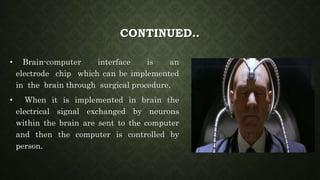
• Brain-computer interface is an
electrode chip which can be implemented
in the brain through surgical procedure.
• When it is implemented in brain the
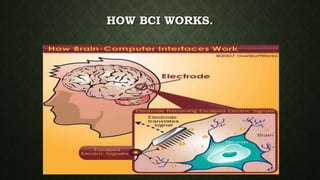
electrical signal exchanged by neurons
within the brain are sent to the computer
and then the computer is controlled by
person.
PRINCIPAL BEHIND BCI
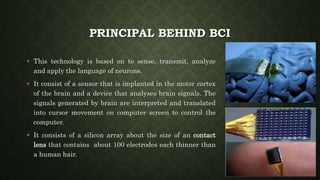
 This technology is based on to sense, transmit, analyze
and apply the language of neurons.
 It consist of a sensor that is implanted in the motor cortex
of the brain and a device that analyses brain signals. The
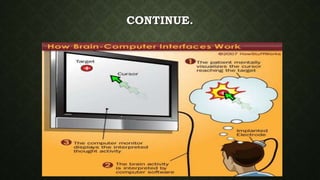
signals generated by brain are interpreted and translated
into cursor movement on computer screen to control the
computer.
 It consists of a silicon array about the size of an contact
lens that contains about 100 electrodes each thinner than
a human hair.
HOW BCI WORKS.
CONTINUE.
CONTINUE.
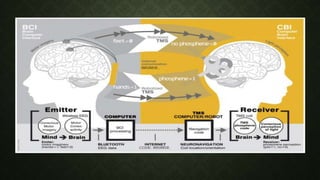
• This is how the brain-to-brain system works. The BCI reads the
sender’s thoughts — in this case, the sender thinks about moving his
or her hands or feet.
• Thinking about feet is equivalent to binary 0, while hands is binary 1.
• With a little time/effort, whole words can be encoded as a stream of
ones and zeroes.
• These encoded words are then transmitted (via the internet or some
other network) to the recipient, who is wearing a transcranial
magnetic stimulation (TMS). The TMS is focused on the recipient’s
visual cortex.
CONTINUE.
• When the TMS receives a “1″ from the sender, it stimulates a region in
the visual cortex that produces a phosphine — the phenomenon
whereby you see flashes of light, without light actually hitting your
retina (when you rub your eyes, for example).
• The recipient “sees” these phosphine at the bottom of their visual
field. By decoding the flashes — phosphine flash = 1, no phosphine = 0
— the recipient can “read” the word being sent.
TYPES OF BCI
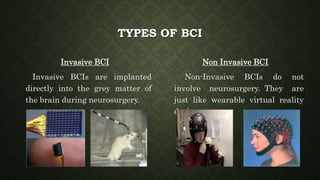
Invasive BCI
Invasive BCIs are implanted
directly into the grey matter of
the brain during neurosurgery.
Non Invasive BCI
Non-Invasive BCIs do not
involve neurosurgery. They are
just like wearable virtual reality
devices.
APPLICATION OF BCI
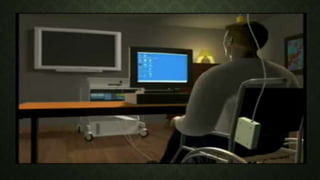
 One of the most exciting areas of BCI research is the development of
devices that can be controlled by thoughts.
 For a quadriplegic, something as basic as controlling a computer cursor
via mental commands would represent a revolutionary improvement in
quality of life.
 Some of the applications of this technology are also frivolous, such as the
ability to control a video game by thought , ability to change TV channels
with your mind etc.
PROJECTS
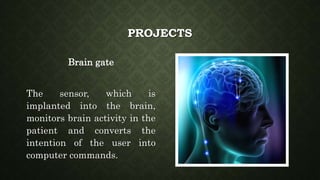
Brain gate
The sensor, which is
implanted into the brain,
monitors brain activity in the
patient and converts the
intention of the user into
computer commands.
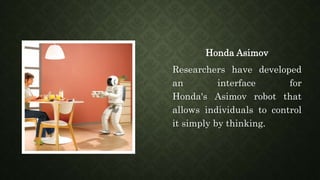
Honda Asimov
Researchers have developed
an interface for
Honda's Asimov robot that
allows individuals to control
it simply by thinking.
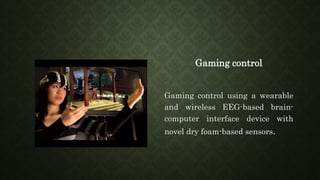
Gaming control
Gaming control using a wearable
and wireless EEG-based brain-
computer interface device with
novel dry foam-based sensors.
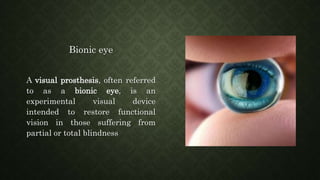
Bionic eye
A visual prosthesis, often referred
to as a bionic eye, is an
experimental visual device
intended to restore functional
vision in those suffering from
partial or total blindness
ADVANTAGES
• Allow paralyzed people to control prosthetic limbs with their mind
• Transmit visual images to the mind of a blind person, allowing them
to see
• Transmit auditory data to the mind of a deaf person, allowing them to
Hear
• Allow gamers to control video games with their minds
• Allow a mute person to have their thoughts displayed and spoken by a
computer
CONCLUSION
• A potential therapeutic tool.
• BCI is an advancing technology promising paradigm shift in areas
like Machine Control, Human Enhancement, Virtual reality and
etc. So, it’s potentially high impact technology.
• Several potential applications of BCI hold promise for
rehabilitation and improving performance, such as treating
emotional disorders (for example, depression or anxiety), easing
chronic pain, and overcoming movement disabilities
due to stroke.
• Will enable us to achieve singularity very soon.
• Intense R&D in future to attain intuitive efficiency
Brain computer interface

Brain computer interface

  • 1.
  • 2.
    CONTENT Introduction Principal behind BCI HowBCI works Types of BCI Application of BCI Advantages conclusion
  • 3.
    INTRODUCTION • Brain ComputerInterface is a direct technological interface between a brain & a computer system not requires a motor output from the user. • It is abbreviated as BCI. • It is also known as Direct Neural Interface (DNI) & Brain – Machine Interface (BMI).
  • 4.
    CONTINUED.. • Brain-computer interfaceis an electrode chip which can be implemented in the brain through surgical procedure. • When it is implemented in brain the electrical signal exchanged by neurons within the brain are sent to the computer and then the computer is controlled by person.
  • 5.
    PRINCIPAL BEHIND BCI This technology is based on to sense, transmit, analyze and apply the language of neurons.  It consist of a sensor that is implanted in the motor cortex of the brain and a device that analyses brain signals. The signals generated by brain are interpreted and translated into cursor movement on computer screen to control the computer.  It consists of a silicon array about the size of an contact lens that contains about 100 electrodes each thinner than a human hair.
  • 6.
  • 7.
  • 9.
    CONTINUE. • This ishow the brain-to-brain system works. The BCI reads the sender’s thoughts — in this case, the sender thinks about moving his or her hands or feet. • Thinking about feet is equivalent to binary 0, while hands is binary 1. • With a little time/effort, whole words can be encoded as a stream of ones and zeroes. • These encoded words are then transmitted (via the internet or some other network) to the recipient, who is wearing a transcranial magnetic stimulation (TMS). The TMS is focused on the recipient’s visual cortex.
  • 10.
    CONTINUE. • When theTMS receives a “1″ from the sender, it stimulates a region in the visual cortex that produces a phosphine — the phenomenon whereby you see flashes of light, without light actually hitting your retina (when you rub your eyes, for example). • The recipient “sees” these phosphine at the bottom of their visual field. By decoding the flashes — phosphine flash = 1, no phosphine = 0 — the recipient can “read” the word being sent.
  • 11.
    TYPES OF BCI InvasiveBCI Invasive BCIs are implanted directly into the grey matter of the brain during neurosurgery. Non Invasive BCI Non-Invasive BCIs do not involve neurosurgery. They are just like wearable virtual reality devices.
  • 12.
    APPLICATION OF BCI One of the most exciting areas of BCI research is the development of devices that can be controlled by thoughts.  For a quadriplegic, something as basic as controlling a computer cursor via mental commands would represent a revolutionary improvement in quality of life.  Some of the applications of this technology are also frivolous, such as the ability to control a video game by thought , ability to change TV channels with your mind etc.
  • 13.
    PROJECTS Brain gate The sensor,which is implanted into the brain, monitors brain activity in the patient and converts the intention of the user into computer commands.
  • 14.
    Honda Asimov Researchers havedeveloped an interface for Honda's Asimov robot that allows individuals to control it simply by thinking.
  • 15.
    Gaming control Gaming controlusing a wearable and wireless EEG-based brain- computer interface device with novel dry foam-based sensors.
  • 16.
    Bionic eye A visualprosthesis, often referred to as a bionic eye, is an experimental visual device intended to restore functional vision in those suffering from partial or total blindness
  • 18.
    ADVANTAGES • Allow paralyzedpeople to control prosthetic limbs with their mind • Transmit visual images to the mind of a blind person, allowing them to see • Transmit auditory data to the mind of a deaf person, allowing them to Hear • Allow gamers to control video games with their minds • Allow a mute person to have their thoughts displayed and spoken by a computer
  • 19.
    CONCLUSION • A potentialtherapeutic tool. • BCI is an advancing technology promising paradigm shift in areas like Machine Control, Human Enhancement, Virtual reality and etc. So, it’s potentially high impact technology. • Several potential applications of BCI hold promise for rehabilitation and improving performance, such as treating emotional disorders (for example, depression or anxiety), easing chronic pain, and overcoming movement disabilities due to stroke. • Will enable us to achieve singularity very soon. • Intense R&D in future to attain intuitive efficiency