Download as PDF, PPTX
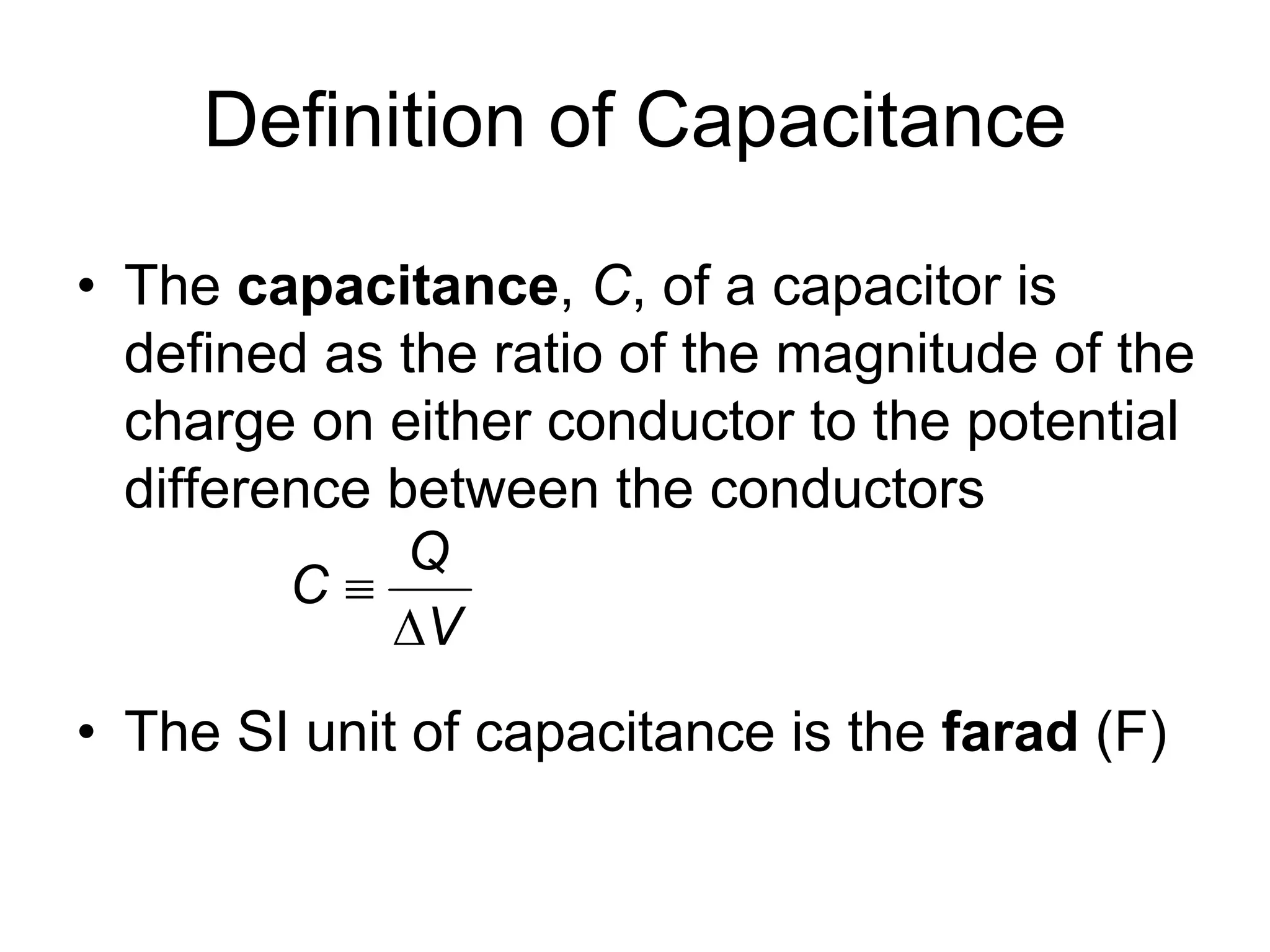
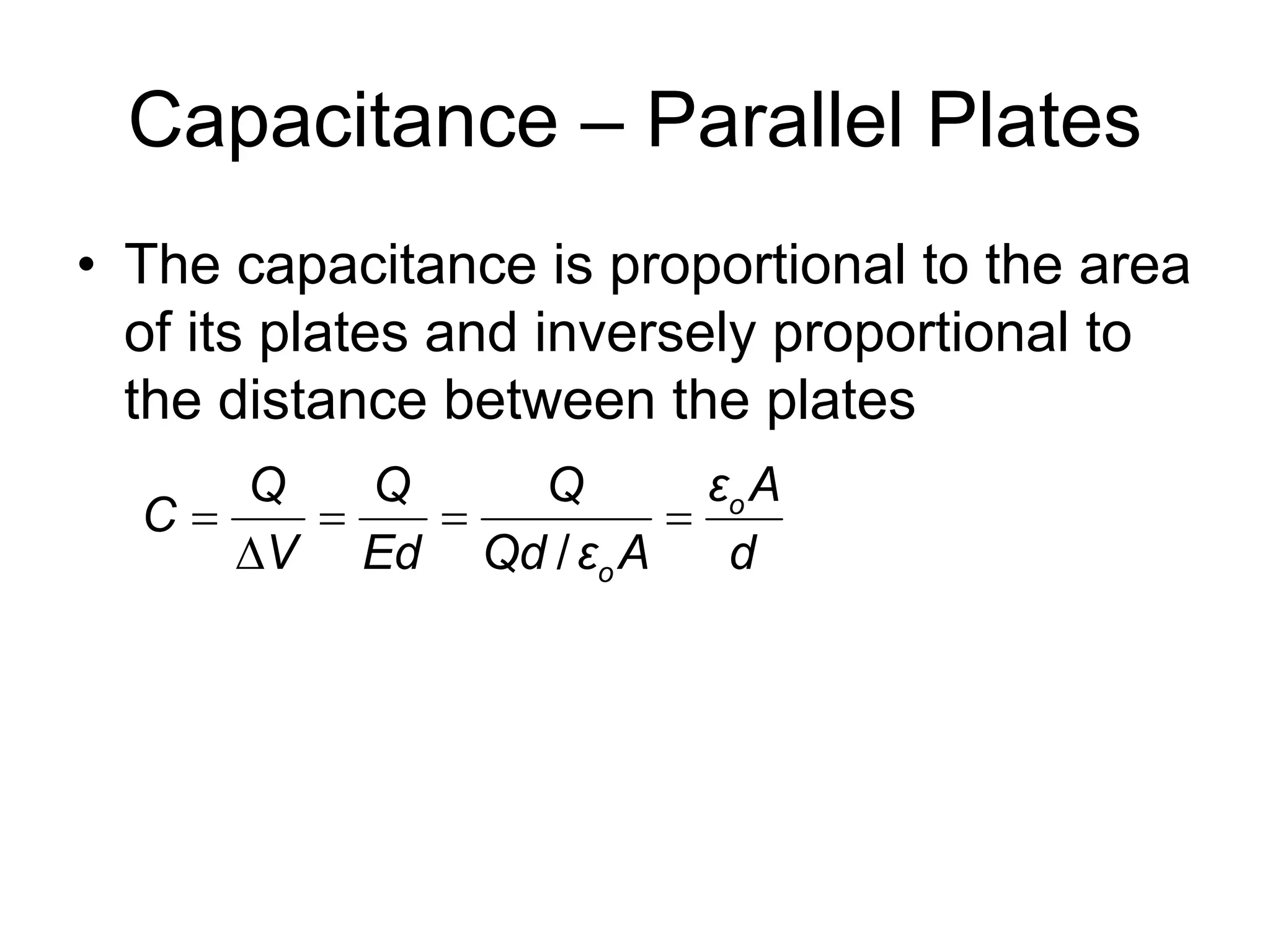
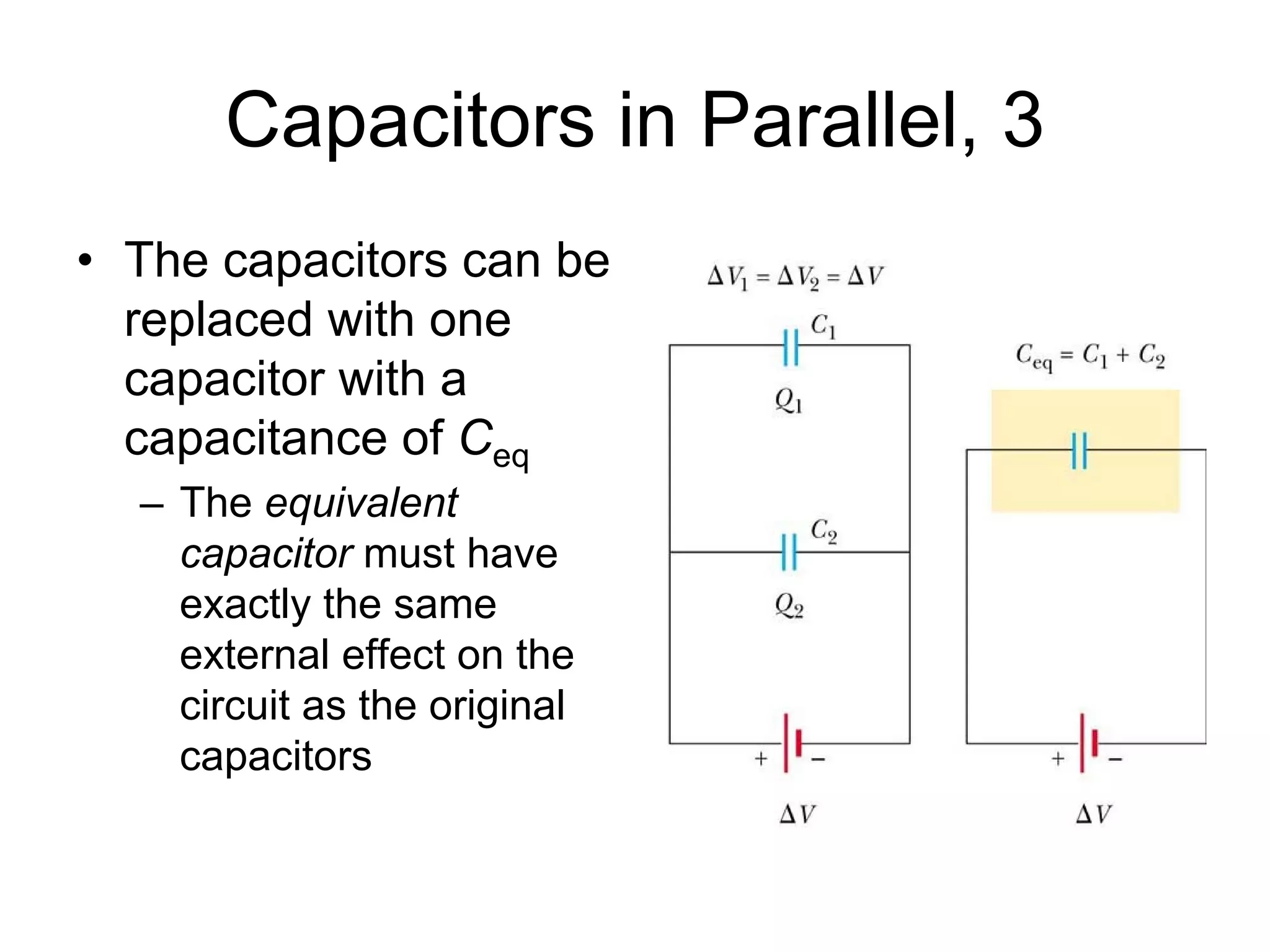

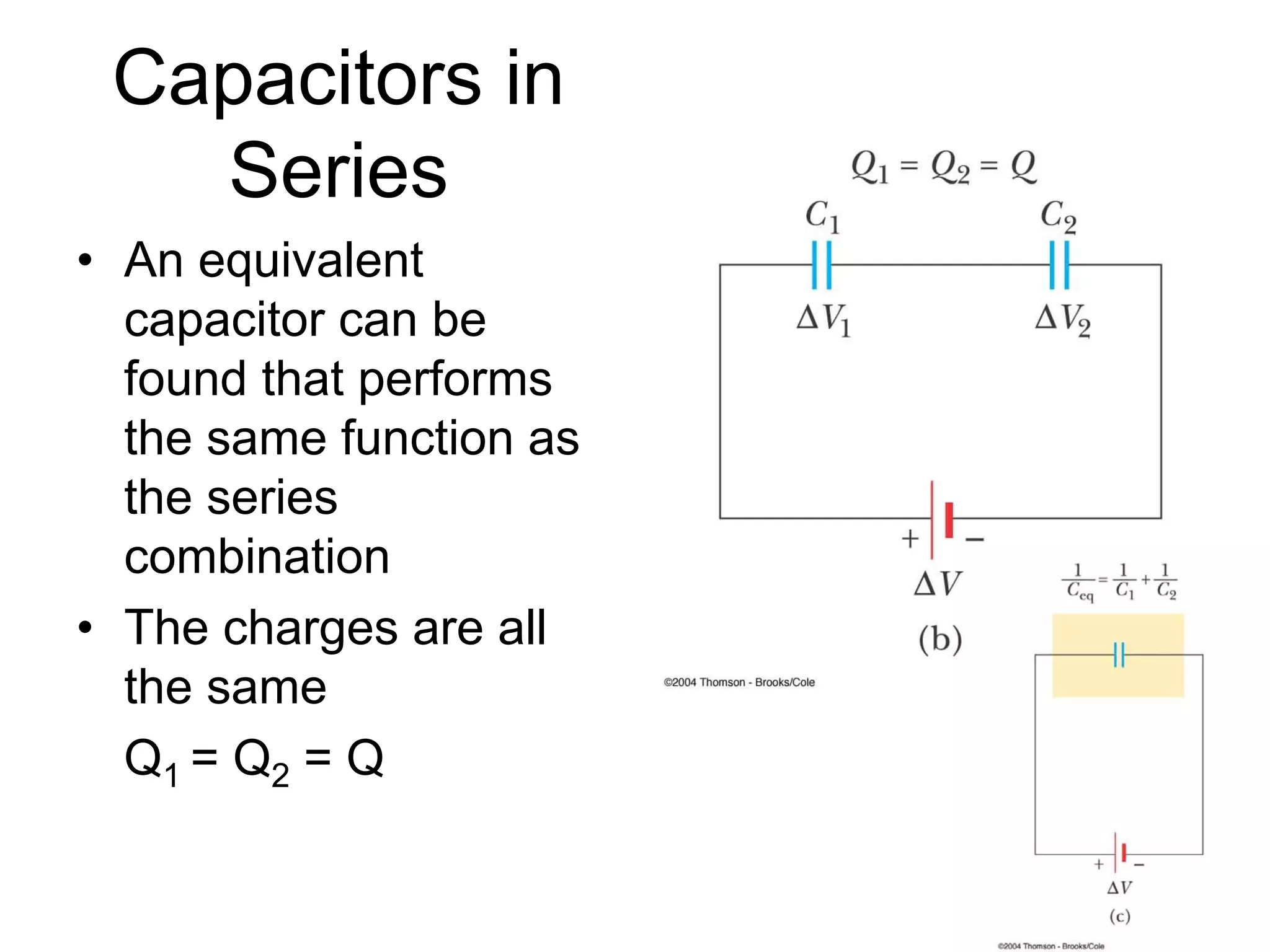
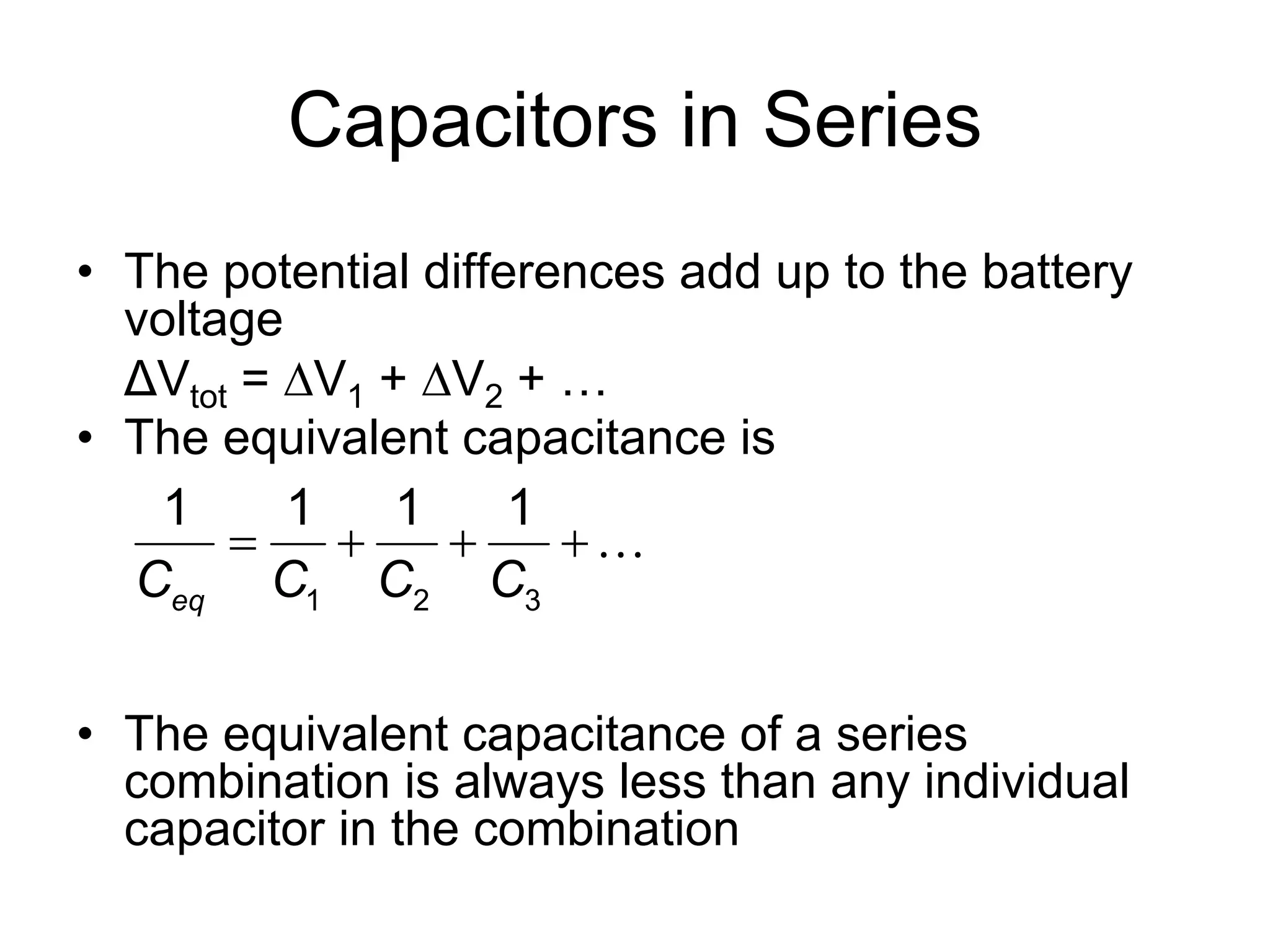
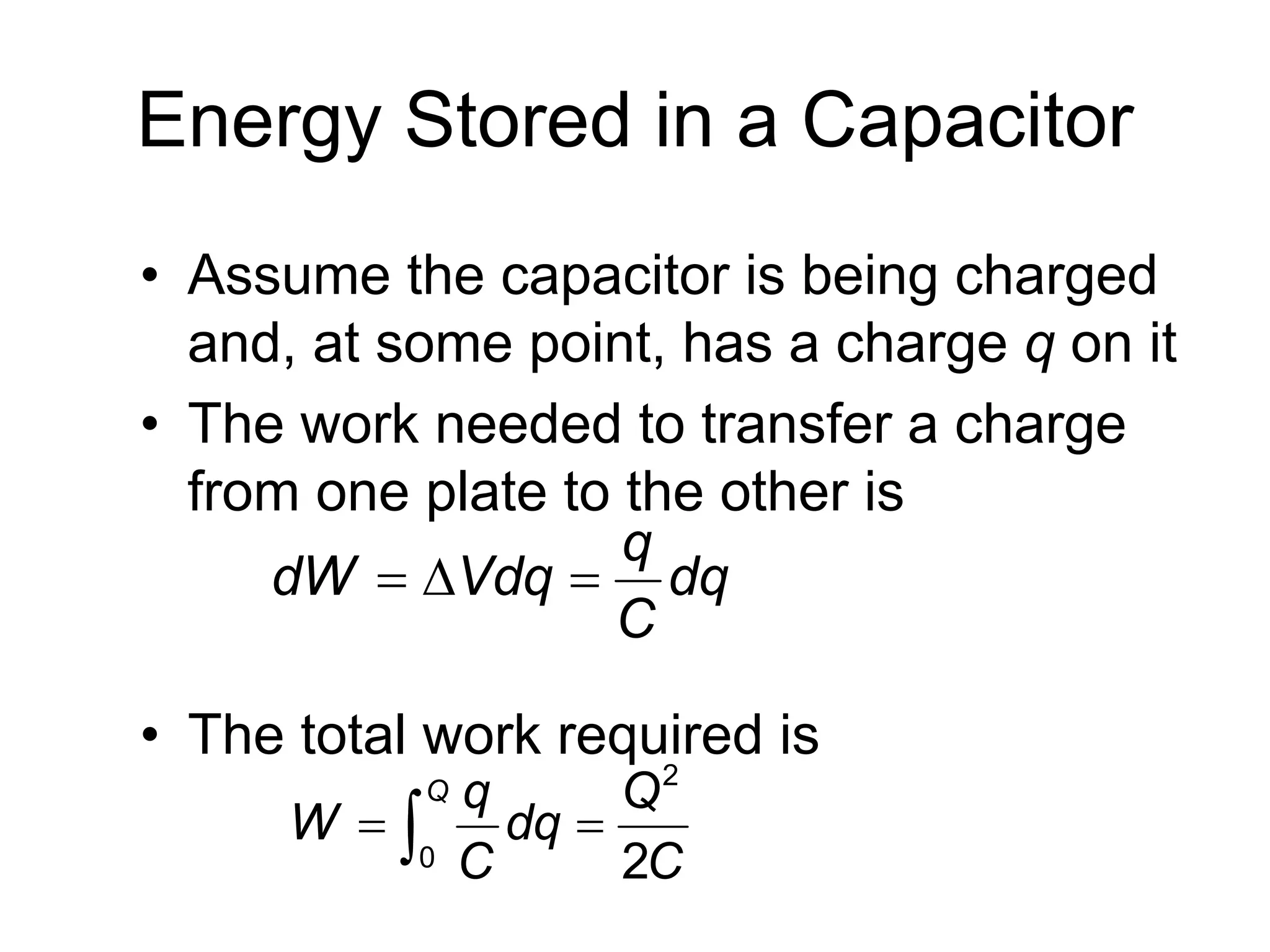
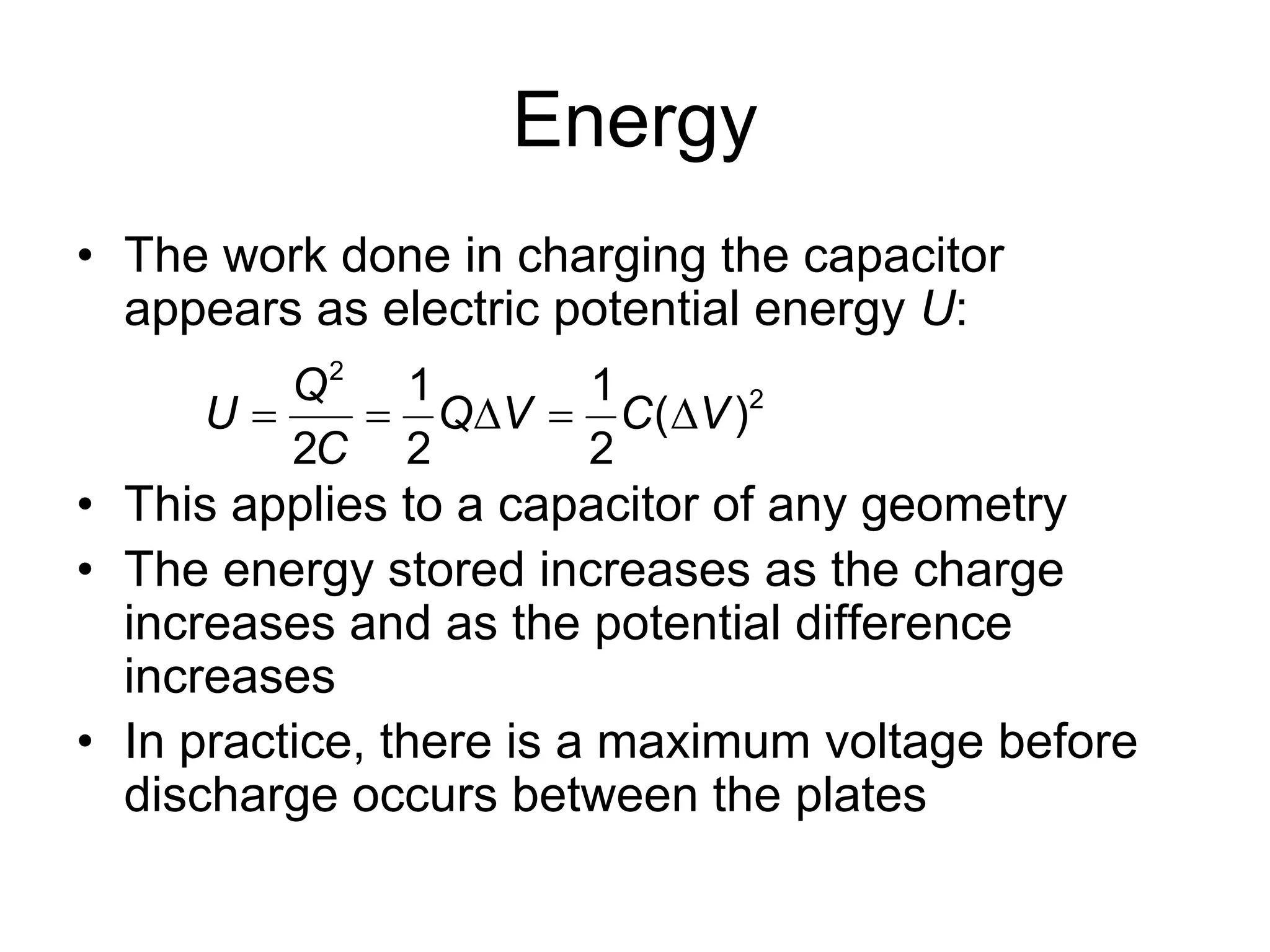
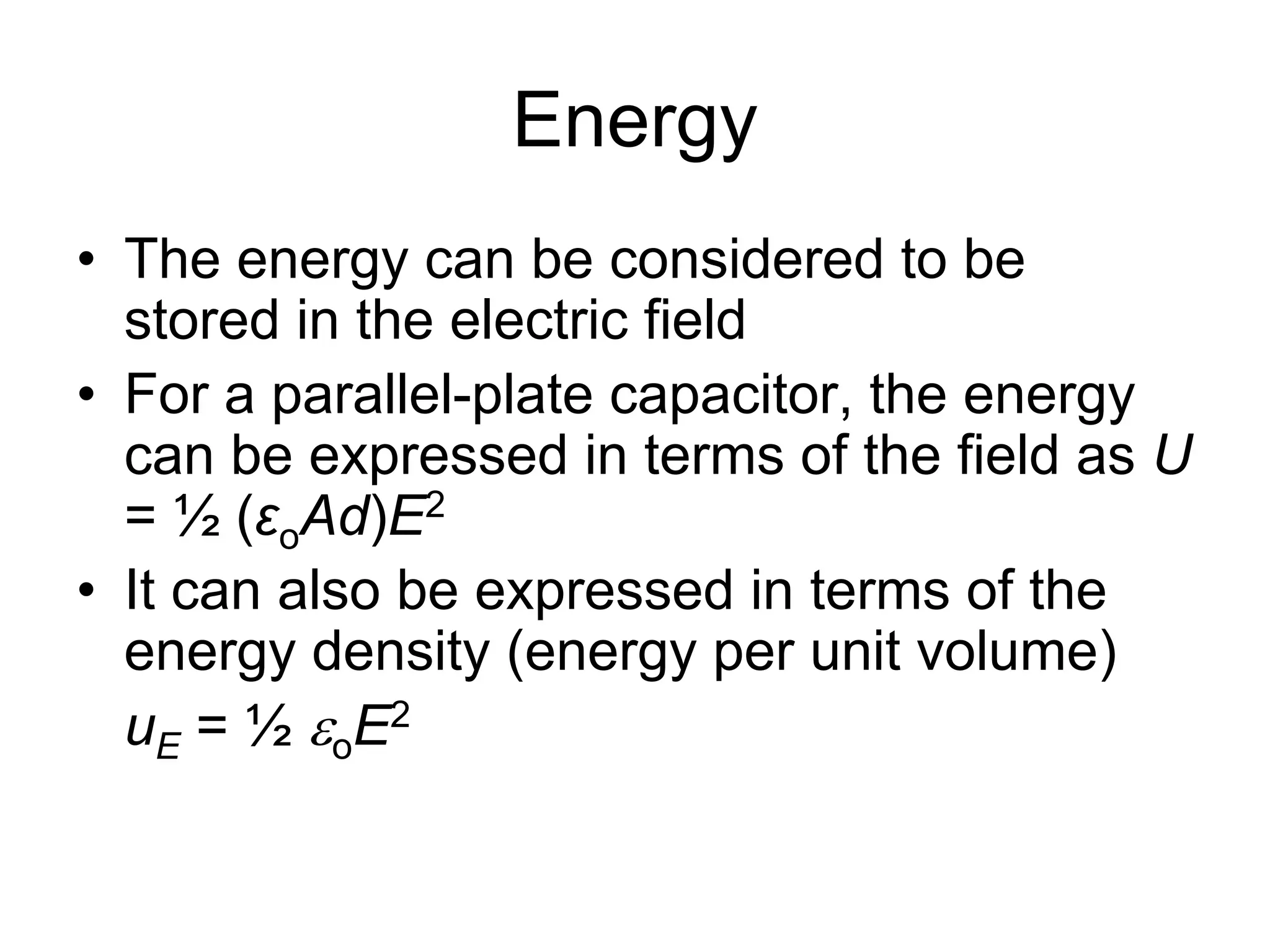

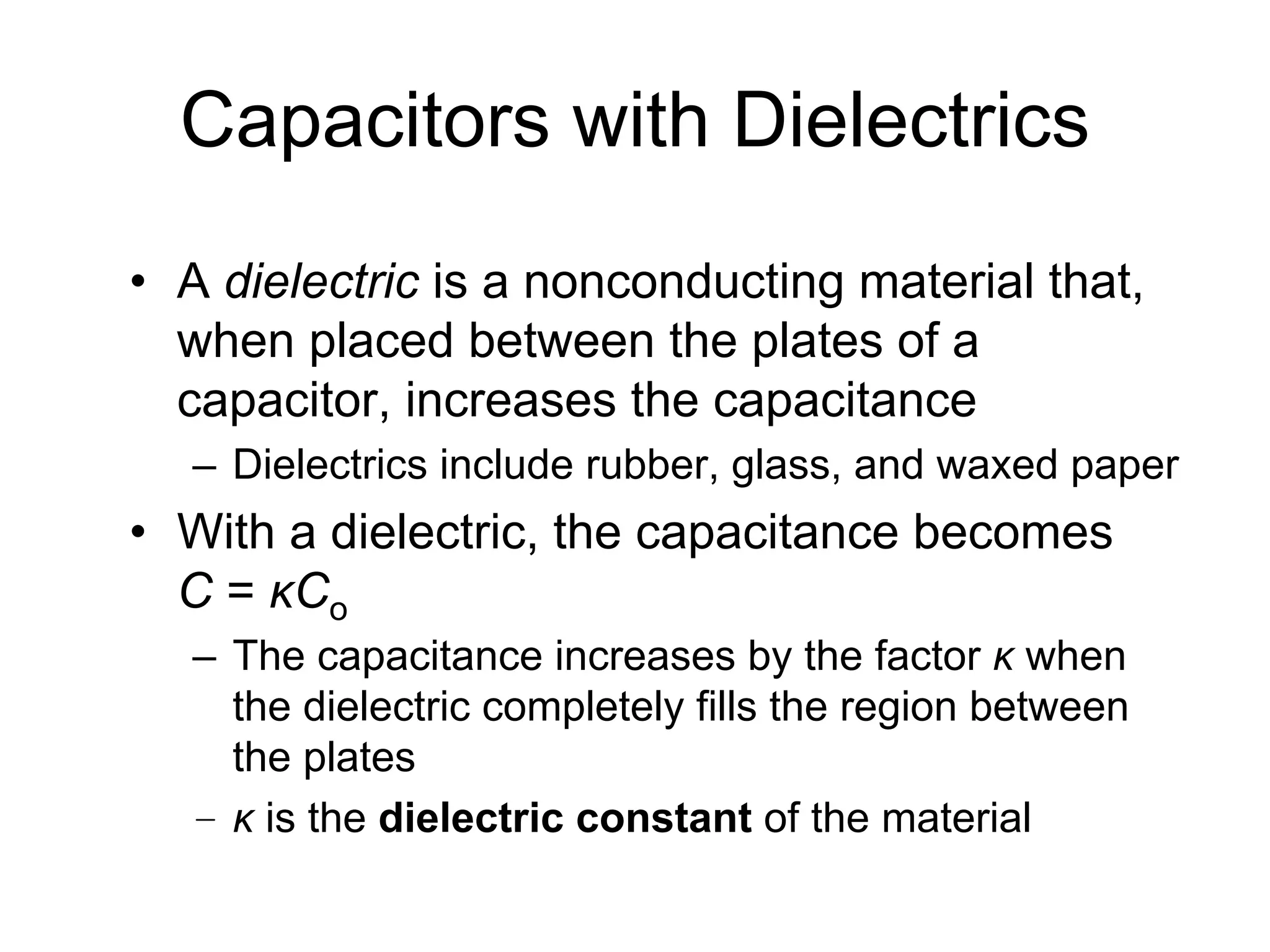




1) Capacitance is a measure of the amount of electric charge stored on a conductor for a given potential difference between conductors. The capacitance of a parallel plate capacitor is directly proportional to the area of its plates and inversely proportional to the distance between the plates. 2) When capacitors are connected in parallel, the equivalent capacitance is the sum of the individual capacitances. In series, the equivalent capacitance is less than the individual capacitances. 3) Energy is stored in a capacitor when it is charged, and this energy can be rapidly discharged. Capacitors are used in applications where energy must be stored and quickly released, such as in defibrillators.


