A computer system can be viewed at multiple levels of abstraction, from the lowest digital logic level to the highest user level. There are typically considered to be 6 levels: digital logic, microarchitecture, instruction set architecture, system software, programming language, and user level. The microarchitecture level implements the instruction set architecture using components like a control unit and functional units. The control unit can be implemented either using microcode or dedicated hardware.
In this document
Powered by AI
Introduction to multilevel perspectives in computer architecture, emphasizing the various layers, including assembly language, operating systems, and digital logic.
Discussion on microarchitecture as implementation of ISA, covering computer architecture hierarchy from digital logic to high-level languages.
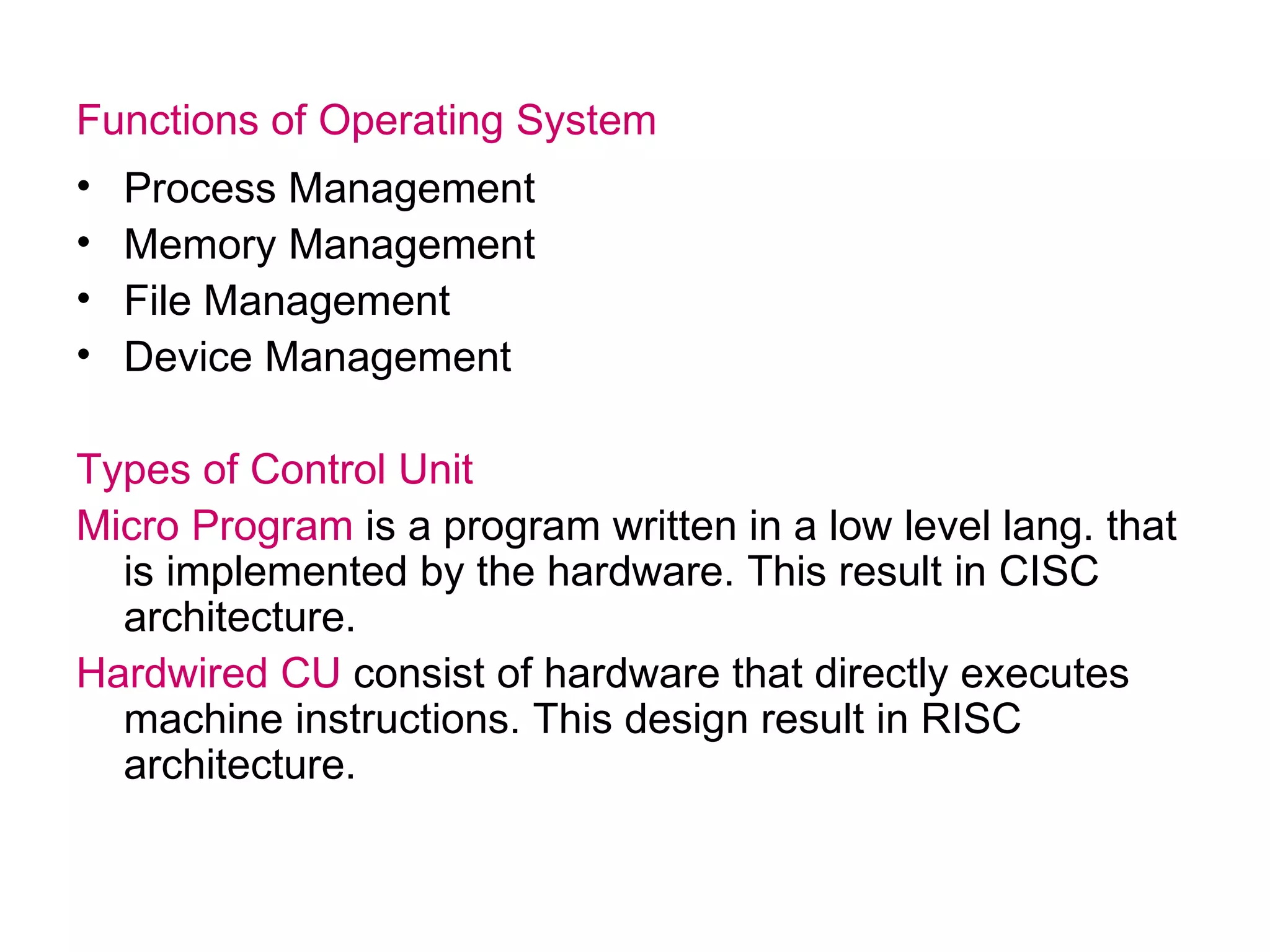
Overview of operating system functions, including process, memory, file, device management, and types of control units (CISC vs RISC).
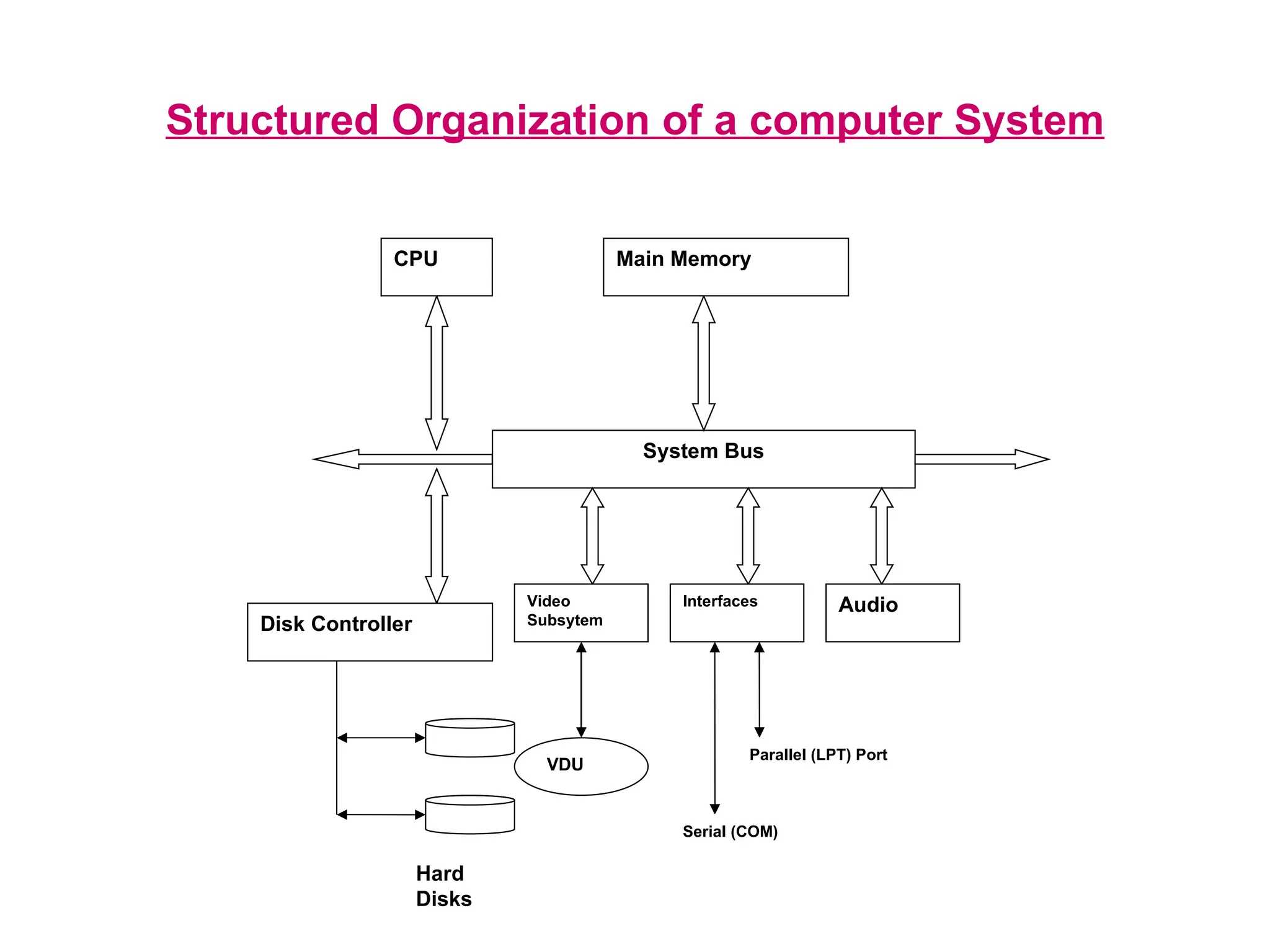
Explanation of computer system structure, detailing components like CPU, memory, disk controller, and various interfaces.
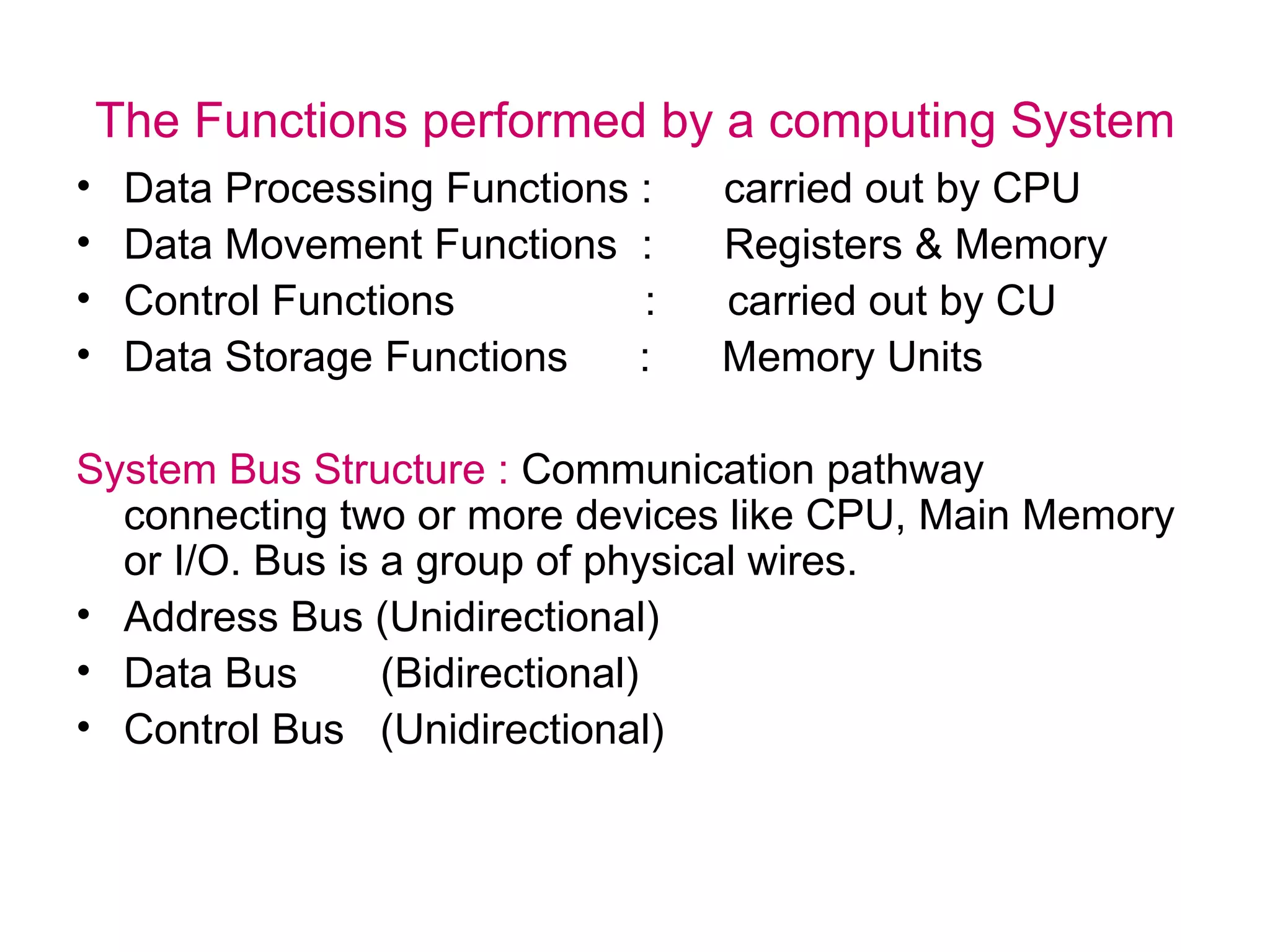
Details on core functions of computing systems such as data processing, movement, control, and storage, including bus structure.
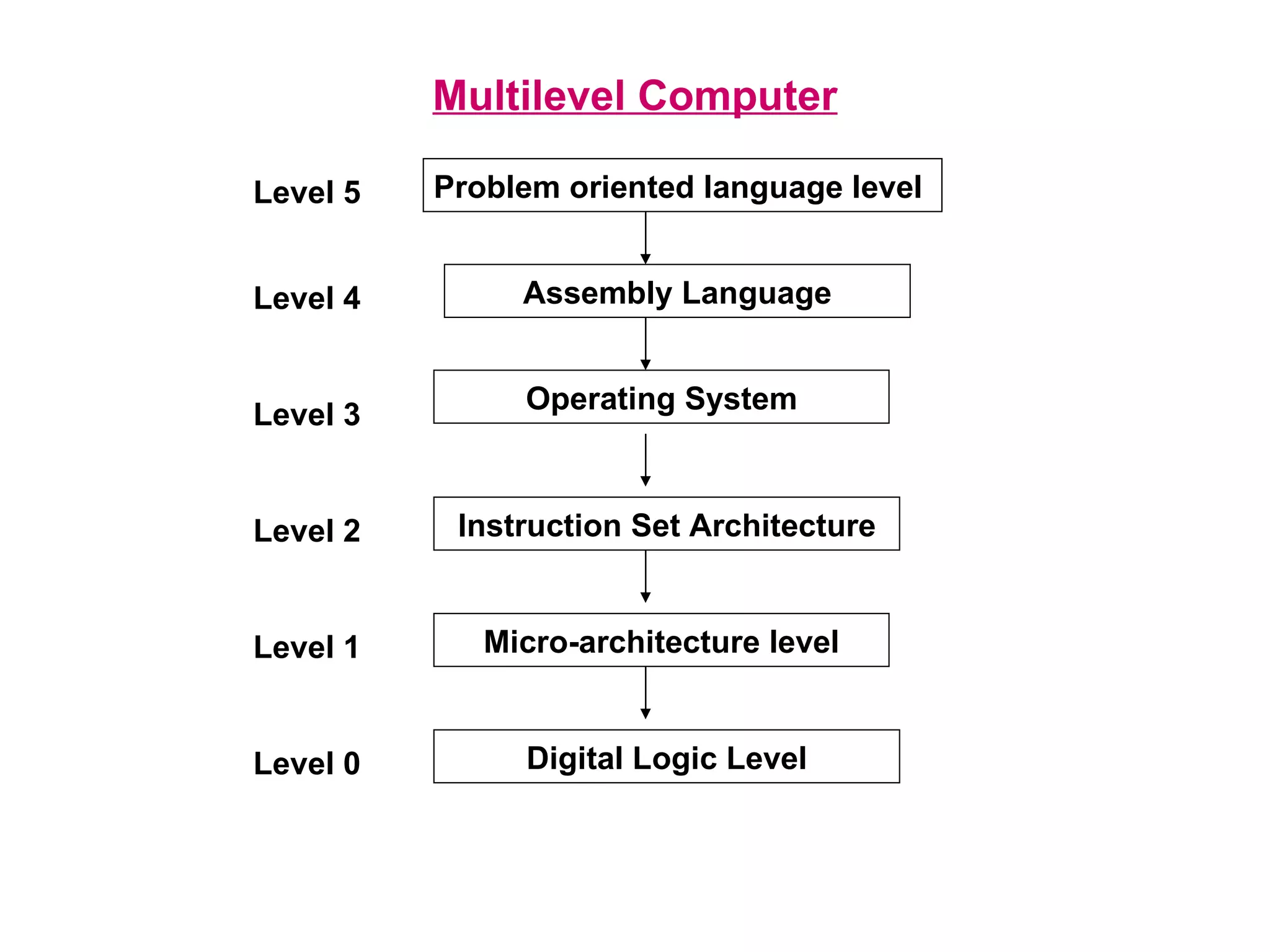
Multilevel Computer Problemoriented language level Assembly Language Operating System Instruction Set Architecture Micro-architecture level Digital Logic Level Level 5 Level 3 Level 2 Level 1 Level 0 Level 4
3.
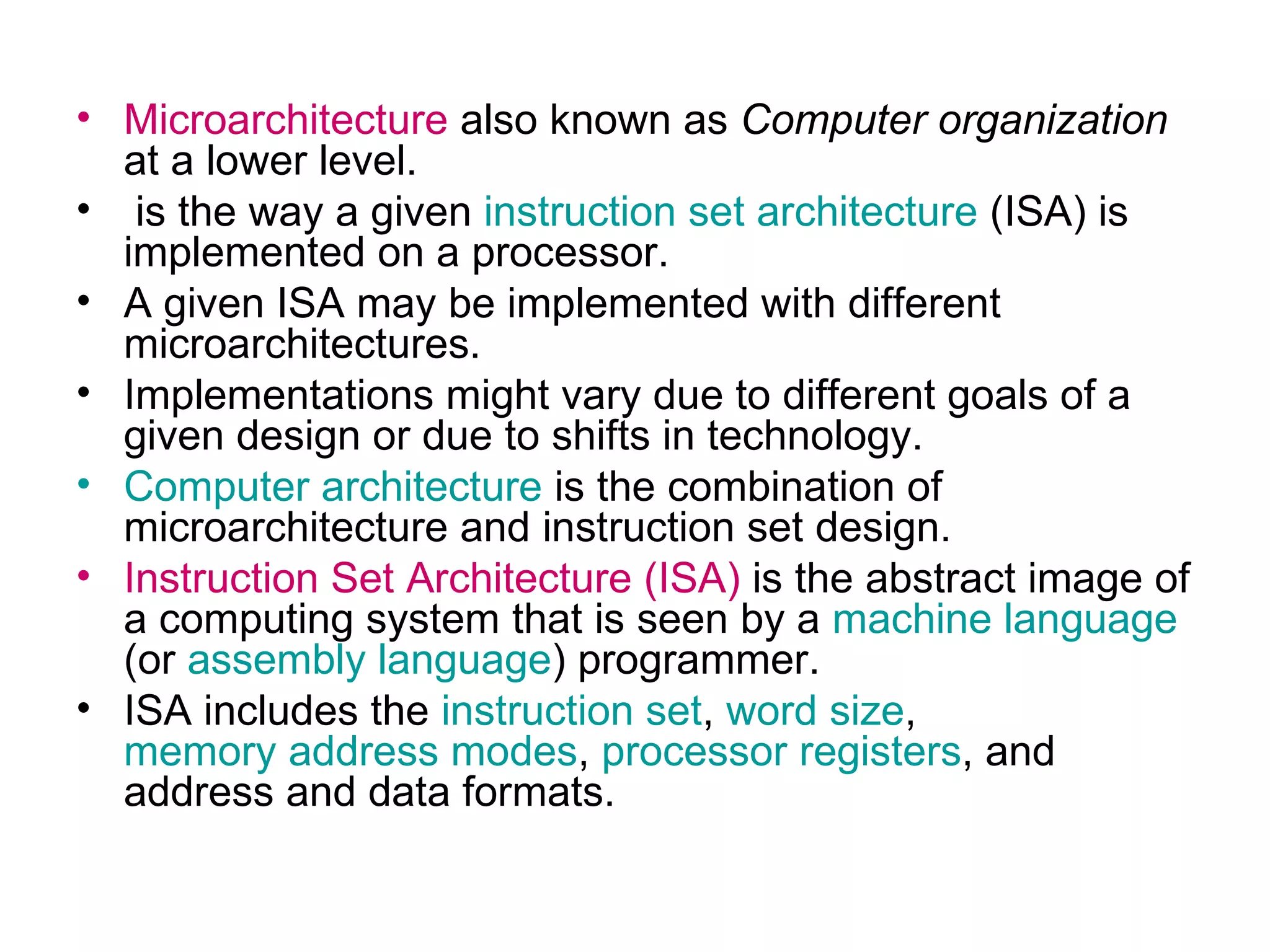
Microarchitecture alsoknown as Computer organization at a lower level. is the way a given instruction set architecture (ISA) is implemented on a processor. A given ISA may be implemented with different microarchitectures. Implementations might vary due to different goals of a given design or due to shifts in technology. Computer architecture is the combination of microarchitecture and instruction set design. Instruction Set Architecture (ISA) is the abstract image of a computing system that is seen by a machine language (or assembly language ) programmer. ISA includes the instruction set , word size , memory address modes , processor registers , and address and data formats.
4.
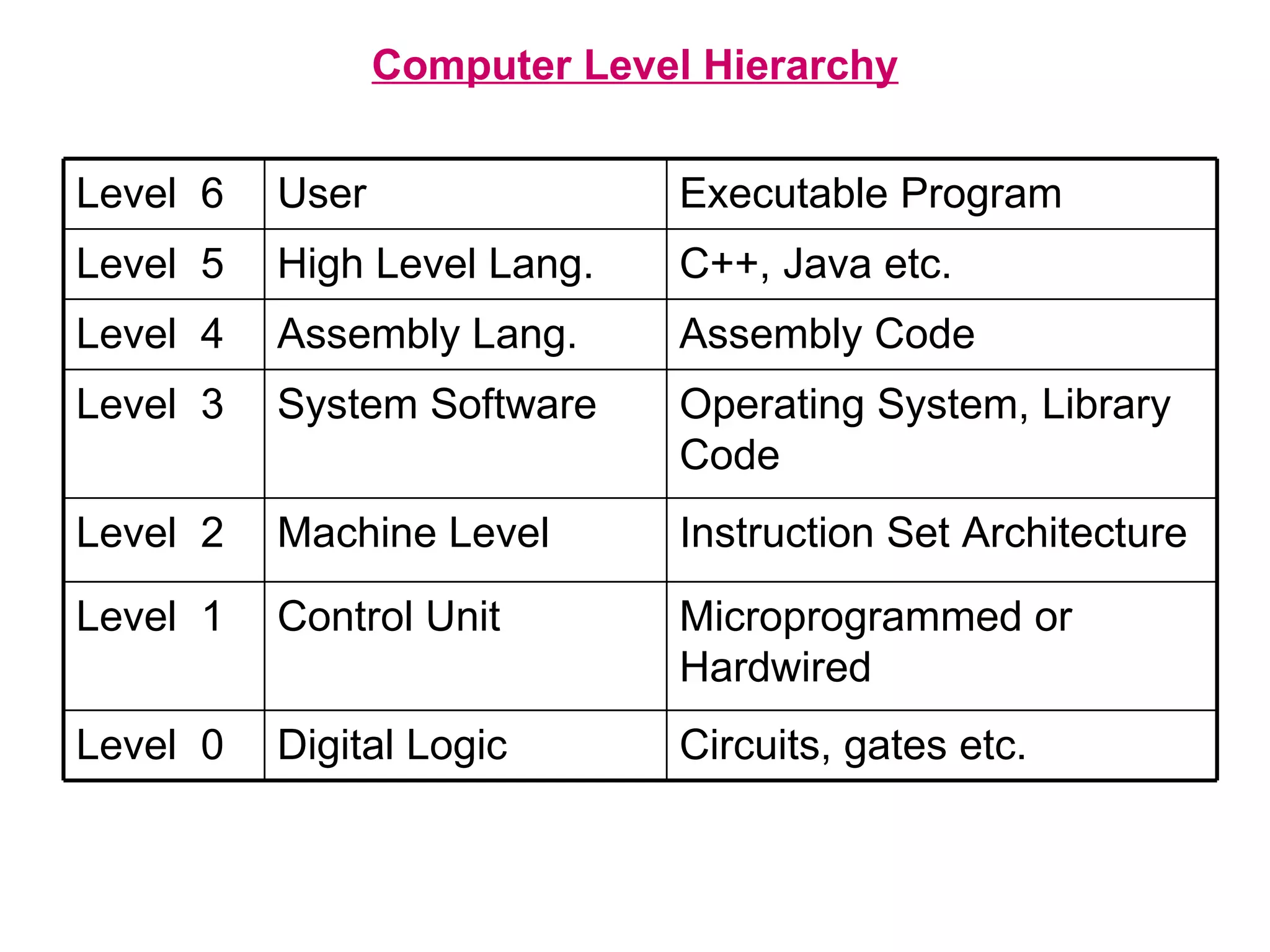
Computer Level HierarchyMicroprogrammed or Hardwired Control Unit Level 1 Circuits, gates etc. Digital Logic Level 0 Instruction Set Architecture Machine Level Level 2 Operating System, Library Code System Software Level 3 Assembly Code Assembly Lang. Level 4 C++, Java etc. High Level Lang. Level 5 Executable Program User Level 6
5.
Functions of OperatingSystem Process Management Memory Management File Management Device Management Types of Control Unit Micro Program is a program written in a low level lang. that is implemented by the hardware. This result in CISC architecture. Hardwired CU consist of hardware that directly executes machine instructions. This design result in RISC architecture.
6.
Structured Organization ofa computer System System Bus CPU Main Memory Disk Controller Video Subsytem Interfaces Audio Hard Disks VDU Serial (COM) Parallel (LPT) Port
7.
The Functions performedby a computing System Data Processing Functions : carried out by CPU Data Movement Functions : Registers & Memory Control Functions : carried out by CU Data Storage Functions : Memory Units System Bus Structure : Communication pathway connecting two or more devices like CPU, Main Memory or I/O. Bus is a group of physical wires. Address Bus (Unidirectional) Data Bus (Bidirectional) Control Bus (Unidirectional)