Optical cOmputers
presented by,
k.vamsi krishna
14A81A0576.
cOntents:
What is optical computers.
Why optical computers.
Example.
Optical computation.
Parallel communication.
Optical components.
Advantages.
Disadvantages.
Conclusion.
What is Optical cOmputer…What is Optical cOmputer…
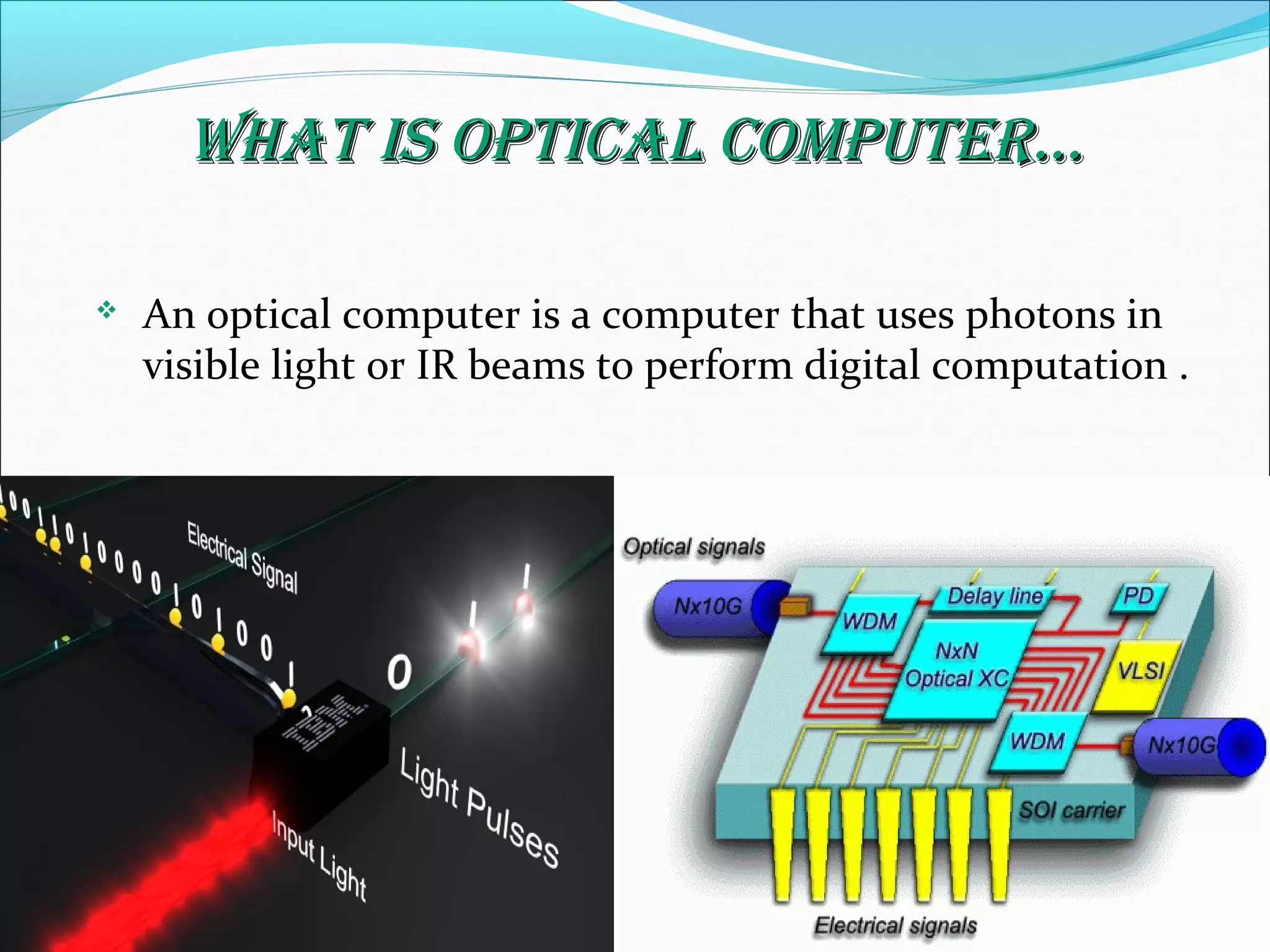
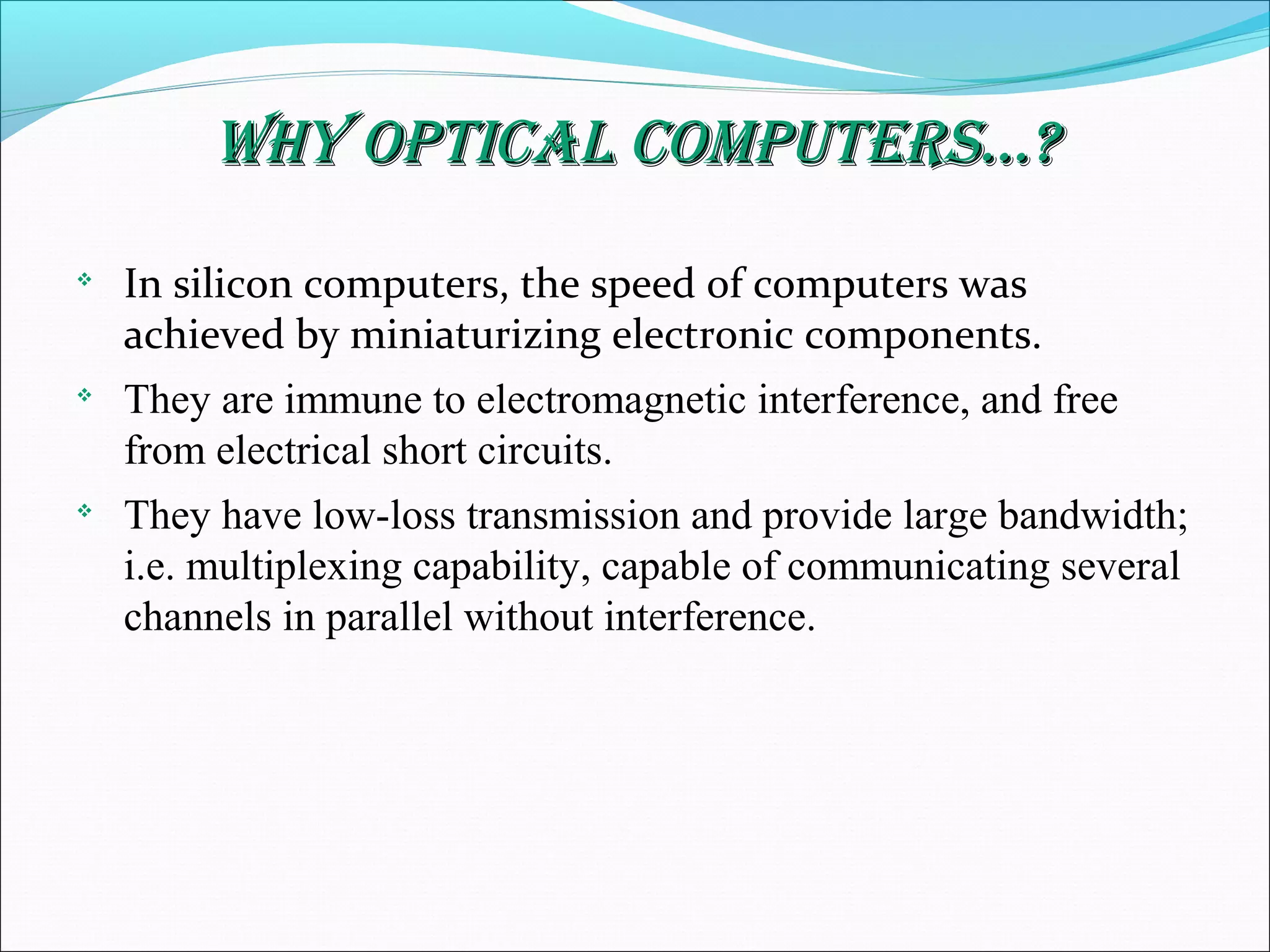
 An optical computer is a computer that uses photons in
visible light or IR beams to perform digital computation .
Why Optical cOmputers...?Why Optical cOmputers...?

In silicon computers, the speed of computers was
achieved by miniaturizing electronic components.

They are immune to electromagnetic interference, and free
from electrical short circuits.

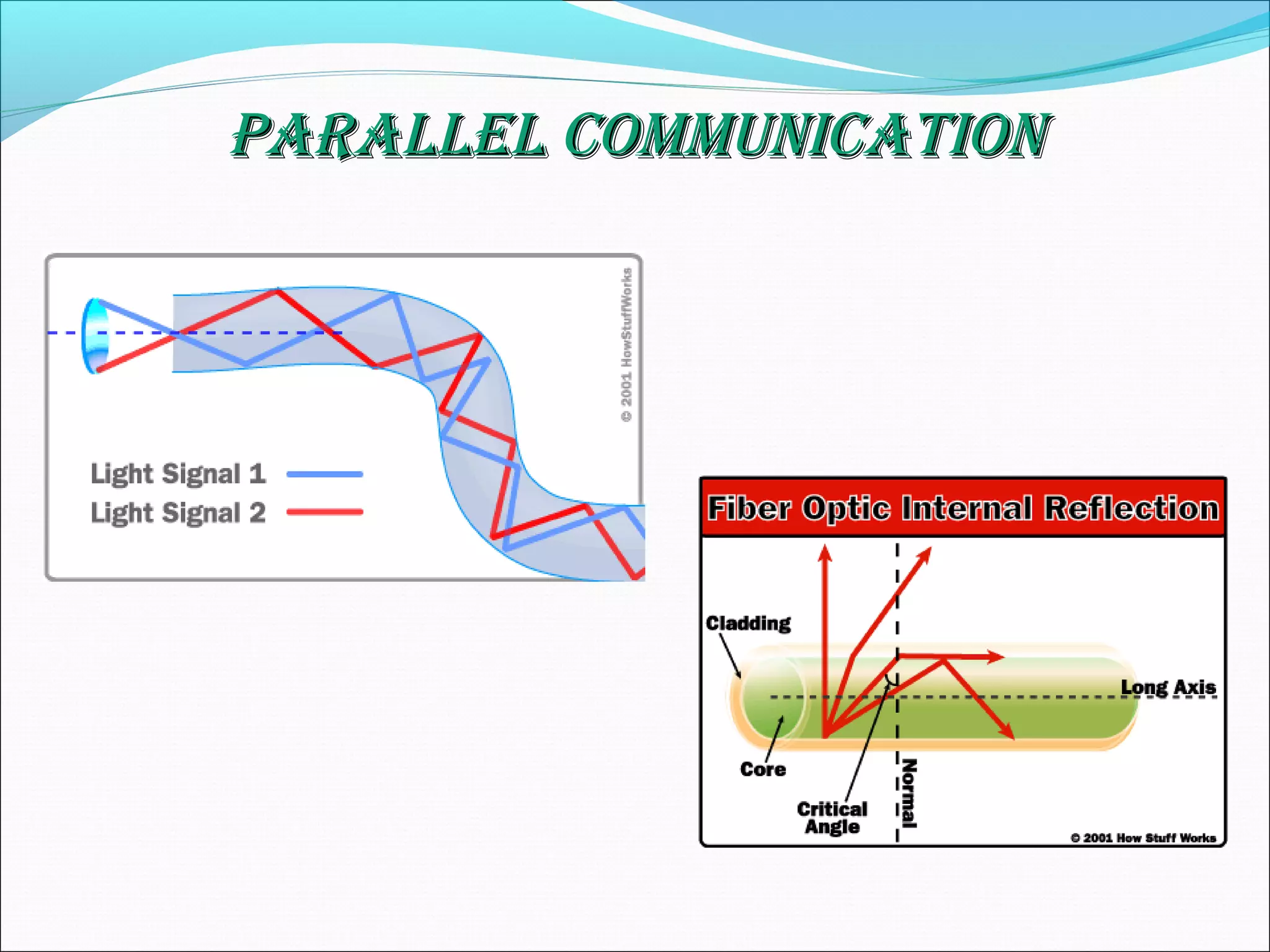
They have low-loss transmission and provide large bandwidth;
i.e. multiplexing capability, capable of communicating several
channels in parallel without interference.
EXAMPLESEXAMPLES
Optical computers use light for storing and
transmitting and operating on data.
Consider E-mail
.txt format
Electronic
To Photonic
Converter
•Fiber optic
cables
Optical cOmputatiOnOptical cOmputatiOn
 Light in the place of Electron
 Uses optical components
 Transistors, logical gates etc. are simulated using optics.
 All-optical components require a high level of laser power
to function as required.
 Send pulses of light instead of pulses of electricity
parallel cOmmunicatiOnparallel cOmmunicatiOn
Optical cOmpOnents...Optical cOmpOnents...

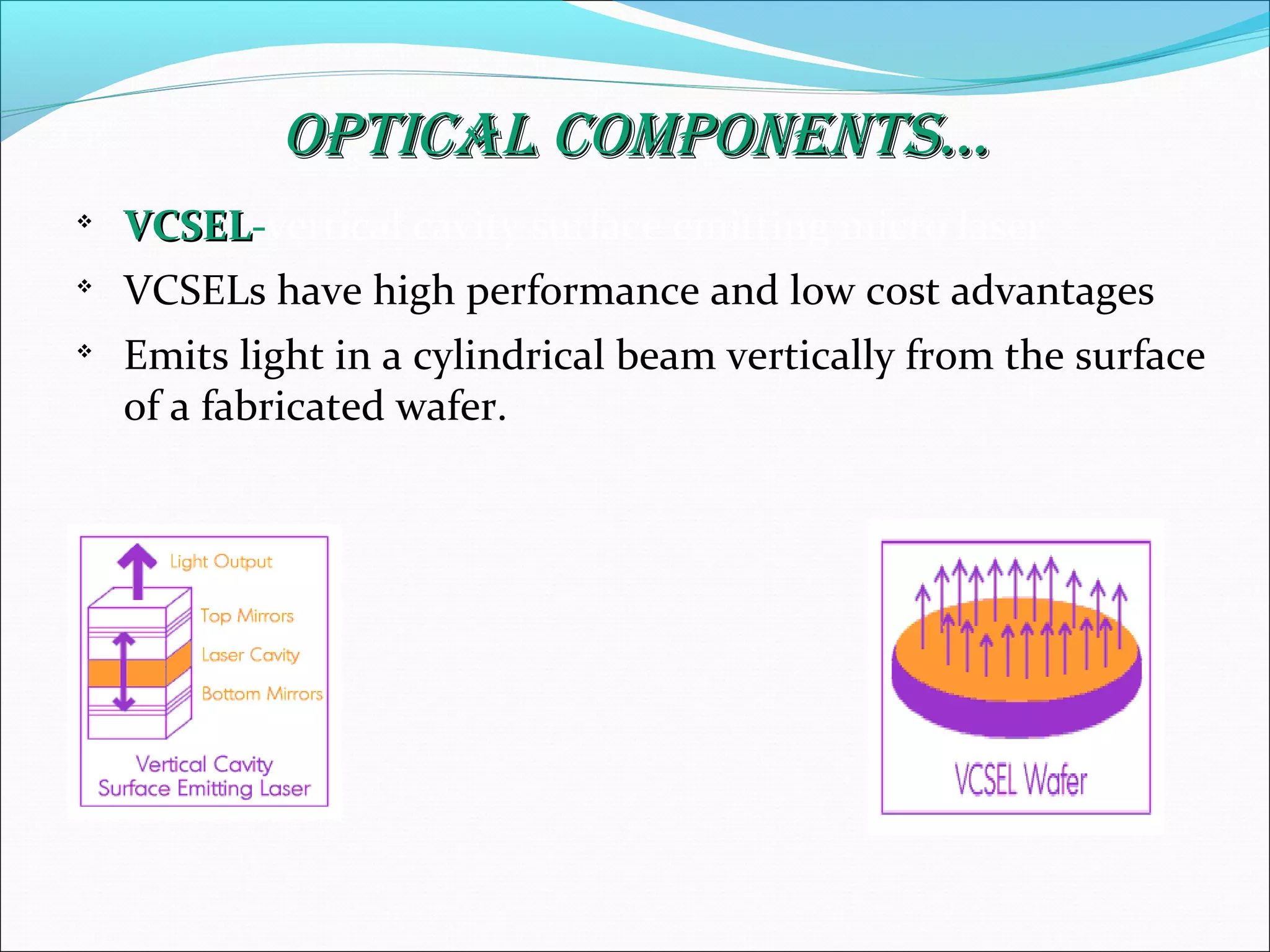
VCSELVCSEL-vertical cavity surface emitting micro laser

VCSELs have high performance and low cost advantages

Emits light in a cylindrical beam vertically from the surface
of a fabricated wafer.
 VCSEL converts the electrical signal to optical using lens
and micromirrors

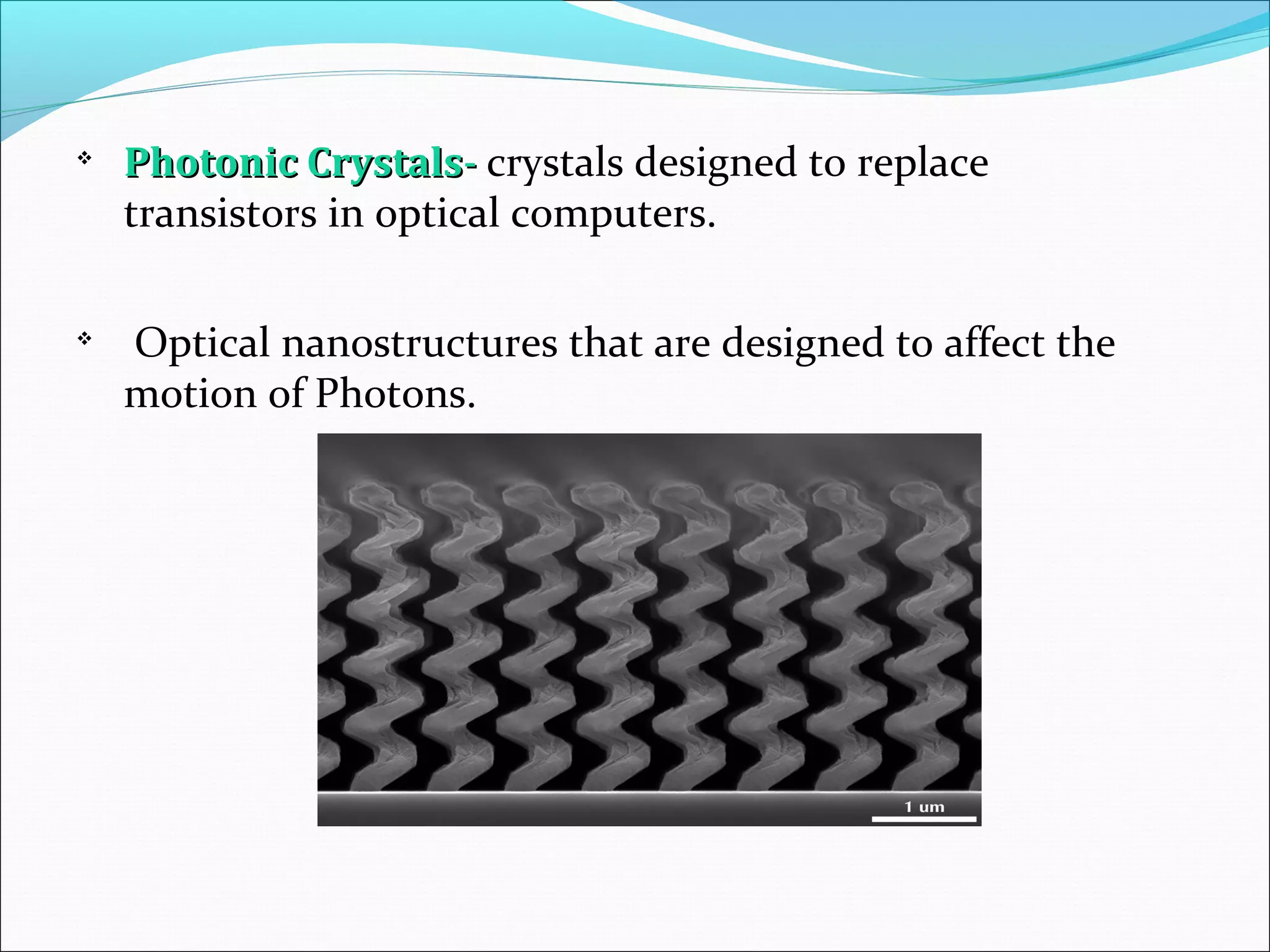
Photonic CrystalsPhotonic Crystals-- crystals designed to replace
transistors in optical computers.

Optical nanostructures that are designed to affect the
motion of Photons.
AdvAntAges...AdvAntAges...

Increase in the speed of computation.

Free from electrical short circuits.

Have low- transmission loss and large bandwidth.

Speed of light in photonic circuits will be close to speed of
light in vacuum

Capable of communicating several channels in parallel
without interference.

Possesses superior storage density and accessibility

No power loss due to excess of heating.

Life of the hardware of optical computer is more.
disAdvAntAges
Optical components and their production is
expensive.
Optical components are not miniaturied enough yet.
problems of exact manufacture.
In compatibility.
Due to interference caused by dust particles.
CONCLUSION
 Optical technology promises massive upgrades in the
efficiency and speed of computers, as well as significant
shrinkage in their size and cost.
 Even though pure Optical computer has many challenges
hybrid opto-electrical computer can be expected very soon,
and in near future pure optical computer too..
ANy qUerIeS

optical computers

  • 1.
  • 2.
    cOntents: What is opticalcomputers. Why optical computers. Example. Optical computation. Parallel communication. Optical components. Advantages. Disadvantages. Conclusion.
  • 3.
    What is OpticalcOmputer…What is Optical cOmputer…  An optical computer is a computer that uses photons in visible light or IR beams to perform digital computation .
  • 4.
    Why Optical cOmputers...?WhyOptical cOmputers...?  In silicon computers, the speed of computers was achieved by miniaturizing electronic components.  They are immune to electromagnetic interference, and free from electrical short circuits.  They have low-loss transmission and provide large bandwidth; i.e. multiplexing capability, capable of communicating several channels in parallel without interference.
  • 5.
    EXAMPLESEXAMPLES Optical computers uselight for storing and transmitting and operating on data. Consider E-mail .txt format Electronic To Photonic Converter •Fiber optic cables
  • 6.
    Optical cOmputatiOnOptical cOmputatiOn Light in the place of Electron  Uses optical components  Transistors, logical gates etc. are simulated using optics.  All-optical components require a high level of laser power to function as required.  Send pulses of light instead of pulses of electricity
  • 7.
  • 8.
    Optical cOmpOnents...Optical cOmpOnents...  VCSELVCSEL-verticalcavity surface emitting micro laser  VCSELs have high performance and low cost advantages  Emits light in a cylindrical beam vertically from the surface of a fabricated wafer.
  • 9.
     VCSEL convertsthe electrical signal to optical using lens and micromirrors
  • 10.
     Photonic CrystalsPhotonic Crystals--crystals designed to replace transistors in optical computers.  Optical nanostructures that are designed to affect the motion of Photons.
  • 11.
    AdvAntAges...AdvAntAges...  Increase in thespeed of computation.  Free from electrical short circuits.  Have low- transmission loss and large bandwidth.  Speed of light in photonic circuits will be close to speed of light in vacuum  Capable of communicating several channels in parallel without interference.  Possesses superior storage density and accessibility  No power loss due to excess of heating.  Life of the hardware of optical computer is more.
  • 12.
    disAdvAntAges Optical components andtheir production is expensive. Optical components are not miniaturied enough yet. problems of exact manufacture. In compatibility. Due to interference caused by dust particles.
  • 13.
    CONCLUSION  Optical technologypromises massive upgrades in the efficiency and speed of computers, as well as significant shrinkage in their size and cost.  Even though pure Optical computer has many challenges hybrid opto-electrical computer can be expected very soon, and in near future pure optical computer too..
  • 15.