Downloaded 62 times
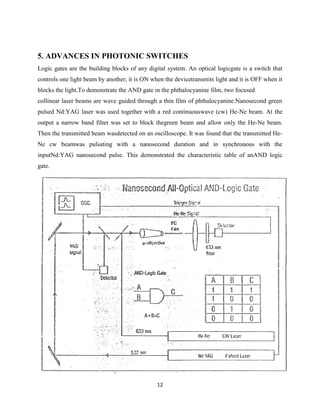
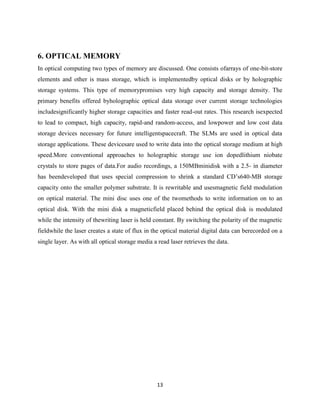
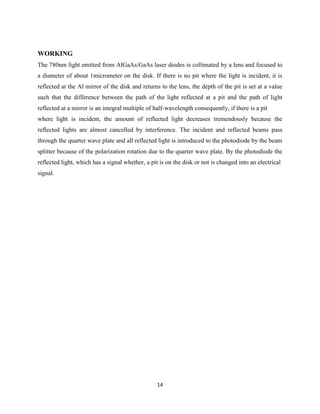
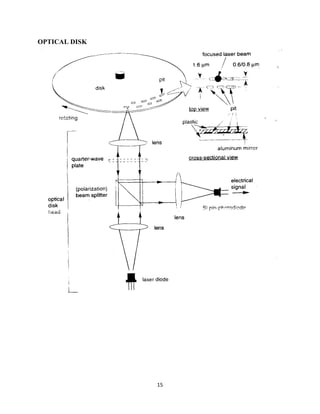
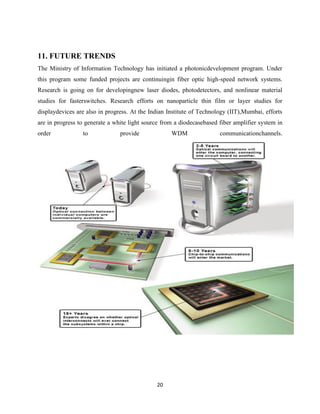

This document provides an overview of optical computing. Some key points: - Optical computing uses light instead of electrons for computations and can process data much faster than traditional electronic computers. An optical desktop computer is capable of processing data 100,000 times faster. - Important optical components that enable optical computing include vertical cavity surface emitting lasers, spatial light modulators, smart pixel technology, and wavelength division multiplexing. - Nonlinear optical materials play a significant role by interacting with light and modulating its properties, enabling functions like optical logic gates. However, current materials have low efficiency. - Optical computing was researched in the 1980s but progress slowed due


