FIRE ANT STINGS:
PATHOPHYSIOLOGY &
NATURAL REMEDY
Kevin KF Ng, MD, PhD
Former Associate Professor of Medicine
Division of Clinical Pharmacology, University of Miami, Florida
kevinng68@gmail.com
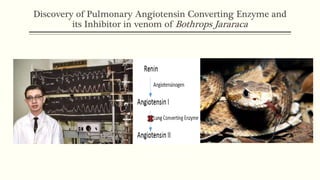
Discovery of Pulmonary Angiotensin Converting Enzyme and
its Inhibitor in venom of Bothrops Jararaca
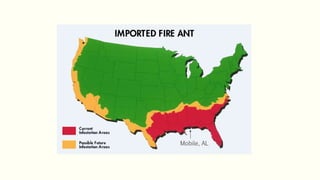
Mobile, AL
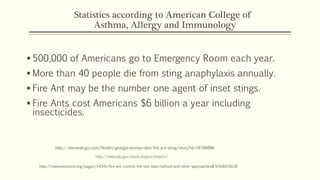
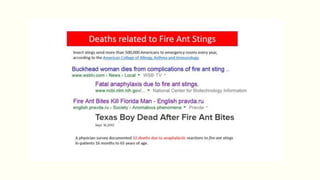
Statistics according to American College of
Asthma, Allergy and Immunology
 500,000 of Americans go to Emergency Room each year.
 More than 40 people die from sting anaphylaxis annually.
 Fire Ant may be the number one agent of inset stings.
 Fire Ants cost Americans $6 billion a year including
insecticides.
http://www.cdc.gov/niosh/topics/insects/
http://www.extension.org/pages/14345/fire-ant-control:-the-two-step-method-and-other-approaches#.VOk8di58z30
http://abcnews.go.com/Health/georgia-woman-dies-fire-ant-sting/story?id=19706086
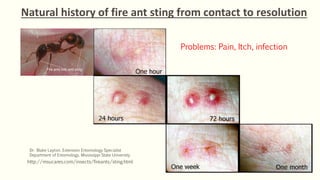
Problems: Pain, Itch, infection
Dr. Blake Layton, Extension Entomology Specialist
Department of Entomology, Mississippi State University
http://msucares.com/insects/fireants/sting.html
Natural history of fire ant sting from contact to resolution
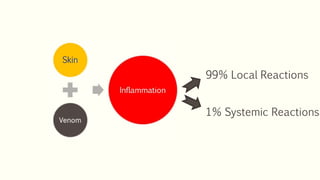
1% Systemic Reactions
99% Local Reactions
Skin
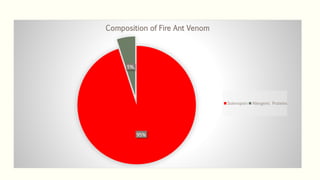
95%
5%,
Composition of Fire Ant Venom
Solenopsin Allergenic Proteins
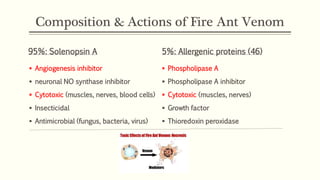
Composition & Actions of Fire Ant Venom
95%: Solenopsin A
 Angiogenesis inhibitor
 neuronal NO synthase inhibitor
 Cytotoxic (muscles, nerves, blood cells)
 Insecticidal
 Antimicrobial (fungus, bacteria, virus)
5%: Allergenic proteins (46)
 Phospholipase A
 Phospholipase A inhibitor
 Cytotoxic (muscles, nerves)
 Growth factor
 Thioredoxin peroxidase
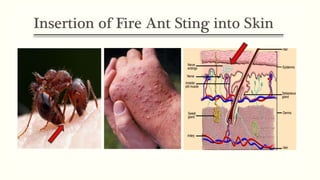
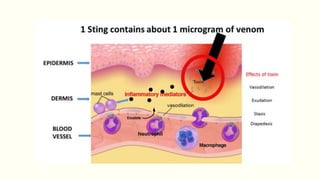
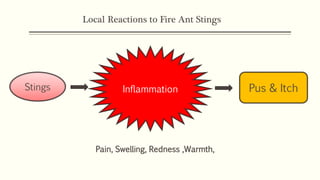
Stings Inflammation Pus & Itch
Local Reactions to Fire Ant Stings
Pain, Swelling, Redness ,Warmth,
Treatment of Fire Ant Stings
Inflammation & Itch
Home remedies
 Ice
 Vinegar
 Ammonia
 Sodium bicarbonate
 Aloe vera gel
Over-the-counter products
 Antihistamines (2% Benadry max strength)
 Corticosteroids (1% Cortaid max strength)
 Local anesthetics (20% Benzocaine max st)
 Local analgesics (10% Trolamine salicylate)
 Calamine lotion (8% zinc oxide)
Disadvantages of Current Topical Renedies
 Low concentration of active ingredients.
 Water-based formulations.
 Inefficient and slow absorption.
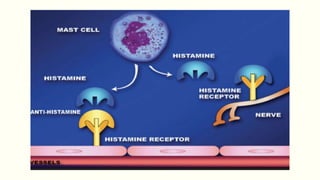
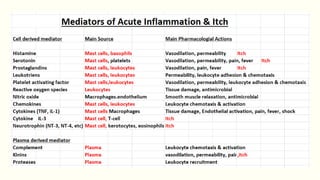
 Actions limited to 2 out of 14 mediators.
 Many mediators act unopposed.
 Therefore treatment is incomplete.
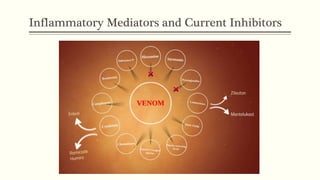
Inflammatory Mediators and Current Inhibitors
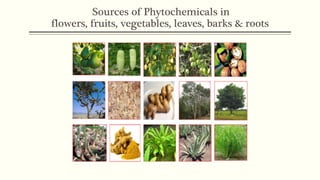
Sources of Phytochemicals in
flowers, fruits, vegetables, leaves, barks & roots
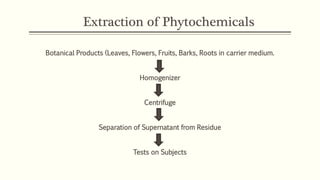
Extraction of Phytochemicals
Botanical Products (Leaves, Flowers, Fruits, Barks, Roots in carrier medium.
Homogenizer
Centrifuge
Separation of Supernatant from Residue
Tests on Subjects
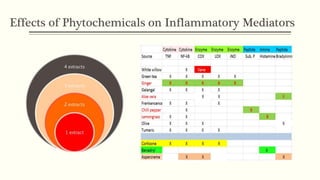
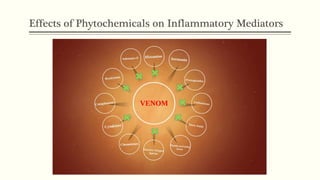
Effects of Phytochemicals on Inflammatory Mediators
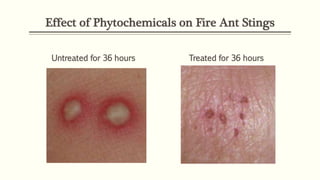
Effect of Phytochemicals on Fire Ant Stings
Untreated for 36 hours Treated for 36 hours
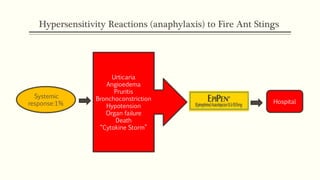
Hypersensitivity Reactions (anaphylaxis) to Fire Ant Stings
Systemic
response:1%
Urticaria
Angioedema
Pruritis
Bronchoconstriction
Hypotension
Organ failure
Death
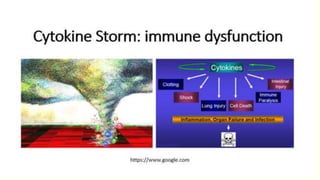
“Cytokine Storm”
Hospital
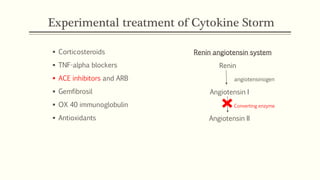
Experimental treatment of Cytokine Storm
 Corticosteroids
 TNF-alpha blockers
 ACE inhibitors and ARB
 Gemfibrosil
 OX 40 immunoglobulin
 Antioxidants
Renin angiotensin system
Renin
angiotensinogen
Angiotensin I
Converting enzyme
Angiotensin II
CONCLUSIONS
 The pathophysiology of acute inflammation has outpaced the treatment of
fire ant stings.
 The conventional topical treatment of fire ant stings needs to be updated
in accordance with new scientific knowledge.
 The abundance of phytochemicals in nature that targets multiple mediators
of inflammation opens up new frontiers for the treatment of fire ant stings.
 The phytochemicals are inexpensive, safe, effective and free from
unwanted side effects.

Fire ant stings: pathophysiology and natural remedy

  • 1.
    FIRE ANT STINGS: PATHOPHYSIOLOGY& NATURAL REMEDY Kevin KF Ng, MD, PhD Former Associate Professor of Medicine Division of Clinical Pharmacology, University of Miami, Florida kevinng68@gmail.com
  • 2.
    Discovery of PulmonaryAngiotensin Converting Enzyme and its Inhibitor in venom of Bothrops Jararaca
  • 3.
  • 4.
    Statistics according toAmerican College of Asthma, Allergy and Immunology  500,000 of Americans go to Emergency Room each year.  More than 40 people die from sting anaphylaxis annually.  Fire Ant may be the number one agent of inset stings.  Fire Ants cost Americans $6 billion a year including insecticides. http://www.cdc.gov/niosh/topics/insects/ http://www.extension.org/pages/14345/fire-ant-control:-the-two-step-method-and-other-approaches#.VOk8di58z30 http://abcnews.go.com/Health/georgia-woman-dies-fire-ant-sting/story?id=19706086
  • 5.
    Problems: Pain, Itch,infection Dr. Blake Layton, Extension Entomology Specialist Department of Entomology, Mississippi State University http://msucares.com/insects/fireants/sting.html Natural history of fire ant sting from contact to resolution
  • 6.
    1% Systemic Reactions 99%Local Reactions Skin
  • 8.
    95% 5%, Composition of FireAnt Venom Solenopsin Allergenic Proteins
  • 9.
    Composition & Actionsof Fire Ant Venom 95%: Solenopsin A  Angiogenesis inhibitor  neuronal NO synthase inhibitor  Cytotoxic (muscles, nerves, blood cells)  Insecticidal  Antimicrobial (fungus, bacteria, virus) 5%: Allergenic proteins (46)  Phospholipase A  Phospholipase A inhibitor  Cytotoxic (muscles, nerves)  Growth factor  Thioredoxin peroxidase
  • 13.
    Stings Inflammation Pus& Itch Local Reactions to Fire Ant Stings Pain, Swelling, Redness ,Warmth,
  • 14.
    Treatment of FireAnt Stings Inflammation & Itch Home remedies  Ice  Vinegar  Ammonia  Sodium bicarbonate  Aloe vera gel Over-the-counter products  Antihistamines (2% Benadry max strength)  Corticosteroids (1% Cortaid max strength)  Local anesthetics (20% Benzocaine max st)  Local analgesics (10% Trolamine salicylate)  Calamine lotion (8% zinc oxide)
  • 15.
    Disadvantages of CurrentTopical Renedies  Low concentration of active ingredients.  Water-based formulations.  Inefficient and slow absorption.  Actions limited to 2 out of 14 mediators.  Many mediators act unopposed.  Therefore treatment is incomplete.
  • 16.
    Inflammatory Mediators andCurrent Inhibitors
  • 17.
    Sources of Phytochemicalsin flowers, fruits, vegetables, leaves, barks & roots
  • 18.
    Extraction of Phytochemicals BotanicalProducts (Leaves, Flowers, Fruits, Barks, Roots in carrier medium. Homogenizer Centrifuge Separation of Supernatant from Residue Tests on Subjects
  • 19.
    Effects of Phytochemicalson Inflammatory Mediators
  • 20.
    Effects of Phytochemicalson Inflammatory Mediators
  • 21.
    Effect of Phytochemicalson Fire Ant Stings Untreated for 36 hours Treated for 36 hours
  • 23.
    Hypersensitivity Reactions (anaphylaxis)to Fire Ant Stings Systemic response:1% Urticaria Angioedema Pruritis Bronchoconstriction Hypotension Organ failure Death “Cytokine Storm” Hospital
  • 25.
    Experimental treatment ofCytokine Storm  Corticosteroids  TNF-alpha blockers  ACE inhibitors and ARB  Gemfibrosil  OX 40 immunoglobulin  Antioxidants Renin angiotensin system Renin angiotensinogen Angiotensin I Converting enzyme Angiotensin II
  • 26.
    CONCLUSIONS  The pathophysiologyof acute inflammation has outpaced the treatment of fire ant stings.  The conventional topical treatment of fire ant stings needs to be updated in accordance with new scientific knowledge.  The abundance of phytochemicals in nature that targets multiple mediators of inflammation opens up new frontiers for the treatment of fire ant stings.  The phytochemicals are inexpensive, safe, effective and free from unwanted side effects.