






Allergies: Nip It in the Bud
Summit Shah, M.D.
Premier Allergy
08/17/2013
Disclosures
 Speakers Bureau
 TEVA Pharmaceuticals
 Educational Grant by Columbus Asthma Society
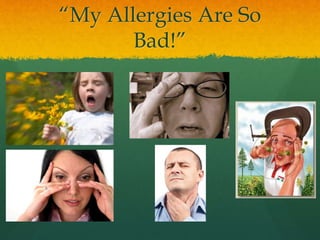
“My Allergies Are So
Bad!”
“Everytime the Weather
Changes…”
Tree pollens Early to mid-spring
Grass pollens Late spring and early summer
Weed pollens Late summer to early fall
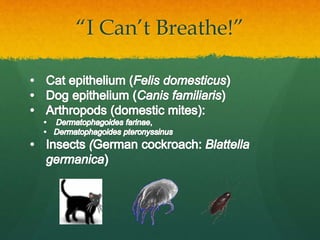
“I Can’t Breathe!”
“I’m Always Itchy!”
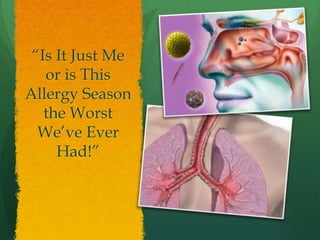
“Is It Just Me
or is This
Allergy Season
the Worst
We’ve Ever
Had!”
“I’ve Been Told I’m
Allergic to Everything”
1. Avoidance
2. Medications
3. Immunotherapy
“I am Always Clearing my Throat!”
Rush IT
 Less Shots
 Faster Results
 Need for pre-medication
 Not offered by most
allergists
Traditional IT
 Longer course
 1-2/weekly shots
 No need for pre-medication
 Offered by traditional
allergists, ENT, family
practice
“I Have Been Putting Up
With Allergies Forever!”
Definition of Anaphylaxis
 Systemic allergic reaction
 Affects body as a whole
 Multiple organ systems may be involved
 Onset generally acute
 Manifestations vary from mild to fatal
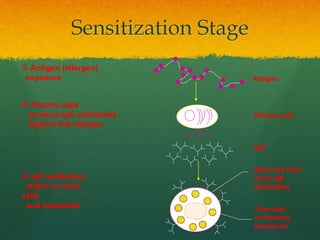
Sensitization Stage
 Antigen (allergen)
exposure
 Plasma cells
produce IgE antibodies
against the allergen
 IgE antibodies
attach to mast
cells
and basophils
Mast cell with
fixed IgE
antibodies
IgE
Granules
containing
histamine
Antigen
Plasma cell
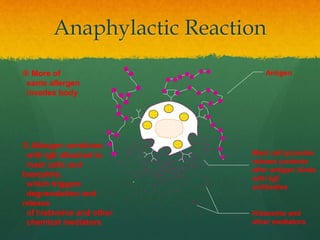
Anaphylactic Reaction
 More of
same allergen
invades body
Antigen
Mast cell granules
release contents
after antigen binds
with IgE
antibodies
Histamine and
other mediators
.
•
•
•
•
••
•
••
•
•
• •
•
•
•••
•
•
•• •
•
••
•
•
•••
•
•
•• •
••
•••
•
•
•• •
•
• •
•
•
••
•
•
• •
• •
•
••
•
••
•••
•
•
•
•
•
•
•
•
• •
•
••
••
•
•
•
•
•
••
•••
•
•
•• •
•
• •
•
•
••
•
•
• •
••
•
•
•
•
•
••
•
••
•
•
•
•
•
•
•
• ••
•
•
••
•••
•
•
•••
•
•
•
•
•
•
•
•
•
•
• •
•
•
•••
•
•
•
•
••
•••
•
•
•
•
•
•
•
• •
•
• •
•
•
•
•
•
••
•
•
•
•• •
•
••
•
•
•
•
•
•
•
•
•
•
•
•
•
••
•
•• •
•
•
•
•
•
•
•• •
•
• •• •
•
•
•••
••
• •
•
•
•
•
•
•
•
•
•
•
•
•
•
•
•
•
•
•
•
•
• •
••
•
•
•
•
•
•
•
•
 Allergen combines
with IgE attached to
mast cells and
basophils,
which triggers
degranulation and
release
of histamine and other
chemical mediators
•
•
•
•
•
•
••
•
Anaphylaxis Fatalities
 Estimated 500–1000 deaths annually
 1% risk
 Risk factors:
 Failure to administer epinephrine immediately
 Peanut, Soy & tree nut allergy (foods in general)
 Beta blocker, ACEI therapy
 Asthma
 Cardiac disease
 Rapid IV allergen
 Atopic dermatitis (eczema)
Food Induced Anaphylaxis
 35%–55% of anaphylaxis is caused by food allergy
 6%–8% of children have food allergy
 1%–2% of adults have food allergy
 Incidence is increasing
 Accidental food exposures are common and
unpredictable
Venom Induced
Anaphylaxis
 0.5%–5% (13 million) Americans are
sensitive to one or more insect venoms
 Incidence is underestimated
 Incidence increasing due to fire ants and Africanized
bees
 Incidence rising due to more outdoor activities
 At least 40–100 deaths per year
Venom: Common Culprits
 Hymenoptera
 Bees
 Wasps
 Yellow jackets
 Hornets
 Fire ants
 Geographical
 Honeybees, yellow jackets most common in East,
Midwest, and West regions of US
 Wasps, fire ants most common in Southwest
and Gulf Coast
Venom Immunotherapy
 Medical criteria
 Hx of any systemic reaction in adults
 Hx of life-threatening reaction in
children
 Positive venom skin test
 97% effective
 Can be discontinued in most after 3–5 years;
10% risk of systemic reaction to subsequent
stings
Myth: Insect Stings are the
most fatal
REALITY:
 While any trigger can be fatal, Most common trigger resulting
in a fatal outcome is food allergies, especially in peds.
 This is especially true with other risk factors , like Asthma
 Also aggravated as most kids forget Epi Pen or have the wrong
size.
 Most common fatal food allergies are:
 Peanuts
 Tree Nuts
Myth: Prior Reactions
Predict Future Reactions
REALITY:
 No predictable pattern
 Severity depends on:
 Sensitivity of the individual
 Dose of the allergen
 Anaphylactoid vs Anaphylactic
Myth: Anaphylaxis is Rare
REALITY:
 Anaphylaxis is underreported
 Incidence seems to be increasing
 Up to 41 million Americans at risk (Neugut AI et al,
2001)
 63,000 new cases per year
(Yocum MW et al, 1999)
 5% of adults may have a history of anaphylaxis
(various surveys)
Myth: Anaphylaxis is Easy to Avoid if
you know what you are Allergic To
REALITY:
 Most cases of anaphylaxis are due to
accidental exposures
 Clinical studies have found repeatedly that,
even when patients attempt strict avoidance
of a known allergen, their efforts are rarely
100% successful.
Myth: Epinephrine is
Dangerous
REALITY:
 Risks of anaphylaxis far outweigh risks
of epinephrine administration
 Minimal cardiovascular effects in children
(Simons et al, 1998)
 Caution when administering epinephrine in
elderly patients or those with known cardiac
disease
Myth: Cause of
Anaphylaxis is Obvious
REALITY:
 Idiopathic anaphylaxis is common
 Triggers may be hidden
 Foods
 Latex
 Patient may not recall details of exposure, clinical
course
Myth: Anaphylaxis Always Presents
with Cutaneous Manifestations
REALITY:
 Approximately 10%-20% of anaphylaxis cases will
not present with hives or other cutaneous
manifestations
 80% of food-induced, fatal anaphylaxis cases were
not associated with cutaneous signs or symptoms
Asthma: A Topic on Its Own
 Pathogenesis
 Symptoms
 Testing (PFTs and Skin Testing)
 Acute Treatment
 Chronic Treatment
Questions?

Allergies, a Presentation by Dr. Summit Shah

  • 1.
    Allergies: Nip Itin the Bud Summit Shah, M.D. Premier Allergy 08/17/2013
  • 2.
    Disclosures  Speakers Bureau TEVA Pharmaceuticals  Educational Grant by Columbus Asthma Society
  • 3.
  • 4.
    “Everytime the Weather Changes…” Treepollens Early to mid-spring Grass pollens Late spring and early summer Weed pollens Late summer to early fall
  • 5.
  • 6.
  • 7.
    “Is It JustMe or is This Allergy Season the Worst We’ve Ever Had!”
  • 8.
    “I’ve Been ToldI’m Allergic to Everything”
  • 9.
  • 10.
  • 11.
  • 12.
    “I am AlwaysClearing my Throat!” Rush IT  Less Shots  Faster Results  Need for pre-medication  Not offered by most allergists Traditional IT  Longer course  1-2/weekly shots  No need for pre-medication  Offered by traditional allergists, ENT, family practice
  • 13.
    “I Have BeenPutting Up With Allergies Forever!”
  • 14.
    Definition of Anaphylaxis Systemic allergic reaction  Affects body as a whole  Multiple organ systems may be involved  Onset generally acute  Manifestations vary from mild to fatal
  • 15.
    Sensitization Stage  Antigen(allergen) exposure  Plasma cells produce IgE antibodies against the allergen  IgE antibodies attach to mast cells and basophils Mast cell with fixed IgE antibodies IgE Granules containing histamine Antigen Plasma cell
  • 16.
    Anaphylactic Reaction  Moreof same allergen invades body Antigen Mast cell granules release contents after antigen binds with IgE antibodies Histamine and other mediators . • • • • •• • •• • • • • • • ••• • • •• • • •• • • ••• • • •• • •• ••• • • •• • • • • • • •• • • • • • • • •• • •• ••• • • • • • • • • • • • •• •• • • • • • •• ••• • • •• • • • • • • •• • • • • •• • • • • • •• • •• • • • • • • • • •• • • •• ••• • • ••• • • • • • • • • • • • • • • ••• • • • • •• ••• • • • • • • • • • • • • • • • • • •• • • • •• • • •• • • • • • • • • • • • • • •• • •• • • • • • • • •• • • • •• • • • ••• •• • • • • • • • • • • • • • • • • • • • • • • • • •• • • • • • • • •  Allergen combines with IgE attached to mast cells and basophils, which triggers degranulation and release of histamine and other chemical mediators • • • • • • •• •
  • 17.
    Anaphylaxis Fatalities  Estimated500–1000 deaths annually  1% risk  Risk factors:  Failure to administer epinephrine immediately  Peanut, Soy & tree nut allergy (foods in general)  Beta blocker, ACEI therapy  Asthma  Cardiac disease  Rapid IV allergen  Atopic dermatitis (eczema)
  • 18.
    Food Induced Anaphylaxis 35%–55% of anaphylaxis is caused by food allergy  6%–8% of children have food allergy  1%–2% of adults have food allergy  Incidence is increasing  Accidental food exposures are common and unpredictable
  • 19.
    Venom Induced Anaphylaxis  0.5%–5%(13 million) Americans are sensitive to one or more insect venoms  Incidence is underestimated  Incidence increasing due to fire ants and Africanized bees  Incidence rising due to more outdoor activities  At least 40–100 deaths per year
  • 20.
    Venom: Common Culprits Hymenoptera  Bees  Wasps  Yellow jackets  Hornets  Fire ants  Geographical  Honeybees, yellow jackets most common in East, Midwest, and West regions of US  Wasps, fire ants most common in Southwest and Gulf Coast
  • 21.
    Venom Immunotherapy  Medicalcriteria  Hx of any systemic reaction in adults  Hx of life-threatening reaction in children  Positive venom skin test  97% effective  Can be discontinued in most after 3–5 years; 10% risk of systemic reaction to subsequent stings
  • 22.
    Myth: Insect Stingsare the most fatal REALITY:  While any trigger can be fatal, Most common trigger resulting in a fatal outcome is food allergies, especially in peds.  This is especially true with other risk factors , like Asthma  Also aggravated as most kids forget Epi Pen or have the wrong size.  Most common fatal food allergies are:  Peanuts  Tree Nuts
  • 23.
    Myth: Prior Reactions PredictFuture Reactions REALITY:  No predictable pattern  Severity depends on:  Sensitivity of the individual  Dose of the allergen  Anaphylactoid vs Anaphylactic
  • 24.
    Myth: Anaphylaxis isRare REALITY:  Anaphylaxis is underreported  Incidence seems to be increasing  Up to 41 million Americans at risk (Neugut AI et al, 2001)  63,000 new cases per year (Yocum MW et al, 1999)  5% of adults may have a history of anaphylaxis (various surveys)
  • 25.
    Myth: Anaphylaxis isEasy to Avoid if you know what you are Allergic To REALITY:  Most cases of anaphylaxis are due to accidental exposures  Clinical studies have found repeatedly that, even when patients attempt strict avoidance of a known allergen, their efforts are rarely 100% successful.
  • 26.
    Myth: Epinephrine is Dangerous REALITY: Risks of anaphylaxis far outweigh risks of epinephrine administration  Minimal cardiovascular effects in children (Simons et al, 1998)  Caution when administering epinephrine in elderly patients or those with known cardiac disease
  • 27.
    Myth: Cause of Anaphylaxisis Obvious REALITY:  Idiopathic anaphylaxis is common  Triggers may be hidden  Foods  Latex  Patient may not recall details of exposure, clinical course
  • 28.
    Myth: Anaphylaxis AlwaysPresents with Cutaneous Manifestations REALITY:  Approximately 10%-20% of anaphylaxis cases will not present with hives or other cutaneous manifestations  80% of food-induced, fatal anaphylaxis cases were not associated with cutaneous signs or symptoms
  • 29.
    Asthma: A Topicon Its Own  Pathogenesis  Symptoms  Testing (PFTs and Skin Testing)  Acute Treatment  Chronic Treatment
  • 30.