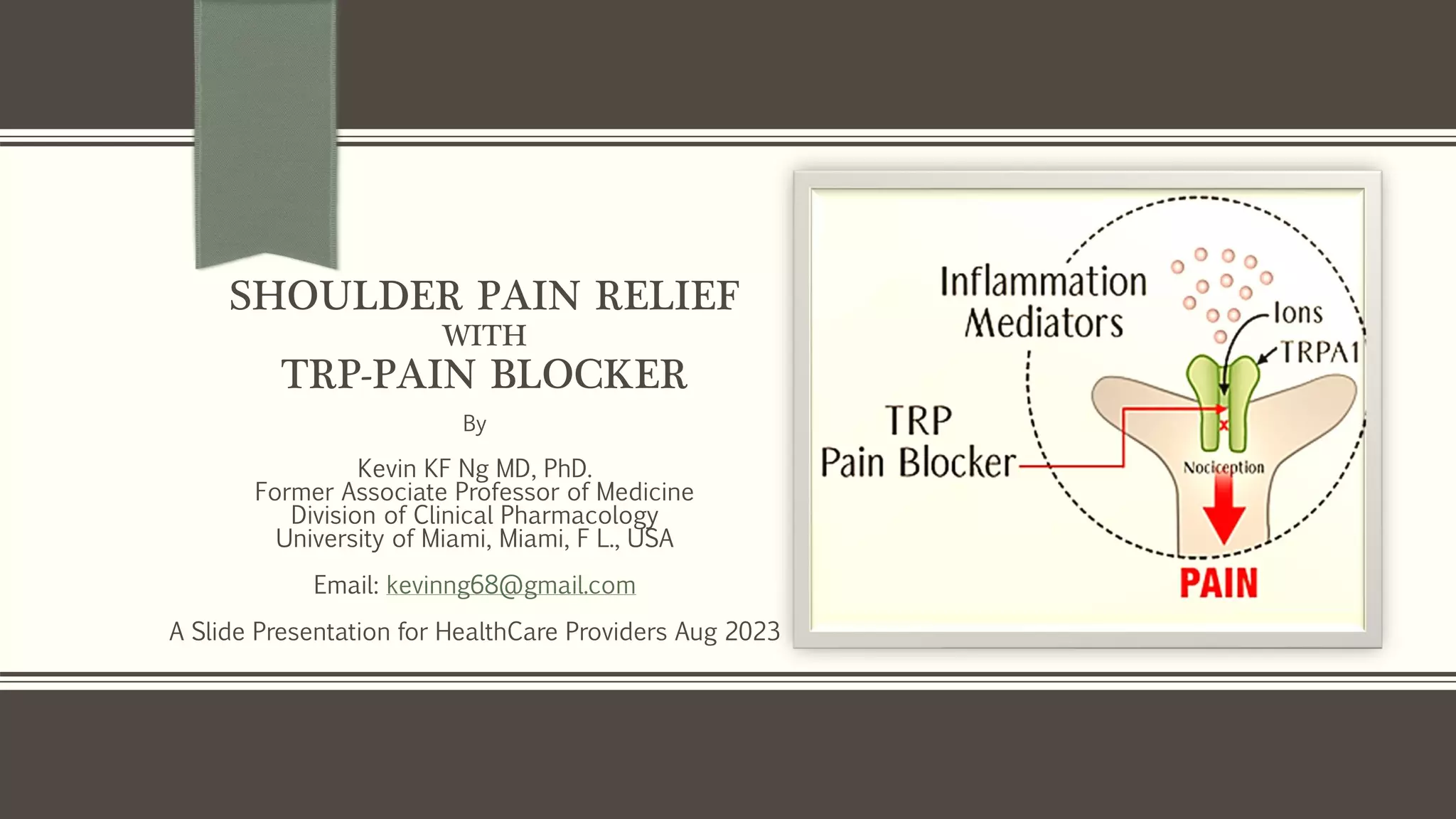
SHOULDER PAIN RELIEF
WITH
TRP-PAIN BLOCKER
By
Kevin KF Ng MD, PhD.
Former Associate Professor of Medicine
Division of Clinical Pharmacology
University of Miami, Miami, F L., USA
Email: kevinng68@gmail.com
A Slide Presentation for HealthCare Providers Aug 2023
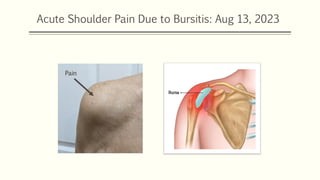
Acute Shoulder Pain Due to Bursitis: Aug 13, 2023
Pain
Timeline of shoulder pain treated with ion channel
“TRP-Pain Blocker” on Aug 13, 2023
A Personal experience
▪ 8.30 AM: I fried with my right hand 8 oz. onions, 6 eggs without yolk, 8
oz oyster mushrooms, and 8 oz flounder with a stainless spatula turner
in a wok. The process involved repetitively turning each ingredient over
a period of 2 to 5 minutes for a total of 15 minutes.
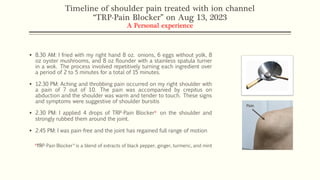
▪ 12.30 PM: Aching and throbbing pain occurred on my right shoulder with
a pain of 7 out of 10. The pain was accompanied by crepitus on
abduction and the shoulder was warm and tender to touch. These signs
and symptoms were suggestive of shoulder bursitis
▪ 2.30 PM: I applied 4 drops of TRP-Pain Blocker꭛ on the shoulder and
strongly rubbed them around the joint.
▪ 2.45 PM: I was pain-free and the joint has regained full range of motion
꭛TRP-Pain BlockerTM
is a blend of extracts of black pepper, ginger, turmeric, and mint
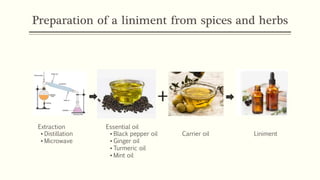
Preparation of a liniment from spices and herbs
Extraction Essential oil
▪ Distillation ▪ Black pepper oil Carrier oil Liniment
▪ Microwave ▪ Ginger oil
▪ Turmeric oil
▪ Mint oil
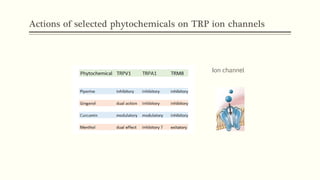
Actions of selected phytochemicals on TRP ion channels
Ion channel
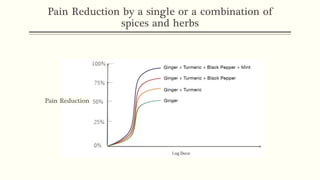
Pain Reduction by a single or a combination of
spices and herbs
DISCOVERIES OF
▪ TRANSIENT RECEPTOR POTENTIAL (TRP) CHANNELS
▪ NOCICEPTIVE RECEPTOR
▪ NOCICEPTIVE NERVE FIBER
https://www.youtube.com/watch?app=desktop&v=64x74JO7c9k
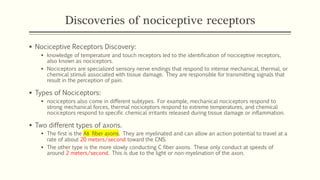
Discoveries of nociceptive receptors
▪ Nociceptive Receptors Discovery:
▪ knowledge of temperature and touch receptors led to the identification of nociceptive receptors,
also known as nociceptors.
▪ Nociceptors are specialized sensory nerve endings that respond to intense mechanical, thermal, or
chemical stimuli associated with tissue damage. They are responsible for transmitting signals that
result in the perception of pain.
▪ Types of Nociceptors:
▪ nociceptors also come in different subtypes. For example, mechanical nociceptors respond to
strong mechanical forces, thermal nociceptors respond to extreme temperatures, and chemical
nociceptors respond to specific chemical irritants released during tissue damage or inflammation.
▪ Two different types of axons.
▪ The first is the Aδ fiber axons. They are myelinated and can allow an action potential to travel at a
rate of about 20 meters/second toward the CNS.
▪ The other type is the more slowly conducting C fiber axons. These only conduct at speeds of
around 2 meters/second. This is due to the light or non-myelination of the axon.
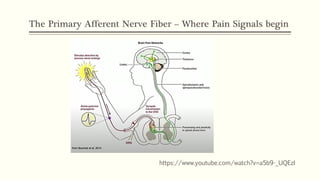
The Primary Afferent Nerve Fiber – Where Pain Signals begin
https://www.youtube.com/watch?v=a5b9-_UQEzI
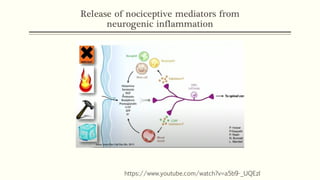
Release of nociceptive mediators from
neurogenic inflammation
https://www.youtube.com/watch?v=a5b9-_UQEzI
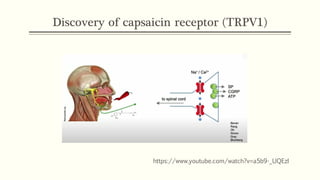
Discovery of capsaicin receptor (TRPV1)
https://www.youtube.com/watch?v=a5b9-_UQEzI
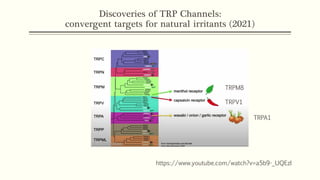
Discoveries of TRP Channels:
convergent targets for natural irritants (2021)
https://www.youtube.com/watch?v=a5b9-_UQEzI
TRPM8
TRPV1
TRPA1
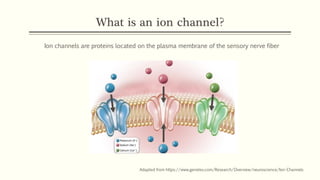
What is an ion channel?
Adapted from https://www.genetex.com/Research/Overview/neuroscience/Ion-Channels
Ion channels are proteins located on the plasma membrane of the sensory nerve fiber
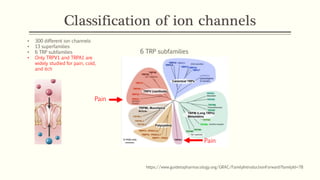
Classification of ion channels
https://www.guidetopharmacology.org/GRAC/FamilyIntroductionForward?familyId=78
• 300 different ion channels
• 13 superfamilies
• 6 TRP subfamilies
• Only TRPV1 and TRPA1 are
widely studied for pain, cold,
and itch
6 TRP subfamilies
Pain
Pain
The functions of TRPA1 ion channel (2022)
▪ TRPA1 is an ion channel located on the plasma
membrane of many human and animal cells.
▪ It is a sensor for pain, cold, itch, and
environmental irritants.
▪ TRPA1 is activated by a number of
▪ reactive compounds:
▪ allyl isothiocyanate, cinnamaldehyde, farnesyl thiosalicylic
acid, formalin, hydrogen peroxide, 4-hydroxynonenal,
acrolein, and tear gases
▪ and non-reactive compounds (nicotine, PF-4840154[16])
and is thus considered as a "chemosensor" in the body.
▪ TRPA1 is co-expressed with TRPV1 on nociceptive
primary afferent C-fibers in humans.
▪ TRPA1 is considered the final pathway for pain
perception and a target for intense research
https://www.moleculardevices.com/applications/ion-channels
Final pathway for pain perception
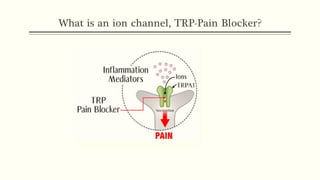
What is an ion channel, TRP-Pain Blocker?
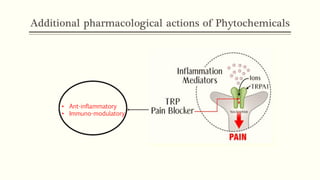
Additional pharmacological actions of Phytochemicals
• Ant-inflammatory
• Immuno-modulatory
MECHANISM OF PAIN RELIEF
BY
BLOCKING TRPA1 ION CHANNEL
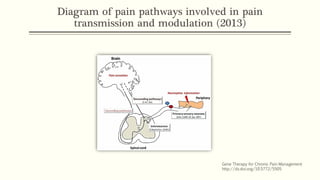
Diagram of pain pathways involved in pain
transmission and modulation (2013)
Gene Therapy for Chronic Pain Management
http://dx.doi.org/10.5772/5505
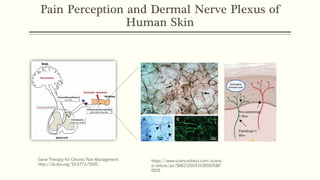
Pain Perception and Dermal Nerve Plexus of
Human Skin
https://www.sciencedirect.com/scienc
e/article/pii/S0022202X15305935#f
0015
Gene Therapy for Chronic Pain Management
http://dx.doi.org/10.5772/5505
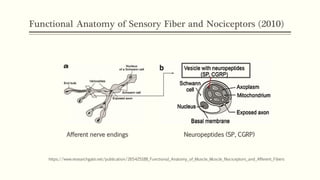
Functional Anatomy of Sensory Fiber and Nociceptors (2010)
https://www.researchgate.net/publication/265425188_Functional_Anatomy_of_Muscle_Muscle_Nociceptors_and_Afferent_Fibers
Afferent nerve endings Neuropeptides (SP, CGRP)
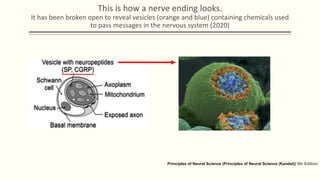
This is how a nerve ending looks.
It has been broken open to reveal vesicles (orange and blue) containing chemicals used
to pass messages in the nervous system (2020)
Principles of Neural Science (Principles of Neural Science (Kandel)) 5th Edition
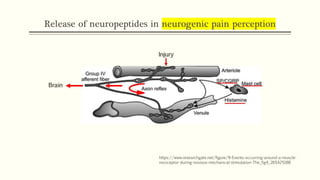
Release of neuropeptides in neurogenic pain perception
https://www.researchgate.net/figure/9-Events-occurring-around-a-muscle-
nociceptor-during-noxious-mechanical-stimulation-The_fig4_265425188
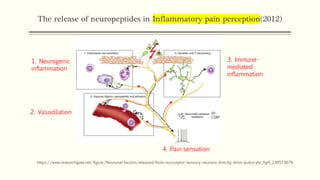
The release of neuropeptides in Inflammatory pain perception(2012)
https://www.researchgate.net/figure/Neuronal-factors-released-from-nociceptor-sensory-neurons-directly-drive-leukocyte_fig4_230573679
SP
CGRP
1. Neurogenic
inflammation
2. Vasodilation
4. Pain sensation
3. Immune-
mediated
inflammation
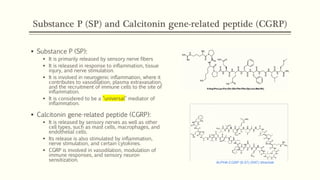
Substance P (SP) and Calcitonin gene-related peptide (CGRP)
▪ Substance P (SP):
▪ It is primarily released by sensory nerve fibers
▪ It is released in response to inflammation, tissue
injury, and nerve stimulation.
▪ It is involved in neurogenic inflammation, where it
contributes to vasodilation, plasma extravasation,
and the recruitment of immune cells to the site of
inflammation.
▪ It is considered to be a "universal" mediator of
inflammation.
▪ Calcitonin gene-related peptide (CGRP):
▪ It is released by sensory nerves as well as other
cell types, such as mast cells, macrophages, and
endothelial cells.
▪ Its release is also stimulated by inflammation,
nerve stimulation, and certain cytokines.
▪ CGRP is involved in vasodilation, modulation of
immune responses, and sensory neuron
sensitization.
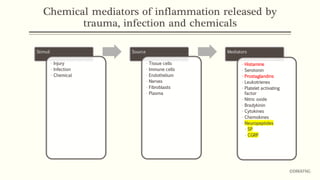
Chemical mediators of inflammation released by
trauma, infection and chemicals
Stimuli
• Injury
• Infection
• Chemical
Source
• Tissue cells
• Immune cells
• Endothelium
• Nerves
• Fibroblasts
• Plasma
Mediators
• Histamine
• Serotonin
• Prostaglandins
• Leukotrienes
• Platelet activating
factor
• Nitric oxide
• Bradykinin
• Cytokines
• Chemokines
• Neuropeptides
• SP
• CGRP
©DRKKFNG
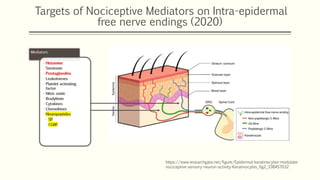
Targets of Nociceptive Mediators on Intra-epidermal
free nerve endings (2020)
https://www.researchgate.net/figure/Epidermal-keratinocytes-modulate-
nociceptive-sensory-neuron-activity-Keratinocytes_fig2_338457032
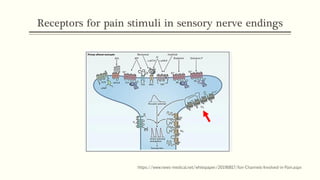
Receptors for pain stimuli in sensory nerve endings
https://www.news-medical.net/whitepaper/20190817/Ion-Channels-Involved-in-Pain.aspx
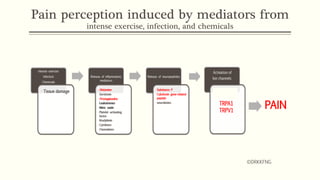
Pain perception induced by mediators from
intense exercise, infection, and chemicals
PAIN
©DRKKFNG
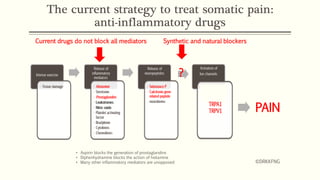
The current strategy to treat somatic pain:
anti-inflammatory drugs
PAIN
• Aspirin blocks the generation of prostaglandins
• Diphenhydramine blocks the action of histamine
• Many other inflammatory mediators are unopposed ©DRKKFNG
Current drugs do not block all mediators Synthetic and natural blockers
?
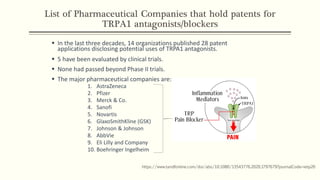
List of Pharmaceutical Companies that hold patents for
TRPA1 antagonists/blockers
▪ In the last three decades, 14 organizations published 28 patent
applications disclosing potential uses of TRPA1 antagonists.
▪ 5 have been evaluated by clinical trials.
▪ None had passed beyond Phase II trials.
▪ The major pharmaceutical companies are:
1. AstraZeneca
2. Pfizer
3. Merck & Co.
4. Sanofi
5. Novartis
6. GlaxoSmithKline (GSK)
7. Johnson & Johnson
8. AbbVie
9. Eli Lilly and Company
10. Boehringer Ingelheim
https://www.tandfonline.com/doi/abs/10.1080/13543776.2020.1797679?journalCode=ietp20
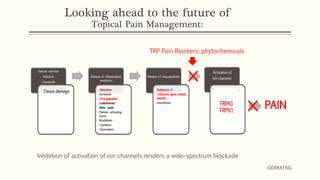
Looking ahead to the future of
Topical Pain Management:
PAIN
×
Inhibition of activation of ion channels renders a wide-spectrum blockade
©DRKKFNG
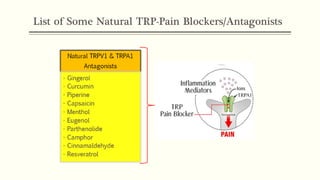
TRP Pain Blockers: phytochemicals
×
List of Some Natural TRP-Pain Blockers/Antagonists
×
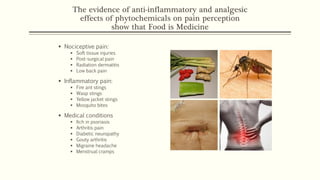
The evidence of anti-inflammatory and analgesic
effects of phytochemicals on pain perception
show that Food is Medicine
▪ Nociceptive pain:
▪ Soft tissue injuries
▪ Post-surgical pain
▪ Radiation dermatitis
▪ Low back pain
▪ Inflammatory pain:
▪ Fire ant stings
▪ Wasp stings
▪ Yellow jacket stings
▪ Mosquito bites
▪ Medical conditions
▪ Itch in psoriasis
▪ Arthritis pain
▪ Diabetic neuropathy
▪ Gouty arthritis
▪ Migraine headache
▪ Menstrual cramps
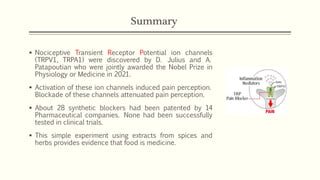
Summary
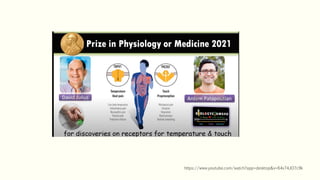
▪ Nociceptive Transient Receptor Potential ion channels
(TRPV1, TRPA1) were discovered by D. Julius and A.
Patapoutian who were jointly awarded the Nobel Prize in
Physiology or Medicine in 2021.
▪ Activation of these ion channels induced pain perception.
Blockade of these channels attenuated pain perception.
▪ About 28 synthetic blockers had been patented by 14
Pharmaceutical companies. None had been successfully
tested in clinical trials.
▪ This simple experiment using extracts from spices and
herbs provides evidence that food is medicine.

Shoulder pain relief based on new science

  • 1.
    SHOULDER PAIN RELIEF WITH TRP-PAINBLOCKER By Kevin KF Ng MD, PhD. Former Associate Professor of Medicine Division of Clinical Pharmacology University of Miami, Miami, F L., USA Email: kevinng68@gmail.com A Slide Presentation for HealthCare Providers Aug 2023
  • 2.
    Acute Shoulder PainDue to Bursitis: Aug 13, 2023 Pain
  • 3.
    Timeline of shoulderpain treated with ion channel “TRP-Pain Blocker” on Aug 13, 2023 A Personal experience ▪ 8.30 AM: I fried with my right hand 8 oz. onions, 6 eggs without yolk, 8 oz oyster mushrooms, and 8 oz flounder with a stainless spatula turner in a wok. The process involved repetitively turning each ingredient over a period of 2 to 5 minutes for a total of 15 minutes. ▪ 12.30 PM: Aching and throbbing pain occurred on my right shoulder with a pain of 7 out of 10. The pain was accompanied by crepitus on abduction and the shoulder was warm and tender to touch. These signs and symptoms were suggestive of shoulder bursitis ▪ 2.30 PM: I applied 4 drops of TRP-Pain Blocker꭛ on the shoulder and strongly rubbed them around the joint. ▪ 2.45 PM: I was pain-free and the joint has regained full range of motion ꭛TRP-Pain BlockerTM is a blend of extracts of black pepper, ginger, turmeric, and mint
  • 4.
    Preparation of aliniment from spices and herbs Extraction Essential oil ▪ Distillation ▪ Black pepper oil Carrier oil Liniment ▪ Microwave ▪ Ginger oil ▪ Turmeric oil ▪ Mint oil
  • 5.
    Actions of selectedphytochemicals on TRP ion channels Ion channel
  • 6.
    Pain Reduction bya single or a combination of spices and herbs
  • 7.
    DISCOVERIES OF ▪ TRANSIENTRECEPTOR POTENTIAL (TRP) CHANNELS ▪ NOCICEPTIVE RECEPTOR ▪ NOCICEPTIVE NERVE FIBER
  • 8.
  • 9.
    Discoveries of nociceptivereceptors ▪ Nociceptive Receptors Discovery: ▪ knowledge of temperature and touch receptors led to the identification of nociceptive receptors, also known as nociceptors. ▪ Nociceptors are specialized sensory nerve endings that respond to intense mechanical, thermal, or chemical stimuli associated with tissue damage. They are responsible for transmitting signals that result in the perception of pain. ▪ Types of Nociceptors: ▪ nociceptors also come in different subtypes. For example, mechanical nociceptors respond to strong mechanical forces, thermal nociceptors respond to extreme temperatures, and chemical nociceptors respond to specific chemical irritants released during tissue damage or inflammation. ▪ Two different types of axons. ▪ The first is the Aδ fiber axons. They are myelinated and can allow an action potential to travel at a rate of about 20 meters/second toward the CNS. ▪ The other type is the more slowly conducting C fiber axons. These only conduct at speeds of around 2 meters/second. This is due to the light or non-myelination of the axon.
  • 10.
    The Primary AfferentNerve Fiber – Where Pain Signals begin https://www.youtube.com/watch?v=a5b9-_UQEzI
  • 11.
    Release of nociceptivemediators from neurogenic inflammation https://www.youtube.com/watch?v=a5b9-_UQEzI
  • 12.
    Discovery of capsaicinreceptor (TRPV1) https://www.youtube.com/watch?v=a5b9-_UQEzI
  • 13.
    Discoveries of TRPChannels: convergent targets for natural irritants (2021) https://www.youtube.com/watch?v=a5b9-_UQEzI TRPM8 TRPV1 TRPA1
  • 14.
    What is anion channel? Adapted from https://www.genetex.com/Research/Overview/neuroscience/Ion-Channels Ion channels are proteins located on the plasma membrane of the sensory nerve fiber
  • 15.
    Classification of ionchannels https://www.guidetopharmacology.org/GRAC/FamilyIntroductionForward?familyId=78 • 300 different ion channels • 13 superfamilies • 6 TRP subfamilies • Only TRPV1 and TRPA1 are widely studied for pain, cold, and itch 6 TRP subfamilies Pain Pain
  • 16.
    The functions ofTRPA1 ion channel (2022) ▪ TRPA1 is an ion channel located on the plasma membrane of many human and animal cells. ▪ It is a sensor for pain, cold, itch, and environmental irritants. ▪ TRPA1 is activated by a number of ▪ reactive compounds: ▪ allyl isothiocyanate, cinnamaldehyde, farnesyl thiosalicylic acid, formalin, hydrogen peroxide, 4-hydroxynonenal, acrolein, and tear gases ▪ and non-reactive compounds (nicotine, PF-4840154[16]) and is thus considered as a "chemosensor" in the body. ▪ TRPA1 is co-expressed with TRPV1 on nociceptive primary afferent C-fibers in humans. ▪ TRPA1 is considered the final pathway for pain perception and a target for intense research https://www.moleculardevices.com/applications/ion-channels Final pathway for pain perception
  • 17.
    What is anion channel, TRP-Pain Blocker?
  • 18.
    Additional pharmacological actionsof Phytochemicals • Ant-inflammatory • Immuno-modulatory
  • 19.
    MECHANISM OF PAINRELIEF BY BLOCKING TRPA1 ION CHANNEL
  • 20.
    Diagram of painpathways involved in pain transmission and modulation (2013) Gene Therapy for Chronic Pain Management http://dx.doi.org/10.5772/5505
  • 21.
    Pain Perception andDermal Nerve Plexus of Human Skin https://www.sciencedirect.com/scienc e/article/pii/S0022202X15305935#f 0015 Gene Therapy for Chronic Pain Management http://dx.doi.org/10.5772/5505
  • 22.
    Functional Anatomy ofSensory Fiber and Nociceptors (2010) https://www.researchgate.net/publication/265425188_Functional_Anatomy_of_Muscle_Muscle_Nociceptors_and_Afferent_Fibers Afferent nerve endings Neuropeptides (SP, CGRP)
  • 23.
    This is howa nerve ending looks. It has been broken open to reveal vesicles (orange and blue) containing chemicals used to pass messages in the nervous system (2020) Principles of Neural Science (Principles of Neural Science (Kandel)) 5th Edition
  • 24.
    Release of neuropeptidesin neurogenic pain perception https://www.researchgate.net/figure/9-Events-occurring-around-a-muscle- nociceptor-during-noxious-mechanical-stimulation-The_fig4_265425188
  • 25.
    The release ofneuropeptides in Inflammatory pain perception(2012) https://www.researchgate.net/figure/Neuronal-factors-released-from-nociceptor-sensory-neurons-directly-drive-leukocyte_fig4_230573679 SP CGRP 1. Neurogenic inflammation 2. Vasodilation 4. Pain sensation 3. Immune- mediated inflammation
  • 26.
    Substance P (SP)and Calcitonin gene-related peptide (CGRP) ▪ Substance P (SP): ▪ It is primarily released by sensory nerve fibers ▪ It is released in response to inflammation, tissue injury, and nerve stimulation. ▪ It is involved in neurogenic inflammation, where it contributes to vasodilation, plasma extravasation, and the recruitment of immune cells to the site of inflammation. ▪ It is considered to be a "universal" mediator of inflammation. ▪ Calcitonin gene-related peptide (CGRP): ▪ It is released by sensory nerves as well as other cell types, such as mast cells, macrophages, and endothelial cells. ▪ Its release is also stimulated by inflammation, nerve stimulation, and certain cytokines. ▪ CGRP is involved in vasodilation, modulation of immune responses, and sensory neuron sensitization.
  • 27.
    Chemical mediators ofinflammation released by trauma, infection and chemicals Stimuli • Injury • Infection • Chemical Source • Tissue cells • Immune cells • Endothelium • Nerves • Fibroblasts • Plasma Mediators • Histamine • Serotonin • Prostaglandins • Leukotrienes • Platelet activating factor • Nitric oxide • Bradykinin • Cytokines • Chemokines • Neuropeptides • SP • CGRP ©DRKKFNG
  • 28.
    Targets of NociceptiveMediators on Intra-epidermal free nerve endings (2020) https://www.researchgate.net/figure/Epidermal-keratinocytes-modulate- nociceptive-sensory-neuron-activity-Keratinocytes_fig2_338457032
  • 29.
    Receptors for painstimuli in sensory nerve endings https://www.news-medical.net/whitepaper/20190817/Ion-Channels-Involved-in-Pain.aspx
  • 30.
    Pain perception inducedby mediators from intense exercise, infection, and chemicals PAIN ©DRKKFNG
  • 31.
    The current strategyto treat somatic pain: anti-inflammatory drugs PAIN • Aspirin blocks the generation of prostaglandins • Diphenhydramine blocks the action of histamine • Many other inflammatory mediators are unopposed ©DRKKFNG Current drugs do not block all mediators Synthetic and natural blockers ?
  • 32.
    List of PharmaceuticalCompanies that hold patents for TRPA1 antagonists/blockers ▪ In the last three decades, 14 organizations published 28 patent applications disclosing potential uses of TRPA1 antagonists. ▪ 5 have been evaluated by clinical trials. ▪ None had passed beyond Phase II trials. ▪ The major pharmaceutical companies are: 1. AstraZeneca 2. Pfizer 3. Merck & Co. 4. Sanofi 5. Novartis 6. GlaxoSmithKline (GSK) 7. Johnson & Johnson 8. AbbVie 9. Eli Lilly and Company 10. Boehringer Ingelheim https://www.tandfonline.com/doi/abs/10.1080/13543776.2020.1797679?journalCode=ietp20
  • 33.
    Looking ahead tothe future of Topical Pain Management: PAIN × Inhibition of activation of ion channels renders a wide-spectrum blockade ©DRKKFNG TRP Pain Blockers: phytochemicals ×
  • 34.
    List of SomeNatural TRP-Pain Blockers/Antagonists ×
  • 35.
    The evidence ofanti-inflammatory and analgesic effects of phytochemicals on pain perception show that Food is Medicine ▪ Nociceptive pain: ▪ Soft tissue injuries ▪ Post-surgical pain ▪ Radiation dermatitis ▪ Low back pain ▪ Inflammatory pain: ▪ Fire ant stings ▪ Wasp stings ▪ Yellow jacket stings ▪ Mosquito bites ▪ Medical conditions ▪ Itch in psoriasis ▪ Arthritis pain ▪ Diabetic neuropathy ▪ Gouty arthritis ▪ Migraine headache ▪ Menstrual cramps
  • 36.
    Summary ▪ Nociceptive TransientReceptor Potential ion channels (TRPV1, TRPA1) were discovered by D. Julius and A. Patapoutian who were jointly awarded the Nobel Prize in Physiology or Medicine in 2021. ▪ Activation of these ion channels induced pain perception. Blockade of these channels attenuated pain perception. ▪ About 28 synthetic blockers had been patented by 14 Pharmaceutical companies. None had been successfully tested in clinical trials. ▪ This simple experiment using extracts from spices and herbs provides evidence that food is medicine.