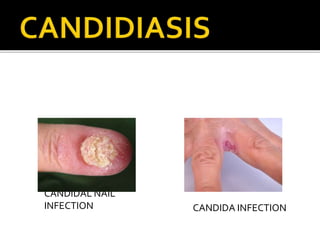
CANDIDAL NAIL
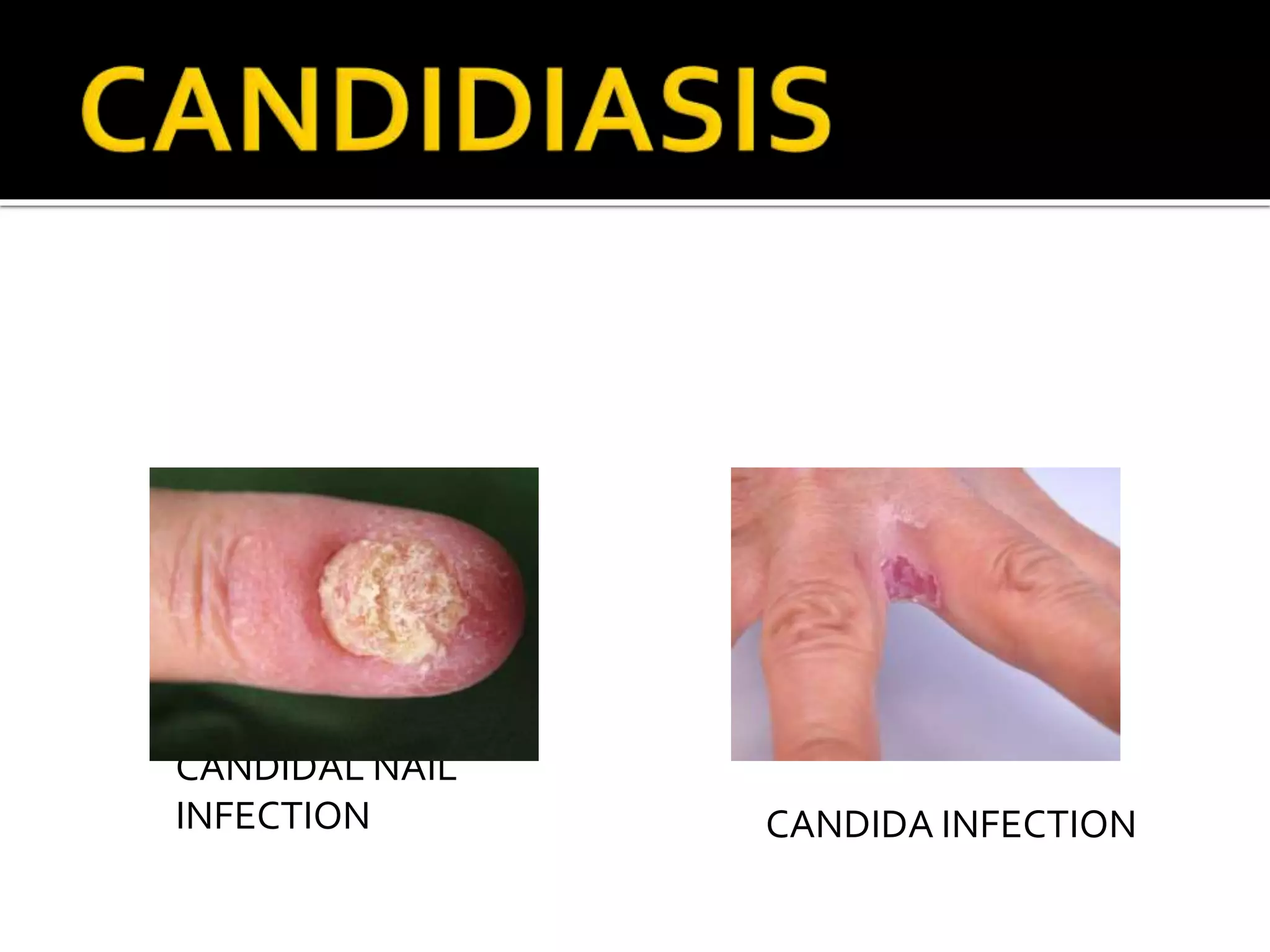
INFECTION CANDIDA INFECTION
 Candida is the name for a group of yeasts (yeast is a type
of fungus) that commonly infect the skin.The name
‘candida’ refers to the white color of the organisms in
culture. Candidal infection is known as ‘candidiasis’,
‘candidosis’ or ‘moniliasis’.
 Candida depends on a living host for survival. It is a normal
inhabitant of the human digestive tract from early infancy,
where it lives without causing any disease most of the
time. However, if the host's defences are lowered, the
organism can cause infection of the mucosa (the lining of
the mouth, anus and genitals), the skin, and rarely, deep-
seated infection.
The most common Candida (C) species to result
in candidiasis is C. albicans. Other non-albicans
candida species are:
 C. tropicalis
 C. parapsilosis
 C. glabrata
 C. guilliermondii
 Oral candidiasis (oral thrush)
 Angular cheilitis
 Vulvovaginal candidiasis (genital infection in
women) including cyclic vulvovaginitis
 Balanitis (penile infection)
 Intertrigo (skin fold infections)
 Napkin dermatitis (nappy or diaper rash)
 Chronic paronychia (nail fold infection)
 Onychomycosis (nail plate infection)
 Chronic mucocutaneous candidiasis
Cutaneous candidiasis is more likely in the following circumstances:
 Infancy or old age
 Warm climate
 Occlusion eg, plastic pants (babies), nylon pantyhose (women),
dental plates
 Broad-spectrum antibiotic treatment
 High-oestrogen contraceptive pill or pregnancy
 Diabetes mellitus, Cushing syndromem and other endocrine
conditions
 Iron deficiency
 General debility eg, from cancer or malnutrition
 Underlying skin disease eg, psoriasis, lichen planus
 Immunodeficiency eg, low levels of immunoglobulins, infection
with human immunodeficiency virus (HIV)
 Chemotherapy or immunosuppressive
medications including systemic steroids.
1. Vulvovaginitis:Vaginal candidiasis is the
most common cause of vaginal discharge.
Candidal vaginitis develop in one-fourth of
women in their childbearing age. It begins
with vaginal itching and/or a white, thin to
creamy discharge.The vaginal mucosa and
external genitalia become red, swollen, and
sometimes eroded.
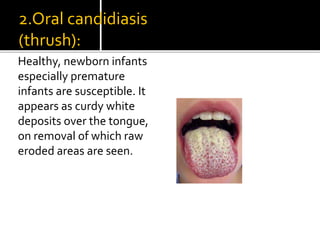
2.Oral candidiasis
(thrush):
Healthy, newborn infants
especially premature
infants are susceptible. It
appears as curdy white
deposits over the tongue,
on removal of which raw
eroded areas are seen.
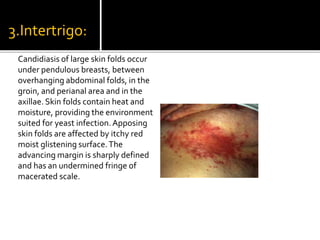
3.Intertrigo:
Candidiasis of large skin folds occur
under pendulous breasts, between
overhanging abdominal folds, in the
groin, and perianal area and in the
axillae. Skin folds contain heat and
moisture, providing the environment
suited for yeast infection.Apposing
skin folds are affected by itchy red
moist glistening surface.The
advancing margin is sharply defined
and has an undermined fringe of
macerated scale.
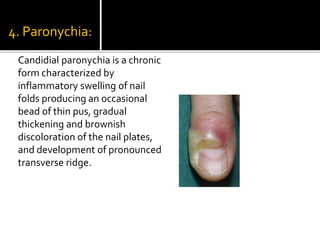
4. Paronychia:
Candidial paronychia is a chronic
form characterized by
inflammatory swelling of nail
folds producing an occasional
bead of thin pus, gradual
thickening and brownish
discoloration of the nail plates,
and development of pronounced
transverse ridge.
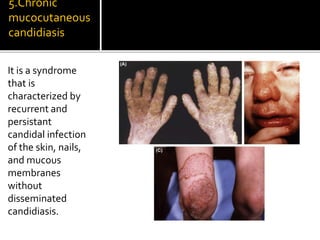
5.Chronic
mucocutaneous
candidiasis
It is a syndrome
that is
characterized by
recurrent and
persistant
candidal infection
of the skin, nails,
and mucous
membranes
without
disseminated
candidiasis.
 KOH preparation: Budding yeasts with or
without hyphae or pseudohyphae.
Pseudohyphae and hyphae indistinguishable
from dermatophyes are seen. Hyphae are
almost always are seen in the mucous
membrane infections but may be absent in the
skin infections.
 Gram-stained smear may demonstrate gram-
positive pseudohyphae, hyphae, and pseudo
budding.
 Culture on Sabouraud’s media.
 General measures, especially removal of moisture,
maceration, and occlusion factors, that precipitate the
infection are undertaken. Diabetes is controlled and
corticosteroids and antibiotics discontinued, if possible.
 Topical therapy nystatin, imidiazole derivatives, or age-old
effective gentain violet paint may be used.
 Oropharyngeal candidiasis can be treated with oral
fluconazole 100mg daily or itraconazole 200mg daily for 2-
4 weeks.
 Vulvovaginitis may be treated with oral antifungals like
fluconazole (150mg single dose), ketoconazole
(400mg/day for 5 days), or itraconazole (200mg/day for 3
days).
Candidiasis by dr.AJ

Candidiasis by dr.AJ

  • 1.
  • 2.
     Candida isthe name for a group of yeasts (yeast is a type of fungus) that commonly infect the skin.The name ‘candida’ refers to the white color of the organisms in culture. Candidal infection is known as ‘candidiasis’, ‘candidosis’ or ‘moniliasis’.  Candida depends on a living host for survival. It is a normal inhabitant of the human digestive tract from early infancy, where it lives without causing any disease most of the time. However, if the host's defences are lowered, the organism can cause infection of the mucosa (the lining of the mouth, anus and genitals), the skin, and rarely, deep- seated infection.
  • 3.
    The most commonCandida (C) species to result in candidiasis is C. albicans. Other non-albicans candida species are:  C. tropicalis  C. parapsilosis  C. glabrata  C. guilliermondii
  • 4.
     Oral candidiasis(oral thrush)  Angular cheilitis  Vulvovaginal candidiasis (genital infection in women) including cyclic vulvovaginitis  Balanitis (penile infection)  Intertrigo (skin fold infections)  Napkin dermatitis (nappy or diaper rash)  Chronic paronychia (nail fold infection)  Onychomycosis (nail plate infection)  Chronic mucocutaneous candidiasis
  • 5.
    Cutaneous candidiasis ismore likely in the following circumstances:  Infancy or old age  Warm climate  Occlusion eg, plastic pants (babies), nylon pantyhose (women), dental plates  Broad-spectrum antibiotic treatment  High-oestrogen contraceptive pill or pregnancy  Diabetes mellitus, Cushing syndromem and other endocrine conditions  Iron deficiency  General debility eg, from cancer or malnutrition  Underlying skin disease eg, psoriasis, lichen planus  Immunodeficiency eg, low levels of immunoglobulins, infection with human immunodeficiency virus (HIV)  Chemotherapy or immunosuppressive medications including systemic steroids.
  • 6.
    1. Vulvovaginitis:Vaginal candidiasisis the most common cause of vaginal discharge. Candidal vaginitis develop in one-fourth of women in their childbearing age. It begins with vaginal itching and/or a white, thin to creamy discharge.The vaginal mucosa and external genitalia become red, swollen, and sometimes eroded.
  • 7.
    2.Oral candidiasis (thrush): Healthy, newborninfants especially premature infants are susceptible. It appears as curdy white deposits over the tongue, on removal of which raw eroded areas are seen.
  • 8.
    3.Intertrigo: Candidiasis of largeskin folds occur under pendulous breasts, between overhanging abdominal folds, in the groin, and perianal area and in the axillae. Skin folds contain heat and moisture, providing the environment suited for yeast infection.Apposing skin folds are affected by itchy red moist glistening surface.The advancing margin is sharply defined and has an undermined fringe of macerated scale.
  • 9.
    4. Paronychia: Candidial paronychiais a chronic form characterized by inflammatory swelling of nail folds producing an occasional bead of thin pus, gradual thickening and brownish discoloration of the nail plates, and development of pronounced transverse ridge.
  • 10.
    5.Chronic mucocutaneous candidiasis It is asyndrome that is characterized by recurrent and persistant candidal infection of the skin, nails, and mucous membranes without disseminated candidiasis.
  • 11.
     KOH preparation:Budding yeasts with or without hyphae or pseudohyphae. Pseudohyphae and hyphae indistinguishable from dermatophyes are seen. Hyphae are almost always are seen in the mucous membrane infections but may be absent in the skin infections.  Gram-stained smear may demonstrate gram- positive pseudohyphae, hyphae, and pseudo budding.  Culture on Sabouraud’s media.
  • 12.
     General measures,especially removal of moisture, maceration, and occlusion factors, that precipitate the infection are undertaken. Diabetes is controlled and corticosteroids and antibiotics discontinued, if possible.  Topical therapy nystatin, imidiazole derivatives, or age-old effective gentain violet paint may be used.  Oropharyngeal candidiasis can be treated with oral fluconazole 100mg daily or itraconazole 200mg daily for 2- 4 weeks.  Vulvovaginitis may be treated with oral antifungals like fluconazole (150mg single dose), ketoconazole (400mg/day for 5 days), or itraconazole (200mg/day for 3 days).