
Download to read offline

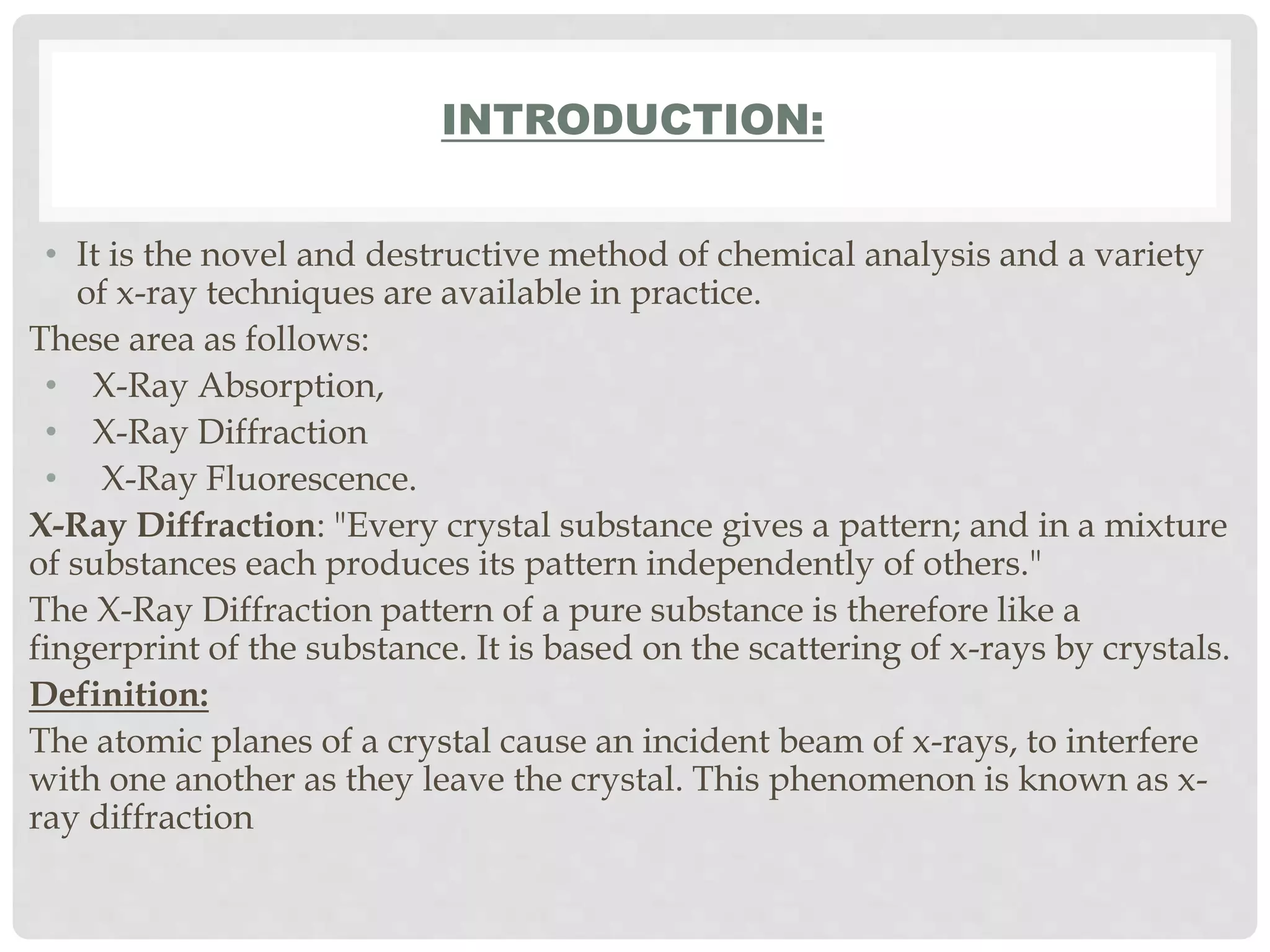


This document discusses X-ray diffraction spectroscopy. It begins by introducing X-ray techniques including X-ray absorption, diffraction, and fluorescence. Bragg's law is then explained, relating the diffraction pattern to the distance between atomic layers in a crystal. The key methods of Laue, rotating crystal, and powder diffraction are described. The powder method is useful for polycrystalline samples, producing a continuous diffraction pattern. Advantages include low cost and convenience, while disadvantages include weak interaction with lighter elements.


