WROUGHT IRON
Submitted By :
Moksha Bhatia
1461576
• Wrought iron is an iron alloy which is soft, ductile,
fibrous variety.
• It usually contains less than 0.1 percent carbon and 1 or 2
percent slag.
• It is superior for most purposes to cast iron, which is
overly hard and brittle owing to its high carbon content.
• Wrought iron can be easily welded.
INTRODUCTION
Manufacturing of Wrought Iron
• Wrought iron is manufactured from process of
puddling of cast iron.
• This involves reheating cast iron and manually
mixing air in with the molten mass.
• Puddling, by which the molten metal is still further
exposed to a blast of air .
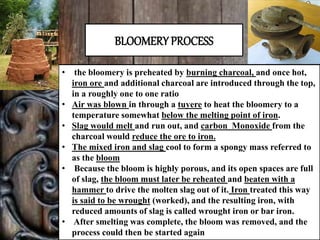
BLOOMERY PROCESS
• the bloomery is preheated by burning charcoal, and once hot,
iron ore and additional charcoal are introduced through the top,
in a roughly one to one ratio
• Air was blown in through a tuyere to heat the bloomery to a
temperature somewhat below the melting point of iron.
• Slag would melt and run out, and carbon Monoxide from the
charcoal would reduce the ore to iron.
• The mixed iron and slag cool to form a spongy mass referred to
as the bloom
• Because the bloom is highly porous, and its open spaces are full
of slag, the bloom must later be reheated and beaten with a
hammer to drive the molten slag out of it. Iron treated this way
is said to be wrought (worked), and the resulting iron, with
reduced amounts of slag is called wrought iron or bar iron.
• After smelting was complete, the bloom was removed, and the
process could then be started again
FINERY PROCESS
• In the 15th century, the blast furnace spread in belgium and
it was improved furthur.
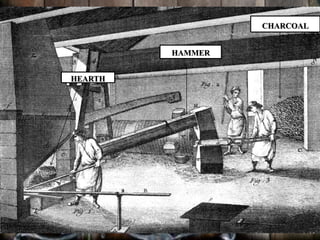
• Pieces of cast iron were placed on a finery hearth.
• On finery hearth charcoal was being burned with a
plentiful supply of air so that carbon in the iron was
removed by oxidation, leaving semisolid malleable iron
behind.
• It was in turn replaced by the puddling process
HEARTH
HAMMER
CHARCOAL
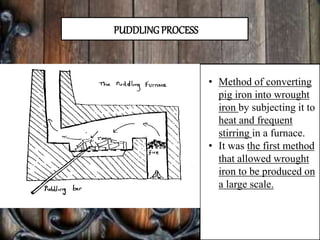
PUDDLING PROCESS
• Method of converting
pig iron into wrought
iron by subjecting it to
heat and frequent
stirring in a furnace.
• It was the first method
that allowed wrought
iron to be produced on
a large scale.
ASTONPROCESS
• In 1925, James Aston of the United States developed a process for
manufacturing wrought iron quickly and economically.
• It involves taking molten steel from a Bessemer converter and
pouring it into cooler liquid slag.
• The molten steel contains a large amount of dissolved gases so when
the liquid steel hits the cooler surfaces of the liquid slag the gases are
liberated
• The molten steel then freezes to yield a spongy mass having a
temperature of about 1370 °C.
• . This spongy mass must then be finished by being shingled and
rolled.
Availabilityin Market
• Bar Iron includes simple sections - round, square, or flat. Ordinary
dimensions are generally from 1/2 inch to 3 inches diameter, or
sides, increasing by 1/16 of an inch each size. If under 1/2 an inch
diameter, they are classed as rods; or if under 3/16 inch diameter,
as wire.
• Flat Bars. - The ordinary dimensions are generally from 1 foot by
1/4 of an inch to 6 inches by 1 inch, the width increasing 1/8 of an
inch and the thickness increasing 1/16 of an inch (at the same time)
in the various sizes. Bars of these sections may be readily obtained
of to 22 feet in length without extra charge.
HISTORY OF WROUGHTIRON
• Due to its malleability and toughness, wrought iron has been
coveted for thousands of years..
• Throughout time, wrought iron has been used to build ancient
structure, warships and railways.
• Around 8th century B.C., armies were equipped with iron swords.
• 18th century – led to beautiful railings and gates throughout
London.
• Demand for wrought iron reached its peak in the 1860s with the
adaptation of iron clad warships and railways, balconies, porches
and verandhas, canopies, roof cresting, lamps, grilles, hardware,
etc.
• Then it began to be used as structural member such as tie rods
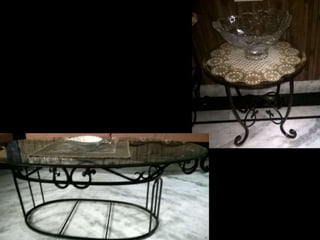
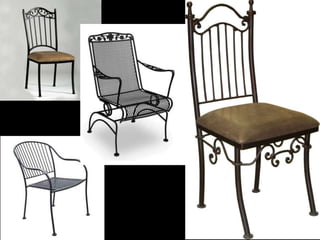
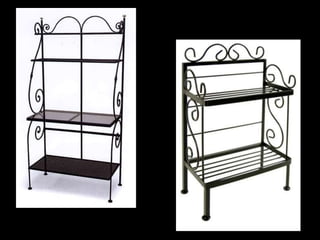
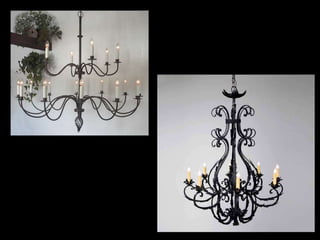
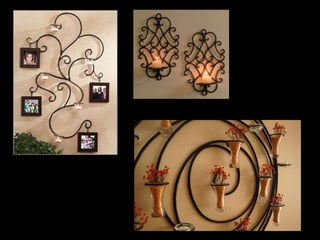
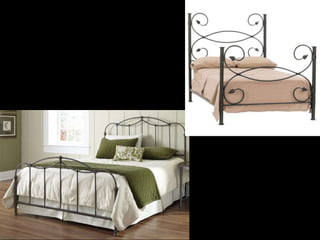
• Today wrought iron can be found anywhere in homes from light
fixtures, to wine racks, to candle holders.
Uses of Wrought Iron
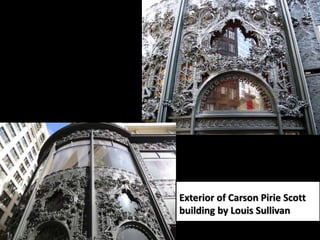
Exterior of Carson Pirie Scott
building by Louis Sullivan
EIFFEL TOWER - PARIS
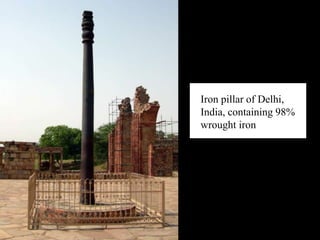
Iron pillar of Delhi,
India, containing 98%
wrought iron
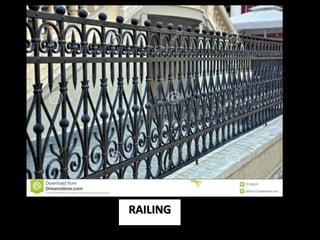
RAILING
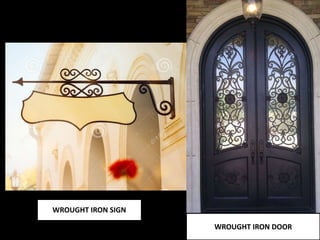
WROUGHT IRON DOOR
WROUGHT IRON SIGN
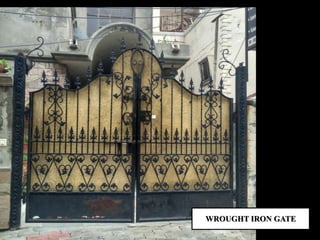
WROUGHT IRON GATE
Wrought iron
Wrought iron
Wrought iron
Wrought iron
Wrought iron
Wrought iron
Wrought iron
Wrought iron
Wrought iron
Wrought iron

Wrought iron

  • 1.
    WROUGHT IRON Submitted By: Moksha Bhatia 1461576
  • 2.
    • Wrought ironis an iron alloy which is soft, ductile, fibrous variety. • It usually contains less than 0.1 percent carbon and 1 or 2 percent slag. • It is superior for most purposes to cast iron, which is overly hard and brittle owing to its high carbon content. • Wrought iron can be easily welded. INTRODUCTION
  • 3.
    Manufacturing of WroughtIron • Wrought iron is manufactured from process of puddling of cast iron. • This involves reheating cast iron and manually mixing air in with the molten mass. • Puddling, by which the molten metal is still further exposed to a blast of air .
  • 4.
    BLOOMERY PROCESS • thebloomery is preheated by burning charcoal, and once hot, iron ore and additional charcoal are introduced through the top, in a roughly one to one ratio • Air was blown in through a tuyere to heat the bloomery to a temperature somewhat below the melting point of iron. • Slag would melt and run out, and carbon Monoxide from the charcoal would reduce the ore to iron. • The mixed iron and slag cool to form a spongy mass referred to as the bloom • Because the bloom is highly porous, and its open spaces are full of slag, the bloom must later be reheated and beaten with a hammer to drive the molten slag out of it. Iron treated this way is said to be wrought (worked), and the resulting iron, with reduced amounts of slag is called wrought iron or bar iron. • After smelting was complete, the bloom was removed, and the process could then be started again
  • 5.
    FINERY PROCESS • Inthe 15th century, the blast furnace spread in belgium and it was improved furthur. • Pieces of cast iron were placed on a finery hearth. • On finery hearth charcoal was being burned with a plentiful supply of air so that carbon in the iron was removed by oxidation, leaving semisolid malleable iron behind. • It was in turn replaced by the puddling process
  • 6.
  • 7.
    PUDDLING PROCESS • Methodof converting pig iron into wrought iron by subjecting it to heat and frequent stirring in a furnace. • It was the first method that allowed wrought iron to be produced on a large scale.
  • 8.
    ASTONPROCESS • In 1925,James Aston of the United States developed a process for manufacturing wrought iron quickly and economically. • It involves taking molten steel from a Bessemer converter and pouring it into cooler liquid slag. • The molten steel contains a large amount of dissolved gases so when the liquid steel hits the cooler surfaces of the liquid slag the gases are liberated • The molten steel then freezes to yield a spongy mass having a temperature of about 1370 °C. • . This spongy mass must then be finished by being shingled and rolled.
  • 9.
    Availabilityin Market • BarIron includes simple sections - round, square, or flat. Ordinary dimensions are generally from 1/2 inch to 3 inches diameter, or sides, increasing by 1/16 of an inch each size. If under 1/2 an inch diameter, they are classed as rods; or if under 3/16 inch diameter, as wire. • Flat Bars. - The ordinary dimensions are generally from 1 foot by 1/4 of an inch to 6 inches by 1 inch, the width increasing 1/8 of an inch and the thickness increasing 1/16 of an inch (at the same time) in the various sizes. Bars of these sections may be readily obtained of to 22 feet in length without extra charge.
  • 10.
  • 11.
    • Due toits malleability and toughness, wrought iron has been coveted for thousands of years.. • Throughout time, wrought iron has been used to build ancient structure, warships and railways. • Around 8th century B.C., armies were equipped with iron swords. • 18th century – led to beautiful railings and gates throughout London. • Demand for wrought iron reached its peak in the 1860s with the adaptation of iron clad warships and railways, balconies, porches and verandhas, canopies, roof cresting, lamps, grilles, hardware, etc. • Then it began to be used as structural member such as tie rods • Today wrought iron can be found anywhere in homes from light fixtures, to wine racks, to candle holders.
  • 12.
  • 13.
    Exterior of CarsonPirie Scott building by Louis Sullivan
  • 14.
  • 15.
    Iron pillar ofDelhi, India, containing 98% wrought iron
  • 16.
  • 17.
  • 18.