Downloaded 1,576 times


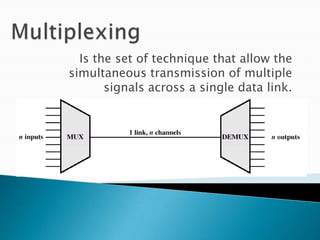
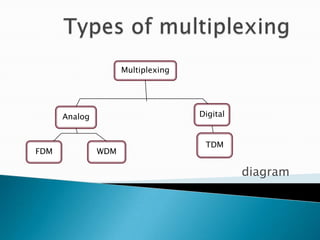

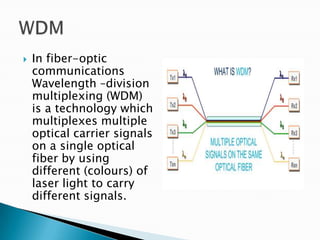
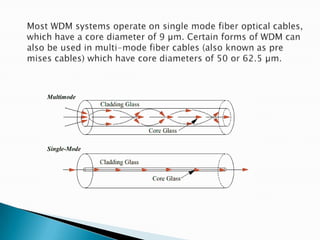
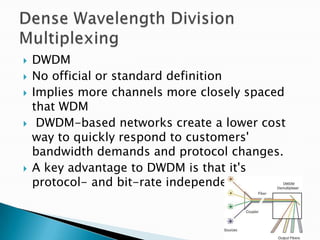

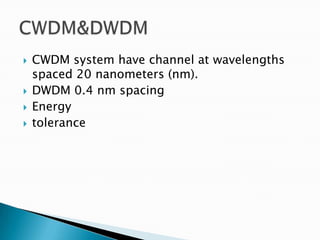
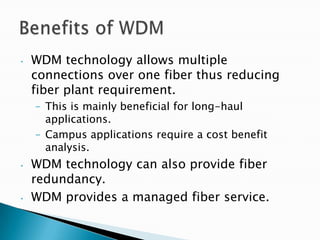


Wavelength-division multiplexing (WDM) is a technology that multiplexes multiple optical carrier signals onto a single optical fiber by using different wavelengths of laser light. Modern WDM systems can handle up to 160 signals and expand a basic 10 Gbit/s fiber system to a theoretical total capacity of over 1.6 Tbit/s. There are two main types: coarse WDM (CWDM) uses channel spacings of 20 nm while dense WDM (DWDM) uses narrower spacings of 0.4 nm, allowing DWDM to carry more channels. WDM reduces fiber plant requirements by allowing multiple connections over one fiber.


