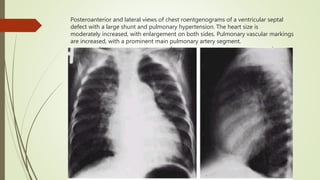
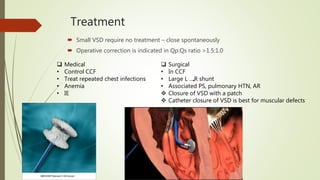
Ventricular septal defect (VSD) is the most common congenital heart defect, occurring when there is an abnormal opening in the dividing wall between the ventricles. VSDs range in size from a few millimeters to defects so large there is no interventricular septum. They are typically classified based on location, size, number, and associated conditions. While small VSDs may close spontaneously, moderate or large VSDs can cause heart failure in infants and children if left untreated. Surgical closure of the defect is usually recommended for larger VSDs with significant left-to-right shunting or those accompanied by other heart issues like pulmonary hypertension.