Downloaded 55 times

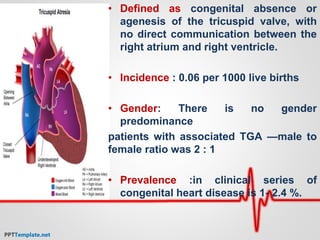

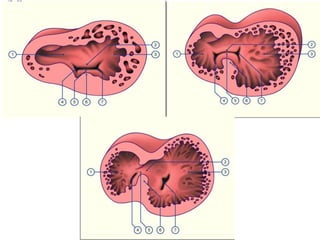
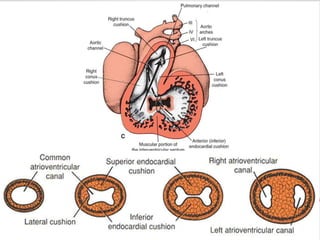





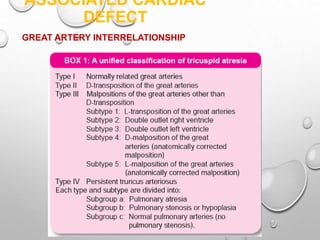
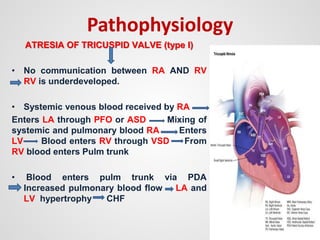
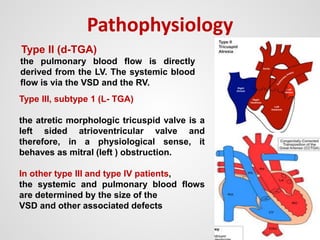


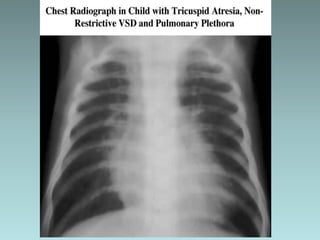
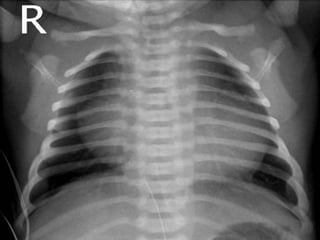
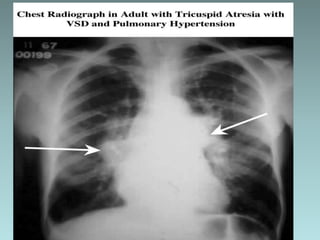
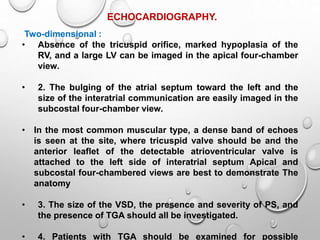
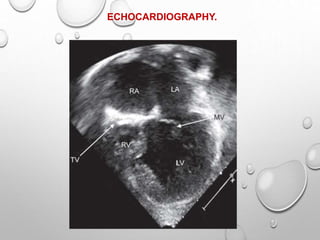
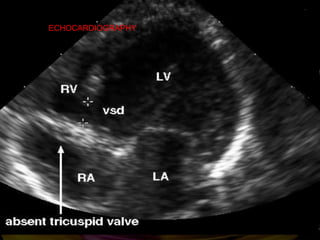
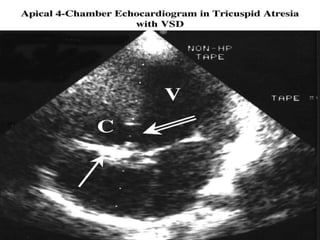
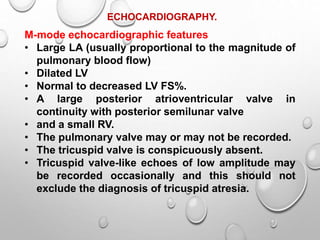

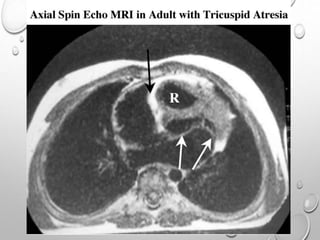
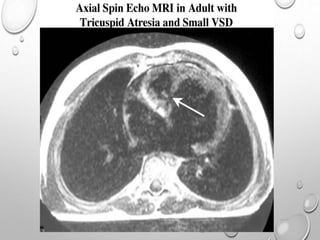
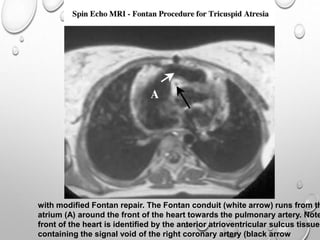
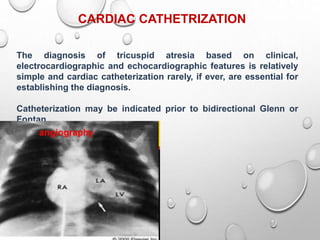



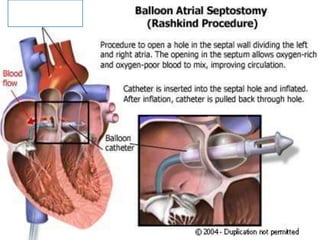


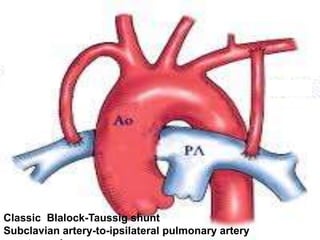
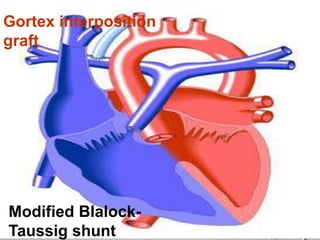
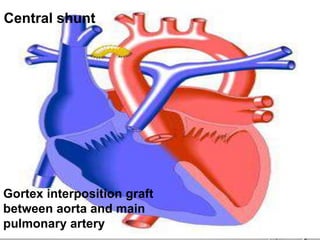
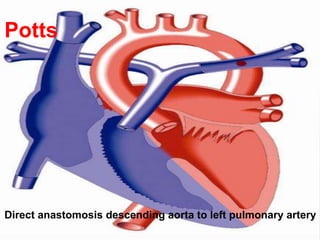
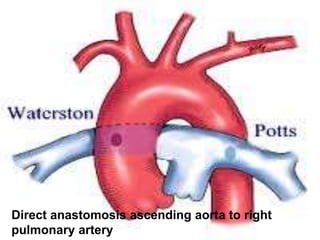

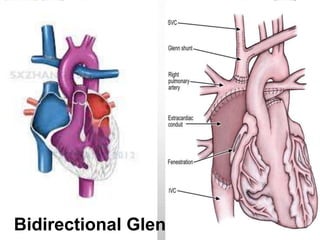
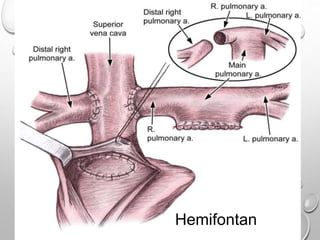
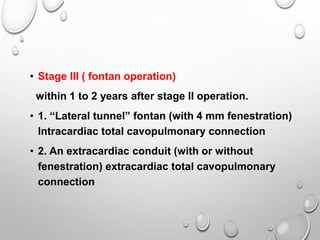
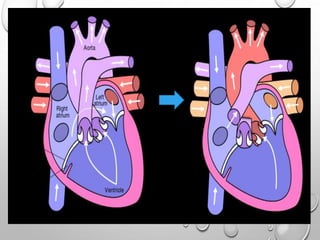
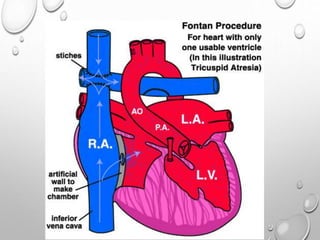

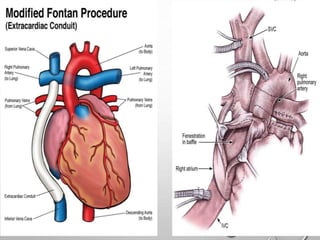


Tricuspid atresia is a congenital heart defect where the tricuspid valve is absent or not formed, preventing communication between the right atrium and right ventricle. It occurs in approximately 0.06 per 1000 live births with no gender predominance. The condition ranges in severity from complete absence of the tricuspid valve to stenosis. Early presentation includes severe cyanosis, hypoxemia, and acidosis in infants with low pulmonary blood flow, while those with higher flow present with heart failure symptoms later in infancy. Echocardiography can identify the absent tricuspid valve and associated defects. Without surgical intervention, few infants survive beyond 6 months, but current treatments including shunts and the


