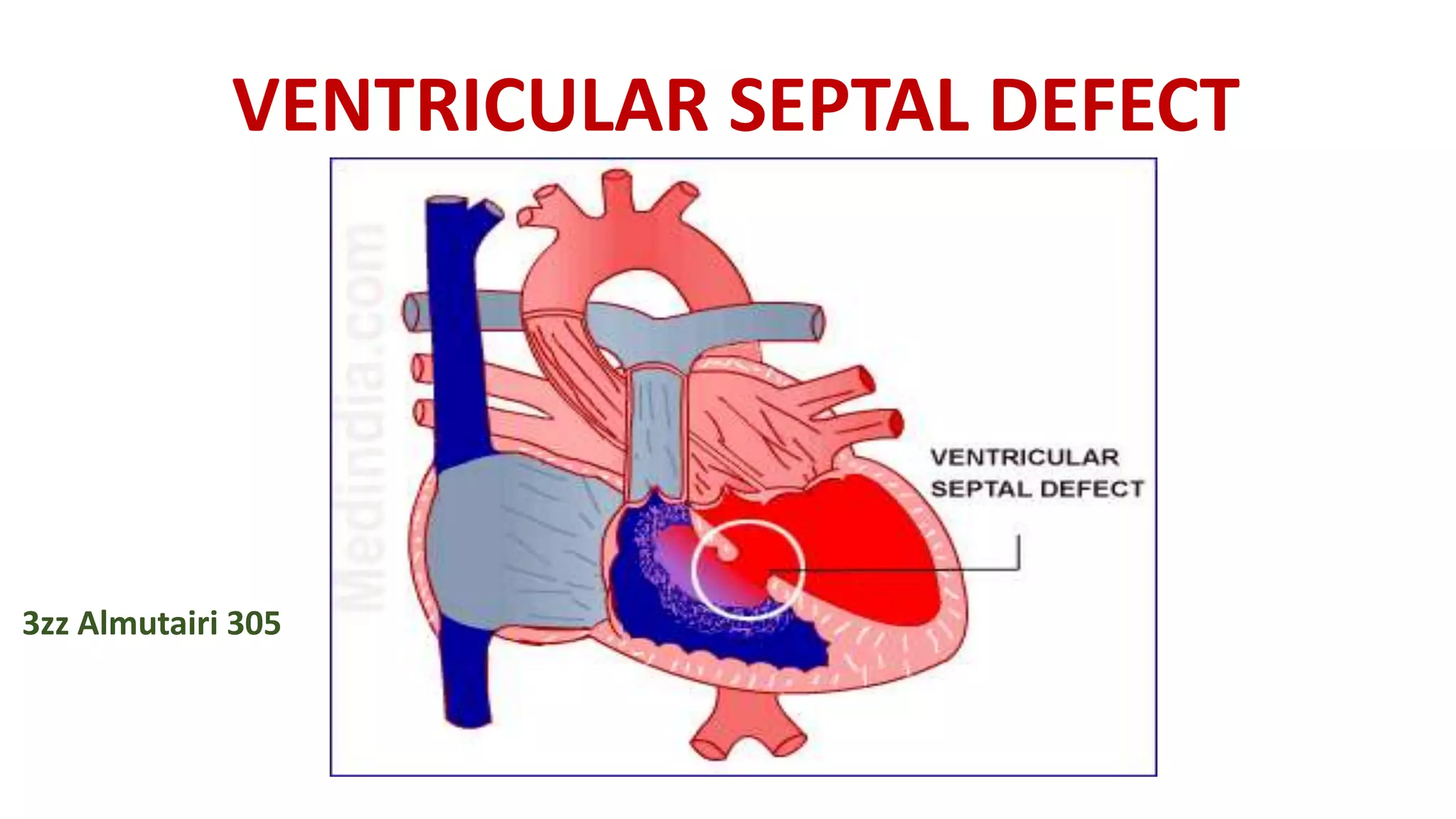
VENTRICULAR SEPTAL DEFECT
3zz Almutairi 305
Overview
- Introduction
- Definition
- Pathophysiology
- Types of VSD
- Classification
- Clinical manifestation
- Diagnostic Tests
- Treatment
- Nursing Managment
What is VSD..?
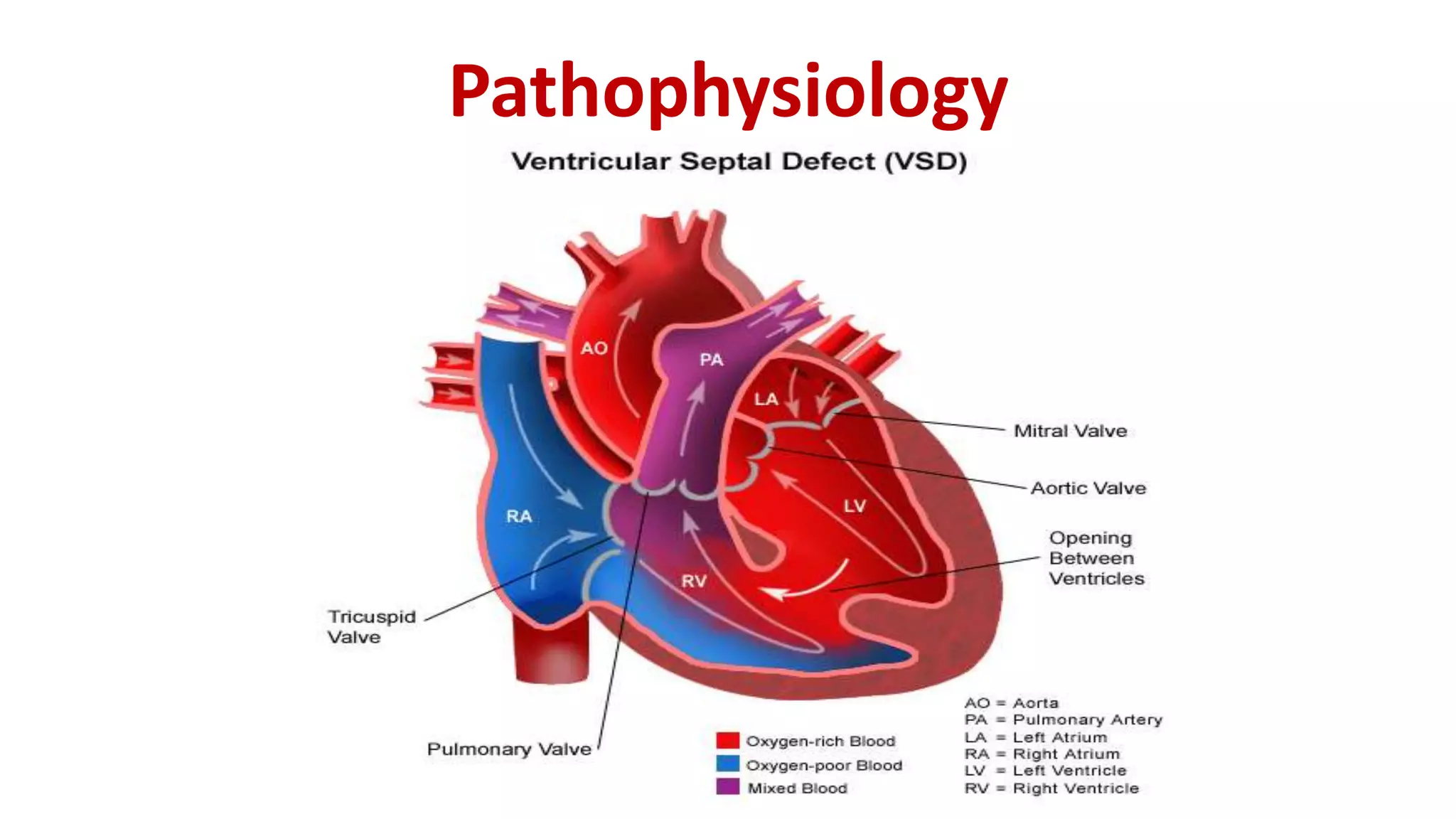
A ventricular septal defect (VSD)
is a congenital defects in the inter-
ventricular septum that allow
shunting of blood between the left
and right ventricles.
Introduction
VSD: are the most common congenital heart defects in infants and
children, and VSD is seen in up to 3.5 infants per 1000 live births
Most of these close spontaneously in childhood.
VSD may also accompany other congenital defects.
Pathophysiology
Types of VSD
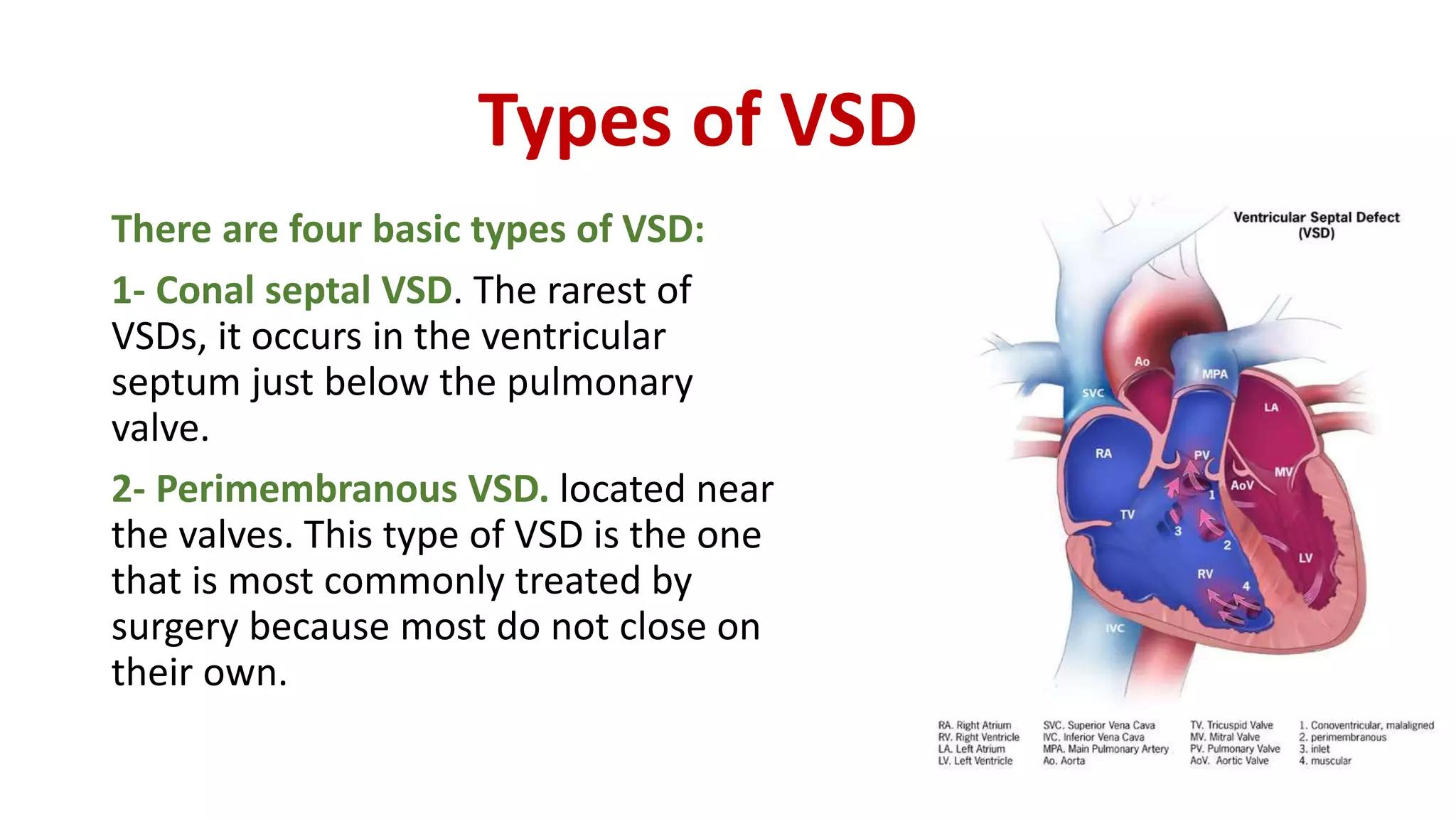
There are four basic types of VSD:
1- Conal septal VSD. The rarest of
VSDs, it occurs in the ventricular
septum just below the pulmonary
valve.
2- Perimembranous VSD. located near
the valves. This type of VSD is the one
that is most commonly treated by
surgery because most do not close on
their own.
Con.. Types of VSD
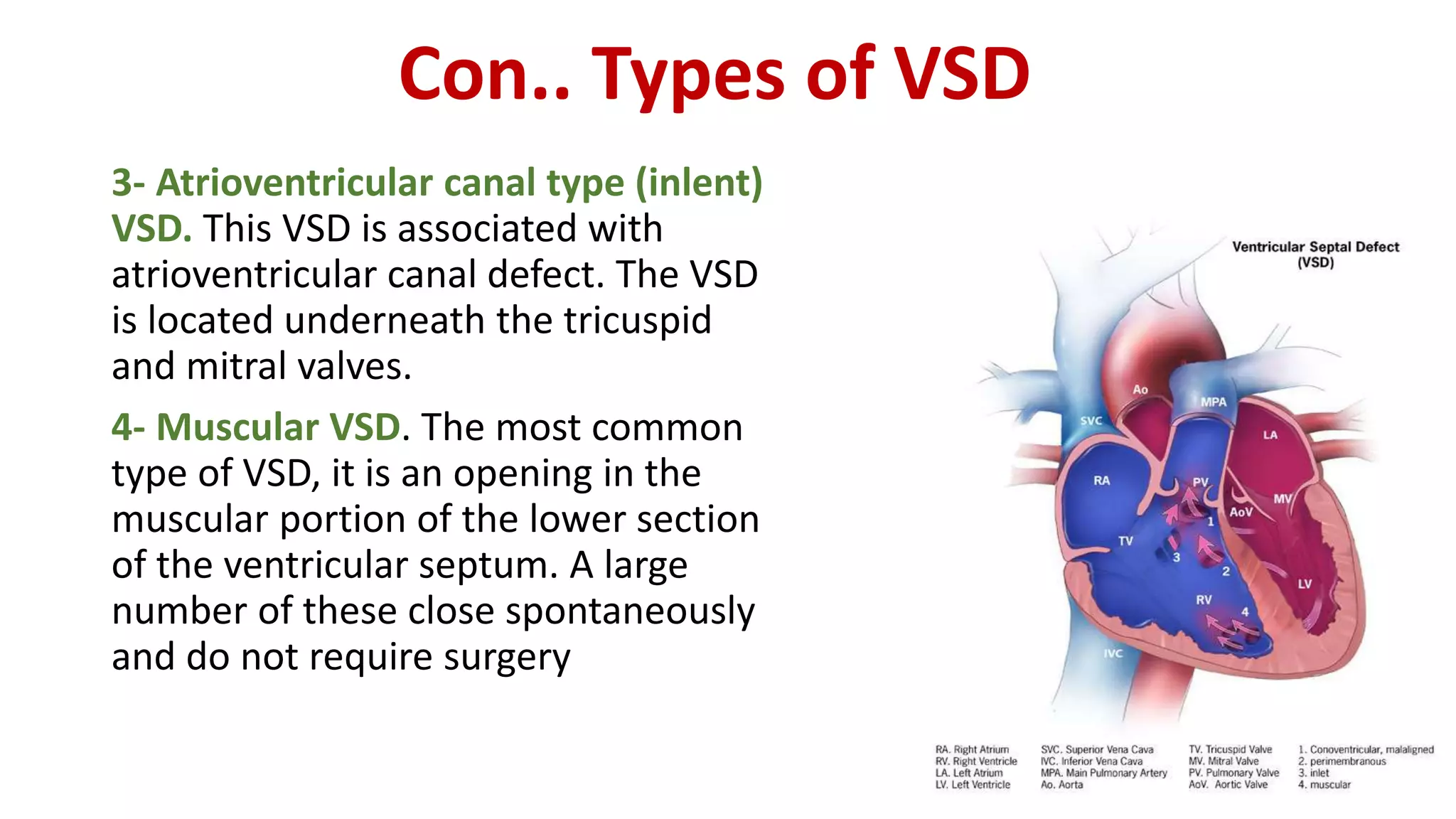
3- Atrioventricular canal type (inlent)
VSD. This VSD is associated with
atrioventricular canal defect. The VSD
is located underneath the tricuspid
and mitral valves.
4- Muscular VSD. The most common
type of VSD, it is an opening in the
muscular portion of the lower section
of the ventricular septum. A large
number of these close spontaneously
and do not require surgery
Classification
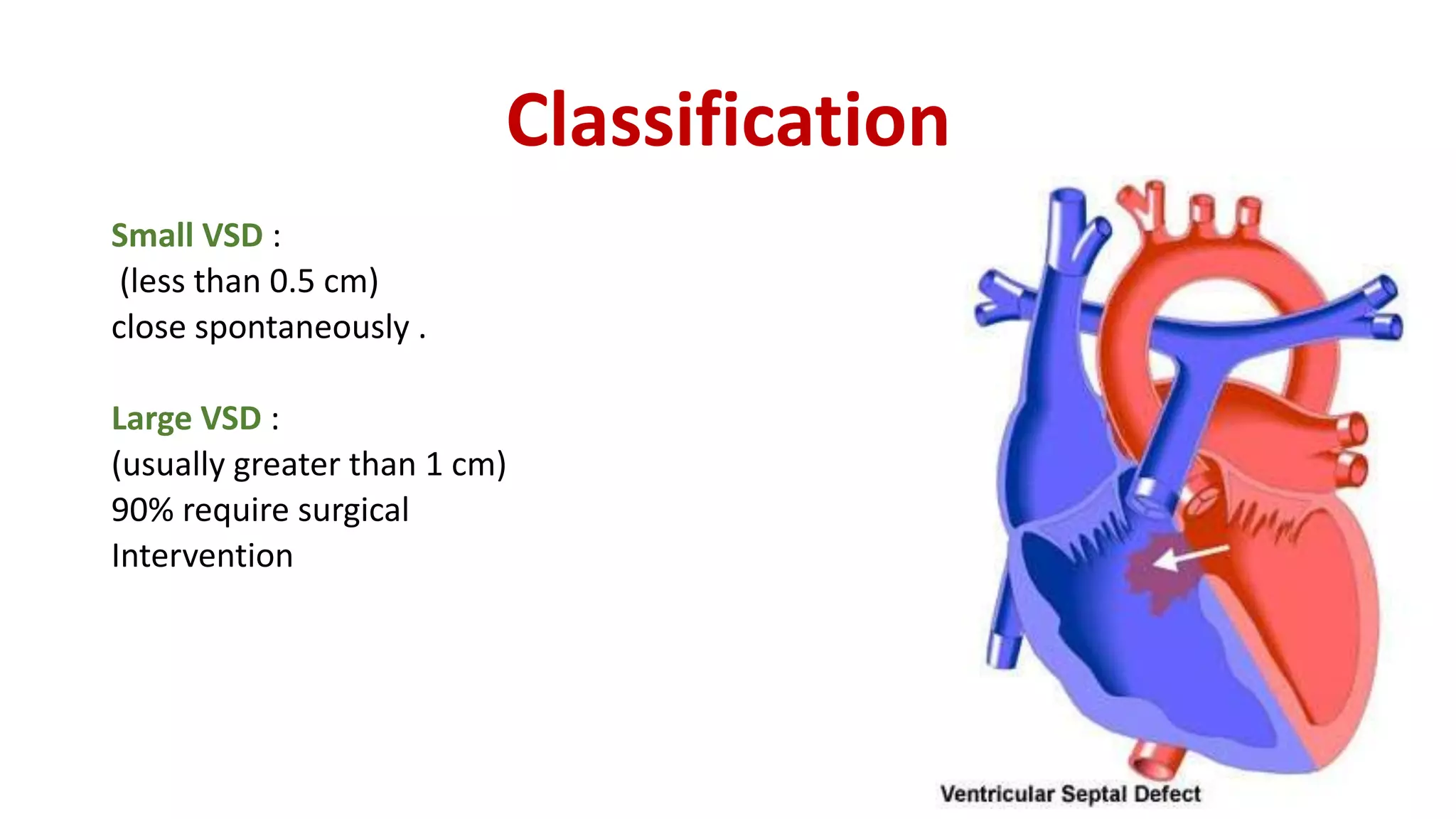
Small VSD :
(less than 0.5 cm)
close spontaneously .
Large VSD :
(usually greater than 1 cm)
90% require surgical
Intervention
Clinical Manifestation
-Murmur sound during auscultation
-Fatigue
-Sweating
-Rapid breathing
-Congested breathing
-Anorexia
-Poor weight gain
-Cyanosis
Diagnostic Test’s
Echocardiogram :
used to define the
anatomy and
characteristics
of the shunted
blood.
X-RAY : to roll out
The size of the heart
Con.. Diagnostic Test’s
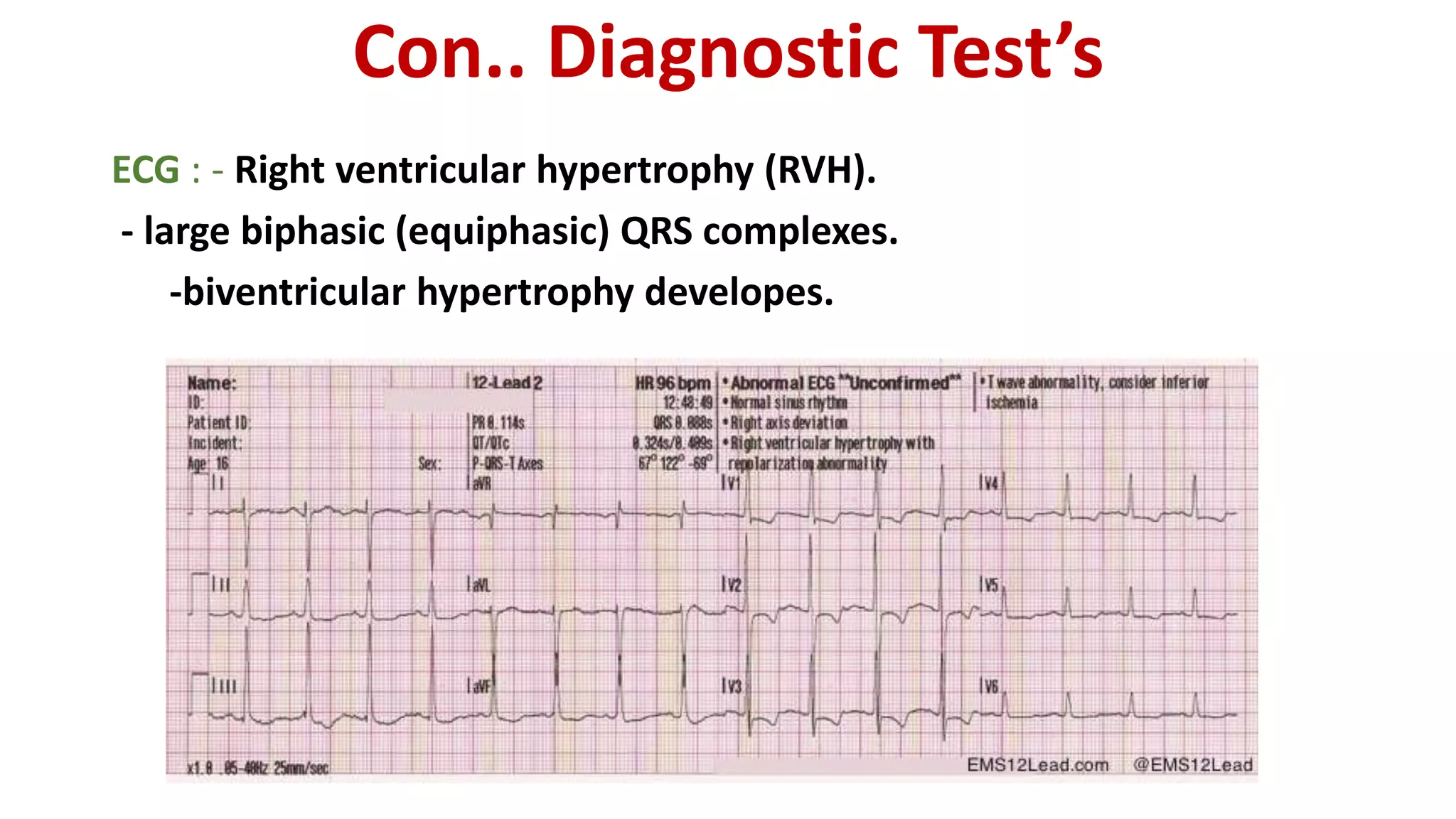
ECG : - Right ventricular hypertrophy (RVH).
- large biphasic (equiphasic) QRS complexes.
-biventricular hypertrophy developes.
Treatment
Medical management:
Digoxin (Lanoxin).
Increase the strength of the
heart's contractions.
furosemide (Lasix).
Decrease the amount of fluid in
circulation and in the lungs.
Bisoprolol (concor)
Keep the heartbeat regular.
Con.. Treatment
Surgical management:
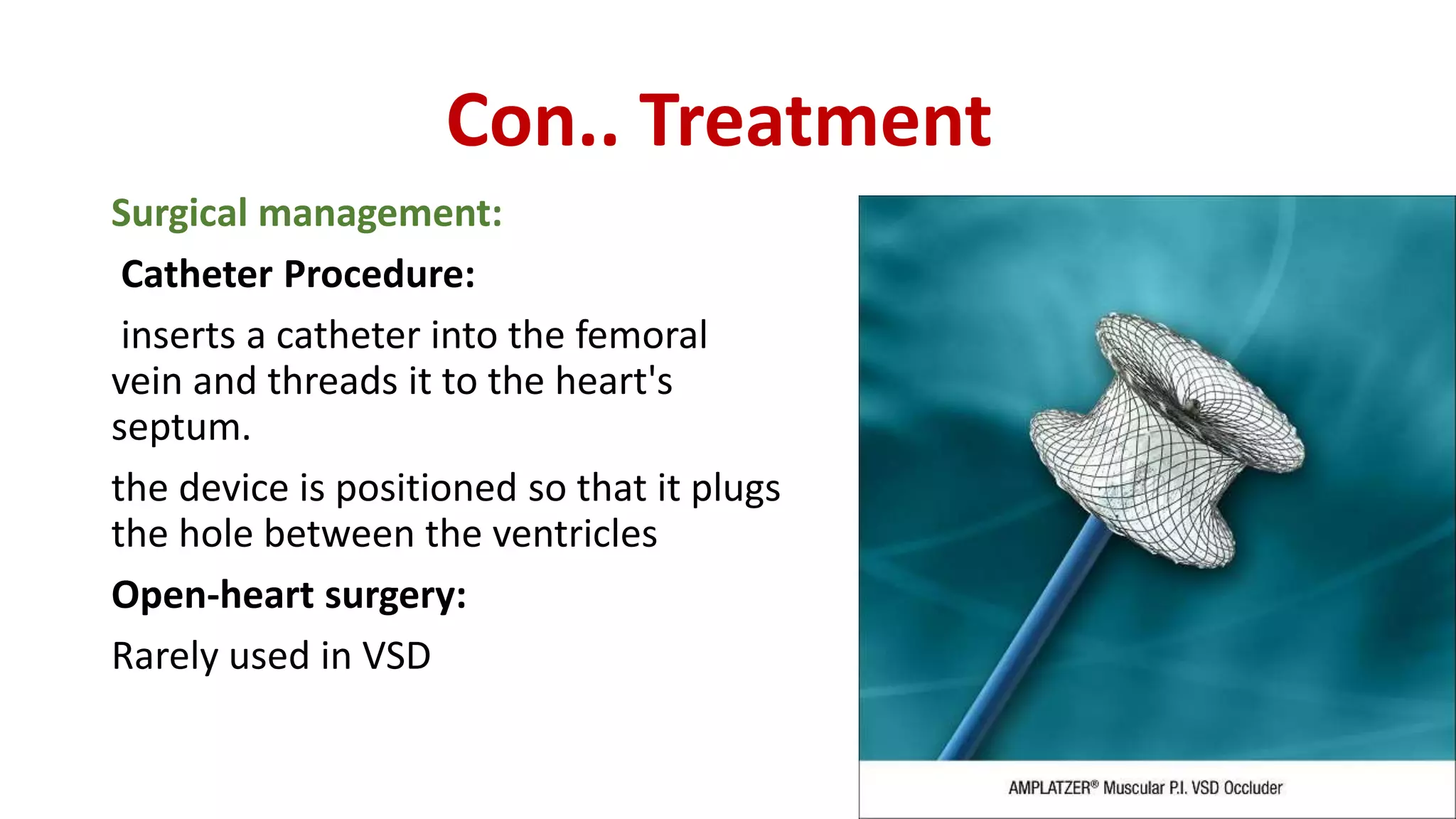
Catheter Procedure:
inserts a catheter into the femoral
vein and threads it to the heart's
septum.
the device is positioned so that it plugs
the hole between the ventricles
Open-heart surgery:
Rarely used in VSD
Preoperative & postoperative care
- Prophylactic antibiotic are often required to prevent infectious
endocarditis.
- The child should be assessed postoperatively for dysrhythmia, since
edema in the septum may interfere with condition.
Nursing managment
Nursing Diagnosis:
Decrease in cardiac output associated with heart malformations.
Nursing goal:
to improve cardiac output.
Nursing Intervention:
Observe the quality and strength of the heartbeat,
peripheral pulses, skin color and warmth.
Assess the degree of cyanosis (mucous membranes, clubbing).
Monitor signs of CHF (anxiety, tachycardia,
tachipnea, shortness of breath, periorbital edema,
oliguria and hepatomegaly.
Con.. Nursing managment
Nursing Diagnosis:
Impaired gas exchange related to pulmonary congestion.
Nursing goal:
improved gas exchange.
Nursing Intervention:
Monitor the quality and rhythm of breathing.
Adjust the position of the child with Fowler position.
Avoid child of an infected person.
Give adequate rest.
Give oxygen as indicated.
Thank you

ventricular septal defect

  • 1.
  • 2.
    Overview - Introduction - Definition -Pathophysiology - Types of VSD - Classification - Clinical manifestation - Diagnostic Tests - Treatment - Nursing Managment
  • 3.
    What is VSD..? Aventricular septal defect (VSD) is a congenital defects in the inter- ventricular septum that allow shunting of blood between the left and right ventricles.
  • 4.
    Introduction VSD: are themost common congenital heart defects in infants and children, and VSD is seen in up to 3.5 infants per 1000 live births Most of these close spontaneously in childhood. VSD may also accompany other congenital defects.
  • 5.
  • 6.
    Types of VSD Thereare four basic types of VSD: 1- Conal septal VSD. The rarest of VSDs, it occurs in the ventricular septum just below the pulmonary valve. 2- Perimembranous VSD. located near the valves. This type of VSD is the one that is most commonly treated by surgery because most do not close on their own.
  • 7.
    Con.. Types ofVSD 3- Atrioventricular canal type (inlent) VSD. This VSD is associated with atrioventricular canal defect. The VSD is located underneath the tricuspid and mitral valves. 4- Muscular VSD. The most common type of VSD, it is an opening in the muscular portion of the lower section of the ventricular septum. A large number of these close spontaneously and do not require surgery
  • 8.
    Classification Small VSD : (lessthan 0.5 cm) close spontaneously . Large VSD : (usually greater than 1 cm) 90% require surgical Intervention
  • 9.
    Clinical Manifestation -Murmur soundduring auscultation -Fatigue -Sweating -Rapid breathing -Congested breathing -Anorexia -Poor weight gain -Cyanosis
  • 10.
    Diagnostic Test’s Echocardiogram : usedto define the anatomy and characteristics of the shunted blood. X-RAY : to roll out The size of the heart
  • 11.
    Con.. Diagnostic Test’s ECG: - Right ventricular hypertrophy (RVH). - large biphasic (equiphasic) QRS complexes. -biventricular hypertrophy developes.
  • 12.
    Treatment Medical management: Digoxin (Lanoxin). Increasethe strength of the heart's contractions. furosemide (Lasix). Decrease the amount of fluid in circulation and in the lungs. Bisoprolol (concor) Keep the heartbeat regular.
  • 13.
    Con.. Treatment Surgical management: CatheterProcedure: inserts a catheter into the femoral vein and threads it to the heart's septum. the device is positioned so that it plugs the hole between the ventricles Open-heart surgery: Rarely used in VSD
  • 14.
    Preoperative & postoperativecare - Prophylactic antibiotic are often required to prevent infectious endocarditis. - The child should be assessed postoperatively for dysrhythmia, since edema in the septum may interfere with condition.
  • 15.
    Nursing managment Nursing Diagnosis: Decreasein cardiac output associated with heart malformations. Nursing goal: to improve cardiac output. Nursing Intervention: Observe the quality and strength of the heartbeat, peripheral pulses, skin color and warmth. Assess the degree of cyanosis (mucous membranes, clubbing). Monitor signs of CHF (anxiety, tachycardia, tachipnea, shortness of breath, periorbital edema, oliguria and hepatomegaly.
  • 16.
    Con.. Nursing managment NursingDiagnosis: Impaired gas exchange related to pulmonary congestion. Nursing goal: improved gas exchange. Nursing Intervention: Monitor the quality and rhythm of breathing. Adjust the position of the child with Fowler position. Avoid child of an infected person. Give adequate rest. Give oxygen as indicated.
  • 17.