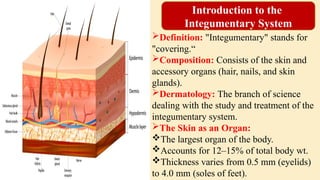
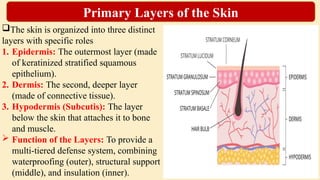
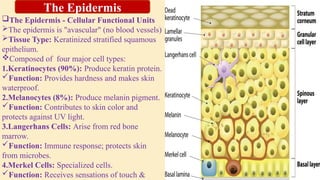
Introduction to the Integumentary System, Integumentary stands for "covering.“ The Skin largest organ of the body. Dermatology: The branch of science dealing with the study and treatment of the integumentary system. Functions of the Integumentary System are Protection, Thermoregulation, Sensation, Excretion, Vitamin D Synthesis. The skin is organized into three distinct layers with specific roles. Epidermis: The outermost layer (made of keratinized stratified squamous epithelium). Dermis: The second, deeper layer (made of connective tissue). Hypodermis (Subcutis): The layer below the skin that attaches it to bone and muscle. The epidermis is "avascular" (no blood vessels). Composed of four major cell types:
1.Keratinocytes (90%): Produce keratin protein.
Function: Provides hardness and makes skin waterproof.
2.Melanocytes (8%): Produce melanin pigment.
Function: Contributes to skin color and protects against UV light.
3.Langerhans Cells: Arise from red bone marrow.
Function: Immune response; protects skin from microbes.
4.Merkel Cells: Specialized cells.
Function: Receives sensations of touch & pain.
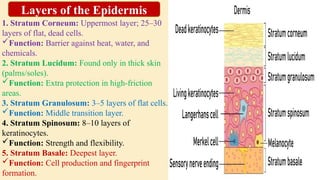
Layers of the Epidermis
1. Stratum Corneum: Uppermost layer; 25–30 layers of flat, dead cells.
Function: Barrier against heat, water, and chemicals.
2. Stratum Lucidum: Found only in thick skin (palms/soles).
Function: Extra protection in high-friction areas.
3. Stratum Granulosum: 3–5 layers of flat cells.
Function: Middle transition layer.
4. Stratum Spinosum: 8–10 layers of keratinocytes.
Function: Strength and flexibility.
5. Stratum Basale: Deepest layer.
Function: Cell production and fingerprint formation.
The Dermis – The "True" Skin
Characteristics: Contains blood vessels, glands, hair follicles, and nerve endings.
1. Papillary Layer (Top): Loose connective tissue.
Function: Rich in blood vessels to nourish the epidermis; contains nerve endings for sensation.
2. Reticular Layer (Bottom): Dense connective tissue.
Function: Contains fat cells, hair follicles, and glands; provides overall strength and elasticity to the skin.
Hypodermis and Accessory Organs
Hypodermis (Subcutis)
Characteristics: Not technically part of the skin; located below the dermis.
Function 1: Attaches skin to underlying bones and muscles.
Function 2: Primary site for fat storage (adipose tissue).
Function 3: Acts as a shock absorber and maintain core body temperature.
Accessory Organs
Hair: Protection and sensation.
Nails: Protect the tips of fingers and toes.
Glands
Sebaceous (Oil): Keep skin moist and inhibit bacterial growth.
Sudoriferous (Sweat): Aid in cooling the body.